AI for Educators: Empowering Teachers in the Modern Digital Classroom

Across the globe, educators face an escalating crisis of administrative overwhelm and burnout—spending nearly 50% of their work week on grading, administrative paperwork, and lesson planning rather than teaching students.
AI educator copilots and smart classroom tools are revitalizing the teaching profession. By automating repetitive administrative tasks, AI restores the joy of teaching and empowers educators to become high-impact mentors.
[!NOTE] What is AI for Educators? AI for educators is a suite of intelligent software assistants that automates lesson plan generation, rubric-based assignment grading, and student engagement telemetry, enabling teachers to deliver individualized instruction and deep human mentorship at scale.
⚖️ Overburdened Traditional Teaching vs. AI-Augmented Educators
| Teaching Activity | Overburdened Traditional Teacher | AI-Augmented Modern Educator | Classroom Impact |
|---|---|---|---|
| Lesson Plan Preparation | 5+ hours weekly creating tiered handouts | 15 minutes generating differentiated materials | Reclaims 4+ hours per week |
| Assignment & Essay Grading | Days of manual red-pen paper grading | Instant automated rubric-based feedback drafting | Rapid, constructive feedback |
| Struggling Student Detection | Discovered late after failing test results | Real-time diagnostic heatmap alerts | Immediate targeted intervention |
| Differentiated Learning | Impossible with 30 students in one room | Instant creation of 3–4 literacy tier variants | Every child learns at their pace |
| Teacher Well-Being | High chronic burnout & turnover | Energized focus on mentorship & inspiration | Sustainable, joyful teaching career |
🏫 The 4 Core Capabilities of the AI Educator Copilot
Teacher Copilot Workflow:
Curriculum Standard Ingestion ──► Tiered Lesson Generation ──► Real-Time Classroom Analytics ──► Rubric Feedback Drafting
1. Differentiated Lesson Planning & Quiz Generation
Educators enter their core curriculum objective, and the AI generates tailored reading passages, vocabulary lists, and quiz questions calibrated across varying student reading levels.
2. Automated Rubric-Based Grading & Feedback
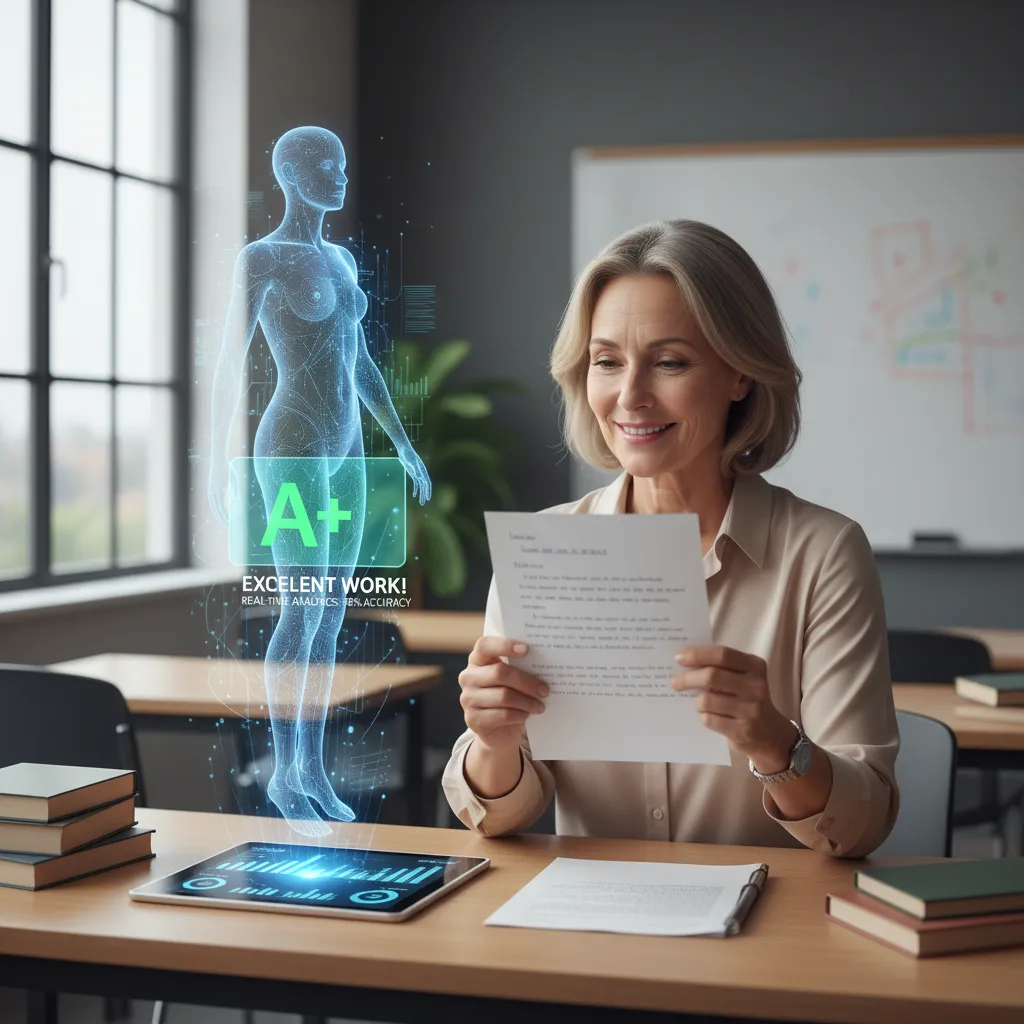
AI assistants evaluate written essays against the teacher’s grading rubric, drafting thorough, constructive feedback that the teacher can review, adjust, and approve with a single click.
For institutional frameworks on classroom transformation, explore our guide on The AI Classroom Revolution.

3. Real-Time Classroom Engagement Heatmaps
Live diagnostic dashboards alert the teacher during class if multiple students are struggling with a specific math or science concept, enabling spontaneous small-group breakout reviews.
For K-12 adaptive learning systems, read our guide on AI in K-12 Education.

4. Professional Development & Collaborative Workshops
Schools host ongoing professional development workshops where educators master prompt engineering, learning analytics interpretation, and ethical AI integration strategies.
For broader applications in education, explore AI-Powered Personalized Learning Systems.
🚀 3 Recommendations for Teachers in 2026
- Use AI for First Drafts, Human for Final Polish: Generate initial lesson outlines and quiz banks with AI, then infuse your personal teaching style and classroom anecdotes.
- Design AI-Resistant, Project-Based Assessments: Shift away from standard take-home essays toward in-class debates, live oral presentations, and collaborative problem-solving projects.
- Protect Student Privacy: Ensure all classroom tools comply strictly with FERPA and COPPA regulations, never uploading identifiable student names into public LLMs.