AI Eco-Travel & Sustainable Adventures: Low-Carbon Itinerary Guide

Travel broadens human perspectives and bridges cultures, but conventional mass tourism places immense strain on fragile ecosystems, inflates carbon emissions, and overwhelms historic destinations.
AI-powered eco-travel and sustainable itinerary design are reshaping exploration—allowing adventurers to discover off-the-beaten-path wonders, minimize carbon footprints, and directly support local conservation economies.
[!NOTE] What is AI-Powered Eco-Travel? AI-powered eco-travel is the application of route-optimization algorithms, real-time carbon emission modeling, and destination crowd telemetry to design low-impact, culturally immersive itineraries that enrich local communities and preserve natural biodiversity.
⚖️ Mass Conventional Tourism vs. AI-Optimized Eco-Travel
| Travel Dimension | Mass Commercial Tourism | AI-Optimized Eco-Travel | Long-Term Benefit |
|---|---|---|---|
| Carbon Tracking | Ignored or generic estimated offsets | Real-time multi-modal route optimization | 40–60% lower travel emissions |
| Crowd Density | Overcrowded tourist hotspots | Dynamic redirection to hidden cultural gems | Intimate, serene exploration |
| Economic Beneficiary | 80% revenue leaks to global chains | Direct hiring of local guides & eco-stays | Fosters community wealth |
| Environmental Impact | Waste generation & ecosystem degradation | Leave No Trace & regenerative initiatives | Protects fragile biomes |
| Experience Depth | Passive, rushed sightseeing checklists | Immersive, authentic cultural engagement | Meaningful personal memories |
🌲 The 4 Pillars of Sustainable AI Itinerary Planning
Eco-Travel Planning Cycle:
Multi-Modal Route Comparison ──► Crowd Avoidance Engine ──► Verified Green Lodging ──► Community Support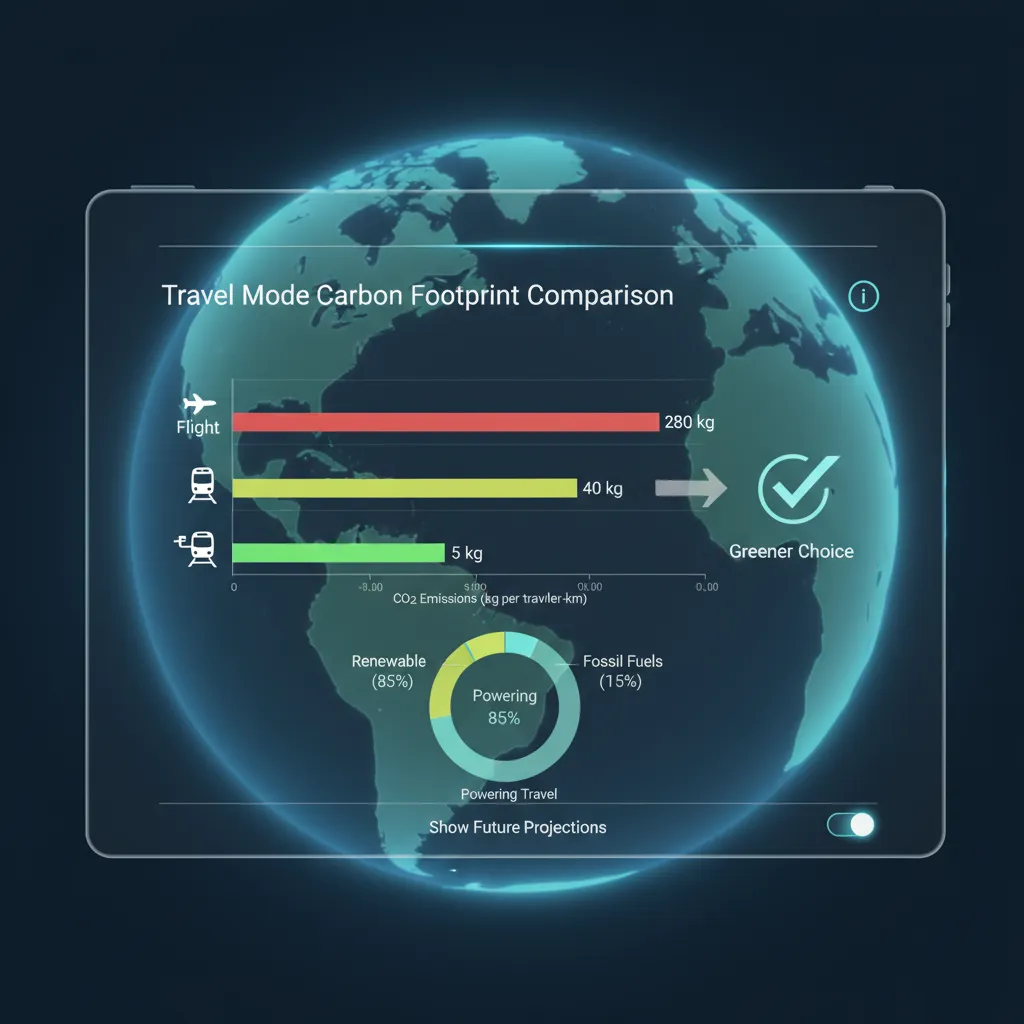
1. Multi-Modal Carbon Footprint Comparison
Intelligent travel copilots calculate the exact emissions difference between flights, high-speed rail, and electric vehicle rentals, recommending scenic train corridors that reduce carbon emissions by over 80%.

2. Verified Eco-Glamping & Community Stays
AI platforms filter through accommodation greenwashing by verifying certifications (Green Key, EarthCheck), connecting travelers with solar-powered eco-lodges and indigenous-led safari camps.
For foundational adventure travel guidelines, read our Adventure Travel & Responsible Exploration Guide.

3. Dynamic Overtourism Mitigation & Hidden Gems
By monitoring real-time foot-traffic sensors and social media check-in velocity, AI copilots direct travelers to enchanting secondary towns, ensuring your vacation dollars support underfunded local artisans.

4. Regenerative Citizen Science & Beach Cleanups
Eco-travelers can integrate conservation volunteer shifts into their journeys—using drone-assisted beach cleanup apps to record marine micro-plastic data for global research institutes.
For wildlife protection technologies, check out our guide on AI Drones for Wildlife Conservation.
🚀 3 Steps to Plan Your Eco-Adventure in 2026
- Choose Rail Over Regional Flights: Replace short-haul flights under 500 km with electrified high-speed rail.
- Prioritize Certified Green Accommodations: Stay at verified eco-lodges that utilize solar microgrids and rainwater harvesting.
- Engage Certified Local Guides: Book small-group excursions led by regional naturalists to ensure travel funds directly benefit local conservation.