AI Smart City Surveillance: Public Safety vs. Digital Privacy Rights

As global metropolitan centers expand, municipal governments face a defining 21st-century challenge: how to leverage artificial intelligence for public safety without establishing an omnipresent surveillance state.
AI-driven smart city surveillance transforms municipal grids into responsive networks—detecting transit accidents, optimizing emergency dispatch, and identifying infrastructure failures in real time.
[!NOTE] What is AI Smart City Surveillance? AI smart city surveillance is the integration of high-resolution camera networks, edge-computed computer vision, and IoT sensor arrays to monitor traffic velocity, public transit flow, and environmental hazards autonomously while enforcing statutory privacy protections.
⚖️ Unrestricted Biometric Tracking vs. Privacy-Preserving Edge AI
| Dimension | Mass Unrestricted Surveillance | Privacy-Preserving Edge AI | Municipal Impact |
|---|---|---|---|
| Data Processing | Centralized streaming of raw video feeds | Local on-camera edge processing & instant anonymization | Eliminates central honeypots |
| Facial Recognition | Continuous public facial cataloging | Real-time hardware facial blurring & silhouette telemetry | Protects civil liberties |
| Emergency Response | Delayed manual dispatch calls | Automated incident detection & dispatch routing | 40% faster ambulance arrivals |
| Data Retention | Permanent unencrypted cloud archives | Ephemeral data wiping within 24 hours | Prevents unauthorized surveillance |
| Regulatory Compliance | Violates GDPR / EU AI Act standards | Fully compliant with strict municipal privacy charters | Builds democratic public trust |
🏙️ The 4 Technical Layers of Modern Urban Telemetry
Smart City Telemetry Grid:
Edge Sensor Capture ──► Hardware Anonymization ──► Incident Classification ──► Rapid First Responder Dispatch
1. Public Safety & Rapid Incident Detection
Computer vision models analyze traffic intersections to detect vehicle collisions, pedestrian crosswalk obstructions, and sudden crowd panics in milliseconds, automatically triggering traffic light overrides for emergency vehicles.

2. Infrastructure Health & Environmental Monitoring
Surveillance cameras double as utility sensors—tracking flood water levels in storm drains, spotting gas leaks via thermal imaging, and identifying road potholes for municipal repair crews.
For exploring how biometric identity authentication operates under strict zero-knowledge security, read our guide on AI Biometrics and Secure Identity Access.
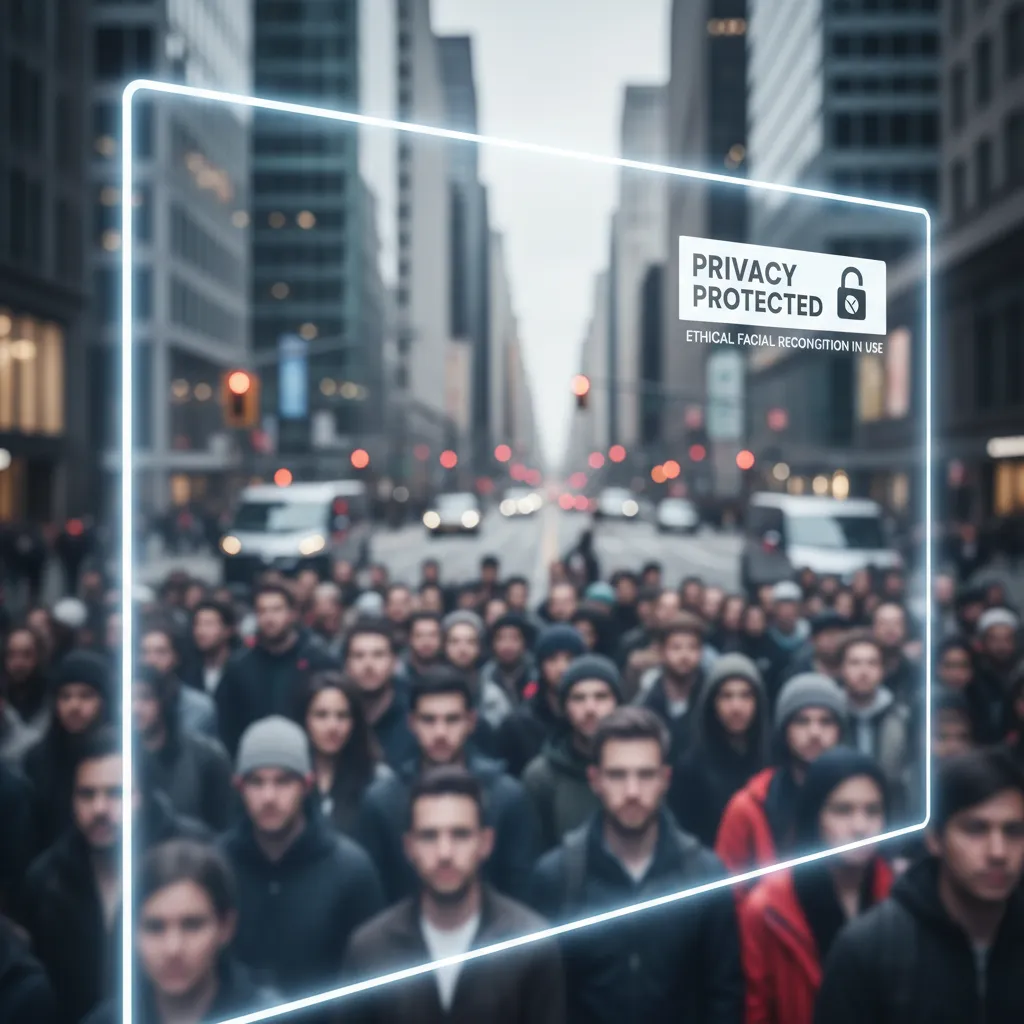
3. Ethical Facial Blurring & Anonymity Enforcement
To protect civil rights, edge cameras convert human figures into mathematical bounding boxes, discarding raw facial imagery before footage ever leaves the camera chassis.

4. Citizen Transparency & Municipal Data Governance
Progressive smart cities maintain open public registers detailing sensor locations, algorithmic audit reports, and strict data retention schedules accessible to every resident.
For broader applications of autonomous technology in extreme and urban environments, explore our deep dive on AI Autonomous Robots in Extreme Environments.
🚀 4 Principles for Responsible Urban AI in 2026
- Mandate Edge Anonymization: Enforce on-device video scrubbing at the camera hardware level.
- Prohibit Commercial Monetization: Bar municipal agencies from licensing public video streams to private data brokers.
- Conduct Annual Bias Audits: Require independent validation to prevent racial and demographic algorithmic misidentifications.
- Enforce Judicial Oversight: Require legal warrants before law enforcement can access unblurred investigative footage.