Smart Bins, Smarter Planet: AI Revolutionizing Home Waste & Recycling
Introduction
Let’s be honest: sorting trash is a confusing, often messy chore. You stand over the bins, a yogurt container in hand, wondering, “Is this plastic #5 recyclable? Does the lid go in? Should I rinse it first?” This daily moment of uncertainty, multiplied by billions of households worldwide, creates a massive problem: recycling contamination. When we guess wrong, we risk sending entire truckloads of good recyclables straight to the landfill. Add to that the mounting issue of food waste, and it’s clear our traditional approach to household waste is broken.
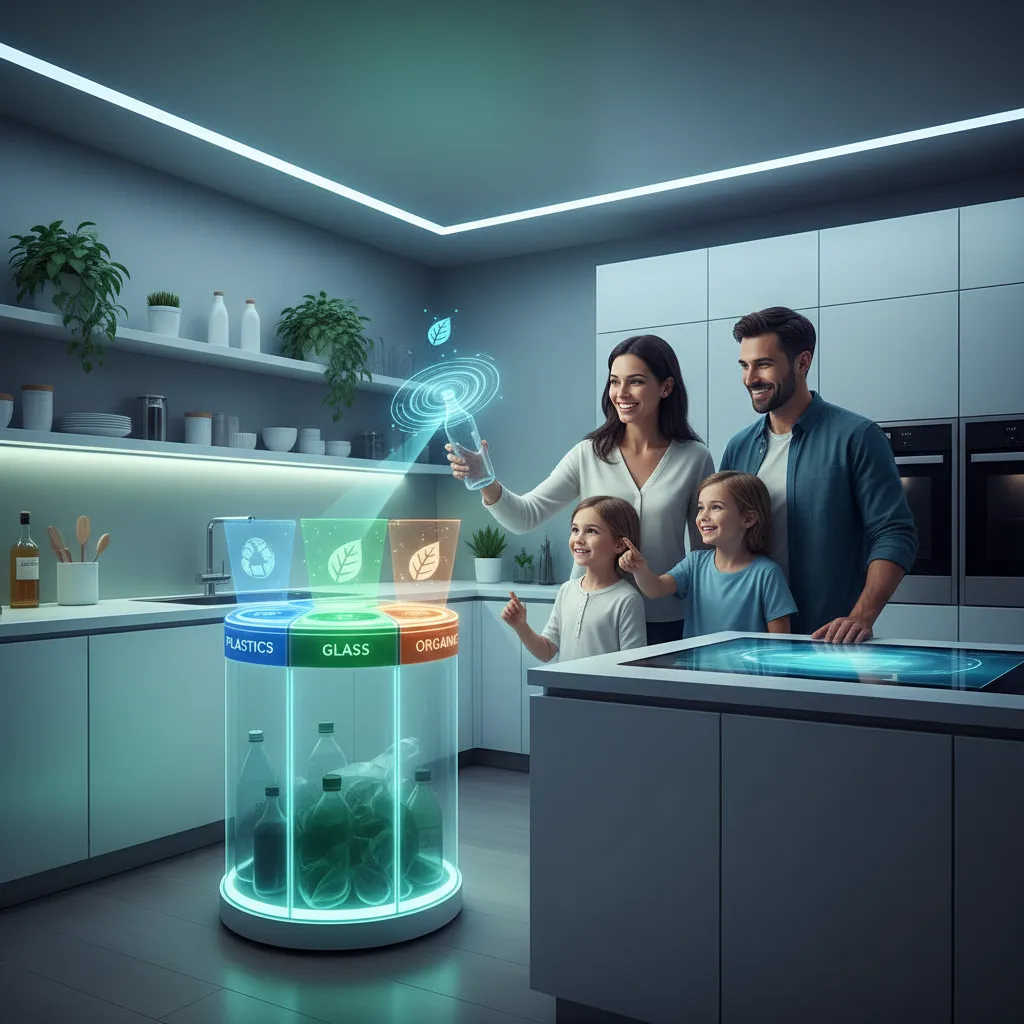
But what if your trash can was smarter than you? What if it could eliminate the guesswork, automatically sort your waste with near-perfect accuracy, and even help you reduce waste in the first place? This isn’t science fiction. This is the reality of the eco-friendly smart home, powered by a new generation of intelligent waste systems. The rise of AI waste management is turning the humble garbage can into a high-tech hub for sustainability.
In this deep dive, we’ll explore how smart recycling bins and AI for household recycling are doing more than just tidying up our kitchens. They’re pioneering a movement towards sustainable living tech, making concepts like the zero waste smart home more achievable than ever. We’ll unpack the cutting-edge waste reduction technology inside these devices, from AI image recognition to IoT connectivity, and reveal how they’re setting the stage for the future of home waste.
The Messy Reality of Household Waste: Why We Need an Upgrade
Before we embrace the future, it’s crucial to understand the scale of the problem we’re facing. Our current waste disposal infrastructure, both at home and on a municipal level, is struggling to keep up with modern consumption habits.
The statistics are sobering. According to the EPA, the average American generates nearly 5 pounds of trash per day. A significant portion of this is recyclable material, yet the national recycling rate hovers around a disappointing 32%. A primary culprit is contamination. A single non-recyclable item, like a greasy pizza box or a plastic bag, can contaminate an entire bin of otherwise clean materials, forcing waste management facilities to condemn the whole lot to a landfill.
Food waste presents an even more alarming picture. Globally, about one-third of all food produced for human consumption is lost or wasted. In homes, this often means forgotten leftovers and spoiled produce ending up in the trash. When this organic matter decomposes in a landfill, it releases methane, a greenhouse gas over 25 times more potent than carbon dioxide.
This is where the need for innovative waste solutions becomes undeniable. We need more than just better intentions; we need smarter tools. The manual process of sorting is prone to human error and apathy. The promise of domestic recycling AI is to remove that friction, creating a seamless and efficient bridge between our homes and a circular economy.
What is a Smart Bin? More Than Just a Motion-Sensor Lid
When you hear “smart garbage cans,” you might picture a bin with a lid that opens with a wave of your hand. While convenient, that’s just the tip of the iceberg. True AI waste management systems are sophisticated devices packed with advanced technology. They are the frontline soldiers in the battle for home sustainability AI.
At their core, these bins are designed to perform one critical task: automated waste sorting. They use a combination of hardware and software to identify, separate, and process waste without human intervention.
The Brains: AI and Machine Learning
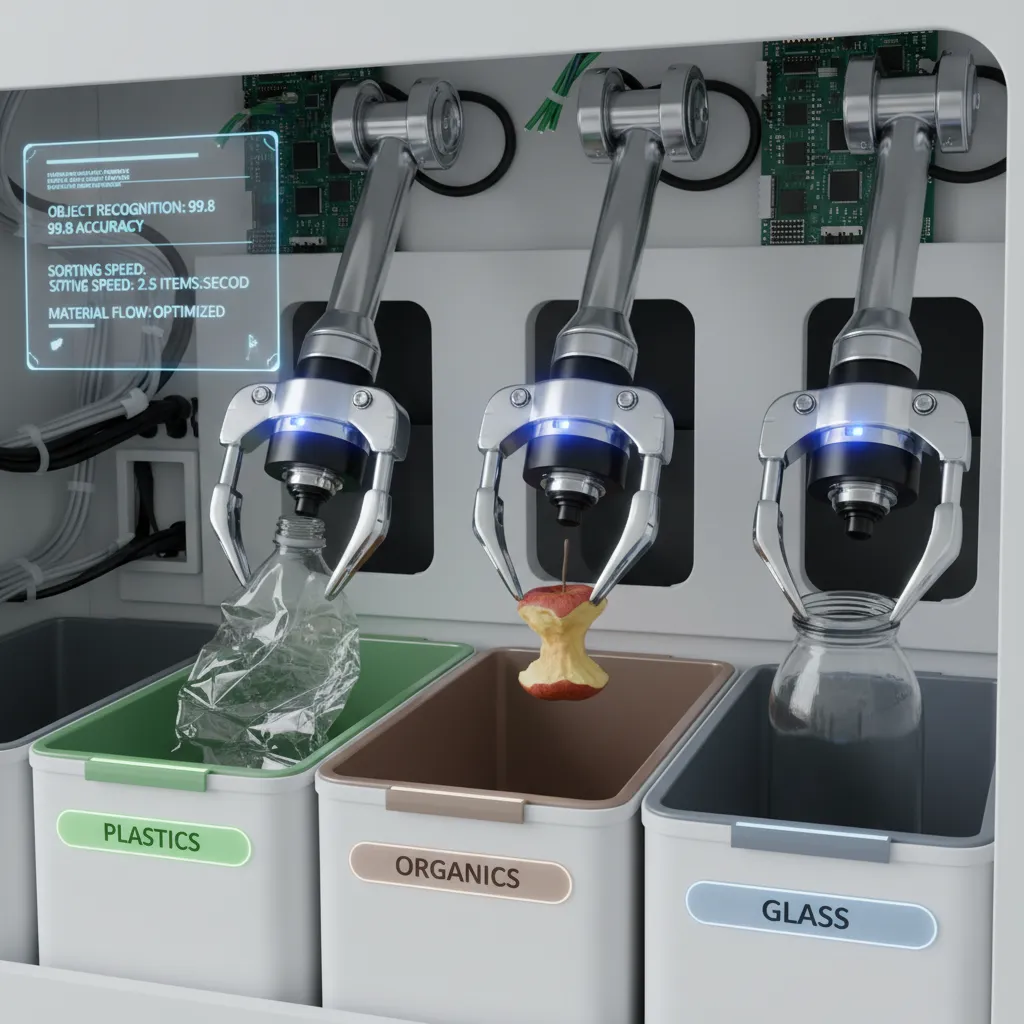
The “smart” in smart bins comes from powerful AI algorithms. Much like the AI that powers facial recognition on your phone, the home waste sorting AI is trained on massive datasets containing millions of images of different waste items. When you drop an item into the bin, an internal camera captures an image, and the AI analyzes it in milliseconds.
- It identifies the material: Is it PET plastic, aluminum, glass, paper, or organic food waste?
- It assesses the condition: Is the item clean enough to be recycled? Is it a compostable food scrap?
- It makes a decision: Based on its analysis, the AI directs internal mechanisms to route the item into the correct compartment—recycling, compost, or landfill.
This process transforms your bin into an active AI trash sorter, dramatically increasing the quality of your household’s recyclable output.
The Senses: Advanced Sensors and Cameras
To make these intelligent decisions, the bin needs to perceive the world. High-resolution cameras are the AI’s “eyes,” but they work in tandem with a suite of other sensors:
- Fill-Level Sensors: Ultrasonic or infrared sensors constantly monitor how full each compartment is. This prevents overflow and is a key feature of IoT recycling systems.
- Weight Sensors: These can track the weight of waste you generate over time, providing valuable data for AI waste optimization.
- Barcode Scanners: Some advanced models incorporate scanners that can read a product’s UPC barcode to get precise information about its packaging material, leaving no room for error.
The Connection: IoT and Smart Home Integration
A standalone smart bin is useful, but a connected one is revolutionary. As connected recycling bins, these devices use Wi-Fi or Bluetooth to become part of your green tech home automation ecosystem. This connectivity unlocks a new level of functionality:
- Real-Time Notifications: Your bin can send an alert to your phone when a compartment is full or when it’s time to take the trash out for municipal collection.
- Automated Shopping Lists: Some systems can automatically add bin liners to your online shopping cart when you’re running low.
- Data Synchronization: They sync with a companion app, providing you with detailed analytics on your waste habits.
This integration of smart disposal tech into the broader smart home is what truly defines home eco-tech trends. Related: DePIN: The Future of Decentralized Internet Connectivity?
The AI Revolution in Your Kitchen: Key Features and Benefits
The technology is impressive, but what does it actually mean for your daily life and your environmental impact? The benefits of adopting an AI for conscious living approach to waste are tangible and far-reaching.
Flawless Sorting, Maximum Recycling
The most immediate benefit is the end of recycling anxiety. With advanced recycling technology handling the cognitive load, you simply discard an item, and the machine does the rest. This virtually eliminates contamination at the source, ensuring that the materials you send to be recycled are of the highest possible quality. This clean stream of materials is more valuable to recycling facilities and more likely to be used in creating new products, strengthening the circular economy.
Tackling Food Waste with AI Composting Solutions
Many smart bin systems are designed with a dedicated focus on AI kitchen waste management. They don’t just separate trash; they actively promote better food habits.
- Automated Composting: An integrated compartment for organics can often grind, dehydrate, and begin the composting process right in your kitchen, creating a nutrient-rich soil additive in a matter of hours or days.
- Waste Tracking: The system’s AI can learn to identify the types of food you throw away most often. The companion app might show you a report: “This week, you discarded 2 pounds of leafy greens and 1 pound of bread.” This data empowers you to adjust your shopping habits, directly helping to reduce food waste AI-style. Related: AI in Finance: The Future of Money and Personal Wealth
Data-Driven Sustainability: Making Conscious Living Effortless
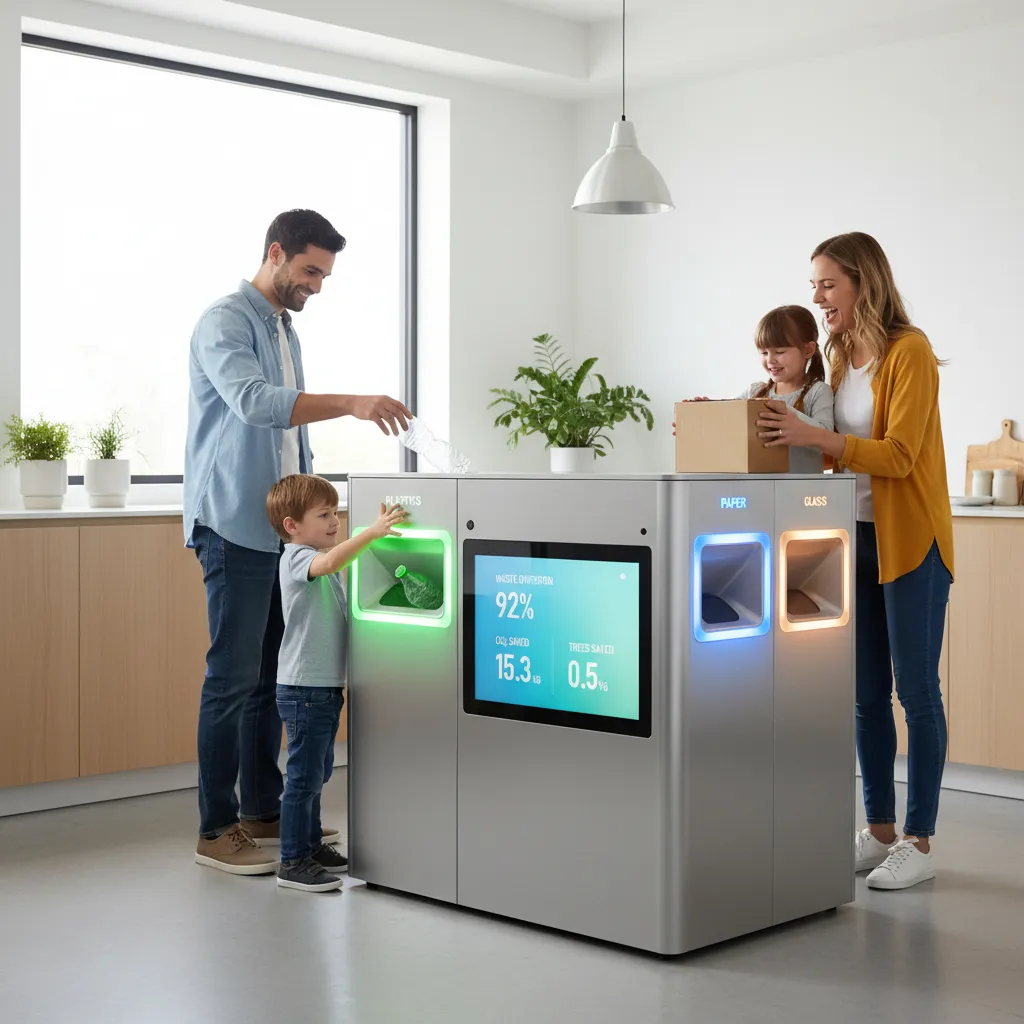
Perhaps the most powerful feature of these intelligent waste systems is their ability to turn your waste into actionable data. Your smart bin’s app becomes a personal sustainability dashboard.
- Track Your Progress: See weekly and monthly reports on your recycling rates, landfill diversion percentage, and the total weight of waste produced.
- Gamification: Many apps use gamification, setting goals and offering rewards for improving your metrics, making sustainability feel engaging rather than like a chore.
- Visualize Your Impact: The app can translate your efforts into easily understandable equivalents, like “This month, you recycled enough plastic to save the energy equivalent of charging your smartphone for 3 years.”
This feedback loop is the cornerstone of smart home sustainability. It closes the gap between action and impact, empowering families to make more informed choices.
Seamless Integration into the Eco-Friendly Smart Home
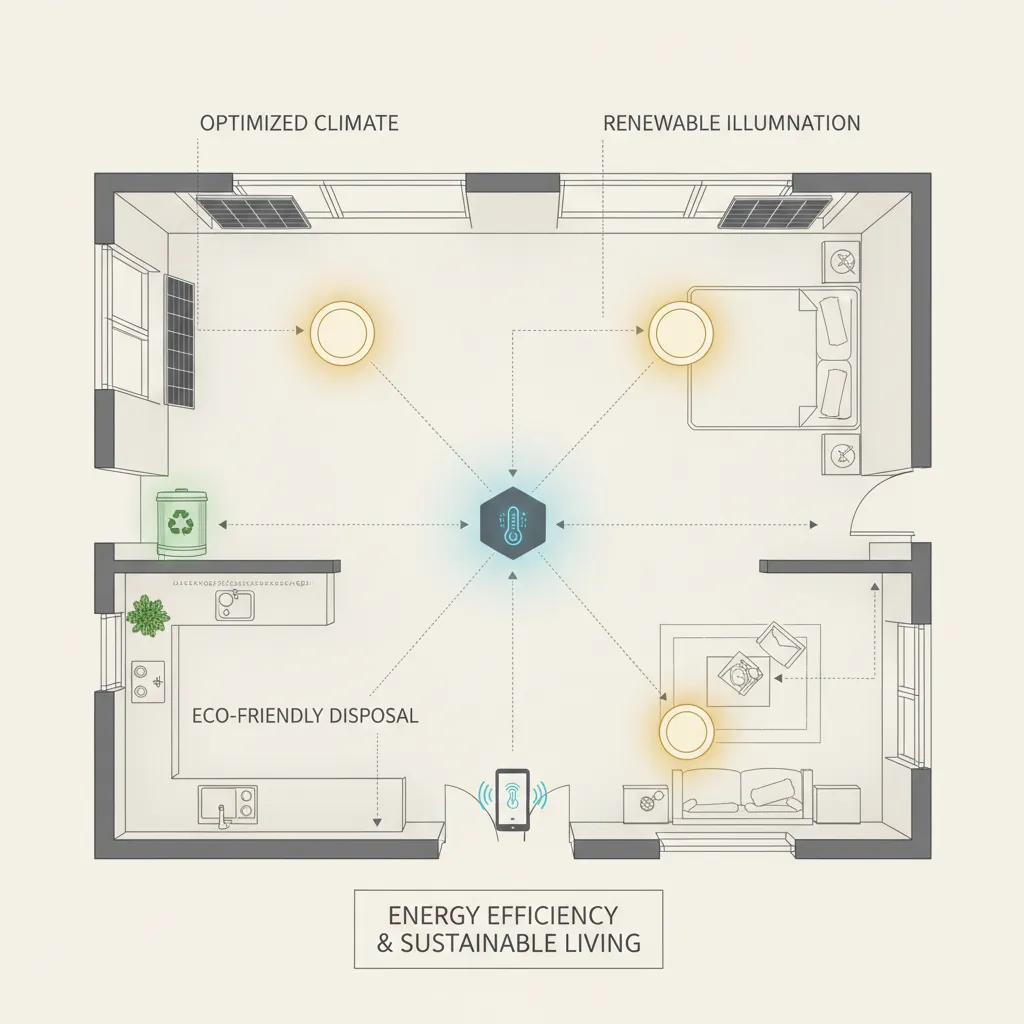
The future of home waste is not isolated; it’s integrated. Your smart bin becomes another node in your connected home, working in concert with other devices to create a holistic ecosystem of smart home eco solutions. Imagine this scenario:
- Your smart bin detects you’re low on compostable liners.
- It communicates with your smart home assistant (like Alexa or Google Home).
- The assistant adds the item to your digital shopping list.
- Simultaneously, the bin’s fill-level data syncs with your smart calendar to remind you of trash day.
This level of automation removes friction and makes sustainable living the path of least resistance.
The Bigger Picture: From a Smart Home to a Smarter Planet
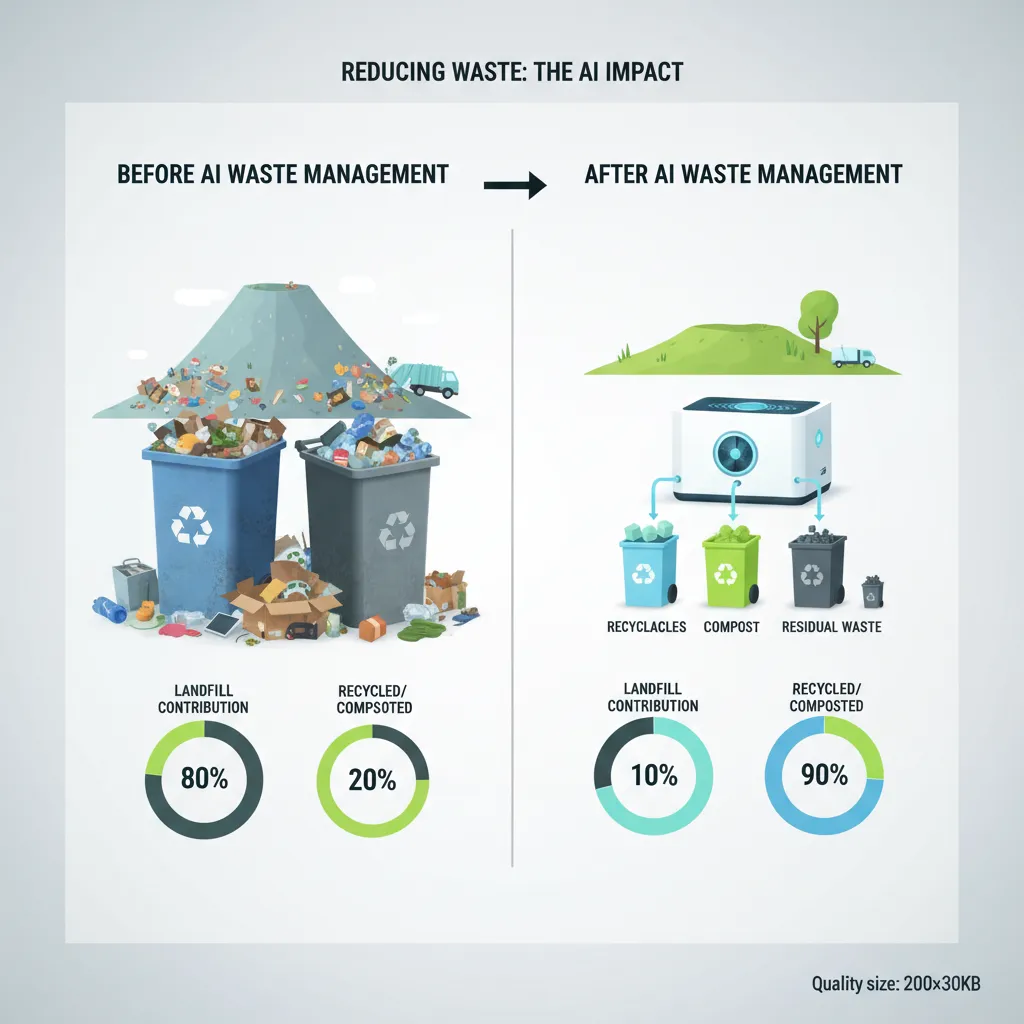
The ripple effect of widespread domestic recycling AI adoption extends far beyond individual kitchens. When thousands, and eventually millions, of homes are equipped with this AI environmental tech, it generates a massive, valuable dataset that can revolutionize municipal services and supply chains.
Optimizing Waste Collection
Currently, garbage trucks often run inefficient routes, collecting half-empty bins while others are overflowing. With data from a network of smart bins, cities can implement dynamic routing. Trucks are dispatched only when bins in a specific area are full, saving fuel, reducing emissions, and cutting operational costs. This is AI waste optimization on a city-wide scale.
Powering a True Circular Economy
A circular economy is an economic system aimed at eliminating waste and promoting the continual use of resources. Its success hinges on a steady supply of clean, well-sorted raw materials. Smart bins are the missing link. By providing a pristine stream of sorted plastics, metals, and glass directly from households, they make it cheaper and more efficient for manufacturers to use recycled content instead of virgin materials. Related: AI Productivity Tools: Your Ultimate Guide to Mastering Efficiency
A Glimpse into Future Innovations
The technology is still in its early stages, and the potential for future development is immense. We are just scratching the surface of home eco-tech trends. Imagine future smart bins that could:
- Perform basic material processing: Shred paper or plastics to make them more compact and easier to transport.
- Integrate with 3D printers: Use sorted plastic waste as feedstock for creating new household items.
- Analyze nutritional waste: Provide even more granular data on the nutritional value of the food you discard, linking to health and wellness apps.
These innovative waste solutions point to a future where “waste” is no longer an endpoint but a valuable resource managed intelligently within our own homes. Related: How AI and Autonomous Robots are Conquering Extreme Environments
The Challenges on the Road to a Zero Waste Smart Home
Despite the incredible potential, several hurdles must be overcome before AI-powered smart bins become a standard kitchen appliance.
The Cost Factor: A Premium on Sustainability?
The most significant barrier to entry is cost. Current models from startups like Lasso Loop or Bin-e can cost thousands of dollars. This places them firmly in the luxury or early-adopter category. For this waste reduction technology to make a global impact, the price must come down significantly through economies of scale and technological maturation. However, proponents argue that potential long-term savings from reduced waste disposal fees (in “pay-as-you-throw” municipalities) and more conscious consumption could offset the initial investment.
Technological Hurdles and User Adoption
While the AI is remarkably advanced, it isn’t perfect. It can still be confused by crushed or heavily soiled items. The mechanical sorting systems also require maintenance. Furthermore, there’s a learning curve. Users need to trust the machine and understand its capabilities and limitations. Widespread adoption will require not just technological refinement but also effective consumer education.
Privacy in the Age of Smart Trash
The idea that a company knows exactly what you consume and discard raises legitimate privacy questions. The data collected by a smart bin can reveal incredibly personal details about your diet, health, purchasing habits, and lifestyle. As with all IoT devices, manufacturers must be transparent about what data they collect, how it’s used, and provide robust security measures to protect user privacy.
Conclusion
The journey from a simple plastic bin to an AI-powered waste management hub represents a profound shift in our relationship with what we throw away. Smart recycling bins are more than just a convenience; they are a critical piece of sustainable living tech that addresses the systemic flaws in our current approach to waste. By leveraging the power of AI for household recycling, these devices eliminate human error, turn waste into valuable data, and empower us to become active participants in the circular economy.
While challenges like cost and privacy remain, the trajectory is clear. The integration of AI environmental tech into our homes is accelerating, paving the way for a future where the zero waste smart home is not a niche ideal but a global standard. The revolution won’t happen overnight, but it has already begun, one smart, sorted piece of trash at a time. The future of our planet may very well depend on the intelligence we build into the most overlooked corner of our homes.
Frequently Asked Questions (FAQs)
Q1. What is an AI smart bin?
An AI smart bin is an advanced waste container that uses artificial intelligence, cameras, and sensors to automatically identify, sort, and separate different types of waste, such as landfill, recyclables, and compost. It’s a key component of modern AI waste management and the eco-friendly smart home.
Q2. How does AI help in sorting waste?
AI uses machine learning algorithms trained on millions of images. When you discard an item, an internal camera captures an image. The AI analyzes this image to identify the material (e.g., PET plastic, aluminum, paper) and directs internal mechanisms to place it in the correct compartment, enabling highly accurate automated waste sorting.
Q3. What are the main benefits of using a smart recycling bin at home?
The primary benefits include drastically reducing recycling contamination, increasing the quantity and quality of recycled materials, tracking and helping to reduce food waste through AI composting solutions, and providing users with data to foster more sustainable habits (AI for conscious living).
Q4. Can AI technology help reduce food waste?
Absolutely. Many smart garbage cans can identify and track the types and amounts of food you throw away. Through a companion app, this data helps you understand your waste patterns and adjust your shopping habits. Some systems also include integrated composters that turn food scraps into nutrient-rich fertilizer.
Q5. Are smart bins expensive?
Currently, AI-powered smart bins are a significant investment, often costing over a thousand dollars, placing them in the premium market. However, as the advanced recycling technology matures and production scales up, prices are expected to become more accessible to the average consumer.
Q6. How does IoT work with waste management?
IoT (Internet of Things) allows smart bins to connect to the internet and other smart devices. This enables features like sending you smartphone notifications when the bin is full, automatically re-ordering liners, and syncing with municipal services for more efficient trash collection routes. This is the foundation of IoT recycling.
Q7. What is the future of household recycling?
The future of home waste is intelligent, automated, and integrated. We can expect future smart bins to not only sort waste but also perform initial processing (like shredding), connect with other appliances, and provide deeper insights into consumption patterns, making the zero waste smart home an achievable goal for everyone.