Beyond Chatbots: How Personal AI Agents Revolutionize Mental Wellness

Introduction
In our hyper-connected, always-on world, the silent hum of anxiety and stress has become a near-constant companion for many. The search for mental peace is more urgent than ever, yet traditional support systems often feel out of reach due to cost, stigma, or sheer unavailability. For years, technology offered a simple solution: chatbots. These rule-based programs could offer a scripted ear, but they were more like interactive diaries than dynamic allies.
Today, we stand at the precipice of a profound transformation. The conversation is shifting from reactive chatbots to proactive personal AI agents—sophisticated, deeply integrated digital companions designed to understand, anticipate, and support our mental well-being. This isn’t just an upgrade; it’s a complete paradigm shift in digital mental health AI.
These next-generation tools are more than just conversationalists. They are intelligent systems that learn your unique emotional patterns, integrate with your daily life, and provide personalized AI therapy and support in real-time. This article explores this revolution, moving beyond the familiar landscape of simple apps to reveal how true AI companion mental health agents are poised to redefine self-care, accessibility, and our very relationship with technology. We’ll uncover how AI helps mental health, what sets these agents apart, and the critical ethical questions we must navigate as we embrace this powerful future mental health tech.
The Evolution of Digital Mental Health: From Simple Scripts to Smart Companions
The journey of AI in psychological support has been one of rapid and remarkable evolution. Understanding this progression is key to appreciating the quantum leap represented by modern personal AI agents.
The Era of Rule-Based Chatbots
The first wave of AI well-being apps was dominated by rule-based chatbots. Think of early pioneers like ELIZA in the 1960s, a program that cleverly rephrased users’ statements as questions. More recently, apps like the initial versions of Woebot and Wysa brought Cognitive Behavioral Therapy (CBT) principles to the masses.
These tools were groundbreaking in their own right. They offered a non-judgmental space for users to vent and learn basic coping mechanisms. However, their intelligence was limited. They operated on complex decision trees and keyword recognition. If you said, “I’m feeling anxious,” they would pull from a pre-written script about anxiety. They couldn’t understand nuance, remember past conversations in detail, or grasp the context of your life outside the chat window. They were reactive, waiting for you to initiate and guide the conversation.
The Leap to Generative AI and Emotional Intelligence
The advent of large language models (LLMs) and sophisticated neural networks changed everything. This new breed of smart emotional AI possesses a far deeper understanding of human language and sentiment. This is the core of emotional intelligence AI—the ability to recognize, interpret, and respond to human emotions with remarkable accuracy.
Instead of matching keywords, these models analyze sentence structure, context, and past interactions to generate unique, empathetic, and relevant responses. They can understand sarcasm, metaphors, and the subtle shifts in tone that define human communication. This technological leap closed the gap between a tool that mimics listening and one that begins to understand. It’s this foundation that allowed for the development of the true personal AI agent. Related: AI Personal Assistants: Revolutionizing Daily Life
What Makes a Personal AI Agent Different? Core Features and Capabilities
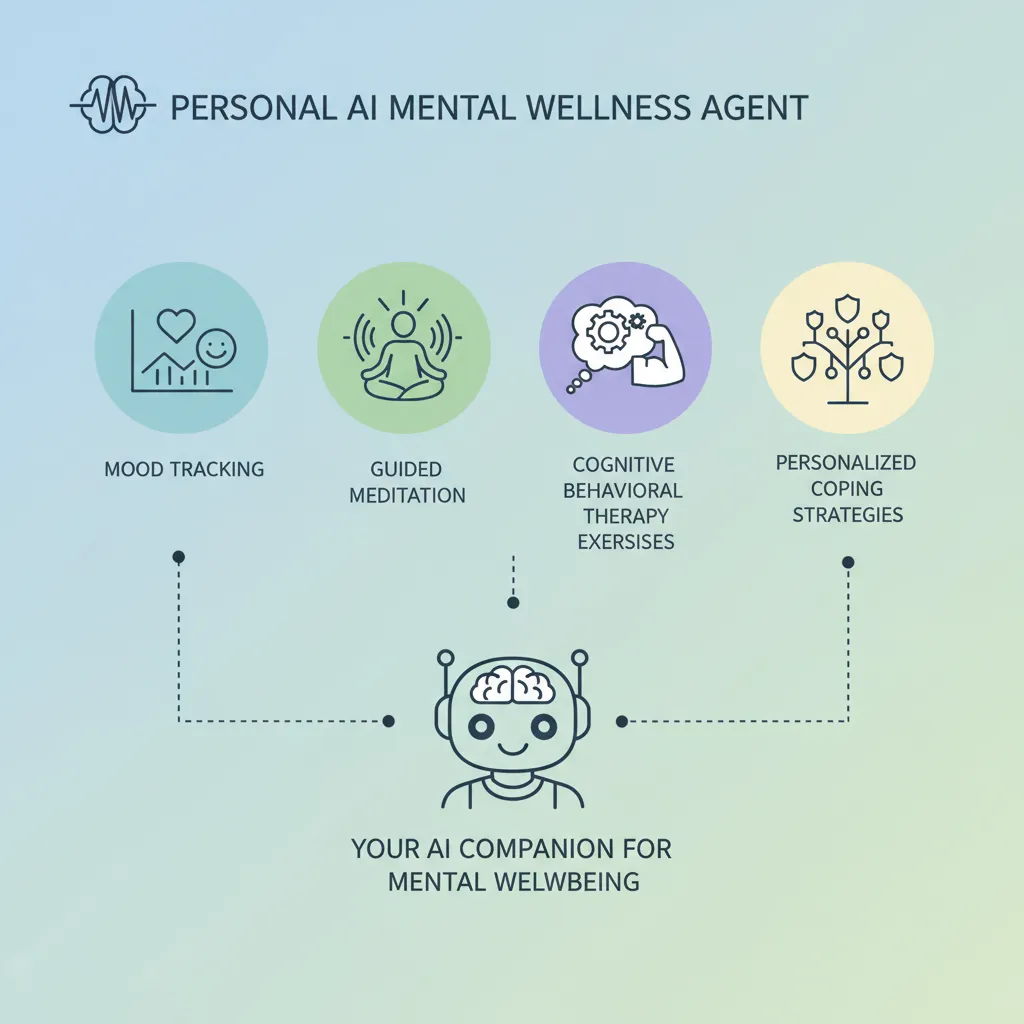
An AI agent is fundamentally different from a chatbot. A chatbot is a program you interact with; an agent is a system that works for you, often in the background. It’s the difference between a self-service kiosk and a dedicated personal concierge. Here are the core capabilities that define this new generation of virtual mental health assistants.
Hyper-Personalization: Your Unique Wellness Blueprint
A personal AI agent’s primary directive is to learn you. It moves beyond generic advice to create a dynamic, evolving model of your emotional landscape. This personalized wellness AI achieves this by integrating various data streams:
- Conversational Data: It remembers your concerns, triumphs, and triggers from past chats.
- Mood and Journal Entries: It identifies patterns in your daily reflections.
- Biometric Data: By connecting to wearables like an Apple Watch, Oura Ring, or Whoop strap, it can correlate your heart rate variability (HRV), sleep quality, and activity levels with your self-reported moods.
- Calendar and App Data: With your permission, it can understand upcoming stressors (like a big presentation) or recognize behaviors (like decreased social app usage).
This creates a rich, holistic profile, allowing the agent to offer insights and support that are uniquely tailored to your life, making AI driven emotional well-being a tangible reality.
Proactive Support and Intervention
This is perhaps the most significant differentiator. While a chatbot waits for you to report feeling stressed, a personal AI agent can predict it.
Imagine this scenario: Your agent notices your sleep quality has been poor for three nights, your calendar shows a looming project deadline, and your heart rate has been consistently elevated. Instead of waiting for a crisis, it might proactively send a notification:
“Hey, I’ve noticed a few things might be piling up this week. Your sleep seems a bit disrupted. How about we take 5 minutes for a guided breathing exercise to reset before your next meeting?”
This proactive capability transforms the tool from a passive resource into an active partner in your AI stress management and AI for stress reduction efforts.
Multimodal Integration: A Holistic View of Your Well-being
Mental wellness doesn’t exist in a vacuum. It’s intrinsically linked to our physical health, our work, and our social lives. Personal AI agents are designed to operate at this intersection. By integrating with various platforms, they build a 360-degree view of your life.
This holistic approach recognizes that financial stress can impact sleep, or that a lack of physical activity can correlate with low moods. By seeing the bigger picture, the agent can offer more relevant support, moving closer to the role of an AI personal coach mental health expert. Related: AI Powering Your Personalized Wellness Journey
Skill-Building and Guided Practices
Effective mental wellness isn’t just about managing crises; it’s about building resilience. These agents are powerful platforms for delivering evidence-based techniques on demand. They serve as robust AI self-care tools that can guide you through:
- Cognitive Behavioral Therapy (CBT): Identifying and reframing negative thought patterns.
- Mindfulness and Meditation: Providing guided sessions tailored to your current emotional state.
- Breathing Exercises: Offering real-time coaching for AI anxiety relief.
- Emotional Regulation Techniques: Helping you develop skills to manage intense emotions.

These guided interventions make therapeutic techniques, once confined to a therapist’s office, accessible anytime, anywhere, truly democratizing AI for mindfulness.
The Tangible Benefits: How AI Agents are Improving Lives Today
The shift toward sophisticated AI mental wellness agents is already yielding profound benefits, addressing some of the most persistent challenges in mental healthcare.
Breaking Down Barriers: Accessibility and Anonymity
The most immediate benefit is access. For millions, traditional therapy is prohibitively expensive, geographically inaccessible, or carries a heavy social stigma. AI mental health benefits shine here:
- 24/7 Availability: A crisis doesn’t schedule an appointment. AI agents are available at 3 AM on a Tuesday, offering immediate support.
- Affordability: While some services are subscription-based, they are often a fraction of the cost of human therapy.
- Anonymity: Users can speak freely without fear of judgment, which can be particularly helpful for those discussing sensitive topics for the first time.
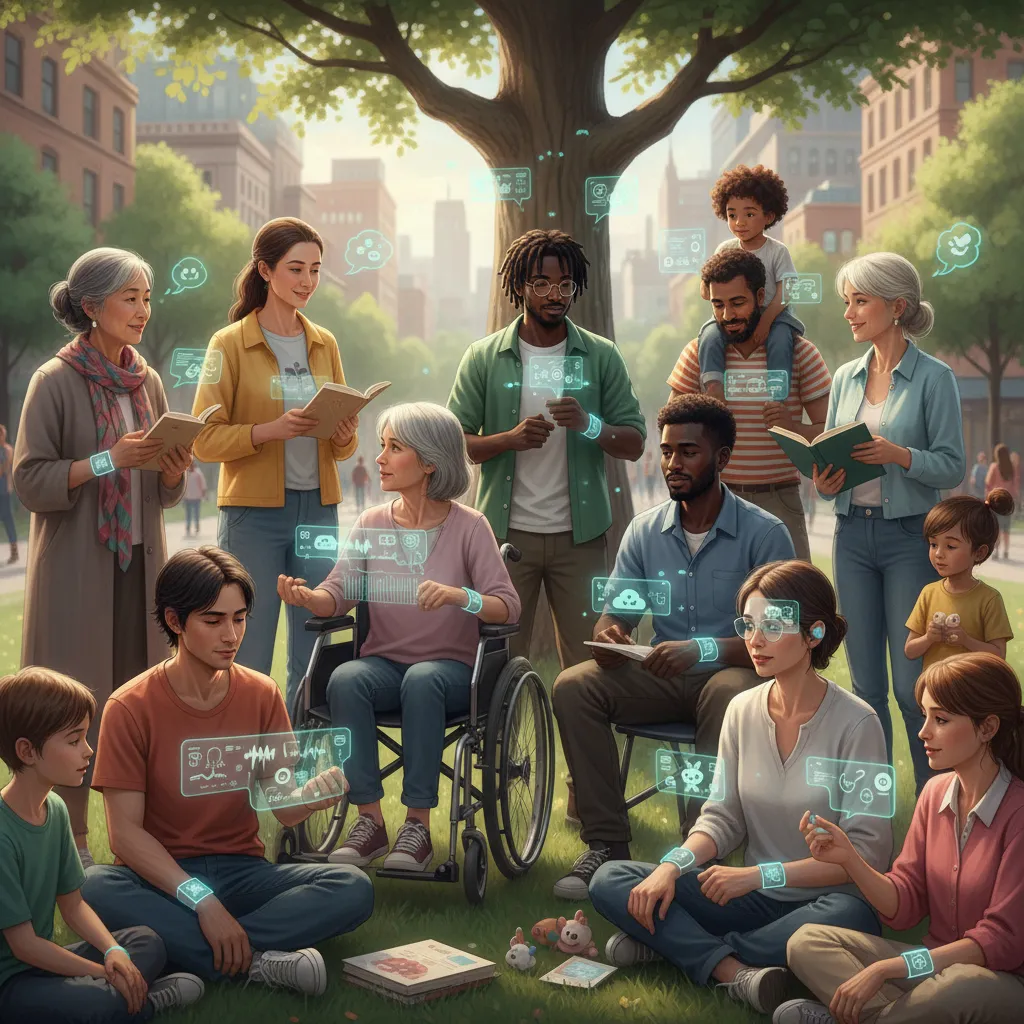
This technology has the potential to bring AI in psychological support to underserved communities and individuals who might otherwise receive no help at all.
Real-Time Support for Anxiety and Depression
Personal AI agents are becoming powerful AI tools for anxiety and AI depression support. By recognizing physiological and behavioral markers, they can intervene in the moments they are needed most. For someone prone to panic attacks, an agent connected to a smartwatch could detect a sudden spike in heart rate and immediately initiate a grounding exercise. For someone with depression, it might notice a pattern of social withdrawal and gently encourage a small, positive action, like a short walk outside.
Fostering Emotional Regulation and Self-Awareness
One of the cornerstones of mental health is self-awareness—understanding your own emotional patterns and triggers. AI agents act as a mirror, reflecting your data back to you with insightful analysis. By consistently tracking your moods and correlating them with activities, sleep, and events, the agent helps you connect the dots. You might discover that your anxiety peaks on days you skip your morning workout or that your mood is significantly better when you get at least seven hours of sleep. This process of discovery, guided by a virtual mental health assistant, is incredibly empowering and key to developing effective AI for emotional regulation.
Navigating the Challenges: The Ethical Landscape of AI Mental Wellness
With great power comes great responsibility. The very features that make personal AI agents so effective—their deep personalization and data integration—also raise critical ethical questions. Acknowledging these challenges is essential for the responsible development and adoption of these mental health technology trends.
The Privacy Paradox: Your Most Sensitive Data
You are sharing your deepest fears, insecurities, and health data with a private company. This creates a significant privacy challenge. Key questions we must ask include:
- Data Security: How is this incredibly sensitive data being stored and protected from breaches?
- Anonymity: Is the data truly anonymized, or can it be traced back to individuals?
- Data Usage: How is the data being used? Is it being sold to third-party advertisers or used to train future models in ways that compromise user privacy?
Consumers must demand transparency, and developers must prioritize robust, end-to-end encryption and user-centric privacy policies. The conversation around ethical AI mental health begins and ends with data stewardship.
The Risk of Algorithmic Bias
AI models are trained on data, and if that data is not diverse, the model will be biased. An AI trained predominantly on data from one demographic might fail to understand the cultural nuances, linguistic differences, or specific life stressors of another. This could lead to the AI offering irrelevant, ineffective, or even harmful advice to users from marginalized communities, undermining the goal of equitable access.
The “Human” Element: Can an AI Truly Empathize?
This is the philosophical and practical core of the debate. An AI can be trained to recognize and respond with empathetic language, but it does not feel empathy. It has no lived experience, no consciousness. This is a crucial distinction.
It is vital to state this clearly: Personal AI agents are not a replacement for human therapists. They are a supplementary tool. They can augment therapy, provide in-the-moment support, and make wellness skills more accessible, but they cannot replicate the nuanced, intuitive, and deeply human connection that is often the most healing aspect of therapy. They are part of a broader mental wellness toolkit, not the entire solution.
The Future is Now: What’s Next for Mental Health Technology?
The field of AI powered therapy is evolving at an incredible pace. The concepts we’ve discussed are not science fiction; they are actively being developed and refined. Looking ahead, we can expect several exciting advancements. Related: Apple Intelligence in iOS 18: A Deep Dive into the AI Features Revealed at WWDC
Predictive Analytics for At-Risk Individuals
As these agents collect more longitudinal data, they will become better at identifying subtle patterns that precede a mental health crisis. This could enable early intervention on a massive scale, potentially flagging at-risk individuals and connecting them with human support before they reach a breaking point. Related: AI Medical Marvel: Early Disease Detection & Personalized Treatment
The AI Personal Coach and Holistic Wellness
The scope of these agents will continue to expand beyond just mental health. They will evolve into holistic wellness coaches, helping users manage stress, improve sleep, optimize nutrition, maintain exercise routines, and even manage their finances to reduce a major source of anxiety. Related: AI in Finance: The Top Trends and Tools for 2024
The Symbiosis with Human Therapists
Rather than replacing therapists, the future lies in collaboration. Imagine a world where a therapist can, with their client’s consent, access a dashboard of insights from their AI agent. They could see mood trends, identify key stressors that occurred between sessions, and track the client’s use of coping skills. This would make therapy sessions more efficient, data-driven, and effective, creating a powerful partnership between human and artificial intelligence.
Conclusion
We are moving decisively beyond the era of simple chatbots. The rise of proactive, deeply integrated personal AI agents marks a new frontier in the quest for mental well-being. These sophisticated companions offer an unprecedented level of personalized, accessible, and real-time support, with the potential to empower millions to take control of their emotional health. They are powerful tools for building resilience, managing stress, and fostering the self-awareness that is the bedrock of a healthy mind.
However, we must proceed with mindful optimism. The ethical challenges of privacy, bias, and the irreplaceable value of human connection must remain at the forefront of the conversation. These agents are not a panacea, but powerful allies. When used responsibly, as a complement to human support systems, they represent one of the most promising technological advancements for democratizing and destigmatizing mental healthcare. The revolution is here, offering not just a listening ear, but an intelligent partner on your personal journey to wellness.
Frequently Asked Questions
Q1. What is an AI mental health agent?
An AI mental health agent is an advanced type of artificial intelligence designed to be a proactive and personalized companion for your mental well-being. Unlike a simple chatbot that reacts to your input, an agent integrates with your data (like calendars and health metrics) to understand your unique patterns, anticipate stressors, and offer timely, tailored support and skill-building exercises.
Q2. How can AI help with anxiety?
AI can help with anxiety in several ways. It provides 24/7 access to calming techniques like guided breathing and mindfulness meditations. An AI agent can detect early signs of anxiety via wearable data (like a high heart rate) and proactively suggest grounding exercises. It also helps users identify and reframe anxious thought patterns based on Cognitive Behavioral Therapy (CBT) principles.
Q3. Can AI replace a human therapist?
No, AI cannot and should not replace a human therapist. While AI offers powerful tools for support, skill-building, and in-the-moment coping, it lacks true empathy, consciousness, and lived experience. The nuanced, intuitive, and profound human connection found in therapy is irreplaceable. AI should be viewed as a supplementary tool to augment care, not replace it.
Q4. Are AI therapy apps safe and confidential?
Safety and confidentiality vary widely between apps. Reputable apps use strong encryption to protect user data. However, it is crucial to read the privacy policy of any AI mental wellness tool you use. Understand how your data is stored, if it is anonymized, and if it is shared with any third parties. Always prioritize services that are transparent about their data practices.
Q5. What are the main benefits of using AI for mental wellness?
The main benefits are Accessibility (24/7 support at a lower cost), Anonymity (a stigma-free space to talk), and Personalization (support tailored to your specific emotional patterns and life events). It empowers users with real-time coping skills and helps build self-awareness by tracking mood and behavior patterns.
Q6. What is the difference between an AI chatbot and a personal AI agent?
A chatbot is primarily reactive; it responds to your direct questions and comments based on a script or its language model. A personal AI agent is proactive; it integrates with various aspects of your digital life to learn your unique needs, anticipates challenges, and initiates support without you having to ask first, acting as a continuous, intelligent companion.