Llama 3.1 Unleashed: How Open-Source AI Empowers Small Businesses & Developers

For years, the narrative around cutting-edge artificial intelligence has been dominated by a handful of tech behemoths. Access to the most powerful AI models often meant navigating expensive APIs, surrendering data to third-party clouds, and accepting a one-size-fits-all solution. But the ground is shifting. The release of Meta’s Llama 3.1 marks a pivotal moment in the AI landscape, a significant step towards democratizing AI and placing unprecedented power directly into the hands of innovators, startups, and solo developers.
This isn’t just another incremental update; it’s a paradigm shift. Llama 3.1, with its family of powerful and efficient open-source models, is dismantling the barriers that have kept sophisticated AI out of reach for many. For small and medium-sized businesses (SMBs), this means access to affordable AI solutions that can revolutionize operations without breaking the bank. For developers, it means the freedom to build, customize, and deploy AI applications with a level of control and privacy previously unimaginable.
In this comprehensive guide, we’ll dive deep into the world of Llama 3.1. We’ll explore what makes it a game-changer, uncover practical Llama 3.1 use cases for your business, and show how developers are leveraging this technology to build the next generation of intelligent tools. Get ready to learn how the future of open AI is empowering small businesses and developers to compete and win.
What is Llama 3.1, and Why is it a Game-Changer?
At its core, Llama 3.1 is the latest generation of large language models (LLMs) from Meta AI. It comes in a range of sizes, from the nimble 8B (8 billion parameters) and 70B models to the colossal 405B powerhouse. But the true revolution isn’t just its impressive performance—which rivals or even surpasses some of the top proprietary models—it’s the philosophy behind it.
Beyond the Hype: A Quick Breakdown
Unlike models like OpenAI’s GPT-4o or Google’s Gemini, the core Llama 3.1 models are open-source. This means their underlying code and architecture are publicly available for anyone to inspect, modify, and use. Think of it like the difference between a secret recipe held by a single corporation and a community-driven cookbook that anyone can add to and perfect.
The Llama 3.1 family includes:
- Llama 3.1 405B: A state-of-the-art model designed for complex reasoning and nuanced tasks, competing directly with top-tier closed models.
- Llama 3.1 70B: A highly capable and balanced model, perfect for a wide range of business applications.
- Llama 3.1 8B: A lightweight and efficient model ideal for running on local hardware, enabling on-device AI Llama 3.1 solutions and enhancing data privacy.
This variety of sizes is crucial for open source LLM adoption, as it allows users to pick the right tool for the job, balancing performance with computational cost.
The “Open Source” Superpower: Democratizing AI
The term “open source” is the key to understanding Llama 3.1’s impact. It unlocks three fundamental advantages that directly challenge the “walled garden” approach of Big Tech.
- Accessibility & Affordability: Open source removes the primary gatekeeper: cost. While using proprietary APIs incurs per-use fees that can quickly escalate, Llama 3.1 can be self-hosted on your own servers or private cloud. This shift from a recurring operational expense to a one-time infrastructure cost provides a more predictable and often dramatically lower total cost of ownership, making it one of the most cost-effective AI solutions available.
- Customization & Control: You’re not stuck with an off-the-shelf product. Businesses and developers can fine-tune Llama 3.1 on their own proprietary data to create custom AI solutions. A law firm can train it on legal documents to build an expert paralegal assistant, while a marketing agency can train it on their brand’s voice to generate perfectly-toned copy. This level of specialization is the holy grail for businesses seeking a true competitive edge.
- Transparency & Trust: With open-source models, you can look “under the hood.” This transparency builds trust and allows for greater security auditing. More importantly, it fuels a vibrant Llama 3.1 community of developers and researchers who collaborate to improve the model, identify flaws, and build new tools on top of it.
This open approach is the ultimate form of empowering small businesses AI, transforming it from a service you rent to an asset you own.
The Unfair Advantage: How Llama 3.1 Levels the Playing Field for Small Businesses
For years, SMBs have watched from the sidelines as enterprises deployed massive AI initiatives. Llama 3.1 changes the game, offering a toolkit that enables AI for startups and established small businesses to innovate and operate with newfound efficiency.

Slashing Costs: From Enterprise Budgets to Startup-Friendly
The most immediate benefit for any small language models business is the economic one. Let’s break down the cost savings:
- No Per-Call API Fees: The pay-as-you-go model of proprietary AI can be a significant and unpredictable expense. Self-hosting Llama 3.1 eliminates these recurring fees.
- Leveraging Existing Infrastructure: If you already have on-premise servers or a cloud environment, you can deploy Llama 3.1 there, maximizing your existing investments.
- Competitive Hosting Options: The open-source nature has spurred a competitive market of hosting providers, driving down the cost of managed Llama 3.1 instances. This makes Llama 3.1 pricing far more flexible than a single-provider solution.
This financial accessibility means that powerful generative AI for SMBs is no longer a distant dream but a practical reality.
Your Data, Your Rules: Unlocking True Data Privacy
In an era of constant data breaches and privacy concerns, sending sensitive customer or business information to a third-party API is a significant risk. This is where data privacy Llama 3.1 becomes a killer feature.
By running local AI models on your own hardware or in a secure private cloud, your data never leaves your control.
- Compliance: For industries like healthcare (HIPAA) or finance (GDPR), keeping data in-house is not just a preference; it’s a legal requirement.
- Confidentiality: Protect your proprietary business strategies, customer lists, and internal communications from being used to train a global AI model.
- Customer Trust: Assuring customers that their data is processed securely within your own systems is a powerful differentiator and trust-builder.
Related: New Green: Beyond ESG Investing for a Sustainable Future
Building Your Own AI Butler: Hyper-Customization and Control
A generic AI assistant is helpful, but an AI assistant trained on your company’s specific data, processes, and voice is a superpower. Llama 3.1 small business implementation allows for deep fine-tuning.
Imagine:
- An e-commerce store fine-tunes Llama 3.1 on its product catalog and past customer support chats. The result is a chatbot that knows every product detail and can handle inquiries with perfect context and brand voice.
- A consulting firm fine-tunes the model on its research reports and case studies to create an internal tool that can instantly generate market analysis summaries for new clients.
- A non-profit fine-tunes Llama 3.1 on its grant proposals and impact reports to assist in drafting new funding applications more efficiently.
This ability to create a bespoke AI tool turns a generic utility into a core part of your business’s intellectual property.
Practical Magic: Real-World Llama 3.1 Use Cases for SMBs
Let’s move from the theoretical to the practical. How can a small business start using Llama 3.1 today? The applications are vast, but here are four key areas where it can deliver immediate value.
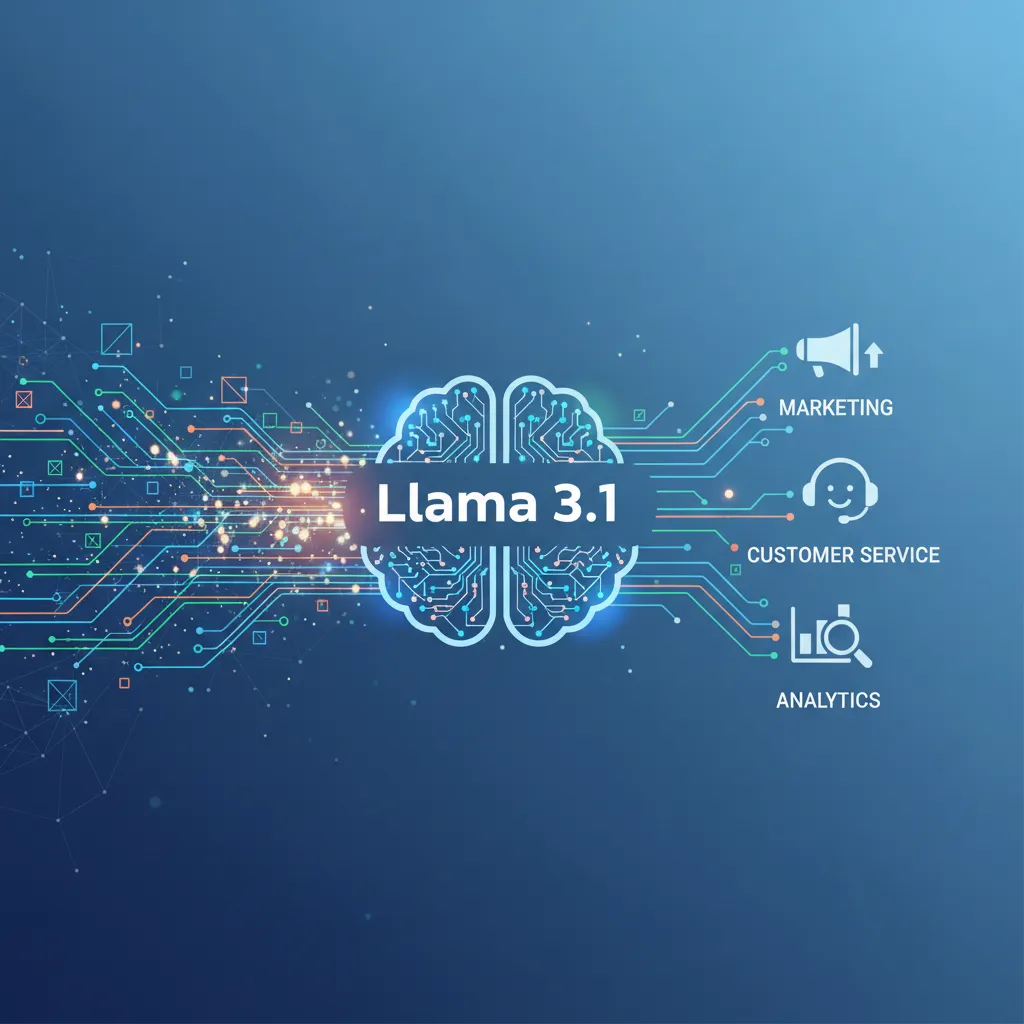
1. Supercharge Your Marketing and Content Creation
Content is king, but it’s also time-consuming. Llama 3.1 can act as a tireless marketing assistant.
- Blog Post & Article Generation: Provide an outline and key points, and the model can draft a well-structured article, saving hours of writing time.
- Social Media Management: Generate engaging captions, tweets, and LinkedIn posts tailored to different platforms and audiences.
- Email Marketing Campaigns: Draft compelling subject lines and personalized email copy to boost open rates and conversions.
- SEO Optimization: Brainstorm keywords, generate meta descriptions, and even create topic clusters to improve your search engine ranking. Related: The Future of Search and SEO with Google’s AI Overviews
2. Revolutionize Customer Support
Excellent customer service is a key differentiator for SMBs. Llama 3.1 can enhance your support without a massive headcount.
- Intelligent Chatbots: Deploy a 24/7 chatbot on your website that can answer common questions, guide users, and even handle initial troubleshooting steps.
- Ticket Summarization & Routing: Automatically summarize incoming support emails and tickets, identify the core issue, and route them to the right person.
- Sentiment Analysis: Analyze customer feedback from reviews, surveys, and support chats to gauge satisfaction and identify areas for improvement.
3. Unlock Business Intelligence from Your Data
Your business generates a mountain of data. Llama 3.1 can help you find the valuable signals within the noise.
- Review Analysis: Feed the model hundreds of customer reviews to extract common themes, feature requests, and points of friction.
- Market Research: Summarize long industry reports, competitor press releases, and financial news to stay ahead of market trends.
- Internal Document Search: Create a smart search engine for your company’s internal knowledge base, allowing employees to ask natural language questions and get precise answers.
4. Streamline Internal Operations
Efficiency is key to profitability. Llama 3.1 can automate countless administrative and operational tasks.
- Meeting Summaries: Transcribe and summarize audio from meetings, automatically identifying key decisions and action items.
- Report & Proposal Drafting: Generate initial drafts of business proposals, internal reports, or project updates based on a few bullet points.
- HR & Onboarding: Create an internal assistant to answer employee questions about company policies, benefits, and procedures. Related: AI-Powered Personalized Financial Planning for Everyone
A Developer’s Dream: Building the Future with Llama 3.1
While Llama 3.1 is a massive boon for business owners, it’s a paradise for developers. The open-source model provides a powerful, flexible foundation for building innovative applications AI without big tech gatekeepers.

The Freedom to Innovate Without Gatekeepers
For AI for solo developers and small teams, the freedom offered by Llama 3.1 is its most compelling feature.
- No API Restrictions: Developers are not bound by the rate limits, content filters, or sudden pricing changes of a proprietary API.
- Full Model Control: You can directly modify the model’s architecture, fine-tune it with unique datasets, and optimize it for specific hardware.
- Offline-First Applications: Because the models can run locally, developers can build applications that work entirely offline, a crucial feature for privacy-focused tools or applications used in areas with poor connectivity.
This level of control fosters an environment where AI innovation accessible to everyone, not just those with venture capital funding. Related: What is GPT-4o? The Ultimate Guide to Real-Time AI
From Cloud to Pocket: On-Device and Edge AI
The release of the highly optimized Llama 3.1 8B model is a significant leap for edge AI with Llama 3.1. This smaller model is efficient enough to run directly on laptops, high-end smartphones, and other edge devices.
This capability unlocks a new class of applications:
- Real-time AI Assistants: Imagine a personal assistant on your phone that processes your voice and data without ever sending it to the cloud.
- Smart IoT Devices: Home automation systems, smart cameras, and industrial sensors that can perform complex analysis locally, reducing latency and bandwidth usage.
- Enhanced App Features: Mobile app developers can integrate sophisticated language features directly into their apps for summarization, translation, and content generation without relying on an internet connection.
Getting Started: Llama 3.1 Implementation and API Access
For developers eager to start building with Llama 3.1, the ecosystem is already mature and welcoming.
- Hugging Face: The central hub for the open-source AI community. Here, you can find the Llama 3.1 models, documentation, and a vast library of tools and fine-tuned variations.
- Cloud Platforms: Major cloud providers like AWS, Google Cloud, and Azure offer easy ways to deploy and scale Llama 3.1 models.
- Managed API Providers: Companies like Replicate, Anyscale, and Fireworks.ai provide managed endpoints, giving you the ease of use of a traditional Llama 3.1 API access without building the infrastructure yourself.
- Local Execution: Tools like Ollama and LM Studio make it incredibly simple to download and run Llama 3.1 on your local machine for testing and development.
There are countless Llama 3.1 tutorials emerging, making it easier than ever for developers of all skill levels to get started.
The Power of Community: The Ecosystem Fueling Llama 3.1’s Growth
A piece of open-source software is only as strong as its community, and the ecosystem around Llama 3.1 is one of its greatest assets. It’s a global network of researchers, engineers, and hobbyists all working to push the boundaries of what’s possible.
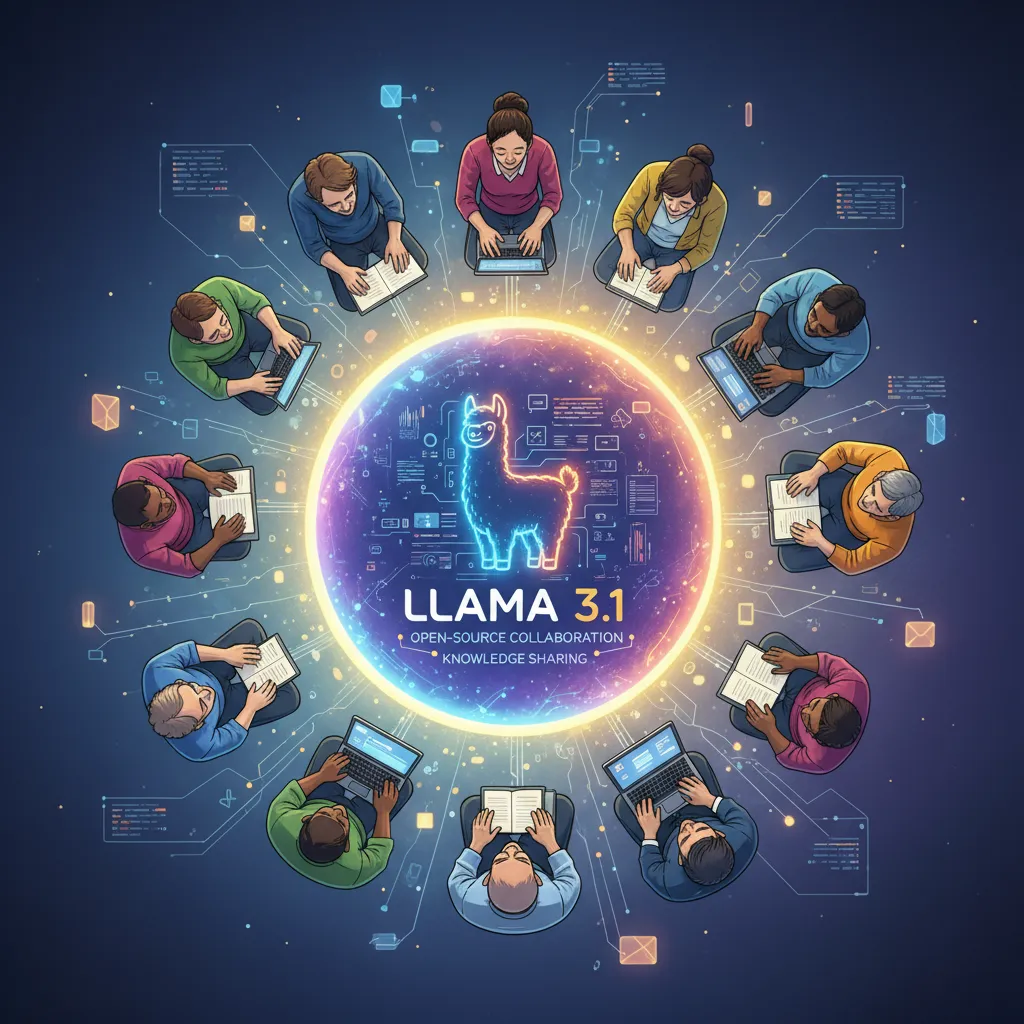
This collaborative spirit leads to:
- Rapid Innovation: The community constantly releases new fine-tuned models specialized for tasks like coding, creative writing, or scientific research.
- Shared Knowledge: Problems are solved faster, and best practices are shared openly on forums, Discord servers, and GitHub.
- A Rich Toolbox: An entire ecosystem of supporting tools for deployment, monitoring, and fine-tuning has sprung up, built by the community, for the community.
Conclusion: The Future is Open, and Your Journey Starts Now
Meta’s Llama 3.1 isn’t just a new product; it’s a declaration that the future of AI will be more open, accessible, and distributed. It dismantles the idea that cutting-edge AI is the exclusive domain of a few well-funded corporations.
For small businesses, it’s a powerful and affordable AI solution that offers a pathway to increased efficiency, better customer engagement, and a genuine competitive advantage. For developers, it’s an invitation to build, create, and innovate without limits. The era of being locked into a single provider’s ecosystem is giving way to a new age of choice, control, and community.
The journey of open source LLM adoption is just beginning. By embracing tools like Llama 3.1, you’re not just adopting a new technology; you’re joining a movement that is fundamentally reshaping our digital world. Explore the resources, start experimenting, and discover how this open-source AI revolution can empower you.
Frequently Asked Questions (FAQs)
Q1. What is Llama 3.1?
Llama 3.1 is the latest generation of open-source large language models (LLMs) developed by Meta. It includes a family of models of different sizes (8B, 70B, and 405B parameters) that are designed for a wide range of tasks, from simple on-device functions to complex, large-scale reasoning. Its open-source nature makes it a popular and cost-effective enterprise alternative.
Q2. Is Llama 3.1 free for commercial use?
Yes, the Llama 3.1 models are available for both research and commercial use, subject to Meta’s license agreement. This allows startups, small businesses, and developers to build and deploy applications using the models without paying licensing fees, making it a highly attractive, cost-effective AI solution.
Q3. How can a small business start using Llama 3.1?
A small business can start by identifying a specific pain point, such as customer support or content creation. They can then explore managed hosting providers that offer easy Llama 3.1 API access, or if they have technical resources, they can self-host the model on their own cloud infrastructure. Starting with a smaller model like the 8B or 70B for a specific use case is a great way to begin.
Q4. Can Llama 3.1 run locally on my computer?
Yes, one of the key Llama 3.1 benefits is that its smaller models, particularly the 8B version, are optimized to run on local hardware like modern laptops and desktops. This is ideal for developers and users who prioritize data privacy Llama 3.1 and want to experiment with or build applications that function entirely offline.
Q5. What’s the main advantage of Llama 3.1 over proprietary models like GPT-4o?
The main advantages are cost, control, and privacy. As an open-source model, Llama 3.1 can be self-hosted to eliminate ongoing API fees. It offers deep customization through fine-tuning on private data. Most importantly, it allows businesses to maintain full control over their data by running the model in their own secure environment, a crucial feature that proprietary cloud-based models cannot offer.
Q6. Do I need to be a programmer to use Llama 3.1?
While direct implementation and fine-tuning require technical expertise, a growing number of user-friendly platforms and services are being built on top of Llama 3.1. These tools offer no-code or low-code interfaces, allowing non-programmers in small businesses to leverage its power for tasks like content generation or data analysis without writing a single line of code.
Q7. How does the Llama 3.1 community help users?
The Llama 3.1 community is a vibrant ecosystem of developers and researchers who actively share knowledge, create tutorials, and build helpful tools. This collaborative environment accelerates problem-solving and innovation, providing a valuable support network for anyone from solo developers to businesses looking to implement the technology.