AI Pin: The Future of Tech or a Total Flop?
Introduction: The Screenless Dream Meets Harsh Reality
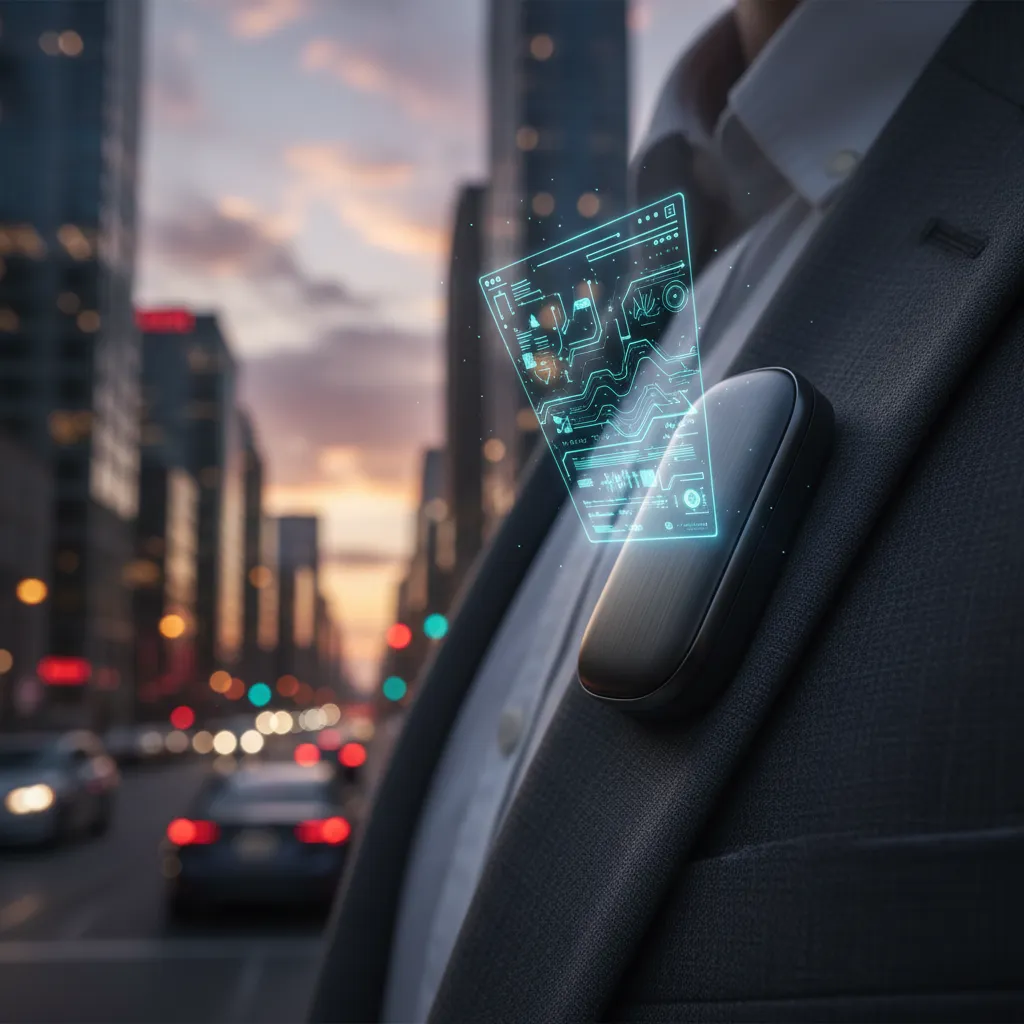
For years, the technology world has been waiting for the “post-smartphone” era. That moment when our primary connection to the digital world moves beyond the glass rectangle we clutch constantly. Humane, a company founded by former Apple executives, promised to deliver that future with the launch of the Humane AI Pin. Billed as an on-body AI computer and the ultimate screenless device, it captured the imagination of everyone interested in wearable AI and ambient computing.
The premise was intoxicating: a small, stylish magnetic pin that could act as a wearable personal assistant, leveraging sophisticated AI (including OpenAI integration) to manage your life via voice, gestures, and a novel projection system. It was designed to free us from the tyranny of notifications and endless scrolling, ushering in the age of interaction without distraction.
However, the reality of the AI Pin’s launch in 2024 has been, to put it mildly, mixed. The initial reviews—including the widely publicized and highly critical MKBHD Humane Pin review—slammed the device for its performance, battery life, and high cost. So, where does this leave us? Is the AI Pin a groundbreaking harbinger of the future of mobile, or just an ambitious, expensive gadget that proved to be a total flop?
This article dives deep into the technology, the hype, the criticism, and the significance of the Humane AI Pin, determining what lessons this polarizing device holds for the next generation devices in AI hardware.
The Vision: Defining the Humane AI Pin and Screenless Computing
Before dissecting its failures, it’s crucial to understand the grand vision behind the Humane AI Pin. This wasn’t just another smartwatch; it was a radical re-imagining of personal computing.
The core intent was to shift interaction from tapping and scrolling to speaking and gesturing. This move toward voice-activated AI defines the Pin’s functionality. Unlike a smartphone, which is application-based, the AI Pin is intent-based. You don’t open a weather app; you simply ask the Pin, “What’s the weather?” and it uses its integrated AI stack to deliver the answer seamlessly.
Core Technology and Features of the AI Pin
The hardware itself is a marvel of miniaturization and innovative engineering, supporting the concept of an advanced AI assistant device.
1. The Laser Ink Display (The Projection System)
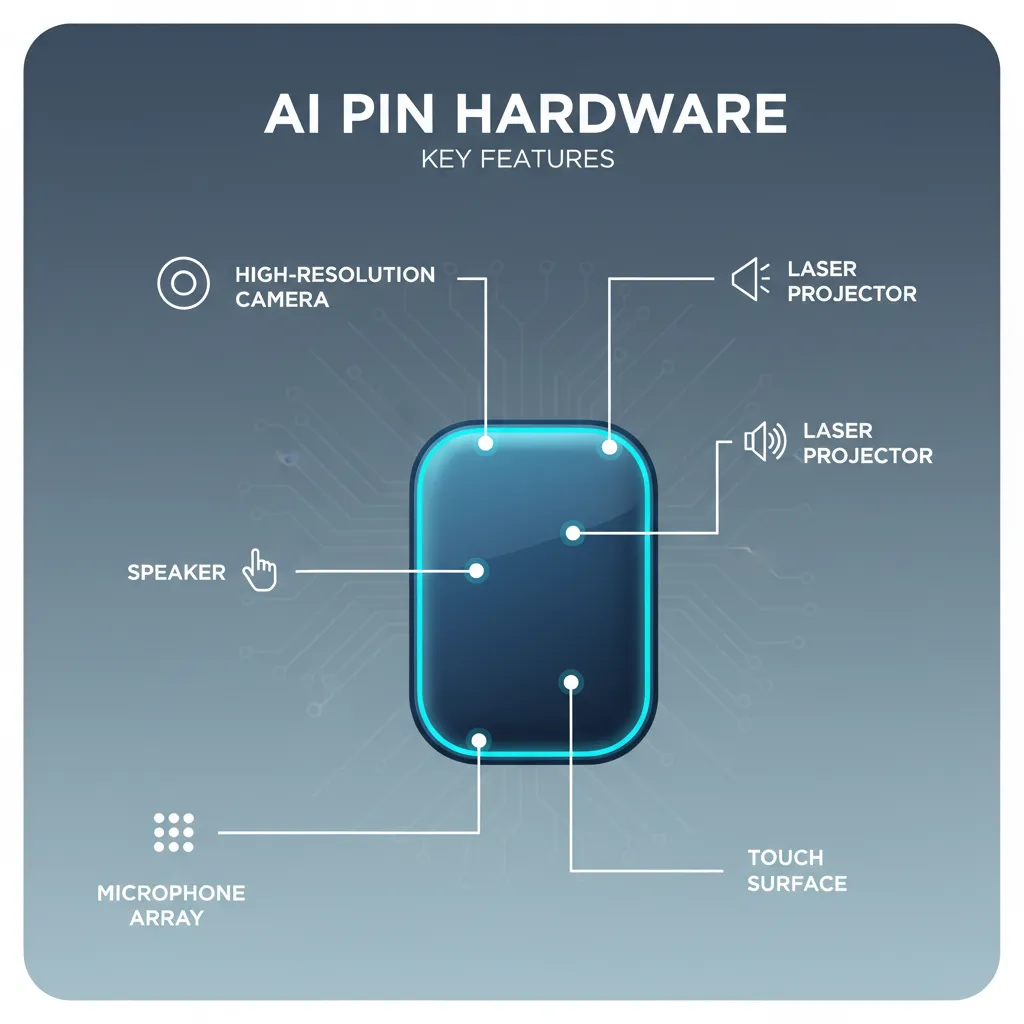
Perhaps the most unique feature is the integrated projector, which Humane calls the laser ink display. This system projects a monochromatic green interface onto the palm of the user’s hand. The user can then interact with this projected interface using specific hand gestures, like tilting the hand to scroll or pinching to select. This was the physical embodiment of the screenless device philosophy.
2. AI and Operating System (Cosmos)
The Pin runs on its own operating system, Cosmos, which is designed to contextually route user queries to the most appropriate AI models or services. This is where the integration with large language models, including models from OpenAI, comes into play, enabling advanced conversational abilities, complex search queries, and real-time translation—a core element of the AI-powered gadgets wave.
3. Power and Connectivity
The device uses a Qualcomm Snapdragon processor and is designed to operate completely independently of a smartphone, utilizing its own cellular connection. It is magnetically attached to clothing, featuring a camera for computer vision tasks and microphones for constant listening (with a trust light indicator for privacy).
🖼️ Image Placement: Breakdown of Features
The Reality Check: Early Reviews and the Flop Factor
The excitement surrounding the AI Pin quickly turned into confusion and widespread disappointment following its public release. While the underlying vision was sound, the execution stumbled across fundamental technical hurdles.
Performance: Sluggish Speed and Inaccurate Responses
The single biggest criticism levied by tech reviewers and early adopters was the performance. In practice, the Pin was slow. Asking a question often involved a delay of several seconds before a response was generated. This lag fundamentally undermined the premise of an instant, ambient computing device. If a user can pull out their smartphone, unlock it, and Google the answer faster than the Pin can respond, the Pin has failed its core purpose.
Reviewers noted that the AI often struggled with basic, contextual tasks and provided factually incorrect information. This highlighted the reliance on large language models and the difficulty of making those models fast, accurate, and reliably integrated into a real-time, wearable technology device.
The Cost Barrier: Humane AI Pin Price and Subscription
The investment required to own the device became a major point of friction, leading many to question, “is the Humane AI Pin worth it?”
- High Upfront Cost: The Humane AI Pin price starts at $699.
- Mandatory Subscription: Crucially, the Pin requires a mandatory $24 per month subscription (the Humane Pin subscription cost) for cellular connectivity and access to the necessary AI services. Without this, the device is essentially a non-functional piece of hardware.
This combination meant a user was committing to over $1,000 in costs within the first year, a steep price for a device that couldn’t reliably replace essential smartphone functions.
[Related: https://hyperdaily.one/blog/mastering-ai-workflow-productivity-automation/]
Battery and Privacy Concerns
Battery life was another significant practical issue. The device struggled to last a full day of typical usage, often requiring supplementary power packs. Furthermore, while Humane implemented a “Trust Light”—a physical indicator that illuminates when the camera or microphone is active—the continuous presence of an on-body AI computer naturally raises questions about data privacy wearables and continuous surveillance, even if data is anonymized.
AI Pin vs. Smartphone: A True Alternative or a Companion?
The central conflict in the AI Pin narrative is its perceived positioning against the entrenched smartphone alternatives. Humane intended for the Pin to be a minimalist replacement, encouraging users to live in the moment. However, current limitations forced a difficult comparison.
| Feature | Humane AI Pin | Modern Smartphone | Verdict |
|---|---|---|---|
| Primary Interaction | Voice, gesture, projection | Touch, visual screen | Smartphone wins on speed/accuracy. |
| Core Functionality | AI summaries, real-time translation, context | Communication, navigation, apps, entertainment | Smartphone provides far greater utility. |
| Interface | Laser ink display (low resolution, green) | High-resolution OLED/LCD | Smartphone dominates visual fidelity. |
| Connectivity | Standalone cellular (via $24/mo sub) | Standalone or Wi-Fi | Smartphone is flexible, often lower long-term cost. |
| App Ecosystem | None (intent-based) | Vast, mature ecosystem | Smartphone offers unlimited potential. |
The Chasm in Utility
While the AI Pin excels at novel tasks—like instantly identifying a product or summarizing your inbox via voice—it utterly fails at the mundane but essential tasks we rely on the smartphone for: detailed navigation, complex multi-app workflows, high-quality photography, and visual entertainment.
The Pin struggled to reliably text specific contacts or make simple calls, functions that are automatic on any modern phone. This vast chasm in basic utility confirms that the Pin, in its V1 state, could not be a smartphone replacement. It was, at best, a highly specialized, expensive AI-powered gadget companion.
The Competition: AI Pin vs. Rabbit R1
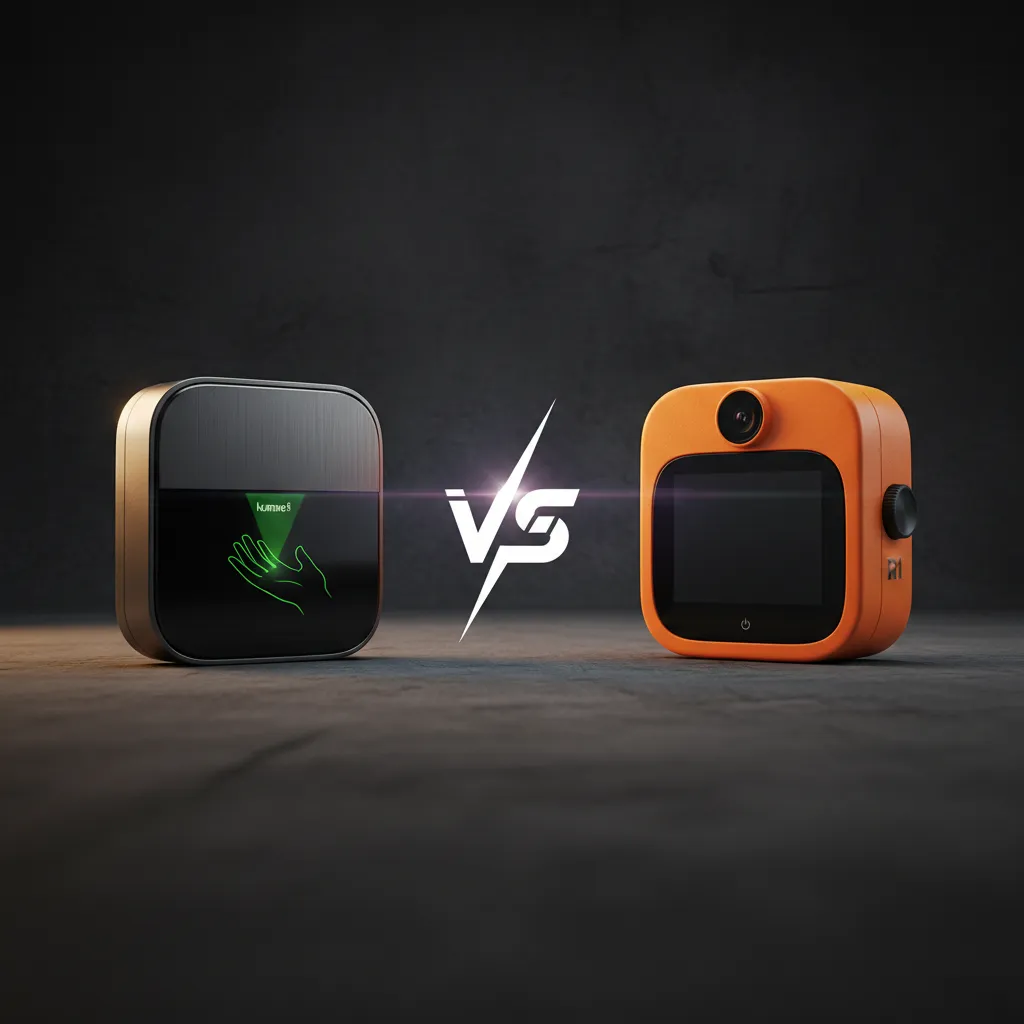
The AI Pin wasn’t the only device launching in the new wearable AI category in 2024. The Rabbit R1, a striking orange handheld device with a physical scroll wheel and camera, also sought to define the future of screenless computing (or at least, less-screen computing). Comparing the two reveals different philosophies in how to solve the problem of digital interaction.
🖼️ Image Placement: Comparison of AI Devices
Philosophical Differences in AI Assistant Devices
The Rabbit R1 review generally positioned it as a more focused, practical device, albeit one still in its early stages.
The Humane AI Pin Approach: Ambient and Personal
The Pin is all about being ambient. It’s always on, always listening (when activated), and meant to blend into your life. Its strength lies in context—understanding where you are and what you are doing (e.g., summarizing an immediate conversation). It uses classic LLMs and a minimalist UI, focused on minimizing screen time entirely.
The Rabbit R1 Approach: Action and Automation
The Rabbit R1 operates on a Large Action Model (LAM). Its goal is not just to answer questions, but to do things on your behalf. For example, instead of asking where to buy tickets, you tell the R1 to “buy me two tickets to the movie.” The LAM learns how to interact with existing apps and services (like Uber or DoorDash) to perform complex tasks, potentially offering a more pragmatic bridge to a future where AI handles tedious digital chores.
While both devices are experimental tech gadgets 2024, the R1’s lower cost and focused “action” philosophy made it seem less risky than the AI Pin’s high-cost, high-ambition on-body AI computer model. Both, however, are critical steps in defining the market for smartphone alternatives.
The Hard Lessons: Why the AI Pin Flopped (For Now)
The critical reception to the AI Pin was less a judgment on the idea and more a judgment on the execution. Humane attempted a massive technological leap without mastering the foundational elements needed for a consumer-ready device.
1. The Performance Paradox
The fundamental issue was the speed versus the promise. An ambient computing device must be instantly responsive. The multi-second delay for basic tasks meant the Pin failed the “convenience test.” In the realm of voice-activated AI, speed is paramount to user satisfaction.
2. Over-Reliance on Novelty
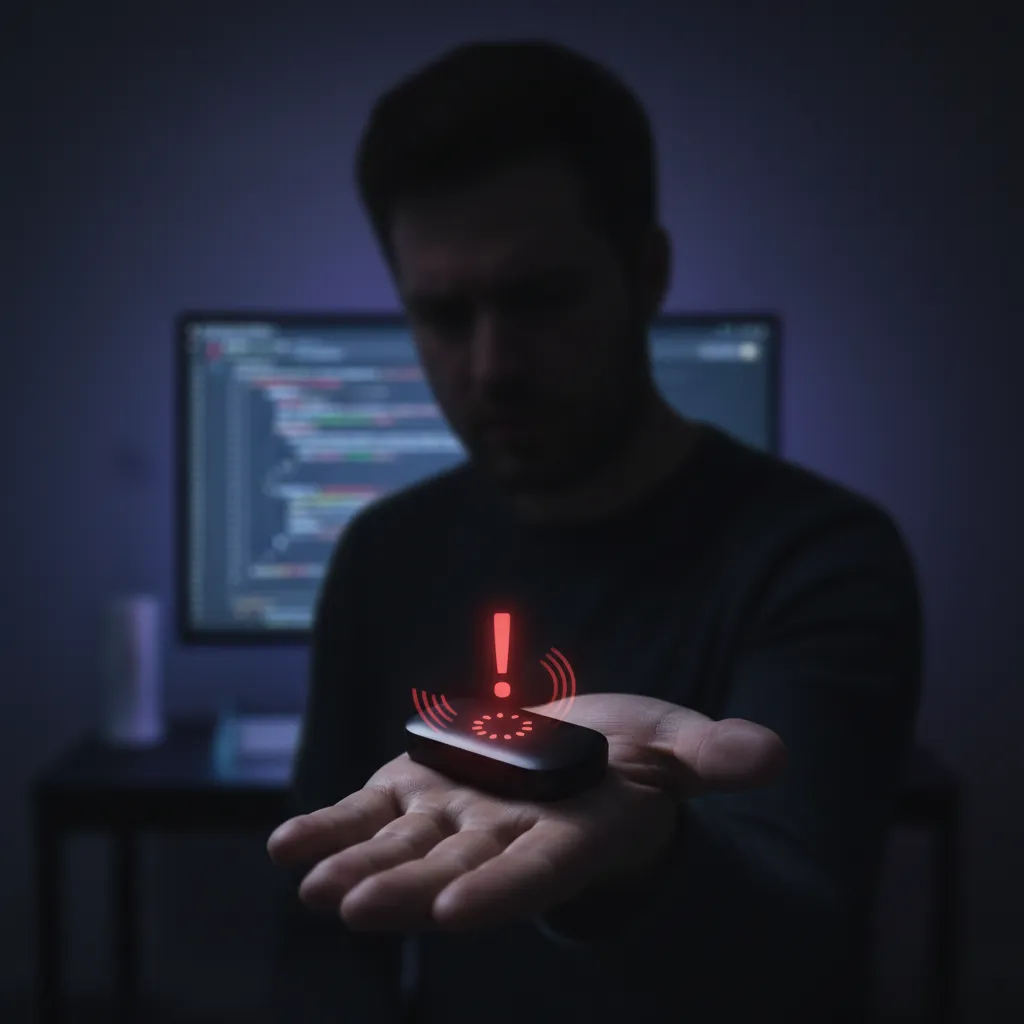
The laser ink display was groundbreaking and futuristic, but impractical. Its low brightness made it unusable in strong sunlight, and the required gestures were often awkward or failed to register correctly, turning the projected screen from a feature into a frustration. This is a classic trap for next generation devices: prioritizing coolness over usability.
🖼️ Image Placement: User Frustration
3. Pricing and Value Proposition
Charging a high upfront cost plus a mandatory, recurring subscription for a device that performed poorly created a devastatingly low value proposition. Users were not only asking “is the Humane AI Pin worth it?” but questioning the business model entirely. The market is willing to pay a premium for revolutionary technology, but not for beta-level performance.
[Related: https://hyperdaily.one/blog/edge-ai-explained-powering-smart-devices-real-time-intelligence/]
The Enduring Significance: The Future of Wearable AI
Despite its V1 failures, the AI Pin is far from irrelevant. In fact, it might be one of the most important technological releases of the decade because it successfully mapped the territory for the future of screenless computing. The Pin established a few undeniable truths for the next wave of AI hardware:
1. The Power of Intent-Based AI
The Pin proved that people want to interact with technology by simply stating their intent, without navigating app layers. Future devices—whether smart rings, glasses, or refined pins—will adopt this model, moving away from app grids toward a unified, AI assistant device. The failure was in the latency, not the concept.
2. The Critical Role of Context
Humane pioneered the concept of an on-body AI computer that uses its camera and microphones to understand the context of the user’s real-world environment. This ambient computing capability—identifying food, translating signs in real-time, or summarizing a document placed in front of it—is a necessary feature for future wearable AI.
3. AI Hardware is Hard
The Pin serves as a powerful reminder that integrating large, complex AI models into compact, low-power, real-time hardware is immensely challenging. Success requires bespoke hardware and software optimization, likely leveraging advanced edge AI techniques to minimize cloud latency. The future of reliable AI wearable technology depends on solving these fundamental engineering problems.
[Related: https://hyperdaily.one/blog/the-quantum-ai-revolution-unprecedented-computing-power/]
The AI Pin might be a commercial flop, but it’s a technological necessity. Every major paradigm shift—from the Newton to early smartwatches—has had ambitious, expensive failures that paved the way for successful V2 and V3 products. Humane bravely demonstrated how not to execute the post-smartphone world, providing invaluable data for giants like Apple, Google, and Samsung as they develop their own next generation devices.
The Road Ahead: What Comes After the AI Pin?
The market for smartphone alternatives is only just beginning. The lessons learned from the Humane AI Pin review and the concurrent launch of the Rabbit R1 suggest that the future of personal tech will be fractured and specialized.
We are likely to see four key developments in the coming years:
- Invisible Integration: Focus will shift to truly invisible, seamless devices—potentially smart glasses or ear buds that handle voice and context better than a chest-mounted pin. The need for a dedicated, separate AI hardware item will diminish if major smartphone manufacturers can integrate the AI assistant functions directly into existing wearables.
- Specialization over Generalization: Future AI assistant device iterations may target highly specific use cases (e.g., travel assistance, health monitoring, or industrial support) rather than trying to replace the universal utility of the smartphone.
- Faster, Local AI: To solve the latency problem, the next generation of AI-powered gadgets will utilize powerful, energy-efficient chips capable of running large segments of the AI model locally, eliminating the reliance on a slow cloud connection for every request.
- Redefined Interfaces: While the laser ink display was novel, future interfaces may rely on refined haptics, nuanced audio cues, or highly transparent augmented reality overlays that integrate seamlessly into the real world, avoiding the awkwardness of projecting onto a human body part.
The AI Pin failed to launch the post-smartphone era, but it successfully defined the parameters of the race. It proved that the user intent is there, but the technology is not yet mature enough to deliver on the promise of true, instant, ambient computing. For now, the smartphone remains the king, but the clock is officially ticking.
🖼️ Image Placement: The Future of Wearable AI

Conclusion: An Essential Failure for Progress
The question remains: AI Pin: The Future of Tech or a Total Flop?
The truthful answer is: it was a total flop commercially and functionally, yet an absolutely essential stepping stone for the future of tech.
Humane attempted an ambitious V1 product that solved a non-existent latency problem with existing cloud AI. The high Humane AI Pin price combined with the mandatory Humane Pin subscription cost for a device that couldn’t reliably perform basic functions sealed its fate in the short term. The critical early reviews, epitomized by the severity of the MKBHD Humane Pin review, accurately reflected the gap between the vision and the reality.
However, the Pin succeeded in articulating the roadmap for the screenless device revolution. It was the first widely known, dedicated on-body AI computer to attempt to unify real-time camera vision, voice interaction, and LLM intelligence into a single, cohesive, wearable AI experience. Future successful smartphone alternatives will owe a debt to the technological risks taken by Humane.
For consumers interested in next generation devices, the takeaway is simple: wait for V2. The dream of ambient computing is real, but the technology needs time to catch up to the vision.
[Related: https://hyperdaily.one/blog/ethical-ai-content-creation-navigating-bias-trust/]
FAQs
Q1. What is the Humane AI Pin?
The Humane AI Pin is a wearable AI device and screenless device launched in 2024. It is designed to be a standalone, on-body AI computer that utilizes voice-activated AI and a built-in projector (laser ink display) to interact with the user, aiming to replace or heavily supplement the traditional smartphone for many daily tasks.
Q2. How much does the Humane AI Pin cost?
The Humane AI Pin price starts at $699 for the device itself. Crucially, it requires a mandatory monthly subscription of $24 (the Humane Pin subscription cost) to function, which covers cellular connectivity and access to the necessary AI services powered by OpenAI integration and others.
Q3. Was the Humane AI Pin considered a success?
Based on sales and widespread technical reviews, including the highly critical MKBHD Humane Pin review, the device was largely considered a commercial and functional flop upon release. Key issues cited were slow performance, poor battery life, unreliable AI responses, and a high cost combined with a mandatory subscription.
Q4. What is the main difference between the AI Pin and the Rabbit R1?
Both are AI assistant devices and smartphone alternatives, but they differ in approach. The Humane AI Pin focuses on ambient, constant voice-activated computing and uses a projection interface. The Rabbit R1 is a handheld device focused on using a Large Action Model (LAM) to execute complex, multi-step actions on the user’s behalf across existing apps, rather than attempting to be a fully screenless device.
Q5. What is the ‘laser ink display’ on the AI Pin?
The laser ink display is the Pin’s proprietary projection system. It uses a low-power laser to project a monochromatic green interface directly onto the user’s palm, allowing for basic navigation and information display via hand gestures.
Q6. Is the AI Pin a true replacement for a smartphone?
No. Despite being marketed as a potential disruptor in the future of mobile, the V1 AI Pin lacked the reliability, speed, and wide-ranging utility (navigation, complex messaging, robust apps) needed to function as a viable replacement for the traditional smartphone. It currently serves as an experimental AI-powered gadget.
Q7. What is ambient computing and how does the AI Pin relate to it?
Ambient computing refers to a system where technology seamlessly integrates into the environment, responding to user needs contextually and non-intrusively. The AI Pin embodies this concept by being always on, using voice and context (via its camera and microphones) to provide information without needing an explicit interaction like opening an app—it aims to be part of the environment rather than a dedicated tool.