Haptic AI: Feeling the Future of Immersive Digital Experiences

Remember the first time your game controller rumbled when you crashed a car, or your phone buzzed with a notification? That simple vibration was your introduction to haptics—the science of touch. For decades, this feedback has been a simple, pre-programmed affair. But we’re now on the cusp of a sensory revolution, powered by the fusion of advanced touch technology and artificial intelligence. This is the world of Haptic AI.
Imagine not just seeing a virtual world, but feeling it. Picture yourself walking through a digital forest and feeling the rough bark of a tree, the gentle press of a leaf, and the cool mist from a waterfall on your skin. This is no longer science fiction. Haptic AI is transforming our passive digital interactions into deeply immersive, tangible experiences.
In this comprehensive guide, we’ll explore the groundbreaking world of AI haptics. We’ll break down how this technology works, dive into its revolutionary applications in gaming, VR, and medicine, and look ahead to the future of touch technology, where feeling becomes as integral to the digital realm as seeing and hearing. Get ready to learn how we are simulating touch digitally in ways we never thought possible.
From Simple Buzz to Complex Sensations: The Evolution of Haptics
Before we can appreciate the “AI” in Haptic AI, we need to understand the foundation: haptic feedback technology. At its core, haptics is any form of interaction involving the sense of touch. In technology, it’s about recreating the sensation of touch through vibrations, forces, or motions.
For a long time, this was dominated by two main types:
- Vibrotactile Feedback: This is the most common form, found in your smartphone and gaming controllers. It uses tiny motors to create vibrations. While effective for alerts and basic effects, it’s a blunt instrument. It can tell you that something happened, but not what it feels like.
- Force Feedback: More advanced, this technology applies opposing force to the user. Think of a high-end racing wheel that pushes against you as you turn a corner, simulating the resistance of the car’s tires on the road. It provides a sense of weight, resistance, and impact.
These traditional systems are limited because they rely on pre-programmed effects. A developer has to manually decide: “When this event happens, trigger this specific vibration.” It’s a one-size-fits-all approach that lacks nuance and adaptability. This is precisely where AI changes the game.
The AI Difference: Creating Dynamic, Real-Time Haptic Experiences
Haptic AI takes the raw potential of touch technology and makes it intelligent. Instead of relying on a library of pre-set rumbles, AI-driven haptic interfaces can analyze a digital environment in real-time and generate complex, nuanced tactile sensations on the fly. This is the leap from a simple buzz to a rich tapestry of textures, temperatures, and pressures.
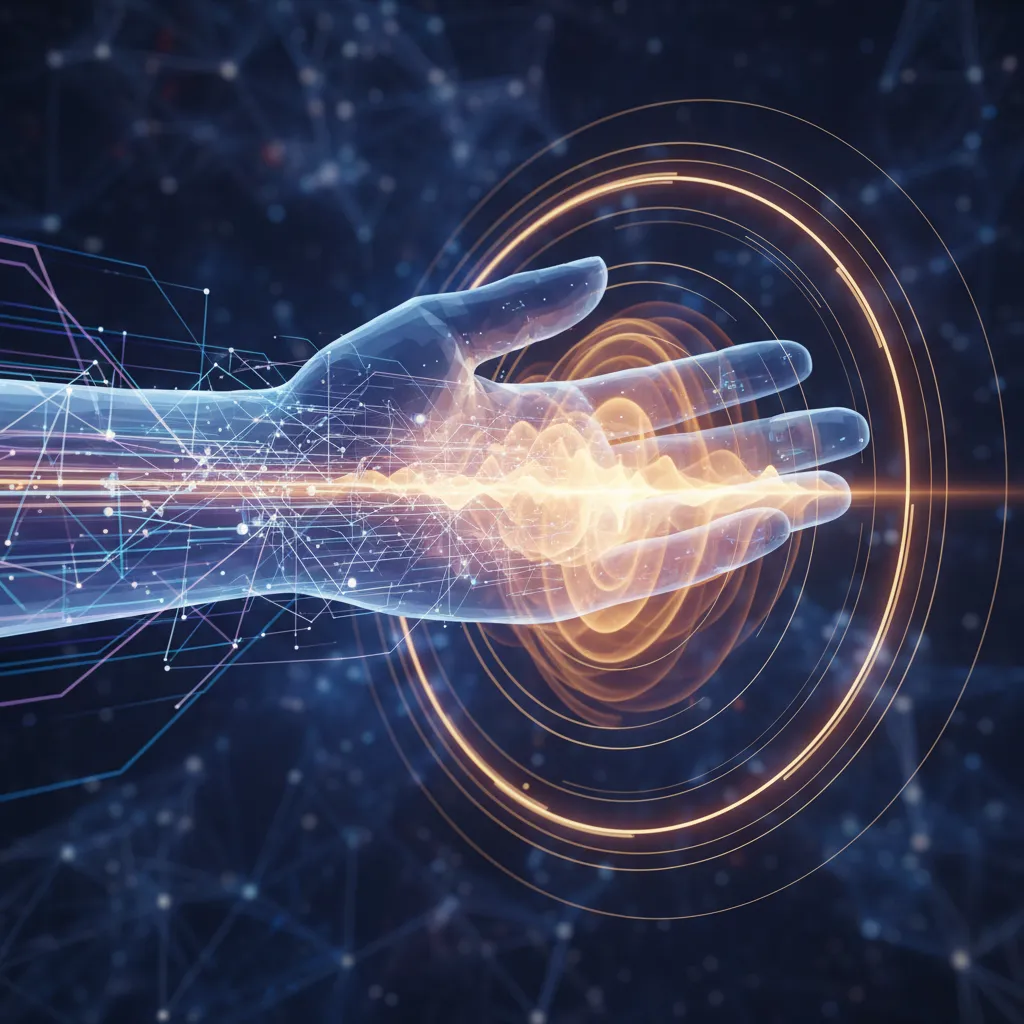
So, how does it work? An AI model, often a sophisticated neural network, processes multiple data streams simultaneously:
- Visual Data: What does the object or surface look like in the virtual environment? Is it wood, stone, water, or fabric?
- Audio Data: What sound is associated with the interaction? The crunch of snow, the splash of water, the thud of an impact.
- Physics Engine Data: How are objects interacting? What is the velocity, force, and direction of a collision?
- User Data: How is the user interacting with the object? Are they pressing lightly, gripping firmly, or swiping quickly?
The AI processes this information and instantly translates it into a precise set of instructions for the haptic hardware. This allows for personalized haptic feedback that feels unique and responsive to every single action. The result is a truly believable sense of touch, making interactive haptic experiences more compelling and realistic than ever before. This is the essence of real-time haptic AI.
Revolutionizing Entertainment: Haptic AI in Gaming, VR, and AR
Nowhere is the potential of Haptic AI more immediately exciting than in the world of entertainment. For decades, game developers have strived to create immersive experiences, and realistic touch is the final frontier.
Beyond the Rumble: Next-Gen Gaming Haptics
The simple controller rumble is evolving. With AI in gaming haptics, the experience becomes profoundly more detailed. Imagine playing an adventure game where you can feel:
- The subtle difference between walking on gravel, sand, or mud.
- The tension of a bowstring as you draw it back.
- The distinct impact of raindrops versus hailstones on your character.
- The gritty texture of a crumbling stone wall as you climb it.
This level of detail is made possible by advanced haptic systems integrated into controllers, vests, and even full-body gaming haptic suits. These devices contain dozens or even hundreds of individual actuators. The AI acts as the conductor, orchestrating these actuators to create a symphony of sensation that perfectly matches the on-screen action. This technology is key to feeling virtual worlds in a way that truly suspends disbelief.
Related: Google AI Overviews: The New Era of Search (SGE)
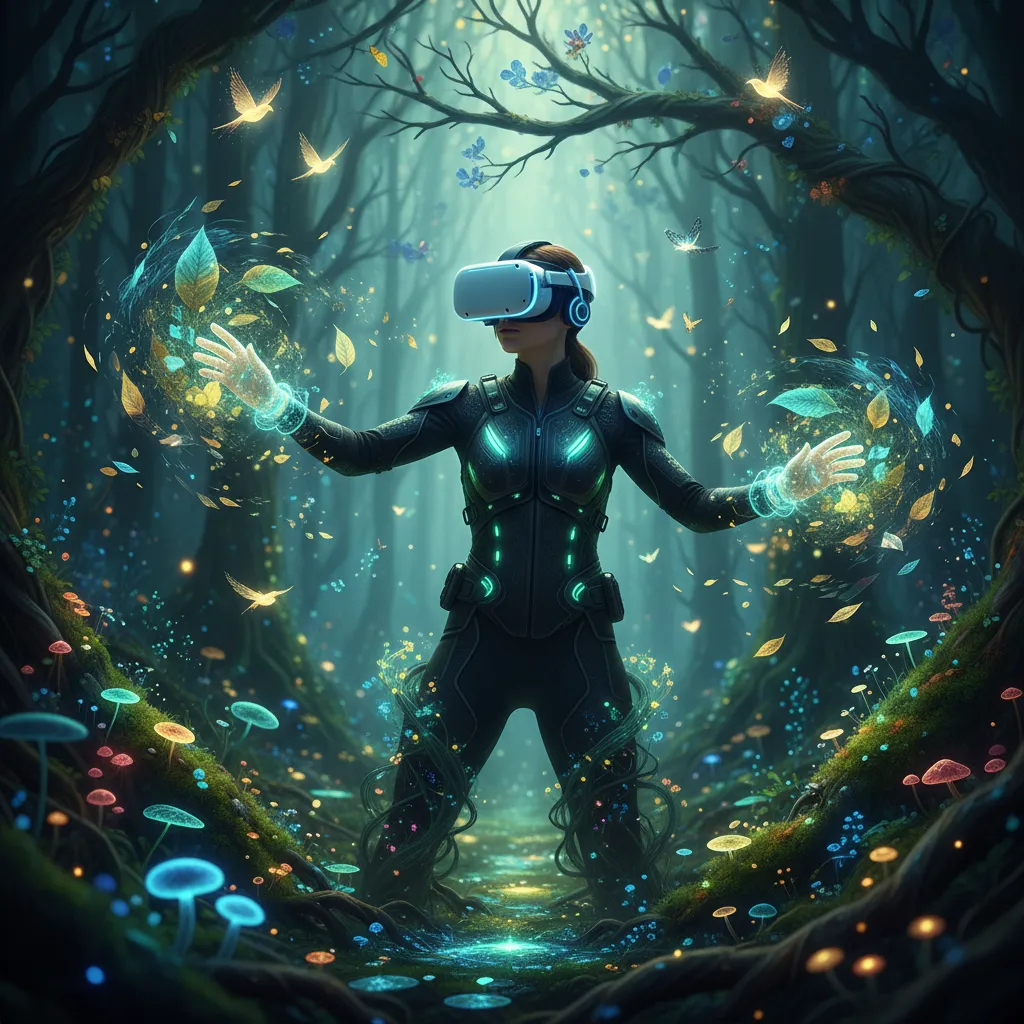
Feeling Virtual Worlds: The Soul of VR and AR
For virtual reality haptics and augmented reality haptics, believable touch isn’t just a feature—it’s essential. Without it, even the most visually stunning VR world feels hollow and disconnected. Haptic AI bridges this gap between the virtual and the physical.
The development of next-gen haptic devices like haptic gloves VR is central to this revolution. These gloves are designed not just to track your hand movements, but to provide detailed feedback to your fingertips.
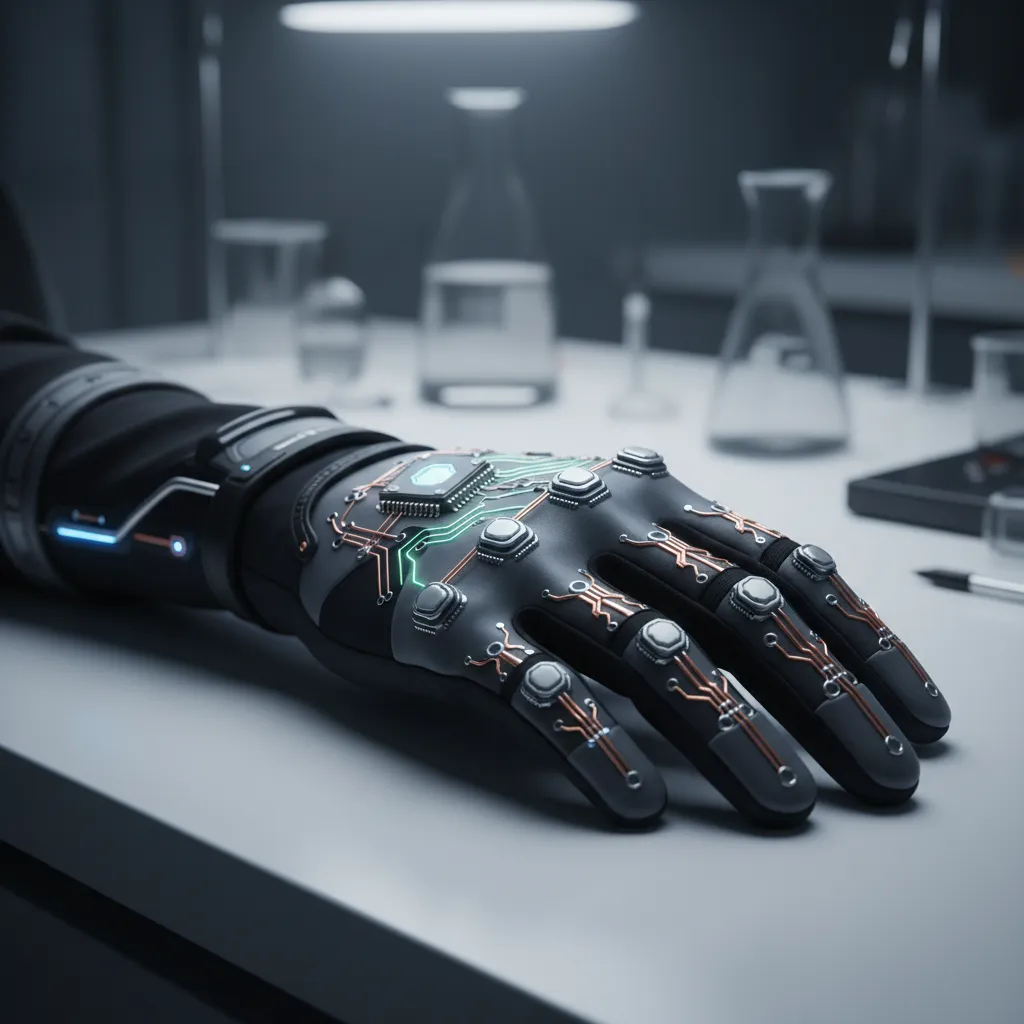
With AI for tactile feedback powering these gloves, you could:
- Pick up a virtual teacup and feel its delicate, smooth surface and fragility.
- Press a virtual button and feel the satisfying click of its activation.
- Run your hand through virtual water and feel the fluid resistance against your fingers.
This haptic feedback innovation makes virtual interactions intuitive and tangible, which is crucial for everything from VR games to complex training simulations. It’s a core component of the broader immersive tech haptics movement.
More Than Fun and Games: Groundbreaking Applications of Haptic AI
While entertainment is a major driver, the impact of Haptic AI extends far beyond the living room. Its ability to convey complex information through touch is creating new possibilities in medicine, communication, and everyday technology.
Transforming Healthcare and Medicine
The medical field is one of the most promising arenas for medical haptic applications.
- Surgical Training: Medical students can practice complex procedures on virtual patients and receive realistic haptic feedback. They can feel the difference between various tissue types, the resistance of a suture, or the precise pressure needed for an incision, all without risking a real patient.
- Remote Surgery (Tele-robotics): Surgeons can control robotic arms from thousands of miles away, feeling the resistance and texture of the patient’s tissue as if they were in the same room. This could bring expert surgical care to remote and underserved areas.
- Rehabilitation and Prosthetics: Haptic AI can provide sensory feedback to prosthetic limbs, allowing users to “feel” the objects they are holding. This can dramatically improve dexterity and create a more natural sense of embodiment. It’s also used in physical therapy to guide patients through exercises with gentle, tactile cues.
Related: AI Medical Marvel: Early Disease Detection & Personalized Treatment
The Future of Communication and Social Connection
Touch is a fundamental part of human communication. Haptic AI is exploring ways to digitize this sense, leading to profound new forms of connection.
This is the realm of haptic communication. Imagine haptic wearables like bracelets or shirts that can transmit a sense of touch over the internet. You could send a comforting squeeze on the arm or a gentle pat on the back to a loved one across the globe. This could also evolve into emotional haptic feedback, where AI interprets the emotional tone of a message and translates it into a corresponding tactile sensation, adding a new layer of depth to digital conversations.
For individuals with visual or hearing impairments, haptics offers a powerful new channel for receiving information about their surroundings.
Related: AI is Revolutionizing Mental Wellness
Smarter Devices and the Tactile Internet
The concept of the Tactile Internet envisions a future where we can interact with digital information and remote environments through touch with near-zero latency. Haptic AI is the engine that will power this vision.

We’re already seeing early examples of this in:
- Automotive: Car dashboards with haptic buttons that “click” when you touch the screen, allowing drivers to keep their eyes on the road.
- Smart Home: Dials and sliders on a smart display that provide textured feedback, making them easier to control.
- E-commerce: In the future, you might be able to “feel” the texture of a sweater or the grain of a wooden table through a specialized haptic device before you buy it online.
These digital experiences haptic integrations will make our technology feel more intuitive, responsive, and seamlessly integrated into our physical world.
Related: Eco-Friendly Gadgets for Sustainable Living & Tech
Challenges on the Road to a Tangible Future
While the future of haptic technology is incredibly bright, several hurdles remain on the path to widespread adoption.
- Cost and Accessibility: High-fidelity haptic devices, especially full-body suits and advanced gloves, are currently very expensive, limiting them to enterprise and enthusiast markets.
- Hardware Miniaturization: For haptics to become ubiquitous in wearables like smartwatches and rings, the actuators and power sources need to become much smaller and more efficient without sacrificing quality.
- The “Uncanny Valley” of Touch: Just as with realistic graphics, there’s a point where unrealistic haptics can feel more jarring and immersion-breaking than no haptics at all. The AI models must be perfectly tuned to generate realistic haptics.
- Computational Power: Generating complex, real-time haptic AI feedback requires significant processing power, which can be a challenge for mobile and standalone devices like VR headsets.
- Standardization: There is currently no universal standard for haptic design. Creating a common language for developers to implement haptics across different platforms and devices will be crucial for growth.
Conclusion: The Dawn of the Sensory Internet
Haptic AI is not just an incremental improvement; it’s a paradigm shift in how we interact with the digital world. It’s the critical missing piece that elevates our AI and sensory experiences from a two-dimensional exchange of sight and sound to a fully three-dimensional, multi-sensory engagement. We are moving from simply observing digital content to physically participating in it.
From making feeling virtual worlds a tangible reality in gaming to enabling surgeons to perform remote operations with confidence, the applications are as vast as our imaginations. The journey has just begun, but the fusion of intelligent algorithms and advanced hardware promises a future where our digital lives are richer, more intuitive, and profoundly more human. The future of touch technology is here, and it feels incredible.
What application of Haptic AI are you most excited to experience? Share your thoughts in the comments below!
Frequently Asked Questions
Q1. What is the best example of haptic feedback?
A great modern example is the “HD Rumble” in Nintendo Switch Joy-Con controllers or the “Haptic Feedback” in Sony’s PlayStation 5 DualSense controller. These devices use advanced linear actuators to create highly detailed and nuanced vibrations, allowing players to feel the difference between walking on various surfaces or the tension of a bowstring.
Q2. What is the main purpose of haptics?
The main purpose of haptics is to engage the sense of touch to provide information and enhance a user’s experience with technology. It’s used to make digital interactions more intuitive, immersive, and realistic. In essence, it’s about simulating touch digitally to communicate information that can’t be conveyed through sight or sound alone.
Q3. How does AI improve haptic feedback?
AI improves haptic feedback by making it dynamic, responsive, and incredibly detailed. Instead of using pre-programmed vibrations, haptic AI analyzes a digital environment in real-time—including visuals, sounds, and physics—to generate appropriate tactile sensations on the fly. This allows for personalized haptic feedback that feels far more believable and immersive.
Q4. What is the difference between haptic and tactile?
While often used interchangeably, “tactile” refers specifically to the sensations detected by nerve endings in the skin (pressure, vibration, texture). “Haptic” is a broader term that encompasses both tactile sensations and kinesthetic feedback, which involves the feeling of force, motion, and body position. So, all tactile feedback is haptic, but not all haptic feedback is purely tactile.
Q5. What industries use haptic technology?
Haptic technology is used across a wide range of industries, including consumer electronics (smartphones, wearables), gaming and entertainment (VR/AR), automotive (dashboard interfaces, safety alerts), healthcare (medical haptic applications for surgical training and remote robotics), and aerospace (flight simulators).
Q6. Can you feel pain with haptic feedback?
Most consumer haptic systems are designed to simulate pressure, texture, and vibration, not to induce pain. However, advanced advanced haptic systems used in medical or military training simulations can generate strong force feedback to simulate impacts or resistance, but they include safety protocols to prevent actual harm. The goal is realistic simulation, not causing injury.