Gemini vs. ChatGPT: Which AI Assistant Reigns Supreme in 2024?
The world of artificial intelligence is no longer a distant sci-fi dream; it’s a dynamic, ever-present reality reshaping how we work, create, and live. At the forefront of this revolution are two titans: Google’s Gemini and OpenAI’s ChatGPT. The “Gemini vs. ChatGPT 2024” debate isn’t just a tech-enthusiast squabble; it’s a critical decision for anyone looking to leverage the best AI assistant for their professional and personal lives.
Just when we thought the landscape was settling, 2024 brought seismic shifts with the launch of OpenAI’s lightning-fast ChatGPT-4o and Google’s powerhouse Gemini 1.5 Pro. These advanced AI models have blurred the lines, making the choice more complex—and more exciting—than ever.
This comprehensive guide will dissect the AI model comparison from every angle. We’ll explore their core capabilities, user experiences, real-world applications, and the groundbreaking technology powering them. By the end, you’ll have a clear understanding of which of these professional AI tools is the right copilot for your specific needs, whether you’re a writer, developer, student, or business leader navigating the future of AI in business 2024.
The Contenders: A Quick Introduction
Before we dive deep, let’s get acquainted with our two main players. They may seem like simple chatbots on the surface, but they represent two distinct philosophies in the development of generative AI.
Google Gemini: The Multimodal Maverick
Gemini is Google’s answer to the generative AI boom, born from the company’s decades of research in language and search. It represents a fundamental rethinking of AI architecture. Unlike models that have vision and audio capabilities “bolted on,” Gemini was built from the ground up to be natively multimodal. This means it can seamlessly understand, process, and reason across text, code, images, audio, and video inputs simultaneously.
Its current flagship, Gemini 1.5 Pro, available through Gemini Advanced, boasts a staggering one-million-token context window. This allows it to analyze massive amounts of information—like entire codebases or hours of video—in a single prompt. Its true power lies in its deep, and ever-growing, integration with Google’s vast ecosystem of products like Workspace (Docs, Sheets, Gmail) and Android, positioning it as the ultimate personal AI assistant for those embedded in the Google universe.
OpenAI’s ChatGPT: The Trailblazing Titan
ChatGPT is the model that brought generative AI into the global consciousness. Developed by OpenAI, it set the standard for conversational AI with its remarkable fluency and reasoning capabilities. Its evolution has been rapid, moving from the capable GPT-3.5 to the powerful GPT-4, and now to the revolutionary GPT-4o (“omni”).
The latest ChatGPT updates 2024 have focused on speed, efficiency, and breaking down interaction barriers. GPT-4o is a single “omnimodal” model that unifies text, audio, and vision, allowing for incredibly fast, real-time conversations with emotional nuance and visual understanding. ChatGPT’s strengths remain its polished user experience, the expansive GPT Store with custom AI agents, and a robust API that has fueled thousands of applications, making it a cornerstone of the current AI technology impact. Related: GPT-4o Explained: All The New ‘Omni’ Model Features and How to Get Free Access
Head-to-Head Comparison: Core Capabilities in 2024
Now for the main event. Let’s pit these AI language models against each other across the most critical performance areas.
Text Generation & Reasoning
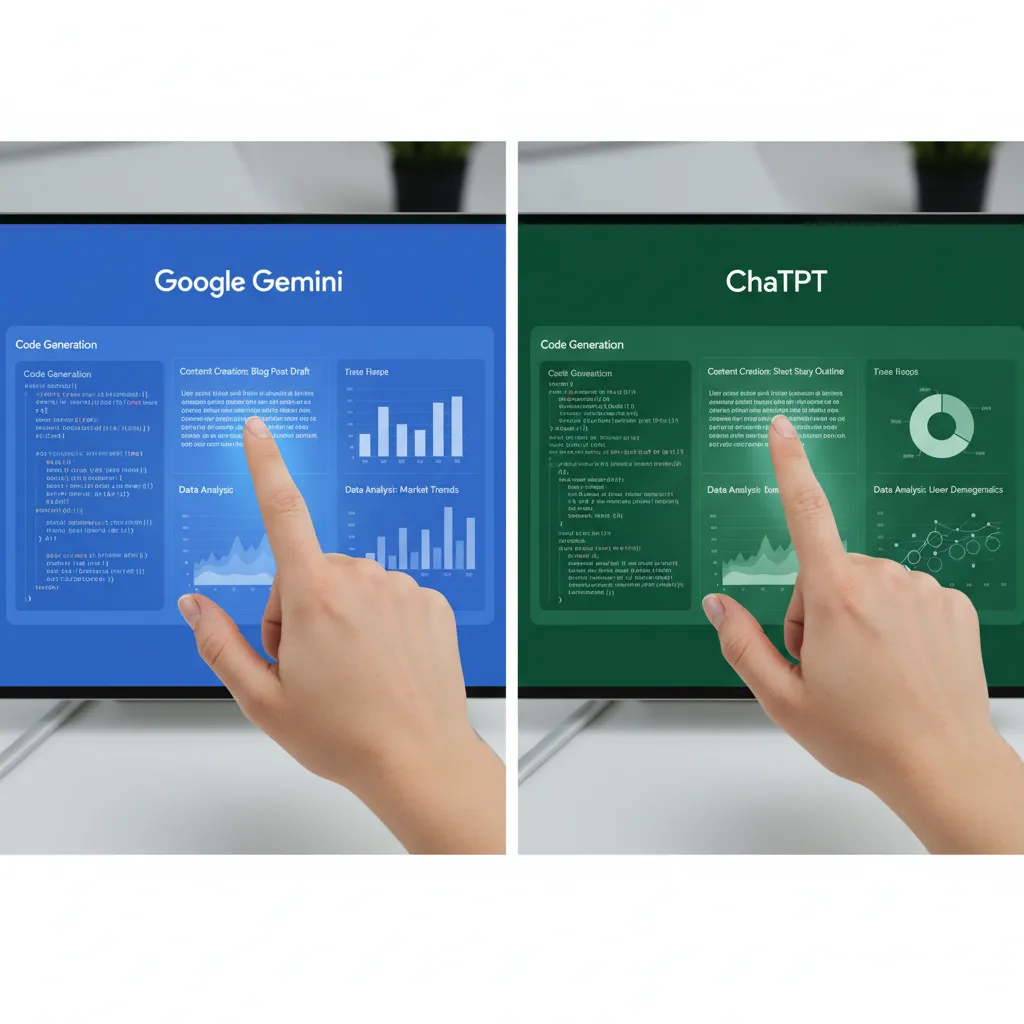
This is the traditional battleground for AI tools for writing. Both models are exceptionally skilled at drafting emails, writing articles, and generating creative copy.
- ChatGPT-4o often feels more polished and conversational out of the box. Its writing style is refined, and it excels at adopting specific tones and formats with minimal prompting. It’s a master of creative tasks, from writing a sonnet to brainstorming a marketing campaign.
- Gemini 1.5 Pro is a powerhouse of raw intellect. Its massive context window gives it an unparalleled ability to synthesize information from large documents. You can upload a 200-page PDF and ask it to extract key themes, create a summary, and generate a Q&A based on the content—a task that would choke most other models. While its prose can sometimes be slightly more verbose, its reasoning across vast datasets is second to none.
Verdict: For pure creative writing and conversational polish, ChatGPT-4o has a slight edge. For in-depth analysis and synthesis of large volumes of text, Gemini 1.5 Pro is the undisputed champion.
Multimodality: The See, Hear, and Speak Revolution
Multimodality is the most exciting frontier in the generative AI comparison, and it’s where the ChatGPT 4o vs Gemini battle is fiercest.
- Gemini was designed with multimodality at its core. It can analyze the nuances of a video frame-by-frame, listen to an audio recording and transcribe it, and read the data from a complex chart you’ve uploaded—all within the same prompt. Its “Project Astra” demo showcased a future of seamless, real-time interaction with the world through your phone’s camera, identifying objects and answering questions on the fly.
- ChatGPT-4o represents a massive leap for OpenAI, unifying its previously separate models into one. It can hold a real-time spoken conversation, detect emotion in your voice, and react to what it sees through your camera. The experience is incredibly low-latency and human-like, making it feel less like a tool and more like a true assistant.
Verdict: This is almost a tie. Gemini’s strength is in deep, multi-format analysis (e.g., analyzing a video file). ChatGPT-4o’s strength is in real-time, fluid interaction (e.g., having a live conversation about a visual problem). The best choice depends on whether you need an analyst or a conversational partner.
Data Analysis & Coding Assistance
For developers and data analysts, these AIs are indispensable productivity tools.
- ChatGPT, with its Advanced Data Analysis feature (formerly Code Interpreter), provides a sandboxed Python environment. You can upload datasets (CSVs, Excel files), and it will write and execute code to perform complex analysis, generate visualizations, and clean data. It’s an incredibly powerful and user-friendly tool for anyone working with data.
- Gemini is also a formidable coding assistant. It can debug code, translate between languages, and explain complex algorithms. Its integration with Google Colab and other developer tools is a significant plus. Its massive context window is again a key advantage, allowing it to understand an entire codebase to provide more contextually-aware suggestions.
Verdict: ChatGPT’s Advanced Data Analysis remains slightly more intuitive and powerful for interactive data visualization for non-coders. For professional developers needing an assistant that can grasp the architecture of a large project, Gemini’s context window offers a unique and powerful advantage.
Real-Time Information & Web Integration
An AI’s usefulness is often tied to how current its knowledge is.
- Gemini has a direct, native pipeline to Google Search. This gives it a significant advantage in providing up-to-the-minute information with more detailed and diverse sourcing. The integration is seamless, making it feel like you’re having a conversation with the world’s most powerful search engine.
- ChatGPT uses Microsoft’s Bing for its web browsing capabilities. While highly effective, it can sometimes be a step slower than Gemini’s integration and occasionally provides less comprehensive sourcing.
Verdict: Gemini wins here. Its direct and deep integration with Google Search provides faster, more comprehensive, and better-cited real-time information, which is critical for research and fact-checking. Related: Perplexity Pages Review: Can This AI Content Generator Dethrone Jasper?
The User Experience: Interface and Accessibility
A powerful tool is useless if it’s difficult to use. Here’s how the two platforms stack up in terms of daily usability and cost.
Free vs. Paid Tiers: A Clear Divide
Understanding the ChatGPT free vs paid debate is crucial for most users.
| Feature | ChatGPT (Free) | Gemini (Free) | ChatGPT Plus ($20/mo) | Gemini Advanced ($20/mo) |
|---|---|---|---|---|
| Underlying Model | GPT-3.5 (with limited GPT-4o access) | Gemini 1.0 Pro | GPT-4 & priority access to GPT-4o | Gemini 1.5 Pro |
| Multimodality | Basic image understanding | Text, image, and basic audio input | Advanced vision, DALL-E 3 image generation, data analysis | Advanced analysis of video, audio, images, documents |
| Context Window | Standard | Standard | Larger | 1 Million Tokens |
| Web Access | Yes | Yes | Yes (faster) | Yes (deeply integrated) |
| Ecosystem | Basic features | Basic features | GPT Store, Advanced Data Analysis | Integration into Gmail, Docs, etc. (as Gemini for Workspace) |
| Usage Limits | Higher limits, may be unavailable at peak times | Generous | 5x higher limits than free | Priority access |
The Takeaway: The free version of Gemini, powered by Gemini 1.0 Pro, is arguably more capable than the free version of ChatGPT, which primarily relies on the older GPT-3.5. However, at the paid tier, the AI software comparison becomes much closer, with the choice boiling down to whether you value the GPT Store and data analysis tools (ChatGPT Plus) or the massive context window and Google ecosystem integration (Gemini Advanced).
Ecosystem Integration: The Hidden Superpower
This is where the long-term vision for each AI becomes clear.
- OpenAI/Microsoft: ChatGPT is the brain behind Microsoft’s Copilot, deeply embedding itself into Windows, Office 365, and Azure. Its strength is in the professional and enterprise workspace. The GPT Store also creates a powerful flywheel effect, allowing a community of developers to build specialized AI agents for millions of users.
- Google: Gemini’s strategy is to be the intelligent fabric connecting every Google product. Imagine Gemini summarizing your unread emails in Gmail, creating a presentation from a Google Doc, and scheduling a meeting in Calendar, all from a single prompt. This deep, personal integration aims to make Gemini an indispensable AI assistant for work and AI for everyday use. Related: iOS 18’s Best AI Features: A Deep Dive into Apple Intelligence
Verdict: If your professional life revolves around Microsoft products, ChatGPT’s ecosystem is more mature today. If you are deeply invested in the Google ecosystem (Android, Workspace, etc.), Gemini’s future potential is astronomical and already incredibly useful.
Real-World Use Cases: Which AI is Right for You?
Let’s move from theory to practice. When choosing an AI chatbot, your profession is a key factor.
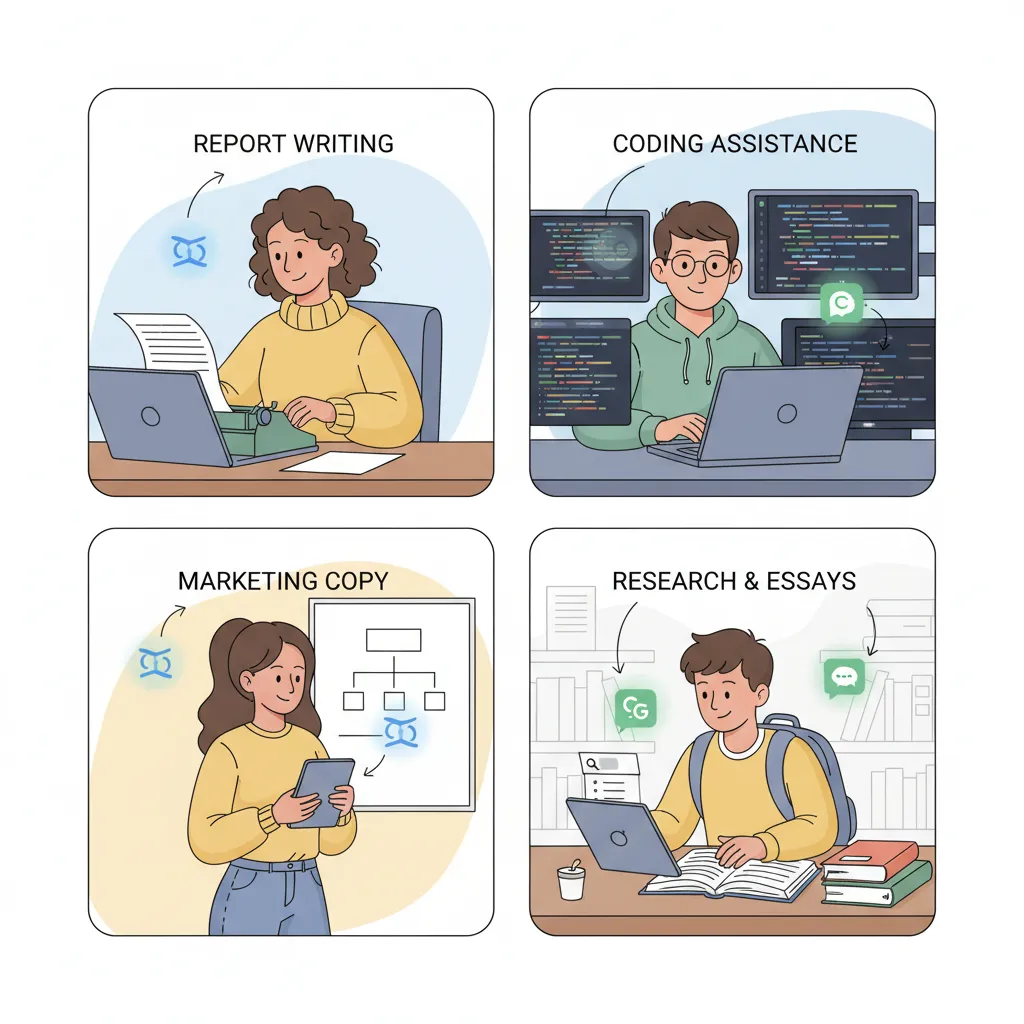
- For Writers & Content Creators: ChatGPT-4o is often the preferred choice for its creative flair and ability to quickly generate high-quality, stylistically consistent text. Gemini is excellent for the research phase, capable of summarizing vast amounts of source material. Related: The AI Content Power-Up: How to Speed Up Quality Content Creation Today
- For Developers & Programmers: This is a tough call. ChatGPT’s Advanced Data Analysis is fantastic for quick data scripting and visualization. Gemini’s ability to ingest and understand an entire codebase makes it an incredible partner for large-scale development and debugging.
- For Students & Researchers: Gemini’s superior real-time web search and its capacity to analyze dense academic papers and textbooks give it a decisive edge for research and study.
- For Business Professionals: If your workflow is in Google Workspace, Gemini Advanced is a game-changer for productivity. For general market research, report generation, and presentations, both are excellent, but ChatGPT’s slightly more polished output may require less editing.
The Technology Under the Hood (Explained Simply)
Understanding the core philosophy behind these models helps clarify their strengths.
- Gemini’s Architecture: Google built Gemini to be multimodal from its very inception. It wasn’t a text model that later learned to see; it was trained simultaneously on a massive, diverse dataset of text, images, audio, and video. This “native” multimodality allows for a deeper and more nuanced understanding of prompts that mix different data types.
- ChatGPT’s Evolution: OpenAI’s path led to GPT-4o, a single, unified “omnimodal” model. Previously, a request involving vision would be handed off to a separate vision model. GPT-4o processes everything—text, audio, and vision—together in one neural network. This is why it’s so incredibly fast and can perceive nuances like emotion in a user’s voice during a live conversation. Related: The Rise of Sustainable AI: Eco-Friendly Innovation for a Greener Digital Future
The Future of the AI Race: What’s Next?
The Google AI vs OpenAI battle is just getting started. We are moving beyond simple chatbots towards proactive, personalized AI agents.
The latest AI developments point to a future where these assistants are deeply integrated into operating systems. We’re already seeing this with Microsoft’s Copilot in Windows and Google’s plans for Gemini in Android. Apple’s entry with Apple Intelligence, which plans to integrate ChatGPT and potentially Gemini into iOS, further validates this trend. The goal is an assistant that understands your personal context and can take action on your behalf across different apps.

This future also hinges on trust, safety, and ethics. As these models become more capable, ensuring they are used responsibly will be the biggest challenge and the most important measure of success.
Conclusion: So, Which AI Reigns Supreme?
After this exhaustive AI comparison guide, the answer to “which AI is better?” is clear: it depends entirely on you. There is no single supreme ruler in 2024. Instead, we have two brilliant specialists vying for different thrones.
- Choose ChatGPT if: You prioritize a polished, highly creative conversational partner, need the best-in-class interactive data analysis tools, or want to tap into a vast ecosystem of custom GPTs and API integrations. It’s the versatile artist and the sharp data scientist.
- Choose Gemini if: You are a heavy user of the Google ecosystem, need to analyze and synthesize massive amounts of information (text, video, or code), or require the most accurate and deeply integrated real-time web information. It’s the powerful researcher and the hyper-efficient productivity engine.
The best approach is to try both. Use the free versions to get a feel for their unique “personalities” and workflows. The true winner of the Gemini vs. ChatGPT war is us—the users. We now have access to unprecedented tools that can augment our intelligence, supercharge our productivity, and unlock new realms of creativity. The AI future is here, and the power to choose your perfect digital partner is in your hands.
Frequently Asked Questions (FAQs)
Is Gemini better than ChatGPT?
Neither is definitively “better” overall; they excel in different areas. Gemini’s strengths are its massive context window for analyzing large documents, its deep integration with the Google ecosystem, and its superior real-time search capabilities. ChatGPT often provides a more polished conversational experience, has a more mature ecosystem with the GPT Store, and its Advanced Data Analysis tool is top-notch.
What is the main difference between Gemini 1.5 Pro and GPT-4o?
The primary difference lies in their core strengths and architecture. Gemini 1.5 Pro is built for deep analysis of vast amounts of information, thanks to its one-million-token context window. GPT-4o is optimized for fast, real-time, human-like interaction, seamlessly blending voice, vision, and text in a live conversational setting.
Is Google Gemini free to use?
Yes, there is a free version of Gemini available to the public. It is powered by the Gemini 1.0 Pro model, which is very capable for everyday tasks. To access the most powerful model, Gemini 1.5 Pro, you need to subscribe to the Gemini Advanced plan.
Which AI is better for writing and content creation?
For creative writing, brainstorming, and generating stylistically refined content, many writers prefer ChatGPT-4o due to its conversational polish. However, for research-heavy writing that requires summarizing and synthesizing information from many sources or large documents, Gemini’s large context window and search integration make it an incredibly powerful tool.
Can Gemini generate images like DALL-E 3?
Yes. Google has its own image generation model called Imagen 2, which is integrated into Gemini. Users can generate images from text descriptions directly within the Gemini interface, similar to how ChatGPT integrates with DALL-E 3.
How does Gemini’s integration with Google Workspace work?
Through a Gemini for Workspace subscription, the AI is embedded directly into apps like Gmail, Docs, Sheets, and Meet. It can summarize email threads, draft entire documents from a simple prompt, create custom spreadsheet formulas, and even take meeting notes for you, significantly boosting productivity within the Google ecosystem.
Will Apple use Gemini or ChatGPT?
Apple has announced a partnership to integrate ChatGPT into its new “Apple Intelligence” system for iOS 18, iPadOS 18, and macOS Sequoia. However, they also stated they intend to add support for other AI models in the future, and have specifically mentioned Google Gemini as a possibility. It seems likely that users may eventually be able to choose their preferred AI model. Related: Apple Intelligence: Your Ultimate Guide to The New AI Features