AI Wearables: Your Guide to the Future of Personalized Health & Productivity

Introduction
For years, we’ve strapped gadgets to our wrists to count steps, track runs, and check notifications. These fitness trackers and smartwatches were our first foray into the world of wearable technology. But what if your wearable could do more than just report the past? What if it could understand your body’s subtle signals, predict your needs, and act as a personalized coach for your health, sleep, and even your focus?
Welcome to the era of AI wearables. This isn’t just an upgrade; it’s a complete paradigm shift. We’re moving from passive data collection to proactive, intelligent guidance. These next-generation devices, powered by sophisticated algorithms and advanced sensors, are transforming how we approach everything from fitness to mental wellness and professional productivity.
This guide will explore the exciting world of wearable AI devices. We’ll delve into how they work, examine their revolutionary impact on personalized health tech, and look ahead at the future of wearables. Get ready to discover how these smart health gadgets are becoming indispensable tools for a healthier, more efficient life.
What Exactly Are AI Wearables? Beyond Step Counting
At its core, the difference between a standard smartwatch and an AI wearable is the difference between a reporter and a strategist. A traditional fitness tracker reports what happened: you walked 8,000 steps and slept for 6.5 hours. An AI wearable acts as a strategist, analyzing that data in the context of your personal history, environment, and real-time biometrics to provide predictive health insights.
Here’s what sets them apart:
- Advanced Biometric Sensors: AI wearables go beyond simple heart rate monitors. They often include sensors for skin temperature, electrodermal activity (EDA) to measure stress, blood oxygen (SpO2), and even capabilities for tracking blood pressure or glucose levels through non-invasive means. This constant stream of rich biometric data AI is the fuel for the AI engine.
- Machine Learning Algorithms: This is the “brain” of the operation. The AI doesn’t just see numbers; it learns your personal baseline. It understands what’s normal for you. When it detects a deviation—a sudden spike in resting heart rate overnight, a decline in sleep quality before a big project deadline—it can correlate events and offer insights.
- Personalized, Actionable Feedback: Instead of just showing you a graph, an AI wearable might say, “Your sleep quality has declined by 20% this week, and your stress levels are highest around 2 PM. Try a 10-minute walk after lunch to improve your focus and sleep.” This is the essence of AI driven wellness.
This shift represents the core of the quantified self AI movement—not just collecting data, but using AI to translate it into meaningful, life-changing actions.
The Revolution in Personalized Health: Your 24/7 Digital Guardian
The most profound impact of AI wearables is in the realm of health. These devices are evolving into powerful digital health solutions, offering a level of continuous monitoring that was previously only possible in a clinical setting.
Continuous Health Monitoring & Preventative Insights
For the first time, we have the technology for genuine continuous health monitoring outside of a hospital. Devices like smart patches AI can stick to the skin for days, tracking vital signs like ECG, respiratory rate, and temperature.
This constant data stream is invaluable for preventative health AI. The AI can learn an individual’s unique physiological patterns and flag anomalies long before symptoms appear. For someone with a heart condition, it could detect an arrhythmia. For a diabetic, it could predict a hypoglycemic event. This proactive approach is a game-changer, shifting the focus of healthcare from treatment to prevention.
Related: A User’s Guide to Apple Intelligence: iOS 18’s New AI Features
Next-Gen Fitness: AI Coaching in Your Ear
The world of next-gen fitness tech is getting a major upgrade. While traditional fitness trackers AI log your workouts, AI wearables become your personal trainer.
Imagine you’re lifting weights. Smart clothing with integrated sensors can analyze your form in real-time, providing haptic feedback or an audio cue if your posture is off, preventing injury. During a run, the AI can analyze your heart rate variability (HRV) and gait to tell you when to push harder and when to ease off for optimal performance and recovery.
This is AI health coaching at its finest. It generates dynamic, personalized fitness plans that adapt daily based on your sleep, stress, and readiness levels, ensuring you get the most out of every single workout.

Unlocking Better Rest: The Science of AI-Powered Sleep Tracking
Quality sleep is the foundation of health, and sleep tracking AI is one of the most mature applications in the wearable space. AI-powered devices like smart rings and headbands go far beyond just tracking how long you were in bed.
They analyze:
- Sleep Stages: Accurately measuring the time spent in Light, Deep, and REM sleep.
- Latency & Efficiency: How quickly you fall asleep and how much of your time in bed is actual sleep.
- Disruptions: Pinpointing interruptions from noise, movement, or breathing issues.
- Circadian Rhythm: Aligning your sleep schedule with your body’s natural internal clock.
The AI then synthesizes this data to provide a “readiness” or “recovery” score for the day and offers specific advice, such as avoiding caffeine after a certain time or getting morning sunlight to reset your body clock.

Mental Wellness on Your Wrist: Taming Stress with AI
In our always-on world, managing mental health is critical. Mental wellness wearables are emerging as powerful allies in this fight. These devices use sensors to track key indicators of stress, such as heart rate variability (HRV), skin temperature, and electrodermal activity (EDA).
When the AI detects rising stress levels, these stress management wearables can proactively intervene. They might vibrate gently and guide you through a one-minute breathing exercise, suggest a short walk, or play calming audio. By providing real-time biofeedback, they help you recognize your stress triggers and build resilience over time. This makes them one of the most impactful applications of AI in our day-to-day lives.
Related: Boost Your Mind: Top AI Mental Wellness Tools & Apps for a Calmer You

Beyond Health: How AI Wearables Are Redefining Productivity
While health is the headline act, the impact of AI wearables on productivity is a rapidly growing subplot. These devices are poised to become indispensable AI productivity tools, seamlessly integrating into our professional lives.
The Future of Work: Seamless Integration and Enhanced Focus
The future of work AI wearables is about creating a frictionless environment where you can stay in your flow state. Imagine a device that can:
- Automate Note-Taking: Listen to your meetings and generate concise summaries with action items, delivered straight to your inbox.
- Manage Notifications: Intelligently filter notifications based on your current task and focus level, only letting through what’s truly urgent.
- Optimize Your Energy: By tracking your cognitive load and energy levels, it can suggest when to tackle demanding tasks and when to take a strategic break for enhanced cognitive function AI.
This technology aims to offload the mental clutter of administrative tasks, freeing up your cognitive resources for deep, creative work.
Related: Autonomous AI Agents: The Future of Productivity and Business Automation
AI-Enabled Accessories: The Invisible Assistant
The form factor of AI wearables is becoming more diverse and discreet. The bulky smartwatch is no longer the only option, as new AI enabled accessories blend technology seamlessly into our lives.
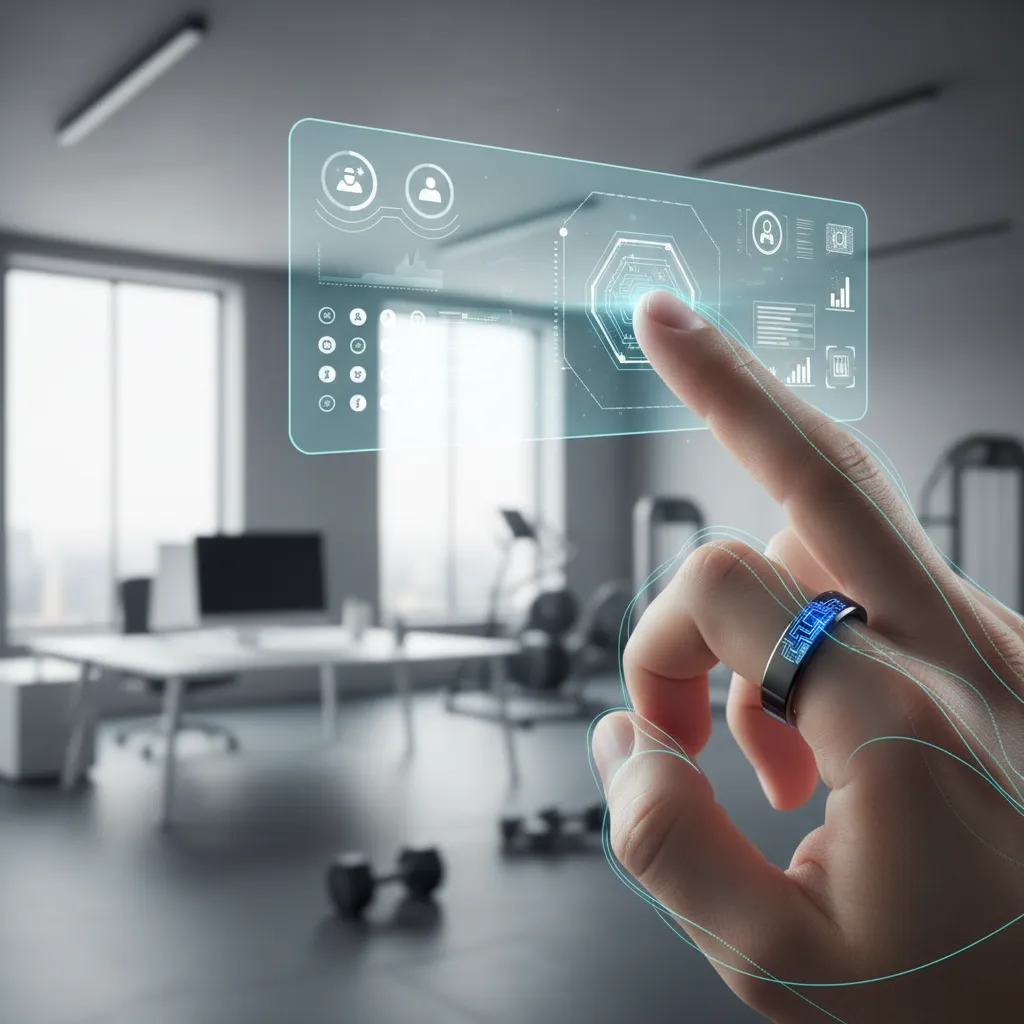
- Smart Rings: Devices like the Oura Ring and Ultrahuman Ring pack a surprising amount of sensor technology into a tiny, unobtrusive package. With multi-day battery life, smart rings AI are perfect for 24/7 health and sleep tracking without the distracting screen of a watch. They are the epitome of “wear and forget” technology.
- Smart Patches: These are flexible, adhesive sensors that provide clinical-grade data for specific use cases, from monitoring post-surgery recovery to tracking athletic performance.
- Smart Clothing: Smart clothing AI with woven-in sensors can provide rich data on everything from posture and breathing to muscle exertion, offering a holistic view of your body’s mechanics.
- Hearables & AI Glasses: Devices that sit in or on your ear or face can provide real-time language translation, contextual information overlays, and hands-free access to AI assistants.
Navigating the Challenges: Data, Privacy, and Practicality
As with any powerful technology, the rise of AI wearables comes with important considerations. Building trust is paramount for widespread adoption.
The Double-Edged Sword of Biometric Data
These devices collect the most intimate information about us. The issue of personal data security wearables is a major hurdle. Users need clear, transparent answers to critical questions:
- Who owns my data?
- How is it encrypted and protected from breaches?
- Is it being sold to third parties like insurers or advertisers?
- Can I delete my data permanently?
Leading companies in this space must prioritize robust privacy policies and give users granular control over their information to build lasting trust.
The Accuracy and Reliability Question
It’s crucial to distinguish between a wellness device and a medical device. While AI wearables are becoming incredibly sophisticated, they are not always a substitute for clinical-grade medical equipment or a doctor’s diagnosis. As the technology improves and gains more regulatory approval (like FDA clearance), the line will blur, but users should remain aware of the current limitations.
Overcoming ‘Data Fatigue’ and Ensuring Actionability
The sheer volume of data from health monitoring AI can be overwhelming. The goal is not to drown in charts and graphs but to receive clear, simple, and actionable guidance. The success of an AI wearable is measured by its ability to inspire positive behavior change, not by the number of metrics it can track.
The Road Ahead: What’s Next for Wearable Technology Trends?
We are at the very beginning of the AI wearable revolution. The wearable technology trends on the horizon promise an even deeper integration of AI into our lives.
- Hyper-Personalization: Future AI will not only analyze your data but also cross-reference it with your genetic information, microbiome data, and stated goals to provide truly bespoke health and wellness recommendations.
- Seamless Environmental Integration: Your wearable will communicate with other smart devices. It might tell your smart thermostat to lower the temperature for optimal sleep or signal your coffee machine to start brewing when it detects you’re waking up.
- Closed-Loop Systems: This is the holy grail. Imagine a smart patch that continuously monitors glucose levels and automatically communicates with an insulin pump to deliver the precise dose needed. These automated, self-regulating systems will revolutionize chronic disease management.
- Energy Harvesting: The need to charge devices will become a thing of the past as future wearables learn to harvest energy from body heat, motion, and ambient radio waves.
Related: How AI is Reshaping Creativity: The Art, Music, and Design Revolution
Conclusion
AI wearables represent a monumental leap forward from the first generation of activity trackers. They are transforming from passive data logs into active, intelligent partners dedicated to improving our well-being and performance. By translating complex biometric data AI into personalized, predictive, and actionable insights, these devices are empowering us to take unprecedented control over our health, focus, and daily lives.
The journey is just beginning. As the technology matures and concerns around privacy are addressed, these powerful tools will become increasingly integrated into the fabric of our existence. The future of wearables is not just on our wrists; it’s in our rings, our clothes, and our ears, working silently to help us live longer, healthier, and more fulfilling lives. The question is no longer if you’ll use an AI wearable, but how you’ll use its insights to unlock your full potential.
Frequently Asked Questions (FAQs)
Q1. What is the main function of an AI wearable?
An AI wearable’s main function is to interpret raw biometric data using machine learning algorithms to provide personalized, proactive, and predictive insights. Unlike standard trackers that just report data (like steps taken), AI wearables analyze trends to offer actionable advice on improving sleep, managing stress, optimizing workouts, and enhancing overall wellness.
Q2. How do AI wearables collect data?
AI wearables use a suite of advanced optical and electrical sensors to collect data. These can include PPG sensors for heart rate and blood oxygen, accelerometers for movement, skin temperature sensors, and EDA sensors for stress responses. This continuous stream of data provides the AI with a holistic view of your physiological state.
Q3. What is the difference between a fitness tracker and an AI wearable?
A fitness tracker is primarily a data recorder; it logs activities, sleep duration, and heart rate. An AI wearable is an data interpreter; it takes that data, analyzes it against your personal baseline and historical trends, and provides contextual, forward-looking guidance and coaching to drive behavior change.
Q4. Are AI wearables safe and are there privacy concerns?
Reputable AI wearable companies use strong encryption and security protocols to protect user data. However, personal data security wearables are a valid concern. It’s crucial for users to review the privacy policy of any device, understand how their data is used, and use devices from brands that prioritize user data protection and transparency.
Q5. Can AI wearables predict illness?
AI wearables are moving towards predictive health insights. By detecting subtle changes in biometrics like resting heart rate, HRV, and respiratory rate, some devices can identify early signs that your body is fighting off an illness, sometimes even before you feel symptoms. However, they are considered wellness devices, not medical diagnostic tools, and should not replace professional medical advice.
Q6. What are some examples of AI wearables?
Popular examples include smart rings AI like the Oura Ring and Ultrahuman Ring, advanced fitness watches from brands like WHOOP and Garmin that use AI for recovery and training recommendations, and emerging devices like smart patches AI for continuous monitoring. The category is rapidly expanding beyond wrist-based devices.
Q7. How does AI help with mental wellness in wearables?
Mental wellness wearables use AI to analyze data from sensors that measure physiological signs of stress, such as heart rate variability (HRV) and electrodermal activity (EDA). When the AI detects indicators of stress, it can trigger real-time interventions, like guided breathing exercises or mindfulness prompts, to help the user manage their mental state proactively.