Harmonize Your Workflow: How AI is Revolutionizing Music Production
Introduction
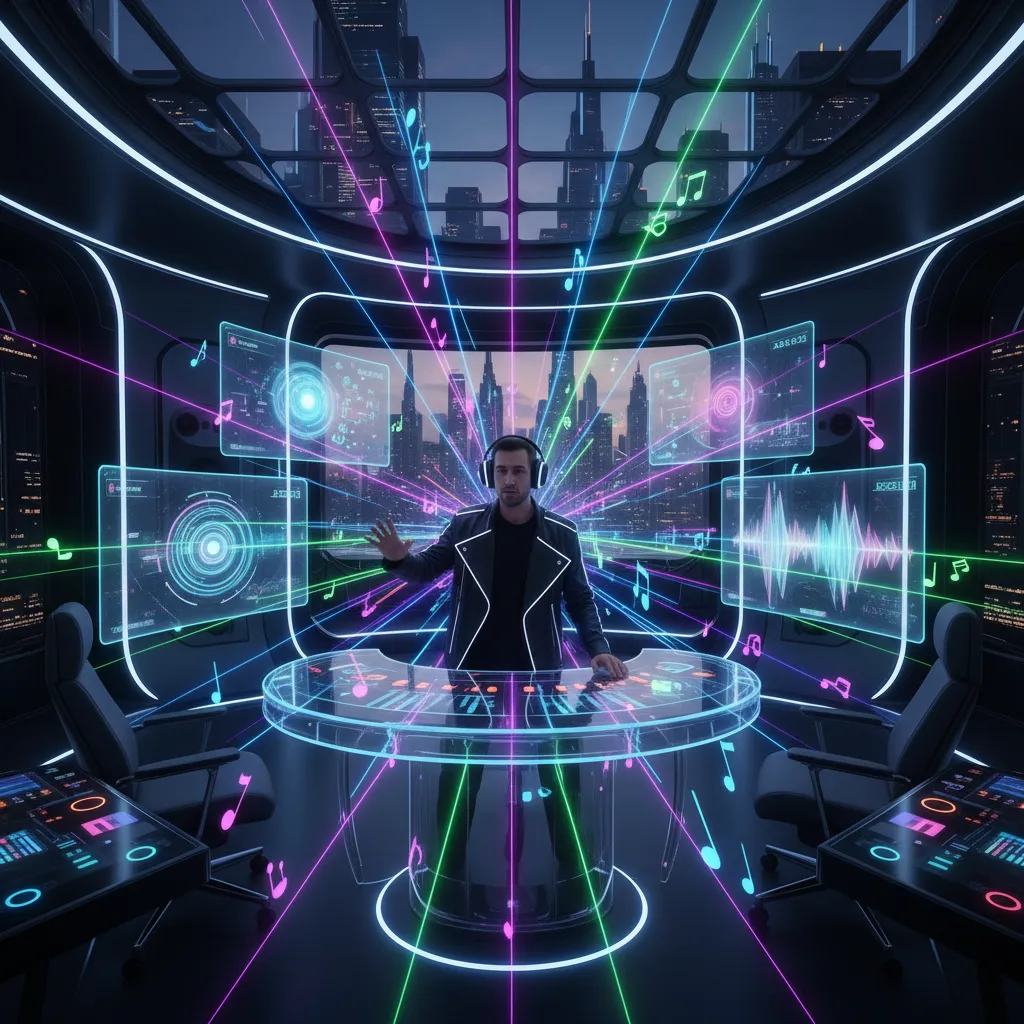
The modern music studio has always been a hub of innovation, evolving from analog tape machines to digital audio workstations (DAWs). Today, we’re witnessing the next seismic shift, one powered by algorithms and neural networks. Artificial intelligence in music is no longer a futuristic concept; it’s a tangible, powerful collaborator sitting right beside the artist. From sparking the initial melody to applying the final mastering polish, AI music production is fundamentally reshaping creative workflows, breaking down technical barriers, and unlocking unprecedented sonic possibilities.
For many musicians, producers, and songwriters, the term “AI” might conjure images of robots replacing human creativity. The reality, however, is far more nuanced and exciting. Instead of a replacement, think of AI as the ultimate co-producer—a tireless assistant that can handle tedious tasks, suggest inspiring ideas, and provide objective feedback. This revolution is about enhancing music with AI, not removing the human element.
This deep dive explores the transformative AI music industry impact. We’ll journey through how an AI melody generator can conquer writer’s block, how an AI beat maker can lay down the perfect groove in seconds, and how intelligent AI mixing and mastering tools are making professional-sounding tracks accessible to everyone. Whether you’re a seasoned producer or an aspiring artist, understanding this AI music technology is key to staying ahead in the ever-evolving soundscape.
The New Creative Partner: What is AI’s True Role in the Studio?
The integration of artificial intelligence into the creative process marks a pivotal moment in music history. It’s a move from static tools to dynamic, interactive partners. At its core, machine learning music algorithms analyze vast datasets—from centuries of classical compositions to every modern electronic hit—to understand the intricate patterns, structures, and emotional triggers that make music resonate with us.
This learning manifests in two primary ways in the studio:
- Assistive AI: These tools act as intelligent assistants within your existing workflow. They don’t create content from scratch but help you do your job better and faster. Think of an EQ that automatically identifies and cuts harsh frequencies or a compressor that intelligently adapts to a vocal performance. This is about augmenting, not automating, human skill.
- Generative AI: This is where things get truly futuristic. Generative AI music platforms can create entirely new musical elements—melodies, chord progressions, drum loops, and even full arrangements—often from a simple text prompt. This technology acts as a powerful brainstorming partner, offering endless variations to kickstart a project.
The initial apprehension towards these tools is giving way to a new paradigm of human-AI collaboration. The fear of being replaced is eclipsed by the excitement of being empowered. AI music creativity isn’t about letting the machine take over; it’s about using its unique capabilities to push your own creative boundaries.
Related: AI Reshapes Creativity: The Art, Music, and Design Revolution
From Blank Canvas to Full Arrangement: AI in Composition and Songwriting
For any creator, the most intimidating obstacle is the blank page—or in this case, the empty DAW project. This is where music composition AI has made its most significant impact, providing powerful solutions to overcome creative blocks and accelerate the ideation process.
The AI Melody Generator: Sparking Initial Ideas
Every great track starts with a spark. An AI melody generator is like having a co-writer on call 24/7. These tools use sophisticated algorithms to generate catchy, harmonically correct melodies based on user-defined parameters like genre, mood, key, and tempo. Instead of spending hours searching for a hook, you can generate dozens of options in seconds, then pick one to edit, customize, and build upon. This process transforms a potential point of frustration into a moment of pure inspiration, making it one of the most valuable AI tools for songwriters.
Building the Foundation: The AI Beat Maker and Rhythm Generator
A compelling rhythm is the backbone of most modern music. An AI beat maker or AI rhythm generator goes beyond simple drum loops. These tools understand the nuances of different genres, from the swing of a hip-hop groove to the driving pulse of a techno track. They can create intricate, evolving patterns that feel human-played, complete with subtle variations and fills. This allows producers to establish a solid foundation for their track instantly, freeing up valuable time to focus on melody, harmony, and arrangement. This is a prime example of AI driven music creation in action.
AI Music Theory in Practice
One of the most impressive aspects of modern AI music composition tools is their deep-seated understanding of music theory. They aren’t just randomly spitting out notes; they’re leveraging centuries of musical knowledge to suggest chords that work together, create compelling basslines that support the melody, and build arrangements with a natural sense of tension and release. For artists who may not have a formal background in AI music theory, this is revolutionary. It acts as a guide, ensuring that your creative experiments remain musically coherent and impactful.
Sculpting Soundscapes: The Rise of AI Sound Design
Beyond notes and rhythms, the texture and timbre of sounds—the very fabric of a track—are crucial. AI sound design is an emerging frontier where artificial intelligence is used not just to arrange sounds, but to create them from the ground up.
Generative AI Music and Novel Textures
Imagine describing a sound in words and having an AI synthesize it for you. Tools are now emerging that can generate unique synth patches, atmospheric pads, and complex textures from text prompts (e.g., “a warm, ethereal pad that shimmers like glass”). This is a game-changer for sound designers and electronic producers, offering a limitless palette of never-before-heard sounds. This approach to AI music innovation is pushing the boundaries of what’s sonically possible.
AI Vocal Synthesis: The Voice as an Instrument
AI vocal synthesis is one of the most talked-about—and controversial—areas of AI music technology. The technology now allows for the creation of incredibly realistic vocal performances from text, the cloning of existing voices, and the ability to alter a singer’s pitch and delivery post-recording with flawless results. While the ethical implications are significant and require careful navigation, the creative potential is undeniable. Producers can now create custom background vocals, prototype vocal melodies without a singer, or use synthetic voices as unique textural elements within a track.
The Intelligent Studio: AI in Mixing and Mastering
The technical phases of mixing and mastering have long been seen as a dark art, requiring years of experience and expensive equipment. AI audio tools are democratizing this crucial final stage of production, making a professional polish achievable for everyone.
Related: AI Copilots for Developers: Supercharge Your Coding Workflow
Smarter Mixing with AI Audio Processing
The mixing process involves balancing the levels, frequencies (EQ), and dynamics (compression) of every track in a session. AI audio processing tools can analyze your tracks and suggest intelligent starting points. For example, an AI-powered EQ can listen to a vocal and automatically carve out space for it in a busy mix, while a smart compressor can tame a wild bassline without crushing its energy. These tools don’t replace the producer’s ear, but they handle the technical heavy lifting, allowing for faster, more creative mixing decisions. This is a core part of the modern music production software AI ecosystem.
The Final Polish: AI Mixing and Mastering Made Accessible
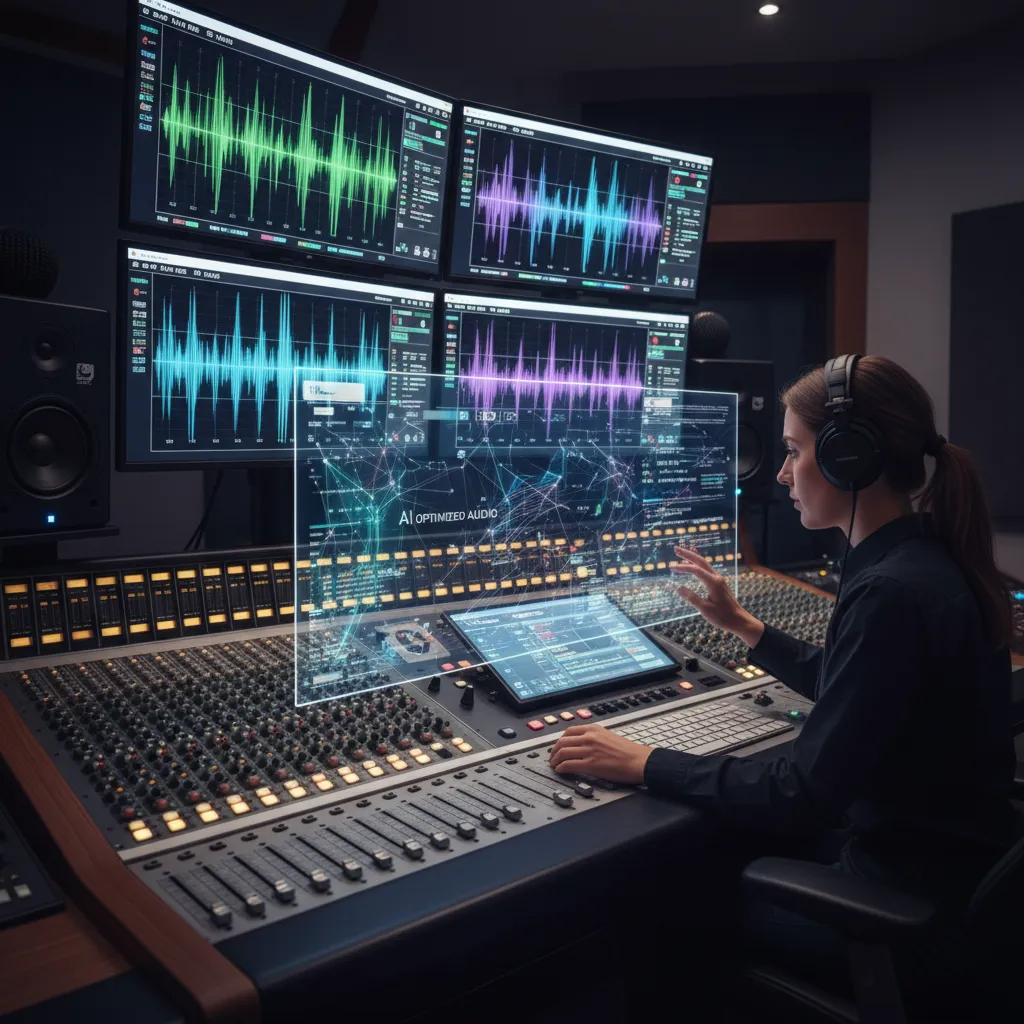
Mastering is the final step where a mixed track is optimized for playback across all systems, from club speakers to earbuds. Historically, this was a specialized service costing hundreds or thousands of dollars per song. Today, AI mixing and mastering platforms can analyze your track, compare it to commercial hits in your genre, and apply a professional mastering chain in minutes. This has empowered millions of independent artists to release radio-ready music from their home studios.
The Modern Musician’s Toolkit: Best AI Music Apps and Software
The market for AI tools for producers is exploding. Navigating the options can be overwhelming, so here’s a breakdown of some leading platforms and what they do best:
| Tool/Platform | Category | Key Feature | Best For |
|---|---|---|---|
| iZotope Ozone 11 | Mixing & Mastering | AI Master Assistant, Stabilizer, Clarity Module | Producers seeking professional-grade results |
| LANDR | Mastering & Distribution | Instant AI mastering and digital distribution | Independent artists releasing music |
| Suno / Udio | Generative AI Music | Creates full songs (music + vocals) from text | Quick idea generation and songwriting |
| Orb Producer Suite | Music Composition AI | AI-powered melody, chord, and bassline plugins | Producers needing compositional inspiration |
| LALAL.AI | Audio Separation | Extracts stems (vocals, drums, etc.) from any song | DJs, remixers, and sampling artists |
| Splice CoSo | AI Beat Maker | AI-powered sample discovery and beat creation | Beat makers and electronic musicians |
| Sonible smart:suite | AI Mixing | Intelligent EQ, compression, and reverb plugins | Mixing engineers looking to speed up workflow |
This list represents just a fraction of the best AI music apps available, highlighting the diverse ways AI for musicians is being integrated into every stage of the creative process.
The Bigger Picture: AI Music Industry Impact and Future Trends
The AI music revolution extends far beyond the individual studio. It’s creating new opportunities, posing new questions, and charting an exciting course for the future of music production.
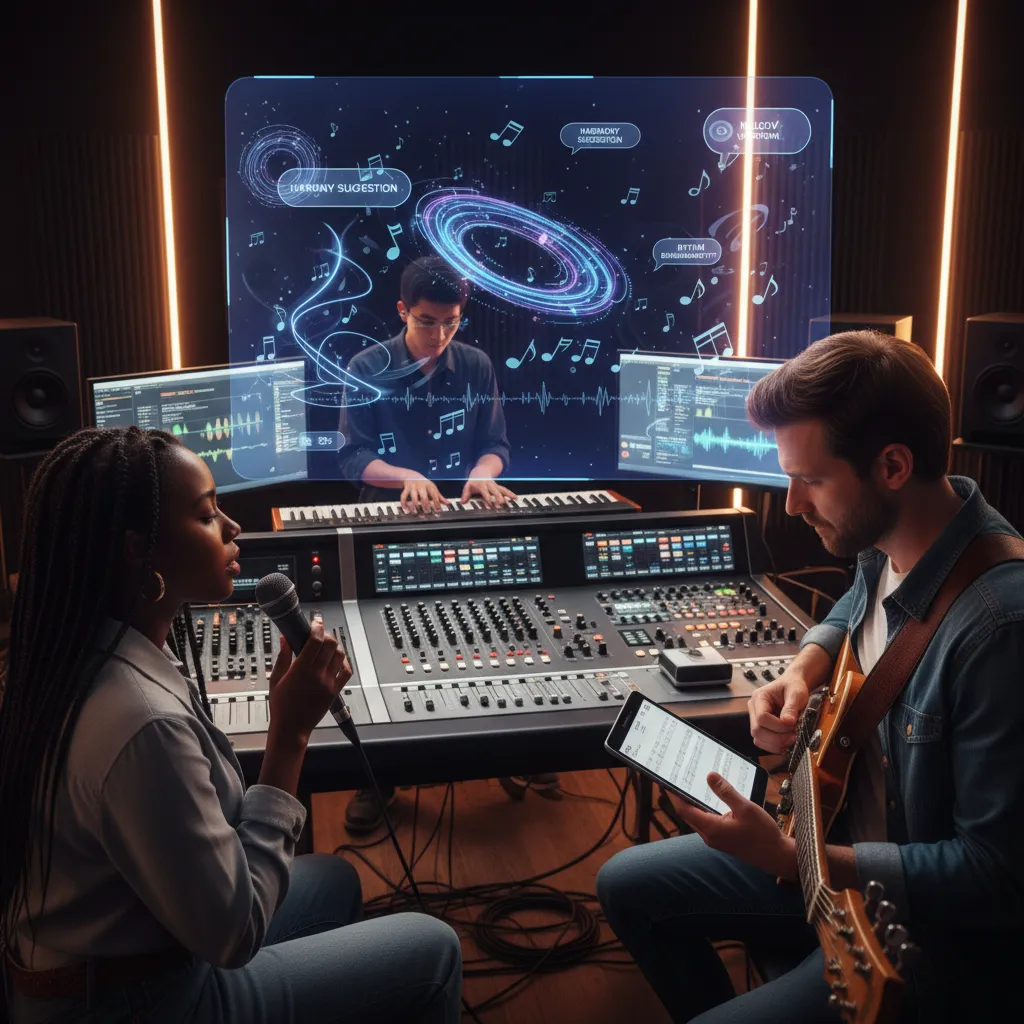
How AI Makes Music More Accessible
Perhaps the most significant AI music industry impact is democratization. By lowering technical and financial barriers, AI is empowering a new generation of creators who may lack formal training or access to expensive gear. This influx of diverse voices and perspectives will undoubtedly lead to more vibrant and innovative music.
Redefining Creativity and Collaboration
The relationship between artist and tool is becoming a partnership. The future belongs to creators who can effectively collaborate with AI, using it as a springboard for their own unique vision. This human-in-the-loop approach, where AI provides the options and the human provides the taste and direction, is where the most compelling art will be made.
Ethical Considerations and the Copyright Conundrum
With great power comes great responsibility. The rise of AI in studio recording and composition brings critical ethical questions to the forefront. How do we ensure AI models are trained on ethically sourced data? Who owns the copyright to a song co-created with an AI? These are complex challenges the industry is actively working to solve, and they will shape the legal and creative landscape for years to come.
Conclusion
The integration of artificial intelligence into music production is not a trend; it’s the new harmony. From the first spark of an idea with an AI melody generator to the final professional sheen from an AI mastering engine, these tools are fundamentally harmonizing the creative workflow. They are breaking down barriers, eliminating tedious tasks, and acting as a limitless source of inspiration.
The future of music production is not one of human versus machine, but of human with machine. AI music production empowers artists to work faster, think bigger, and explore sonic territories that were previously unreachable. It’s a new era of creativity where technology serves art, amplifying the human spirit at the heart of all great music.
Embrace these tools, experiment with them, and discover how they can harmonize your own creative process. The next sonic revolution is here, and your next masterpiece is just a click away.
Frequently Asked Questions (FAQs)
Q1. What exactly is AI music production?
AI music production refers to the use of artificial intelligence and machine learning algorithms to assist in or automate tasks within the music creation process. This includes everything from generating initial ideas like melodies and chord progressions to technical tasks like mixing, mastering, and even creating new sounds through AI sound design.
Q2. Can AI compose a full song?
Yes, generative AI music platforms like Suno and Udio can now compose full songs, including lyrics, vocals, and instrumentation, from simple text prompts. While impressive, these are best used as advanced starting points or brainstorming tools, with human artists then refining and personalizing the results to create a finished product.
Q3. Will AI replace music producers?
It’s highly unlikely. Most experts view AI as a powerful collaborator, not a replacement. AI excels at handling repetitive, technical tasks and generating ideas, which frees up human producers to focus on the elements that require genuine creativity, emotion, and taste—the things that define an artist’s unique sound. The role is evolving into one of a creative director who guides AI tools.
Q4. What is the best AI for making music?
The “best” AI depends entirely on your needs. For composition and songwriting, look into Orb Producer Suite. For quick, full-song generation, try Suno. For industry-standard AI mixing and mastering, iZotope Ozone is a top choice. For beat-making, Splice’s CoSo is excellent. The key is to find the AI audio tools that best fit your specific workflow.
Q5. Is AI-generated music copyrighted?
Copyright law for AI-generated art and music is a complex and evolving legal area. In many jurisdictions, including the U.S., works created entirely by AI without significant human authorship cannot be copyrighted. However, if a human artist substantially modifies, arranges, or directs the AI’s output, the resulting work may be eligible for copyright protection. This remains a key topic of discussion in the AI music industry impact.
Q6. How is AI used in audio mastering?
In mastering, AI analyzes your mixed track and compares it to a vast database of commercially successful songs in your genre. It then applies an intelligent chain of processing—including EQ, compression, limiting, and stereo widening—to optimize your song’s loudness, tonal balance, and dynamic range for all listening platforms, delivering a professional-sounding result in minutes.
Q7. What are the main benefits of using AI in music?
The primary benefits include overcoming creative blocks by generating new ideas, speeding up tedious workflow tasks, democratizing access to high-quality production tools (especially for mixing and mastering), and opening up new sonic possibilities through generative AI music and sound design. It ultimately allows artists to focus more on creativity and less on technical hurdles.