Beyond Therapy: How AI Boosts Proactive Emotional Well-being & Digital Detox

Introduction
In our hyper-connected, always-on world, the hum of notifications and the pressure to perform have become the background music to our lives. For decades, the conversation around mental health has been primarily reactive—we seek help when the stress becomes overwhelming, when burnout hits, or when anxiety becomes a constant companion. But what if we could shift that paradigm? What if we could build emotional resilience before the storm hits?
This is where the new frontier of proactive mental health tech emerges, and artificial intelligence is at its very core. We’re moving beyond the idea of AI as just a clinical tool or a simple chatbot. Instead, we’re witnessing the rise of a sophisticated ecosystem designed for emotional well-being AI, offering everything from personalized mental wellness plans to intelligent digital detox solutions. This isn’t about replacing human therapists; it’s about democratizing the tools for daily mental fitness, making self-care accessible, intuitive, and deeply personal.
In this comprehensive guide, we’ll explore how AI is revolutionizing our approach to emotional health. We’ll dive into how it fosters self-awareness, delivers powerful AI for stress reduction, and, in a fascinating paradox, uses technology to help us disconnect from technology. Get ready to discover how the future of mental health AI is creating a world where emotional balance isn’t a luxury, but a daily, achievable practice.
The Paradigm Shift: From Reactive Treatment to Proactive Well-being
Historically, mental healthcare has operated on a “break-fix” model. We wait for symptoms to manifest—persistent anxiety, depressive episodes, crippling burnout—and then we seek treatment. While essential, this reactive approach often means we’re already in a state of distress before getting support.
Proactive emotional well-being, on the other hand, is about preventative maintenance for your mind. It involves:
- Building Resilience: Developing the skills to navigate life’s challenges without becoming overwhelmed.
- Emotional Regulation: Understanding and managing your emotional responses in a healthy way.
- Mindfulness & Self-Awareness: Being present and consciously aware of your thoughts, feelings, and bodily sensations.
- Stress Management: Implementing daily practices and habits that mitigate the physiological and psychological impact of stress.
The challenge has always been scalability and personalization. How do you provide millions of people with the daily, individualized guidance needed to build these skills? This is the gap that preventative mental health AI is built to fill. It offers a private, non-judgmental, and always-available resource to help us build a stronger emotional foundation, one day at a time.
How AI is Revolutionizing Personalized Mental Wellness
The magic of AI in this space isn’t just about providing information; it’s about creating a dynamic, responsive experience that adapts to you. Generic advice has been replaced by data-driven, personalized insights that make AI-powered self-care a tangible reality.
AI-Driven Emotional Intelligence & Self-Awareness
Before you can manage your emotions, you have to understand them. AI is becoming an incredibly powerful mirror, reflecting our own emotional patterns back to us with objective clarity. Tools using AI-driven emotional intelligence can analyze text from journal entries, the tone of your voice, or even physiological data to identify recurring themes.
For example, an AI journaling app might notice that you express feelings of being overwhelmed most often on Wednesday afternoons and cross-reference that with your calendar to see it correlates with a weekly team meeting. This insight—moving from a vague feeling of stress to a specific trigger—is the first step toward taking control. This is AI emotional regulation in action: providing the data you need to make conscious changes.
This level of self-discovery, once only accessible through deep therapeutic work, is now being facilitated by the smart tech in our pockets. It’s about building a language for your own emotional landscape. Related: Human-AI Synergy: Redefining the Future of Work and Productivity
The Rise of the Virtual Emotional Coach
One of the most significant developments in AI mental health is the emergence of the virtual emotional coach. AI companions like Wysa, Woebot, and Youper use principles of AI cognitive behavioral therapy (CBT)—an evidence-based therapeutic approach—to help users reframe negative thoughts and develop healthier coping mechanisms.
These are not just simple chatbots. They are sophisticated platforms that:
- Offer 24/7 Support: Providing a safe space for AI companion emotional support whenever you need it, without judgment.
- Guide You Through Exercises: They can walk you through breathing exercises for AI anxiety relief or guide you in a thought-challenging CBT exercise.
- Track Your Mood: They help you log your emotions and identify long-term trends, contributing to your overall mental fitness AI journey.
- Learn and Adapt: The more you interact with them, the better they understand your specific needs and communication style.
The core technology powering these coaches is evolving at a breathtaking pace, promising even more nuanced and helpful interactions in the near future. Related: Meta LLaMA 3: The Ultimate Guide to the New Open Source AI Model
Hyper-Personalized Mindfulness and Meditation
For years, meditation apps offered vast but static libraries of content. You’d browse and pick a session, hoping it matched your current mood. Today, AI mindfulness apps are transforming this experience into a dynamic and personalized journey.
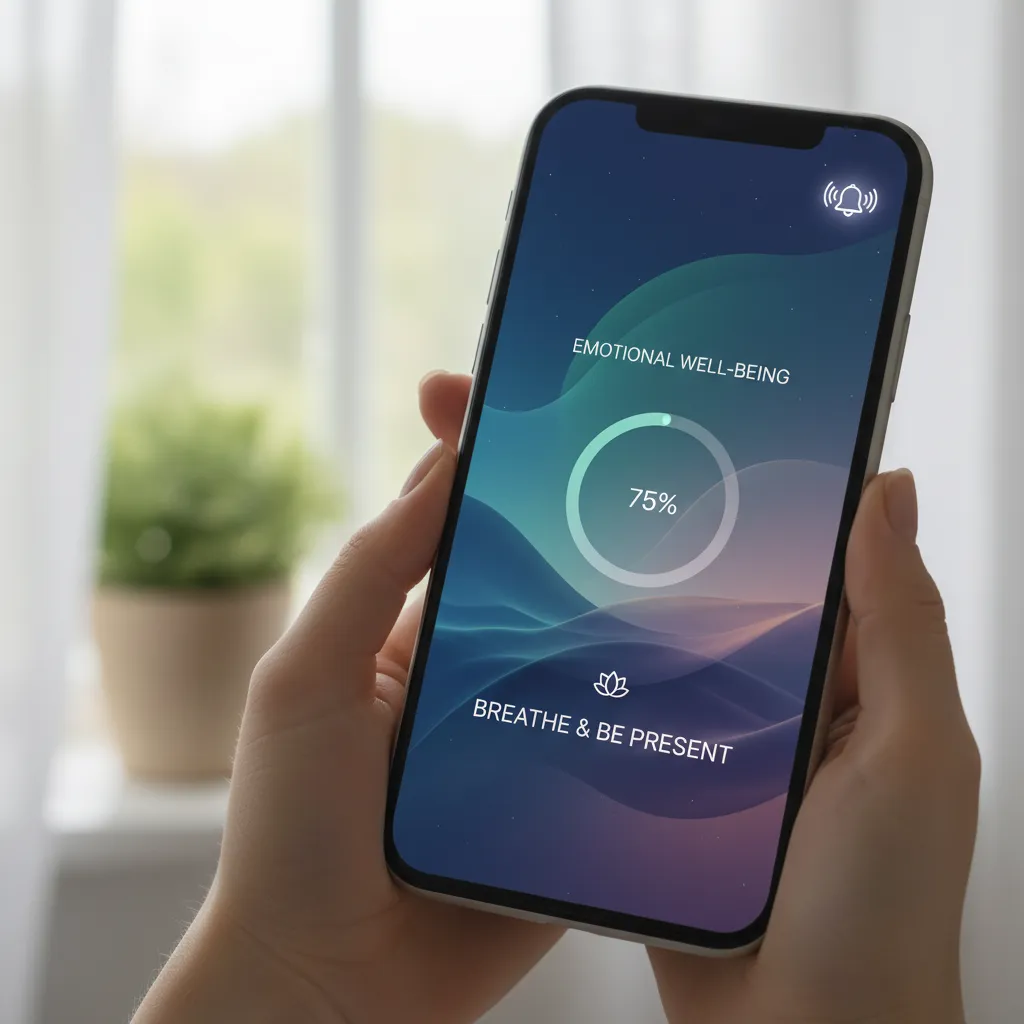
Imagine an app that asks how you’re feeling and, based on your answer (“anxious,” “unfocused,” “stressed”), instantly curates a specific guided meditation tailored to that state. The next level of this mind-body AI integration involves using biometric data from your smartwatch. The app might detect a rising heart rate and proactively suggest a 5-minute breathing exercise to help you find your center. This is the essence of holistic AI wellness—a system that understands and responds to both your mental and physical state in real time.
This move toward hyper-personalization makes mindfulness less of a chore and more of a responsive tool for daily emotional management. Related: Personalized Wellness Tech: Your Custom Path to Optimal Health
AI for Stress Reduction and Burnout Prevention
In the modern workplace, stress and burnout are at epidemic levels. AI is stepping in as a powerful ally, not just to manage stress when it happens, but to prevent it from taking hold in the first place through the establishment of sustainable, healthy habits.
Building Healthy Habits with AI Nudges
Consistency is the cornerstone of well-being. We all know we should take breaks, get enough sleep, and stay hydrated, but life gets in the way. AI can act as a gentle, intelligent accountability partner.
Instead of generic reminders, AI healthy habits platforms learn your personal rhythm. An AI might notice you haven’t stepped away from your computer in two hours and send a soft nudge suggesting a brief walk. It can analyze your sleep data and recommend an optimal bedtime, or remind you to drink water based on your activity levels. These micro-interventions help create and reinforce the positive routines that are fundamental to preventing AI burnout prevention.
Mind-Body AI Integration with Wearable Tech
The synergy between AI software and wearable technology (like the Apple Watch, Oura Ring, or Whoop strap) is where AI for stress reduction gets truly powerful. These devices collect a wealth of physiological data—heart rate variability (HRV), respiratory rate, sleep stages, and body temperature.
On its own, this data can be overwhelming. But AI algorithms can interpret it, transforming raw numbers into actionable insights.
- Low HRV? Your AI might suggest a low-intensity workout and a mindfulness session, recognizing your nervous system is under strain.
- Poor Sleep Quality? It could correlate this with a late-night workout or caffeine intake and suggest adjustments.
- Elevated Resting Heart Rate? It might flag this as a sign of impending illness or significant stress, prompting you to prioritize rest.
This data-driven approach allows for an unprecedented level of smart tech emotional balance, helping you understand how your lifestyle choices directly impact your physiological and emotional state. Related: iOS 18’s Best AI Features: A Deep Dive into Apple Intelligence
Smart Environments for Emotional Balance
The concept of tech for digital wellness extends beyond your phone. The future is an integrated ecosystem where your environment actively supports your well-being. Imagine a smart home where the AI detects you’ve had a stressful day based on your voice tone or calendar events.

In response, it could automatically:
- Dim the lights to a warmer, calmer hue.
- Play a curated playlist of relaxing ambient music.
- Suggest a guided breathing exercise through a smart speaker.
- Adjust the thermostat to a more comfortable temperature.
This isn’t science fiction; it’s the next evolution of AI life balance, where our living spaces become active participants in our mental and emotional health journey.
The Digital Detox Paradox: Using Tech to Fight Tech Overload
It sounds counterintuitive: using your phone to help you use your phone less. Yet, this is one of the most practical and powerful applications of AI for well-being. The goal isn’t to abandon technology entirely but to cultivate a healthier, more intentional relationship with it.
Intelligent Screen Time Management
Basic screen time trackers tell you how much time you’ve spent on apps, which can sometimes induce more guilt than change. AI screen time management tools are far more sophisticated. They learn your usage patterns and intervene intelligently.
For example, an AI tool might detect you’ve been scrolling social media aimlessly for 20 minutes and gently interrupt with a prompt like, “Is this how you want to be spending your time right now?” or suggest an alternative, more fulfilling activity. Some tools can dynamically block distracting apps during periods you’ve designated for deep work, acting as a proactive guardian of your focus and providing much-needed AI for focus and calm.
AI-Powered Digital Wellness Tools
True digital detox solutions are about rediscovering the analog world. AI can be a surprisingly effective bridge to facilitate this. Digital well-being tools are emerging that use AI to curate offline experiences.

Based on your location, interests, and available time, an AI could suggest:
- A specific hiking trail in a nearby park.
- A local art class or community event.
- A new recipe to cook, complete with a grocery list.
- A creative writing prompt to explore with a pen and paper.
By using data to encourage tech-free well-being, AI helps break the cycle of passive consumption and nudges us toward active, real-world engagement.
The Future of Mental Health AI: Trends and Ethical Considerations
The field of digital health AI trends is evolving rapidly. We’re on the cusp of even more integrated and intuitive technologies. The development of multimodal AI, which can understand and process information from text, images, and audio simultaneously, will lead to a more holistic understanding of an individual’s well-being. Related: Multimodal AI for Creatives: Unleashing New Horizons in Art, Design, and Content
However, with great power comes great responsibility. The ethical considerations are paramount:
- Data Privacy: Mental health data is incredibly sensitive. Companies in this space must adhere to the highest standards of encryption and user privacy.
- Algorithmic Bias: AI models are trained on data, and if that data is biased, the AI’s recommendations can be too. Ensuring fairness and equity is crucial.
- Over-reliance: It’s vital to remember that these are tools, not replacements for human connection or professional medical advice. The goal is augmentation, not dependency.
As we look toward what’s next, projects like Google’s vision for a seamless AI assistant show a future where these supportive technologies are woven even more deeply into our daily lives, hopefully for the better. Related: Project Astra: Google’s Vision for an AI-Powered Future
Conclusion
We are at a pivotal moment in the history of mental health. Artificial intelligence is fundamentally reshaping the landscape, moving us away from a purely reactive model and empowering us with the tools for proactive, daily emotional fitness. From personalized mental wellness plans that adapt in real-time to intelligent digital detox solutions that help us reclaim our focus, AI is becoming an indispensable partner in navigating the complexities of modern life.
The journey toward AI life balance is not about finding a magic algorithm to solve all our problems. It’s about leveraging these incredible digital well-being tools to build greater self-awareness, cultivate healthier habits, and foster a more intentional relationship with both our inner world and the technology that surrounds us. The future of mental health is personal, proactive, and profoundly more accessible—and AI is leading the charge.
What step will you take today to invest in your proactive emotional well-being?
Frequently Asked Questions (FAQs)
Q1. What is AI in mental health?
AI in mental health refers to the use of artificial intelligence technologies to develop tools that support, monitor, and improve emotional and psychological well-being. This includes everything from AI-powered chatbots that offer CBT techniques and AI companion emotional support, to apps that analyze mood patterns, and wearable devices that track physiological signs of stress.
Q2. How does AI help with emotional well-being?
AI helps by providing personalized, accessible, and scalable support. It can offer 24/7 access to coping strategies, guide users through mindfulness exercises, track mood and behavior patterns to increase self-awareness, and provide gentle nudges to encourage AI healthy habits. This makes daily mental fitness AI a more achievable goal for everyone.
Q3. Are AI mental health apps a replacement for therapy?
No. AI mental health apps are powerful AI-powered self-care tools, but they are not a replacement for a licensed human therapist. They are best viewed as a complementary resource—a “virtual emotional coach” for daily check-ins, skill-building, and support between professional therapy sessions, or as a first step for those exploring mental wellness resources.
Q4. What are some examples of AI-powered self-care tools?
Examples include chatbot apps like Wysa and Woebot that provide AI cognitive behavioral therapy conversations, AI mindfulness apps like Calm or Headspace that use AI to personalize meditation recommendations, and journaling apps like Reflectly that use AI to analyze your entries and provide emotional insights.
Q5. Can AI really help with a digital detox?
Yes. It seems paradoxical, but AI screen time management apps can be very effective. Instead of just blocking sites, they learn your habits and intelligently intervene to break cycles of mindless scrolling. They can also act as digital detox solutions by using your interests and location data to suggest engaging offline activities, promoting a healthier balance between the digital and real worlds.
Q6. Is my data safe with AI mental health apps?
Data privacy is a critical concern. Reputable AI mental health apps use strong encryption and have strict privacy policies, often complying with regulations like HIPAA. However, it is always essential for users to read the privacy policy of any app they use to understand how their data is collected, stored, and used before sharing personal information.