AI for Eco-Conscious Travel: Plan Sustainable Adventures Smarter

Introduction
The call to explore our planet has never been stronger, but with it comes a growing awareness of our footprint. We want to see the world’s wonders without contributing to their decline. This is the heart of eco-conscious travel: a desire for adventure balanced with a deep respect for the environment and local communities. But let’s be honest—planning a truly sustainable trip can be overwhelming. Sifting through endless blogs, deciphering “green” certifications, and avoiding tourist traps that harm local ecosystems is a full-time job.
What if you had a brilliant, data-savvy co-pilot for your journey? An expert that could instantly analyze flight emissions, vet eco-lodges for authenticity, and guide you to hidden gems that genuinely support local economies? This isn’t science fiction; it’s the new reality powered by Artificial Intelligence. AI for eco-conscious travel is transforming how we plan, experience, and reflect on our journeys, making sustainable choices easier and more accessible than ever.
This guide will explore how green travel technology is moving beyond simple booking algorithms. We’ll dive into the practical ways AI sustainable travel tools are helping travelers reduce their carbon footprint, discover ethical adventures, and contribute positively to the destinations they visit. Get ready to learn how to plan smarter, travel deeper, and become a true agent of change on your next adventure.
The New Compass: How AI is Redefining Green Travel Technology
For years, sustainable travel planning meant hours of manual research, cross-referencing reviews, and hoping for the best. The digital landscape was a jungle of information, rife with “greenwashing”—where businesses appear more environmentally friendly than they truly are. The core challenge for the conscious traveler has always been data overload and a lack of transparency.
Enter Artificial Intelligence. AI’s greatest strength is its ability to process and analyze colossal datasets in seconds. It can connect dots that a human researcher might miss, identifying patterns, verifying claims, and personalizing recommendations based on your specific ethical and environmental values.
This isn’t just about faster booking. It’s about a fundamental shift towards AI powered eco-tourism, where technology provides the clarity needed to make genuinely responsible decisions. AI acts as a sophisticated filter, cutting through the marketing noise to present options that align with a philosophy of preservation and respect. It’s the new, intelligent compass for the modern explorer, pointing the way toward a more sustainable and fulfilling way to see the world.
Step 1: Planning Your Journey with AI-Powered Eco-Intelligence
The most significant impact of your travels is often determined before you even pack your bags. The choices you make regarding transportation, accommodation, and activities set the stage for your entire trip’s footprint. This is where AI travel planning eco-friendly tools are becoming indispensable.
Personalized Itineraries that Prioritize the Planet
Generic, one-size-fits-all travel packages are becoming a thing of the past. Modern eco travel planner AI platforms are designed to build your trip from the ground up based on what matters most to you.
Instead of just asking for your destination and dates, these AI systems can incorporate preferences like:
- Low-Impact Activities: Prioritizing hiking, kayaking, or cycling over high-emission options.
- Community-Based Tourism: Suggesting tours and homestays run by local communities.
- Wildlife Conservation: Finding legitimate sanctuaries and ethical wildlife viewing opportunities.
- Travel Pace: Building a slower-paced itinerary to reduce transit emissions and encourage deeper cultural immersion.
By understanding your values, AI can craft personalized sustainable trips that are not only unique but also inherently more responsible. It moves beyond just finding a “green hotel” to architecting an entire journey that reflects a commitment to sustainability.
Related: Google’s Project Astra: The Future of AI as a Universal Agent?
Calculating and Minimizing Your Carbon Footprint
Understanding your travel’s carbon emissions has historically been a complex and often inaccurate process. AI is changing the game by providing clear, data-driven insights. New AI carbon footprint reduction travel tools integrate directly into the planning process.
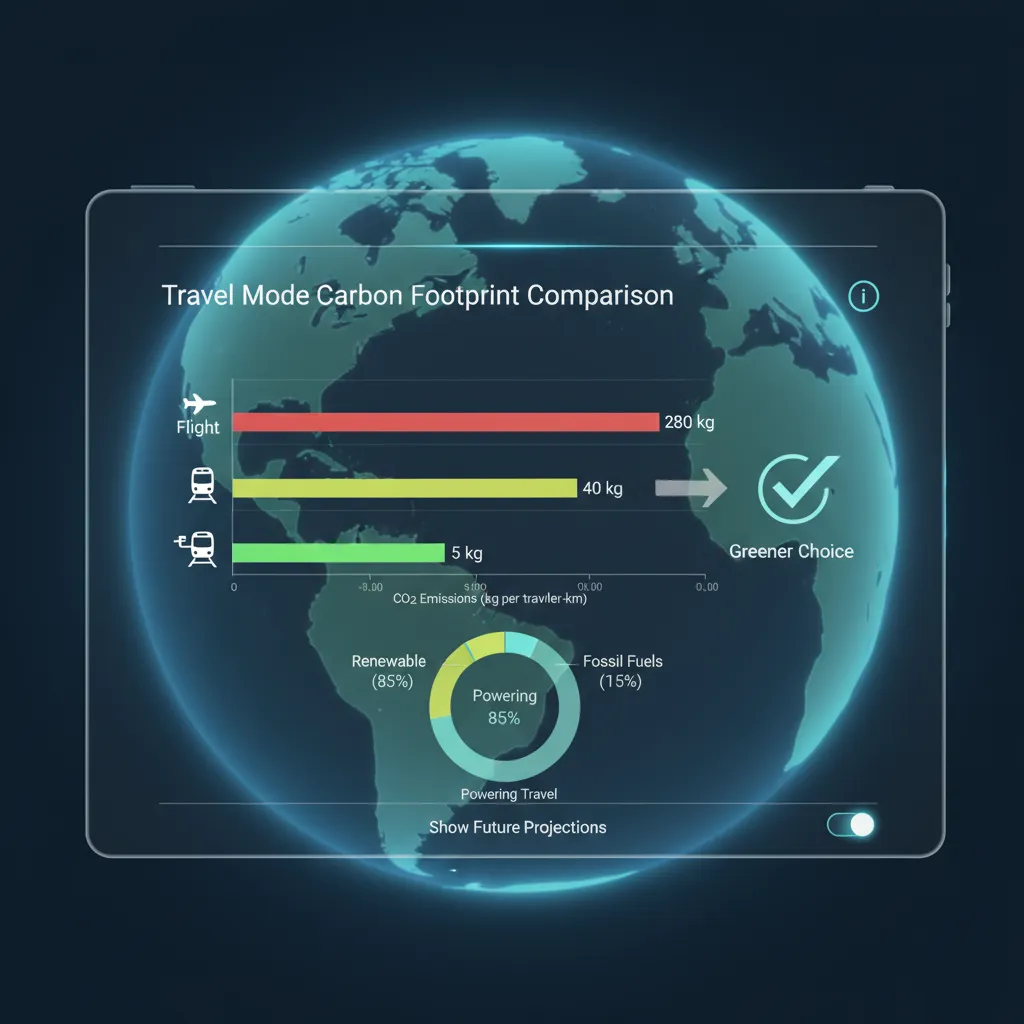
Here’s how they work:
- Transportation Analysis: AI algorithms can compare the carbon cost of different travel modes in real-time. They’ll show you the exact CO2 difference between taking a direct flight versus one with a layover, or a high-speed train versus a short-haul flight.
- Smarter Routing: Some platforms use AI to optimize multi-destination trips, creating the most efficient routes to minimize overall travel distance and emissions.
- Accommodation Impact: Advanced AI can estimate the environmental impact of your hotel choice by analyzing its energy sources, water conservation policies, and waste management practices.
This technology empowers you to see the direct consequences of your choices, making it easier to opt for the greener route. It’s about making AI minimizing travel impact a practical and visible part of your planning.
Related: Smart Home Energy Savings: Top Gadgets for Eco-Friendly, Affordable Living
Decoding “Greenwashing” with Intelligent Vetting
One of the biggest hurdles for eco-travelers is distinguishing authentic sustainable businesses from those that just use savvy marketing. AI is becoming a powerful “greenwashing” detector.
By analyzing vast amounts of unstructured data, AI can:
- Verify Certifications: Cross-reference a hotel’s claimed eco-certifications with official databases to ensure they are legitimate and current.
- Analyze Guest Reviews for Sentiment: Go beyond star ratings to analyze the text of thousands of reviews, looking for keywords related to sustainability, local sourcing, and community engagement.
- Scrutinize Corporate Policies: Scan a company’s published sustainability reports and policies for concrete data and measurable goals, flagging vague or non-committal language.
This level of due diligence, performed in seconds, provides a layer of trust and transparency that was previously impossible, ensuring your sustainable vacation planning AI is built on a foundation of truth.
Step 2: On the Ground – Smart AI Tools for Eco-Travelers in Action
Your commitment to sustainability doesn’t end once your trip begins. AI-powered tools in your pocket can help you make better choices in real-time, enhancing your experience while reducing your negative impact.
Discovering Authentic, Local, and Sustainable Experiences
The best travel memories often come from stepping off the beaten path and connecting with the local culture. AI local sustainable travel apps are designed to help you do just that, acting as a guide to authentic experiences.

These tools can:
- Recommend Locally-Owned Businesses: Using geolocation and curated databases, AI can point you toward restaurants that source from local farms, shops that sell artisan goods, and cafes owned by community members. This ensures your money directly supports the local economy.
- Find Ethical Encounters: For a AI driven eco-adventure, these platforms can differentiate between exploitative animal tourism and genuine conservation projects or ethical wildlife viewing tours.
- Translate and Communicate: Real-time AI translation tools break down language barriers, enabling more meaningful interactions with local people.
Related: The Web3 Creator Economy: Empowering Artists and Innovators
Real-Time Resource Management and Waste Reduction
Being a conscious traveler involves being mindful of the resources you consume. AI can help you manage your environmental impact on a daily basis. Think of an AI green travel guide that helps with practical, everyday actions:
- Finding the nearest water bottle refill station to avoid single-use plastics.
- Locating recycling and composting bins in an unfamiliar city.
- Providing real-time public transit information to encourage car-free exploration.
- Recommending restaurants that are part of food waste reduction programs.
These small, AI-assisted actions compound over the course of a trip, adding up to a significantly smaller environmental footprint.
Step 3: Beyond Your Trip – AI’s Role in Regenerative and Ethical Tourism
The most advanced applications of AI in travel look beyond individual trips to address systemic issues like overtourism and environmental degradation. This is where AI shifts from a planning tool to a powerful force for AI and regenerative tourism.
Combating Overtourism with Predictive Analytics
Overtourism threatens fragile ecosystems and historic sites, from Venice’s canals to Iceland’s glaciers. Responsible travel AI systems use predictive analytics to combat this problem. By analyzing data from social media, flight bookings, and historical trends, AI can:
- Forecast Crowd Levels: Predict when specific locations will be overcrowded and suggest alternative times or days to visit.
- Disperse Tourists: Recommend lesser-known but equally beautiful alternative attractions, spreading the economic benefits of tourism more evenly and reducing pressure on hotspots.
- Manage Visitor Flow: Help authorities implement smart tourism strategies, like timed entry systems or dynamic pricing, to manage crowds effectively.

This data-driven approach is crucial for preserving the world’s most beloved destinations for future generations.
Related: The Metaverse at Work: Revolutionizing Remote Collaboration & Virtual Offices
Empowering Conservation Efforts through Data
Your travels can also contribute to conservation. Many AI sustainable tourism solutions now incorporate citizen science. AI-powered apps can help you identify plant and animal species with your phone’s camera, automatically logging the sighting with GPS data for use by conservation researchers.
At a larger scale, AI is used to:
- Monitor Wildlife: Drones equipped with AI analyze aerial footage to count animal populations and track their movements without disturbing them.
- Prevent Poaching: AI algorithms can predict poaching hotspots by analyzing patrol data, animal locations, and environmental factors.
- Restore Ecosystems: AI analyzes satellite imagery to monitor deforestation, coral bleaching, and the success of reforestation projects.

When you choose tour operators who use or support this eco-friendly travel tech, you are directly contributing to the preservation of the places you’ve come to see.
The Future of Sustainable Travel: What’s Next for AI?
We are only at the beginning of the future of sustainable travel AI. The integration of AI into our travel habits will become deeper, more seamless, and even more powerful.
We can expect to see:
- Hyper-Personalization: AI agents that know your travel style and sustainability priorities so well they can proactively suggest trips and experiences, handling all the complex ethical vetting behind the scenes.
- Augmented Reality (AR) Guides: Imagine pointing your phone at a product and having AI instantly tell you its origin, carbon footprint, and whether it was ethically made.
- Integration with Smart Devices: Your AI assistant might suggest walking instead of a taxi because it knows your fitness goals and the weather, while also calculating the carbon savings.
- Policy and Infrastructure Planning: Governments and tourism boards will use AI to design more sustainable tourism infrastructure and create policies that protect natural and cultural heritage.
The AI impact on eco-travel is not just about convenience; it’s about embedding consciousness into every stage of the journey. As AI becomes more sophisticated, so will our ability to explore the world in a way that is truly restorative.
Related: The Rise of AI PCs: Why 2024 is a Game Changer
Conclusion
Traveling sustainably is no longer a niche concept; it’s an essential mindset for the modern global citizen. The challenge has never been a lack of desire, but a lack of clear, accessible information. Artificial Intelligence is bridging that gap. It’s the tool that sifts through the noise, quantifies our impact, and illuminates the path to more responsible choices.
From planning a low-carbon itinerary and finding truly eco-friendly hotels to discovering authentic local businesses and avoiding overcrowded destinations, AI for conscious travelers is a game-changer. It empowers us to move beyond passive tourism and become active participants in the preservation and celebration of our planet’s diverse cultures and ecosystems.
The next time you start dreaming of a new destination, consider inviting an AI co-pilot along for the planning phase. Embrace the power of smart eco travel technology. By making smarter, data-informed decisions, you’re not just planning a vacation—you’re investing in a healthier, more equitable, and more beautiful world for everyone.
Frequently Asked Questions (FAQs)
Q1. How can AI promote sustainable tourism?
AI promotes sustainable tourism by providing data-driven tools for both travelers and the industry. It helps travelers plan low-carbon journeys, find vetted eco-friendly accommodations, and avoid overtourism. For the industry, AI optimizes resource management in hotels, aids in wildlife conservation, and helps authorities manage visitor flow to protect sensitive environments.
Q2. How does AI help in reducing carbon emissions from travel?
AI helps reduce travel-related carbon emissions by analyzing and comparing the carbon footprint of different transportation options in real-time. AI-powered tools can suggest more efficient routes, recommend direct flights over those with layovers, and show the emission savings of choosing rail travel over short-haul flights, enabling travelers to make informed, lower-impact choices.
Q3. Can AI help me find eco-friendly hotels?
Yes, absolutely. AI is a powerful tool for finding genuinely eco-friendly hotels by cutting through “greenwashing.” It can verify eco-certifications, analyze thousands of guest reviews for comments on sustainable practices, and scrutinize a hotel’s published environmental policies to ensure they are taking concrete action on energy, water, and waste reduction.
Q4. What is an example of a sustainable travel practice powered by AI?
A great example is using an AI-powered app to combat overtourism. The app might analyze real-time data and historical trends to advise you that a famous landmark is currently overcrowded. It would then suggest a less-crowded but equally compelling alternative nearby, perhaps a local market or a park, thereby improving your experience and reducing strain on the popular site.
Q5. What are the challenges of using AI in tourism?
The main challenges include data privacy concerns, the risk of algorithmic bias favoring larger or more technologically advanced businesses, and the high cost of implementation for smaller operators. There’s also the challenge of ensuring the AI’s data is accurate and up-to-date to prevent misleading recommendations.
Q6. How can technology reduce the negative impact of tourism?
Technology, particularly AI, can reduce tourism’s negative impact by enabling smart resource management (e.g., reducing energy and water waste in hotels), providing data to manage visitor flow and prevent overcrowding, helping travelers calculate and minimize their carbon footprint, and supporting conservation efforts through AI-powered monitoring of wildlife and ecosystems.