The AI Creativity Revolution: Transforming Art, Music & Design
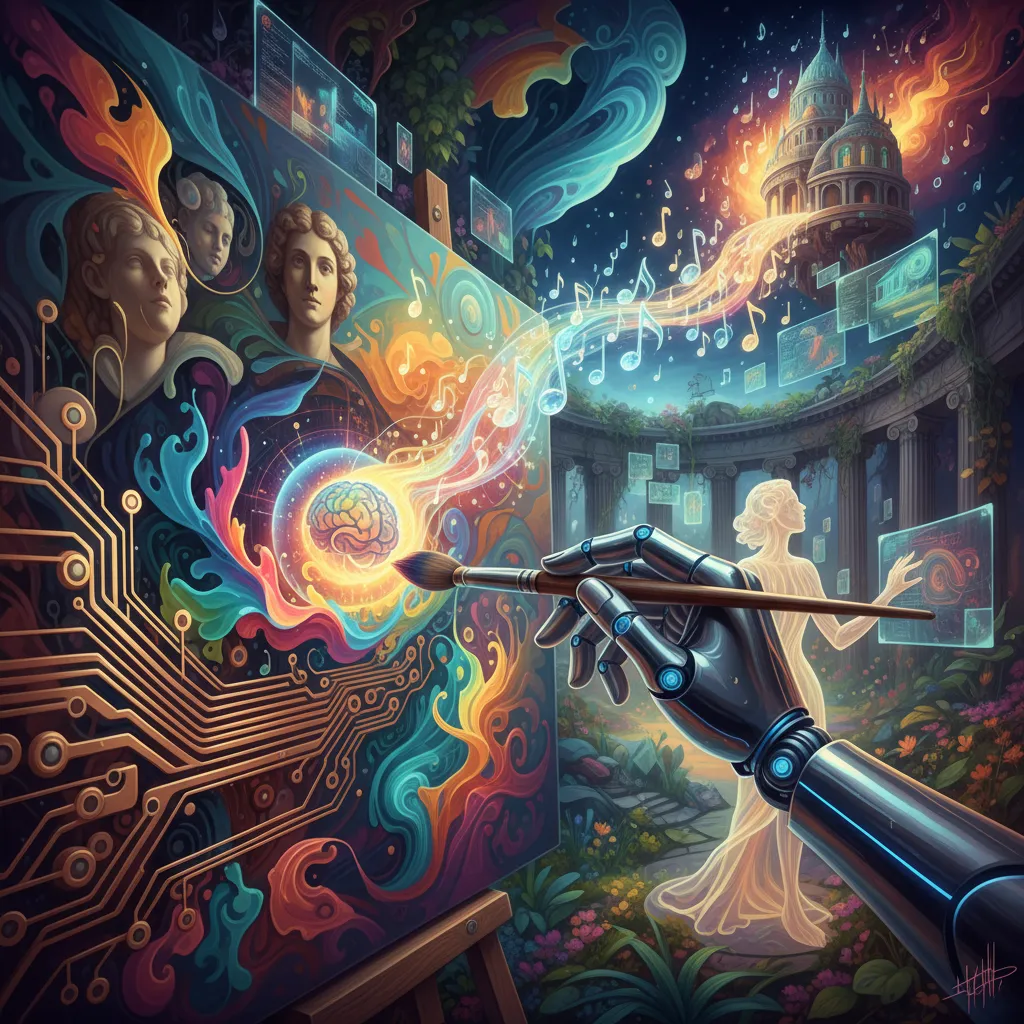
Throughout human history, artistic expression evolved alongside technological revolutions—from the invention of oil paint and printing presses to electronic synthesizers and digital tablets.
The AI creativity revolution represents the most profound creative shift of our era. Generative algorithms are breaking down traditional technical barriers, turning imagination itself into the primary medium of artistic creation.
[!NOTE] What is the AI Creativity Revolution? The AI creativity revolution is the convergence of multimodal diffusion models, neural audio synthesizers, and parametric design algorithms that enable creators to generate complex visual, musical, and architectural works through human-directed algorithmic collaboration.
⚖️ Traditional Disciplinary Silos vs. AI-Powered Creative Fusion
| Creative Domain | Traditional Siloed Production | AI Multimodal Creative Fusion | Artistic Evolution |
|---|---|---|---|
| Visual Arts | Months mastering brushwork & pigment | Instant synthesis of novel artistic hybrids | Infinite stylistic exploration |
| Music Composition | Constrained by instrumental proficiency | Generative MIDI, stem isolation, & stem remixing | Hyper-experimental soundscapes |
| Architecture | Manual drafting of static blueprints | Algorithmic generative bio-mimetic forms | Structurally optimized green buildings |
| Fashion & Textiles | Costly physical fabric sampling | 3D virtual garment simulation & zero waste | Sustainable digital couture |
| Creative Barrier | Years of mechanical technique mastery | Intuition, emotional taste, & conceptual vision | Democratized global expression |
🎼 The 4 Creative Frontiers Transformed by AI
Multimodal Creative Fusion:
Visual Arts Synthesis ──► Neural Music Composition ──► Parametric Architecture ──► Cross-Medium Brainstorming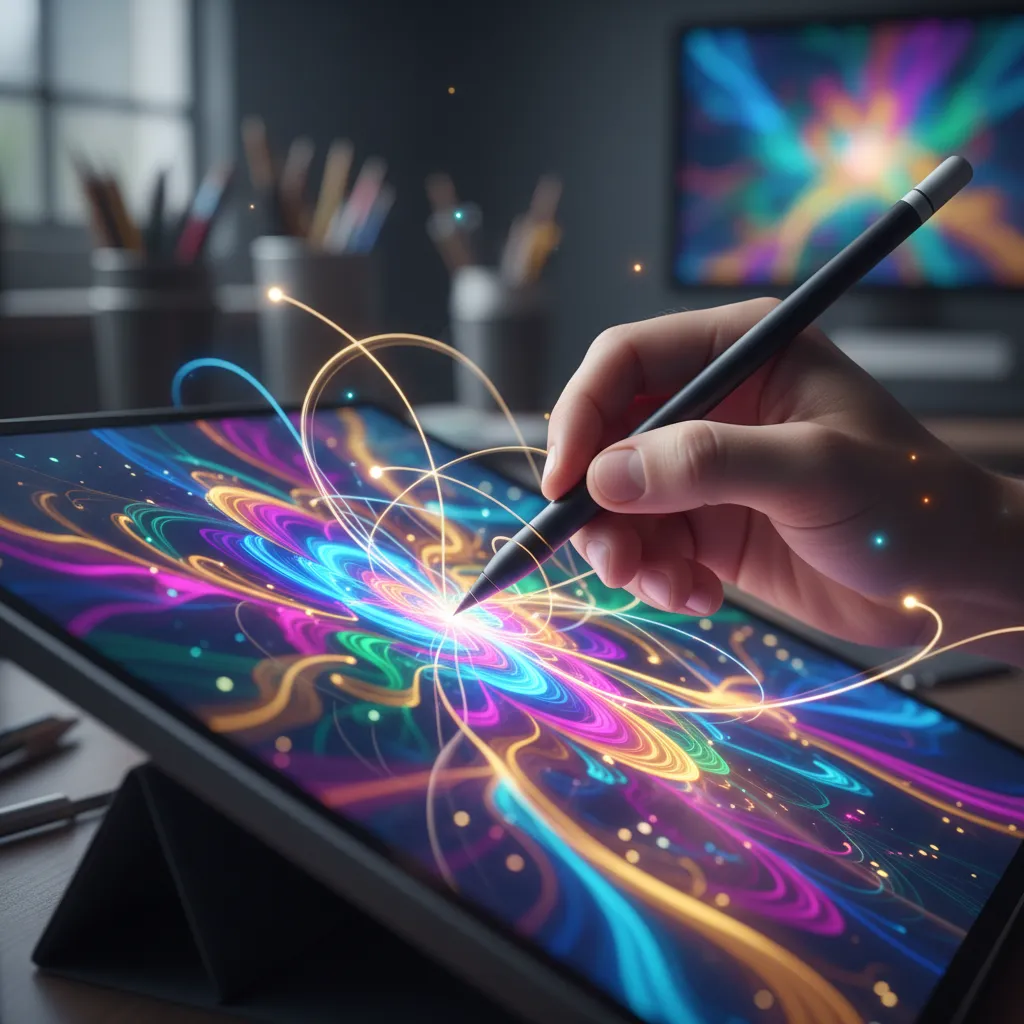
1. Digital Painting & Hybrid Visual Media
Visual artists use neural diffusion models as virtual apprentices—generating intricate background geometries and unconventional color palettes to blend with physical brushwork.
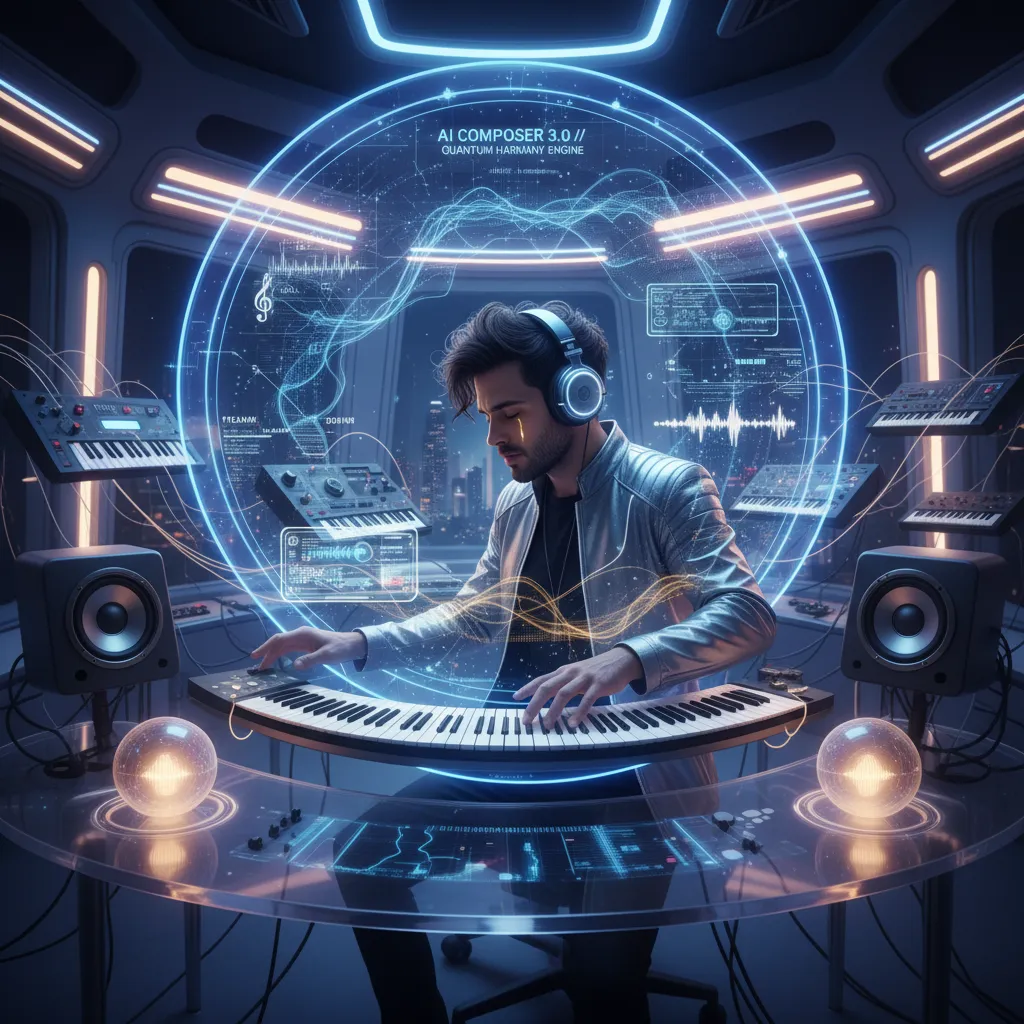
2. Neural Audio Composition & Sound Design
Sound engineers use AI models to isolate vocals from vintage recordings, synthesize impossible acoustic instruments, and dynamically adapt video game soundtracks to player emotions in real time.
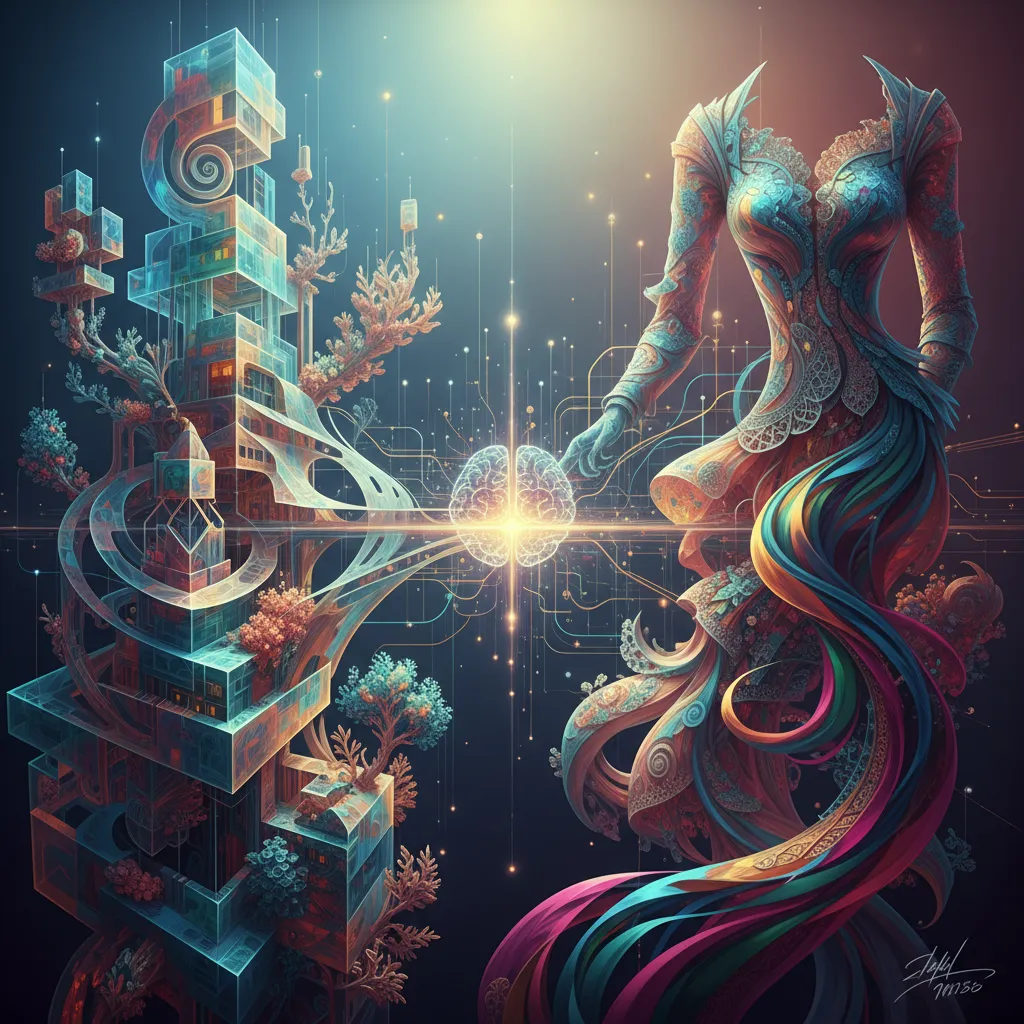
3. Parametric Architecture & Bio-Mimetic Fashion
Architects deploy generative structural algorithms that mimic natural cellular structures, designing ultra-strong, lightweight skyscrapers that require 30% less concrete and steel.
For insights into how algorithms curate and display digital art collections in modern spaces, explore our guide on AI Art Curation & Discovery.
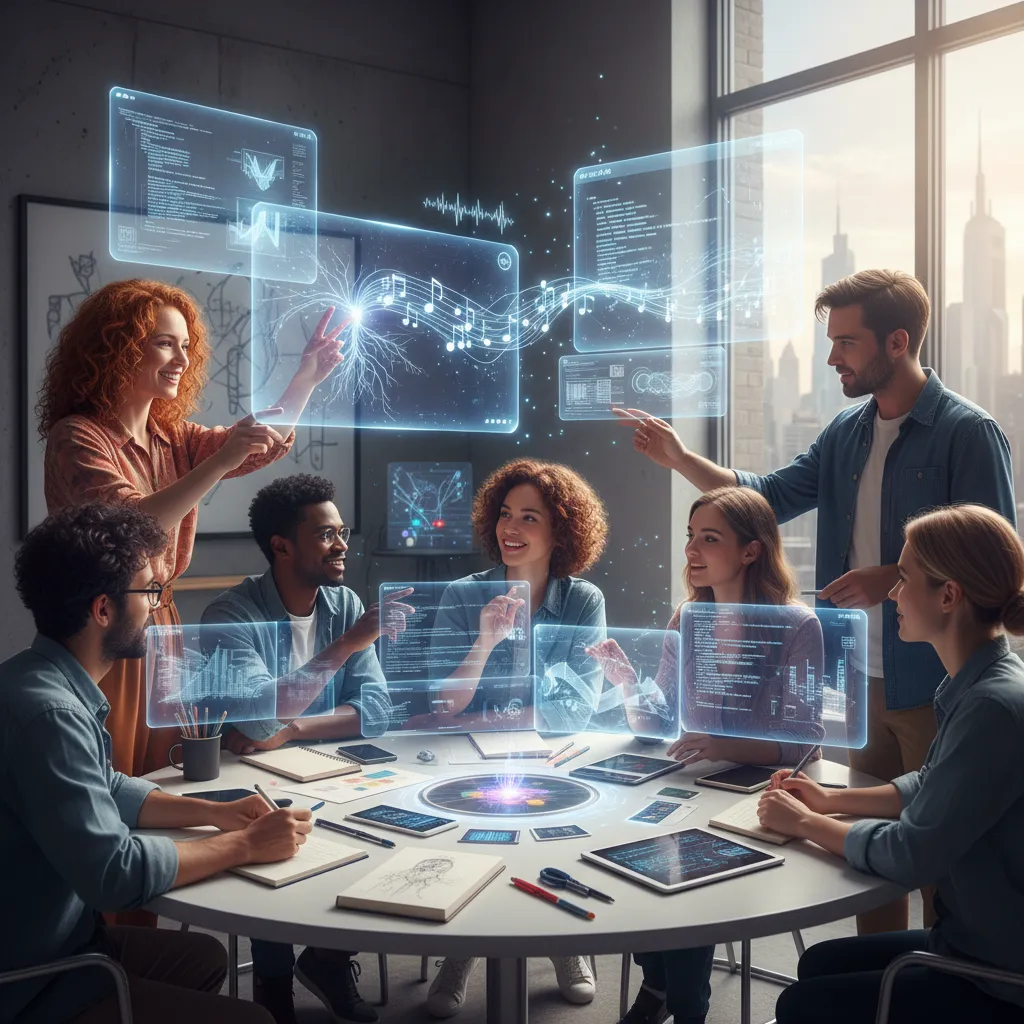
4. Cross-Disciplinary Human-AI Brainstorming
Creative teams collaborate across shared spatial interfaces, translating a musical melody into visual color harmonies or turning a written poem into an architectural concept in real time.
🚀 3 Guiding Principles for the Future of Creative Expression
- Cultivate Unique Aesthetic Discernment: When anyone can generate an image, the true differentiator is your taste, storytelling, and emotional vulnerability.
- Combine Digital Tools with Physical Craft: The most compelling modern artworks blend algorithmic digital textures with physical canvas, sculpture, and performance.
- Pioneer Uncharted Genres: Use AI to invent art forms that were previously physically or mathematically impossible to create.