AI City Surveillance: Balancing Public Safety with Privacy Rights

Introduction
Imagine walking through a bustling city square. Above, a discreet camera notes the flow of traffic, instantly alerting authorities to a fender bender and rerouting emergency services. A nearby smart sensor detects an unusual spike in air pollutants, tracing it back to a faulty industrial vent. This is the promise of the smart city—a technologically advanced urban environment where data and AI work in harmony to create a safer, more efficient, and more livable space. At the heart of this vision lies AI city surveillance.
This network of intelligent cameras, sensors, and algorithms forms the digital nervous system of modern urban landscapes. It offers unprecedented capabilities for AI public safety, from thwarting crimes before they happen to managing city-wide emergencies with breathtaking speed. But as these AI monitoring systems become more powerful and pervasive, they cast a long shadow, forcing us to confront a critical 21st-century dilemma: How do we harness the incredible benefits of urban surveillance AI without sacrificing our fundamental rights to privacy and autonomy?
This article dives deep into this complex debate. We’ll explore the groundbreaking ways smart city technology is enhancing urban life, dissect the significant AI privacy concerns and ethical questions it raises, and map out a framework for balancing AI safety privacy. From facial recognition in smart cities to the ethics of predictive policing AI, we’ll navigate the fine line between a watchful protector and an overbearing Big Brother, seeking a future where technology serves our cities without compromising our civil liberties.
The Promise: How AI is Revolutionizing Urban Safety
The allure of AI-powered surveillance is undeniably strong for city planners and law enforcement agencies. Faced with growing populations and strained resources, AI solutions for cities offer a way to do more with less, transforming public safety from a reactive discipline to a proactive one. The benefits of AI surveillance extend far beyond simple security, touching nearly every aspect of urban management.
Proactive Crime Prevention and Real-Time Response
At its core, AI crime prevention is about identifying patterns invisible to the human eye. By analyzing vast datasets from AI cameras in public spaces, these systems can detect anomalies that often precede criminal activity. For instance, an AI can learn the normal rhythm of a street and flag unusual behavior, such as someone loitering near an ATM late at night or a vehicle circling a block repeatedly.
This capability extends to real-time incident detection. Advanced computer vision algorithms can automatically identify:
- Traffic Accidents: Instantly alerting emergency services with the precise location and severity.
- Fires and Smoke: Detecting fires faster than traditional smoke alarms, especially in large public areas.
- Public Disturbances: Recognizing the audio and visual signatures of a fight or a crowd in distress, allowing for rapid police dispatch.
- Gunshot Detection: Acoustic sensors paired with AI can pinpoint the location of a gunshot within seconds, dramatically reducing response times.
This is how AI enhances city safety in a tangible way—by shrinking the gap between an incident occurring and help arriving.

Optimizing City Operations and Emergency Services
A truly smart city uses its surveillance infrastructure for more than just crime. Smart city infrastructure integrated with AI can lead to massive efficiency gains. Consider traffic management: AI can analyze live video feeds from across the city to adjust traffic light timing dynamically, easing congestion, reducing pollution, and ensuring emergency vehicles have a clear path.
During large-scale events like natural disasters or public gatherings, AI provides a comprehensive overview, helping authorities manage crowd flow, identify potential bottlenecks, and deploy resources where they’re needed most. This bird’s-eye view is crucial for effective disaster response and maintaining public order. Related: How AI is Revolutionizing Daily Routines and Habits.
The Peril: Navigating the Privacy and Ethical Minefield
While a safer, more efficient city is a laudable goal, the path to achieving it with AI surveillance is fraught with ethical peril. The very tools that promise to protect us also have the potential to create a society of constant, unchecked monitoring, raising profound questions about privacy in smart cities and the future of AI and civil liberties.
The Erosion of Privacy and Anonymity
The most immediate and visceral of the AI privacy concerns is the loss of anonymity. In a city blanketed with facial recognition smart cities technology, every public movement can be tracked, logged, and analyzed. This creates a digital record of our lives—where we go, who we meet, and what we do.
This constant scrutiny can have a “chilling effect” on society. People may become hesitant to attend protests, visit certain religious institutions, or associate with particular groups for fear of being misjudged by an algorithm or a government entity. The impact of AI on privacy is not just about data; it’s about the freedom to live without the persistent feeling of being watched.
The Specter of Algorithmic Bias
One of the most significant smart city challenges AI presents is algorithmic bias. AI systems learn from data, and if that data reflects historical biases, the AI will learn and amplify them. In the context of predictive policing AI, this is incredibly dangerous. If historical arrest data shows a higher rate of arrests in minority neighborhoods (often due to over-policing, not a higher rate of crime), the AI will learn to flag those areas as “high-risk,” leading to a feedback loop of even more policing and arrests.
This isn’t theoretical. Studies have shown that some facial recognition systems have higher error rates for women and people of color, leading to a greater risk of false identification. Ethical AI surveillance demands that we confront and mitigate these biases, but doing so is a monumental technical and societal challenge. Related: Implementing Explainable AI in Your Business.

Data Security and the Risk of Misuse
Collecting vast amounts of sensitive citizen data creates an irresistible target for hackers and a powerful tool for potential misuse. The question of how to secure smart city data is paramount. A major breach could expose the personal movements and habits of millions of people.
Furthermore, there is the issue of government AI surveillance. While often implemented in the name of security, this centralized data can be repurposed for social control, as seen in some authoritarian regimes. Clear, legally-binding rules on who can access this data and for what purpose are essential to prevent a slide into a surveillance state. Data privacy smart surveillance must be the default, not an afterthought.
The Technology Under the Magnifying Glass
To understand the debate, it’s crucial to look at the specific surveillance tech trends shaping our cities. The technology is far more sophisticated than the grainy CCTV footage of the past.
AI-Powered Cameras and Computer Vision
Modern AI cameras in public spaces are intelligent edge devices. They don’t just record; they analyze. Using computer vision, they can perform:
- Object Recognition: Identifying vehicles, packages, and weapons.
- License Plate Reading: Automatically logging vehicle movements.
- Behavioral Analysis: Detecting falls, fights, or erratic movements.
- Crowd Density Monitoring: Measuring crowd sizes and flows to prevent dangerous overcrowding.
Facial Recognition: A Double-Edged Sword
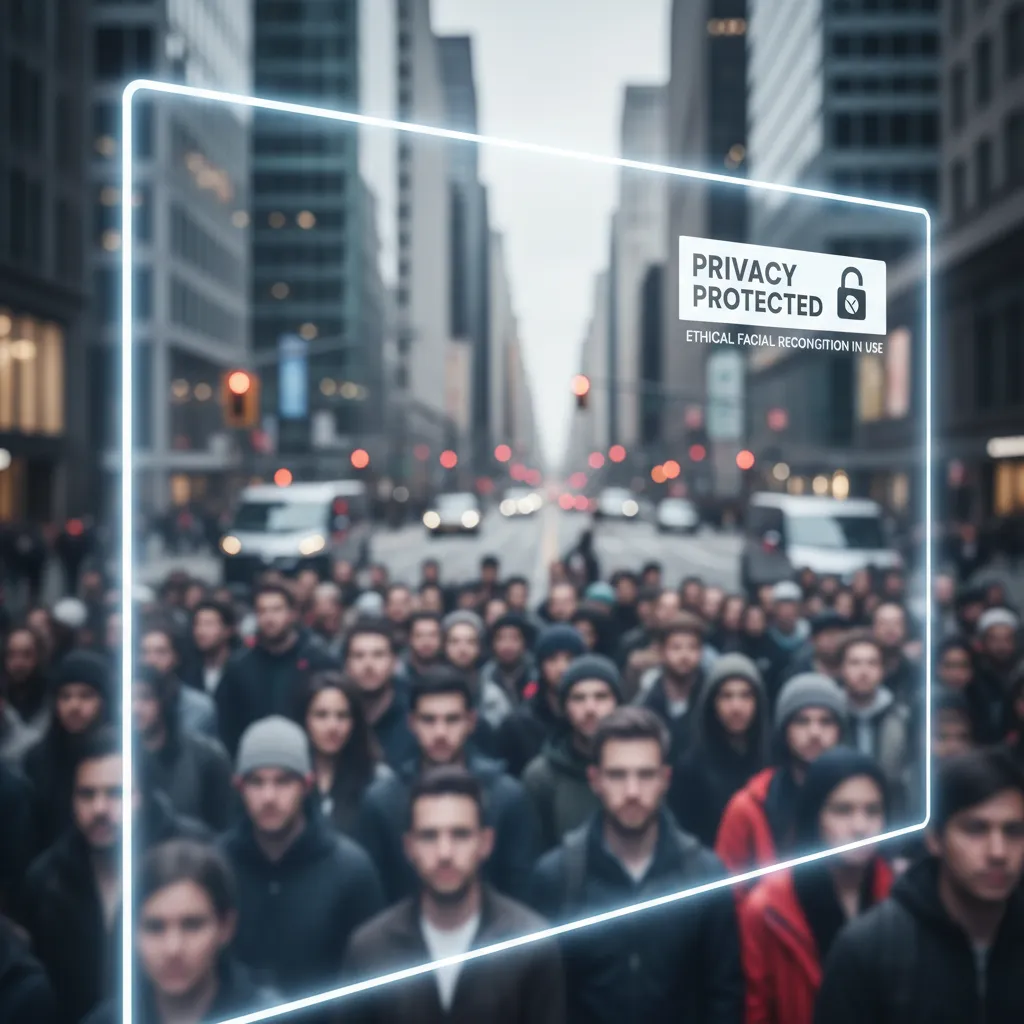
Facial recognition is perhaps the most controversial piece of the urban surveillance AI puzzle. On one hand, it can be a powerful tool for finding missing persons or identifying dangerous criminals in a crowd. On the other, its potential for mass tracking and the high stakes of a misidentification make it a technology that many civil liberties groups argue should be heavily regulated or even banned for public surveillance. The drawbacks of AI surveillance are often most starkly illustrated by this technology.
Sensor Networks and the IoT Ecosystem
AI surveillance isn’t limited to what we can see. The modern smart city is a rich ecosystem of Internet of Things (IoT) devices. Acoustic sensors can detect gunshots or breaking glass. Environmental sensors monitor air and water quality. This data, when fed into an AI platform, provides a multi-layered understanding of the urban environment, creating a city that not only sees but also hears and feels.
Striking the Balance: A Framework for Responsible Implementation
The challenge is not to halt progress but to guide it. We can build smart cities that are both safe and free, but it requires a deliberate and thoughtful approach centered on AI ethics urban planning. A framework for achieving this balance must be built on several key pillars.
Pillar 1: Transparency and Public Accountability
Citizens have a right to know how they are being monitored. Cities must be transparent about:
- What AI monitoring systems are in use and where they are located.
- What kind of data is being collected.
- How that data is being used, stored, and secured.
- Which government agencies or private partners have access to it.
Public consultations and civilian oversight boards are essential to build trust and ensure the technology serves the community’s interests, not just the government’s.
Pillar 2: Robust Legal and Regulatory Frameworks
Technology moves faster than legislation, creating a “wild west” environment. We need strong, clear AI privacy regulations urban frameworks that establish firm boundaries. Inspired by regulations like Europe’s GDPR, these laws should codify citizen privacy rights AI and mandate principles such as:
- Purpose Limitation: Data collected for traffic management should not be used for criminal surveillance without a warrant.
- Data Minimization: Collect only the data that is absolutely necessary for a specific, legitimate purpose.
- Strict Access Controls: Define who can view the data and under what circumstances, with a clear audit trail.
Pillar 3: Privacy by Design
Privacy shouldn’t be a feature you add on later; it must be baked into the smart city infrastructure from the very beginning. This “Privacy by Design” approach involves using Privacy-Enhancing Technologies (PETs) like:
- Anonymization and Pseudonymization: Stripping personally identifiable information from data before it’s analyzed. For example, analyzing crowd flow without identifying individual faces.
- Federated Learning: Training AI models on data locally (e.g., on the camera itself) without sending raw, sensitive footage to a central server.
- Differential Privacy: Adding statistical “noise” to datasets to protect individual identities while still allowing for valuable large-scale analysis.

Pillar 4: Human Oversight and Intervention
Ultimately, AI should be a tool to augment, not replace, human judgment. For critical decisions—like identifying a criminal suspect or dispatching a tactical unit—there must always be a human in the loop. This ensures accountability and provides a crucial check against algorithmic errors or biases. Relying solely on automated systems for high-stakes decisions is a recipe for disaster and an abdication of moral responsibility. Related: The Wearable AI Revolution for Mind and Body Wellness.
The Future of Urban Security: Trends to Watch
The conversation around the future of urban security is constantly evolving. As technology advances, we can expect to see several key trends emerge. There will be a greater push towards edge computing, where more data is processed locally on devices to minimize the amount of sensitive information sent to centralized cloud servers. We will also likely see the rise of more sophisticated AI that can deliver security insights without relying on personally identifiable data, focusing on events and patterns rather than people.
The global debate will intensify, leading to a patchwork of regulations as different cities and countries decide where they want to fall on the spectrum between safety and privacy. The cities that succeed will be those that treat this not as a technical problem, but as a socio-technical one, fostering an open dialogue with their citizens to build a shared vision for their technological future. Related: AI in Space Exploration: Unveiling Cosmic Mysteries.
Conclusion
AI city surveillance is one of the most powerful and polarizing technologies of our time. It holds the potential to create urban environments that are safer, cleaner, and more responsive to the needs of their inhabitants. Yet, it also holds the potential to erode the very freedoms and privacies that make city life vibrant and diverse.
The path forward is not a simple choice between safety and privacy; it is about finding a sustainable and ethical equilibrium. The solution lies not in the code, but in our collective values. By demanding transparency, enacting robust regulations, designing technology with privacy at its core, and insisting on human accountability, we can steer the development of our smart cities. We can build a future where intelligent technology acts as a guardian of public safety while also fiercely protecting the rights and dignity of every citizen. The conversation is happening now, in city halls and community forums around the world, and it’s one we all need to be a part of.
Frequently Asked Questions (FAQs)
Q1. What are the main benefits of AI surveillance in smart cities?
The primary benefits include enhanced public safety through proactive crime prevention, faster emergency response times, and real-time incident detection (like accidents or fires). It also helps optimize city operations, such as managing traffic flow to reduce congestion and improve air quality.
Q2. What are the biggest privacy risks of urban surveillance AI?
The biggest risks are the erosion of personal anonymity through mass tracking, especially with facial recognition technology. This can create a “chilling effect” on free expression and assembly. Other major risks include algorithmic bias leading to discrimination against certain communities and the potential for massive data breaches or misuse of citizen data by governments.
Q3. How does facial recognition work in smart cities?
In smart cities, cameras capture faces in public spaces and convert them into a unique digital signature (a faceprint). AI algorithms then compare these faceprints against vast databases—which could include driver’s license photos, mugshots, or social media images—to identify individuals in real-time.
Q4. What is ‘predictive policing AI’ and is it biased?
Predictive policing AI uses historical crime data to forecast where and when future crimes are most likely to occur, allowing police to allocate resources to those “hotspots.” However, it is highly susceptible to bias. If the historical data reflects past patterns of over-policing in minority neighborhoods, the AI will amplify that bias, unfairly targeting those communities and creating a discriminatory feedback loop.
Q5. How do you balance public safety and privacy in AI surveillance?
Balancing safety and privacy requires a multi-pronged approach. Key strategies include establishing strong legal and regulatory frameworks (like GDPR), implementing “Privacy by Design” principles (such as data anonymization), ensuring full transparency with the public, and maintaining meaningful human oversight for all critical decisions made by the AI.
Q6. Can AI surveillance ever be truly ethical?
Achieving truly ethical AI surveillance is a significant challenge but is theoretically possible if built on a foundation of public trust and robust safeguards. This requires a commitment to eliminating algorithmic bias through rigorous testing, strict legal limits on its use, complete transparency in its operation, and a system where the primary goal is to serve the community’s well-being without infringing on fundamental human rights.