AI as Your Creative Partner: Empowering Artists, Writers & Designers
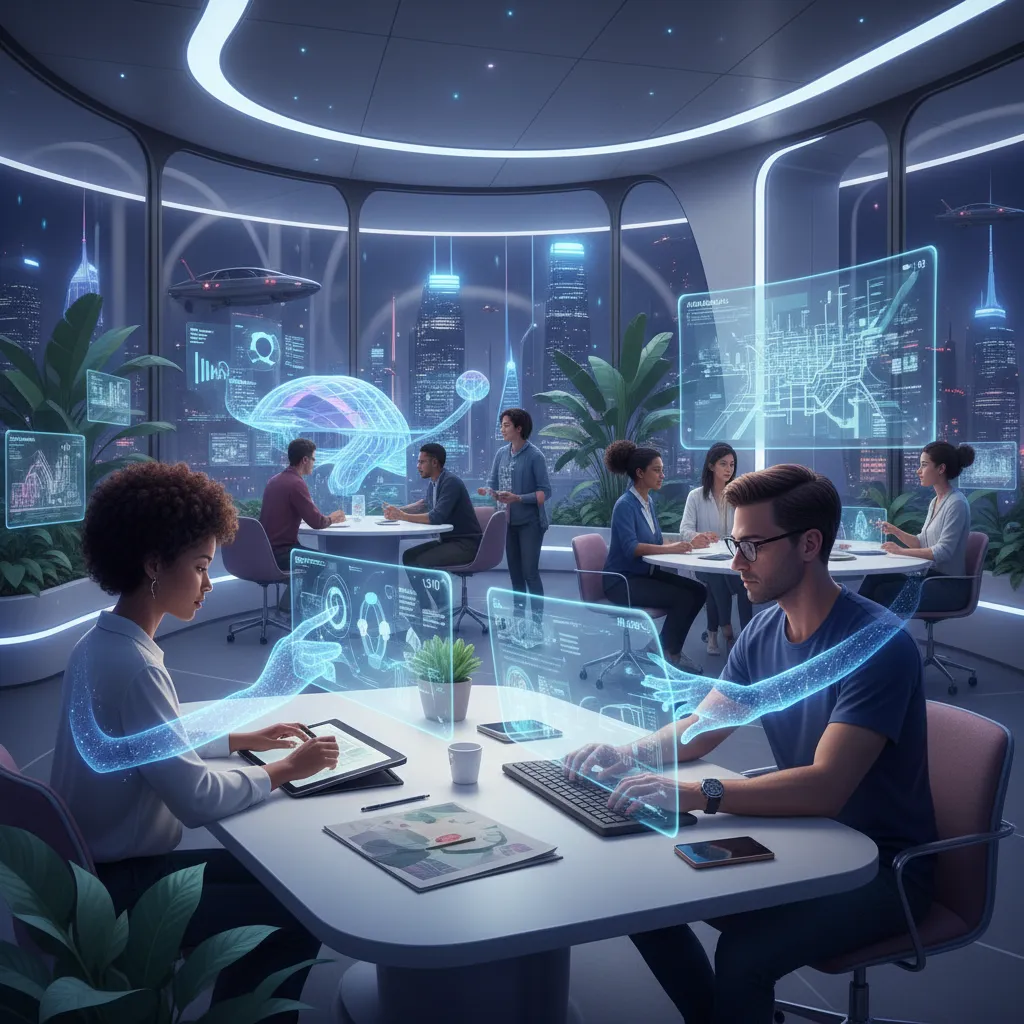
For centuries, the creative process has been a solitary, often grueling dance between an artist and a blank page, a silent canvas, or an unwritten score. But a new partner has entered the studio, one that doesn’t compete for the spotlight but instead offers an infinite wellspring of inspiration, a tireless assistant, and a co-conspirator in the act of creation. This partner is Artificial Intelligence.
The conversation around AI for creatives has often been shadowed by fear and uncertainty. Will it replace us? Does it devalue human skill? The narrative is shifting. We’re moving beyond the dystopian headlines to a more nuanced and exciting reality: AI is not the new artist; it’s the new paintbrush, the new chisel, the new collaborator. It’s a force for AI augmented creativity, a tool that can amplify our own innate talents to previously unimaginable heights.
This article explores the new frontier of AI and artistic collaboration. We’ll delve into the specific creative AI applications that are transforming workflows for artists, writers, and designers. You’ll discover how to leverage AI art tools, writing assistants, and design software not to replace your genius, but to unlock it. Get ready to meet your new creative partner.
The New Creative Revolution: Moving from Passive Tools to Active Partners
For decades, digital tools have been largely passive. Adobe Photoshop waits for your command. Final Cut Pro doesn’t suggest edits. They are powerful, but they are reactive. The innovation in arts today lies in the shift from these passive tools to active, AI-powered partners.
This isn’t just about automation; it’s about augmentation. Think of an AI writing assistant that doesn’t just correct your grammar but helps you brainstorm plot twists. Imagine AI design software that generates a hundred logo variations in seconds, freeing you to focus on the high-level conceptual work. This is the core of the new creative paradigm. It’s about a symbiotic relationship where human intuition guides the raw computational power of AI.
The future of creative work isn’t human versus machine; it’s human with machine. This collaborative model allows for faster iteration, the demolition of creative blocks, and the exploration of styles and ideas that would be too time-consuming or technically difficult to pursue alone. The AI becomes a copilot, handling some of the navigational complexities so you can focus on steering the ship toward a unique destination.
Related: The Rise of AI Copilots: Revolutionizing Work, Boosting Creativity & Driving Innovation
For the Visual Virtuoso: AI Empowering Artists and Illustrators
The visual arts have experienced one of the most dramatic and visible transformations with the rise of generative AI art. For painters, illustrators, and digital artists, AI opens up a universe of possibilities, acting as a tireless sketch artist, a master of styles, and an infinitely patient assistant.
From Blank Canvas to Infinite Concepts
The terror of the blank canvas is a universal experience for artists. What to create? Where to begin? AI tools for artists like Midjourney, DALL-E 3, and Stable Diffusion are revolutionary for this initial ideation phase. Instead of spending hours sketching thumbnails, an artist can generate dozens of visual concepts in minutes.
The key lies in mastering the new language of creativity: the prompt. Crafting effective AI prompts for artists is a skill in itself, a blend of poetic description and technical precision.
- Simple Prompt: “an astronaut”
- Detailed Prompt: “cinematic photo, an astronaut floating in a nebula of swirling magenta and cyan, helmet visor reflecting a distant red dwarf star, hyper-detailed, volumetric lighting, 8K, octane render”
This process isn’t about letting the AI do all the work. It’s a conversation. The artist directs, the AI generates, and the artist curates, refines, and then uses these outputs as a springboard for their own unique work in Photoshop, Procreate, or on a physical canvas.

Enhancing Digital Workflows
Beyond pure generation, AI is being seamlessly integrated into the tools artists already use, supercharging existing workflows. The rise of new AI creative software and plugins is a game-changer for AI productivity for designers and artists alike.
- Adobe Firefly: Built directly into Photoshop and Illustrator, it offers features like “Generative Fill,” allowing you to select an area of an image and describe what you want to add, remove, or change. Need to extend a background or add a character? Just type it.
- Topaz Labs: Their suite of AI tools can intelligently upscale low-resolution images, remove noise, and sharpen details with a level of clarity that was previously impossible.
- Style Transfer: AI models can analyze the style of a master painter like Van Gogh and apply it to your photograph or digital painting, enabling incredible stylistic experimentation.
This integration of AI for digital artists and illustrators automates the tedious, technical tasks, preserving the artist’s most valuable resource: creative energy.
Related: iOS 18 Photos & Genmoji: The Ultimate AI Guide
For the Wordsmith: The AI Writing Assistant in Every Author’s Toolkit
Writers, from novelists to content marketers, are finding a powerful ally in AI. The modern AI writing assistant is far more than a glorified spell-checker; it’s a brainstorming partner, an editor, and a muse on demand, making it one of the most vital AI tools for writers block.
Conquering the Dreaded Writer’s Block
Every writer knows the feeling of staring at a blinking cursor, the words refusing to come. AI writing tools for authors can be the jolt needed to get the engine started.
- Brainstorming and Outlining: Tools like Jasper, Sudowrite, and even the advanced models in ChatGPT or Claude can help you flesh out ideas. You can feed them a simple premise (“a detective story set on Mars”) and ask for plot points, character backstories, or chapter outlines.
- Expanding on Ideas: If you have a sentence but can’t build a paragraph, AI can offer multiple ways to expand upon it, helping you find the right direction and tone.
- Finding the Right Words: Stuck on a description? Ask an AI to “describe a futuristic city in a noir style,” and you’ll get a wealth of sensory details and vocabulary to weave into your own prose.
This process of AI content creation isn’t about letting the bot write your book. It’s about generating possibilities and breaking through the mental logjams that stall progress.
Related: What is GPT-4o? OpenAI’s New AI Explained
Refining and Polishing Your Masterpiece
Once the first draft is down, the real work of writing—rewriting—begins. Here, AI tools become invaluable editors.
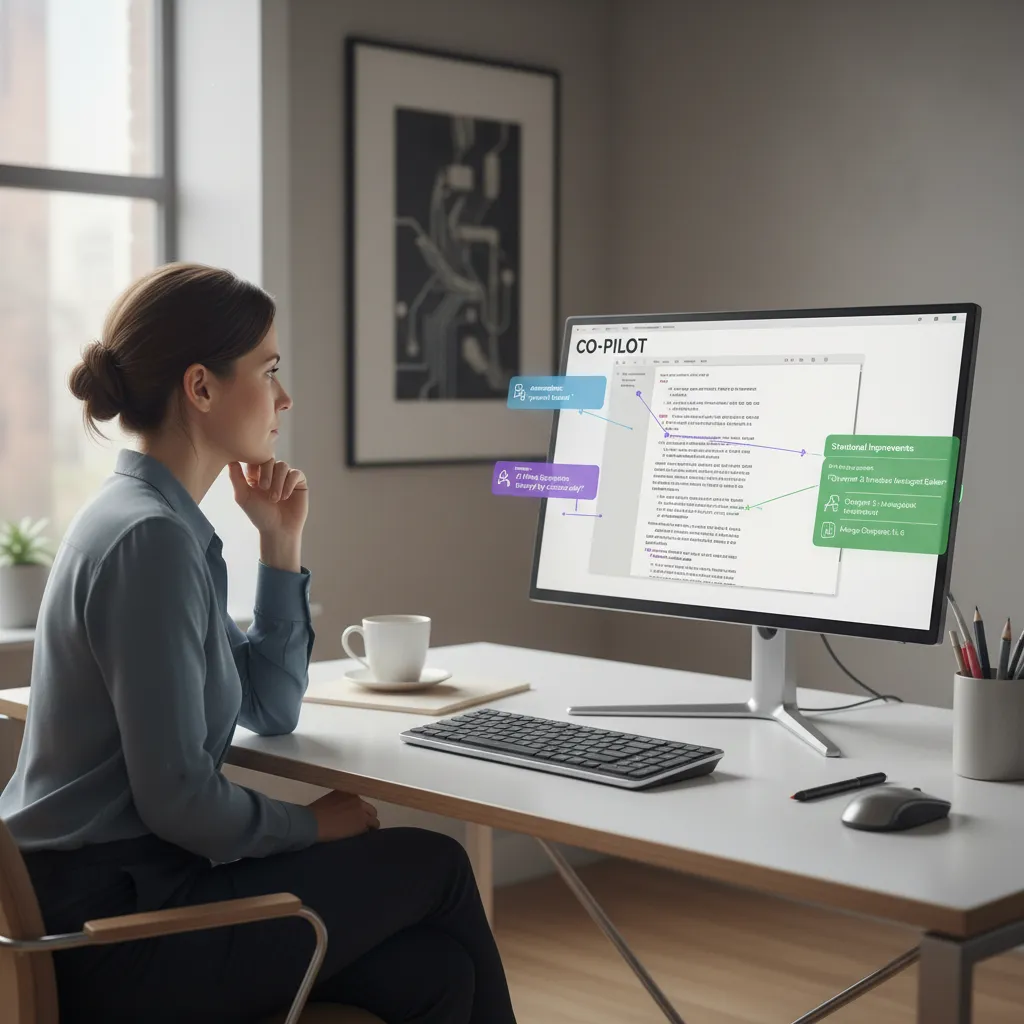
- Advanced Grammar and Style: Tools like Grammarly and ProWritingAid use AI to go beyond simple comma splices. They analyze sentence structure, suggest improvements for clarity and conciseness, and help maintain a consistent tone.
- Summarization and Analysis: You can input a long chapter and ask an AI to summarize the key points, helping you check for pacing issues or plot holes.
- Content Marketing and SEO: For those involved in AI for content marketing, tools like SurferSEO or MarketMuse analyze top-ranking content and provide AI-driven suggestions on keywords, headings, and topics to cover, ensuring your work reaches its intended audience.
By handling the mechanical aspects of editing, AI allows the writer to maintain a “big picture” view of their story and message.
Related: Claude 3.5 Sonnet: The New AI Speed King
For the Design Maverick: Reimagining Design with AI Software
The world of graphic design is built on structure, rules, and systems, making it fertile ground for AI innovation. AI in graphic design is not about replacing the designer’s eye but about accelerating the design process and automating repetitive tasks, leading to more robust and creative AI-powered design workflows.
Rapid Prototyping and Ideation
The initial phase of any design project—gathering ideas, creating mood boards, and developing initial concepts—can be incredibly time-consuming. AI design software acts as a force multiplier here.
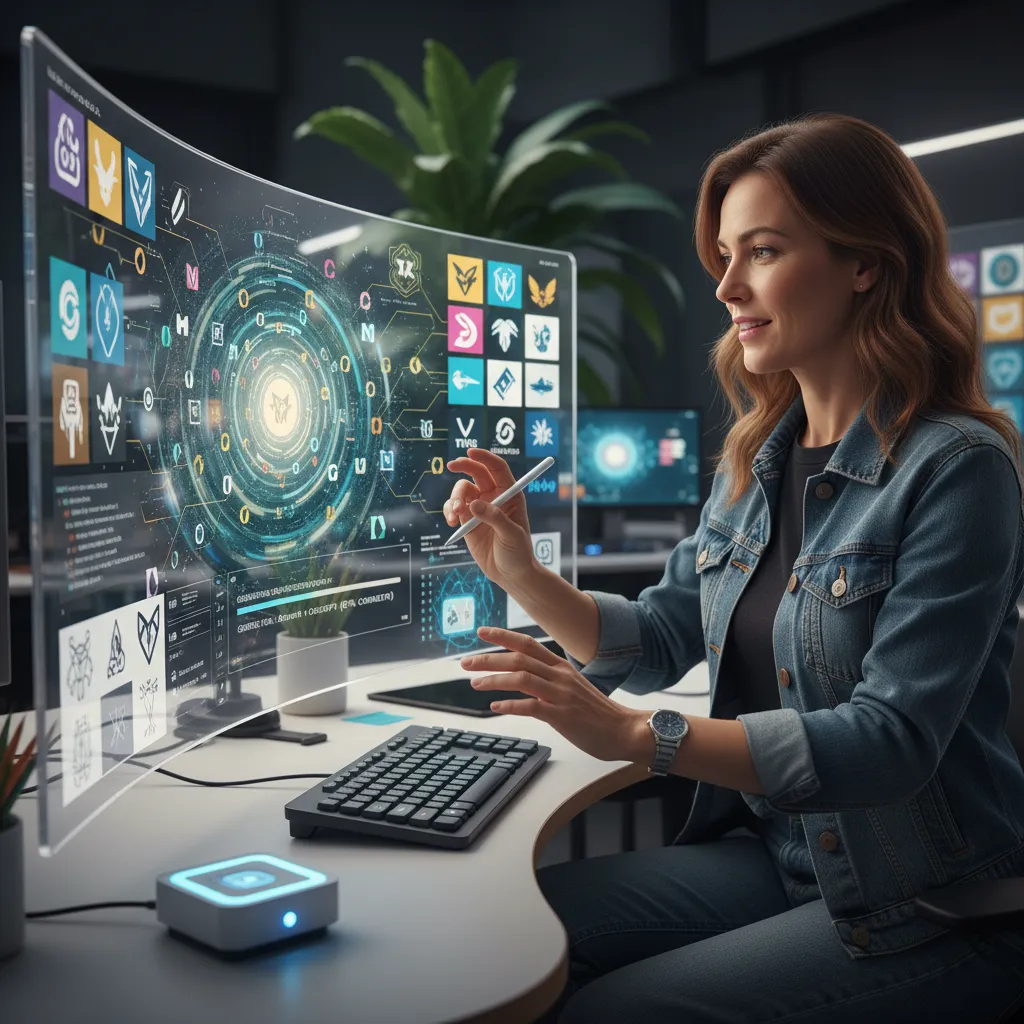
- Logo and Brand Generation: Services like Looka or Midjourney can generate hundreds of logo concepts based on a few keywords. While the final product will almost always require a human designer’s touch for refinement and strategic thinking, this initial explosion of ideas can save days of work.
- UI/UX Prototyping: Tools like Galileo AI and Uizard can convert simple text descriptions or hand-drawn sketches into high-fidelity, editable mockups for websites and apps. This allows designers to test and iterate on user flows at lightning speed.
- Generating Design Assets: Need a unique icon set, a custom pattern, or a series of social media templates? AI can generate these assets based on your brand guidelines, ensuring consistency while offering creative variations.
Automating the Mundane, Amplifying the Creative
One of the biggest boons for AI productivity for designers is the automation of non-creative tasks. Every minute saved on tedious work is a minute that can be spent on strategy and creativity.
- Intelligent Tools in Canva and Figma: Popular design platforms are integrating AI to automate tasks like background removal, magic resizing of designs for different formats, and even generating presentation slides from a simple prompt.
- Predictive Design: AI is being developed to analyze user interaction data and suggest improvements to UI/UX design, such as optimizing button placement for better conversion rates.
- Automated Variation Creation: Imagine designing one ad and having AI instantly generate 50 variations with different layouts, images, and calls-to-action for A/B testing. This is the power of AI in the modern design workflow.
By taking over the grunt work, AI frees designers to become true creative directors, focusing on brand strategy, user experience, and the emotional impact of their work.
Related: AI-Powered Digital Twins: Revolutionizing Industries for Future Innovation
Beyond the Big Three: Exploring Other Creative AI Applications
While art, writing, and design are at the forefront, the wave of creative technology trends powered by AI is touching every corner of the AI in creative industries.
AI in Music Composition
AI is becoming a valuable collaborator for musicians and composers. Platforms like Amper Music, Soundraw, and Boomy can generate royalty-free background music tailored to a specific mood, length, and genre. For serious composers, tools like Orb Composer use AI to suggest chord progressions, melodies, and orchestrations, acting as a tireless musical theory partner. This field of AI in music composition isn’t about replacing the composer but offering new harmonic pathways and overcoming creative blocks.
Intelligent Video Editing
Video editing is a labor-intensive process, but AI video editing tools are streamlining the workflow.
- Adobe Premiere Pro’s Scene Edit Detection: Automatically finds cuts in an already-edited video, saving hours of manual work.
- Descript: A revolutionary tool that transcribes your video and allows you to edit the video simply by editing the text document. Deleting a sentence in the transcript removes that clip from the video.
- RunwayML: Offers a suite of AI “magic tools,” including object removal from video, automatic background replacement, and motion tracking.
These tools allow creators to focus more on storytelling and less on the painstaking, frame-by-frame mechanics of editing.
Related: AI in the Kitchen: Reshaping the Future of Food & Gastronomy
The Future of Creative Work: A Symphony of Human and Machine
So, what does this all mean for the future? The roles of artists, writers, and designers are not disappearing; they are evolving. The emphasis is shifting from pure technical execution to creative direction, curation, and strategic thinking. AI and human creativity are not in conflict but are becoming deeply intertwined.
The creative professional of the future will be a conductor, orchestrating a suite of AI tools to bring their vision to life. The value will lie in the uniqueness of their ideas, the depth of their emotional intelligence, and their ability to guide these powerful systems to create something truly new and meaningful. The technology handles the “how,” allowing us to focus on the “what” and, most importantly, the “why.”
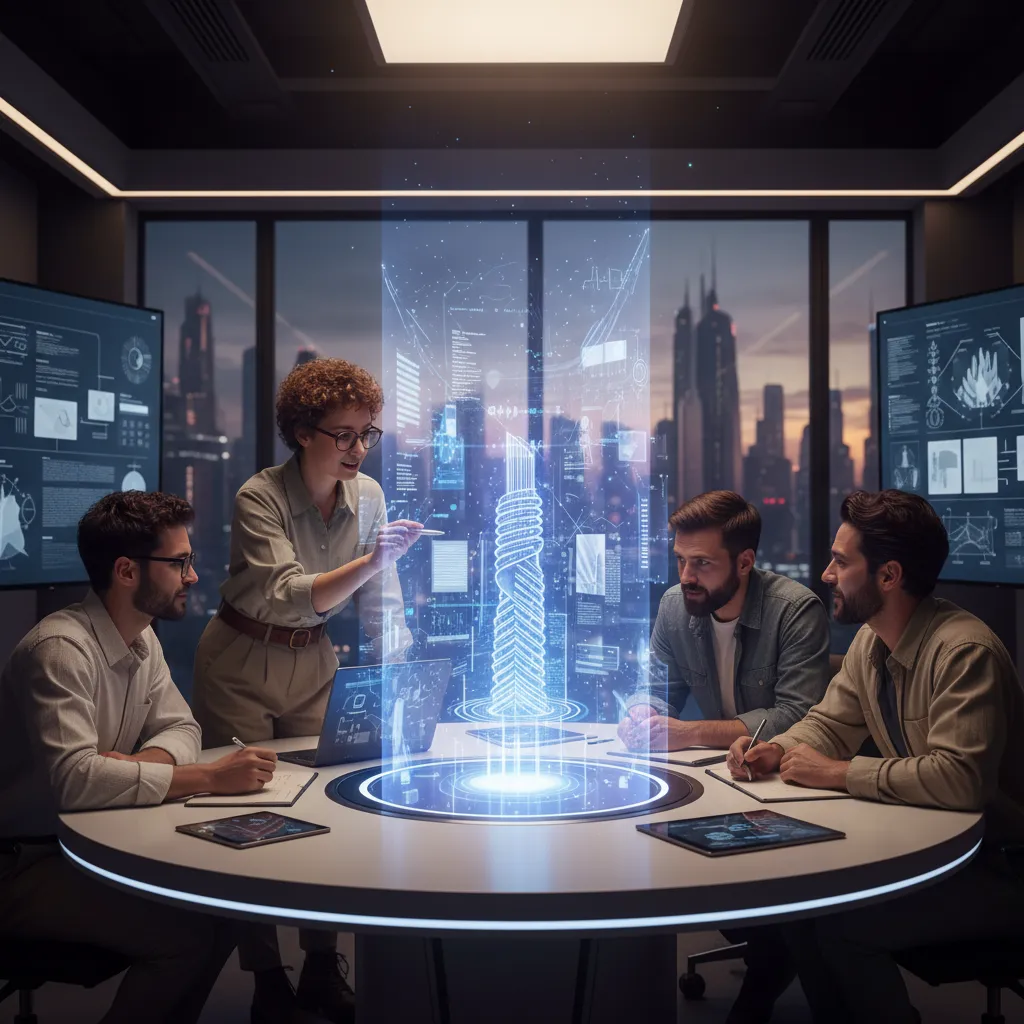
This new era of AI and artistic collaboration democratizes creation. An independent filmmaker can generate a custom score. A startup founder with no design skills can prototype a visually appealing app. A novelist can explore plot variations with a speed previously unthinkable. Boosting creativity with AI is about lowering the barrier to entry and raising the ceiling of what’s possible.
Related: The Future of Human-Robot Collaboration: AI’s Next Frontier
Conclusion: Your New Creative Partner Awaits
The rise of AI in the creative industries is not a threat to human ingenuity—it is its next great catalyst. We are at the dawn of a new renaissance, where technology serves not to mechanize art, but to humanize it by freeing us from our limitations. By embracing AI as a collaborator, we can explore, iterate, and create with unprecedented freedom and speed.
Whether you’re an artist seeking new forms of expression, a writer battling the blank page, or a designer aiming to build the future, these tools are here to augment your talent, not appropriate it. The canvas is now infinite, the library contains every book ever written, and the design studio can render a million ideas in the blink of an eye. The story is still yours to tell.
The only question left is: How will you collaborate with your new creative partner?
Frequently Asked Questions (FAQs)
Q1. How does AI enhance creativity?
AI enhances creativity by acting as a powerful tool for ideation, iteration, and execution. It can generate a vast number of concepts quickly, helping creators overcome blocks. It automates tedious tasks, freeing up mental energy for high-level creative thinking. And it enables the exploration of new styles and mediums that would be manually difficult or time-consuming to access, thereby augmenting and expanding a human’s creative potential.
Q2. Will AI replace creative professionals?
While AI will automate certain tasks, it is unlikely to replace creative professionals entirely. Instead, it is transforming creative roles. The future of creative work will likely emphasize skills like creative direction, strategic thinking, curation, and the unique human ability to imbue work with emotion, context, and narrative. AI is becoming a collaborator, not a replacement.
Q3. What are the best AI tools for artists?
The best AI tools for artists depend on their needs. For image generation and concept art, Midjourney, DALL-E 3, and Stable Diffusion are industry leaders. For integrating AI into an existing workflow, Adobe Firefly within Photoshop and Illustrator is incredibly powerful. For upscaling and refining images, tools from Topaz Labs are highly regarded.
Q4. Can AI help with writer’s block?
Absolutely. This is one of AI’s most powerful applications for writers. AI writing assistants like Jasper, Sudowrite, or even advanced chatbots like ChatGPT-4o can help by brainstorming plot ideas, suggesting character traits, writing outlines, or rephrasing sentences in different tones. They act as a tireless brainstorming partner to help get the words flowing again.
Q5. What is generative AI in design?
Generative AI in design refers to AI systems that can create new, original design assets from text prompts or other inputs. This includes generating logos, website layouts (UI/UX), illustrations, patterns, and product mockups. It dramatically accelerates the ideation and prototyping phases of the design process.
Q6. Is using AI in art considered cheating?
This is a subject of ongoing debate, but the growing consensus is that AI is a tool, much like a camera or Photoshop. The creativity and artistry come from the human directing the tool—crafting the prompts, curating the results, and refining the output into a final piece. It’s not cheating; it’s a new medium with its own unique set of skills and artistic challenges. The final intent and vision still originate from the human artist.