AI Agents for Everyday Automation: Your Ultimate Guide to a Smarter Life

Feeling overwhelmed by the endless stream of notifications, chores, and repetitive tasks that define modern life? You’re not alone. The daily grind can feel like a relentless game of catch-up, leaving little room for focus, creativity, or simply being present. But what if you had a team of tireless digital helpers working behind the scenes to manage the chaos?
This isn’t science fiction; it’s the reality of AI agents. These intelligent systems are more than just the reactive voice assistants we’ve grown accustomed to. They are proactive, autonomous problem-solvers designed to perceive their digital environment, make decisions, and take action on your behalf. They are the key to unlocking a new level of personal and professional efficiency.
In this ultimate guide, we’ll demystify the world of AI agents for everyday automation. You’ll learn exactly what they are, how they can simplify your life, and which AI productivity tools you can start using today to automate daily tasks and build a smarter, more streamlined existence.
What Exactly is an AI Agent? (And Why It’s Not Just a Chatbot)
The term “AI” is everywhere, but “AI agent” signifies a crucial leap forward. While a chatbot or a standard AI assistant like Siri or Alexa primarily reacts to your commands, an AI agent is designed to be proactive.
Think of it this way:
- A chatbot is like a customer service rep at a call center. You ask a question, they look up the answer and give it to you. The interaction ends there.
- An AI agent is like a personal chief of staff. You give it a high-level goal—“Organize my business trip to Tokyo next month”—and it gets to work. It checks your calendar for availability, finds the best-rated flights within your budget, books a hotel near your meeting locations, adds everything to your calendar, and sends you a complete itinerary. It doesn’t wait for step-by-step instructions; it understands the goal and executes the necessary tasks to achieve it.
At their core, how AI agents work is based on a simple loop: they perceive their environment (like new emails, calendar invites, or data from a smart device), process that information based on their goals, and then take action. This ability to act autonomously is what makes them revolutionary AI digital assistants.
Technically, these systems can range from simple reflex agents that act on current data (like a smart thermostat adjusting the temperature) to complex, goal-based agents that can plan multi-step actions to achieve a future objective. This sophistication is what allows them to automate mundane tasks with unprecedented intelligence.
The Revolution in Your Daily Routine: Automating from Dawn Till Dusk
The true power of AI task automation is its ability to weave itself into the fabric of your day, eliminating friction and freeing up cognitive bandwidth. Let’s walk through a day powered by intelligent agents.
Morning Mastery: Streamline Your Start
Forget the frantic morning scramble. With daily routine automation AI, your day begins with seamless efficiency.
- Intelligent Alarms: Your AI agent monitors real-time traffic data. Instead of a fixed 6:30 AM alarm, it wakes you up at the optimal time to ensure you’re not late for your first meeting, even accounting for unexpected road closures.
- Personalized Briefings: As you wake, your smart speaker, powered by a personal agent, delivers a curated daily briefing. It skips the generic news headlines and instead summarizes your first three calendar events, flags urgent emails that need a reply, and gives you a weather forecast relevant to your commute.
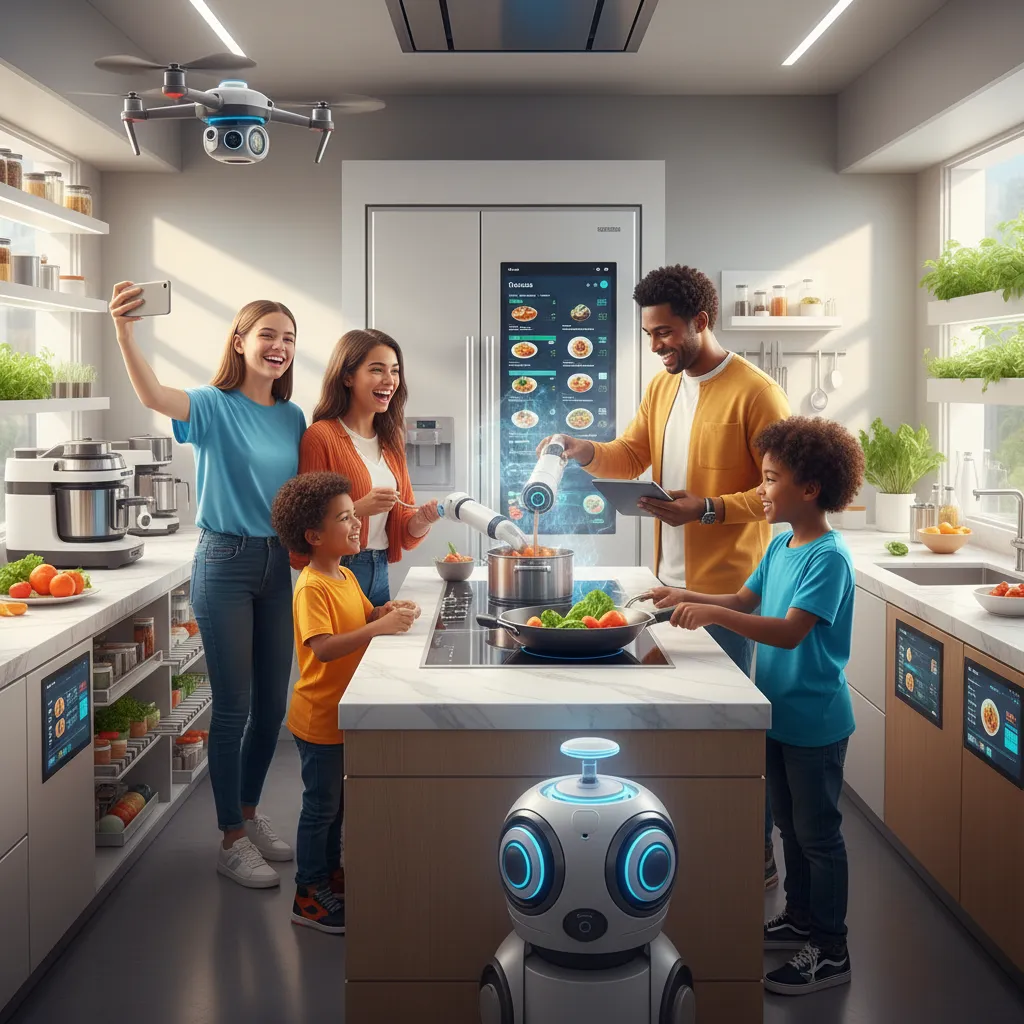
- Smart Home Synergy: The agent triggers a “Good Morning” scene. Your coffee maker starts brewing, the smart blinds slowly open, and the thermostat adjusts to your preferred temperature. This is the essence of AI for smart homes 2024—a connected, proactive environment.
The 9-to-5 Reimagined: Supercharge Your Productivity
The modern workplace is a hotbed of “shallow work”—email management, scheduling, data entry. AI for busy professionals tackles this head-on, allowing you to focus on the deep work that drives real value.
- The Autonomous Inbox: An AI agent can triage your emails, summarizing long chains, categorizing messages by priority, and even drafting replies for common inquiries. It can identify action items from an email and automatically add them to your to-do list app.
- Frictionless Scheduling: Instead of the endless back-and-forth of finding a meeting time, your agent can access your calendar, understand your preferences (e.g., “no meetings on Friday afternoons”), and negotiate a time with your contact’s agent automatically.
- Meeting Superpowers: During a meeting, an AI agent can provide real-time transcription. After the call, it automatically generates a concise summary, identifies key decisions, and assigns action items to attendees, creating a task in their project management tool. Related: AI Copilots for Developers: How to Supercharge Your Coding Workflow

This level of AI workflow automation transforms you from a task-doer into a strategic overseer, dramatically increasing your personal productivity.
Reclaiming Your “Life” in Work-Life Balance
Automation isn’t just for the office. Smart agents for daily life help you manage the countless personal responsibilities that eat into your free time.
- Dynamic Meal Planning: An agent connects to your smart fridge, sees you have chicken and broccoli, and suggests three recipes. Once you choose one, it adds the missing ingredients to your grocery list. This is how AI helps with chores in a truly intelligent way.
- Appointment & Subscription Guru: Your agent can schedule your dentist appointment by finding an open slot that fits your schedule and booking it for you. It can also monitor your subscriptions, flagging price increases or unused services, and even handle the cancellation process.
- Proactive Life Admin: Imagine an agent that reminds you your passport is expiring in 6 months and provides a link to the renewal form, partially filled out with your information. This is the future of AI personal organization.
Building Your Smart Ecosystem: Top AI Agents and Tools for 2024
Ready to start building your automated life? The market for best AI automation tools is exploding. Here’s a look at the key players in different areas of your life.
For Home Automation: The Intelligent Living Space
Your home can become a responsive ecosystem rather than a collection of gadgets. While platforms like Amazon Alexa and Google Home are a great start, the real power comes from orchestrators that allow for more complex agentic workflows.
- Home Assistant: An open-source powerhouse for tech-savvy users, allowing you to create incredibly detailed automations (agents) that run locally for enhanced privacy.
- IFTTT (If This, Then That): A user-friendly platform perfect for beginners. It connects hundreds of apps and devices with simple “Applets” that act as basic agents (e.g., “If my Ring doorbell detects motion after 10 PM, then turn on my Philips Hue porch light”).
- Amazon Alexa Routines & Google Home Automations: These are becoming increasingly sophisticated, allowing you to chain commands and create scenes that act as agents for managing your smart devices. Related: The Humane Ai Pin Review: Genius Gadget or Total Flop?
For Personal Productivity: Your Digital Chief of Staff
These tools are designed to connect your digital apps and create seamless workflows, acting as the central nervous system for your productivity.
- Zapier & Make: These are the industry leaders in AI workflow automation. They connect thousands of apps, allowing you to build complex “Zaps” or “Scenarios.” For example: “When a customer submits a Typeform, create a customer profile in HubSpot, generate an invoice in Stripe, and send a confirmation email via Gmail.”
- Agentic Platforms (Emerging): Keep an eye on tools like MultiOn, Adept AI, and AgentGPT. These represent the next frontier, using Large Language Models to understand natural language goals and execute them by controlling web browsers and applications directly. Related: The Future of Work: How AI is Shaping Jobs and Careers
For Financial Wellness: The Automated Money Manager
AI agents can bring clarity and proactivity to your finances, helping you build wealth with less effort.
- Copilot Money & Monarch Money: These apps use AI to consolidate all your financial accounts, track spending, identify saving opportunities, and manage your budget. They act as agents that monitor your financial health 24/7.
- Bill Negotiation Services: Services like Rocket Money (formerly Truebill) use AI-powered agents to analyze your bills and subscriptions. They can identify opportunities to save and will even negotiate with service providers on your behalf to lower your monthly costs. Related: The Future of Money: Top AI Personal Finance Apps

Beyond Convenience: The Deeper Impact of AI Automation
The goal of using AI agents isn’t just to cram more tasks into your day. It’s about fundamentally changing your relationship with time and energy.
Freeing Up Your Mind for What Truly Matters
Every small decision—what to eat for lunch, when to schedule a meeting, how to respond to an email—consumes a bit of your finite mental energy. This is known as cognitive load. By outsourcing these decisions to reliable AI personal assistants, you dramatically reduce this load.
This reclaimed mental space can be used for things that truly move the needle in your life:
- Deep Work: Focusing without distraction on your most important professional projects.
- Creativity: Having the headspace to brainstorm, learn a new skill, or start a passion project.
- Presence: Being fully engaged with your family and friends, without the nagging feeling of a dozen unfinished tasks in the back of your mind.

This is the ultimate promise of AI for smart living: not just an easier life, but a more meaningful one.
A Note on Privacy and Security
As we empower agents to act on our behalf, it’s crucial to address privacy. Entrusting an AI with your data requires careful consideration.
- Choose Reputable Tools: Stick with well-known companies that have clear privacy policies.
- Understand Permissions: Be mindful of the data access you grant to any app or service.
- Use Strong Security: Employ two-factor authentication and unique passwords for all your connected accounts. The future of AI personal management will undoubtedly involve more robust, user-centric privacy controls.
The Future is Autonomous: What’s Next for AI Agents?
We are at the very beginning of the agentic AI revolution. The future of AI automation is incredibly exciting and points toward a world where our digital and physical environments are seamlessly managed by intelligent collaborators.
We’re moving from single-purpose agents to multi-modal, generalist agents that can see, hear, and speak to accomplish complex, long-term goals. Recent demonstrations from companies like Google with its Project Astra and OpenAI with its GPT-4o model showcase this future: AI that can act as a real-time tutor, a visual assistant that helps you find your keys, or a coding partner that works alongside you. Related: Google I/O 2024: The Biggest AI Announcements You Need to Know and Related: Apple Intelligence in iOS 18: A Guide to the New AI Features.
These future agents will communicate with each other, creating a “society of agents” that can collaboratively solve problems far too complex for a single agent to handle.
Conclusion: Start Your Automation Journey Today
The age of the proactive AI agent is here. These powerful tools are no longer confined to research labs; they are accessible, practical, and ready to automate daily tasks that consume your time and energy. By embracing AI task automation, you can streamline daily tasks, boost your productivity, and ultimately simplify your life.
You don’t need to build a fully autonomous home overnight. The journey to a smarter life starts with a single step.
Your call to action is simple: Identify one repetitive, low-value task in your life right now. It could be sorting emails, creating a daily to-do list, or tracking your expenses. Then, research one of the tools mentioned in this guide and spend 30 minutes setting up your first automation. Take back that small slice of your day, and you’ll be on your way to a more efficient, focused, and fulfilling future.
Frequently Asked Questions (FAQs)
Q1. What is an AI agent?
An AI agent is an autonomous software entity that can perceive its environment (through data, sensors, or user input), make decisions, and take actions to achieve specific goals. Unlike a simple program, it’s proactive and can operate independently without constant human intervention.
Q2. What is an example of an AI agent in daily life?
A great example is a smart thermostat like the Nest. It learns your temperature preferences and daily schedule. It then proactively adjusts the heating and cooling to keep you comfortable while also saving energy, all without you needing to command it constantly. It perceives the room’s temperature, your presence, and the time of day, and acts to achieve its goal of balancing comfort and efficiency.
Q3. How are AI agents different from AI assistants like Siri or Alexa?
The key difference is proactivity vs. reactivity. AI assistants like Siri and Alexa are primarily reactive; they wait for your voice command and then execute a specific task. AI agents are proactive; you give them a goal, and they can independently plan and execute a series of tasks to achieve it. For instance, you tell Siri to “set a timer,” but you’d tell an AI agent to “make sure I’m prepared for my 9 AM client meeting,” and it would then check your documents, summarize notes, and check traffic for you.
Q4. What are the main benefits of using AI to automate tasks?
The primary benefits are reclaiming time, reducing cognitive load, and increasing accuracy. By automating repetitive tasks, you free up hours in your week. By offloading routine decisions, you save mental energy for more important, creative work. Finally, AI agents can perform tasks with a high degree of accuracy, reducing human error in areas like data entry or scheduling.
Q5. Is it difficult to set up AI automation for personal use?
Not anymore. While advanced automation can be complex, platforms like IFTTT and Zapier have user-friendly, no-code interfaces that make it easy to start. You can create powerful automations, or “Zaps,” in minutes by connecting the apps you already use, no programming skills required.
Q6. What are the 4 main types of AI agents?
In artificial intelligence theory, agents are often categorized by their intelligence and capability. The four main types are:
- Simple Reflex Agents: Act only on the basis of the current percept, ignoring the rest of the percept history (e.g., a thermostat).
- Model-Based Reflex Agents: Maintain an internal state to track aspects of the world they can’t see right now.
- Goal-Based Agents: Have goal information that describes desirable situations and use planning to achieve them.
- Utility-Based Agents: Try to maximize their own expected “happiness” or utility, allowing them to make trade-offs between conflicting goals.