What is GPT-4o? OpenAI’s New AI Explained

Introduction: The Dawn of the “Omni-Model”
For years, the promise of truly intelligent assistants—think Jarvis from Iron Man—has been confined to science fiction. We’ve seen incredible leaps with models like GPT-4, but they often felt like separate entities: a chatbot for text, a separate system for images, and another for voice. The interactions were powerful, but often clunky, sequential, and slow.
That paradigm fundamentally shifted with the OpenAI Spring Update and the subsequent release of GPT-4o.
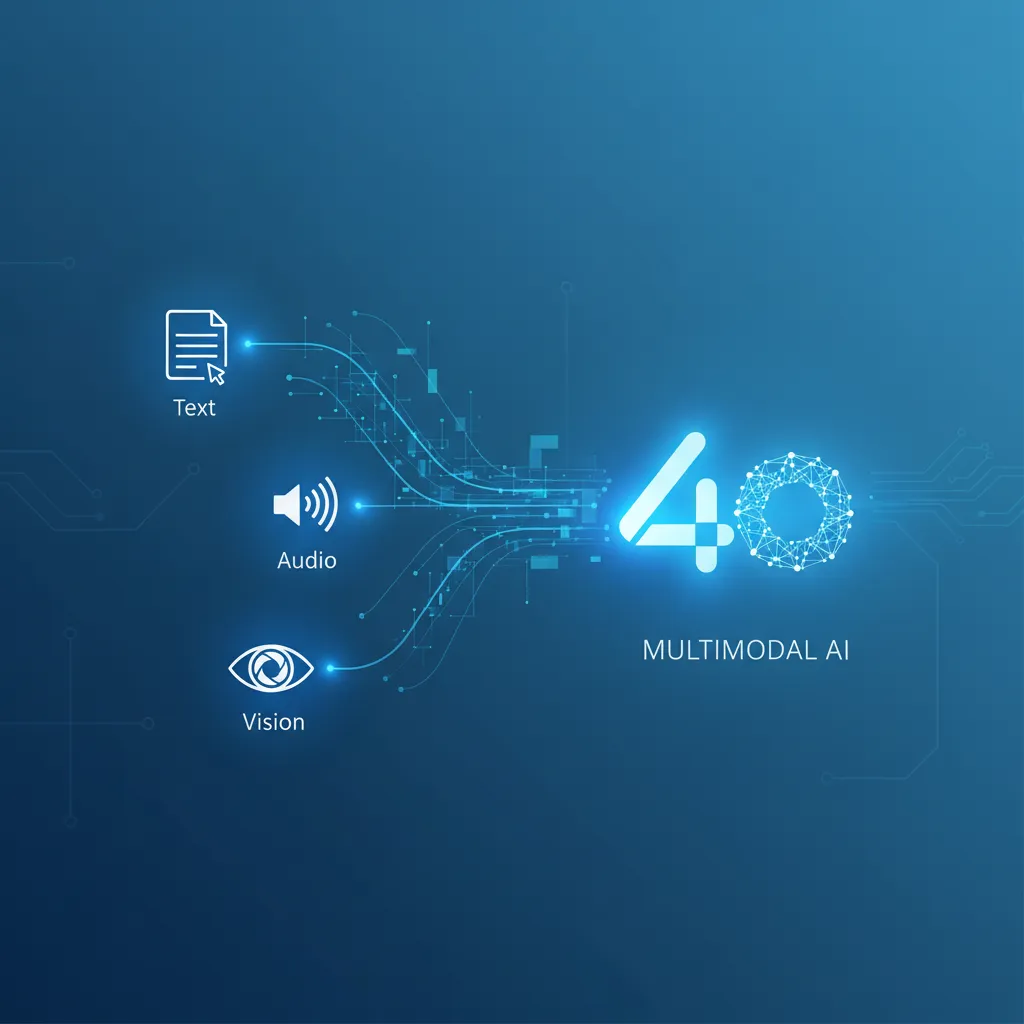
So, what is GPT-4o? The “o” stands for “omni,” signifying its complete integration of capabilities. GPT-4o is not just a faster or smarter version of its predecessors; it is the first true, natively multimodal AI model from OpenAI. Instead of relying on a chain of separate, specialized models to process different inputs (like transcribing audio to text, feeding it to the LLM, and then generating a response which is synthesized back to audio), GPT-4o processes text, audio, and vision simultaneously.
This unified architecture allows for unprecedented speed, emotional understanding, and seamless interaction, effectively transforming the concept of a conversational AI from a helpful tool into a genuine, highly efficient personal AI assistant.
This guide delves deep into the capabilities that make GPT-4o the next generation AI. We will explore its revolutionary features, compare it directly to GPT-4o vs GPT-4 Turbo, detail how to use GPT-4o, and analyze the implications for the future of human-computer interaction and AI technology trends 2024.
Section 1: Decoding GPT-4o – The Core Technical Innovation
The hype around a new model release is often intense, but GPT-4o’s innovation is rooted in a fundamental architectural shift. To truly understand what is GPT-4o, we must appreciate the difference between a “stitched” multimodal model and a natively “omni-model.”
The Limitation of Past Multimodal Systems
Previous versions of conversational AI, including earlier iterations of GPT models when paired with voice and vision, operated like a relay race:
- Audio Input: The user speaks. A specific speech-to-text (STT) model transcribes the audio.
- LLM Processing: The text is sent to the Large Language Model (LLM) (e.g., GPT-4 Turbo) for reasoning and response generation.
- Text Output: The LLM generates the text response.
- Audio Output: A separate text-to-speech (TTS) model synthesizes the response into artificial voice audio.
This process introduced latency (delays), especially when the model had to interpret tonal changes or visual context. If the STT model missed a nuance, the LLM never received it.
The Power of the Omni-Model AI
GPT-4o changes this by unifying the input and output modalities. It was trained from the ground up to handle raw text, audio, and visual data all flowing into a single neural network.
This unified approach delivers three critical advantages:
1. Real-Time Conversational Latency
The most immediately impactful feature demonstrated was the speed. Latency—the delay between a user speaking and the AI responding—is the biggest barrier to natural conversation.
With GPT-4o, the average response time for audio inputs is a mere 232 milliseconds, often dipping as low as 150 milliseconds, which is comparable to a typical human response time in conversation. This real-time AI conversation capability is what makes the experience feel genuinely interactive and effortless.
2. Native Multimodality and Context Switching
GPT-4o can maintain context across modalities effortlessly.
For example:
- You can start a conversation in text, switch to voice, upload an image mid-stream, and ask the AI to analyze all three simultaneously.
- The AI can hear your voice, detect if you sound frustrated, and then adjust its tone and suggested solutions accordingly.
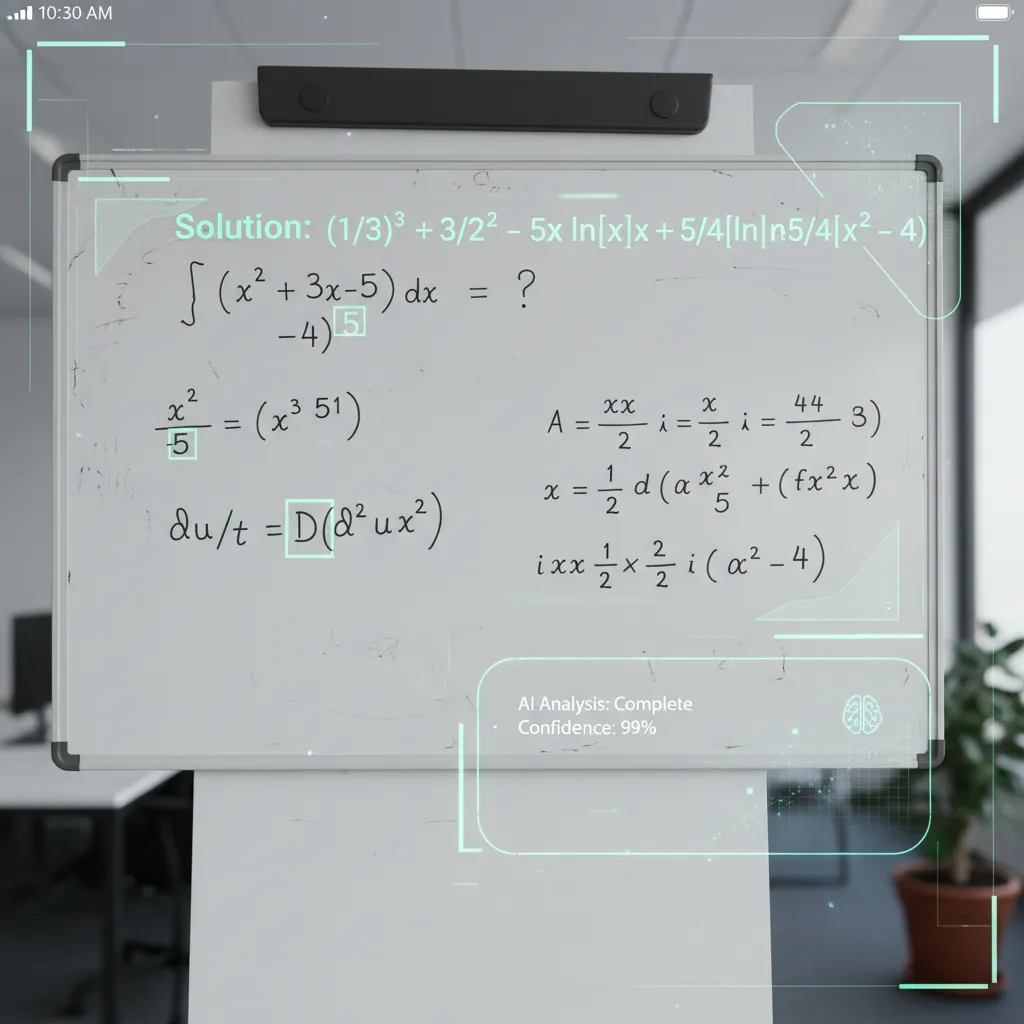
- If you show it a math problem on a whiteboard using its vision capability, you can verbally interrupt its explanation, and it will immediately pivot without losing track of the visual context.
This seamless fusion makes it the most intuitive and powerful intelligent assistant yet.
Section 2: Diving Deep into GPT-4o Features
The core features of GPT-4o extend beyond mere speed. They introduce capabilities that unlock new potential for developers and end-users alike.
2.1. Revolutionary Voice and Emotional Intelligence (GPT-4o Voice Mode)
The new voice mode moves beyond robotic synthesis to offer highly expressive and emotionally nuanced output. During the GPT-4o demo, the AI showcased a range of voices, tones, and even singing capabilities. Crucially, the model can interpret not just what you say, but how you say it.
If you are speaking rapidly and excitedly, the model processes that emotional context to infer urgency or high enthusiasm, allowing for more empathetic and human-like responses. This development dramatically elevates the potential of the AI voice assistant.
- Interruption Handling: Unlike earlier systems that required you to wait for the AI to finish, GPT-4o handles interruptions gracefully, restarting its thought process instantly, much like a human conversation partner.
- Tonal Recognition: It can detect subtle changes in pitch and pacing, enabling better mental state recognition—a huge step towards truly advanced natural language processing.
2.2. Vision Capabilities: Seeing and Solving Problems
The GPT-4o vision capabilities are perhaps the most game-changing aspect for practical applications. By using the camera feed (on a mobile device or desktop), the model can process real-world objects, text, and data in real-time.
Real-World Problem Solving Examples:
- Live Translation: Pointing a camera at a foreign-language menu allows GPT-4o to read the text and provide instantaneous, natural language translation (including nuances and context) in a conversation. This goes beyond simple text overlays; it’s a spoken, contextual translation.
- Educational Assistance: A student can show a complex chemistry equation or a geometry diagram, and GPT-4o can walk them through the solution step-by-step, using the visual data as the primary context for the explanation.
- Code Debugging: Developers can show a snippet of physical whiteboard notes or even a printed error log, and the model can immediately parse the image, recognize the code, and offer debugging advice.
This integration makes GPT-4o an indispensable tool for instantaneous knowledge acquisition and application, bridging the gap between digital data and the physical world.
2.3. Enhanced Intelligence Across All Benchmarks
While the focus is on multimodality, GPT-4o didn’t sacrifice traditional intelligence. In side-by-side comparisons, it matches or exceeds the performance of GPT-4 Turbo across major LLM benchmarks, including reasoning, coding, and general knowledge tasks. This means that for basic text generation, coding help, or complex data analysis, it retains the high quality and coherence expected from a flagship model, but with added speed and lower cost.
[Related: Mastering AI Workflow: Productivity and Automation]
Section 3: The Comparison – GPT-4o vs GPT-4 Turbo
A critical question for both users and developers is: How does this new model stack up against its highly capable predecessor? The comparison between GPT-4o vs GPT-4 Turbo highlights the shift from sequential excellence to holistic integration.
| Feature | GPT-4 Turbo | GPT-4o (Omni-Model) | Implication |
|---|---|---|---|
| Model Architecture | Specialized (Uses separate models for vision/voice) | Native, Unified (Single model for all inputs/outputs) | Seamless Integration. No latency bottlenecks. |
| Speed (Audio Latency) | Average 5.4 seconds | Average 232 milliseconds | Real-Time AI Conversation. Human-level interaction speed. |
| Multimodality | Sequential (Text is primary, audio/vision is secondary input) | Simultaneous (All modalities are primary and simultaneous) | Deeper Context. Can interpret emotion and tone directly. |
| Cost (API) | Standard GPT-4 pricing | 50% Cheaper than GPT-4 Turbo | Developer Savings. Significantly reduced barrier to entry for AI for developers. |
| Rate Limits | Paid tiers only (Plus, Team, Enterprise) | 5x Higher limits than GPT-4 Turbo | Increased Scalability. Better throughput for large applications. |
| Accessibility | Primarily for paid users | Free GPT-4o access offered to all ChatGPT users (with limits) | Democratization. High-end AI power becomes widely available. |
The most significant takeaways for users are the speed and accessibility. For the first time, OpenAI is offering their most advanced model with free GPT-4o access, albeit with usage caps that reset periodically. This move democratizes access to elite AI productivity tools and accelerates the adoption of high-quality intelligent assistants.
Section 4: How to Use GPT-4o and Access
One of the most appealing aspects of the OpenAI new model is its rapid deployment across various platforms. Understanding how to use GPT-4o depends on whether you are an end-user or a developer.
4.1. Access for End-Users (ChatGPT)
GPT-4o is being rolled out systematically across ChatGPT interfaces:
Free Tier Access:
All free ChatGPT users now gain access to GPT-4o. This access is capped, meaning once you hit a certain number of queries in a time window, the system defaults you back to GPT-3.5. This allows users to experience the speed and capability without subscribing.
Plus and Paid Tier Access:
Subscribers to ChatGPT Plus, Team, and Enterprise receive significantly higher usage caps, ensuring continuous, heavy-duty use of the model.
Voice and Vision Rollout:
While the core text capabilities were rolled out immediately, the highly advanced features—like the real-time, high-speed GPT-4o voice mode and the vision analysis via camera—are often phased rollouts, first appearing in the mobile app before full desktop integration. To use the full multimodal features, ensure your ChatGPT mobile app is updated.
4.2. Access for Developers (API)
For businesses and AI for developers building applications, the API access to GPT-4o is crucial. As noted above, the model is half the price of GPT-4 Turbo, making high-end AI applications significantly more cost-effective to deploy.
The API exposes the model’s multimodal endpoints, allowing developers to pipe in raw audio, video frames, and text data directly, eliminating the need for complex, latency-inducing pre-processing steps. This opens up possibilities for building highly responsive customer service bots, dynamic educational tools, and advanced robotics control systems.
[Related: The XAI Revolution: Demystifying AI Decisions for Trust and Transparency]
Section 5: The Impact of GPT-4o on AI Technology Trends
GPT-4o represents a critical inflection point in the timeline of AI technology trends 2024. It shifts the focus from maximizing sheer parameter count to optimizing interaction and utility.
5.1. Moving Towards Jarvis-Level AI
The concept of a truly integrated Jarvis-level AI assistant is no longer a distant aspiration. With its ability to process complex input (seeing a messy desk, hearing a stressed voice, reading a technical document) and respond instantly and contextually, GPT-4o moves AI out of the static text box and into the flow of real life.
This evolution is fundamentally changing the nature of human-computer interaction (HCI). Instead of being tools we access, these assistants are becoming collaborative partners that can perceive and react to our environment.
5.2. Revolutionizing Human-Computer Interaction
The low latency and seamless multimodal communication redefine user expectations.
- Education: Personalized tutoring becomes truly interactive. The AI can literally watch a student solve a problem, identify the exact moment they struggle, and intervene with a targeted, spoken hint.
- Creative Fields: Artists can show the AI a sketch and verbally ask it to generate variations based on the visual and spoken instructions simultaneously, significantly speeding up the creative feedback loop.
- Workplace Productivity: A personal AI assistant can monitor a live meeting (via audio/vision), summarize key decisions, and simultaneously draft follow-up emails, all while confirming deadlines verbally with attendees.

[Related: The Rise of AI Personal Assistants: Automate Your Life and Boost Productivity]
5.3. Implications for the Future of AI and NLP
GPT-4o validates the “omni-model AI” architecture as the future. We will likely see competitors racing to replicate this unified approach, meaning subsequent models will continue to prioritize speed and native multimodality over sheer size.
Furthermore, the model’s sophisticated real-time translation capabilities signal a major step in breaking down language barriers, making global communication instantaneous and fluid. The implications for international business and travel are enormous.
Conclusion: The Next Step in Intelligent Assistance
GPT-4o is more than just an update; it is a foundational re-engineering of how Large Language Models interact with the world. By unifying text, audio, and vision processing into a single, efficient “omni-model,” OpenAI has created an AI assistant that is faster, more natural, and vastly more capable in real-world scenarios than anything that came before it.
The availability of free GPT-4o access ensures that this powerful technology is not confined to expensive enterprise tiers but is available to drive innovation and increase productivity for everyday users. Whether you are a developer leveraging the cheaper, faster API or a casual user seeking a more responsive conversational AI, GPT-4o marks the definitive arrival of the next generation AI—an intelligent, empathetic, and instantaneous partner ready to help you navigate the complexities of life and work in real-time.
It’s time to rethink what an AI assistant can do. The era of the fragmented, clunky chatbot is over; the era of the seamless, intuitive personal AI assistant has arrived.
FAQs: Grounding the GPT-4o Experience
Q1. What does the ‘o’ in GPT-4o stand for?
The ‘o’ in GPT-4o stands for “omni.” This nomenclature signifies that the model is built as a single, unified, or “omni” entity capable of natively processing and generating content across text, audio, and vision modalities simultaneously, rather than relying on a chain of separate specialized models.
Q2. Is GPT-4o free to use, and how do I access it?
Yes, free GPT-4o access is available to all ChatGPT users. Free users can access GPT-4o but will have usage limits, after which they revert to GPT-3.5. Paid subscribers (Plus, Team, Enterprise) receive higher usage caps, allowing for more extensive use of the OpenAI new model. Access is via the ChatGPT web interface and the mobile applications.
Q3. What is the key difference between GPT-4o vs GPT-4 Turbo?
The key difference lies in architecture and speed. GPT-4 Turbo used separate, specialized models for audio/vision interpretation, resulting in higher latency (delays). GPT-4o is a single, unified neural network (omni model AI) that handles all modalities natively, leading to significantly lower latency (around 232 milliseconds in voice mode) and much smoother, real-time AI conversation.
Q4. What are the main GPT-4o vision capabilities?
The GPT-4o vision capabilities allow the model to interpret visual information from images or live video feeds. This enables functions like real-time reading and translating foreign-language signs, analyzing complex graphs or handwriting on a whiteboard, and providing step-by-step guidance based on what it is visually perceiving.
Q5. Can GPT-4o truly understand emotional tone?
Yes. Because GPT-4o was trained end-to-end on audio, it can process subtle vocal cues like pitch, rhythm, and pacing, allowing it to infer emotion, intent, and tone from the user’s voice. This capability allows the AI voice assistant to respond more empathetically and contextually.
Q6. Is GPT-4o available through an API for developers?
Yes, GPT-4o is available through the OpenAI API for AI for developers. Crucially, the API pricing for GPT-4o is approximately 50% cheaper than the previous GPT-4 Turbo models, while also offering faster processing and significantly higher rate limits, making it a highly attractive option for building scalable applications.
Q7. When was the GPT-4o release date and announcement?
GPT-4o was officially announced by OpenAI during the OpenAI Spring Update keynote event in May 2024, with a rapid rollout of its text and reasoning capabilities to users immediately following the announcement. The advanced voice and vision features are typically rolled out in phases.
Q8. Will GPT-4o replace all previous models?
While GPT-4o represents the state-of-the-art and is offered as the new flagship model with superior performance and accessibility, older models like GPT-4 Turbo and GPT-3.5 remain available. However, given the significant improvements and the lower cost of the GPT-4o API, it is expected to become the preferred choice for most new deployments requiring high-end AI technology trends 2024 features.