Wearable AI: Revolutionizing Mind-Body Wellness & Holistic Health

Introduction
In a world that never seems to slow down, the pursuit of well-being has become more critical than ever. We’ve all felt it—that nagging feeling of being overworked, underslept, and disconnected from our own bodies. For years, we’ve turned to technology for answers, strapping on devices that diligently count our steps and track our runs. But what if that technology could do more than just count? What if it could understand?
This is the dawn of wearable AI, a paradigm shift that’s transforming simple fitness trackers into sophisticated, personal health companions. We’re moving beyond raw data and into the realm of personalized health insights and actionable advice. This isn’t just about tracking metrics; it’s about translating your body’s subtle signals into a clear language, fostering a deeper connection between mind and body. This revolution in mind body wellness tech is at the heart of a more proactive, personalized, and holistic approach to health.
In this comprehensive guide, we’ll explore how holistic health AI is revolutionizing personal wellness. We’ll delve into the smart wellness devices redefining our relationship with health, from stress management AI that calms your nervous system in real-time to sleep tracking AI that coaches you toward more restorative rest. Get ready to discover the future of well-being—a future that’s not just on your wrist, but deeply integrated into your life.
The Evolution from Wearable Tech to Wearable AI
The journey of wearable technology has been a rapid and fascinating one. What began as a simple novelty for fitness enthusiasts has blossomed into a powerful tool for preventative health tech. The key catalyst for this transformation? Artificial Intelligence.
Beyond Step Counting: The Dawn of Biometric Data Analysis
Remember the first generation of wearables? Devices like the early Fitbit or Jawbone were revolutionary for their time, making us acutely aware of our daily activity levels. They gamified movement, encouraging us to take the stairs and park further away. However, they primarily provided raw data—steps taken, calories burned, hours slept. This data was interesting, but it lacked context. Knowing you took 8,000 steps is one thing, but understanding how that activity impacted your stress levels, recovery, and sleep quality is another entirely.
The limitation was clear: data without interpretation is just noise. Users were often left with a dashboard of numbers and graphs, unsure of what to do next. This is where AI stepped in to bridge the gap between information and action.
How AI Transforms Raw Data into Actionable Health Insights
Wearable AI isn’t just about collecting more data; it’s about making that data meaningful. Modern smart wellness devices are equipped with an array of advanced sensors that capture a rich tapestry of physiological information. But the real magic happens when AI algorithms get to work on this biometric data analysis.
Here’s a simplified look at the process:
- Sensing: Sophisticated wearable sensors health monitors continuously track metrics like Heart Rate Variability (HRV), skin temperature, electrodermal activity (EDA), blood oxygen levels, and respiratory rate.
- Analyzing: AI and machine learning models, trained on vast datasets, analyze these streams of data in real-time. They don’t just see individual data points; they recognize patterns, correlations, and deviations from your personal baseline.
- Interpreting: The AI acts as a translator for your body’s signals. It can infer your stress levels from your HRV, determine your sleep quality by analyzing your heart rate and movement, and gauge your readiness for physical exertion.
- Advising: This is the crucial final step. Instead of just showing you a low HRV score, a personal health AI will provide context and a recommendation: “Your stress levels are high this morning. Consider a 10-minute mindfulness session to help your nervous system recover.”
This intelligent feedback loop transforms a passive tracking device into an active AI coaching health partner. It’s like having a personal wellness expert with you 24/7, offering guidance tailored specifically to your body’s unique needs. Related: What is Apple Intelligence? Top Features Revealed a concept that is rapidly making its way into our everyday health devices.
Unlocking Mind-Body Synergy: Key Applications of Wearable AI
The true power of AI driven wellness lies in its ability to address our health holistically, recognizing the profound connection between our mental and physical states. Let’s explore the key areas where wearable AI is making the biggest impact.
Stress Management and Emotional Resilience
Chronic stress is one of the biggest silent culprits behind modern health issues. Wearable AI offers a powerful new toolkit for managing it proactively.
Stress management AI primarily relies on biofeedback wearables that monitor physiological indicators of stress, with Heart Rate Variability (HRV) being the gold standard. A high HRV is generally associated with a relaxed, resilient nervous system, while a low HRV can indicate stress, illness, or overtraining.
Devices like the Oura Ring, Whoop strap, and premium smartwatches continuously track your HRV. When the AI detects a significant drop, it can:
- Alert You: Provide a gentle notification that you might be entering a stressed state.
- Guide You: Trigger on-screen guided breathing exercises or short meditations to help you regulate your nervous system in the moment.
- Identify Triggers: Over time, the AI can correlate your stress spikes with events in your calendar or activities, helping you identify your personal stress triggers.
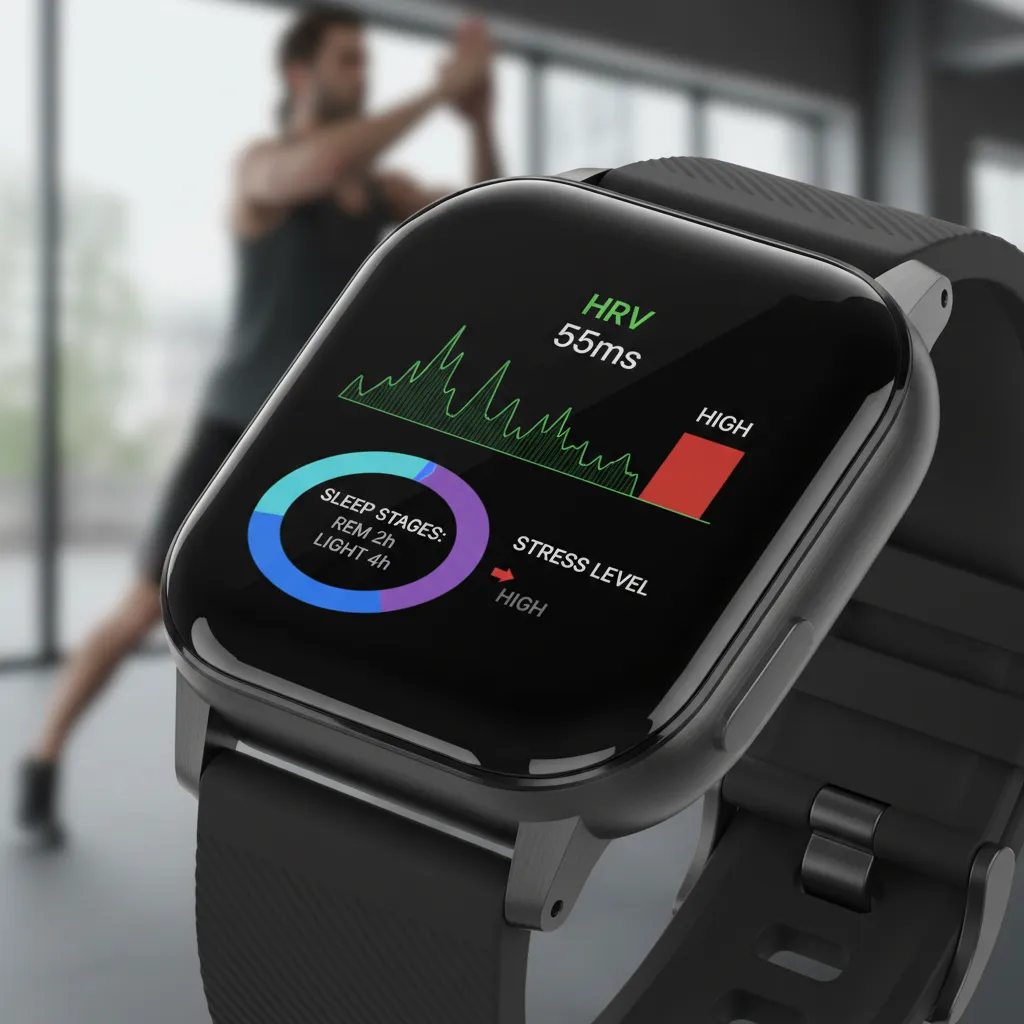
Some advanced devices are even exploring emotional intelligence AI, using a combination of sensors to infer your emotional state, providing deeper insights into your mental landscape. This continuous health monitoring is a game-changer for building emotional resilience.
The New Frontier of Sleep: AI-Powered Sleep Tracking and Optimization
Sleep is the cornerstone of both physical and mental health, yet it’s often the first thing we sacrifice. Sleep tracking AI has evolved far beyond simply logging hours.
Modern wearables use a combination of heart rate, HRV, respiratory rate, and movement data to accurately identify your sleep stages: Light, Deep, and REM. Each stage serves a critical function, from physical restoration (Deep) to memory consolidation (REM).
An AI-powered sleep coach can analyze your sleep architecture and provide hyper-personalized advice:
- “You had less REM sleep last night after your late-night meal. Try eating dinner at least 3 hours before bed.”
- “Your body temperature was elevated, which can disrupt sleep. A cooler room might improve your sleep quality.”
- “Your optimal bedtime, based on your body’s circadian rhythm, is between 10:00 PM and 10:30 PM.”
This level of detailed feedback empowers you to make small, targeted changes to your daily routine that can have a massive impact on your energy, mood, and overall health. Related: Apple Vision Pro: The Future of Computing, Spatial & visionOS, another piece of personal tech, aims to reshape our daily interactions, much like how sleep tech reshapes our nights.
Personalized Fitness and AI Coaching
AI fitness trackers have turned the “one-size-fits-all” workout plan on its head. Using your biometric data, these devices create dynamic training programs that adapt to you.
The core concept is balancing strain and recovery. Platforms like Whoop and Garmin use AI to calculate a daily “readiness” or “body battery” score. This score, based on your sleep quality, HRV, and recent activity, tells you how prepared your body is for exertion.
- High Readiness Score: The AI coach might suggest a high-intensity workout to maximize fitness gains.
- Low Readiness Score: It will recommend a light recovery day, like yoga or walking, to prevent overtraining and injury.
Furthermore, AI is being integrated into form correction. Some smartwatches health features use accelerometers and gyroscopes to analyze your running form or weightlifting movements, providing real-time feedback to improve efficiency and reduce the risk of injury. It’s like having a personal trainer on your wrist, ensuring every workout is safe, effective, and perfectly suited to your body’s current state.
Enhancing Mental Well-being and Mindfulness
The connection between technology and mental health can be complex, but wearable AI is pioneering a positive relationship. The rise of mental well-being apps integrated with wearable data is creating powerful tools for mindfulness and mental clarity.

AI meditation guides can use biofeedback to create a responsive experience. For example, if your heart rate is high during a meditation session, the app might gently adjust the guidance to focus more on calming breathing techniques. This AI enhanced mindfulness helps you see the direct physiological impact of your practice, reinforcing its benefits.
Devices like smart rings health trackers are particularly well-suited for this, as their discreet form factor allows for unobtrusive, all-day monitoring of the signals that reflect your inner state, promoting a more mindful connection with yourself throughout the day.
The Technology Powering the Wellness Revolution
The sleek design of a modern wearable hides an incredible amount of sophisticated technology. Understanding the components that make this revolution possible helps appreciate the depth of innovation at play.
Advanced Wearable Sensors: The Eyes and Ears of Your Health
The quality of AI insights is entirely dependent on the quality of the data it receives. Modern wearables are packed with an array of tiny, powerful sensors:
- Photoplethysmography (PPG) Sensors: These are the green lights on the back of your smartwatch. They shine light into your skin to measure blood flow changes, allowing for the calculation of heart rate and HRV.
- Electrodermal Activity (EDA) Sensors: These measure minute changes in skin sweat, which is a direct indicator of your sympathetic nervous system’s response to stress or excitement.
- Skin Temperature Sensors: Crucial for tracking sleep, recovery, and even predicting the onset of illness or tracking menstrual cycles.
- Accelerometers & Gyroscopes: These track movement in 3D space, essential for step counting, activity recognition, and analyzing fitness form.
- SpO2 Sensors: Measure blood oxygen saturation, a key metric for respiratory health and sleep quality analysis, particularly for detecting conditions like sleep apnea.
The AI Engine: From Biometric Data to Personalized Health Insights
Collecting data is only half the battle. The true engine of these devices is the complex set of machine learning algorithms that live both on the device and in the cloud. These algorithms are trained on petabytes of anonymized health data, allowing them to learn the intricate patterns that define human physiology.
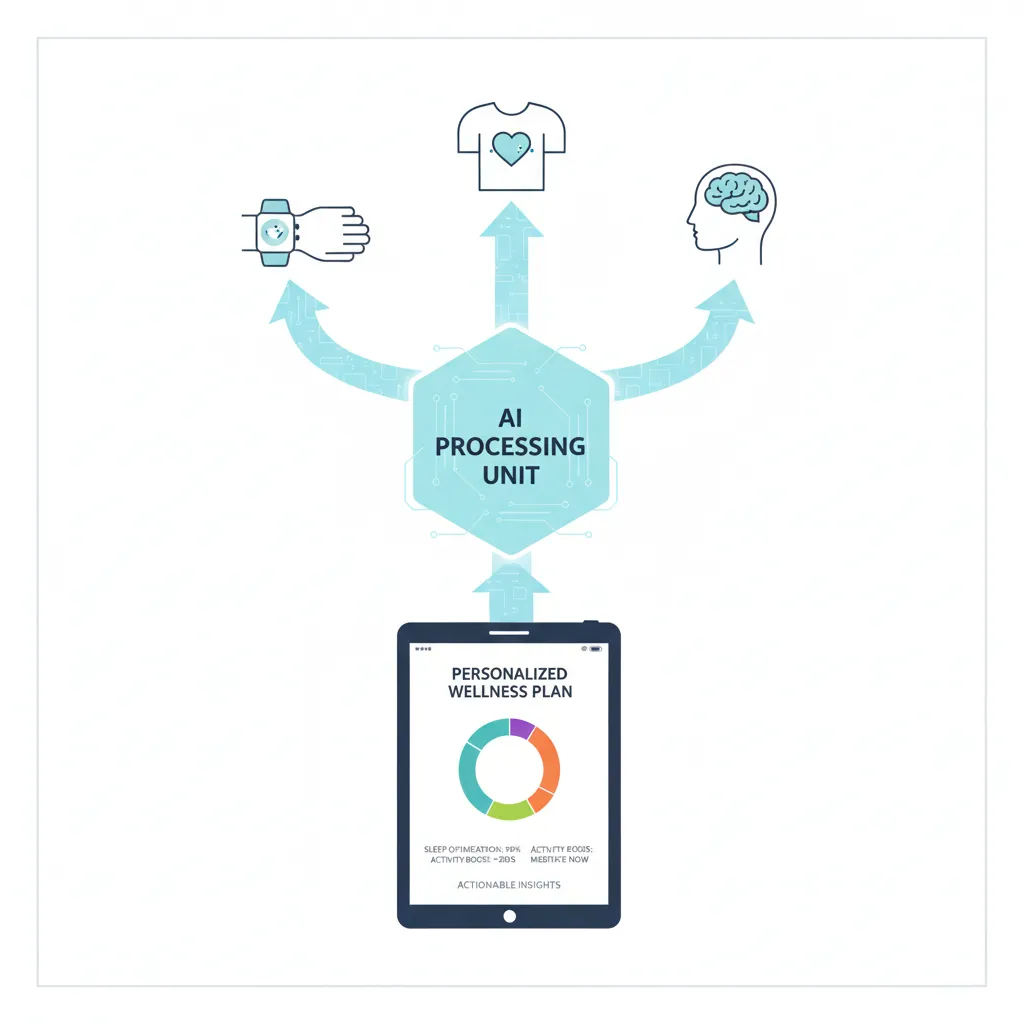
When you start using a device, the AI begins by establishing your personal baseline over a week or two. It learns what “normal” looks like for you. From that point on, it focuses on detecting meaningful deviations from that baseline. This is the essence of personalization. An elevated heart rate might be normal for one person but could be a sign of stress or illness for another. The AI understands this context, making its insights far more relevant and reliable. This deep analytical capability is a significant step towards the future of healthcare. Related: AI in Healthcare: Revolutionizing Diagnostics & Patient Care explores the broader clinical applications of these technologies.
Integrated Wellness Platforms: Creating a 360-Degree Health View
The future of wellness technology lies in integration. The most powerful insights come from combining data from multiple sources. Integrated wellness platforms like Apple Health and Google Fit act as central hubs for your health information.
Your wearable AI can sync its data with other apps and services, creating a holistic, 360-degree view of your well-being. Imagine a system where:
- Your wearable notes poor sleep.
- It communicates with your calendar and sees you have an early, high-stakes meeting.
- It then integrates with your smart home to slowly brighten the lights and suggests a 5-minute mindfulness exercise instead of a strenuous workout.
This seamless integration, powered by AI, moves us from isolated data points to a truly interconnected and intelligent wellness ecosystem.
Beyond the Individual: The Broader Impact of Wearable AI
While the primary benefit of wearable AI is personal empowerment, its collective impact has the potential to reshape public health and our approach to medicine on a larger scale.
Preventative Health and Early Detection
Perhaps the most profound impact of wearable AI is its shift from reactive to proactive healthcare. These devices are at the forefront of preventative health tech. By providing continuous health monitoring, they can detect subtle irregularities that might otherwise go unnoticed for years.
The most well-known example is the detection of Atrial Fibrillation (AFib), a common type of irregular heartbeat that can lead to stroke. Many modern smartwatches are now capable of taking an ECG and alerting users to potential signs of AFib, prompting them to seek medical attention. Beyond AFib, AI can analyze long-term trends in resting heart rate, respiratory rate, and sleep patterns, which can be early indicators of developing health issues, from infections to chronic conditions.
AI for Chronic Conditions Management
For individuals living with chronic illnesses, wearable AI is a transformative tool. The management of conditions like diabetes, hypertension, and heart disease requires constant monitoring and lifestyle adjustments.
- AI for chronic conditions like diabetes is already a reality with Continuous Glucose Monitors (CGMs) that pair with smartwatches. AI algorithms can predict glycemic changes, alerting users to potential hypo- or hyperglycemic events before they happen.
- For hypertension, wearables can track blood pressure trends and show the direct impact of diet, exercise, and medication on cardiovascular health, empowering patients to take a more active role in their care.

The Ethical Compass: Data Privacy and the Digital Detox Dilemma
With great power comes great responsibility. The rise of personal health AI brings critical ethical questions to the forefront. Who owns your highly personal health data? How is it being protected from breaches or misuse? Reputable companies in this space invest heavily in data encryption and user privacy, but it remains a crucial consideration when choosing a device.
Furthermore, there’s the potential for data obsession or health anxiety. Constantly monitoring our bodies can sometimes lead to more stress, not less. This highlights the need for digital detox support. The next wave of intelligent wellness tech may include features that recognize when you’re becoming overly focused on data and encourage you to disconnect and simply listen to your body intuitively.
The Future of Wellness Technology: What’s Next?
The field of wearable AI is evolving at an exponential rate. What seems like science fiction today will be a standard feature tomorrow. Here’s a glimpse of what the future of wellness technology holds.
Smart Rings, Hearables, and Invisible Tech
The trend is moving towards more seamless and less obtrusive technology. Smart rings health trackers, like the Oura Ring, are gaining immense popularity for their comfort, long battery life, and discreet design. The future may also lie in “hearables” (smart earbuds) that can track heart rate and body temperature, or even “smart patches” that adhere to the skin for medical-grade monitoring. The ultimate goal is technology that integrates so seamlessly into our lives that we forget it’s even there.
Hyper-Personalization: Your AI Wellness Twin
The next frontier is hyper-personalization. Imagine an AI that doesn’t just analyze your past data but creates a “digital twin”—a complex virtual model of your body. This AI could run simulations to predict how your body will react to different foods, workouts, or stressors.
This will lead to truly personalized nutrition AI, offering meal suggestions based on your real-time biometric needs. It could predict your risk of burnout weeks in advance or suggest the optimal time to take a break for peak mental performance AI. The possibilities are as vast as they are exciting. Related: Quantum AI Unleashed: Reshaping Intelligence & Innovation hints at the kind of computational power that could make these digital twins a reality.
Conclusion
We stand at a remarkable intersection of technology and human biology. Wearable AI is fundamentally reshaping our understanding of health, moving us from a model of treating sickness to one of proactively cultivating wellness. These intelligent devices are more than just gadgets; they are translators for the body’s intricate language, partners in our quest for balance, and coaches that empower us to become the architects of our own well-being.
By transforming streams of complex biometric data analysis into clear, actionable, and personalized health insights, this technology is unlocking a new level of mind-body synergy. From managing stress and optimizing sleep to personalizing fitness and enhancing mindfulness, the applications are profoundly changing lives.
The journey is far from over. As the technology becomes more sophisticated, integrated, and invisible, it promises an even more personalized and preventative future. The ultimate goal is not to become dependent on technology, but to use it as a tool to foster a deeper, more intuitive connection with ourselves. The question is no longer just “What is my data?” but “What is my body telling me?” — and for the first time, we have a guide to help us listen.
FAQs
Q1. What exactly is wearable AI?
Wearable AI refers to smart electronic devices, such as smartwatches, rings, or fitness trackers, that are worn on the body and use artificial intelligence to analyze biometric data. Unlike basic trackers that just display raw numbers, wearable AI interprets this data to provide personalized, actionable insights and coaching for improving health, fitness, and overall well-being.
Q2. How accurate are wearable AI devices?
The accuracy of wearable AI devices has improved significantly and is generally very reliable for tracking trends in metrics like heart rate, sleep stages, and activity levels. While they are not medical-grade devices and shouldn’t be used for self-diagnosis, they are highly effective for understanding personal health patterns and making informed lifestyle choices. Always consult a healthcare professional for medical concerns.
Q3. Can wearable AI replace a doctor?
No, absolutely not. Wearable AI is a powerful tool for personal health monitoring and preventative wellness, but it is not a substitute for professional medical advice, diagnosis, or treatment. It can provide valuable data to share with your doctor, but all medical decisions should be made in consultation with a qualified healthcare provider.
Q4. What is the difference between a fitness tracker and a holistic wellness wearable?
A traditional fitness tracker primarily focuses on physical activity metrics like steps, distance, and calories burned. A holistic wellness wearable, powered by AI, takes a broader view. It integrates activity data with deeper physiological metrics like Heart Rate Variability (HRV), sleep quality, respiratory rate, and skin temperature to provide a complete picture of your mind-body wellness, including stress, recovery, and sleep health.
Q5. Which is the best wearable AI for stress management?
Several devices excel at stress management. Look for those that prioritize Heart Rate Variability (HRV) and Electrodermal Activity (EDA) tracking. Devices like the Oura Ring, Whoop, and premium smartwatches from Apple, Samsung, and Google (with Fitbit integration) offer robust stress tracking features, often including guided breathing exercises and mindfulness content. The “best” one depends on your personal preferences for form factor (ring vs. watch vs. band) and ecosystem.
Q6. How does AI actually analyze sleep data?
AI analyzes sleep by combining data from multiple sensors. The accelerometer tracks your movement to determine when you’re restless or still. The PPG sensor monitors your heart rate and HRV, which change distinctly during different sleep stages (Light, Deep, REM). The AI algorithm, trained on thousands of sleep studies, recognizes the unique combination of signals for each stage, allowing it to create a detailed map of your night’s sleep and provide insights for improvement.
Q7. Are there major privacy concerns with wearable AI?
Yes, privacy is a valid and important concern. These devices collect highly sensitive personal health data. It is crucial to choose devices from reputable brands that have strong privacy policies, use end-to-end data encryption, and give you clear control over how your data is used and shared. Always review the privacy policy before purchasing a device.