Unlock Your Potential: Top AI Tools for Personalized Learning & Student Success

Introduction
The traditional one-size-fits-all model of education is rapidly becoming a relic of the past. In a world where every student has a unique learning pace, style, and set of interests, the demand for a more tailored educational experience has never been greater. Enter the game-changer: Artificial Intelligence. AI personalized learning is not just a futuristic concept anymore; it’s a present-day reality that is reshaping classrooms and study halls, offering students unprecedented tools to achieve academic success.
This shift towards personalized education AI moves beyond simply digitizing textbooks. It’s about creating dynamic, responsive, and engaging learning environments. Imagine a tutor that never sleeps, a study plan that adapts to your progress in real-time, and homework help that explains the ‘why’ behind the ‘what’. This is the power of AI in education technology.
In this comprehensive guide, we’ll dive deep into the world of smart learning tools. You will discover the core principles behind adaptive learning, explore a curated list of the best AI tools for students across various subjects, and understand how you can leverage these technologies to not just pass your exams, but to truly master new skills and unlock your full potential.
Why AI in Education is More Than Just a Buzzword
For decades, the standard classroom model has struggled to cater to individual student needs. A teacher, no matter how dedicated, can only provide so much one-on-one attention in a class of twenty or thirty. This often leads to some students feeling left behind while others are bored and unengaged. AI is fundamentally changing this equation by making personalized education scalable.
The core AI learning benefits revolve around three key areas:
- Personalization: AI algorithms can analyze a student’s performance data—quiz scores, time spent on topics, common mistakes—to build a unique learning profile. This allows for the creation of an AI-driven curriculum that adjusts its difficulty and focus based on the student’s real-time needs.
- Efficiency: AI study aids can automate tedious tasks like creating flashcards, scheduling study sessions, and finding relevant research papers. This frees up valuable time for students to focus on deeper learning and critical thinking.
- Accessibility: AI tutors for students and other smart learning tools are available 24/7, providing support whenever and wherever it’s needed. This breaks down barriers for students who may not have access to traditional tutoring resources.
This evolution is a critical part of the broader technological shift, where intelligent systems are becoming integral to our daily lives. [Related: What are AI Agents? A Guide to the Next Tech Frontier]
The Core Pillars of AI-Powered Personalized Learning
To truly appreciate the tools, it’s essential to understand the technology that powers them. Customized learning AI isn’t a single technology but an ecosystem of interconnected concepts working together to create a seamless educational experience.
Adaptive Learning Pathways
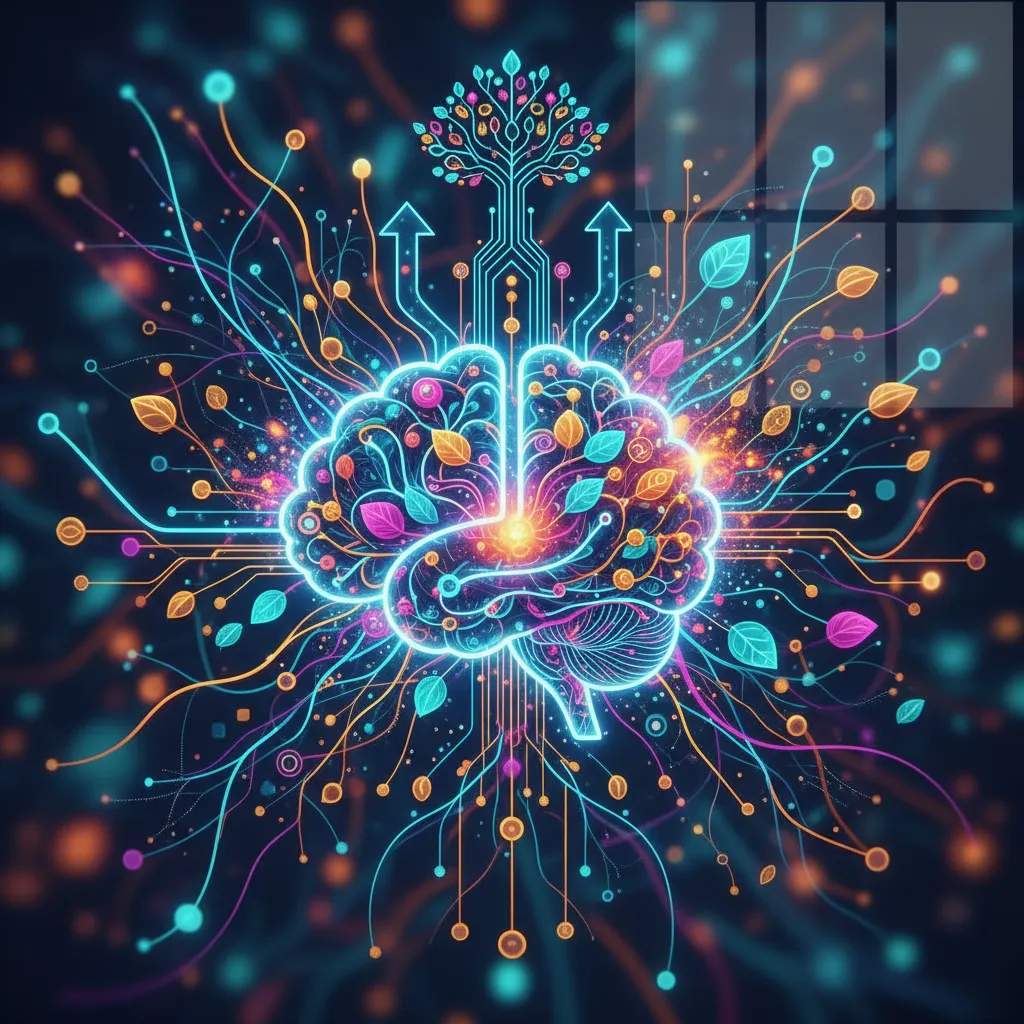
At the heart of personalized education is adaptive learning AI. Imagine you’re learning algebra. An adaptive platform will present you with a problem. If you solve it easily, the next problem will be slightly more challenging. If you struggle, the system will identify your knowledge gap and offer a simpler problem, a video tutorial, or a step-by-step guide to reinforce the underlying concept. This ensures you’re always operating in your “zone of proximal development”—the sweet spot where learning is challenging but not overwhelming. These systems create a unique educational journey for every single user.
Intelligent Tutoring & Instant Feedback
One of the most powerful applications of AI is the creation of virtual tutors. These AI homework helper tools go beyond just giving answers. They can guide students through complex problems, ask probing questions to stimulate critical thinking, and provide personalized feedback AI on essays, math equations, and even code. This immediate feedback loop is crucial for learning, as it helps students correct misunderstandings before they become ingrained habits. Platforms are increasingly using sophisticated models, similar to those discussed in next-gen AI advancements, to provide nuanced, human-like feedback. [Related: GPT-4o: What Is It and Why It Matters]
Student Learning Analytics AI
Every interaction a student has with an AI learning platform generates data. Student learning analytics AI systems collect and analyze this data to provide valuable insights for both the student and the educator. A student can view a dashboard highlighting their strengths, weaknesses, and progress over time, empowering them to take ownership of their learning. For educators, these analytics can reveal class-wide trends, flagging topics that may need to be re-taught.
The Ultimate Toolkit: Best AI Tools for Students in 2025
Now, let’s explore the practical applications. We’ve categorized some of the best educational AI software and best AI learning apps to help you build your ultimate study toolkit.
For Flawless Research and Writing
Writing essays and research papers is a staple of academic life. These tools help streamline the process from brainstorming to final proofreading, making AI-powered assignments more manageable and of higher quality.
- Grammarly: More than just a spell checker, Grammarly’s AI-powered assistant provides suggestions on tone, clarity, engagement, and delivery. Its premium version includes a plagiarism checker and advanced style recommendations, making it an indispensable tool for ensuring your writing is polished and professional.
- QuillBot: This is a powerful paraphrasing tool that helps you rephrase sentences to avoid plagiarism and improve clarity. Its co-writer function integrates research, outlining, and writing into a single, seamless workflow. It’s a fantastic aid for AI-assisted studying and note summarization.
- Elicit & Consensus: These are AI research assistants designed for academia. Instead of just searching for keywords, you can ask a research question, and these tools will find relevant papers, summarize their key findings, and extract crucial data. They are invaluable for literature reviews and evidence-based writing.
- Notion AI: Integrated directly into the popular Notion productivity app, this AI assistant can summarize long documents, brainstorm ideas, draft outlines, and even write entire paragraphs. Its ability to work with your existing notes makes it a powerhouse for student AI productivity.

For Crushing STEM and Complex Problem-Solving
Science, Technology, Engineering, and Math (STEM) subjects often involve complex calculations and abstract concepts. These AI tools act as powerful problem-solving partners.
- Wolfram Alpha: Billed as a “computational knowledge engine,” Wolfram Alpha is a must-have for any student in a quantitative field. It can solve complex mathematical equations, perform calculus, generate plots, and provide detailed information on scientific concepts. It’s the ultimate tool for AI for STEM education.
- Socratic by Google: Aimed at high school and early college students, Socratic allows you to take a picture of a problem (from math to chemistry), and its AI will find the best online resources to help you learn the concepts needed to solve it. It focuses on teaching the methodology rather than just giving the answer.
- Symbolab: A powerful math solver that provides step-by-step solutions for a wide range of problems in algebra, trigonometry, and calculus. It’s an excellent way to check your work and understand the process behind complex calculations.
For Mastering New Languages and Humanities
Learning a new language or delving into the humanities requires practice, context, and feedback. AI is making this process more interactive and effective than ever.
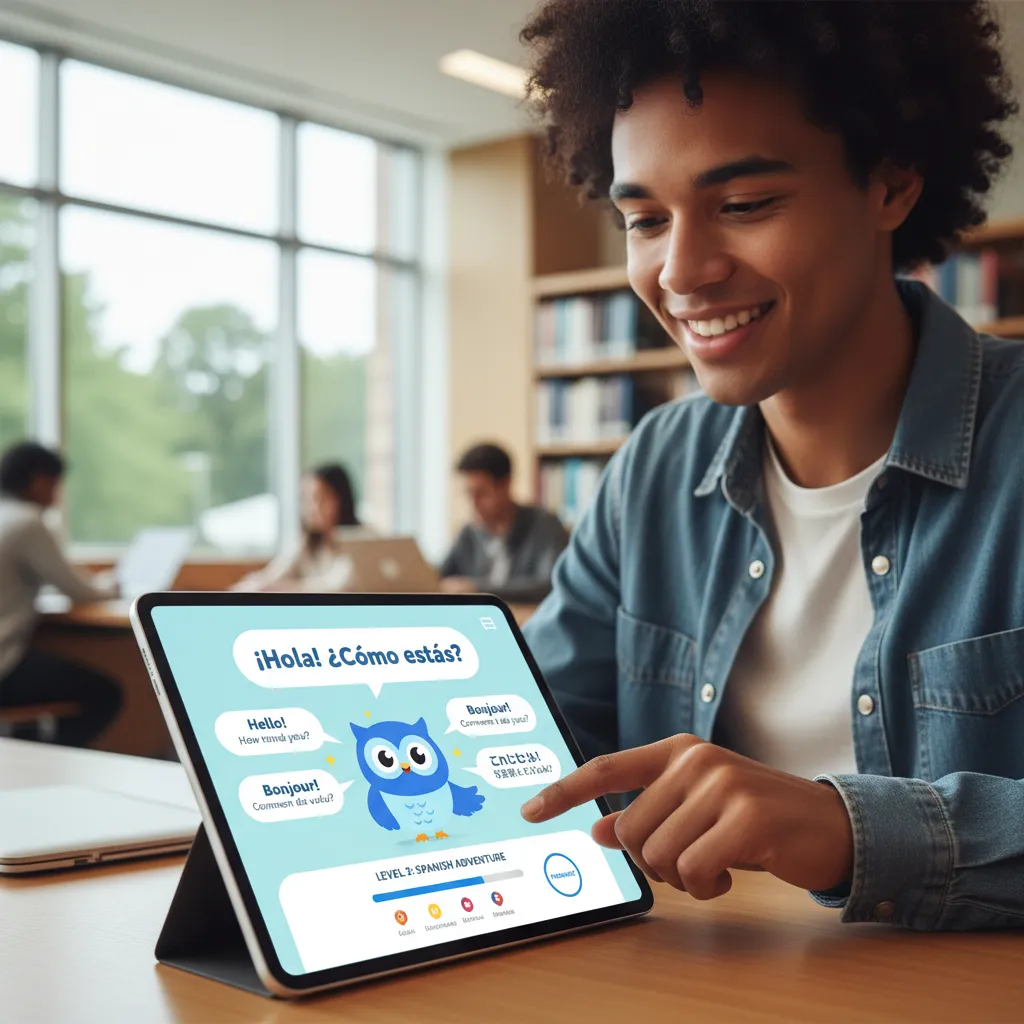
- Duolingo Max: Powered by OpenAI’s advanced models, Duolingo Max adds two new features to the popular language app: “Explain My Answer” for detailed grammatical explanations and “Roleplay” for practicing real-world conversations with an AI character. This is the cutting edge of AI for language learning.
- Elsa Speak: This app focuses specifically on pronunciation. Its AI listens to you speak and provides detailed feedback on your accent, intonation, and rhythm, helping you sound more like a native speaker.
- Anki with AI Add-ons: Anki is a legendary spaced-repetition flashcard app. With community-developed AI add-ons, you can now automatically generate flashcards from your notes, find relevant images, and even create audio pronunciations, supercharging your study sessions.
For Smart Test Prep and Efficient Studying
Preparing for exams can be stressful. These AI test prep tools help you study smarter, not just harder, by personalizing your revision and optimizing your schedule.
- Quizlet: A household name in studying, Quizlet now incorporates AI features like “Magic Notes” to turn your lecture notes into outlines, flashcards, and practice tests instantly. Its “Learn” and “Test” modes adapt to your performance, focusing on the concepts you find most difficult.
- Shiken: This platform uses AI to create personalized study plans and predictive analytics to tell you when you’re ready for an exam. It breaks down large subjects into manageable chunks and uses adaptive quizzing to reinforce learning.
- Cerego: Cerego is a personalized learning platform that uses cognitive science and AI to help you learn faster and remember longer. It creates a personalized review schedule for every concept, ensuring information is transferred to your long-term memory.

Comprehensive AI Learning Platforms
Some tools offer an all-in-one experience, covering a wide range of subjects and age groups, from K-12 to higher education.
- Khan Academy: This non-profit has integrated AI to provide a personalized tutoring experience called Khanmigo. It acts as a Socratic guide for students, helping them with math and other subjects without giving away the answers. It’s a leading example of K-12 AI learning tools.
- Coursera & edX: Leading platforms for AI in online learning, they use AI to recommend courses based on your career goals, provide personalized feedback on assignments, and help you navigate their vast catalogs of content from top universities. This is a prime example of AI in higher education.
Beyond Homework: AI for Skill Development and Future-Readiness
The true potential of AI for academic success extends beyond traditional subjects. The future of education AI lies in its ability to foster crucial real-world skills.
AI for skill development is a rapidly growing field. Platforms like Codecademy use AI to provide interactive feedback on your code, while others can help you learn graphic design, data analysis, or project management.
Moreover, learning to use these AI tools is a skill in itself. Understanding how to write effective prompts, critically evaluate AI-generated content, and ethically integrate these tools into your workflow are becoming essential skills for the modern workforce. The future isn’t just about what you know; it’s about how effectively you can partner with technology to find, analyze, and apply information. The rise of new hardware, like AI-powered laptops, will only accelerate this trend. [Related: Copilot+ PCs: The Future of AI-Powered Laptops]
Navigating the Challenges: Ethical Considerations and Best Practices
While the benefits are immense, it’s crucial to approach AI in education with a critical eye. Concerns about data privacy, algorithmic bias, and the potential for over-reliance are valid and require careful consideration. [Related: Navigating AI Ethics: Governance, Bias, and Trust in the AI Era]
Here are some best practices for students:
- Use AI as a Co-pilot, Not an Autopilot: Use AI tools to brainstorm, research, and refine your work, not to do it for you. The goal is to enhance your learning, not circumvent it.
- Fact-Check Everything: AI models can sometimes generate inaccurate information (“hallucinate”). Always verify critical facts, figures, and citations with reliable sources.
- Understand Your School’s Policies: Be aware of your institution’s academic integrity policies regarding the use of AI tools for assignments. Transparency is key.
- Protect Your Data: Be mindful of the personal information you share with AI platforms and review their privacy policies.
Conclusion
The integration of AI personalized learning into education is not a passing trend; it is a profound paradigm shift. From AI homework helpers that clarify complex topics to adaptive learning AI platforms that tailor entire curriculums, these technologies are empowering students to take control of their educational journeys like never before.
The smart learning tools we’ve explored are designed to augment human intelligence, not replace it. They handle the tedious work, provide instant feedback, and adapt to your unique needs, freeing you up to focus on what truly matters: critical thinking, creativity, and a genuine love for learning.
The future of education AI is bright, promising a world where every student has the support they need to succeed. The journey starts now. We encourage you to explore some of these tools, experiment with their features, and discover how AI can help you unlock your true academic potential.
Frequently Asked Questions (FAQs)
Q1. How does AI personalize the learning experience?
AI personalizes learning by collecting and analyzing data on a student’s performance, such as quiz scores, time spent on tasks, and interaction patterns. Using this data, adaptive learning AI algorithms adjust the difficulty of content, recommend relevant resources, and create customized study plans that cater to the individual’s specific strengths and weaknesses.
Q2. What are the main benefits of using AI in education?
The primary AI learning benefits include deep personalization, increased efficiency, and 24/7 accessibility. AI provides tailored learning paths that match a student’s pace, automates tasks like grading and content creation, and offers on-demand support through tools like AI tutors for students, making high-quality educational help available to everyone.
Q3. Can AI tools replace human teachers?
No, AI tools are designed to augment and support human teachers, not replace them. While AI can handle tasks like personalized practice, content delivery, and data analysis, human teachers are irreplaceable for providing mentorship, fostering creativity, teaching complex social-emotional skills, and inspiring students. The future is a collaborative model.
Q4. What is an example of an AI tool used by students?
A great example is a tool like QuillBot. Students use its AI to paraphrase complex sentences for better understanding, summarize long articles to quickly grasp key points, and check their grammar and tone. This makes it a versatile AI study aid for improving writing quality and research efficiency.
Q5. Is using an AI homework helper considered cheating?
This depends on how the tool is used and the specific academic integrity policy of the institution. Using an AI homework helper to understand a concept, get step-by-step guidance on a practice problem, or check your work is generally considered a legitimate learning activity. However, submitting AI-generated work as your own is academic dishonesty.
Q6. How is AI changing higher education?
In AI in higher education, the technology is being used to personalize student advising, power smart campus systems, and enhance online courses with adaptive assessments. AI also helps researchers analyze large datasets and streamlines administrative processes, allowing universities to operate more efficiently and provide a better student experience.
Q7. Are there AI tools available for language learning?
Absolutely. AI for language learning is a rapidly growing area. Apps like Duolingo Max and Elsa Speak use AI to offer interactive role-playing conversations, provide real-time feedback on pronunciation and grammar, and create personalized lesson plans that adapt to your vocabulary and skill level.