The Rise of Small Language Models: Powering Edge AI & On-Device Intelligence

Introduction
Ever noticed how your smartphone’s camera can instantly identify faces, or how your voice assistant responds before you’ve even finished your question? This isn’t magic; it’s the dawn of a new era in artificial intelligence—an era where intelligence lives not in a distant, powerful cloud, but right in the palm of your hand. For years, the AI conversation has been dominated by massive, cloud-based Large Language Models (LLMs) that require entire data centers to function. But a quiet revolution is underway, driven by their smaller, nimbler cousins: Small Language Models (SLMs).
This shift marks the rise of Edge AI and On-device Intelligence, a paradigm where data processing and AI decision-making happen locally on your devices. SLMs are the secret sauce making this possible. These compact AI models are designed for efficiency, bringing powerful AI processing to everyday gadgets without constantly needing to phone home to the cloud.
In this deep dive, we’ll explore the fascinating world of SLMs and their symbiotic relationship with Edge AI. We’ll unpack why this move away from the cloud is critical for AI privacy, performance, and the creation of a truly personal AI. Get ready to understand how this next-gen AI is already reshaping our interaction with technology, from mobile devices to smart homes, and what the future of edge AI holds.
The Cloud Conundrum: Why a Shift to the Edge Was Inevitable
For the last decade, the cloud has been the undisputed king of AI. Training and running colossal models like GPT-4 or Claude required immense computational power that only vast, centralized servers could provide. This approach, however, comes with a set of inherent limitations that have become increasingly apparent as AI integrates more deeply into our lives.
-
The Latency Lag: Every time you ask a cloud-based AI a question, your data travels from your device to a server hundreds or thousands of miles away, gets processed, and the response travels all the way back. This round-trip introduces a noticeable delay, or latency. While a one-second delay is acceptable for a search query, it’s a deal-breaker for real-time AI applications like autonomous driving or augmented reality overlays.
-
The Privacy Predicament: Sending personal data—voice recordings, photos, location history—to a third-party server creates significant privacy risks. Data breaches, unauthorized access, and corporate data mining are valid concerns for users. In a world increasingly governed by regulations like GDPR, keeping sensitive data local is not just a preference; it’s a necessity.
-
The Connectivity Constraint: Cloud-based AI is entirely dependent on a stable internet connection. If you’re on a plane, in a subway tunnel, or in a remote area with spotty service, your “smart” device becomes surprisingly dumb. This dependency limits the reliability and utility of AI in countless real-world scenarios.
-
The Cost Calculation: Constantly streaming data to and from the cloud isn’t free. The bandwidth costs for users and the astronomical server maintenance and energy costs for companies create a significant financial barrier. This makes scaling AI applications to billions of devices an expensive proposition.
These challenges created a clear demand for a new approach—a decentralized AI model that could deliver intelligence locally, efficiently, and securely.
What Are Small Language Models (SLMs)? The Pocket-Sized Powerhouses
Enter Small Language Models. Don’t let the name fool you; “small” is a relative term. While LLMs can have hundreds of billions or even trillions of parameters (the variables the model learns during training), SLMs typically have parameter counts in the millions to a few billion. The key isn’t just size, but optimization.
SLMs are the result of groundbreaking research in model architecture, training techniques, and quantization (a process of reducing the precision of the model’s numbers to make it smaller and faster). They are specifically engineered to be resource-efficient AI, capable of running on the limited processing power and memory of consumer hardware.
Think of it this way:
- An LLM is like a massive, all-encompassing public library. It contains a staggering amount of general knowledge but requires a huge building and a team of librarians to operate.
- An SLM is like a specialist’s personal bookshelf. It’s highly curated, deeply knowledgeable about specific domains, and can fit comfortably in a small office—or in this case, on an AI chip inside your phone.
This focused efficiency is what makes models like Microsoft’s Phi-3, Google’s Gemma, and Meta’s Llama 3 8B so revolutionary. They demonstrate that you don’t always need a sledgehammer to crack a nut; a finely tuned instrument is often more effective. [Related: Meta Llama 3: The Ultimate Guide for 2024]
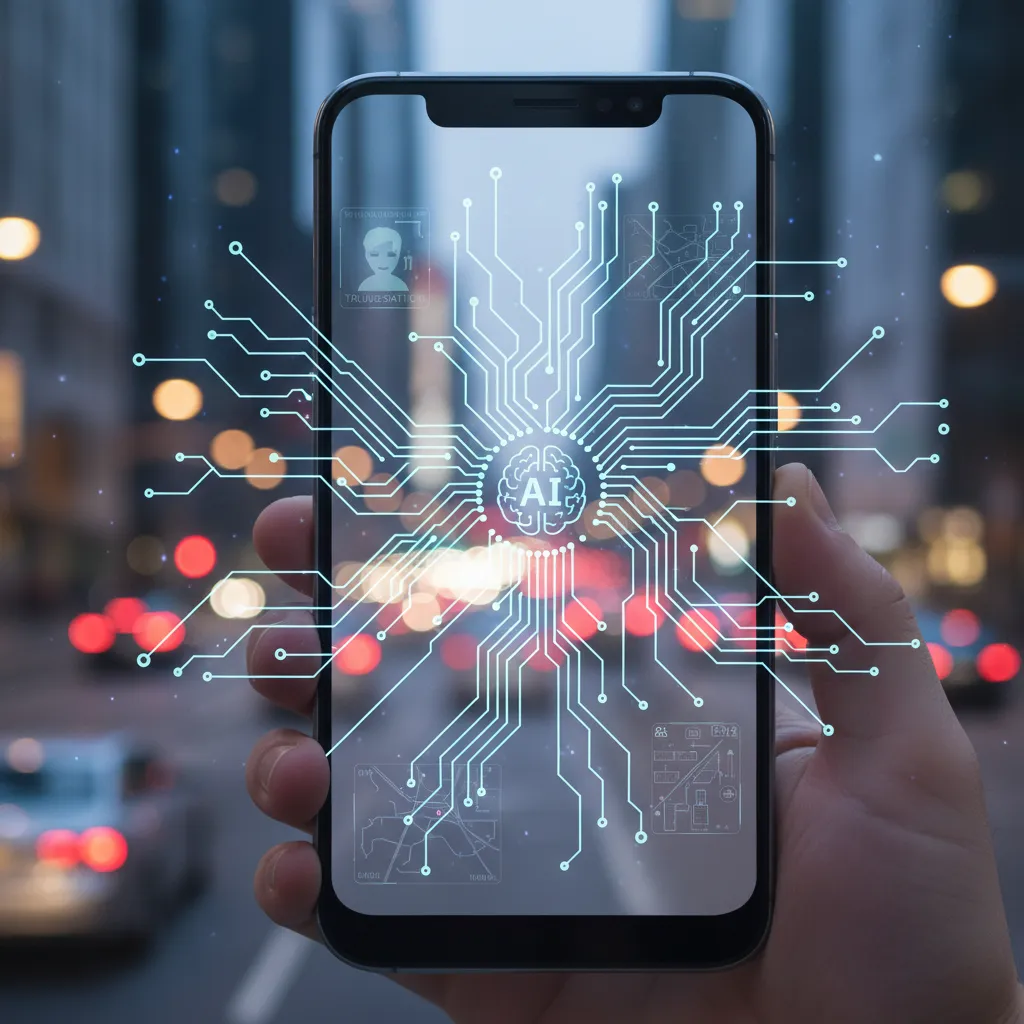
The Perfect Match: How SLMs Fuel Edge AI and On-Device Intelligence
SLMs and Edge AI are a match made in tech heaven. They are two sides of the same coin, with SLMs providing the intelligent software and edge computing providing the local hardware environment.
Edge AI is the practice of running machine learning algorithms directly on an end-user device (the “edge” of the network). This means the computations happen on your smartphone, your smartwatch, your car’s infotainment system, or your smart thermostat, rather than in a remote data center.
The synergy is clear:
- SLMs need an efficient environment: Their compact nature is designed precisely for the hardware constraints of edge devices.
- Edge AI needs intelligent models: To perform useful tasks, edge devices need AI models that are powerful enough to be helpful but small enough to run locally.
This combination unlocks on-device AI, where sophisticated capabilities are baked directly into the products we use every day. It’s the engine behind the shift from devices that are merely connected to devices that are truly intelligent.
Unpacking the Advantages: Why Local AI is the Next Big Thing
The move towards SLMs and on-device processing isn’t just a technical curiosity; it delivers a cascade of tangible benefits that are fundamentally changing our relationship with technology.
Blazing-Fast Speed and Real-Time AI Processing
By eliminating the cloud round-trip, local AI achieves near-instantaneous response times. The impact is profound. Think of live translation apps that can translate a conversation as it happens, not a second later. Consider AR glasses that can overlay information onto your world without any perceptible lag. This is the essence of real-time AI, and it’s only possible when the processing happens feet, not continents, away from the user.
Unbreakable Privacy and Enhanced Security
This is perhaps the most critical advantage of on-device AI. When your data is processed locally, it never leaves your device unless you explicitly choose to send it. Your voice commands, the photos you edit, and the content of your messages remain private. This model of AI privacy builds user trust and sidesteps the immense security challenges of protecting petabytes of sensitive user data on centralized servers. It’s a fundamental shift from a model of data extraction to one of user empowerment.
Offline Capability and Unwavering Reliability
An SLM running on your device doesn’t need an internet connection to work. This makes AI more robust and reliable. Your car’s navigation and voice assistant can continue to guide you through a dead zone. A medical wearable can still detect an anomaly and alert you even when you’re hiking off-grid. This AI without cloud dependency ensures that critical features are always available, transforming smart devices into dependable companions rather than internet-tethered accessories.
Cost-Effectiveness and Scalability
For developers and manufacturers, Edge AI powered by SLMs dramatically reduces operational costs. There’s less need for massive server infrastructure, and data transmission costs plummet. This economic incentive accelerates the adoption of embedded AI across a wider range of products, from high-end smartphones to affordable home appliances.
Personalization and Context-Awareness
A personal AI can learn your habits, preferences, and routines by analyzing data stored securely on your device. It can learn to proactively suggest the app you’re looking for, adjust your smart home settings as you arrive, or summarize your notifications based on what it knows is important to you. This deep, privacy-preserving personalization allows for a more intuitive and helpful user experience that a generic cloud model could never replicate.
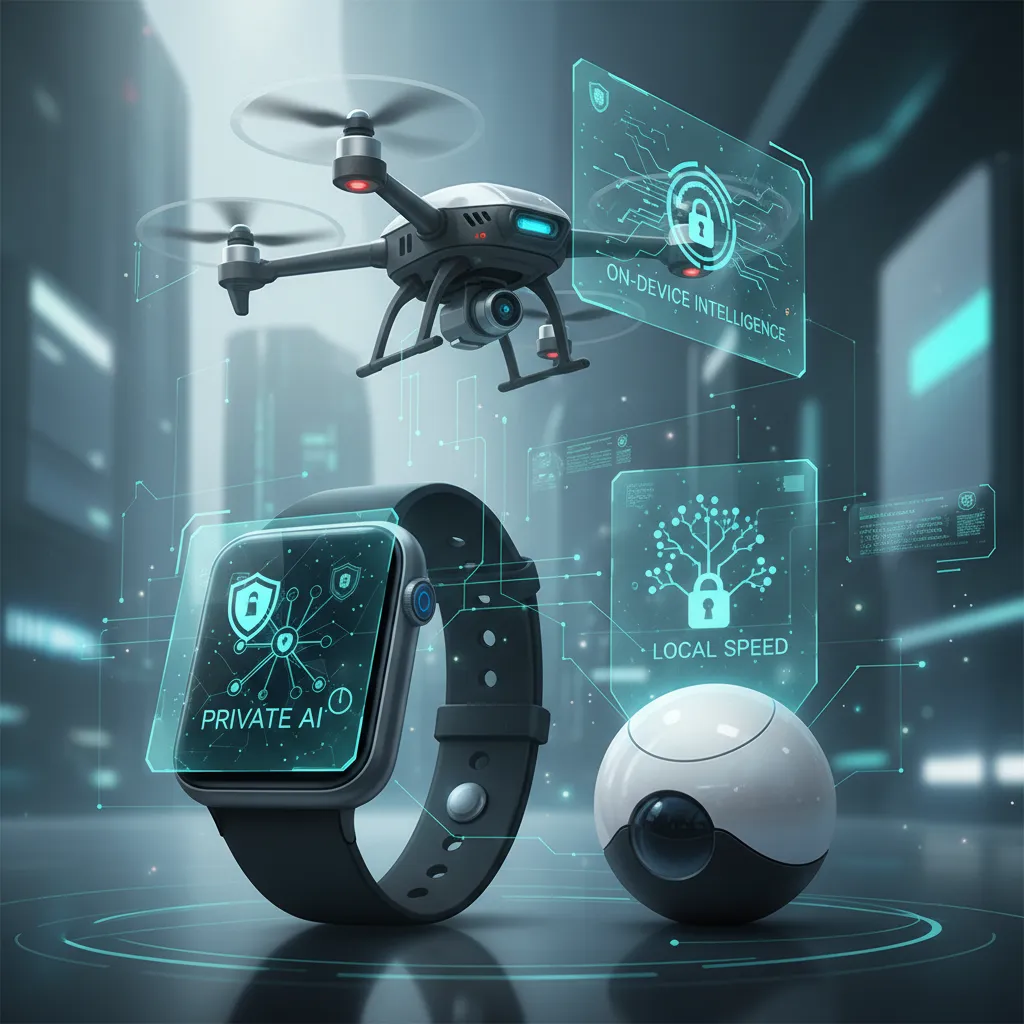
The Hardware Backbone: Specialized AI Chips and TinyML
This software revolution in compact AI models is being met by a parallel revolution in hardware. Modern processors, especially in mobile devices, now include specialized components designed to run AI workloads efficiently.
These are often called NPUs (Neural Processing Units) or TPUs (Tensor Processing Units). These AI chips are built from the ground up for the mathematical operations that underpin machine learning, allowing them to perform complex AI tasks using a fraction of the power of a traditional CPU. This low-power AI hardware is essential for running SLMs on battery-powered devices without draining them in minutes.
Pushing this concept even further is the field of TinyML (Tiny Machine Learning). This discipline focuses on deploying machine learning at the edge on even the smallest, most power-constrained devices, like microcontrollers in home appliances or environmental sensors. TinyML enables a world where even the simplest devices possess a degree of intelligence, running models that might only be a few hundred kilobytes in size but can perform valuable tasks like keyword spotting or anomaly detection. [Related: What Are AI Agents? A Guide to the Next Tech Frontier]
The co-evolution of efficient AI software like SLMs and specialized, low-power hardware is the engine driving the entire Edge AI ecosystem forward.

SLM Use Cases: On-Device AI in Action Today and Tomorrow
The applications for SLMs on the edge are virtually limitless, spanning every industry and aspect of daily life. Here are some of the most compelling SLM use cases that are either already here or just around the corner.
Smart Mobile Devices
This is the primary battleground for AI for mobile devices. On-device SLMs are already powering features like:
- Hyper-intelligent Virtual Assistants: Assistants that can understand context, manage tasks, and summarize content without an internet connection.
- Real-time Photography Enhancement: Computational photography that adjusts lighting, removes unwanted objects, and enhances detail instantly as you take the picture.
- Advanced Predictive Text: Keyboards that not only predict the next word but can draft entire email replies based on the context of the conversation.
- Live Transcription and Summarization: Instantly transcribing meetings or lectures and providing a concise summary, all done securely on the device.
The Intelligent Smart Home
SLMs are making AI for smart homes more responsive and private.
- Local Voice Control: Smart speakers and hubs that can process commands like “turn on the lights” without sending your voice to the cloud.
- Proactive Automation: Your home can learn your routines—like your morning coffee schedule or evening lighting preferences—and automate them without complex programming.
- Smarter Security: On-device processing in security cameras can distinguish between a pet, a package delivery, and a potential intruder, sending you more meaningful alerts and reducing false alarms. [Related: Smart Home Energy Savings: Top Gadgets for Eco-Friendly & Affordable Living]

Automotive and Transportation
The modern vehicle is a powerful edge computing device on wheels. SLMs are enabling:
- Natural Language In-Car Assistants: Control navigation, climate, and media using complex, conversational commands that work even in a tunnel.
- Driver Monitoring Systems: On-board AI can track driver alertness and engagement to enhance safety.
- Predictive Maintenance: The car can analyze sensor data locally to predict when parts might fail, alerting the driver to schedule service.
AI for Wearables and Healthcare
Wearables are a perfect fit for resource-efficient AI.
- Real-time Health Insights: Smartwatches can use SLMs to analyze heart rate, sleep patterns, and movement data to provide proactive health advice and detect irregularities.
- Next-Gen Fitness Coaching: Your wearable can act as a personal trainer, analyzing your form in real-time and providing corrective feedback.
Challenges and the Road Ahead for Decentralized AI
Despite the immense momentum, the path to a fully decentralized, on-device AI world has its challenges. Optimizing models to fit within the tight memory and power budgets of edge devices remains a complex task. There’s also the risk of fragmentation, where developers must navigate a wide array of different hardware and software platforms.
However, the future is incredibly bright. We’re likely to see a rise in hybrid models, where devices use local SLMs for instant responses and can optionally tap into more powerful cloud-based LLMs for more complex, research-heavy tasks. Advances in techniques like federated learning—where models can learn from user data across many devices without the data itself ever leaving those devices—will further enhance AI capabilities while preserving privacy.
[Related: The Rise of SLMs: Edge AI’s Secret Weapon for Local Intelligence]
Conclusion
The rise of Small Language Models is not just an incremental improvement; it’s a fundamental architectural shift in how we build and interact with artificial intelligence. By moving intelligence from the centralized cloud to the decentralized edge, SLMs are unlocking a future that is faster, more private, more reliable, and deeply personal.
This transition from borrowed intelligence to owned, on-device intelligence places the user back in control of their data and their digital experience. The SLM benefits are clear: from the instant response of our mobile apps to the secure reliability of our smart homes, the impact of these compact AI models is already profound. The era of local AI is here, and it’s running quietly and efficiently on the devices we use every day, paving the way for a truly intelligent and seamlessly integrated world.
FAQs
Q1. What is the main difference between an SLM and an LLM?
The primary difference is size and resource consumption. Large Language Models (LLMs) have billions or trillions of parameters and require massive data centers to run. Small Language Models (SLMs) have significantly fewer parameters (millions to a few billion) and are optimized to run efficiently on local devices with limited power and memory, like smartphones.
Q2. What is an example of an SLM?
Prominent examples of SLMs include Microsoft’s Phi-3 family, Google’s Gemma models, and the smaller versions of Meta’s Llama 3 (like the 8B model). These models are specifically designed for high performance on consumer hardware.
Q3. What are the benefits of on-device AI?
The main benefits of on-device AI are significantly lower latency (faster responses), enhanced privacy and security (data doesn’t leave your device), offline functionality (works without an internet connection), and reduced costs associated with cloud processing and data transfer.
Q4. Is Edge AI the same as on-device AI?
The terms are often used interchangeably and are very closely related. Edge AI is the broader concept of bringing computation and data storage closer to the sources of data (the “edge” of the network). On-device AI is a specific implementation of Edge AI where the “edge” is the end-user device itself, such as a phone, car, or wearable.
Q5. Why is privacy a major advantage of SLMs and Edge AI?
Privacy is a huge advantage because processing happens locally. When you use a cloud-based AI, your personal data (voice queries, photos, text) is sent to a company’s server, creating potential risks. With on-device SLMs, that data is processed and stored on your own device, giving you full control and minimizing exposure.
Q6. Can SLMs run without an internet connection?
Yes, absolutely. This is a core feature. Because the model and the processing happen directly on the device’s hardware, no internet connection is required for the AI to function, making it more reliable and versatile.
Q7. What is TinyML?
TinyML (Tiny Machine Learning) is a subfield of machine learning focused on developing and deploying AI models on extremely low-power and resource-constrained devices, such as microcontrollers. It enables simple devices like home appliances or industrial sensors to have embedded AI capabilities using very little energy.