The Rise of DePIN: Decentralized Physical Infrastructure Networks Reshaping the Future

Introduction: The Dawn of a Decentralized Tomorrow
In an era defined by rapid technological advancements, the foundational pillars of our digital and physical worlds are undergoing a profound transformation. For decades, the infrastructure that powers our daily lives – from internet connectivity to energy grids and data storage – has largely been centralized, controlled by a handful of large corporations and state entities. While efficient in many respects, this centralized model often comes with inherent vulnerabilities: single points of failure, lack of transparency, susceptibility to censorship, and limited opportunities for individual participation.
Enter Decentralized Physical Infrastructure Networks (DePIN), a groundbreaking paradigm emerging from the heart of Web3 innovation. DePIN represents a revolutionary approach to building, maintaining, and operating real-world infrastructure by leveraging blockchain technology, token incentives, and a global community of participants. Imagine a world where individuals contribute their resources – be it excess internet bandwidth, unused storage space, or renewable energy – to a collective network, earning cryptocurrency rewards for their verifiable contributions. This isn’t science fiction; this is the core promise of DePIN.
This comprehensive guide will delve deep into DePIN explained, exploring how these decentralized physical infrastructure networks are not just a technological marvel but a societal shift. We’ll unpack the underlying mechanisms, showcase compelling crypto DePIN projects, examine the myriad DePIN advantages, and cast a gaze into the future of infrastructure as it’s reshaped by this powerful new movement. From decentralized wireless networks to decentralized energy grids and the intricate dance between IoT and DePIN, prepare to understand why DePIN is poised to democratize infrastructure and unlock unprecedented levels of efficiency, resilience, and inclusivity.
Understanding DePIN: The Intersection of Blockchain and the Real World
At its essence, DePIN bridges the digital realm of blockchain with the tangible world of physical assets and services. It’s about more than just digital currencies; it’s about blockchain infrastructure extending its reach to power the very fabric of our physical existence.
What Exactly is DePIN?
DePIN stands for Decentralized Physical Infrastructure Networks. These are networks that use blockchain technology to coordinate and incentivize the deployment and operation of real-world physical infrastructure. Instead of relying on a single, centralized entity to build and manage these systems, DePINs enable a distributed community of individuals and organizations to contribute resources and receive compensation in the form of crypto tokens.
This model fundamentally alters how infrastructure is funded, built, and maintained. It shifts from capital-intensive, top-down approaches to a more agile, bottom-up, and community-driven methodology. Key components of DePIN include:
- Physical Infrastructure: Tangible assets like Wi-Fi hotspots, data storage devices, energy sensors, EV charging stations, or environmental monitors.
- Blockchain Technology: Provides the decentralized ledger for recording contributions, verifying proof of physical work, and managing token distribution.
- Token Incentives: Cryptocurrencies or utility tokens that reward participants for deploying, operating, and maintaining the infrastructure, creating a positive feedback loop.
- Decentralized Governance: Often, these networks are governed by their token holders, allowing for collective decision-making regarding network upgrades and parameters.
The Problem with Centralized Infrastructure
To truly appreciate the innovation of DePIN, it’s crucial to understand the limitations of traditional, centralized infrastructure. These include:
- High Barrier to Entry: Building large-scale infrastructure (e.g., cell towers, data centers) requires massive capital investment, limiting competition and fostering monopolies.
- Single Points of Failure: Centralized systems are vulnerable to outages, cyberattacks, or natural disasters that can bring down entire networks.
- Lack of Transparency: Users often have limited visibility into how their data is handled, how services are priced, or the true costs of operation.
- Censorship and Control: Centralized entities can control access to services, censor content, or impose restrictions on users.
- Inefficient Resource Utilization: Often, resources lie idle or are underutilized in traditional models (e.g., unused broadband, empty storage space).
DePIN directly addresses these challenges by distributing control, incentivizing participation, and leveraging existing, often underutilized, resources.
The Pillars of DePIN: How it Works
The operation of a DePIN is a sophisticated dance between hardware, software, and economic incentives. Understanding these core mechanisms is key to grasping the power of building decentralized networks.
Proof of Physical Work and Verifiable Contributions
A cornerstone of any DePIN is the ability to prove that physical work has been performed. Unlike proof-of-work in cryptocurrencies that solve arbitrary computational puzzles, DePINs require demonstrable real-world activity. This is often achieved through:
- Sensor Data: IoT devices collecting verifiable data (e.g., environmental conditions, network uptime).
- Location-Based Proofs: GPS or other geolocation technologies confirming the deployment and operation of physical assets in specific areas.
- Cryptographic Proofs: Using cryptographic techniques to ensure data integrity and authenticity from physical devices.
When participants deploy a device, provide a service, or collect data, the network verifies their contribution. This “proof of physical work” then triggers the issuance of token rewards.
Token Incentivized Networks: The Economic Engine
The token economy is the lifeblood of DePIN. It’s what differentiates these networks from traditional open-source projects or peer-to-peer sharing. The token serves several critical functions:
- Incentivization: Rewards participants for contributing resources (e.g., deploying a Wi-Fi hotspot, providing storage). This encourages broad participation and network expansion.
- Governance: Token holders often have voting rights, allowing them to participate in the decentralized governance of the network, proposing and voting on upgrades, fees, or development priorities.
- Utility: Tokens can be used to pay for services within the network (e.g., purchasing data bandwidth, accessing storage).
- Value Accrual: As the network grows and demand for its services increases, the utility and value of the token can potentially increase, further incentivizing participation and investment.
This creates a powerful flywheel effect: more participants lead to a more robust network, which attracts more users, increasing demand for the token, which in turn incentivizes even more participation.
The Role of IoT and Edge Computing in DePIN
IoT and DePIN are inextricably linked. The Internet of Things (IoT) provides the physical devices and sensors that gather data and perform tasks in the real world. DePIN leverages these devices as the endpoints of its decentralized infrastructure.
Edge computing DePIN further enhances this synergy. Instead of sending all data to a centralized cloud for processing, edge computing processes data closer to its source – at the “edge” of the network. In a DePIN context, this means:
- Reduced Latency: Faster data processing and response times for real-time applications.
- Increased Privacy: Sensitive data can be processed locally without being sent to central servers.
- Reduced Bandwidth Costs: Less data needs to be transmitted over long distances.
This combination of IoT devices, edge computing, and blockchain-based incentives creates highly efficient, scalable, and resilient decentralized networks.

Real-World Applications: Crypto DePIN Projects in Action
The theoretical promise of DePIN is already being realized through a diverse range of crypto DePIN projects. These initiatives are applying the decentralized model to critical infrastructure sectors, showcasing the transformative potential of blockchain use cases in the real world.
Decentralized Wireless Networks (DeWi)
Perhaps one of the most prominent examples, decentralized wireless networks aim to build community-owned and operated internet connectivity.
- Helium (HNT): One of the pioneers, Helium allows individuals to deploy “Hotspots” that provide long-range wireless coverage for IoT devices. In return, Hotspot owners earn HNT tokens. This has led to a massive expansion of IoT network coverage globally, demonstrating the power of P2P infrastructure.
- Other Projects: Emerging projects are exploring decentralized 5G and Wi-Fi networks, aiming to provide more affordable and resilient internet access.
Decentralized Storage Networks
Centralized cloud storage providers offer convenience but come with concerns about data privacy, security, and censorship. Decentralized storage networks offer an alternative.
- Filecoin (FIL): Filecoin allows users to rent out their unused storage space to others. Data is encrypted, sharded, and distributed across multiple nodes, making it highly resilient and censorship-resistant. Storage providers earn FIL tokens for hosting data.
- Arweave (AR): Focuses on “permaweb” storage, offering a permanent, immutable data storage solution for a one-time fee.
- Sia (SC): Another peer-to-peer decentralized storage platform that allows users to rent out their hard drive space.
These projects highlight how real-world assets crypto can enable a more robust and private data infrastructure.
Decentralized Energy Grids
The energy sector is ripe for disruption. Decentralized energy grids leverage DePIN principles to promote renewable energy, local energy trading, and grid stability.
- Powerledger (POWR): Enables peer-to-peer energy trading, allowing households with solar panels, for example, to sell excess energy directly to their neighbors.
- Hivemapper (HONEY): While not strictly energy, Hivemapper is a decentralized mapping network where contributors collect street-level imagery using dashcams, earning HONEY tokens. This data can be crucial for optimizing infrastructure, including EV charging networks.
These initiatives contribute to sustainability in DePIN by encouraging cleaner energy and more efficient resource management.
Decentralized Computing and Edge Computing
Beyond storage and networking, DePIN is also extending to computing power, enabling decentralized computing and distributed processing.
- Golem (GLM): A decentralized supercomputer that allows users to rent out their idle computing power for tasks like rendering, scientific simulations, and machine learning.
- Render Network (RNDR): Focuses specifically on decentralized GPU rendering, allowing artists and studios to leverage a global network of idle GPUs for their rendering needs.
These platforms represent a significant step towards a truly machine economy, where digital assets and services are exchanged seamlessly across a global, decentralized network.
The Advantages and Impact of DePIN
The implications of DePIN extend far beyond technical innovation. These networks are poised to redefine ownership, access, and resilience in our critical infrastructure.
Democratizing Infrastructure and Fostering Inclusivity
One of the most profound DePIN advantages is its ability to democratize infrastructure. By lowering the barrier to entry for participation, DePIN empowers individuals to become active contributors rather than passive consumers.
- Economic Opportunity: Anyone can participate in a DePIN, whether by deploying a sensor, sharing storage, or providing bandwidth, earning tokens in return. This creates new economic opportunities, especially in underserved regions.
- Increased Access: In areas where traditional infrastructure is lacking or expensive, DePIN can provide more affordable and accessible services (e.g., internet access, energy).
- Community Ownership: Instead of corporate ownership, DePINs are often community-owned and governed, giving stakeholders a direct say in their development and future.
Enhanced Resilience and Security
Decentralization inherently boosts the resilience and security of infrastructure.
- No Single Point of Failure: With resources distributed across many independent nodes, the failure of one or even several nodes does not bring down the entire network. This makes DePINs highly robust against attacks or outages.
- Censorship Resistance: The decentralized nature makes it significantly harder for any single entity to censor data or restrict access to services.
- Data Integrity: Blockchain’s immutable ledger ensures the integrity and verifiability of data collected and transmitted across the network.
Efficiency and Resource Optimization
DePINs are designed to maximize resource utilization and minimize waste.
- Leveraging Idle Resources: The core concept involves tapping into unused resources – idle computing power, available storage space, or excess energy – turning them into productive assets.
- Dynamic Resource Allocation: Networks can dynamically allocate resources based on demand, leading to more efficient operation compared to static, over-provisioned centralized systems.
- Lower Operating Costs: By distributing the burden of infrastructure deployment and maintenance, DePINs can potentially offer services at lower costs.
Fueling Web3 Innovation and New Business Models
DePIN is a crucial driver of broader Web3 innovation. It provides the physical layer for many decentralized applications and services.
- New DApp Capabilities: DePINs offer foundational services (storage, computing, connectivity) that decentralized applications (dApps) can build upon, unlocking new functionalities and use cases.
- The Machine Economy: DePINs accelerate the vision of a machine economy, where machines and devices can autonomously interact, transact, and provide services to each other, powered by crypto tokens.
- Real-World Asset Tokenization: By linking physical infrastructure to blockchain tokens, DePIN projects are at the forefront of tokenizing real-world assets crypto, opening new avenues for investment and fractional ownership.
Challenges and Considerations in the DePIN Ecosystem
While the promise of DePIN is immense, its widespread adoption also faces significant hurdles that need careful consideration.
Regulatory Landscape and Compliance
The nascent nature of DePIN means that the regulatory environment is still evolving.
- Classification of Tokens: Whether DePIN tokens are classified as securities, utility tokens, or a new category can have major implications for compliance, fundraising, and operation.
- Data Privacy and Sovereignty: DePINs, especially those handling sensitive data, must navigate complex global data privacy regulations (e.g., GDPR, CCPA).
- Infrastructure Regulations: Traditional infrastructure is heavily regulated, and applying these regulations to decentralized models can be challenging.
Navigating these complexities requires ongoing dialogue between project developers, regulators, and legal experts.
Technical Scalability and Interoperability
Scaling decentralized physical networks to a global level presents considerable technical challenges.
- Blockchain Scalability: The underlying blockchains must be able to handle a massive volume of transactions and data from countless IoT devices and network participants.
- Data Latency and Throughput: For real-time applications, ensuring low latency and high throughput across a decentralized network is critical.
- Interoperability: Different DePINs and Web3 protocols need to be able to communicate and share data seamlessly to create a truly interconnected ecosystem.
Advances in layer-2 solutions, new consensus mechanisms, and cross-chain bridges are crucial for addressing these issues.
Security Vulnerabilities and Attack Vectors
While decentralization offers inherent security benefits, it also introduces new attack vectors.
- Sybil Attacks: Preventing malicious actors from creating numerous fake identities to gain disproportionate influence or rewards.
- Hardware Tampering: Ensuring the integrity of physical devices and preventing tampering that could compromise data or network operations.
- Smart Contract Risks: Bugs or vulnerabilities in smart contracts can lead to significant financial losses or network disruptions.
Robust auditing, ongoing security research, and community vigilance are essential for mitigating these risks.

User Experience and Adoption
For DePIN to achieve mainstream adoption, the user experience must be intuitive and accessible.
- Complexity: Setting up and managing physical devices, understanding token economics, and interacting with decentralized applications can be daunting for non-technical users.
- Onboarding: Streamlining the onboarding process for new participants, from purchasing hardware to earning and managing tokens, is critical.
- Reliability: DePINs must demonstrate comparable or superior reliability and performance to their centralized counterparts to gain user trust.
Simplified interfaces, educational resources, and robust support systems will be vital for broader adoption.
Investment in DePIN: The Opportunity Ahead
The growth of DePIN has not gone unnoticed by investors, with significant capital flowing into the sector. Investment in DePIN is driven by the recognition of its potential to create massive value by disrupting traditional industries.
The Emerging DePIN Ecosystem
The DePIN ecosystem is rapidly expanding, with new projects emerging across various sectors. This includes:
- Infrastructure Providers: Projects building the core decentralized networks (e.g., storage, wireless).
- Hardware Manufacturers: Companies producing the specialized devices needed for DePINs (e.g., Helium hotspots, environmental sensors).
- Software and Protocol Developers: Teams creating the underlying blockchain protocols, smart contracts, and APIs that power DePINs.
- Data Consumers: Businesses and individuals utilizing the services provided by DePINs.
This interconnected ecosystem fosters innovation and collaboration, driving the entire sector forward.
Future Outlook: Next-Gen Infrastructure and Smart Cities
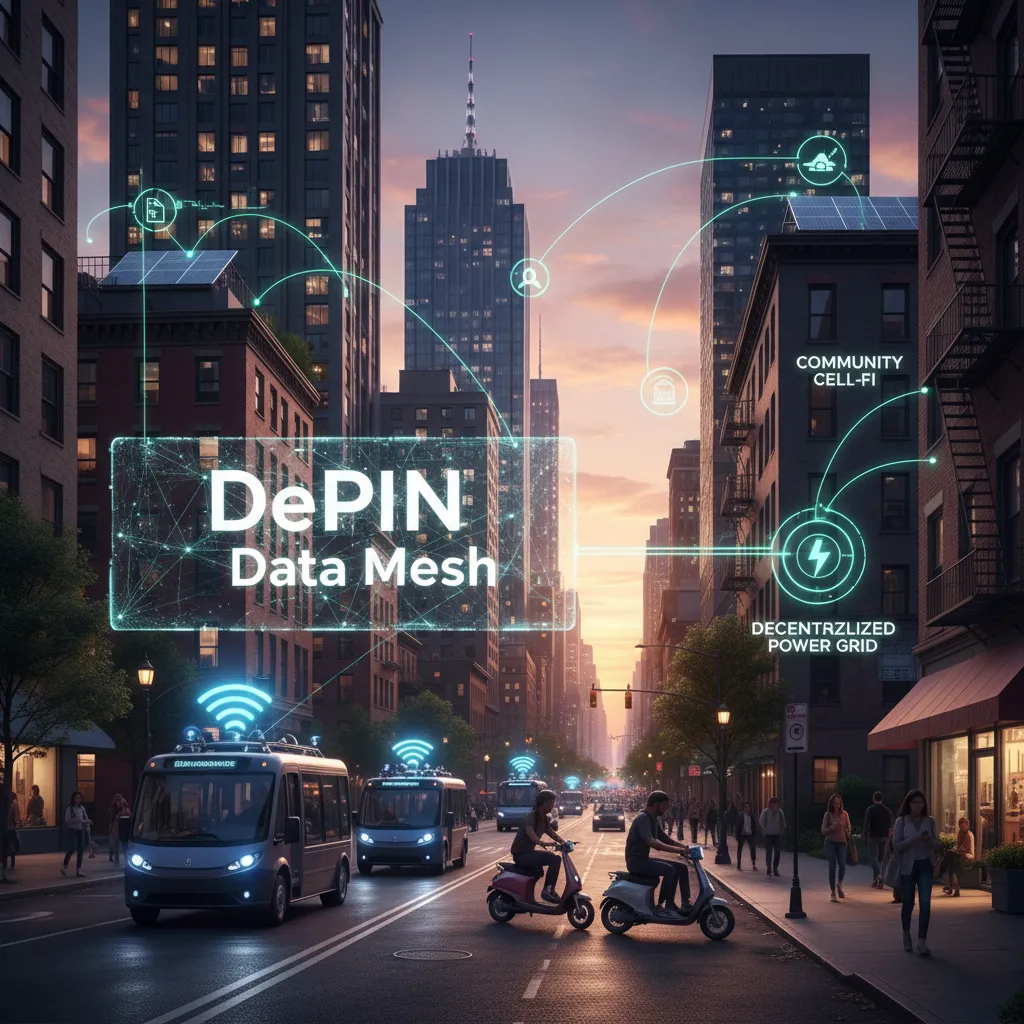
The future of infrastructure is increasingly pointing towards decentralized models. DePINs are poised to play a pivotal role in the development of next-gen infrastructure and the realization of smart cities DePIN.
Imagine cities where:
- Traffic management is optimized by decentralized sensor networks providing real-time data.
- Public safety is enhanced by community-contributed surveillance systems.
- Environmental monitoring is conducted by a global network of decentralized sensors.
- Electric vehicle charging is facilitated by a peer-to-peer network of charging stations.
DePIN offers a pathway to more resilient, sustainable, and citizen-centric urban environments. The emphasis on open source infrastructure and community contribution will accelerate this evolution.
Sustainability in DePIN: A Greener Future
Beyond economic incentives, DePIN holds significant promise for sustainability in DePIN.
- Efficient Resource Use: By leveraging existing and often underutilized resources, DePIN minimizes the need for new, energy-intensive infrastructure build-outs.
- Promotion of Renewables: Decentralized energy grids can incentivize local renewable energy generation and consumption.
- Environmental Monitoring: DePIN projects can deploy vast networks of environmental sensors, providing critical data for climate research and pollution control.
This alignment with sustainable practices positions DePIN as a key technology for addressing global environmental challenges.
Conclusion: Reshaping Our World, One Decentralized Network at a Time
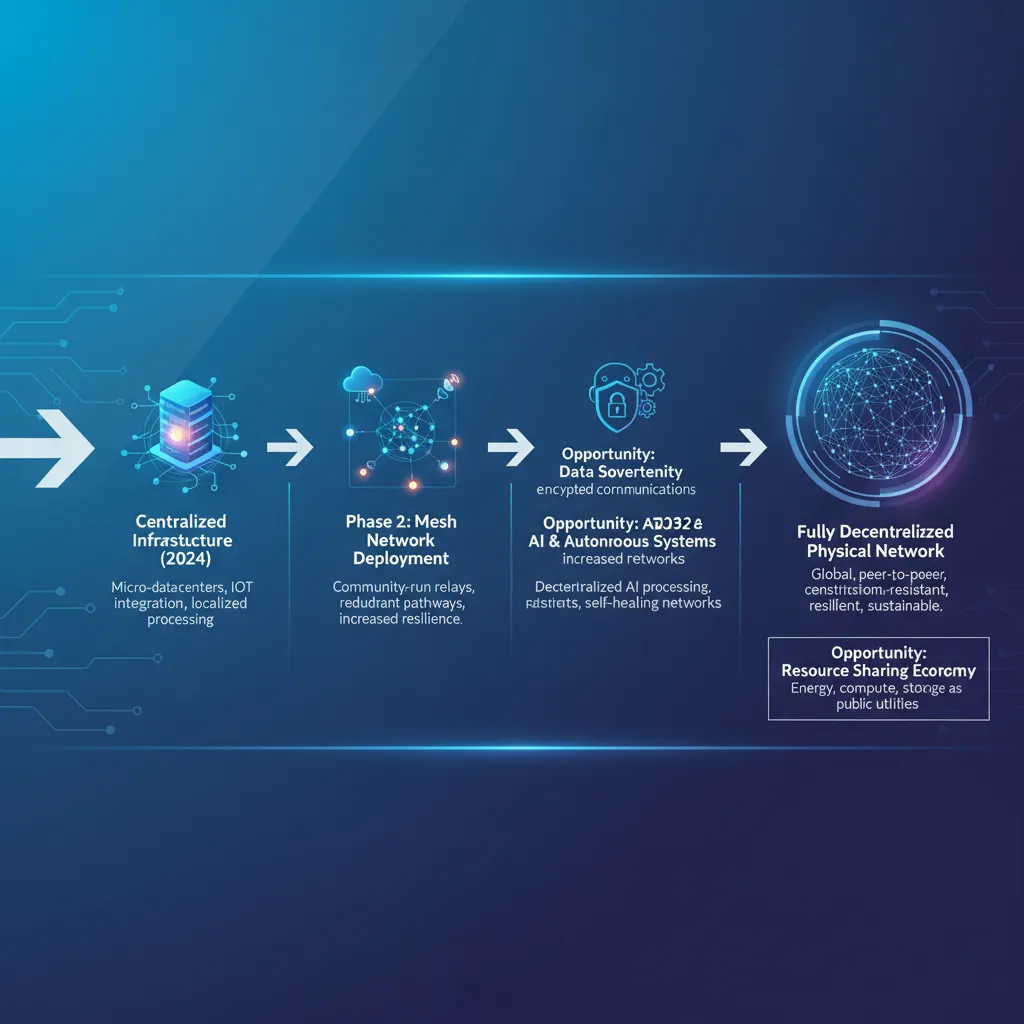
The rise of DePIN marks a pivotal moment in the evolution of technology and society. By combining the power of blockchain with the tangible needs of physical infrastructure, these networks are not just creating new ways to build and manage resources; they are fundamentally reshaping the future of how we interact with our world. From decentralized wireless networks to decentralized storage networks and beyond, DePIN is paving the way for a future that is more resilient, more equitable, and more efficient.
As Web3 innovation continues to mature, DePIN will undoubtedly emerge as one of its most impactful and visible applications, demonstrating how blockchain use cases can extend far beyond digital currencies to touch every aspect of our lives. The journey ahead will involve overcoming technical hurdles, navigating regulatory complexities, and fostering widespread adoption. Yet, the vision of democratizing infrastructure and empowering individuals to collectively build and own the networks they rely on is a powerful one.
We are entering an exciting era where the next-gen infrastructure will be built not by a few, but by many. The opportunity for investment in DePIN and participation in this burgeoning ecosystem is immense. By embracing open source infrastructure and the principles of decentralization, we can collectively build a future where our physical networks are as robust, transparent, and user-centric as the digital ones we increasingly depend on. The impact of DePIN will be felt across industries and communities, ushering in an era of unprecedented connectivity, efficiency, and empowerment.
Join the decentralized revolution. Explore the DePIN ecosystem, contribute to building decentralized networks, and be a part of The Rise of DePIN: Decentralized Physical Infrastructure Networks Reshaping the Future.
FAQs
Q1. What is DePIN explained in simple terms?
DePIN (Decentralized Physical Infrastructure Networks) refers to blockchain-based networks that use cryptocurrency incentives to encourage people to build and maintain real-world infrastructure. Think of it as a community-driven approach to creating things like Wi-Fi networks, data storage, or energy grids, where participants earn tokens for their contributions.
Q2. How does DePIN differ from traditional infrastructure?
Traditional infrastructure is usually built and owned by large, centralized corporations or governments. DePIN, however, decentralizes this process, allowing a global community of individuals to contribute resources and share ownership, leading to more resilient, transparent, and often more affordable services.
Q3. What are some examples of DePIN projects?
Prominent DePIN projects include Helium (for decentralized wireless networks), Filecoin and Arweave (for decentralized storage), and Powerledger (for decentralized energy trading). These projects demonstrate how blockchain and token incentives can create distributed versions of essential services.
Q4. What are the main benefits of Decentralized Physical Infrastructure Networks?
DePIN offers several advantages: it democratizes access to infrastructure, enhances resilience by removing single points of failure, improves security through blockchain’s immutability, and optimizes resource utilization by leveraging idle assets. It also creates new economic opportunities for participants.
Q5. What role does blockchain play in DePIN?
Blockchain acts as the foundational layer for DePINs. It provides a transparent and immutable ledger to record contributions, verify “proof of physical work” (that a task was completed in the real world), and distribute token rewards fairly. This ensures trust and accountability within the network.
Q6. Can individuals participate in DePIN, and how?
Yes, many DePIN projects are designed for individual participation. Depending on the project, you might deploy a physical device (like a Helium hotspot), contribute unused hard drive space, or share computing power. In return, you typically earn cryptocurrency tokens for your verifiable contributions to the network.
Q7. How does DePIN contribute to sustainability?
DePIN can promote sustainability by incentivizing the use of existing, often underutilized, resources, reducing the need for new, resource-intensive infrastructure. Projects in decentralized energy can also encourage local renewable energy generation and more efficient energy consumption.
Q8. What is the future outlook for DePIN?
The future of DePIN is bright, with significant potential to reshape various industries. It’s expected to drive the development of next-generation infrastructure, power smart cities, and fuel the machine economy. As the technology matures and regulatory clarity emerges, DePIN is poised for widespread adoption and impact.