The Rise of AI Copilots: Revolutionizing Work, Boosting Creativity & Driving Innovation
Introduction: The Dawn of a New Era in Collaboration
The landscape of work is undergoing a profound transformation, driven by the relentless march of technological progress. At the forefront of this evolution stands the AI Copilot, a sophisticated form of artificial intelligence designed not to replace, but to augment human capabilities. Far from the simplistic automation tools of yesterday, AI Copilots are emerging as intelligent partners, reshaping industries, catalyzing unprecedented levels of productivity, and unlocking new dimensions of creativity and innovation.
In an increasingly complex and competitive global environment, businesses and individuals alike are seeking novel ways to enhance efficiency, overcome limitations, and maintain a competitive edge. This urgent demand has propelled AI Copilots from experimental concepts into indispensable components of modern workflows. From streamlining mundane tasks to assisting in complex problem-solving and generating novel ideas, these intelligent AI Assistants are redefining what’s possible in virtually every sector. This article delves into the profound impact of AI Copilots, exploring how they are revolutionizing work, boosting creativity, and driving innovation, thereby ushering in a new era of human-AI collaboration and shaping the very future of work AI.
What Exactly Are AI Copilots?
To truly grasp their impact, it’s crucial to understand what distinguishes an AI Copilot from other forms of artificial intelligence. Unlike fully autonomous AI systems that operate independently, or basic automation scripts that follow predefined rules, AI Copilots are built on a foundation of collaboration. They are designed to work alongside humans, acting as an extension of our cognitive and operational abilities.
Beyond Simple Automation: The Essence of Augmentation
At its core, an AI Copilot embodies the principle of augmentation. This means it doesn’t just automate repetitive tasks; it actively assists, suggests, and generates insights to enhance human performance. Think of it as an intelligent partner that anticipates needs, provides relevant information, and even contributes to creative processes, all while keeping the human at the helm. This symbiotic relationship ensures that humans retain control and critical decision-making authority, leveraging the AI for its speed, data processing power, and ability to identify patterns invisible to the human eye. This is a fundamental shift from simple Work Automation to intelligent human-AI partnership.
Key Characteristics of AI Copilots
AI Copilots possess several distinguishing characteristics that enable their transformative capabilities:
- Contextual Understanding: They can understand the context of a user’s task or query, drawing on vast datasets and intricate algorithms to provide relevant and timely assistance.
- Generative Capabilities: Leveraging
Generative AImodels, many copilots can create new content, code, designs, or even strategic recommendations, significantly accelerating workflows and sparking new ideas. - Learning and Adaptation: They continuously learn from interactions and feedback, improving their performance and becoming more tailored to individual user preferences and organizational needs over time.
- Integration: AI Copilots are typically integrated seamlessly into existing software, platforms, and workflows, making their adoption intuitive and minimizing disruption.
- Proactive Assistance: They can often anticipate potential issues or opportunities, offering proactive suggestions or solutions before being explicitly asked, transforming
Personal AI assistants for daily tasksinto proactive partners.
These characteristics collectively enable AI Copilots to act as genuine partners, driving the next wave of AI trends in modern workplaces and accelerating Digital Transformation AI efforts across industries.
Revolutionizing Work: How AI Copilots Transform Workplaces
The integration of AI Copilots into daily operations is fundamentally reshaping how we approach work. They are not merely tools but catalysts for profound change, driving efficiency, streamlining processes, and liberating human potential from the shackles of monotony.
Enhancing Productivity and Efficiency Through Work Automation
One of the most immediate and tangible benefits of AI Copilots is their ability to enhance productivity and efficiency. They excel at handling repetitive, time-consuming tasks, freeing up human workers to focus on more strategic and creative endeavors. From drafting emails and scheduling meetings to organizing data and generating reports, AI Copilots can significantly reduce the cognitive load associated with administrative overhead.
For instance, an AI copilot can analyze vast datasets in minutes, extracting key insights that would take a human analyst hours or even days. This capability empowers faster, more data-driven decision-making, which is crucial for modern businesses. In legal, finance, and healthcare sectors, AI Productivity Tools are proving invaluable for processing documents, analyzing contracts, and extracting critical information with unparalleled speed and accuracy. This exemplifies how AI-powered work automation strategies are not just about doing tasks faster, but about enabling a higher quality of work output.

Streamlining Workflows and Operations
Beyond individual task automation, AI Copilots are pivotal in optimizing entire workflows and operational processes. They can integrate across various platforms and applications, acting as a central nervous system that ensures smooth information flow and task execution. For project managers, an AI assistant can monitor project progress, identify bottlenecks, and even suggest resource reallocation based on real-time data. This leads to more agile and responsive operations, minimizing delays and maximizing resource utilization.
Consider the role of AI in quality assurance or customer support. AI Copilots can monitor communications, identify common issues, and even draft responses, allowing human agents to focus on complex, sensitive cases. This level of Work Automation not only improves service delivery but also enhances employee satisfaction by reducing burnout from repetitive inquiries.
Personal AI Assistants for Daily Tasks
The concept of a Personal AI assistant for daily tasks has evolved dramatically. These are no longer just voice-activated devices that play music or set reminders; modern AI Copilots are deeply integrated into professional lives. They can manage calendars, prioritize emails, summarize lengthy documents, and even help in research by fetching relevant information across various sources. This personalized assistance allows individuals to manage their time more effectively, maintain focus, and significantly reduce the mental fatigue associated with information overload. The best AI assistants for creative professionals and executives are becoming indispensable, enabling a hyper-personalized work experience. You can read more about leveraging AI for daily tasks here: Unlock Your Potential: Top AI Tools for Everyday Productivity.
Boosting Creativity: Unleashing New Potentials
Perhaps one of the most exciting frontiers for AI Copilots is their role in enhancing human creativity. Far from stifling imagination, these intelligent partners are proving to be powerful catalysts, helping individuals and teams to ideate, prototype, and realize creative visions at an unprecedented pace.
Creative AI Tools: From Concept to Creation
Creative AI Tools powered by Generative AI are revolutionizing fields like graphic design, content writing, music composition, and even architectural planning. For writers, an AI copilot can generate outlines, suggest plot points, proofread, and even draft entire sections of text, acting as an intelligent muse that overcomes writer’s block. For designers, AI can create mood boards, generate variations of logos or product designs, and even suggest color palettes, accelerating the ideation phase and allowing designers to explore more options in less time.
This isn’t about AI replacing the artist; it’s about providing a potent set of tools that amplify human artistic capabilities. The Best AI assistants for creative professionals are those that understand nuanced stylistic preferences and can translate abstract ideas into tangible outputs. They enable rapid prototyping and iteration, allowing creators to spend more time on refinement and conceptual depth rather than manual execution. Leveraging AI for creative content generation is no longer a futuristic concept but a present-day reality.

Overcoming Creative Blocks and Expanding Horizons
Every creative individual experiences moments of creative block. AI Copilots can act as powerful antidotes to these impasses. By generating diverse ideas, suggesting alternative approaches, or providing new perspectives based on vast amounts of data, they can kickstart inspiration and help individuals break free from conventional thinking.
For example, an architect struggling with a layout can input design parameters into an AI copilot, which can then generate hundreds of unique structural variations, some of which might never have occurred to a human designer. This ability to explore a much broader solution space not only saves time but also leads to genuinely novel and innovative outcomes. The Benefits of AI copilots in design are immense, pushing the boundaries of what’s creatively possible.
Driving Innovation: AI in Business and Digital Transformation
Innovation is the lifeblood of progress, and AI Copilots are proving to be invaluable drivers in this arena, fundamentally altering how businesses operate, strategize, and grow. They are central to the broader narrative of Digital Transformation AI.
Strategic Decision Making with AI Insights
In today’s data-rich environment, strategic decisions require processing vast amounts of information quickly and accurately. AI tools for strategic decision making empower leaders by providing deep insights derived from complex data analytics, market trends, and predictive modeling. An AI Copilot can analyze customer behavior, forecast market shifts, assess competitive landscapes, and even simulate the outcomes of different strategic choices. This allows businesses to make more informed, proactive decisions, reducing risk and identifying new opportunities for growth.
For instance, in the realm of financial services, AI copilots can analyze market data to predict investment trends or assess credit risks with greater precision than traditional methods. In retail, they can optimize inventory management, personalize customer experiences, and identify emerging product demands, directly impacting profitability and market share. This level of insight is crucial for Implementing AI for business growth.
Accelerating Research and Development
The pace of research and development (R&D) is critical for industries reliant on continuous innovation, such as pharmaceuticals, technology, and advanced manufacturing. AI Copilots significantly accelerate R&D cycles by assisting with literature reviews, hypothesis generation, experimental design, and data analysis. They can sift through millions of scientific papers, identify potential drug candidates, or simulate complex material properties, dramatically cutting down the time and resources traditionally required.
This expedited R&D process not only brings new products and services to market faster but also enables scientists and engineers to explore more complex problems and develop more sophisticated solutions. You can see the impact of AI in various cutting-edge fields, such as AI Unleashed: Revolutionizing Space Exploration & Cosmic Discovery or AI in Healthcare: Revolutionizing Medicine & Patient Care.
Implementing AI for Business Growth and Digital Transformation AI
The adoption of AI Copilots is a cornerstone of modern Digital Transformation AI. For businesses looking to enhance their competitive edge, these tools offer a pathway to improved operational efficiency, superior customer experiences, and the development of entirely new business models. AI in Business is no longer a luxury but a strategic imperative.
From optimizing supply chains and automating customer service to personalizing marketing campaigns and enhancing cybersecurity protocols (check out Guardians of the Digital Frontier: AI Revolutionizing Cybersecurity), AI Copilots provide scalable solutions that drive sustainable growth. They enable enterprises to adapt quickly to changing market conditions, foster a culture of continuous innovation, and unlock previously untapped potential within their data assets. Virtual AI assistants for enterprises are becoming crucial for managing vast amounts of information and coordinating complex operations across global teams.
The Future of Work with AI Copilots: A Symbiotic Relationship
As AI Copilots become more sophisticated and ubiquitous, they are fundamentally altering the very fabric of how humans and machines interact in professional settings, ushering in an era of genuine human-AI symbiosis. This profound shift defines the true Future of Work AI.
AI and Human-Robot Collaboration
The vision of AI and human-robot collaboration is rapidly moving from science fiction to everyday reality. In manufacturing, robotics, and even surgical procedures, AI Copilots are enabling humans to operate complex machinery with greater precision and safety, or to perform intricate tasks that would otherwise be impossible. This collaboration extends beyond physical robots to intelligent software agents that work seamlessly with human teams.
In creative fields, an AI copilot might handle the technical aspects of 3D rendering or video editing, allowing a human artist to focus solely on the artistic vision. In scientific research, AI can manage data collection and initial analysis, leaving researchers free to interpret results and design subsequent experiments. This division of labor leverages the strengths of both human and artificial intelligence, leading to outcomes that neither could achieve alone.
Impact of AI on Job Roles and Future Skills
The Impact of AI on job roles is a frequently discussed topic. While some fear job displacement, the more nuanced reality suggests a shift in the nature of work. AI Copilots will automate routine and predictable tasks, certainly, but they will also create new roles and demand new skills. Jobs requiring uniquely human attributes—such as creativity, critical thinking, emotional intelligence, strategic problem-solving, and complex interpersonal communication—will become even more valuable.
Therefore, the focus for individuals and organizations must be on Upskilling for the AI era. This involves developing skills in areas like prompt engineering (the art of effectively communicating with AI), data literacy, AI ethics, and human-AI collaboration. The Future skills for an AI-driven workforce will increasingly involve knowing how to work with AI, rather than competing against it. This paradigm shift will necessitate continuous learning and adaptation, transforming the educational and professional development landscapes. Explore other cutting-edge areas influenced by AI such as Unlocking New Realities: AI & Spatial Computing.
AI in Collaborative Work Environments
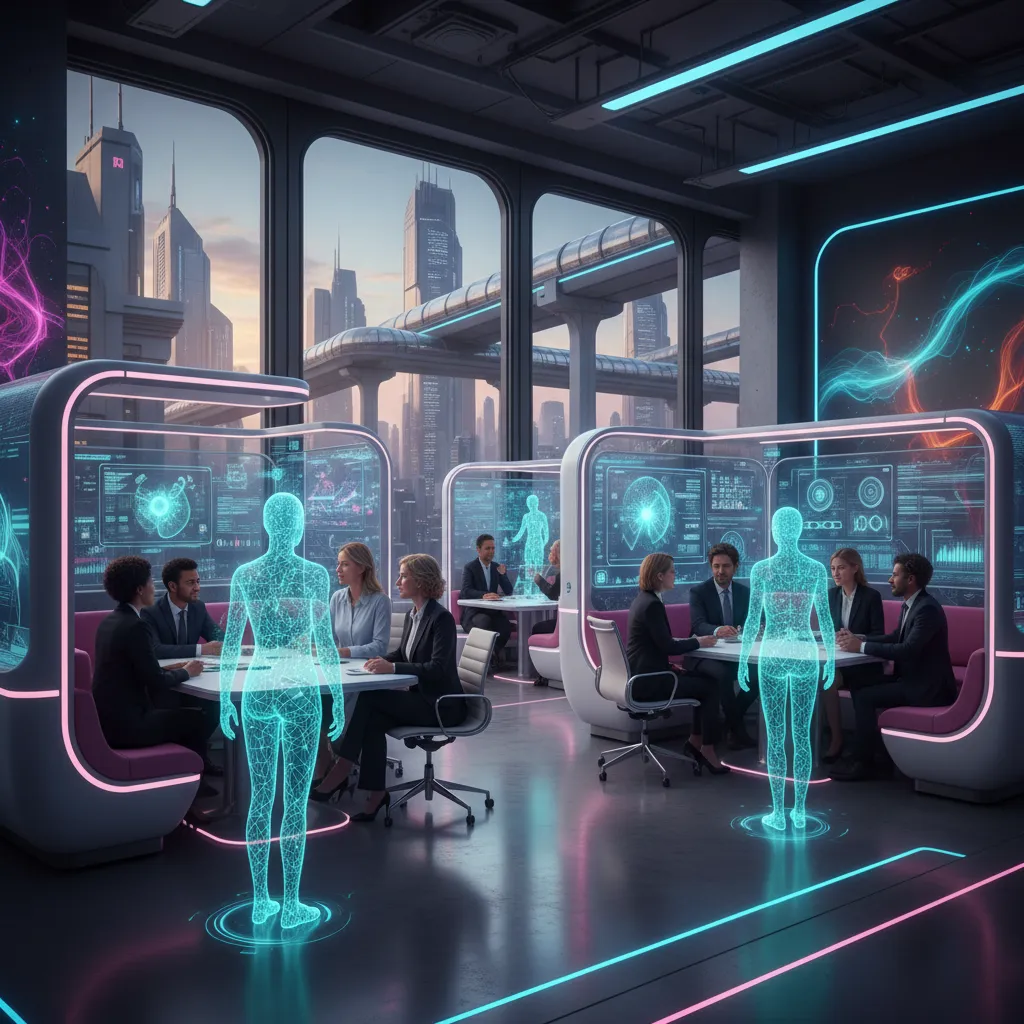
AI Copilots are not just individual assistants; they are increasingly integrated into AI in collaborative work environments. They can facilitate team communication, manage shared documents, identify common ground in brainstorming sessions, and even help resolve conflicts by providing objective data. In large enterprises, virtual AI assistants can coordinate complex projects across geographically dispersed teams, ensuring everyone is aligned and has access to the information they need.
This enhanced collaboration leads to more cohesive teams, faster project completion, and a more inclusive work environment where every team member can contribute at their highest potential. AI trends in modern workplaces clearly point towards an era where AI acts as a glue, binding diverse talents and resources into a highly efficient and synergistic whole.
Navigating the Challenges and Ethical Considerations
While the benefits of AI Copilots are immense, their widespread adoption also brings forth a unique set of challenges and ethical considerations that must be proactively addressed to ensure responsible and equitable deployment.
Addressing Job Displacement Concerns
One of the most pressing concerns is the potential for job displacement. As AI Copilots automate more tasks, certain job functions may diminish or disappear. However, history teaches us that technological advancements, while disrupting existing roles, also create new ones. The key lies in strategic planning, investment in reskilling programs, and a societal commitment to supporting workers through transitions. The conversation needs to shift from “AI taking jobs” to “AI changing jobs” and how we can empower the workforce to adapt.
Ensuring Ethical AI Development and Deployment
The development and deployment of AI Copilots must be guided by strong ethical frameworks. Ethical considerations of AI in work include issues of bias in algorithms, fairness, transparency, and accountability. If AI models are trained on biased data, they can perpetuate and even amplify existing societal inequalities. It is imperative that developers and organizations prioritize diversity in data, implement robust testing protocols, and establish clear guidelines for ethical use. Organizations must be transparent about when and how AI is being used, ensuring human oversight and the ability to intervene when necessary.

Data Privacy and Security Implications
AI Copilots, by their very nature, often process vast amounts of sensitive data—personal communications, proprietary business information, and intellectual property. This raises significant concerns about data privacy and security. Robust cybersecurity measures, strict data governance policies, and adherence to regulations like GDPR are paramount. Companies deploying AI Copilots must ensure that data is encrypted, access is controlled, and privacy is protected at every stage of the AI lifecycle. The integrity of internal links, such as Web3 & The Creator Economy: Empowering Artists & Innovators, also relies on secure digital environments.
Challenges of AI Adoption in Companies
Beyond the ethical considerations, companies face practical Challenges of AI adoption in companies. These include the high initial investment in AI infrastructure, the need for specialized talent, resistance to change from employees, and the complexity of integrating AI systems with legacy IT environments. Successful adoption requires a clear strategy, strong leadership buy-in, cross-functional collaboration, and a focus on incremental implementation rather than a “big bang” approach. Change management and employee training are crucial to ensure smooth transitions and maximize the benefits of AI Copilots.
Embracing the AI Era: Upskilling and Adaptation
The transformative power of AI Copilots means that individuals and organizations must proactively embrace learning and adaptation. This isn’t merely about technological adoption; it’s about fostering a mindset of continuous growth in an AI-driven workforce.
Lifelong Learning for an AI-Driven World
The concept of Upskilling for the AI era is no longer a recommendation but a necessity. As AI automates routine tasks, human workers will need to evolve their skill sets towards higher-order cognitive functions. This includes critical thinking, complex problem-solving, creativity, emotional intelligence, and interdisciplinary collaboration. Educational institutions, corporate training programs, and individual initiatives must focus on developing these uniquely human capabilities, alongside AI literacy—understanding how AI works, its capabilities, and its limitations.
Lifelong learning will become the norm, with individuals continually acquiring new knowledge and skills to remain relevant and valuable in the evolving job market. This proactive approach ensures that humans remain indispensable, acting as conductors of increasingly powerful AI orchestras.
Leveraging AI for Personalized Work Experience
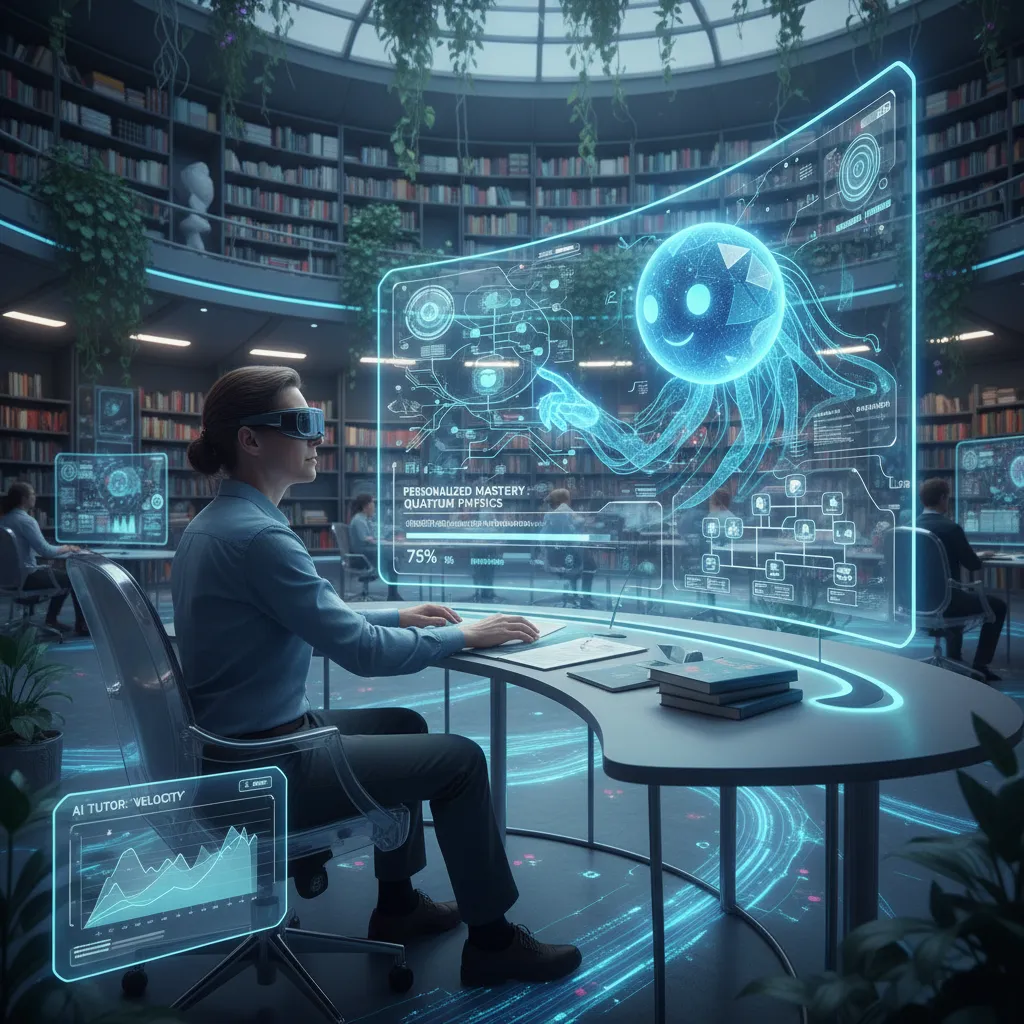
Paradoxically, while AI transforms work on a macro level, it also enables a more AI for personalized work experience on an individual level. AI Copilots can learn an individual’s work habits, preferences, strengths, and weaknesses, then tailor their assistance accordingly. This might involve recommending personalized learning paths for skill development, suggesting work-life balance adjustments, or optimizing task prioritization based on individual cognitive load and deadlines.
This level of personalization can lead to increased job satisfaction, reduced stress, and greater overall well-being. By automating the mundane and augmenting capabilities, AI Copilots free up individuals to focus on what they do best and what they enjoy most, fostering an environment where human talent can truly flourish. Even for topics like health, AI offers personalized solutions, as seen in Unlock Your Best Self: AI-Powered Personalized Nutrition & Fitness for Optimal Health.
Conclusion: The Unstoppable Ascent of AI Copilots
The rise of AI Copilots represents a pivotal moment in the history of work. These intelligent AI Assistants are not just tools; they are symbiotic partners that are profoundly revolutionizing work, boosting creativity, and driving innovation across every conceivable industry. From enhancing work automation and AI productivity tools to fostering new forms of human-AI collaboration and empowering creative AI tools, their impact is undeniable and ever-expanding.
As we navigate this transformative era, the challenges, particularly around ethical considerations of AI in work and the impact of AI on job roles, demand careful attention and proactive solutions. However, by embracing upskilling for the AI era and focusing on the synergistic potential of AI and human-robot collaboration, we can harness the immense power of AI Copilots to create a future of work that is more efficient, more creative, and ultimately, more human. The journey has just begun, and the destination promises a world where human ingenuity is amplified, and the boundaries of what’s possible are continually redefined.
FAQs
Q1. What is an AI Copilot?
An AI Copilot is an artificial intelligence system designed to work collaboratively with humans, augmenting their capabilities rather than replacing them. It assists with tasks, offers suggestions, generates content, and provides insights, enhancing human productivity, creativity, and decision-making.
Q2. How do AI Copilots differ from traditional AI assistants?
While traditional AI assistants (like voice assistants) primarily respond to commands and perform basic tasks, AI Copilots offer more proactive, contextual, and intelligent assistance. They deeply integrate into workflows, learn from interactions, and possess generative capabilities, actively collaborating on complex projects.
Q3. Will AI Copilots replace human jobs?
AI Copilots are designed to automate routine and repetitive tasks, which may lead to shifts in job roles. However, they also create new job opportunities and elevate the importance of uniquely human skills such as creativity, critical thinking, emotional intelligence, and strategic problem-solving, necessitating upskilling for the AI era.
Q4. What are the benefits of using AI Copilots in a business setting?
In a business setting, AI Copilots enhance work automation, boost AI productivity tools, provide AI tools for strategic decision making, accelerate digital transformation AI, and foster AI in collaborative work environments. This leads to increased efficiency, better decision-making, faster innovation, and improved customer experiences.
Q5. How can individuals prepare for an AI-driven workforce?
Individuals can prepare by focusing on future skills for an AI-driven workforce, including AI literacy, data analysis, critical thinking, creativity, and emotional intelligence. Embracing lifelong learning and adapting to new tools and collaborative paradigms will be crucial.
Q6. What are some examples of creative AI tools?
Creative AI tools encompass a wide range, including AI writing assistants for content generation, AI art generators for visual design, AI music composers, and AI-powered tools for video editing or 3D modeling. These tools leverage AI for creative content generation to spark ideas and accelerate creative workflows.
Q7. What ethical concerns are associated with AI in work?
Key ethical considerations of AI in work include potential job displacement, algorithmic bias, data privacy, security, transparency, and accountability. Addressing these requires careful development, robust regulation, and clear guidelines for responsible AI deployment and human oversight.
Q8. How do AI Copilots boost innovation?
AI Copilots drive innovation by accelerating research and development, providing AI tools for strategic decision making based on deep data insights, automating experimental processes, and freeing up human talent to focus on conceptualization and problem-solving. They enable faster iteration and the exploration of novel ideas, fostering a culture of continuous advancement.