The Metaverse at Work: Revolutionizing Remote Collaboration & Virtual Offices
Introduction: Stepping into the Future of Work
The landscape of work is undergoing a profound transformation. While remote work and hybrid models have redefined our understanding of the traditional office, a new frontier is emerging that promises to push the boundaries of productivity, engagement, and global connectivity: the metaverse at work. Far from being a mere gaming platform or social hangout, the metaverse is rapidly evolving into a sophisticated ecosystem poised to revolutionize remote collaboration and virtual offices for businesses worldwide.
Imagine a world where geographic boundaries dissolve, where colleagues from different continents can brainstorm around a virtual whiteboard, examine 3D product prototypes as if they were physically present, or attend a company-wide town hall from the comfort of their homes, yet feeling truly immersed. This isn’t science fiction; it’s the promise of enterprise metaverse solutions. This article will delve deep into how the metaverse for business is reshaping the future workplace technology, exploring its benefits, applications, challenges, and the strategic pathways for its adoption. We’ll uncover how immersive work environments, powered by VR for business and AR in the workplace, are not just enhancing communication but creating entirely new paradigms for metaverse productivity and employee engagement metaverse.
Redefining Remote Collaboration: Beyond Video Calls
For years, video conferencing has been the cornerstone of remote collaboration. While invaluable, it often falls short in replicating the spontaneity, non-verbal cues, and shared presence of in-person interactions. The metaverse offers a compelling evolution, transforming static screens into dynamic, interactive 3D spaces.
The Power of Presence: Virtual Reality Meetings
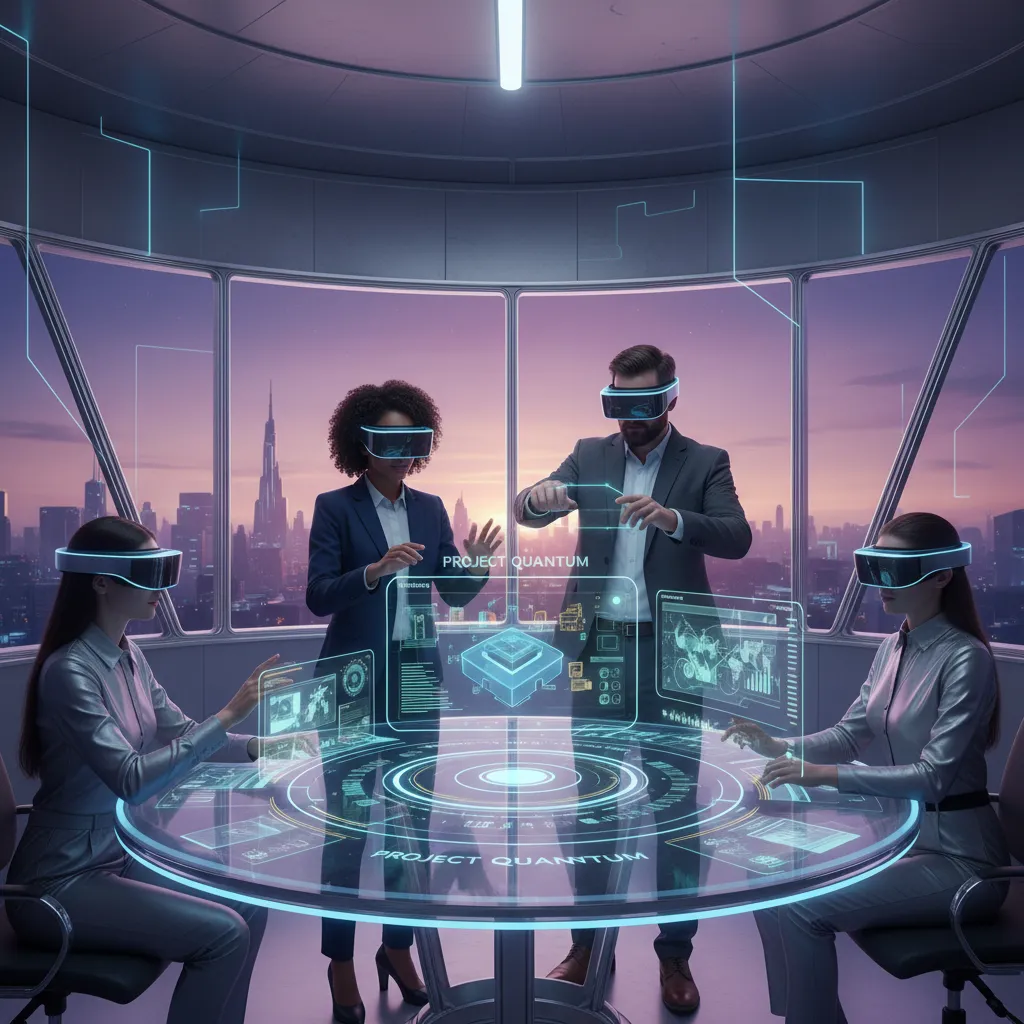
Virtual reality meetings are a game-changer for distributed teams. Instead of a grid of faces, participants don their VR headsets and enter a shared virtual space, represented by customizable avatars. This creates a powerful sense of presence, making it feel as though colleagues are truly in the same room. Whiteboards become infinite, presentations can be projected onto massive virtual screens, and interactive 3D models can be manipulated by everyone simultaneously. This level of immersion fosters stronger connections and more effective brainstorming sessions.
Enhanced Communication and Engagement
The ability to use natural body language through avatar movements, spatial audio that mimics real-world acoustics, and shared interactive tools drastically improves communication. This heightened immersive collaboration technology helps combat the “Zoom fatigue” often associated with traditional video calls, leading to higher employee engagement metaverse. Businesses are beginning to see the clear metaverse office benefits in these scenarios.
Augmented Reality in the Workplace: Bridging Digital and Physical
While VR transports users entirely into a virtual world, AR in the workplace overlays digital information onto the real world. This is particularly transformative for tasks requiring physical interaction or real-time data visualization. Imagine a field technician repairing complex machinery, guided by AR overlays that highlight specific components and display step-by-step instructions. Or an architect walking through a construction site, seeing a holographic overlay of the building’s final design.
Practical Applications of AR
AR glasses can provide instant access to data, project plans, and expert guidance without requiring workers to look away from their physical tasks. This significantly boosts efficiency, reduces errors, and enhances problem-solving capabilities, making it a powerful tool for metaverse productivity across various industries.
Building the Virtual Office: A New Frontier for Enterprise
The concept of the virtual office takes remote work a step further, providing a persistent, customizable digital headquarters where teams can gather, work, and socialize. These aren’t just meeting rooms; they are fully realized immersive work environments designed to replicate and even enhance the traditional office experience.
From Static to Dynamic: Metaverse Collaboration Platforms
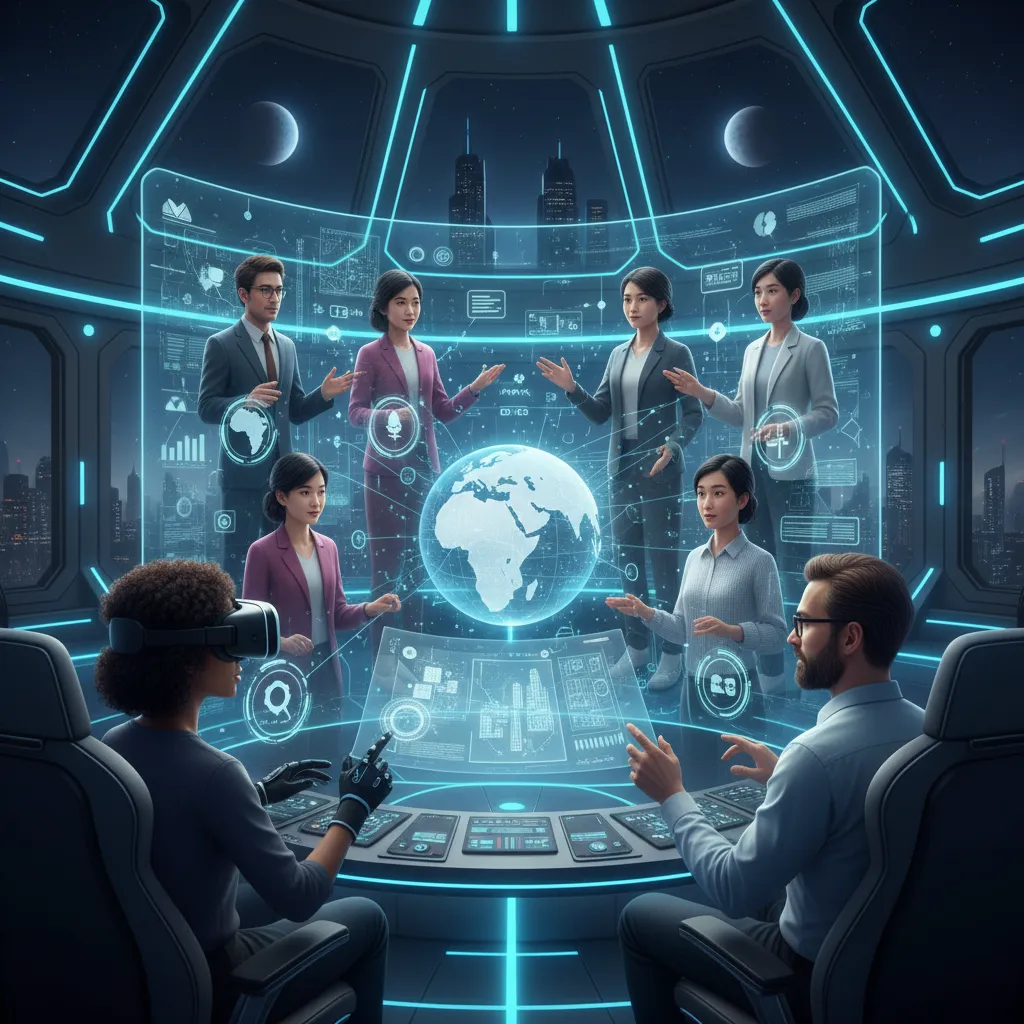
Metaverse collaboration platforms are emerging as central hubs for businesses. These platforms allow companies to create bespoke virtual meeting spaces, shared workspaces, and even digital “campuses.” Employees can customize their avatars, decorate their virtual desks, and seamlessly transition between different collaborative areas. This fosters a sense of belonging and a stronger corporate culture, crucial for remote work evolution.
Features of Advanced Virtual Offices
- Persistent Spaces: Your virtual office exists 24/7, ready for impromptu meetings or focused work.
- Spatial Audio: Hear colleagues clearly based on their avatar’s proximity, just like in a physical office.
- Interactive Tools: Shared whiteboards, 3D model viewers, presentation screens, and document collaboration tools.
- Customization: Brand your virtual space, design unique layouts, and create tailored environments for different teams or projects.
- Integration: Connect with existing business tools, project management software, and communication platforms.
Digital Twins for Enterprise: Real-World Replication and Innovation
One of the most powerful business applications of metaverse technology is the creation of digital twins for enterprise. A digital twin is a virtual replica of a physical object, process, or system. In the metaverse, these digital twins can be incredibly detailed and interactive, allowing businesses to monitor, analyze, and simulate real-world operations in a safe, virtual environment.
Revolutionizing Design, Manufacturing, and Operations
- Product Development: Engineers can design, test, and iterate on complex products virtually, identifying flaws and optimizing performance before physical production. This accelerates time-to-market and reduces costs.
- Factory Optimization: A digital twin of a factory floor allows managers to simulate production lines, identify bottlenecks, and optimize workflows without disrupting real-world operations.
- Urban Planning: City planners can create digital twins of entire cities to model traffic flow, infrastructure development, and emergency response scenarios.
- Healthcare: Hospitals can use digital twins of patients or operating rooms to practice procedures or optimize resource allocation.
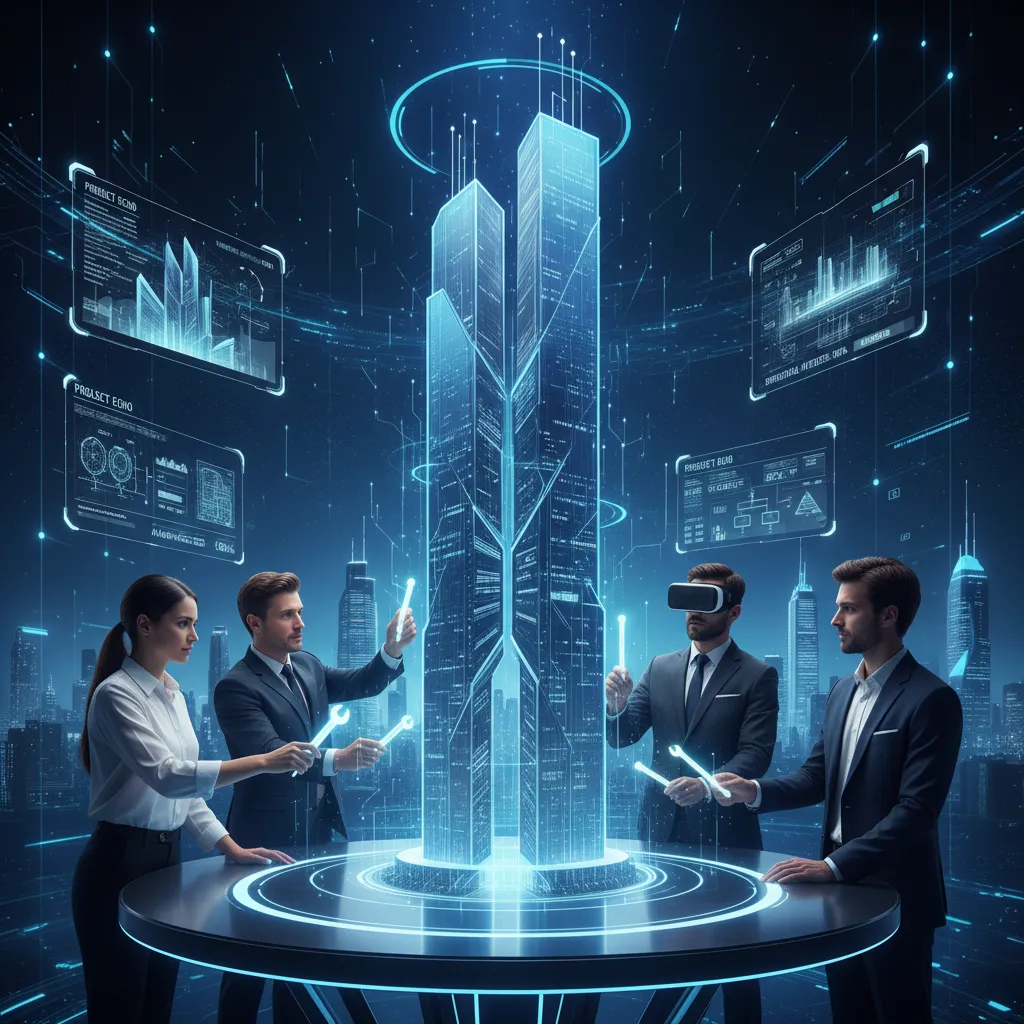
The use of digital twins is a prime example of how the metaverse fosters business innovation metaverse, offering unprecedented capabilities for analysis and foresight.
The Metaverse and Hybrid Work: A Seamless Blend
As companies grapple with the complexities of metaverse and hybrid work models, the metaverse offers a compelling solution to bridge the gap between in-office and remote employees. It provides a common ground where everyone, regardless of their physical location, can participate equally and feel connected.
Equalizing the Hybrid Experience
In a traditional hybrid setup, remote employees often feel like “second-class citizens” in meetings where most attendees are in a physical conference room. The metaverse levels the playing field. Everyone attends as an avatar, ensuring that all participants have the same visual and auditory experience. This fosters inclusivity and ensures that every voice is heard, a critical aspect of promoting employee engagement metaverse.
Future Workplace Technology: Integrating XR for Flexibility
The integration of XR (Extended Reality, encompassing VR, AR, and Mixed Reality) into future workplace technology means greater flexibility. Employees can choose to work from a virtual office, collaborate in an AR-enhanced physical space, or combine both as needed. This adaptability is key to attracting and retaining talent in a competitive market. It represents a significant step in remote work evolution, offering a more engaging and productive alternative to current solutions.
Transforming Key Business Functions
The impact of the metaverse extends far beyond just meetings and office spaces. It’s poised to revolutionize critical business functions across the board.
Metaverse for Corporate Training and Skill Development
Traditional corporate training can be expensive, time-consuming, and often lacks real-world applicability. Metaverse for corporate training offers a highly effective alternative through augmented reality training and virtual reality simulations.
Immersive Learning Experiences
- Onboarding: New hires can explore their virtual office, meet colleagues, and learn company culture in an engaging, gamified environment.
- Technical Skills: Employees can practice complex procedures in a risk-free virtual setting, such as operating heavy machinery, performing delicate surgeries, or troubleshooting intricate systems.
- Soft Skills: VR simulations can be used for leadership training, customer service role-playing, and diversity & inclusion workshops, allowing participants to experience scenarios and receive immediate feedback.
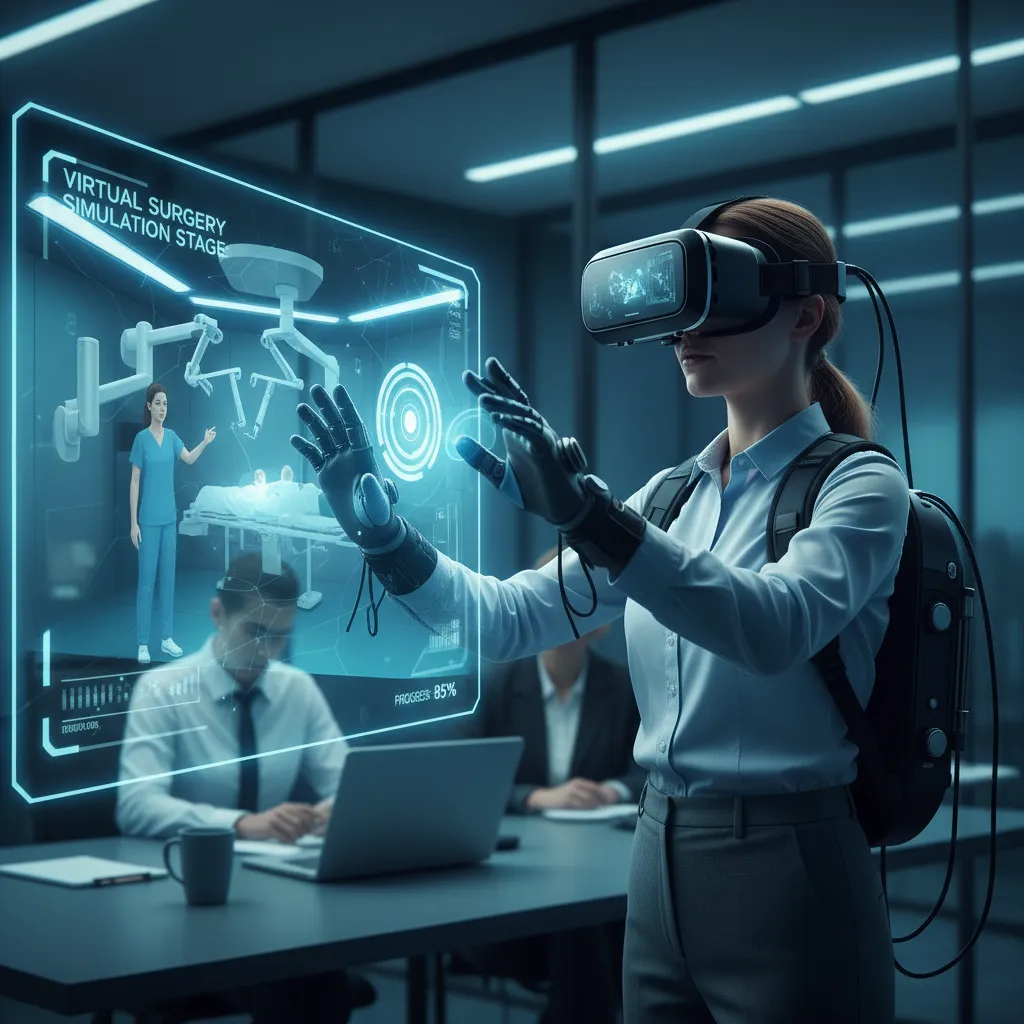
The ability to repeatedly practice in a realistic, immersive environment leads to faster skill acquisition and higher retention rates, making it an invaluable tool for future of work metaverse strategies.
Virtual Events Metaverse: Engagement at Scale
The pandemic accelerated the adoption of virtual events, but many lacked the engagement of in-person gatherings. The virtual events metaverse offers a solution, creating highly interactive and immersive experiences for conferences, trade shows, product launches, and concerts. Attendees can network, visit virtual booths, watch keynote speeches on massive screens, and even participate in interactive workshops, all within a vibrant 3D environment. This expands reach and offers new avenues for marketing and engagement.
Metaverse Economic Opportunities and Web3 Work Solutions
The metaverse isn’t just about collaboration; it’s also a burgeoning economy. Metaverse economic opportunities include:
- Virtual Real Estate: Businesses can purchase or lease virtual land to build their virtual offices, showrooms, or event spaces.
- Digital Goods and Services: A new market for creating and selling digital assets, from avatar wearables to 3D models and virtual experiences.
- New Business Models: Companies can explore new revenue streams through virtual storefronts, advertising within the metaverse, and offering unique digital-first products.
Furthermore, the rise of Web3 work solutions and the decentralized work metaverse points towards new organizational structures and ways of managing digital assets and identities, potentially fostering truly distributed autonomous organizations (DAOs) where work is managed and compensated transparently on blockchain.
Navigating the Challenges and Adopting the Metaverse
While the promise of the metaverse is immense, its widespread adoption comes with its own set of challenges. Addressing these is crucial for a successful metaverse adoption strategy.
Key Hurdles to Overcome
- Hardware Accessibility and Cost: High-quality VR headsets can still be expensive, and not every employee may have access to the necessary equipment or reliable internet connections.
- Digital Fatigue: While immersive, spending extended periods in VR can lead to eye strain, motion sickness, or general fatigue for some individuals.
- Security and Privacy: As with any new digital frontier, safeguarding data, intellectual property, and user privacy in the metaverse is paramount. Robust security protocols are essential.
- Interoperability: Ensuring seamless transitions between different metaverse platforms and integrating with existing enterprise systems remains a challenge.
- Skill Gaps: Businesses need to invest in training employees to navigate and effectively utilize metaverse tools and platforms.
Developing a Metaverse Adoption Strategy
To overcome these challenges, companies need a clear, incremental metaverse adoption strategy:
- Start Small, Experiment Big: Begin with pilot projects in specific departments or for particular use cases, such as virtual meetings for a remote team or AR training for a specific skill.
- Invest in Infrastructure: Ensure robust network capabilities and consider providing necessary hardware to employees.
- Prioritize User Experience: Design intuitive, accessible, and comfortable metaverse environments to minimize digital fatigue and maximize engagement.
- Emphasize Security: Implement strong cybersecurity measures and educate employees on best practices for operating in the metaverse.
- Foster a Culture of Innovation: Encourage employees to explore, experiment, and provide feedback on metaverse tools, driving continuous improvement and organic adoption.
- Partner with Experts: Collaborate with metaverse collaboration platforms providers and XR developers to build tailored solutions.
The Future is Now: Embracing Metaverse Workplace Trends
The metaverse workplace trends are not a distant dream but an accelerating reality. Forward-thinking companies are already exploring and implementing XR in business to gain a competitive edge. From virtual reality meetings that enhance connection to augmented reality training that boosts skill acquisition, the benefits are tangible. The metaverse for business is offering unparalleled metaverse office benefits such as global reach, reduced travel costs, and enhanced productivity.
The future workplace technology will increasingly leverage these immersive environments to foster stronger teams, drive innovation, and unlock new metaverse economic opportunities. By embracing these technologies, businesses can not only adapt to the evolving demands of remote and hybrid work but thrive in the next era of enterprise.
Conclusion: Pioneering the Next Era of Work
The metaverse at work represents a profound paradigm shift, moving us beyond the limitations of traditional 2D interfaces into a rich, immersive 3D world. It’s a journey that promises to revolutionize everything from remote collaboration and virtual offices to corporate training and business innovation. While challenges remain, the strategic integration of enterprise metaverse solutions, VR for business, and AR in the workplace offers unprecedented opportunities for enhanced metaverse productivity and employee engagement metaverse.
The future of work metaverse is not about replacing human interaction but augmenting it, making it richer, more accessible, and more effective than ever before. Companies that embrace these metaverse workplace trends and develop a thoughtful metaverse adoption strategy will be the ones that redefine industry standards, attract top talent, and lead the charge into a truly global, immersive, and interconnected working world.
The time to explore the vast potential of the metaverse is now. Begin your journey into immersive collaboration technology and unlock a future where your team’s potential knows no bounds. Discover how these advancements can empower your enterprise to navigate the complexities of the modern workforce and emerge stronger, more innovative, and truly connected. For more insights into emerging technologies shaping our future, visit HyperDaily.
FAQs
Q1. What is the metaverse for business?
The metaverse for business refers to persistent, interactive, and immersive virtual environments designed for professional purposes. It enables virtual offices, remote collaboration, corporate training, product design, and virtual events through technologies like VR, AR, and digital twins, enhancing productivity and engagement.
Q2. How does the metaverse enhance remote collaboration?
The metaverse enhances remote collaboration by creating immersive 3D virtual spaces where colleagues, represented by avatars, can interact with a strong sense of presence. This allows for more natural communication, shared manipulation of 3D objects, and dynamic virtual meetings, going beyond the limitations of traditional video calls.
Q3. What are “virtual offices” in the metaverse?
Virtual offices in the metaverse are persistent, customizable 3D digital environments that serve as a company’s virtual headquarters. They allow employees to gather, work, and socialize in an immersive setting, offering dedicated workspaces, meeting rooms, and common areas accessible from anywhere with a VR headset or compatible device.
Q4. How do VR and AR contribute to the metaverse at work?
VR (Virtual Reality) fully immerses users in a virtual world for experiences like realistic virtual meetings and training simulations. AR (Augmented Reality) overlays digital information onto the real world, enhancing physical tasks with interactive data, guides, and 3D models, making both critical for creating comprehensive immersive work environments.
Q5. What are digital twins and their business applications in the metaverse?
Digital twins are virtual replicas of physical objects, processes, or systems. In the metaverse, businesses use them for real-time monitoring, analysis, and simulation. Applications include optimizing manufacturing lines, designing and testing products virtually, and simulating complex infrastructure projects before physical implementation, driving business innovation.
Q6. Can the metaverse help with employee engagement?
Yes, the metaverse can significantly boost employee engagement. By providing immersive, interactive, and novel work environments, it fosters stronger team bonds, reduces digital fatigue associated with traditional remote tools, and offers more engaging avenues for collaboration, training, and social interaction, leading to higher satisfaction.
Q7. What are the main challenges of metaverse adoption for businesses?
Key challenges include the cost and accessibility of high-quality hardware, potential for digital fatigue, ensuring robust security and data privacy, achieving interoperability between different platforms, and addressing the need for employee training and skill development to effectively utilize metaverse tools.
Q8. What are some metaverse economic opportunities for businesses?
Metaverse economic opportunities include acquiring virtual real estate, creating and selling digital goods and services (e.g., avatar apparel, 3D models), developing new business models for virtual storefronts, advertising within metaverse spaces, and exploring Web3-powered decentralized work solutions.