The Future of Travel: How AI Crafts Your Perfect Personalized Journey
Introduction
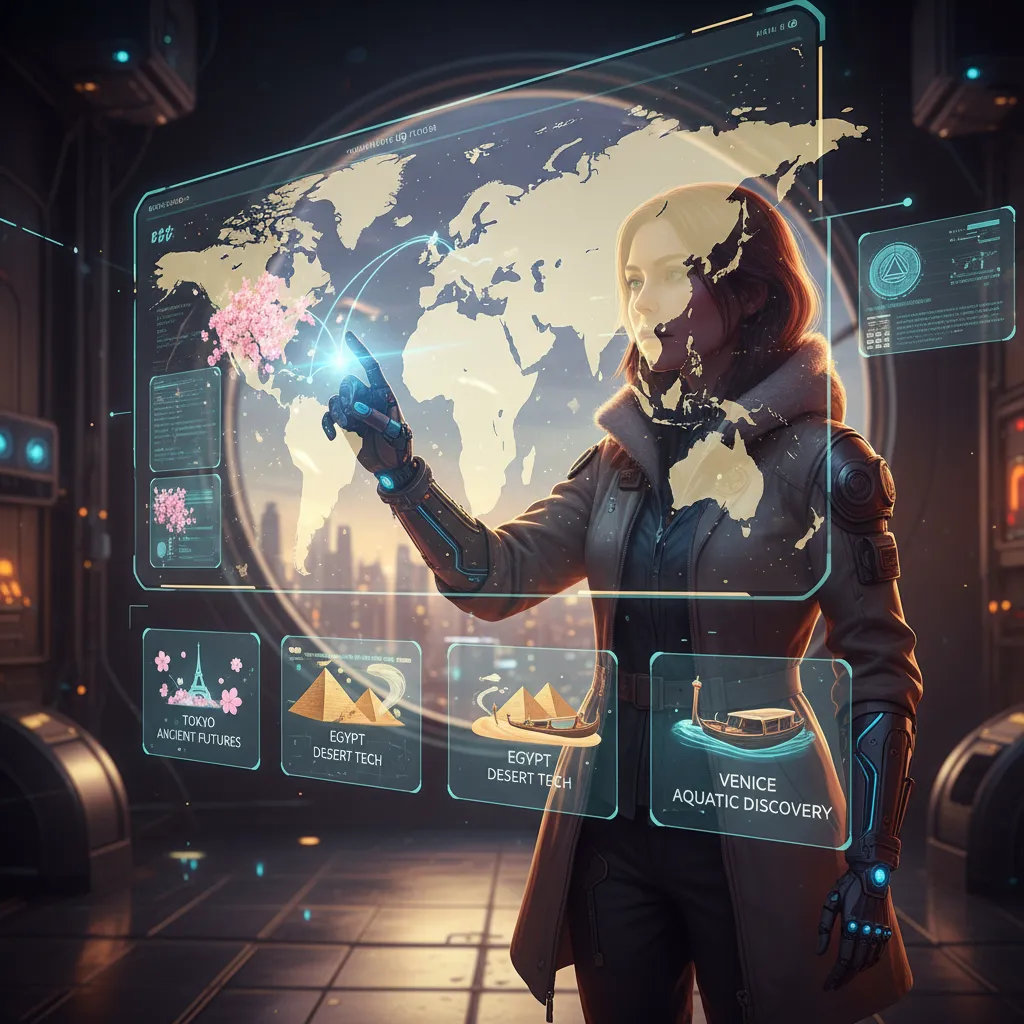
Remember the old way of planning a vacation? The ritual involved dozens of open browser tabs, endless scrolling through reviews, comparing prices across countless sites, and the lingering anxiety that you might be missing out on a hidden gem. It was a part-time job just to book a holiday. This era of information overload and decision fatigue is rapidly coming to an end. The future of travel isn’t just about faster planes or fancier hotels; it’s about intelligence, personalization, and seamlessness, all powered by Artificial Intelligence.
We’re entering an age of hyper-personalized travel, where your journey is crafted to your unique tastes, interests, and even your mood, long before you pack your bags. From an AI itinerary builder that knows you prefer street art to museums, to a digital travel assistant that reroutes you around a sudden downpour, smart technology is transforming how we explore the world. This isn’t science fiction; it’s the new reality of AI-powered tourism.
In this guide, we’ll explore the revolutionary impact of AI travel planning. You’ll learn how these sophisticated tools work, discover the tangible benefits for your next trip, and get a glimpse into the exciting travel tech trends shaping the adventures of tomorrow. Get ready to ditch the spreadsheets and embrace a smarter, more intuitive way to travel.
Beyond the Cookie-Cutter Itinerary: Why Travel Planning Needed an Upgrade
For decades, the travel industry has operated on a model of mass-market packages and one-size-fits-all recommendations. Guidebooks pointed everyone to the same handful of landmarks, and online booking sites, despite their convenience, often funneled users toward sponsored listings or the most popular, generic choices.
The result? A world of travel that often felt impersonal and overwhelming.
The core problems with traditional travel planning include:
- Information Overload: The sheer volume of flights, hotels, activities, and reviews available online is staggering. Sifting through it to find what’s truly relevant to you can take hours or even days.
- Decision Paralysis: With infinite choices comes the fear of making the wrong one. This can lead to stress during what should be an exciting planning phase.
- Generic Experiences: Algorithmic recommendations have historically been basic, often based on what’s popular with the masses rather than your specific interests. If you’re a vegan foodie who loves architecture, getting recommendations for the city’s most famous steakhouse is simply noise.
- Time Sink: The time spent researching and coordinating logistics is time you’re not spending on other things. For busy professionals and families, this is a significant barrier.
This is precisely the friction that AI in tourism is designed to eliminate. Instead of presenting you with a mountain of data to climb, AI acts as your personal sherpa, analyzing your needs and guiding you directly to the summit of your perfect vacation. It’s about shifting the paradigm from searching for travel to having travel discover you. [Related: AI Travel: Plan Your Dream Trip Faster]
Your Personal Travel Genius: How AI Trip Planners Work
At the heart of this revolution is the AI trip planner. Think of it as a blend of a seasoned travel agent, a local expert, and a hyper-efficient personal assistant, all living inside your phone or computer. But how does it actually create these uniquely tailored experiences? It’s a combination of understanding you, leveraging vast datasets, and using powerful new generative technologies.
The Power of Data: Understanding Your Unique Travel DNA
The magic of custom vacation planning AI starts with data. These platforms build a unique “Traveler DNA” profile for you by analyzing various inputs:
- Explicit Preferences: You directly tell the AI your budget, travel dates, desired activities (e.g., “relaxing on a beach,” “hiking in mountains”), and travel style (“luxury,” “budget-friendly,” “family-oriented”).
- Implicit Behavior: AI can analyze your past travel bookings, the types of articles you read, and even your social media activity (with your permission) to understand your latent interests. It might notice you always book hotels with a gym or frequently “like” photos of ancient ruins.
- Contextual Data: The system considers real-time information like flight prices, hotel availability, weather forecasts, and local events to ensure its recommendations are timely and practical.
By combining these layers of information, the AI moves beyond simple keywords to grasp the nuanced intent behind your travel dreams, creating a foundation for truly personalized travel experiences.
From Prompt to Paradise: The Magic of Generative AI Travel
The latest leap forward comes from Generative AI travel tools. Powered by the same technology behind ChatGPT and Gemini, these platforms allow you to plan a trip using simple, conversational language.
Instead of clicking through filters, you can just type a prompt like:
“Plan a 10-day anniversary trip to Italy in September for a couple who loves food, wine, and history, but wants to avoid the biggest crowds. Our budget is around $5,000, and we want a mix of famous sites and off-the-beaten-path experiences.”
The AI adventure planner processes this request, understands the layered intent (romance, culinary focus, historical interest, crowd aversion), and instantly generates a potential itinerary.

Building Your Smart Itinerary, Step-by-Step
Once the AI understands your request, the AI itinerary builder gets to work on the logistics, creating a detailed and flexible plan:
- Route Optimization: It maps out the most logical travel path, suggesting whether to fly, take a train, or rent a car between cities like Rome, Florence, and a quieter town in Tuscany.
- Accommodation Matching: It scans thousands of hotels, boutique inns, and vacation rentals to find options that match your budget and “romantic” or “historic” style.
- Activity Curation: It populates your days with a balanced mix of activities. For the Italy prompt, this might include a pre-booked ticket to the Colosseum to skip the line, a reservation for a private vineyard tour in Chianti, and a recommendation for a local cooking class—all based on your stated interests.
- Booking and Integration: The most advanced AI travel tools can even handle the bookings for you or provide direct links, consolidating all your confirmations into one seamless, smart travel itinerary.
This process of automated trip planning turns a week of stressful research into a few minutes of conversation, delivering a starting point that is already 90% of the way to your dream trip planning AI experience.
Not Just a Planner: AI as Your On-the-Go Travel Assistant
The influence of smart travel technology doesn’t end once your trip is booked. Modern AI travel assistant apps are becoming indispensable companions during your journey, making your experience smoother, safer, and more enriching.
Real-Time Recommendations and Dynamic Adjustments
Your AI companion is aware of your location, the time of day, and even the weather. This allows for incredibly powerful, context-aware suggestions.
- Spontaneous Discovery: As you wander through a neighborhood in Lisbon, your app might buzz with a notification: “A Fado music performance, which you might enjoy based on your interest in live music, is starting in 15 minutes at a highly-rated club just around the corner.”
- Dynamic Itinerary Changes: Imagine your planned beach day gets rained out. Your digital travel assistant can instantly rework your schedule, suggesting the best-rated indoor modern art museum nearby and checking ticket availability.
- Personalized Dining: Instead of just showing “restaurants near me,” the AI leverages your “Traveler DNA.” It knows you’re a vegetarian and will highlight top-rated plant-based restaurants that locals love, effectively filtering out the noise.

Breaking Down Barriers: Language and Culture
One of the biggest challenges of international travel is the language barrier. AI is effectively dismantling it. Apps using advanced neural machine translation can translate spoken conversations in real-time, turning your smartphone into a universal translator. Furthermore, AI can provide crucial cultural context and etiquette tips, helping you navigate new social environments with respect and confidence.
Augmented Reality and Immersive Exploration
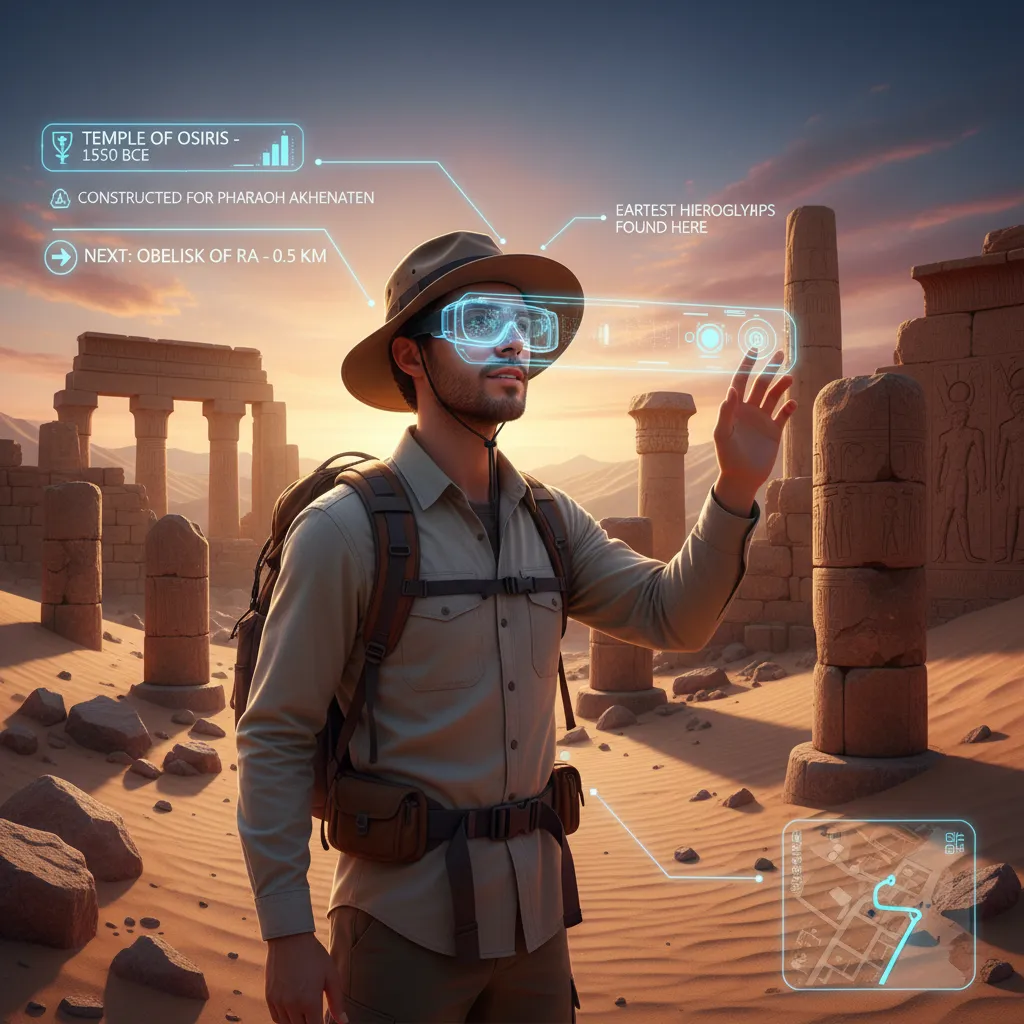
The synergy between AI and Augmented Reality (AR) is unlocking new ways to experience our surroundings. Point your phone or AR glasses at an ancient Roman ruin, and an AI-powered app can overlay a digital reconstruction of how it looked in its prime, complete with historical facts and stories. This travel innovation AI turns a simple sightseeing trip into an immersive educational experience. [Related: Apple Intelligence: Your Guide to Apple’s New AI Features]
The Bigger Picture: How AI is Reshaping the Entire Tourism Industry
While individual travelers reap the benefits of intelligent travel planning, AI is also sending transformative waves across the entire tourism ecosystem. This creates a virtuous cycle where better technology leads to better experiences, which in turn generates more data to make the technology even smarter.
For Travelers: The Unmistakable Benefits
The advantages of embracing AI to enhance travel with AI are clear and compelling:
- Unmatched Personalization: Journeys are no longer generic; they are a true reflection of your personality and passions.
- Time and Effort Saved: Drastically reduces the hours spent on research and logistics.
- Discovery of Hidden Gems: AI algorithms excel at finding unique, off-the-beaten-path spots that you’d likely never discover through traditional methods.
- Optimized Budgeting: AI can analyze pricing trends and find the optimal time to book flights and hotels, saving you money without sacrificing quality.
- Reduced In-Trip Stress: With a smart assistant managing logistics and providing real-time help, you can focus on being present and enjoying the moment.

For Businesses: A New Era of Hospitality
Airlines, hotels, and tour operators are also leveraging AI to improve their services:
- Dynamic Pricing: Airlines use complex AI models to adjust ticket prices based on demand, time of year, and competitor pricing.
- Personalized Marketing: Hotels can send targeted offers to past guests based on their previous stays, increasing loyalty.
- Enhanced Customer Service: AI-powered chatbots on websites can answer common questions 24/7, freeing up human agents to handle more complex issues.
- Operational Efficiency: AI helps optimize everything from hotel occupancy rates to airline fuel consumption, leading to a more sustainable and efficient industry.
This industry-wide adoption ensures that the ecosystem supporting your AI-driven travel experiences is becoming more robust and integrated every day. [Related: The Rise of AI Copilots: Revolutionizing Work, Boosting Creativity, and Driving Innovation]
Navigating the Future: Challenges and What’s Next for AI in Travel
The road to a fully AI-integrated travel future is incredibly exciting, but it’s not without its bumps. As with any powerful technology, there are challenges to address and ethical considerations to navigate.
The Human Touch vs. The Algorithm
A key question is whether a bespoke travel AI can ever fully replace the expertise and personal touch of a human travel agent. While AI is brilliant at data processing and logistics, a great travel agent provides empathy, reassurance, and creative problem-solving honed by years of experience. The future likely lies in a hybrid model, where agents use AI as a powerful tool to augment their skills, allowing them to focus on the high-touch, human elements of trip planning.
Data Privacy and Ethical Considerations
Hyper-personalized travel relies on access to personal data. This raises valid concerns about privacy and security. Travelers need to be confident that their data is being used responsibly and ethically. Leading companies in the AI-powered tourism space must prioritize transparency, giving users clear control over what information they share and how it is used. [Related: The Humane AI Pin: Future or Flop? A Deep-Dive Review]
The Next Frontier: Predictive and Proactive Travel
Looking ahead, the next evolution in future travel planning is predictiveness. Imagine an AI assistant that notices you’ve had a stressful quarter at work and proactively suggests a weekend wellness retreat, having already checked your calendar and found a great deal on a flight. This shift from a reactive planning tool to a proactive travel companion will make discovering and booking trips more seamless than ever before. This is the ultimate goal of travel innovation AI: to anticipate your needs and inspire your next journey before you’ve even articulated the desire to go.
Conclusion
The days of generic guidebooks and overwhelming travel websites are numbered. We stand at the dawn of a new, intelligent age of exploration, where the journey truly is as unique as the traveler. Artificial intelligence is no longer a far-off concept; it is a practical and powerful tool that is actively redefining our relationship with travel.
From the initial spark of an idea to the final moments of a trip, AI is working to make the entire experience more personal, efficient, and enriching. By harnessing the power of data, AI trip planners and digital travel assistants are eliminating the friction of planning and empowering us to discover the world in ways that resonate deeply with who we are.
The future of travel is not about replacing human curiosity but amplifying it. It’s about spending less time planning and more time experiencing, less time stressing and more time discovering. So, the next time you dream of a getaway, remember that your perfect, personalized journey AI is just a conversation away. Are you ready to let AI plan your next adventure?
FAQs
Q1. What is an AI travel planner?
An AI travel planner is a digital tool or application that uses artificial intelligence to help users research, plan, and book trips. It analyzes a user’s preferences, budget, and travel style to generate personalized itineraries, recommend flights and hotels, and suggest activities, automating much of the traditional planning process.
Q2. Can AI replace a human travel agent?
While AI can handle logistical tasks and data-driven recommendations with incredible efficiency, it is unlikely to completely replace human travel agents soon. Agents provide a level of empathy, creative problem-solving, and personalized assurance that algorithms currently cannot replicate. The future is likely a hybrid model where agents use AI tools to enhance their service.
Q3. How does AI create a personalized itinerary?
AI creates a personalized itinerary by collecting and analyzing data about you. This includes your explicit inputs (like destination and budget), implicit behavior (like past travel history), and real-time contextual data (like weather and pricing). It then uses machine learning algorithms to match these inputs against a vast database of travel options to build a unique, optimized trip plan.
Q4. What are some of the best AI trip planner tools available now?
Several innovative AI trip planners are gaining popularity. Tools like Wanderlog, TripIt, and GuideGeek use AI to organize logistics and provide recommendations. Additionally, generative AI platforms like Google’s Gemini and OpenAI’s ChatGPT are increasingly being used by travelers to brainstorm ideas and build custom itineraries from conversational prompts.
Q5. Is it safe to use AI for travel planning?
Generally, yes. Reputable AI travel planning companies invest in data security to protect user information. However, as with any online service, it’s crucial to use strong passwords, be aware of the data you are sharing, and review the privacy policy of any tool you use. Always book through secure and verified links provided by the planner.
Q6. How is generative AI changing the travel industry?
Generative AI is revolutionizing the travel industry by making trip planning conversational and intuitive. Instead of clicking filters, travelers can simply describe their ideal trip in natural language. This technology can instantly produce detailed itineraries, travel guides, and booking suggestions, making the process of creating complex, AI for unique trips faster and more accessible than ever before.