Space Tourism Takes Off: Your AI-Powered Guide to Earth’s New Frontier
Introduction
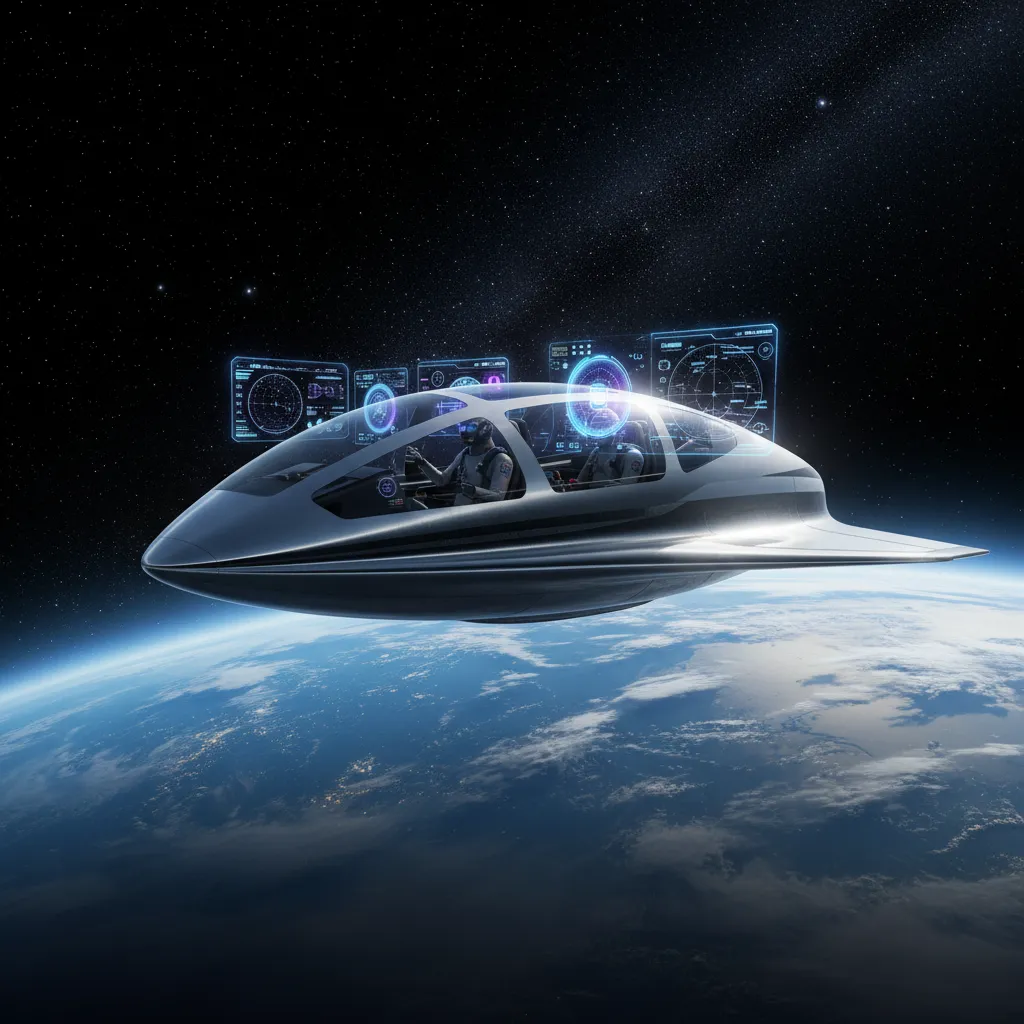
For decades, the dream of looking down at the Earth’s blue curve was reserved for a select few astronauts. It was the stuff of science fiction, a distant frontier accessible only through government agencies and years of rigorous training. Today, that frontier is rapidly becoming a destination. The era of space tourism and commercial space travel is not on the horizon; it has arrived. Companies are now booking flights, and private citizens are earning their astronaut wings.
But this giant leap for tourism is not being taken alone. Behind the spectacular rocket launches and breathtaking views is a silent, powerful co-pilot: Artificial Intelligence. AI is the critical enabling force that is making this cosmic adventure safer, more efficient, and increasingly personalized. From designing the rockets to training the passengers and managing the in-flight experience, AI is weaving itself into the very fabric of our journey to the stars.
In this guide, we’ll explore the exhilarating world of private spaceflight. You’ll discover the key players turning this dream into reality, understand the different types of journeys available, and delve deep into the revolutionary role AI space travel technology plays in every stage. This is your AI-powered guide to humanity’s most exciting future travel trend.
The Dawn of a New Era: What is Commercial Space Travel?
At its core, space tourism is about traveling to space for recreational, leisure, or educational purposes. It represents a fundamental shift from government-led space exploration to a commercially driven industry. This new sector, fueled by billionaire visionaries and incredible leaps in space exploration tech, is democratizing access to the final frontier.
The journey began in 2001 when American businessman Dennis Tito paid a reported $20 million to visit the International Space Station (ISS). His flight marked the birth of a market. Today, the industry is branching out into distinct experiences, each offering a unique taste of space.
Suborbital Flights: The Karman Line and Back
The most accessible entry point into space tourism is the suborbital flight. This journey takes passengers just past the Kármán line—the internationally recognized boundary of space, 100 kilometers (about 62 miles) above Earth.
Passengers on these flights experience several minutes of weightlessness and witness the profound “overview effect”—the cognitive shift in awareness reported by some astronauts when viewing Earth from orbit. It’s a short, thrilling trip to the edge of space and back, often lasting around 90 minutes from takeoff to landing.
Orbital Tourism: Circling the Globe
For those seeking a more immersive space vacation, orbital tourism offers the chance to circle the Earth for several days. This is the classic astronaut experience, involving much higher speeds, longer durations in a zero-gravity environment, and breathtaking, ever-changing views of the planet below.
These missions, currently led by companies like SpaceX, often involve docking with the International Space Station or free-flying in a state-of-the-art capsule. The complexity, duration, and energy required make orbital travel significantly more expensive and demanding than its suborbital counterpart.
The Horizon: Lunar and Martian Journeys
The ultimate dream for many is to venture beyond Earth’s orbit. Lunar tourism aims to take paying customers on trips around the Moon, while the even more ambitious goal of Mars travel remains the long-term vision. These missions represent monumental logistical and technological challenges, from developing powerful new rockets like the SpaceX Starship to creating sustainable life support systems for long-duration travel. AI will be absolutely indispensable in making these incredible journeys a reality.
The Architects of the Cosmos: Leading Space Tourism Companies
A handful of pioneering companies are at the forefront of the commercial space race, each with a unique approach to opening up the cosmos.
Virgin Galactic: The Rock ‘n’ Roll Ride to Space
Founded by Sir Richard Branson, Virgin Galactic offers a stylish and cinematic suborbital experience. Their method is unique: a carrier aircraft, VMS Eve, takes off from a runway carrying the VSS Unity spaceplane to an altitude of about 50,000 feet. From there, Unity is released, ignites its rocket motor, and ascends past the edge of space, providing passengers with an unforgettable zero-gravity experience before gliding back to Earth for a runway landing.
Blue Origin: The Astronaut Experience for a Day
Jeff Bezos’s Blue Origin provides a classic rocket-and-capsule suborbital flight with its New Shepard vehicle. The fully autonomous system launches vertically, sending the capsule containing six passengers past the Kármán line. At the apex, passengers unbuckle to float around the cabin and gaze through the largest windows ever flown in space. The capsule then descends under parachutes, while the rocket booster makes a pinpoint vertical landing to be reused—a key factor in driving down costs.
SpaceX: The Orbital Powerhouse
Led by Elon Musk, SpaceX is the dominant force in orbital travel. Their Crew Dragon capsule, launched atop the Falcon 9 rocket, has already carried NASA astronauts and private citizens (through missions organized by Axiom Space) to the ISS. SpaceX’s ultimate goal is far grander: using its next-generation, fully reusable SpaceX Starship to make humanity multi-planetary, starting with lunar missions and eventual settlements on Mars.
Emerging Players and Space Habitats
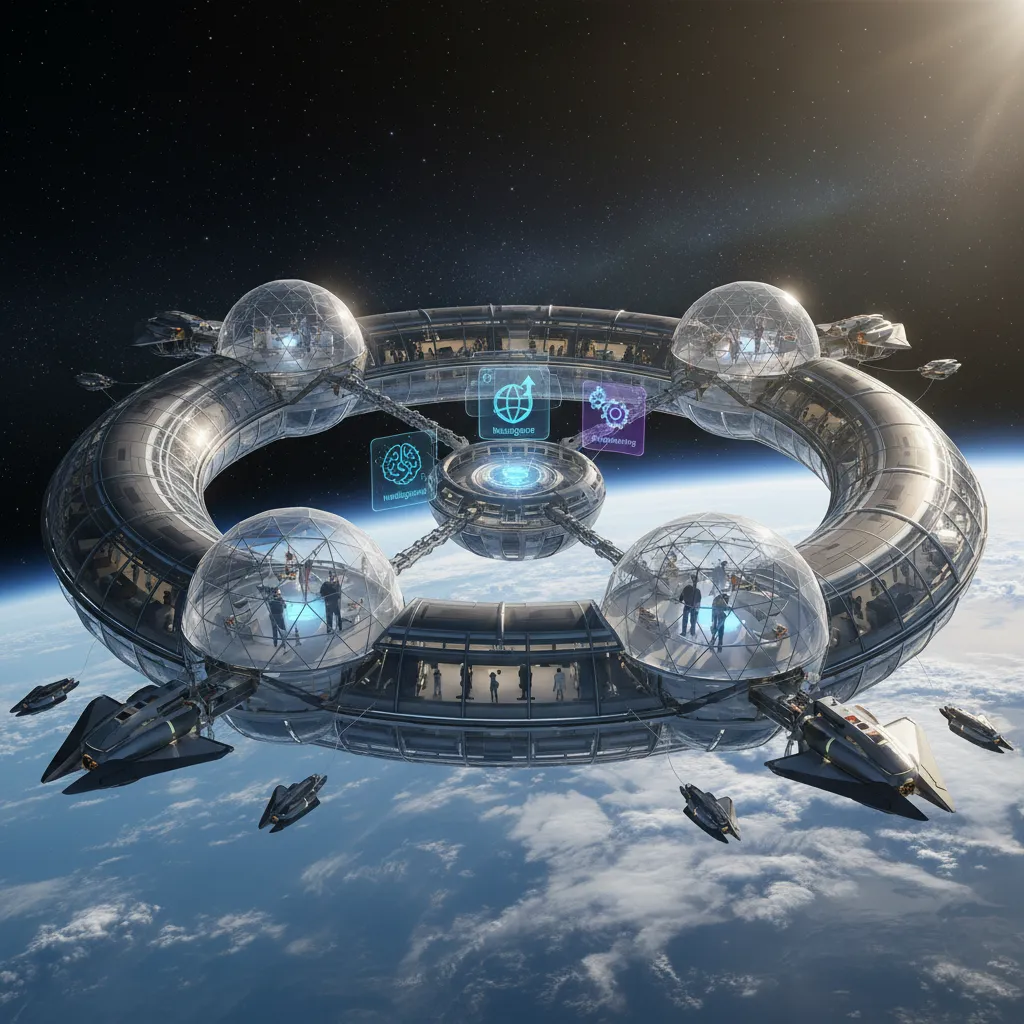
Beyond the big three, a new wave of innovation is coming. Companies like Axiom Space are building their own commercial modules for the ISS, with plans for a free-flying private space station. The concept of a luxurious space hotel is no longer just a fantasy. These orbital destinations, or space habitats, will serve as hubs for research, manufacturing, and tourism, offering extended stays in the ultimate off-world location.
The AI Co-Pilot: How Artificial Intelligence is Revolutionizing Space Travel
While powerful rockets capture the headlines, Artificial Intelligence is the unsung hero of the commercial space travel revolution. It’s the digital nervous system that enhances safety, personalizes the journey, and paves the way for future exploration.
Phase 1: AI-Powered Mission Planning and Preparation
The journey to space begins long before liftoff, and AI is crucial from the very first step.
- Personalized Space Journeys: Forget one-size-fits-all packages. AI travel planning algorithms can create bespoke mission profiles for tourists. By analyzing an individual’s health data, risk tolerance, and desired experiences (e.g., space walks, scientific participation), AI can help design personalized space journeys that are both thrilling and safe. Related: AI-Powered Personalized Financial Planning for Everyone
- Optimized Trajectories: AI excels at complex calculations. It can analyze countless variables—weather, solar flare activity, orbital mechanics—to plot the most fuel-efficient and safest flight paths, saving costs and reducing risks.
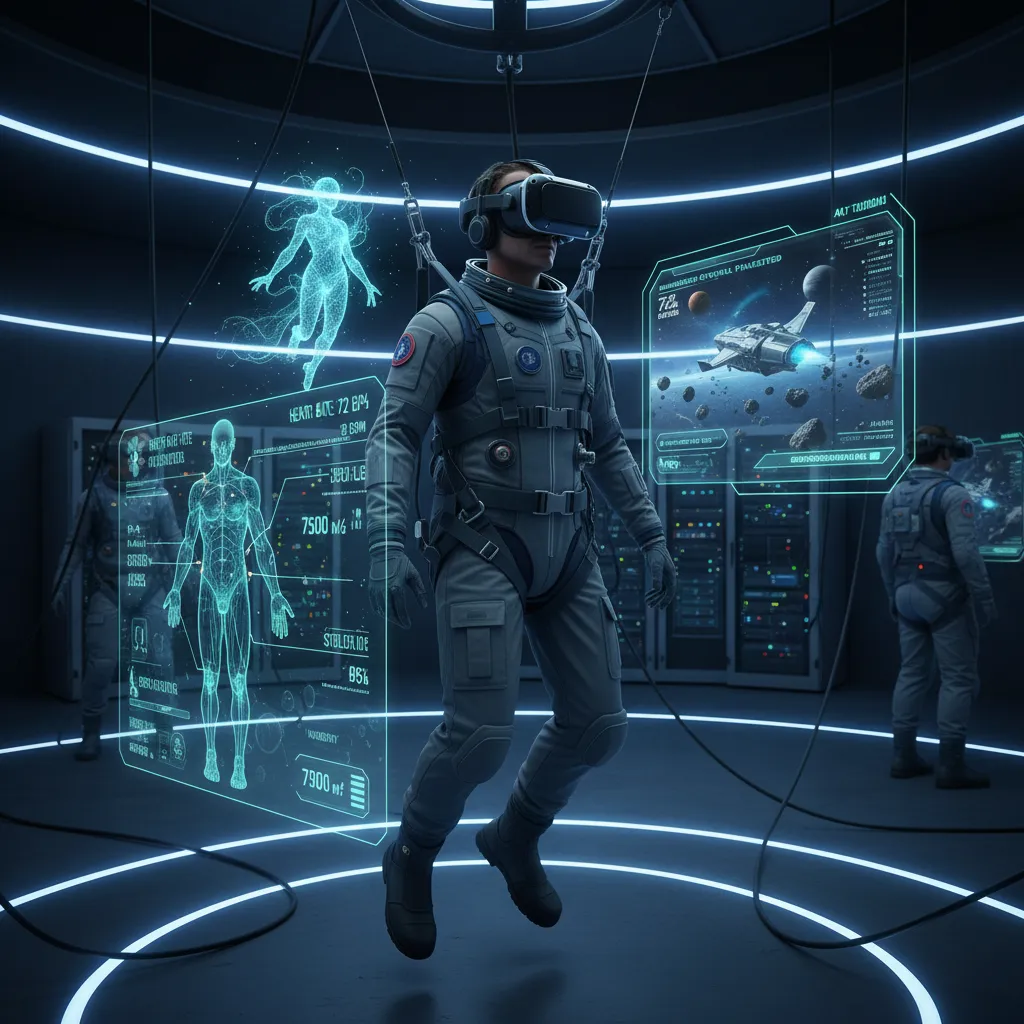
- Next-Gen Astronaut Training: The days of purely physical training are evolving. Astronaut training AI uses virtual reality (VR) and augmented reality (AR) to create hyper-realistic simulations of the entire flight. These systems can adapt to the user’s performance, identify areas for improvement, and use biometric sensors to monitor stress levels, ensuring every passenger is mentally and physically prepared for the rigors of spaceflight. Related: Augmented Reality Travel Experiences
Phase 2: The In-Flight AI Experience
Once in the air, AI transitions from planner to an active co-pilot and experience enhancer.
- Autonomous Systems: Modern spacecraft are marvels of automation. AI-driven systems handle countless aspects of the flight, from navigation and system checks to complex docking procedures. This reduces the cognitive load on human pilots and allows for split-second adjustments that can prevent emergencies.
- AI-Enhanced Life Support: The cabin environment is a delicate ecosystem. AI algorithms constantly monitor air quality, pressure, and temperature, making micro-adjustments to keep the crew comfortable and safe. This extends to personal health, where wearable sensors monitored by space medicine AI can track passenger vitals in real-time, detecting potential health issues before they become critical. Related: AI in Preventative Health: The Longevity Revolution
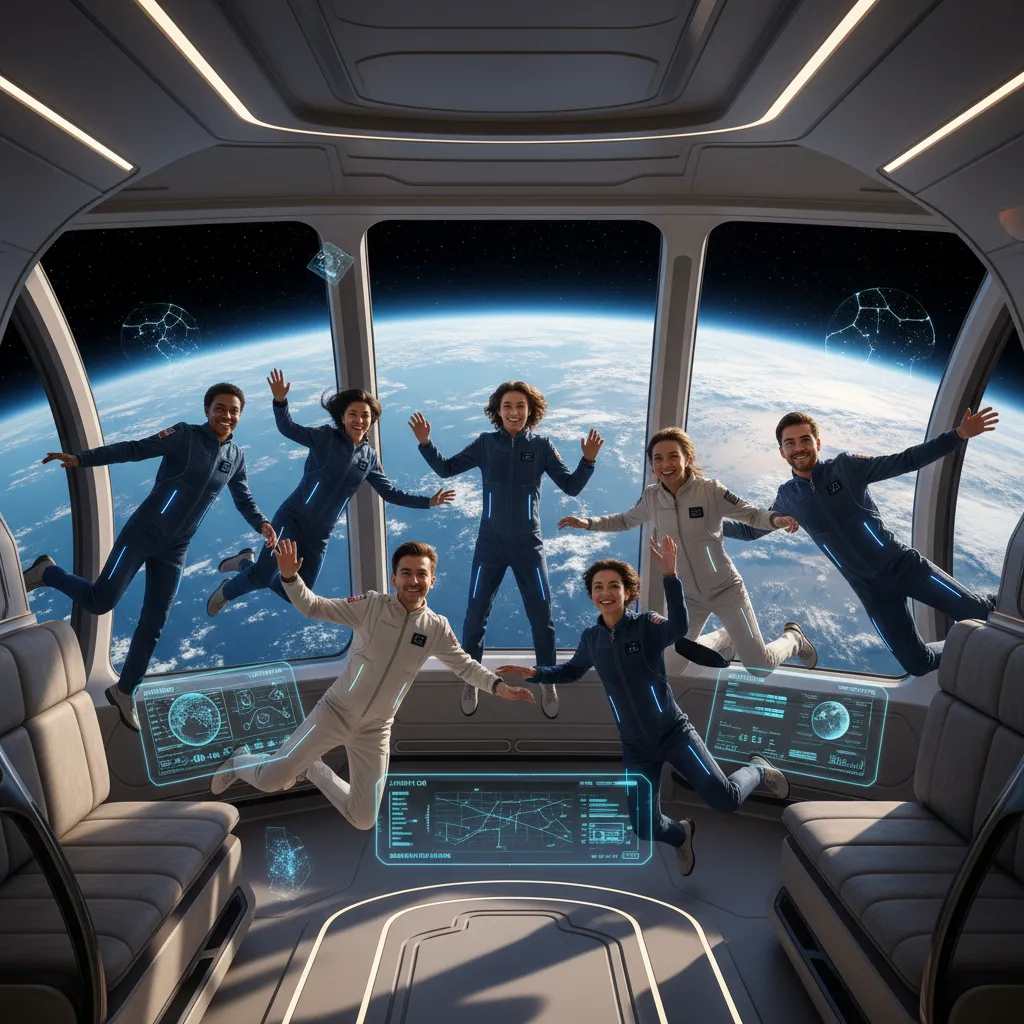
- A Personalized Cosmic Adventure: The view from space is stunning, but AI can make it interactive. Imagine looking out a window as an AI-powered augmented reality overlay identifies constellations, satellites, and geographical features on Earth below. This technology transforms passive sightseeing into an engaging, educational experience, turning every tourist into an amateur astronomer.
Phase 3: Building the Future with AI in Aerospace
AI’s role doesn’t end when a mission is complete. It is the core technology being used to design the next generation of space infrastructure.
- Designing Space Habitats: Creating a sustainable space hotel or lunar base is an immense engineering challenge. AI in aerospace uses generative design to create lightweight, durable structures optimized for the harsh environment of space. It can simulate decades of use in a matter of hours, ensuring these future homes are safe and efficient.
- Predictive Maintenance: On Earth, a broken part is an inconvenience; in space, it’s a catastrophe. AI-powered predictive maintenance systems analyze torrents of data from a spacecraft’s sensors to identify potential component failures before they happen, allowing crews to perform repairs proactively.
- Sustainable Space Travel: As space becomes more accessible, its environmental impact becomes a critical concern. AI is essential for creating a model for sustainable space travel, from optimizing launch fuel to developing sophisticated systems for tracking and mitigating the growing problem of space debris.
The Billion-Dollar Question: Understanding Space Travel Cost and Accessibility
Let’s address the elephant in the room: space travel cost. Currently, a trip to space is an experience reserved for the ultra-wealthy.
- Suborbital Flights: A seat on Virgin Galactic’s spaceplane has been priced at $450,000. Blue Origin has not officially released its per-seat price but it is believed to be in a similar, if not higher, range.
- Orbital Flights: A multi-day stay in orbit is in another league entirely. Private missions to the ISS organized by Axiom Space have cost an estimated $55 million per person.
The primary drivers of this cost are the immense expense of research and development and the energy required to escape Earth’s gravity. However, the core business model of companies like SpaceX and Blue Origin is built on reusability. By reusing rockets and capsules, they drastically reduce the cost per flight. As flight frequency increases and technology matures—aided by AI-driven efficiencies—the price is expected to come down, though it will likely remain a premium experience for the foreseeable future.
Navigating the Risks: The Reality of Space Travel Preparation and Safety
A space vacation is not a trip to the beach. It involves inherent space travel risks, from the extreme G-forces during launch and re-entry to the effects of radiation and microgravity on the human body.
Comprehensive space travel preparation is non-negotiable. This includes detailed medical screenings and training to prepare passengers for the physical sensations of spaceflight. Here again, space medicine AI plays a vital role, creating personalized health monitoring profiles for each passenger and providing real-time decision support to flight surgeons on the ground.
Ethical and Sustainable Space Tourism: A New Frontier of Responsibility
As we open this new frontier, we face critical questions. The conversation around ethical space tourism is growing louder. Key concerns include:
- Environmental Impact: Rocket launches have a significant carbon footprint. The industry must invest in cleaner fuels and more efficient technologies.
- Space Debris: Every launch adds to the cloud of debris orbiting Earth, posing a threat to active satellites and future missions.
- Inequality: How do we ensure that the benefits of space—scientific discovery, resources, and inspiration—are shared equitably?
Developing a framework for sustainable space travel is a responsibility that lies with the entire industry, from operators to passengers, to ensure that space remains a pristine and accessible resource for generations to come.
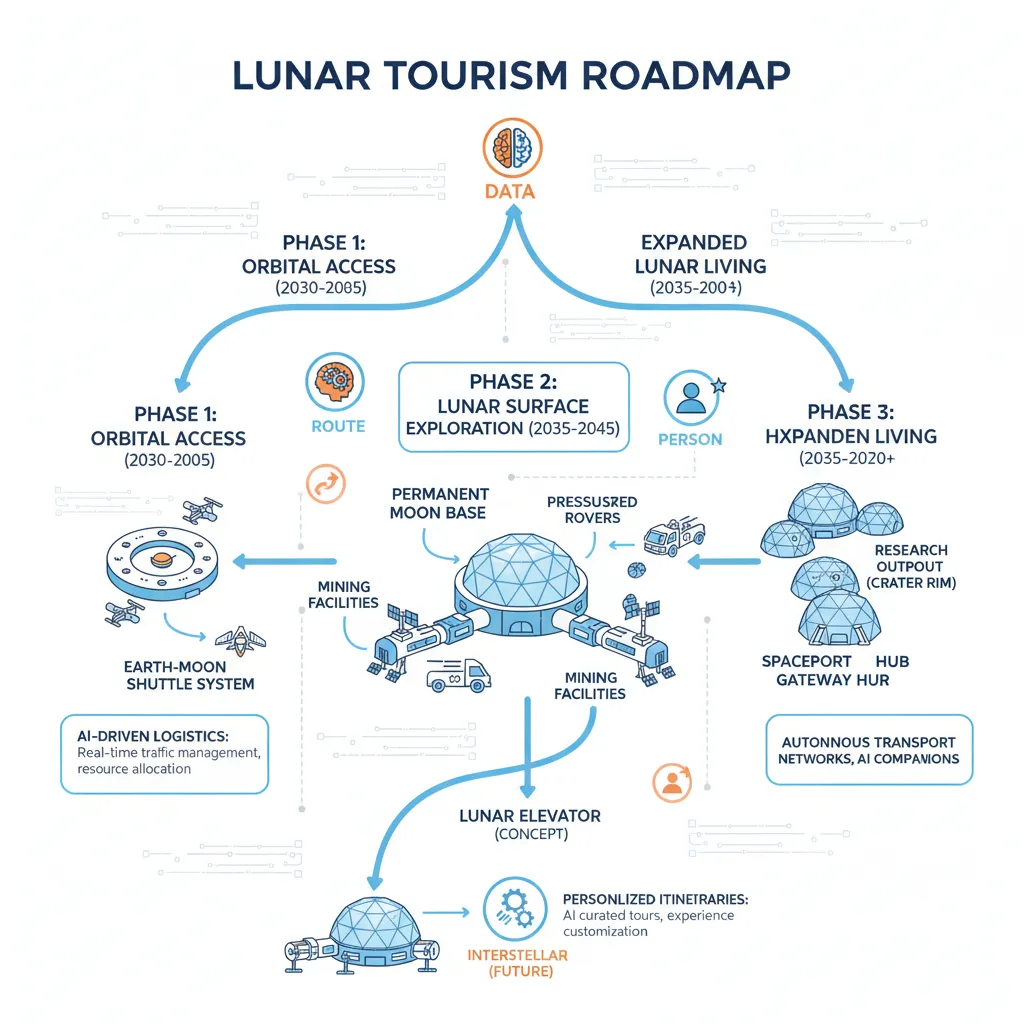
Charting Your Journey: The Future of AI and Lunar Tourism
The current era of suborbital and orbital flights is just the beginning. The next great leap is lunar tourism. AI is the foundational technology that will make this possible, handling the immense complexity of a multi-day mission beyond Earth’s protective magnetosphere.
AI will manage autonomous lunar landings, help scout for ideal landing sites, and even assist in operating rovers for tourists to explore the lunar surface. It will be essential for managing life support in lunar space habitats and optimizing the use of in-situ resources. Projects like the dearMoon mission, which aims to take artists on a trip around the Moon aboard SpaceX’s Starship, are the first seeds of this incredible future. This evolution is a key part of broader future of tourism trends, where technology enables experiences previously thought impossible. Related: The Rise of SLMs: Edge AI’s Secret Weapon for Local Intelligence
Conclusion
We stand at the dawn of a second space age—one defined not by the competition of superpowers, but by the commercial drive for exploration and experience. Space tourism is transforming from a futuristic concept into a tangible, albeit exclusive, industry. From the brief, exhilarating taste of weightlessness on a suborbital flight to the life-altering perspective of an orbital journey, the final frontier is finally open for business.
At the heart of this transformation is Artificial Intelligence, the invisible engine making these journeys possible. AI is our navigator, our health monitor, our trainer, and our guide. It is the tool that will lower costs, enhance safety, and ultimately help us build a sustainable human presence beyond Earth.
The cosmos is calling. As AI continues to accelerate innovation in AI in aerospace, the question is no longer if we’ll travel to the Moon and beyond for leisure, but simply when you’ll be ready to book your ticket to Earth’s new frontier.
Frequently Asked Questions (FAQs)
Q1. How much does it cost to go to space for tourism?
The cost varies dramatically depending on the experience. Suborbital flights with companies like Virgin Galactic cost around $450,000 per seat. Orbital flights to the International Space Station can cost upwards of $55 million for a multi-day mission. Prices are expected to decrease over time with advancements in reusable rocket technology.
Q2. What are the three main types of space tourism?
The three primary categories of space tourism currently being developed are:
- Suborbital Flights: A brief trip just beyond Earth’s atmosphere (the Kármán line) for a few minutes of weightlessness.
- Orbital Flights: Circling the Earth for several days, often involving a stay at a space station.
- Lunar/Deep Space Tourism: Future journeys that will take tourists on trips around the Moon or potentially to other celestial bodies like Mars.
Q3. Can a normal person go to space?
Yes, provided they can afford the ticket and pass the required medical screenings and training. Unlike government astronauts who require specific scientific or military backgrounds, the main criteria for private spaceflight are wealth and health. The training for tourists is significantly less intensive than for professional astronauts but still necessary to handle the physical and psychological stresses of spaceflight.
Q4. What is the main purpose of space tourism?
The primary purpose of space tourism is to provide private individuals with the unique experience of space travel for recreation and leisure. Proponents argue it also drives technological innovation, inspires public interest in space, creates a new commercial market, and may ultimately help fund the development of technologies needed for humanity to become a multi-planetary species.
Q5. How long is space tourist training?
The duration of training depends on the mission’s complexity. For suborbital flights, training can be as short as a few days, covering safety procedures, G-force acclimatization, and what to expect during the flight. For longer, orbital missions to the ISS, training is far more extensive and can last for several months to prepare passengers for life in a microgravity environment.
Q6. Is space tourism safe?
Space travel is inherently risky, and safety is the highest priority for all space tourism companies. While every possible measure is taken to mitigate dangers through rigorous engineering, testing, and training, the risks associated with launch, re-entry, and the harsh environment of space can never be completely eliminated. All passengers must acknowledge and accept these risks.