Solo Travel Reinvented: Your AI Companion for Confident Global Adventures

The call of the unknown is intoxicating. The idea of packing a bag and setting off to explore the world on your own terms—unbound by anyone else’s schedule or preferences—is the ultimate expression of freedom. Yet, for many, this dream of solo travel is shadowed by daunting questions. How do I stay safe? How will I navigate a city where I don’t speak the language? Can I really afford this? For decades, these challenges were managed with heavy guidebooks, crumpled maps, and hopeful guesswork. Today, that’s all changing.
Welcome to the new era of independent exploration, where your most powerful tool isn’t a book—it’s an AI travel companion living right in your pocket. This isn’t science fiction; it’s the reality of smart travel tech in 2025. Artificial intelligence is fundamentally reinventing the solo travel experience, transforming potential anxieties into empowered confidence. From crafting a personalized travel itinerary in minutes to acting as your real-time translator and safety guardian, AI is the co-pilot every solo explorer tech enthusiast has dreamed of. This guide will show you how to leverage these incredible tools to plan, execute, and enjoy the solo adventure of a lifetime, with more safety, efficiency, and global travel confidence than ever before.
The New Age of Solo Exploration: Why AI is Your Ultimate Travel Partner
Solo travel has always been about self-discovery and pushing personal boundaries. The traditional tools—guidebooks, hostel recommendations from fellow travelers, and phrasebooks—had their charm, but they were static. They couldn’t adapt to a sudden train strike, warn you about a local scam, or find you the best gluten-free ramen in Tokyo based on your specific cravings right now.
AI changes this dynamic entirely. It’s a proactive, personalized, and predictive partner.
- Hyper-Personalization: Instead of one-size-fits-all advice, AI learns your preferences—your budget, your interests (art history over hiking, street food over fine dining), and even your travel pace—to deliver truly bespoke recommendations.
- Dynamic Problem-Solving: An
AI assistant for tripscan reroute you in real-time around traffic jams, find an alternative flight when yours is canceled, and suggest a rainy-day museum when your beach plans are washed out. - Enhanced Safety: AI provides a digital safety net, offering real-time alerts, emergency contact features, and data-driven insights into the safest neighborhoods, a crucial feature for
solo female travel safety. - Barrier Breaking: Language and cultural barriers dissolve with an
AI language translatorand tools that offer instant cultural etiquette tips, fostering deeper and more authenticcultural immersion solo.
This shift moves technology for travelers from a mere convenience to an indispensable part of the journey, making independent travel tips smarter and more actionable than ever.
Phase 1: AI-Powered Trip Planning & Itinerary Crafting
The best adventures begin long before you leave home. The planning phase can be overwhelming, but with AI, it becomes an exciting part of the discovery process.
From Dream to Destination: Finding Safe & Affordable Solo Havens
The first question is always “Where should I go?” AI helps answer this with data, not just pretty pictures on Instagram. Generative AI travel tools can act as your personal travel agent. By giving a large language model like Gemini or ChatGPT a detailed prompt, you can get tailored suggestions.
Example Prompt:
“I’m a 30-year-old female looking for a 2-week solo trip in May. My budget is $2,000 after flights. I love hiking, historical architecture, and authentic food markets. I prioritize safety and good public transport. Suggest 5
safe solo travel destinationsin Southeast Asia or Southern Europe, with a brief explanation of why each fits my criteria.”
The AI will analyze vast amounts of data—crime statistics, cost of living, weather patterns, and millions of traveler reviews—to provide recommendations that guidebooks simply can’t match. This approach is invaluable for finding affordable solo trips and destinations that align perfectly with your comfort level and interests.
Building Your Personalized Itinerary with an AI Trip Planner
Once you’ve chosen a destination, the real magic begins. An AI trip planner can take your vague ideas and structure them into a seamless, day-by-day plan. Apps like Wanderlog, TripIt, and the AI features within Google Maps are revolutionizing planning international travel.

Here’s how it works:
- Input Your Core Data: Enter your flight and hotel confirmations. The AI automatically organizes them into a master timeline.
- Add Your Interests: Tell the
AI trip planner appyou want to see “Renaissance art in Florence,” “visit three coffee shops in Lisbon,” and “hike a coastal trail.” - Let AI Optimize: The AI will then arrange these activities logically. It will group attractions by neighborhood to minimize travel time, suggest optimal routes on public transit, and even pull in opening hours and ticket booking links. It can build a
personalized travel itinerarythat’s efficient and stress-free.
This process eliminates hours of tedious research, allowing you to focus on the excitement of the journey ahead. Related: The Future of Travel: How AI Crafts Your Perfect Personalized Journey.
Phase 2: On the Ground Intelligence: Your AI Co-Pilot in a Foreign Land
The best-laid plans can change. This is where your AI companion truly shines, acting as your real-time guide, translator, and problem-solver.
Navigating with Confidence: AI Maps and Real-Time Assistance
While Google Maps is a staple, its AI-powered features are a game-changer for navigating foreign countries AI. The “Live View” feature uses augmented reality to overlay walking directions onto your phone’s camera view, making it nearly impossible to get lost in a labyrinthine old city.
AI also enhances navigation by:
- Predicting Crowds: It can analyze historical data to tell you the least crowded times to visit major attractions.
- Providing Safety Alerts: In some cities, maps can now highlight safer routes, especially at night.
- Offering Context: Pointing your camera at a landmark can trigger Google Lens, which uses AI to instantly provide historical facts and relevant information.
This turns simple navigation into an interactive and enriching experience, perfect for solo adventure travel.
Breaking Barriers: The Power of the AI Language Translator
Nothing makes you feel more like an outsider than being unable to communicate. An AI language translator is perhaps the most transformative tool for a solo traveler.

Apps like Google Translate and Microsoft Translator now offer “Conversation Mode,” where two people can speak into the phone, and it will translate their speech back and forth in near real-time. Even more impressively, camera functions allow you to point your phone at a menu, sign, or document and see an instant translation overlaid on the screen. This technology empowers you to order food confidently, ask for directions, and even have simple, meaningful conversations with locals, which is the heart of cultural immersion solo. Related: Humane AI Pin Review: The Truth Behind the Hype.
Smart Spending: AI for Budgeting and Travel Hacking
Staying on a budget solo travel plan can be tough. AI-powered finance apps like Trabee Wallet or Trail Wallet help you track every expense in multiple currencies, categorizing your spending so you know exactly where your money is going.
For the more advanced traveler, travel hacking AI tools are emerging. These platforms can monitor flight prices across thousands of routes, alerting you to “error fares” or a sudden price drop. They can also help you optimize your credit card points, suggesting the best ways to book travel to maximize value. Related: The FinTech Revolution: Mastering Money with Innovative Personal Finance Tools.
Safety First: How AI Enhances Solo Travel Security
For many, especially in the solo female travel safety community, security is the number one concern. AI is providing innovative solutions that create a powerful digital safety net.
Proactive Safety Measures for Solo Travelers
A new generation of personal safety apps uses AI to keep you safe.
- bSafe: This app lets you share your live location with trusted contacts (“Guardians”). You can also use a voice-activated SOS alarm, and it will automatically record and stream video and audio to your Guardians’ phones.
- Noonlight: This service connects to various apps (including Tinder and Uber) and smart devices. If you feel unsafe, you can discretely press a button in the app. If you don’t enter your PIN within a few seconds, it automatically alerts local emergency services with your exact location.
- Citizen: While more common in the US, this app uses AI to monitor 911 communications and send real-time alerts about nearby safety incidents, from fires to police activity.
These travel safety tips are supercharged by technology, offering peace of mind and an actionable plan for emergency AI travel situations.
The Rise of Smart Travel Tech: Luggage and Gadgets
Your physical belongings are also safer thanks to smart travel tech.

Smart luggage now comes equipped with GPS trackers (like Apple AirTags or Tile), so you’ll always know where your bag is. Some even feature digital scales built into the handle to avoid overweight baggage fees and remote locking systems you control from your phone.
Beyond luggage, other travel security gadgets are gaining popularity:
- Portable Door Lock Alarms: Small devices that brace a door shut and shriek loudly if tampered with.
- Anti-theft Backpacks: Designed with hidden zippers, slash-proof fabric, and RFID-blocking pockets to protect your passport and credit cards from digital theft.
These tools add layers of security that help you relax and enjoy your trip.
The Digital Nomad & Remote Work Revolution: AI as an Essential Tool
For the growing legion of digital nomads, solo travel isn’t a vacation—it’s a lifestyle. AI is an indispensable part of the toolkit for successful remote work travel.
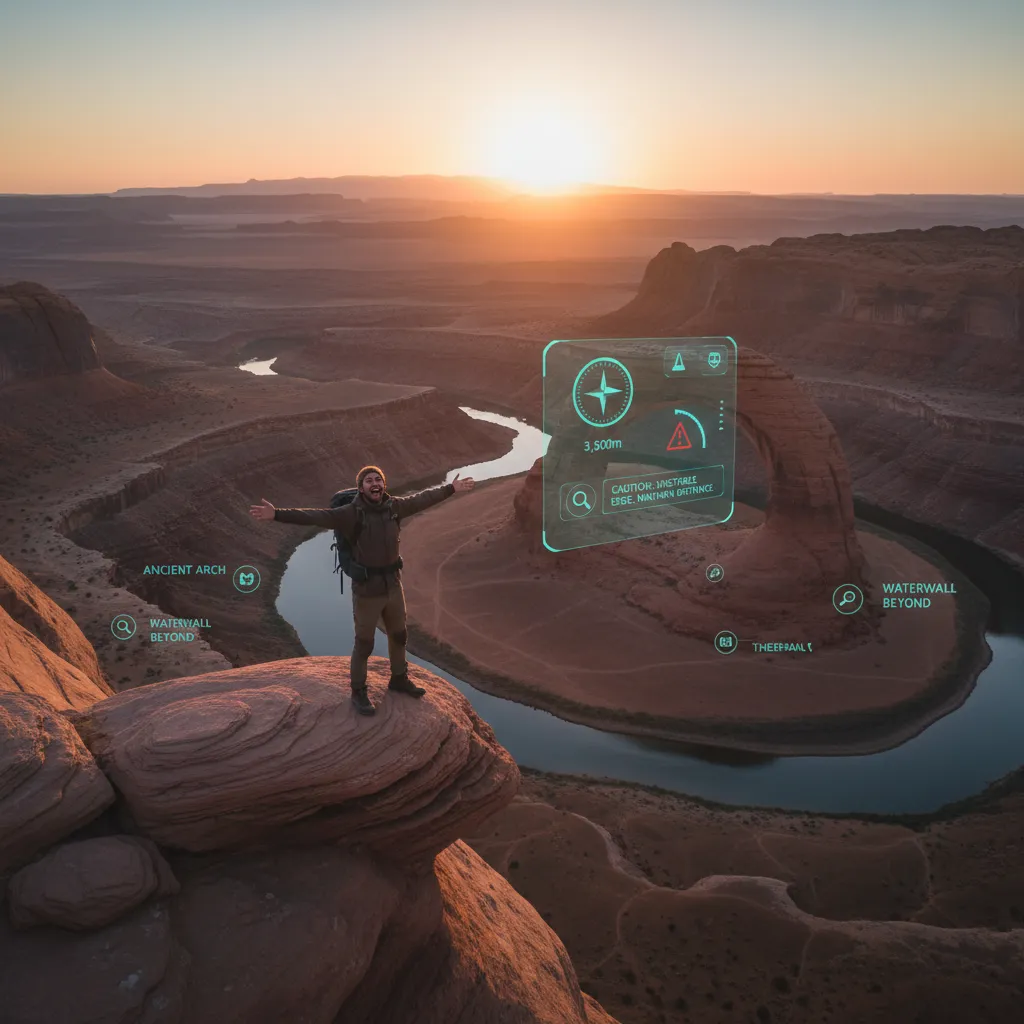
Digital nomad tools powered by AI can:
- Find Ideal Workspots: AI can analyze data from platforms like Nomad List to recommend cities based on your specific criteria for internet speed, cost of living, safety, and visa requirements.
- Optimize Productivity: AI assistants can manage your calendar across different time zones, automatically summarize long email chains from your team back home, and even transcribe your voice notes from a client call. Related: Unlock Potential: Top AI Tools for Everyday Productivity.
- Streamline Logistics: AI can help find month-to-month furnished apartments, co-working spaces with the amenities you need, and the best local SIM card deals upon arrival.
This level of solo explorer tech allows digital nomads to spend less time on admin and more time working efficiently and exploring their new surroundings.
Top AI-Powered Apps and Tools for the Modern Solo Traveler
Navigating the world of AI travel apps can be tough. Here’s a curated list of the best apps for solo travel to build your digital toolkit:
| Category | App/Tool | Key AI Feature for Solo Travel |
|---|---|---|
| Trip Planning | Wanderlog | Collates all bookings and uses AI to build an optimized, map-based daily itinerary. Great for visual planning. |
| Generative AI | Google Gemini / ChatGPT | Your creative partner for brainstorming destinations, creating packing lists, and asking complex cultural questions. |
| Navigation | Google Maps | Live View AR directions, crowd prediction, and real-time transit updates. |
| Language | Google Translate | Real-time conversation mode and instant camera translation for menus and signs. |
| Safety | bSafe | Live location sharing with designated guardians, voice-activated SOS, and automatic video recording. |
| Budgeting | Trail Wallet | Sets a daily budget and uses AI to categorize spending in local currencies, providing smart insights. |
| Packing | PackPoint | Generates a custom packing list based on your destination, trip duration, and planned activities, checking the weather forecast. |
Conclusion
The essence of solo travel will always be about the human spirit of adventure and self-reliance. But the tools we use to unlock that spirit are undergoing a profound evolution. The AI travel companion is not here to replace the thrill of spontaneous discovery but to augment it, to remove the friction and fear that holds so many back.
By leveraging an AI trip planner, you can spend less time stressing and more time dreaming. With an AI language translator, you can connect more deeply with the cultures you came to experience. And with AI-driven safety features, you can explore with a level of global travel confidence that was previously unimaginable. The world is more accessible, safer, and more personalized than ever. So, download a few new apps, give a travel guide AI a prompt, and ask yourself: where will your confident solo adventure take you first?
FAQs
Q1. What is an AI travel companion?
An AI travel companion is a suite of digital tools, apps, and platforms that use artificial intelligence to assist you in planning and executing your travels. This can range from an AI trip planner app that builds your itinerary to a real-time AI language translator or a personal safety app that monitors your location.
Q2. How can AI help with solo female travel safety?
AI significantly enhances solo female travel safety by providing proactive tools. Apps can share your live GPS location with trusted contacts, offer one-touch SOS alerts that connect directly to local authorities, provide data-driven insights on the safest neighborhoods for accommodation, and send real-time alerts about nearby disturbances.
Q3. What is the best AI trip planner app?
The “best” app often depends on your needs. Wanderlog is excellent for visual, map-based planning. TripIt is fantastic for automatically organizing all your booking confirmations in one place. For creative and highly personalized brainstorming, using a generative AI tool like Google Gemini or ChatGPT to build a foundational itinerary is becoming increasingly popular.
Q4. Can AI help me stick to a budget while traveling solo?
Absolutely. AI-powered budgeting apps automatically track your spending in local currencies and categorize expenses, giving you a clear picture of your finances. Furthermore, travel hacking AI can find the cheapest flights and accommodations by analyzing millions of data points, ensuring you get the best deals for a budget solo travel adventure.
Q5. How does AI make navigating foreign countries easier?
Beyond standard GPS, AI enhances navigation with features like augmented reality (AR) walking directions (Google Maps’ Live View), which overlays directions onto your real-world view. AI can also predict traffic, suggest the least crowded times for attractions, and provide instant information about landmarks you see using your phone’s camera.
Q6. How do I start planning my first solo trip with AI?
Begin by using a generative AI travel tool like Gemini to brainstorm destinations based on your budget, interests, and safety comfort level. Once you have a destination, use an AI trip planner app like Wanderlog to input your flight/hotel details and start building a daily itinerary. Finally, download essential on-the-ground apps for translation and safety.