Unlock Your Day: AI for Hyper-Personalized Productivity & Smart Living

Introduction
The modern day is a relentless juggling act. We’re flooded with notifications, buried in to-do lists, and constantly striving for that elusive work-life balance. What if you had a co-pilot for your life? Not just a generic app, but an intelligent system that understands your unique rhythms, priorities, and goals. This is the promise of hyper-personalized AI, a technological revolution that’s moving beyond one-size-fits-all solutions to offer truly custom AI experiences.
This isn’t science fiction anymore. We are at the dawn of an era where an AI daily assistant can do more than just set a timer or play a song. It can anticipate your needs, automate tedious tasks, and provide insights that help you live a smarter, healthier, and more productive life. From optimizing your schedule for deep work to adjusting your smart home’s lighting based on your mood, AI for daily routines is set to become the ultimate life hack.
In this deep dive, we’ll explore how these adaptive AI systems are reshaping everything from our workdays to our well-being. You’ll discover the specific hyper-personalized AI tools that can help you reclaim your time, the benefits of on-device AI for privacy, and what the future of personal AI holds with the rise of intelligent agents. Get ready to unlock your day and streamline life with AI.
The Dawn of the Hyper-Personalized Era: Beyond Generic Assistants
For years, our interaction with AI has been largely transactional. We ask Siri for the weather, tell Alexa to add milk to the shopping list, or use Google Assistant to navigate. While useful, these interactions are generic. The AI responds to a direct command but lacks a deeper understanding of our context, preferences, or long-term goals.
Hyper-personalization changes the game entirely. It’s the difference between a tool and a true companion.
Hyper-personalized AI leverages machine learning to build a dynamic, evolving profile of you. It learns from your calendar, emails, app usage, and even your biometric data to understand:
- Your Chronotype: Are you a morning lark or a night owl? It will suggest focus blocks when you’re most alert.
- Your Priorities: It can differentiate between an urgent project deadline and a casual coffee meeting, allocating your time and energy accordingly.
- Your Habits: It notices you check the news at 7 AM and listen to a focus playlist in the afternoon, proactively cueing up these experiences.
- Your Environment: It connects with your smart devices to create a seamless living experience that adapts to your presence and activities.
This level of intelligence transforms AI from a reactive tool into a proactive partner, creating a system for AI for lifestyle optimization that feels less like technology and more like an extension of yourself.
Your Day, Reimagined: AI for Peak Personal Productivity
The most immediate impact of personalized AI is on our productivity. The constant context-switching and decision fatigue of a modern workday can be overwhelming. AI offers a powerful antidote, automating the mundane so you can focus on what truly matters.
Intelligent Task Management and Scheduling
Forget static to-do lists. Modern AI task management platforms are dynamic schedulers that function as your personal operations manager. Tools like Motion and Reclaim.ai connect to your calendar and automatically find the best time to complete your tasks, treating them with the same importance as scheduled meetings.
This is a profound shift in how we manage work. Imagine this workflow:
- You list everything you need to do for the week, assigning priorities and estimated times.
- The AI scheduling assistant analyzes your existing calendar, including meetings and personal appointments.
- It intelligently slots your tasks into the open spaces, protecting time for lunch and breaks.
- If an urgent meeting pops up, the AI automatically reshuffles your tasks for the rest of the day, ensuring nothing critical is dropped.
This is personal AI automation at its finest, eliminating the daily puzzle of “What should I work on next?” and providing powerful AI efficiency hacks that give you back hours each week. Related: Unleash Your Productivity with Autonomous AI Agents
The End of Information Overload: AI Content Curation
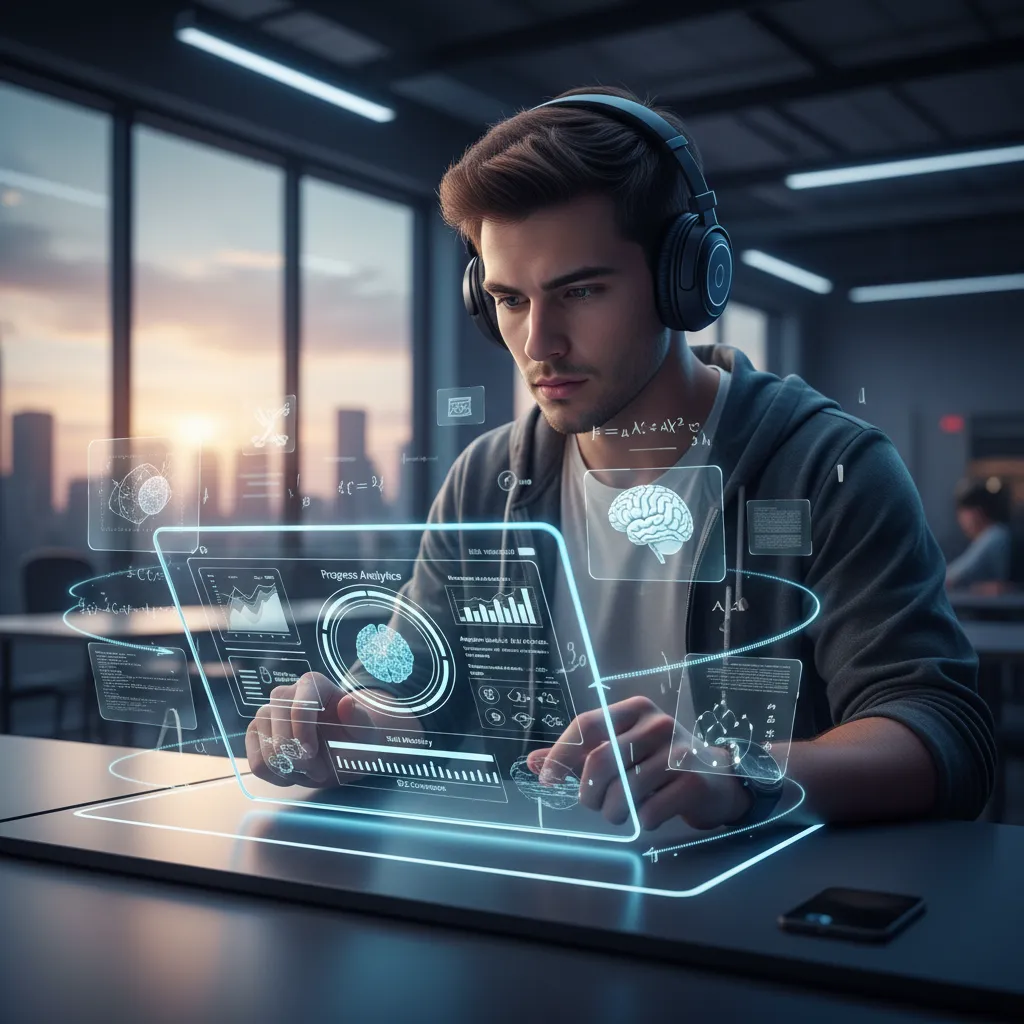
We are drowning in information. An AI content curation system acts as your personal filter, learning your interests and professional needs to surface the most relevant articles, research papers, and videos. Instead of mindlessly scrolling through feeds, you receive a personalized digest of content that aids in your AI and personal growth.
Similarly, an AI learning assistant can create personalized learning paths. Whether you’re trying to learn a new language or master a professional skill, these platforms adapt to your pace, reinforcing concepts you struggle with and accelerating through material you grasp quickly.
AI-Powered Decision Making: Your Strategic Co-Pilot
Beyond organization, AI is becoming a powerful tool for AI for decision making. By analyzing vast datasets, it can provide insights that humans might miss. This applies to:
- Financial Planning: AI can analyze market trends and your personal risk tolerance to offer investment suggestions. Related: AI-Powered Investing: Predictive Analytics for Smarter Financial Decisions
- Travel Planning: AI tools can create entire itineraries based on your budget, interests, and preferred travel style, optimizing for cost and experience.
- Career Growth: AI can analyze job market data and your skill set to recommend courses or career moves that align with your long-term ambitions.
This isn’t about letting AI make decisions for you, but about augmenting your own judgment with data-driven insights.
Smart Living: Seamlessly Integrating AI into Your Environment
The concept of smart living AI extends hyper-personalization beyond your screen and into your physical world. Your home can become an ecosystem that adapts to you, enhancing comfort, security, and efficiency.
The Truly Intelligent Smart Home
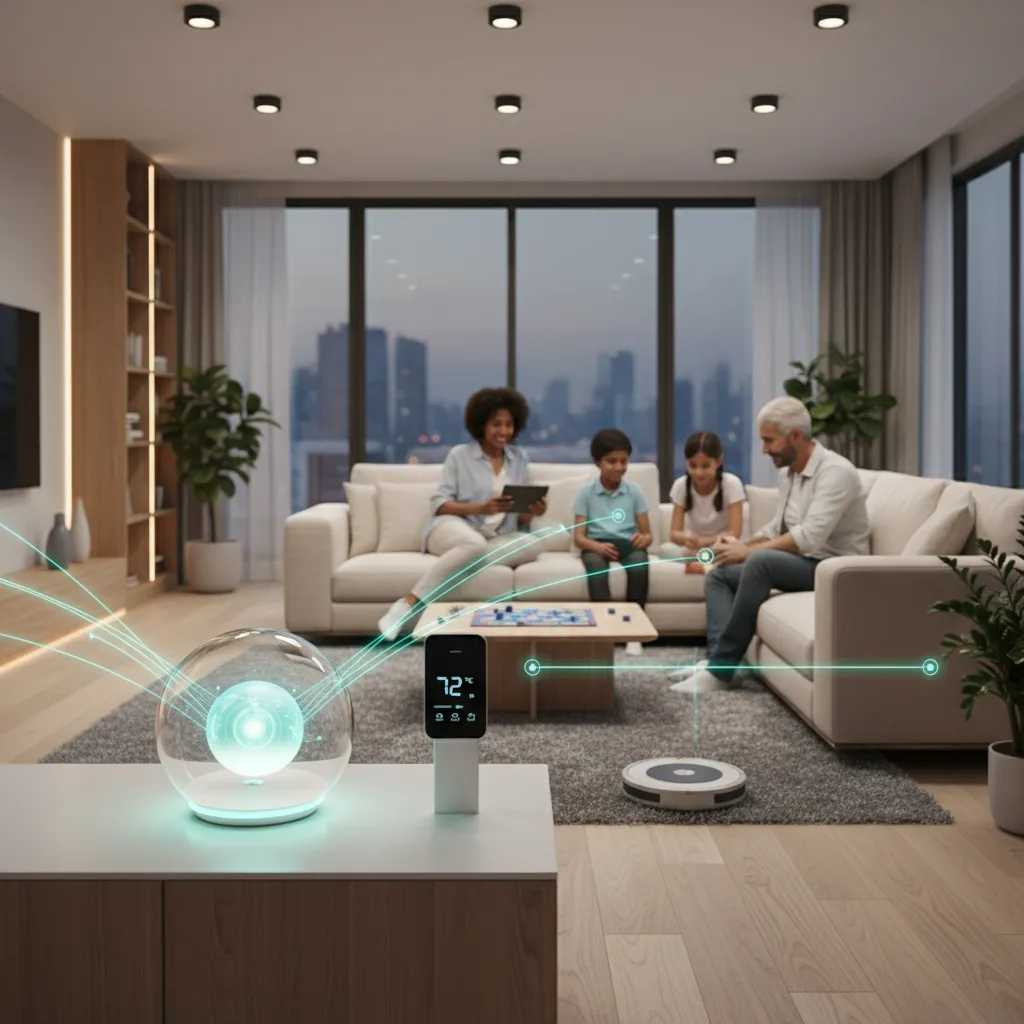
Early smart homes relied on manual routines (“Hey Google, good morning”). True AI smart home integration is predictive and automated. Your home learns the patterns of your life:
- Mornings: As your smart alarm (connected to your sleep tracker) wakes you during a light sleep cycle, the AI tells the blinds to slowly open, the thermostat to adjust, and the coffee maker to start brewing.
- Work from Home: The system can detect when you’re on a video call and automatically silence smart speakers and pause the robot vacuum.
- Evenings: Based on the time of day and your typical habits, the lights dim to a warmer color temperature, your “unwind” playlist begins to play, and the doors automatically lock for the night.
These scenarios are made possible by voice AI assistants and hubs that act as the central brain, orchestrating all your connected devices into a harmonious, intelligent system.
AI-Powered Smart Gadgets That Understand You
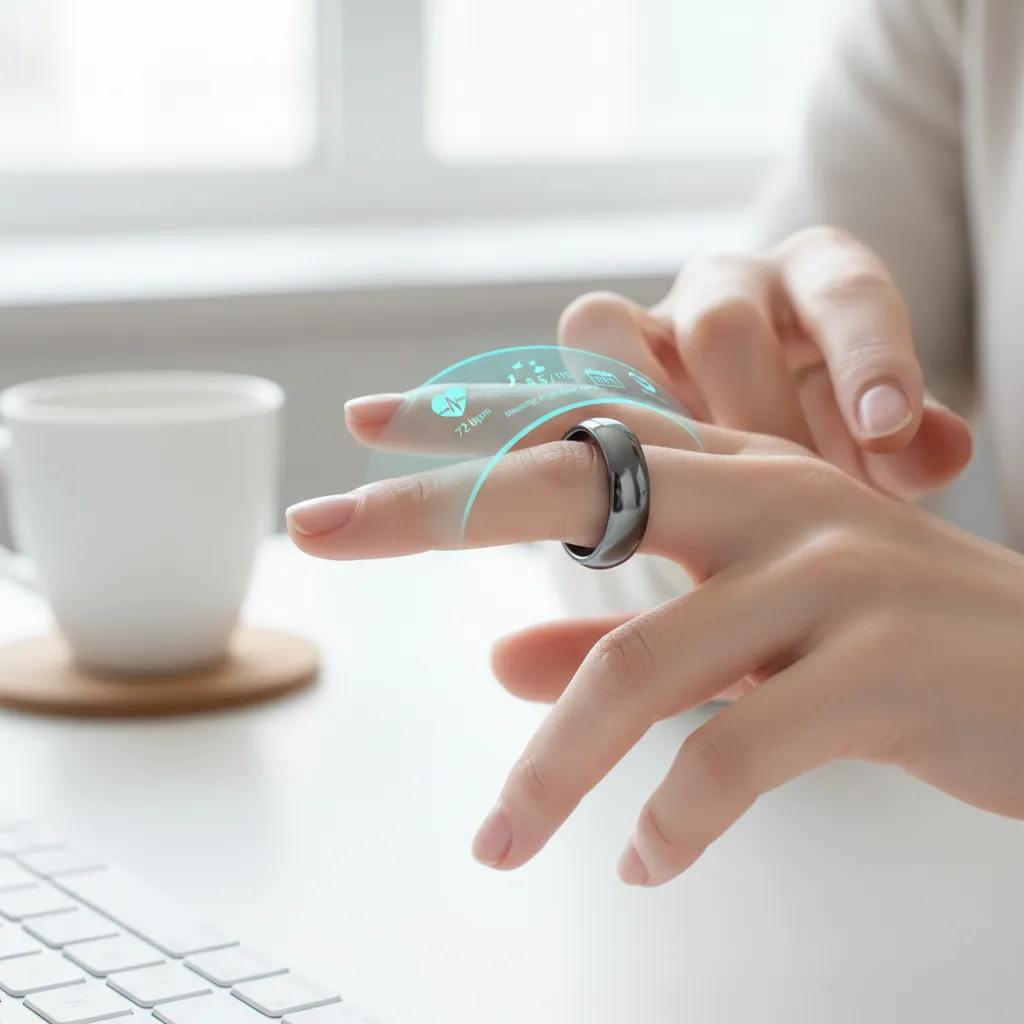
The ecosystem of AI-powered smart gadgets is expanding rapidly. Devices like smart rings and advanced fitness trackers go far beyond simple metrics. They are becoming central hubs for personalized wellness AI.
For example, a device like an Oura Ring or Whoop strap doesn’t just count your steps. It analyzes your heart rate variability (HRV), body temperature, and sleep quality to give you a daily “readiness” score. This score is an AI powered recommendation on whether you should push hard in a workout or prioritize rest and recovery. This is AI habit tracking that provides actionable, personalized feedback to optimize your physical and mental energy.
Holistic Well-being: AI as Your Partner in Health and Growth
Perhaps the most profound application of personalized AI is in our well-being. By providing objective data and personalized guidance, AI can empower us to take better care of our minds and bodies, fostering better AI for work-life balance.
Nurturing Your Mind: AI for Mental Well-being
Mental health is a critical component of a fulfilling life. While not a replacement for professional therapy, AI for mental well-being is making support more accessible. Apps powered by AI can offer:
- Guided Meditations: Tailored to your current stress level, as measured by a connected wearable.
- Cognitive Behavioral Therapy (CBT): Interactive chatbots can guide users through CBT exercises to help manage anxiety and reframe negative thought patterns.
- Journaling Analysis: AI can identify recurring themes and emotional trends in your journal entries, providing insights into your mental state over time.
These tools offer a private, on-demand space to check in with yourself and build mental resilience. Related: The Rise of AI Mental Health Tools: Your Personalized Path to Well-being
The Engine Room: Privacy, On-Device Processing, and the Future of Personal AI
For an AI to be truly personal, it needs access to your data. This immediately raises a critical question: what about privacy? The industry is moving towards a more secure and user-centric model, driven by two key innovations.
The Privacy Imperative: On-Device AI Benefits
Historically, AI processing happened in the cloud. You’d speak to your device, the data would be sent to a server, processed, and the response sent back. The big shift now is towards on-device processing.
With on-device AI benefits, the complex calculations happen directly on your phone, laptop, or smart speaker. This means your personal data—your emails, messages, and health metrics—never has to leave your device. This is the core principle behind technologies like Apple Intelligence. It delivers powerful personalization without compromising your privacy, making privacy-focused AI tools a tangible reality. Related: A Deep Dive into Apple Intelligence and Its Supported Devices
The Rise of Intelligent Personal Agents
Looking ahead, the future of personal AI lies in the evolution from single-purpose apps to proactive, intelligent personal agents. These agents will be autonomous systems capable of understanding complex, multi-step goals and executing them across different apps and services on your behalf.
Imagine telling your AI agent: “Plan a weekend trip to San Diego for my anniversary next month. Find a hotel near the beach under $300 a night, book refundable flights for two, and make a dinner reservation at a highly-rated Italian restaurant for Saturday night.”
The agent would then:
- Scan your calendar to find a free weekend.
- Search flight and hotel websites.
- Cross-reference restaurant reviews and booking platforms.
- Present you with a complete, booked itinerary for one-click approval.
This is the ultimate expression of automate daily tasks AI. These agents will become our true digital butlers, managing the complexities of modern life so we can focus on the experience. Related: The Future of Productivity is Here: Autonomous AI Agents
Conclusion: Crafting Your Future with a Custom AI Experience
We are at a pivotal moment in our relationship with technology. Artificial intelligence is maturing from a novel curiosity into a foundational utility, capable of deeply understanding and enhancing our daily lives. The era of the smart AI daily companion is here, offering a path to a more organized, intentional, and balanced existence.
By embracing AI personalized productivity tools, integrating smart living AI into our homes, and leveraging personalized wellness AI for our health, we can offload cognitive burdens and reclaim our most valuable resources: time and energy. The key is to start small. Pick one area of your life you’d like to improve—be it task management, habit tracking, or learning—and explore an AI-powered tool designed to help.
The future isn’t about being replaced by AI; it’s about being amplified by it. By thoughtfully curating our own set of hyper-personalized tools, we can build a life that is not just more efficient, but more aligned with our personal goals and values.
Frequently Asked Questions (FAQs)
Q1. What is a personal AI assistant?
A personal AI assistant is a software agent designed to help individuals manage daily tasks, organize information, and automate routines. Unlike generic assistants, a truly personal AI learns a user’s specific preferences, habits, and context to provide proactive and highly relevant support, covering everything from scheduling to smart home control.
Q2. How can AI improve my daily routine?
AI can improve your daily routine by automating repetitive tasks, optimizing your schedule, and providing personalized insights. For example, an AI scheduling assistant can organize your to-do list within your calendar, a personalized wellness AI can suggest the best time for a workout based on your sleep data, and an AI content curation tool can deliver relevant news, saving you time and reducing decision fatigue.
Q3. What are the best AI productivity tools?
The “best” tools often depend on individual needs, but leading examples in the AI personalized productivity space include Motion and Reclaim.ai for intelligent scheduling and task management, and various AI-powered note-taking apps that can summarize and organize information. These tools excel at reducing the manual effort required to plan and execute your work.
Q4. Is AI in smart homes safe and private?
Safety and privacy are major considerations for smart living AI. Many companies are now prioritizing privacy by implementing on-device processing, which means your personal data is analyzed locally on your device rather than being sent to the cloud. When choosing smart home devices, look for brands that offer transparent privacy policies and robust security features like end-to-end encryption.
Q5. How does AI help with mental well-being?
AI helps with mental well-being by making support more accessible and personalized. Apps powered by AI for mental well-being can offer guided meditations tailored to your stress levels, provide CBT-based exercises to manage anxiety, and analyze journal entries to help you recognize emotional patterns, all from the privacy of your own device.
Q6. What is the difference between an AI assistant and an intelligent personal agent?
An AI assistant typically responds to direct, single-step commands (e.g., “Set a timer for 10 minutes”). An intelligent personal agent, representing the future of personal AI, is more autonomous. It can understand complex, multi-step goals (e.g., “Plan my business trip to Tokyo”) and execute the necessary actions across multiple apps and services to achieve that goal without requiring step-by-step instructions.