Quantum AI Breakthroughs: Revolutionizing Materials Science & Drug Discovery

Introduction: The Dawn of a New Scientific Revolution
For centuries, the discovery of new materials and life-saving drugs has been a slow, painstaking process of trial, error, and serendipity. From the accidental discovery of penicillin to the decades-long development of new alloys, progress has been bound by the limits of human intuition and the brute-force capabilities of classical computers. But what if we could design molecules atom by atom, predicting their properties with perfect accuracy before ever synthesizing them in a lab?
This is the promise of Quantum AI, a groundbreaking fusion of quantum computing and artificial intelligence that is poised to rewrite the rules of scientific discovery. By harnessing the strange and powerful principles of quantum mechanics, this technology allows us to simulate and understand the world at its most fundamental level. The result is an unprecedented acceleration in innovation, particularly in two of the most critical fields for human progress: materials science and drug discovery.
In this comprehensive guide, we’ll journey to the atomic scale to explore how Quantum AI is unlocking solutions to some of humanity’s biggest challenges. You’ll learn how it’s enabling the creation of revolutionary new materials, supercharging the hunt for new medicines, and paving the way for a future of highly personalized healthcare. The breakthroughs in quantum AI are no longer theoretical—they are happening now, and they are about to change everything.
Beyond Binary: Understanding the Quantum AI Revolution
Before diving into the applications, it’s essential to grasp why Quantum AI is such a monumental leap. The revolution stems from moving beyond the rigid, binary world of classical computers into the fluid, probabilistic realm of quantum mechanics.
What is Quantum Computing? A Leap Beyond Classical Limits
Classical computers, from your smartphone to the most powerful supercomputers, process information using “bits.” A bit is a simple switch that can be in one of two states: 0 or 1. It’s a reliable system that has powered the digital age.
Quantum computers, however, use “qubits.” Thanks to a principle called superposition, a qubit can be a 0, a 1, or both at the same time. Furthermore, through entanglement, the state of one qubit can be instantly linked to the state of another, no matter the distance separating them.
This ability to exist in multiple states simultaneously gives quantum computers an exponential advantage in processing power. While a classical computer checks possibilities one by one, a quantum computer can explore millions of possibilities at once. This makes it uniquely suited for solving complex problems in quantum chemistry simulation and optimization—tasks that would take a classical computer longer than the age of the universe to solve.
The “AI” in Quantum AI: Introducing Quantum Machine Learning
The “AI” in Quantum AI refers to Quantum Machine Learning (QML). This is where the optimization power of quantum computing meets the pattern-recognition prowess of artificial intelligence. Classical AI models are fantastic at learning from vast datasets, but they can struggle with the sheer complexity of molecular and atomic interactions.
QML algorithms, running on quantum hardware, can process data in ways that are fundamentally different and more efficient. They can identify subtle patterns and correlations in high-dimensional quantum data that are completely invisible to classical AI. This synergy allows quantum algorithms materials and drug discovery models to not just analyze data, but to predict, design, and innovate with astonishing speed and accuracy.
Related: What is GPT-4o? The Ultimate Guide to Real-Time AI
Forging the Future: Quantum AI in Materials Science
The quest for better materials drives human progress. We need stronger, lighter alloys for aerospace; more efficient batteries for the green energy transition; and novel semiconductors for next-generation electronics. Quantum AI is turning this quest from a game of chance into a science of design.
The Challenge: Simulating the Unseen World of Atoms
The properties of any material are determined by the interactions of its atoms and electrons. The problem is that these interactions are governed by the complex laws of quantum mechanics. Accurately modeling even a relatively simple molecule is a computational nightmare for classical systems. The number of possible states to simulate grows exponentially with each new particle, a problem known as the “curse of dimensionality.” This is why AI-driven materials design has historically been more theoretical than practical.
AI-Driven Materials Design: From Theory to Reality
Quantum AI shatters this barrier. Because quantum computers operate on the same principles as the molecules they are simulating, they can perform a molecular simulation quantum with unparalleled fidelity. Researchers can now create a “digital twin” of a molecule and precisely model how it will behave under different conditions.
This capability is the cornerstone of next-gen materials science. Instead of a “guess and check” approach in the lab, scientists can:
- Define Desired Properties: Specify the need for a material with high conductivity, extreme heat resistance, or specific catalytic properties.
- Run Quantum Simulations: Use Quantum AI to explore vast chemical spaces and identify molecular structures that exhibit these properties.
- Predict and Optimize: The AI model predicts the material’s performance and suggests modifications to optimize it.
- Synthesize with Confidence: Only the most promising candidates are synthesized and tested in the real world, saving immense time and resources.
This is the essence of an AI materials discovery platform, a new paradigm in AI for materials engineering.

Real-World Applications Already Taking Shape
This isn’t science fiction. Advanced materials innovation powered by Quantum AI is already underway in several key areas:
- Better Batteries: Companies are using quantum simulations to design new electrode and electrolyte materials for lithium-ion batteries that could drastically increase energy density, improve safety, and enable ultra-fast charging.
- Efficient Catalysts: In the chemical industry, catalysts are crucial for everything from producing fertilizers to refining oil. Quantum AI is helping design new catalysts that are more efficient and environmentally friendly, a key step in AI in chemical discovery.
- Novel Superconductors: Scientists are searching for a room-temperature superconductor, a holy grail material that could enable lossless power grids and ultra-powerful magnets. Quantum AI is the most promising tool for navigating the complex physics required to discover it.
- Sustainable Materials: The technology is being used to design new polymers that are biodegradable or easily recyclable, as well as lighter and stronger composites to make vehicles more fuel-efficient.
Related: AI Agents for Sustainable Smart Homes
A New Era of Medicine: Quantum AI in Drug Discovery
The process of bringing a new drug to market is notoriously long and expensive, often taking over a decade and costing billions of dollars. For every successful drug, thousands of candidates fail. Quantum AI is set to radically transform this landscape, ushering in an era of accelerated drug discovery and personalized medicine.
Breaking the Logjam in Pharmaceutical Research
The primary bottleneck in AI in pharmaceutical research is understanding how a potential drug molecule will interact with target proteins in the human body. The human body contains tens of thousands of proteins, each a complex, folded 3D structure. Finding a small molecule that binds perfectly to a specific site on a target protein to inhibit a disease is like finding a unique key for a single lock in a warehouse filled with millions of them.
Classical computational methods can only approximate these complex interactions. Quantum AI can simulate them with chemical accuracy.
Pinpointing Cures with Quantum Precision
Using quantum technology in pharma, researchers can now model the precise binding energy between a drug candidate and a target protein. This allows them to screen millions of potential compounds virtually, a quantum-powered version of high-throughput screening AI.
This process, a core part of modern computational drug design, helps scientists:
- Improve Drug Efficacy: Design molecules that bind more tightly and effectively to their targets.
- Reduce Side Effects: Predict and minimize off-target interactions that cause adverse effects.
- Overcome Drug Resistance: Simulate how mutations in a virus or bacteria might affect drug binding, allowing for the proactive design of next-generation treatments.
- Accelerate Pre-Clinical Trials: Drastically shorten the drug candidate identification AI phase by focusing only on the most viable molecules.

The Dawn of Personalized Medicine
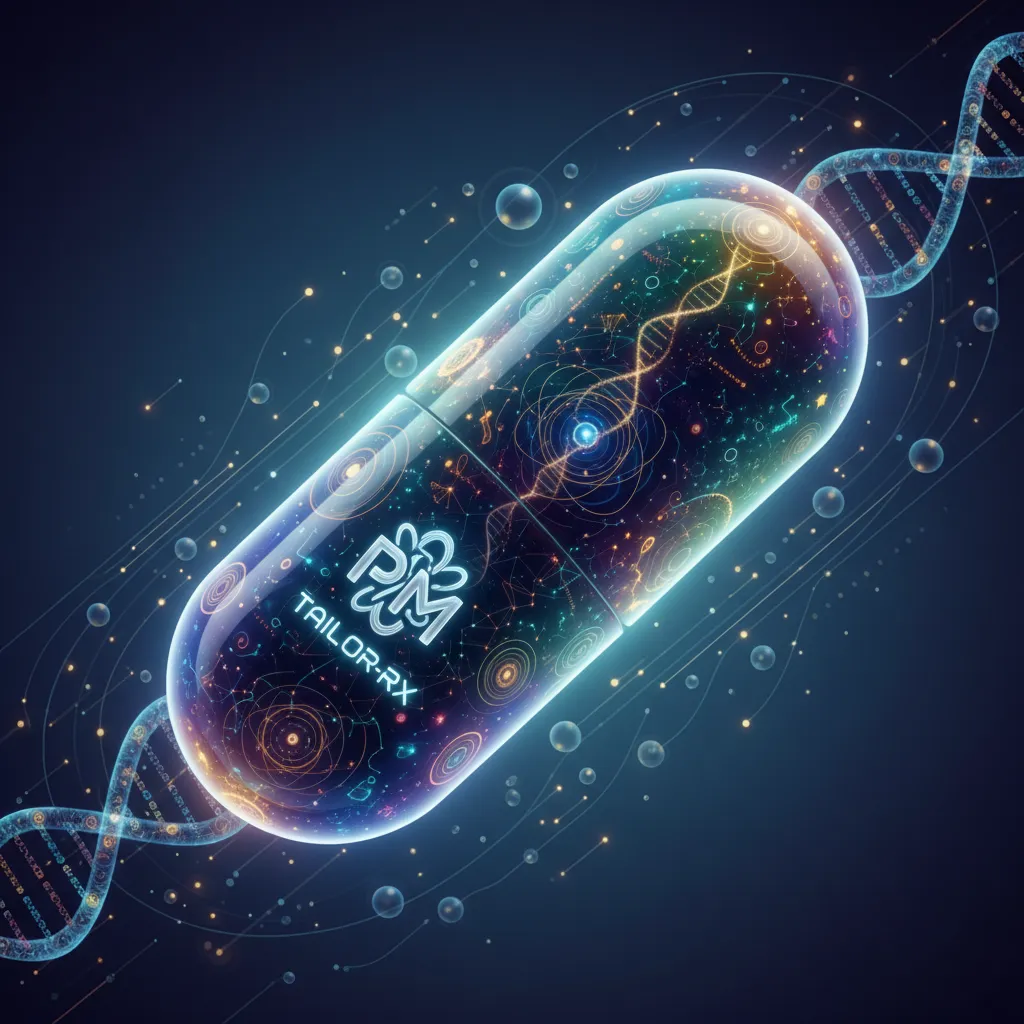
Perhaps the most exciting frontier is personalized medicine quantum. Every individual’s genetic makeup is unique, meaning a drug that works for one person may be ineffective or harmful for another.
Quantum AI healthcare models can analyze a patient’s unique genomic data and disease biomarkers to simulate which drug compound will be most effective for their specific biology. This could lead to:
- Bespoke Cancer Treatments: Designing chemotherapy drugs that specifically target a patient’s unique tumor cells, leaving healthy cells unharmed.
- Optimized Dosages: Precisely calculating the most effective and safest dose for an individual.
- Predictive Health: Simulating how a person’s body might react to various environmental factors or lifestyle changes, enabling preventative care.
The future of drug development is not just about finding new cures, but about tailoring those cures perfectly to the individual.
Related: AI in Longevity: Unlocking the Secrets to a Longer, Healthier Life
The Tools and Platforms Powering the Revolution
This new era of discovery is being enabled by an ecosystem of sophisticated hardware and software. The convergence of these tools is what makes the theoretical promise of Quantum AI a practical reality for AI in R&D.
Quantum Simulation Software and Discovery Platforms
You don’t need to own a multi-million dollar quantum computer to leverage its power. Tech giants like IBM, Google, and Microsoft, along with specialized startups, are building cloud-based platforms that provide access to their quantum hardware and simulators.
Software frameworks like IBM’s Qiskit and Google’s Cirq provide the tools for researchers to build and run quantum algorithms. This quantum simulation software is the bridge that allows chemists, biologists, and materials scientists to translate their complex problems into a language a quantum computer can understand. These platforms are becoming the central hubs for materials informatics quantum and drug discovery research.
The Synergy of Synthesis: AI-Enhanced Drug and Material Creation
The role of AI doesn’t stop at design. Once a promising molecule has been identified, the next challenge is figuring out how to actually make it. AI-enhanced drug synthesis and materials synthesis are emerging fields where AI predicts the most efficient and cost-effective chemical reaction pathways to create a target molecule.
This involves navigating a complex web of potential reactions, reagents, and conditions. AI models can analyze vast chemical literature to propose novel synthesis routes that a human chemist might never consider, further accelerating the pipeline from digital design to physical reality.

Navigating the Quantum Frontier: Challenges and the Road Ahead
Despite the incredible promise and rapid progress, the age of Quantum AI is still in its early days. There are significant technical and practical hurdles to overcome before its full potential is realized.
The Hurdles We Still Face
- Qubit Stability (Decoherence): Qubits are incredibly fragile. Any interaction with their environment (like heat or vibration) can cause them to lose their quantum state, a process called decoherence. This introduces errors into calculations. Building fault-tolerant quantum computers with robust error correction is the primary engineering challenge.
- Scalability: While current quantum computers have hundreds of qubits, the simulations needed for truly complex molecules will require thousands or even millions of stable, interconnected qubits.
- The Talent Gap: There is a shortage of researchers with expertise spanning quantum physics, computer science, and a domain specialty like chemistry or biology.
- Integration and Cost: The AI in R&D pipeline requires integrating quantum and classical computing resources, which is complex and expensive.
The Future of Drug Development and Materials Engineering
Even with these challenges, the trajectory is clear. In the coming decade, we can expect Quantum AI to move from a specialized research tool to a mainstream engine of innovation.
The future it promises is one of rapid discovery cycles. Imagine designing, testing, and synthesizing a new material for a solar panel that is 50% more efficient, all within a matter of months instead of years. Or developing a new antiviral drug to combat a novel pandemic in weeks instead of a decade. This is the world that Quantum AI is building—a world where the fundamental building blocks of matter are no longer a mystery to be discovered, but a language to be written.
Related: AI in Algorithmic Trading: Predicting Market Trends
Conclusion: The Quantum Leap for Humanity
The convergence of quantum computing and artificial intelligence represents one of the most profound scientific shifts of our lifetime. It’s more than just a new type of computer; it’s a new way of understanding and manipulating our world. In materials science, it promises a future of custom-designed materials that are stronger, smarter, and more sustainable. In drug discovery, it offers the hope of accelerated drug discovery, cures for diseases once thought untreatable, and a new paradigm of truly personalized medicine.
The journey is just beginning, and the challenges are real. But the breakthroughs in quantum AI are accelerating, moving from research labs to real-world applications. This technology is a powerful tool that, when wielded with purpose, has the potential to solve some of the most pressing problems facing humanity. The quantum revolution is here, and it’s about to change our world, one molecule at a time.
What breakthrough do you believe will have the biggest impact first? Share your thoughts in the comments below!
Frequently Asked Questions (FAQs)
What is Quantum AI and how does it differ from classical AI?
Quantum AI is the integration of quantum computing principles with artificial intelligence algorithms. While classical AI runs on computers using bits (0s and 1s), Quantum AI leverages qubits, which can be 0, 1, or both simultaneously. This allows it to solve complex optimization and simulation problems, like modeling molecular interactions, that are intractable for even the most powerful classical supercomputers.
How is quantum computing being used in drug discovery?
Quantum computing is revolutionizing drug discovery AI by allowing scientists to accurately simulate how drug molecules interact with proteins in the body. This helps in the rapid identification of promising drug candidate identification AI, predicts potential side effects with greater accuracy, and accelerates the entire pre-clinical research phase, drastically reducing the time and cost of developing new medicines.
What are some examples of materials designed by AI?
While the field is still emerging, AI-driven materials design is already yielding results. Researchers are using it to discover new alloys for aerospace with superior strength-to-weight ratios, design novel polymers for biodegradable plastics, and identify new materials for more efficient battery electrodes and catalysts for green energy production.
What are the main challenges holding back quantum computing?
The primary challenges are technical. Qubits are extremely sensitive to environmental “noise” like heat and radiation, which can destroy their quantum state and introduce errors (a problem called decoherence). Building large-scale, fault-tolerant quantum computers with robust error correction is the biggest engineering hurdle to overcome for widespread adoption.
Can quantum computers simulate complex molecules accurately?
Yes, this is one of their most powerful applications. Because molecules themselves are quantum systems, a quantum computer is the natural tool for simulating them. This process, known as quantum chemistry simulation, allows for a level of accuracy in predicting molecular behavior and properties that is impossible for classical computers to achieve for complex systems.
How will Quantum AI impact personalized medicine?
Quantum AI will be a cornerstone of personalized medicine quantum by enabling the analysis of an individual’s complex genomic and biological data. It can simulate how different drug compounds will interact with a specific person’s unique biochemistry, leading to custom-designed treatments, optimized drug dosages, and therapies tailored to an individual’s genetic makeup for maximum efficacy and minimal side effects.
Is Quantum AI available for use today?
Yes, though still in a nascent stage. Major tech companies and startups offer cloud-based access to their quantum computers and simulators. Researchers and developers can use platforms like IBM’s Qiskit and Google’s Cirq to run quantum machine learning algorithms and begin exploring solutions for real-world problems in finance, materials science, and pharmaceutical research.