Project Astra: Google’s New AI Assistant Explained
Introduction: The Arrival of the Real-Time AI Assistant
For years, we’ve interacted with digital assistants through stilted commands and rigid processes. We ask, they respond, and the context often resets with the next query. That era, it seems, is over.
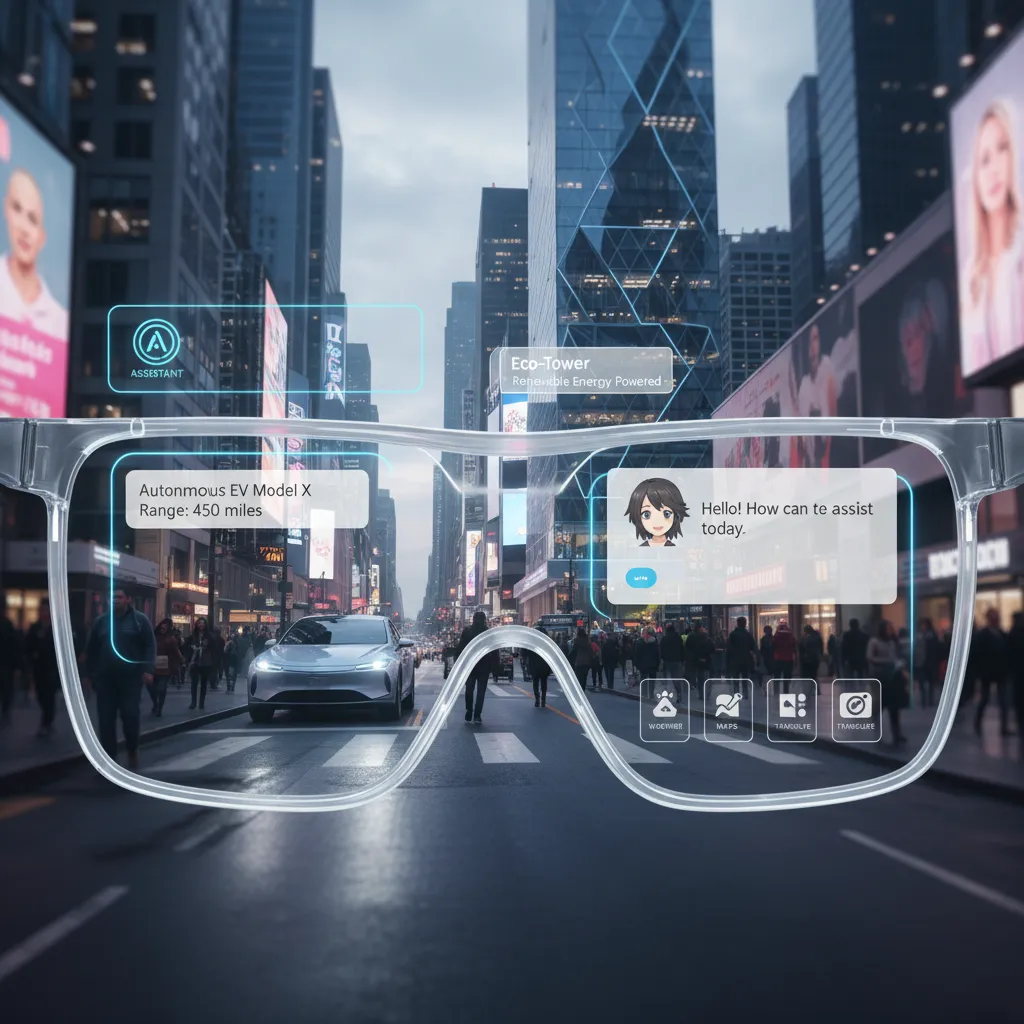
At Google I/O 2024, Google unveiled a concept that fundamentally changes the trajectory of personal computing: Project Astra. More than just a simple update to Google Assistant, Project Astra is the embodiment of a fully integrated, real-time AI assistant—a true AI agent designed not just to answer questions, but to perceive, understand, and interact with the world around you as it happens.
The stunning Project Astra demo showcased capabilities that felt less like software and more like science fiction: continuous conversation, seamless multimodal AI processing (voice, vision, and context simultaneously), and instantaneous comprehension of complex physical environments.
For anyone tracking the development of artificial intelligence news, Project Astra represents Google’s definitive move to dominate the next-generation AI landscape. It leverages the underlying power of Gemini AI and foundational research from DeepMind AI to create a companion that is always aware, always learning, and always ready.
In this comprehensive guide, we will peel back the layers of Project Astra, analyzing what it is, how it achieves its low-latency magic, how it stacks up as a formidable Google’s OpenAI competitor, and what its integration means for the future of Google Search and everyday technology.
The Core Revelation: What is Google Project Astra?
Project Astra is Google’s attempt to build the “Universal AI Agent,” a system capable of operating across various devices and modalities while maintaining a unified, continuous awareness of its surroundings. It moves beyond the familiar “smart speaker” model and into the realm of truly contextual AI.
The core philosophy driving Astra is simple yet revolutionary: to eliminate the friction between the user, their environment, and the AI.
Defining the Next-Gen AI Assistant
Traditionally, AI models operate sequentially:
- User speaks (Audio input).
- Speech is transcribed (Text input).
- Text is processed by the language model (LLM).
- LLM generates a response (Text output).
- Text is converted back to speech (Audio output).
This multi-step process introduces noticeable latency, making the interaction feel disjointed and unnatural. Project Astra, however, achieves near-instantaneous, flowing communication by unifying these processes.
It’s an AI assistant that doesn’t just listen to your words; it watches, remembers, and understands the objects, places, and activities you are currently engaged in.
Built on the Fusion of Gemini AI and DeepMind AI
The architectural foundation of Astra is critical to its success. It is not a standalone product but a deployment of Google’s most advanced models:
- Gemini AI: Specifically, the most optimized, low-latency versions of the Gemini family power Astra’s reasoning and language generation. Gemini’s native multimodal capabilities are what allow Astra to ingest and process visual, audio, and text data natively, rather than through separate modules.
- DeepMind AI Research: DeepMind contributed crucial work on efficient inference and the architecture necessary for the rapid, real-time perception demonstrated in the I/O demo. DeepMind’s focus on building general-purpose learning systems is evident in Astra’s seamless ability to switch tasks and context.
The integration of these powerhouses ensures that Project Astra is not only fast but also highly intelligent and adaptable. This symbiotic relationship transforms a powerful language model into a capable, interactive AI agent.
[Related: the-quantum-ai-revolution-unprecedented-computing-power/]
The Triumph of Multimodal AI: Vision, Voice, and Context
The most compelling feature of Project Astra is its advanced multimodal AI. While many recent AI developments boast multimodal capabilities, Astra takes this a step further by processing everything in real-time.
Consider this: most current systems can analyze an image and generate a caption. Astra can analyze a live video feed, identify moving objects, understand your voice command referring to one of those objects, and answer a contextual question about it—all within a fraction of a second.
This simultaneous processing hinges on:
- Visual Understanding AI: Astra employs sophisticated models for object recognition, spatial awareness, and scene parsing. When you point your camera (or wear Google smart glasses), Astra immediately builds a semantic map of your environment.
- Live Camera AI Integration: Unlike simple image processing, Astra’s ability to process a live camera AI stream allows it to track changes. If you move an item, Astra remembers its original location and can help you find it later.
- Unified Encoding: The data from your voice and the data from the camera are encoded into the same conceptual space, meaning the AI doesn’t have to translate between separate ‘vision’ and ‘language’ models, drastically reducing latency.
The result is an AI that can handle intricate tasks like explaining a block of code shown on a screen, identifying the parts of an unfamiliar machine, or even providing navigational directions based on actual visual landmarks it sees.
/image-topic.webp
The Real-Time Revolution: How Astra Achieves Instantaneous Understanding
The key differentiator for Project Astra is speed. In the world of conversational AI, latency is the enemy of natural interaction. If an AI takes even two seconds to respond, the conversation feels stilted. Astra aims for conversational fluidity that rivals human interaction.
Optimized for Low Latency and Contextual Memory
To achieve this level of speed, Google’s engineers focused on two primary optimizations:
1. Token-Level Interleaving and Pipelining
Instead of waiting for an entire thought or sentence to be generated, Astra employs a technique called pipelining. The model begins generating the next token of its response almost immediately after processing the current token of the user’s input. This overlap, coupled with highly optimized neural network architectures, shrinks the gap between user input and AI response to the bare minimum.
2. The Power of “Episodic Memory”
A key challenge for any AI agent is maintaining context. Project Astra introduces sophisticated contextual AI capabilities often referred to as “episodic memory.”
Unlike short-term memory (which holds the current dialogue), episodic memory allows the AI to recall specific visual and temporal events from its recent past.
Example:
- User: “Where did I put my keys after I walked in?” (Astra doesn’t know yet.)
- Astra (Internal Recall): Accesses the last 30 seconds of visual stream when the user entered the room, noting the keys being placed on a bookshelf.
- Astra (Response): “You placed them on the top shelf next to the blue book, about a minute ago.”
This continuous, persistent awareness is what makes Astra feel less like a tool and more like an attentive assistant. This continuous perception is crucial for its use cases in dynamic environments.
[Related: the-rise-of-slms-edge-ais-secret-weapon-for-local-intelligence/]
The Project Astra Demo Highlights: A Glimpse into the Future
The I/O 2024 demo provided compelling evidence of Astra’s capabilities, moving far beyond theoretical concepts into practical, everyday assistance. The highlights showcased its versatility:
- Finding Lost Objects: A user asks where they left their glasses. Astra, drawing on its episodic memory from the live camera feed, instantly directs them to the exact location.
- Real-Time Explanations: When shown a complex array of circuit boards or a technical diagram, Astra can immediately identify components and explain their function, making learning instantaneous and hands-on.
- Creative Collaboration: The user asks Astra to suggest a creative name for a white-board drawing. Astra analyzes the drawing, understands the context (a futuristic setting), and provides a clever, relevant suggestion. It can even help sketch by refining and completing concepts.
- Adaptive Environment: When a user moves their camera to a different city street, Astra recognizes the location change and can adapt its answers to local context, such as identifying a nearby bus stop or explaining a local landmark.
These demonstrations validate Astra’s role as the next-gen AI assistant, proving it can handle complex, unstructured, and rapidly changing real-world scenarios.
/image-topic.webp

Project Astra vs. the Competition: Google’s OpenAI Competitor
The unveiling of Project Astra came shortly after OpenAI’s stunning GPT-4o reveal, positioning Google’s work as a direct and aggressive response in the high-stakes race for the consumer AI interface. Project Astra solidifies Google’s position as a major Google’s OpenAI competitor.
Project Astra vs GPT-4o: The Latency War
Both Google and OpenAI have dramatically reduced response latency, moving the AI interaction closer to human speed. However, their approaches and demonstrable capabilities highlight key differences:
| Feature | Project Astra (Google) | GPT-4o (OpenAI) |
|---|---|---|
| Core Focus | Continuous, real-time, persistent spatial awareness (AI Agent). | High-quality, fast, multimodal conversation (Model). |
| Multimodality | Native integration of voice and vision AI into a single, highly efficient encoder-decoder model for low latency. | Strong multimodal capabilities, significantly faster than GPT-4, with emphasis on emotional context in voice. |
| Context/Memory | Emphasis on episodic memory—remembering what it saw minutes ago. Designed for spatial persistence. | Excellent short-term conversational context; visual memory is task-based, not continuous. |
| Hardware Integration | Designed for deep integration into Google smart glasses, AI on Android, and across the Google ecosystem. | Designed for platform integration via API; focus is on the model itself, not proprietary hardware deployment. |
| Key Advantage | True, live-stream visual processing and continuous environmental awareness. | Superior emotional intelligence recognition and high-fidelity voice output. |
While GPT-4o is a massive leap in model quality and speed, Project Astra’s explicit goal of maintaining continuous, spatial awareness gives it an edge in applications requiring dynamic interaction with the physical world. Astra is fundamentally designed to be a virtual presence, not just a conversational endpoint.
[Related: searchgpt-vs-google-sge-ai-search-revolution/]
The Google Advantage: Ecosystem Integration
Google holds a massive structural advantage in deploying a technology like Astra: control over billions of consumer devices and services.
- AI on Android: Integrating Astra directly into the Android operating system means it can access system-level information, notifications, and context seamlessly, turning the phone into a truly intelligent companion.
- Future of Google Search: Astra’s knowledge retrieval capabilities are destined to augment and redefine the future of Google Search. This will likely involve enhancing AI Overviews with real-time visual context. Instead of searching, “How do I fix this pipe?” you show Astra the pipe, and it instantly generates a step-by-step solution based on visual analysis and web-grounded knowledge.
- Wearable Tech: The most transformative potential lies in the integration with future Google smart glasses and other wearables. This allows Astra to literally see what you see, making it the ultimate hands-free, invisible, and ubiquitous personal AI assistant.
/image-topic.webp

Deployment and Integration: Where Will Project Astra Live?
Project Astra isn’t meant to be locked inside a single app; its vision is ubiquity. Google plans for Astra to migrate across your digital life, becoming the unified interface for interacting with information, creativity, and the physical world.
1. Augmenting the Mobile Experience (AI on Android)
The immediate goal is to embed Astra’s capabilities into existing Google products. Imagine your phone’s camera app becoming hyper-aware.
- Smart Photo Management: Astra could help you organize photos not just by date or location, but by specific context. “Show me photos of the birthday cake from grandma’s 80th where Uncle Joe was standing behind the table.”
- Real-Time Troubleshooting: Point your phone at a router with blinking lights, and Astra instantly identifies the model, cross-references known issues online, and provides troubleshooting steps—all without you typing a single query.
- Enhanced Navigation: Astra could give directions like, “Take a left at the building with the green awning, then walk past the statue.”
This level of detailed, spatial, and semantic interaction fundamentally changes the role of the smartphone, transforming it into a high-powered, context-aware sensor hub.
[Related: unlock-potential-top-ai-tools-everyday-productivity/]
2. Revolutionizing Search with Real-Time Context (AI Overviews)
Google’s current AI Overviews provide summaries of web search results. Project Astra is poised to make these overviews dynamic and immediate.
If you are renovating your kitchen and look up a specific type of plumbing fixture, Astra could analyze the image of your current setup (via your camera) and tailor the search results and AI Overviews to match the constraints and characteristics of your actual environment—a crucial step for personalized, actionable search results.
This integration links the vastness of the web (Google’s core strength) directly to the immediacy of the physical world (Astra’s innovation).
[Related: the-rise-of-ai-copilots-revolutionizing-work-boosting-creativity-driving-innovation/]
3. The Future of Wearables (Google smart glasses)
While the demo primarily showed a phone/tablet interface, the true end-game for Astra is discreet, hands-free interaction. Future iterations of Google smart glasses could rely on Astra’s continuous visual understanding to provide assistance without needing a screen or active input.
Imagine:
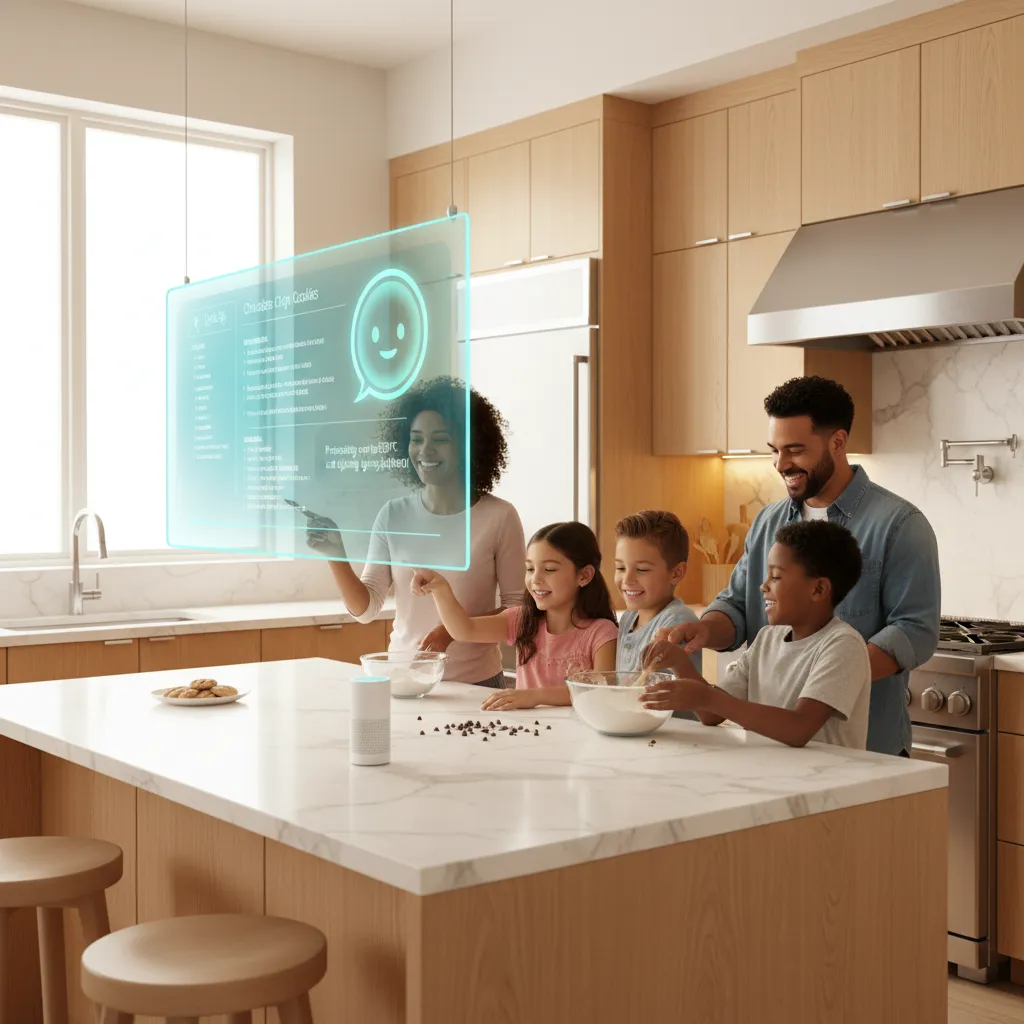
- A chef in a kitchen, getting ingredient measurements read out discreetly.
- An engineer assembling a complex device, receiving visual overlays and step-by-step instructions.
- A student exploring a museum, getting spontaneous, factual summaries of the artifacts they glance at.
Astra, living in smart eyewear, becomes an omnipresent, invisible intelligence layer atop reality, seamlessly blending the digital and physical worlds.
[Related: personalized-health-tech-future-wellness/]
Ethical Considerations and the Future of Everyday AI
As we welcome an AI agent capable of continuous, real-time perception, significant ethical and privacy questions arise. The very features that make Astra revolutionary—its episodic memory and continuous visual feed—are also the features that demand careful regulation and user control.
Privacy, Transparency, and User Control
For Project Astra to succeed as a trusted personal AI assistant, Google must prioritize transparent data handling:
- Clear Opt-In and Opt-Out: Users must have absolute control over when Astra is “looking” and “remembering.” Controls need to be intuitive, allowing users to pause visual recording or delete specific memories.
- Local Processing for Sensitivity: To maintain speed and privacy, as much of the sensitive, moment-to-moment processing (like object identification) should happen locally on the device rather than being constantly streamed to the cloud.
- Safety Filters: Google must implement robust filters to prevent Astra from generating harmful, biased, or inappropriate content, especially when providing real-time instructions or interpreting sensitive visual data.
The ambition of Astra brings with it the imperative to develop AI technology 2024 and beyond with a strong focus on human safety and digital well-being. The challenge is ensuring that this powerful new surveillance-capable AI remains entirely in service of the user, not the corporation.
[Related: navigating-future-imperative-ethical-ai-smart-world/]
The Long-Term Impact on Human Cognition
A fully realized Astra will be profoundly transformative, changing how we learn, work, and interact.
- Democratization of Expertise: Complex tasks currently reserved for experts (like diagnosing simple car problems or interpreting specialized documents) become instantly accessible.
- Reduced Cognitive Load: By handling menial contextual tasks—like remembering where you put things or verifying small facts—Astra frees up human attention for higher-level creative and strategic thinking.
- New Interfaces: The need for traditional apps, search bars, and discrete interfaces diminishes as the AI becomes the primary method of interaction. This paves the way for a more intuitive, voice- and vision-driven computing paradigm.
Project Astra is not just about competing with other technology companies; it’s about establishing the foundational layer for how humans will interact with information and technology for the next generation. It marks a clear path toward the future of AI where assistance is pervasive, proactive, and deeply personal.
/image-topic.webp
Conclusion: The Era of Pervasive Contextual AI
Project Astra is arguably the most ambitious undertaking in Google AI in years. It takes the raw power of the Gemini AI model and marries it with DeepMind’s optimization prowess to deliver a real-time AI assistant that truly understands context, memory, and the physical world.
Unveiled at Google I/O 2024, this project signaled that the competition in the AI space is no longer just about who has the biggest or smartest model, but who can deploy that intelligence most effectively across the human experience. By focusing on low-latency conversational AI and visual understanding AI, Astra sets a new standard for interactive technology.
While still a project in development, its eventual rollout will undoubtedly reshape daily interactions on AI on Android, in future Google smart glasses, and fundamentally alter the landscape of Google Search. Project Astra promises a future where technology is no longer a separate tool requiring deliberate input, but a seamless, intelligent layer of assistance woven into the fabric of our lives.
The age of the proactive, perceptive, and persistent AI agent is here.
FAQs (People Also Ask)
Q1. What is the main purpose of Project Astra?
Project Astra’s main purpose is to create a unified, real-time AI assistant (or AI agent) that can perceive, understand, and interact with the physical world using multimodal AI capabilities (voice and vision). It aims to offer near-instantaneous, context-aware assistance across devices like phones and smart glasses.
Q2. When will Project Astra be released to the public?
As of the Google I/O 2024 announcement, Project Astra is a research project, and specific release dates have not been confirmed. However, Google announced that many of the core capabilities, powered by Gemini AI updates, are being integrated into consumer products like the Gemini app and Google smart glasses over the course of 2024 and 2025.
Q3. Is Project Astra built on the Gemini AI models?
Yes, Google Project Astra is fundamentally built on the highly optimized, multimodal architecture of the Gemini AI family of models, specifically leveraging their capabilities for low-latency processing and unified voice and vision AI. This foundation is essential for its real-time performance.
Q4. How does Project Astra compare to GPT-4o?
Both are next-gen AI assistants with strong multimodal capabilities. Project Astra vs GPT-4o centers on continuous perception. Astra emphasizes real-time AI assistant functionality with persistent spatial awareness and “episodic memory,” designed for deep integration into Google’s hardware ecosystem. GPT-4o emphasizes speed and high-fidelity conversation across text, voice, and vision API calls.
Q5. Will Project Astra replace the existing Google Assistant?
It is highly likely that components of Project Astra features and its underlying contextual AI technology will eventually supersede and replace the legacy Google Assistant. Astra is designed to be a more capable, proactive AI agent that moves beyond simple command-based responses to complex, continuous, and context-aware interactions.
Q6. What does “multimodal AI” mean in the context of Project Astra?
Multimodal AI means the system can process and understand multiple types of data—specifically voice, text, and visual inputs from a live camera AI—simultaneously and natively within a single model architecture. This allows Project Astra to maintain a seamless, immediate understanding of both your verbal query and your visual environment.
Q7. How does Project Astra help with Google Search?
Project Astra’s continuous visual and contextual understanding will augment the future of Google Search by feeding real-world data into queries. This allows for highly personalized and immediate AI Overviews, such as analyzing an object you point your camera at and delivering specific, actionable search results based on that visual input.