OpenAI’s Sora: The Future of AI Video is Here
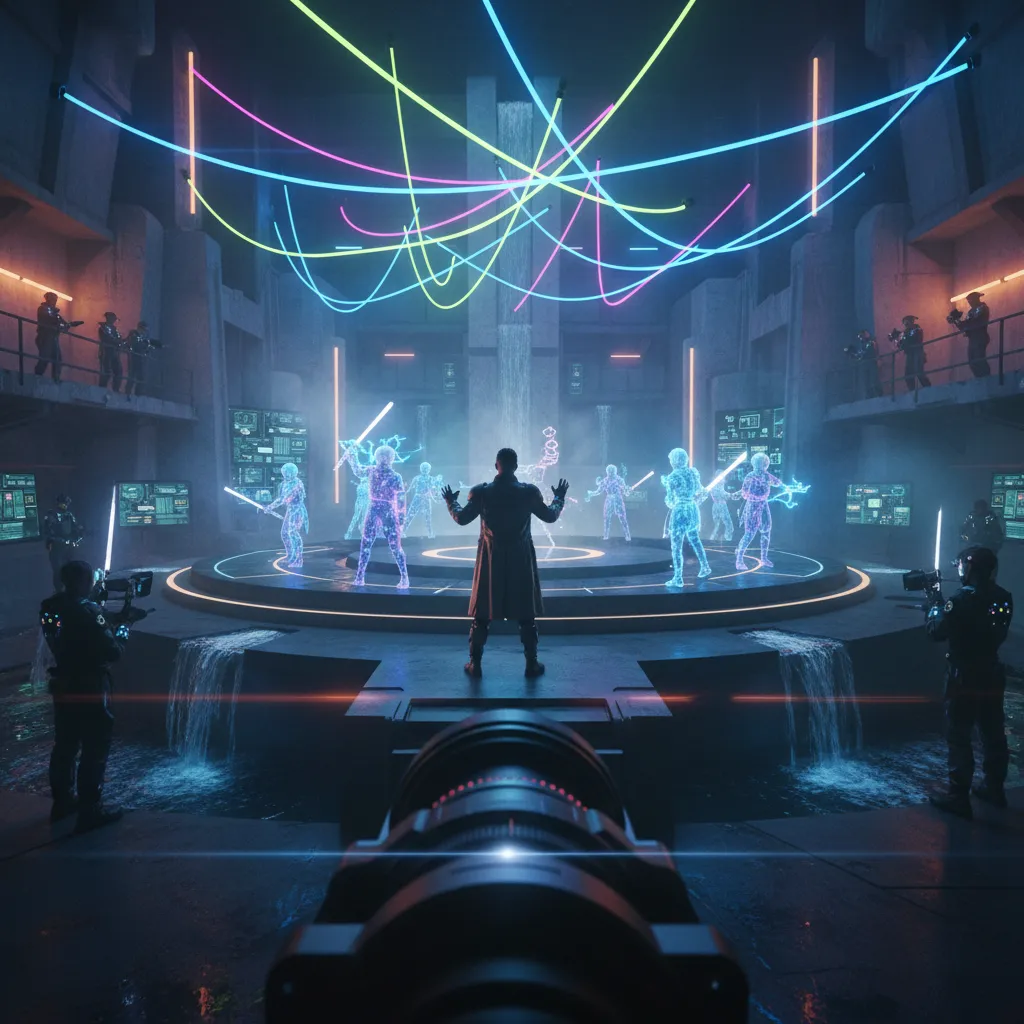
Introduction: The Dawn of Truly Realistic AI Video Generation
The announcement of OpenAI Sora didn’t just mark an iteration in technology; it signaled a true inflection point in digital content creation. For years, the promise of text-to-video AI felt confined to short, often surreal or low-fidelity clips. Then came Sora.
Sora, meaning “sky” in Japanese, lives up to its name by offering a boundless horizon for AI video generation. Developed by the minds at OpenAI, the same team behind GPT and DALL-E, Sora represents a leap forward, capable of generating complex, realistic scenes up to a full minute long, while maintaining remarkable visual quality and adherence to the user’s prompt. The model can simulate physics, character consistency, and detailed camera movements, setting a new standard for generative video models.
This article serves as your comprehensive guide to Sora AI. We will delve into what is Sora, analyze the implications of its technical foundation, navigate the current status of the Sora release date and availability, explore how to craft effective Sora AI prompts, and critically assess the massive impact this technology will have on AI filmmaking and the jobs landscape. If you’re a creator, entrepreneur, or simply curious about the future of AI video, understanding Sora is no longer optional—it’s essential.
Understanding Sora: The Generative Video Revolution
At its core, Sora is a diffusion model, similar to those used in image generation, but architected fundamentally to understand and generate video on a massive scale. Its ability to create long, coherent scenes with multiple characters and specific movements—not just translating text to a sequence of static images—is what makes it revolutionary.
What Makes Sora Different? The Technical Edge
The magic behind Sora lies in its unique approach to data handling. Instead of treating video content as frames, which limits consistency, Sora utilizes a method inspired by the GPT family’s transformer architecture. According to the Sora technical paper, the model is trained on “visual data of unprecedented scale and diversity” and organizes it using a concept called “patches.”
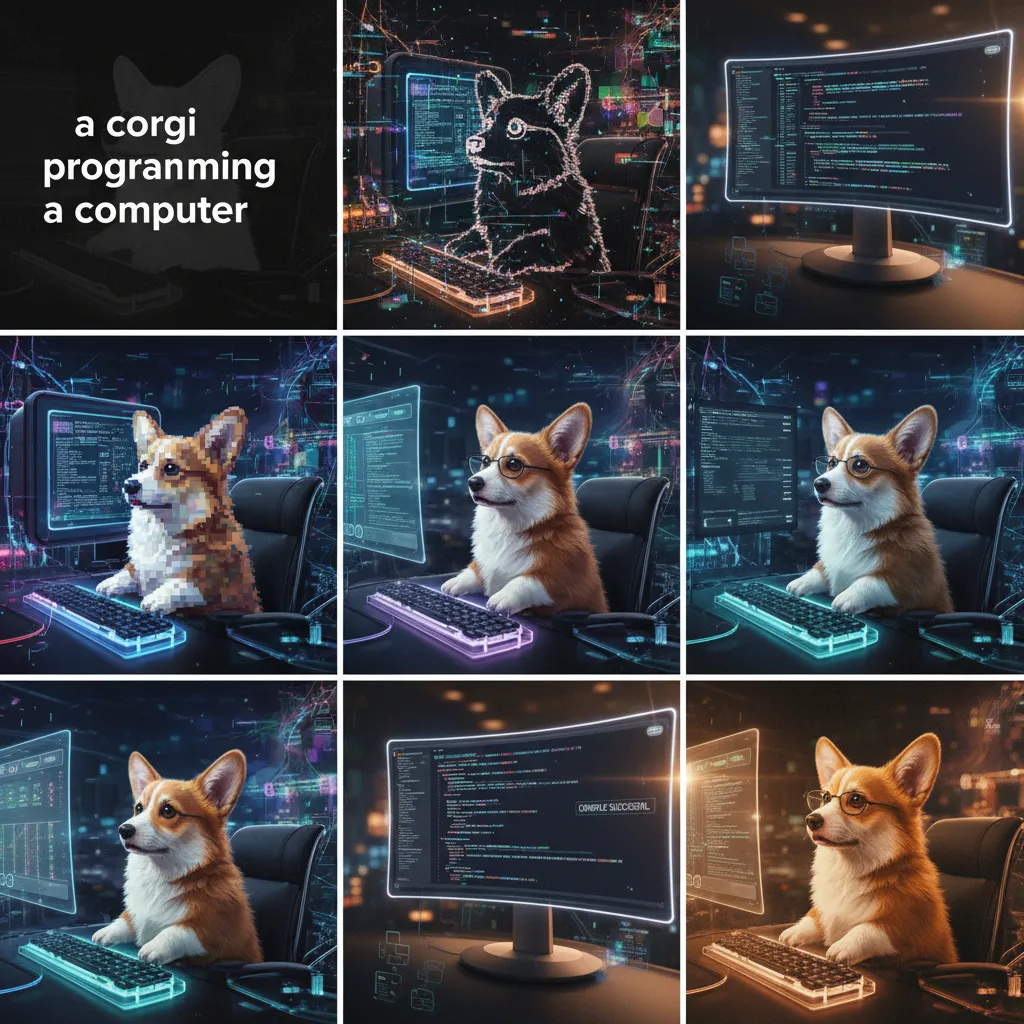
Imagine breaking down an entire video—including time, resolution, and aspect ratio—into small, consistent data units, much like tokens in GPT. These units, or patches, allow Sora to learn holistic relationships across space and time. This makes Sora a truly advanced example of multimodal AI models, as it connects language understanding (the prompt) with complex visual simulation.
This patch-based approach enables three critical capabilities:
- Extended Coherence: Sora maintains the identity of subjects and the physical constraints of a scene over a 60-second runtime, overcoming a major Sora limitations challenge that plagued previous models.
- Diverse Outputs: It can generate content in various resolutions and aspect ratios, adapting instantly to different production needs (e.g., cinematic 21:9 or vertical 9:16 for social media).
- Simulated World Understanding: Sora doesn’t just paint pixels; it models the physical world. While not perfect, the Sora AI demo videos show instances of light reflection, water ripples, and object interactions that suggest the model is learning the physics of the environment.
Showcasing the Quality: Sora AI Examples and Demo
The Sora AI examples released by OpenAI showcase an astonishing level of detail and photorealism, establishing a new benchmark for Sora video quality. From a high-speed drone shot through a neon-lit Tokyo street to a woolly mammoth trudging through snow, the realistic AI video output has blurred the line between simulated and real footage.
These demonstrations have captivated the world, proving that a text prompt like “A cinematic trailer for a 1970s sci-fi movie about space exploration with vibrant colors and retro design” can produce a minute-long, professionally graded sequence.
Below is a conceptual illustration of how the patch system transforms text into dynamic video:
Getting Access: Release Date, Price, and Availability
One of the most pressing questions surrounding this powerful new tool is simple: how to use Sora AI? Unfortunately, unlike some of OpenAI’s other models, public access to Sora remains restricted.
Sora Release Date and Waiting List Status
As of today, the official Sora release date for the general public remains undetermined. OpenAI has adopted a cautious, phased rollout strategy, prioritizing safety and utility testing before mass deployment.
Currently, Sora AI access is granted to a few specific groups:
- Red Teamers: Security experts tasked with probing the model for vulnerabilities, biases, and potential misuse (Sora safety concerns).
- Visual Artists and Filmmakers (Sora for creators): A limited number of professional creatives and visual artists are being given early access to test the model’s practical utility, provide feedback on workflows, and explore the creative applications of Sora.
If you are hoping to gain access, keep an eye on official OpenAI channels. While there isn’t a formal, public Sora AI waiting list yet, early sign-ups for OpenAI developer programs or specific creative research initiatives may offer a quicker pathway when the model does move into wider beta testing.
Sora AI Price and Commercial Access
OpenAI has not announced the final Sora AI price structure. However, based on how they monetize their other large models (GPT-4 and DALL-E), we can anticipate a few scenarios:
| Access Model | Description | Estimated Cost Structure |
|---|---|---|
| Consumer/Creator Tier | Web interface access for individual creators generating short, non-commercial or personal clips. | Subscription tiers or pay-per-credit model (e.g., $X per 10-second video). |
| Enterprise/Production Tier | Higher volume, commercial use, and dedicated support for studios and large agencies. | High-volume monthly subscription with guaranteed generation bandwidth and specific usage rights. |
| Sora API Access | Direct access via an API for integration into third-party applications, software, or large-scale automated content pipelines. | Pay-per-use based on resolution, duration, and processing cost (similar to GPT API tokens). |
It is highly unlikely there will be a simple Sora AI download link for the full model due to its immense computational requirements and the need for centralized safety monitoring. Access will almost certainly be cloud-based, whether through the web UI or Sora API access.
Mastering the Magic: Crafting Effective Sora AI Prompts
The quality of the output in any generative model hinges on the quality of the input. With Sora’s capacity for complexity, prompt engineering has never been more crucial. Learning to write effective Sora AI prompts is essential for any creator looking to harness this power.
Prompt Engineering Fundamentals for Generative Video Models
A successful Sora prompt moves beyond simple nouns and adjectives. It must provide context for the physics, emotional tone, and cinematic style of the desired output.
Key Prompt Components:
- The Subject & Action: Clearly define the central element and what it is doing. (Example: “A sleek silver robot walking on a beach.”)
- The Setting & Environment: Specify the location, time of day, and environmental details. (Example: “…at sunset, with golden light reflecting off the wet sand.”)
- The Cinematic Look (Style): This is where you dictate the feel of the footage. Use terms that a cinematographer or director would use.
- Camera: Wide-angle, macro shot, handheld, dolly zoom.
- Lighting: Soft box lighting, dramatic chiaroscuro, high key.
- Film Stock/Grade: Kodachrome, grainy film, cinematic, documentary style.
- The Duration & Technical Specs (Implicit or Explicit): While Sora manages duration, you can influence the output by requesting complex movement that requires a full minute to complete.
Advanced Prompt Techniques for Maximum Coherence
To overcome subtle Sora limitations, such as occasional physics errors or object disappearances, your prompt must anchor the model in reality.
- Specify Physics: Instead of “A car driving down the road,” try, “A heavy, vintage car accelerates quickly on a wet asphalt road, tires gripping the surface realistically.”
- Establish Continuity: If multiple subjects are involved, name them or link their actions. Example: “Two friends, one in a red coat and one in a blue jacket, meet on a city bench. The friend in red hands the other a small, wrapped gift, their expressions conveying surprise and gratitude.”
- Leverage Existing Media Language: Requesting a specific style, like “stop motion animation” or “footage reminiscent of a Wes Anderson film,” allows Sora to tap into vast datasets of established visual language, leading to higher Sora video quality.
The ability to accurately prompt for desired outcomes will separate the casual user from the professional user of Sora AI.
Sora vs. The Competition: A Generative Video Showdown
The development of generative video models did not begin with OpenAI Sora. Competitors like RunwayML (Gen-2) and Pika Labs have been at the forefront of the text-to-video AI space. However, Sora’s introduction fundamentally shifted the competitive landscape.
Sora vs Runway and Pika Labs
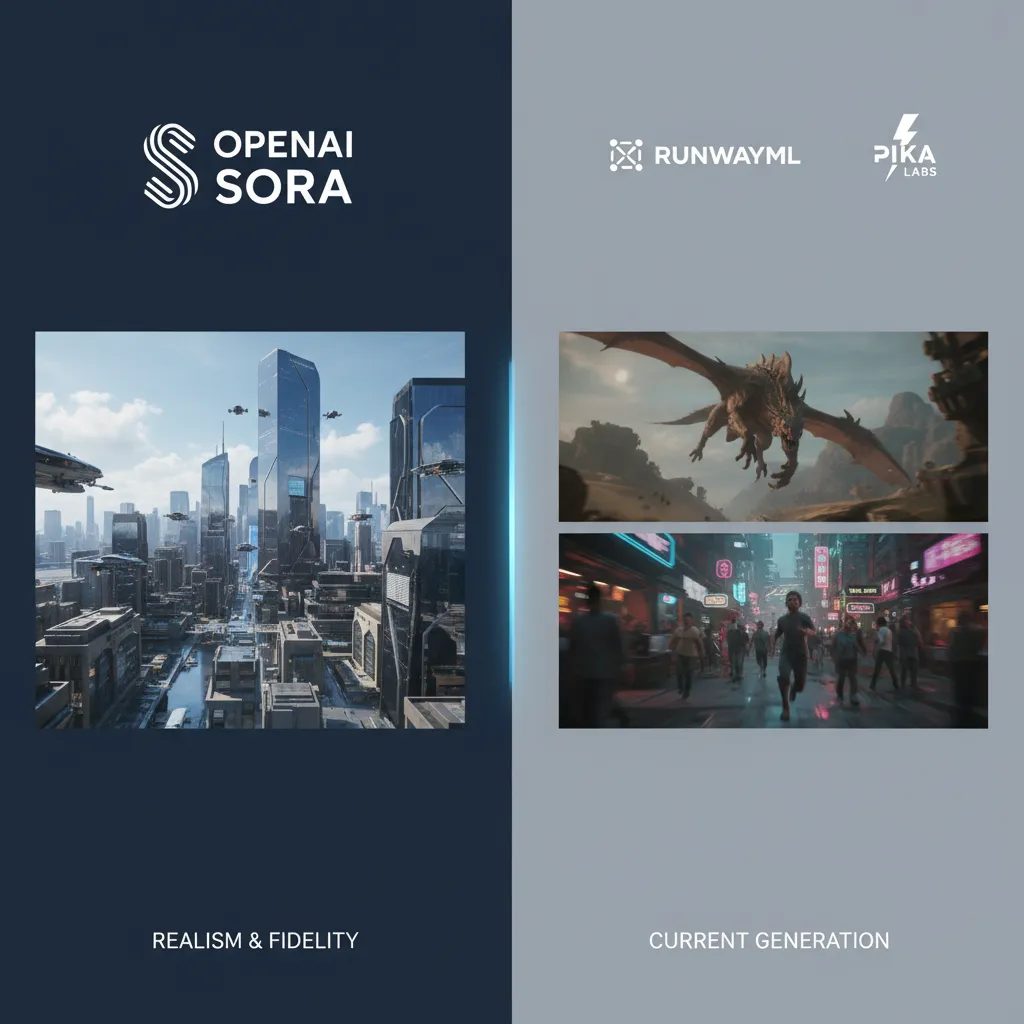
The main differentiation between Sora and current leading models like Runway Gen-2 and Pika is primarily in coherence, duration, and photorealism.
| Feature | OpenAI Sora | Runway Gen-2 | Pika Labs |
|---|---|---|---|
| Max Duration | Up to 60 seconds (variable) | Up to 18 seconds (with chaining) | Up to 3-4 seconds (easily chained) |
| Video Quality | Unprecedented cinematic, realistic AI video | High quality, often stylized | High quality, focuses on stylized and fast outputs |
| Scene Coherence | Excellent; maintains object and physics consistency | Good; occasional “wobble” or object confusion | Moderate; best for short, immediate actions |
| Accessibility | Currently restricted (research/red team only) | Publicly available (web/mobile) | Publicly available (Discord/web) |
| Key Advantage | World simulation and long-form narrative capability | Established workflow and integration into existing editing software | Speed and ease of use |
While Runway and Pika are accessible now and vital tools for many creators, the Sora AI demo footage suggests a level of detail, camera fidelity, and temporal consistency that positions it in a league of its own.
Unreal Engine 5 vs Sora: Comparing Real-Time Rendering to Generative AI
A common question among visual effects artists is: how does Sora compare to established rendering powerhouses like Unreal Engine 5 (UE5)? The answer is that they serve fundamentally different functions, although they are converging.
- Unreal Engine 5 (UE5): A real-time 3D creation tool. It offers absolute control over every element, lighting source, and physics simulation. It requires expert technical skill (modeling, rigging, programming) but produces predictable, game-ready, and highly detailed output.
- OpenAI Sora: A generative AI model. It offers unparalleled speed and conceptual ideation. It requires little technical skill (just a prompt) but offers less granular control, relying on the model’s interpretation of the prompt.
Sora will likely become a powerful tool for the UE5 pipeline—used for pre-visualization, concept art, and rapid asset generation—rather than a direct replacement. The power of AI filmmaking lies in its speed, drastically reducing the time needed to go from script to screen for initial concepts.
The Impact: Sora for Creators and the Future of Media
The emergence of Sora is set to dramatically reshape media production, offering incredible leverage to individual creators and small studios. The future of AI video is no longer defined by large budgets and long rendering times.
Revolutionizing AI Filmmaking
Sora empowers Sora for creators by democratizing the ability to visualize complex ideas. A single person, operating with a laptop and a text prompt, can now generate polished footage that previously required a team of animators, modelers, and compositors.
Creative Applications of Sora:
- Pre-visualization (Pre-Viz): Directors can rapidly generate scenes based on storyboard notes to test camera angles, lighting, and pacing before committing to expensive production days.
- Stock Footage Replacement: The need for generic stock video could diminish, as creators can generate highly specific, context-relevant clips instantly.
- Low-Budget Production: Independent filmmakers can produce short films, music videos, and cinematic advertising with high production value but without the associated infrastructure costs.
- Prototyping and Ideation: Marketing teams can prototype countless ad concepts in hours, allowing them to A/B test visual strategies far faster than traditional methods.
Sora transforms the bottleneck from technical execution to pure ideation. Those who master Sora AI prompts and visual storytelling will become the new power users.

Jobs Affected by Sora: Adaptation, Not Annihilation
Whenever a disruptive technology like Sora appears, concerns naturally arise about jobs affected by Sora. While roles centered purely on repetitive technical execution—like basic 3D modeling or rendering farms—may see contraction, the overall creative economy is more likely to pivot than collapse.
The most affected roles will be those that resisted automation. However, new roles centered around AI video generation will explode:
- Prompt Engineers: Specialists in translating complex creative visions into effective generative inputs.
- AI Video Editors and Integrators: Professionals who stitch together Sora-generated clips, add sound design, and blend them seamlessly with traditional or live-action footage.
- AI Tool Developers: Engineers focused on building user-friendly interfaces and specialized tools utilizing the Sora API access.
The key takeaway is that the tool shifts the value chain. Creative professionals who adopt Sora as a force multiplier—speeding up tedious tasks to spend more time on directorial vision and emotional storytelling—will thrive.
[Related: what-is-gpt-4o-ultimate-guide-to-real-time-ai/]
Addressing the Challenges: Safety, Ethics, and Limitations
OpenAI’s slow, measured rollout of Sora is largely driven by a profound recognition of its power and the potential for misuse. The model’s capacity for photorealistic output introduces significant Sora safety concerns that must be mitigated before widespread public access.
Tackling Misinformation and Deepfakes
The ability to generate long, hyper-realistic video instantly creates a potent tool for misinformation. OpenAI is building robust guardrails to prevent the generation of harmful content, including:
- Strict Policy Filters: Input prompts are screened against policies prohibiting hate speech, violent content, copyrighted material, and politically sensitive content.
- Identity Guardrails: Measures are in place to prevent the generation of realistic imagery of public figures to limit the spread of deepfake videos.
The Role of the Sora Watermark
A critical safety measure is the Sora watermark—a form of cryptographic provenance implemented by OpenAI. This digital signature embedded within the metadata or visibly on the generated video is designed to identify content created by Sora.
The goal of the watermark is to:
- Allow users and platforms to distinguish between real footage and AI-generated content.
- Provide traceability for investigations into misuse.
- Promote transparency regarding the origin of digital media.
Technical and Physical Sora Limitations
Despite its groundbreaking nature, Sora is not perfect. Researchers have identified several key Sora limitations primarily related to complex physics and causality:
- Causality Errors: Sora may struggle with cause-and-effect. For instance, a character might take a bite out of a cookie, but the cookie might not show the corresponding bite mark in the next few frames.
- Object Persistence: In very complex scenes, objects can sometimes spontaneously appear, disappear, or change form in ways that defy physics.
- Spatial Confusion: The model sometimes struggles with the exact spatial relationships between subjects and the camera, leading to unnatural camera movements or distorted perspectives.
These limitations are not failures; they are indicators of the complexity involved in teaching an AI model to truly simulate the known laws of physics. Each new iteration, however, will push these boundaries further.

The Future of AI Video: Beyond Generation
The introduction of OpenAI Sora is just the beginning of a transformative era for video and media. The model is paving the way for systems that don’t just generate video, but actively simulate entire digital worlds.
Imagine a future where you can provide Sora with a character model and a script, and the AI handles everything from lighting to shot composition—a form of AI filmmaking that reduces the creative gap between intention and execution to zero.
Further development in multimodal AI models will allow for seamless integration, where one AI can handle the narrative (like GPT-4), another the visuals (Sora), and a third the sound and score, leading to entirely autonomous media generation pipelines. This innovation has significant implications not just for Hollywood, but for advertising, education, and entertainment worldwide.
The conversation surrounding Sora AI stock and its valuation underscores the immense market confidence in the future of these generative video models. As the technology matures and Sora API access becomes widespread, we will see its influence touch every sector that relies on visual communication.
[Related: project-astra-google-ai-assistant-explained/]
Conclusion
OpenAI Sora stands as a landmark achievement in generative AI, proving that the dream of truly realistic, high-fidelity text-to-video AI is now a reality. From its revolutionary patch-based architecture derived from the Sora technical paper to the stunning Sora AI examples, this model sets a new gold standard for Sora video quality.
While we await the official Sora release date and clarity on the Sora AI price structure, it is critical for creators to understand its potential and limitations. The future belongs to those who learn how to use Sora AI effectively, crafting sophisticated Sora AI prompts that communicate cinematic intent rather than just simple commands.
Sora is more than a tool; it is a catalyst accelerating the convergence of imagination and reality. The creative landscape is shifting, and for those ready to embrace the power of AI, the future of content creation is finally here. Start researching prompt engineering today—your next great film may be only a paragraph away.
FAQs: People Also Ask About OpenAI Sora
Q1. What is OpenAI Sora?
OpenAI Sora is a groundbreaking generative text-to-video AI model developed by OpenAI, capable of creating complex, realistic, and highly detailed videos up to 60 seconds long from simple text prompts. It is considered one of the most powerful generative video models available today, known for its high Sora video quality and temporal consistency.
Q2. When is the Sora release date and how can I join the Sora AI waiting list?
There is no firm, public Sora release date currently announced. Access is strictly limited to red teamers and a small number of visual artists and filmmakers for testing purposes. There is no public Sora AI waiting list available yet, but interested parties should monitor the official OpenAI blog for updates on beta programs or eventual commercial release.
Q3. How does Sora AI compare to competitors like Runway and Pika Labs?
Sora’s primary advantage over current leaders like Sora vs Runway and Pika is its ability to generate significantly longer (up to 60 seconds), more complex, and more consistent scenes with superior object persistence and simulation of real-world physics, resulting in more realistic AI video. While competitors are publicly available, Sora’s technological depth is currently unmatched in quality and duration.
Q4. Is there a Sora AI price or is it free to use?
OpenAI has not disclosed the final Sora AI price. It is highly unlikely to be entirely free due to the immense computational resources required for AI video generation. Pricing will likely involve a subscription model, a pay-per-credit system based on usage (duration, resolution), or dedicated Sora API access tiers for commercial users.
Q5. What kind of content can I generate using Sora AI prompts?
You can generate highly diverse content, but successful Sora AI prompts are detailed and specific. They should define the subject, action, environment, and crucially, the cinematic style (e.g., lighting, camera angle, film aesthetic). The model excels at creating concept art, pre-visualization footage, short narratives, and unique visual effects.
Q6. What are the main Sora limitations and safety concerns?
The primary Sora limitations include occasional errors in complex physics (e.g., objects changing appearance unexpectedly or unrealistic interactions) and challenges in maintaining perfect causality over long sequences. Sora safety concerns are centered on the potential for generating deepfakes and misinformation, which OpenAI is addressing by implementing strong policy filters and a mandatory Sora watermark.
Q7. Will Sora put filmmakers and video editors out of a job?
While jobs affected by Sora will see roles shift, the consensus among experts is that Sora will primarily serve as a powerful acceleration tool, not a job killer. It reduces the technical barrier to entry for visualization, meaning demand will likely increase for skilled Sora for creators who can leverage the tool to enhance storytelling, directorial vision, and post-production integration in AI filmmaking.