Next-Gen AI Assistants: Claude 3.5 Sonnet & The Future of Conversational AI
Introduction: The AI Arms Race Just Hit Warp Speed
Just when we thought the dust was settling from the launch of OpenAI’s GPT-4o, the AI landscape was shaken once again. Anthropic, a key competitor, has thrown down the gauntlet with Claude 3.5 Sonnet, a model that isn’t just an incremental update—it’s a significant leap forward in the evolution of next-gen AI models. This release signals a new, accelerated phase in the development of conversational AI, where the pace of AI innovation 2024 is leaving previous years in the dust.
We’re moving beyond simple chatbots into an era of sophisticated, multimodal, and deeply integrated digital partners. These tools are no longer just for answering trivia; they’re becoming indispensable AI productivity tools, co-pilots for complex problem-solving, and a central part of our AI in daily life.
This article provides a comprehensive Claude 3.5 Sonnet review, diving deep into its groundbreaking features, and stacking it up against its primary rival in a detailed GPT-4o vs Claude 3.5 Sonnet comparison. More importantly, we’ll explore what this rapid advancement means for the Conversational AI future and how these powerful tools are set to redefine everything from business communication to personal creativity.
What is Claude 3.5 Sonnet? Anthropic’s New Champion
Anthropic’s Claude 3.5 Sonnet is the company’s latest and most advanced large language model (LLM). What makes it particularly interesting is its positioning. While “Sonnet” is typically Anthropic’s mid-tier model—balanced between performance and speed—this new version operates at a level that surpasses their previous top-tier model, Claude 3 Opus, in nearly every metric.
The key takeaway? You’re getting flagship, PhD-level intelligence at twice the speed and one-fifth of the cost of its predecessor. This isn’t just a new model; it’s a strategic move to make state-of-the-art AI accessible and practical for widespread adoption, from individual developers to large-scale enterprise applications. It sets a new baseline for what we should expect from an AI personal assistant in 2024.
The Standout Features: What Makes Claude 3.5 Sonnet a Game-Changer?
Claude 3.5 Sonnet isn’t just about better numbers on a spreadsheet. It introduces several new capabilities that directly address user needs and push the boundaries of human-AI interaction.
Blistering Speed and Performance
One of the most immediate and impactful upgrades is speed. Claude 3.5 Sonnet operates at twice the speed of Claude 3 Opus. For users, this means a more fluid and natural conversational flow. When you’re brainstorming, coding, or analyzing data, the reduced latency makes the AI feel less like a tool you’re waiting on and more like a true partner engaged in real-time AI interaction. This performance boost is critical for applications like AI in customer service, where quick, intelligent responses are paramount.
A New Vision: Advanced Image Understanding
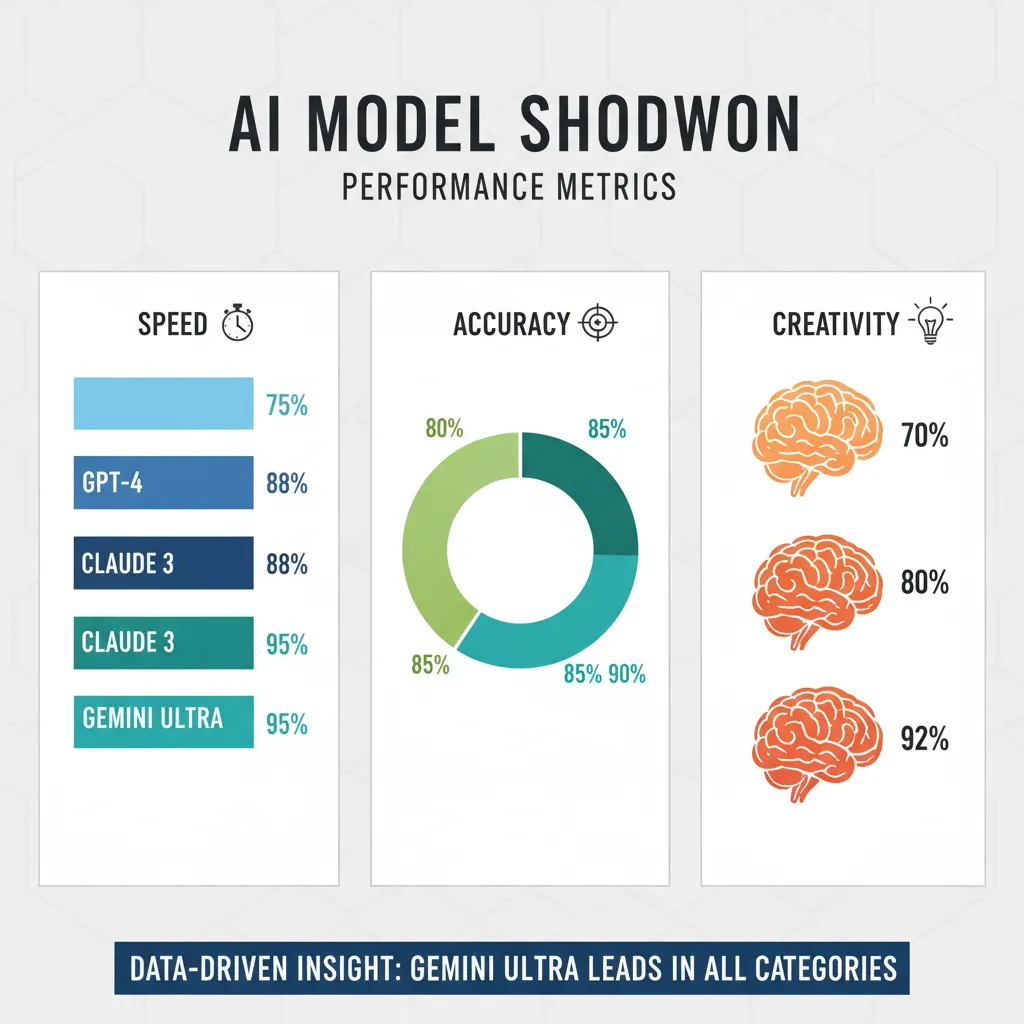
While many models can “see,” Claude 3.5 Sonnet excels at understanding. Its new vision model demonstrates a remarkable leap in interpreting charts, graphs, and complex diagrams. Where other models might falter with low-quality, distorted, or visually complex images, 3.5 Sonnet can accurately transcribe text and extract valuable insights. This is a core component of multimodal AI explained: the ability to seamlessly reason across different data types. For professionals who work with visual data—from medical imaging to financial charts—this is a transformative capability.
The “Artifacts” Feature: A Collaborative Workspace for Creation
Perhaps the most exciting innovation is Artifacts. This new feature transforms the standard chatbot interface into a dynamic, collaborative workspace. When a user asks Claude to generate content like code snippets, text documents, or website designs, that content now appears in a dedicated window next to the conversation.
This is a paradigm shift for AI for content creation:
- Iterative Development: You can see the results of your prompts in real-time and ask for changes, watching the artifact update instantly.
- Seamless Integration: It blurs the line between conversation and creation, allowing users to build upon the AI’s output without copy-pasting between windows.
- Enhanced Productivity: This creates a powerful environment for developers to debug code, writers to draft articles, and designers to prototype layouts. It’s one of the most practical AI efficiency tips built directly into the platform.
Cost-Effectiveness at Scale
By offering intelligence superior to their previous flagship model at a significantly lower price point (around $3 per million input tokens), Anthropic is making high-end AI model performance more accessible. This democratization of power enables startups and individual creators to leverage the same advanced AI that was previously the domain of large corporations, fostering a new wave of innovation.
The Ultimate Showdown: Claude 3.5 Sonnet vs. GPT-4o
The moment a new top-tier model is released, the inevitable question arises: how does it stack up against the competition? The GPT-4o vs Claude 3.5 Sonnet debate is the central conversation in the large language models comparison right now.
Head-to-Head Benchmark Battle
Benchmarks provide a quantitative look at model capabilities. Claude 3.5 Sonnet has set new industry standards across a range of evaluations:
| Benchmark Category | Claude 3.5 Sonnet Performance | Comparison to Competitors |
|---|---|---|
| Graduate-Level Reasoning | Outperforms Claude 3 Opus and GPT-4o. | Sets a new high bar for complex, multi-step problem-solving. |
| Undergraduate Knowledge | Shows significant gains, catching up to top-tier models. | Demonstrates a stronger foundational knowledge base. |
| Coding Proficiency | Solves 64% of problems, a massive jump from Opus’s 38%. | Surpasses GPT-4o in key coding and debugging tasks. |
| Visual Reasoning | State-of-the-art performance, especially on complex charts/graphs. | A clear leader in interpreting nuanced visual data. |
These AI model benchmarks indicate that for tasks requiring sophisticated reasoning, coding, and data interpretation, Claude 3.5 Sonnet has a distinct edge.
The Qualitative Difference: Nuance, Tone, and Safety
Beyond the numbers, users often report a different “feel” between the models. Anthropic has heavily focused on creating a more natural, nuanced, and reliable assistant. Claude is often praised for:
- Writing Style: It can produce more sophisticated and human-sounding prose with less of the generic “AI fluff.”
- Instruction Following: It has a better grasp of complex instructions, tone, and brand voice.
- Ethical Guardrails: Thanks to Anthropic’s focus on ethical AI development, Claude is less prone to generating harmful content or “going off the rails.” This focus on AI assistant privacy and safety is a cornerstone of their philosophy. [Related: AI Revolutionizing Mental Wellness]
The Verdict: Which is the Best AI Assistant in 2024?
The answer is: it depends on your use case.
- Choose Claude 3.5 Sonnet if: Your work involves complex problem-solving, coding, data analysis from charts, and collaborative content creation. The Artifacts feature and superior reasoning make it a powerhouse for professional AI productivity tools.
- Choose GPT-4o if: Your primary need is for real-time, dynamic voice conversations, creative brainstorming, and maximum accessibility across devices. Its conversational interface remains a benchmark for seamless human-AI interaction.
Ultimately, the competition is fantastic for users. We now have two advanced AI chatbots pushing each other to new heights, offering specialized strengths for different tasks.
Beyond the Hype: How Next-Gen AI is Reshaping Our World
The release of models like Claude 3.5 Sonnet and GPT-4o is about more than just a tech headline. It marks an inflection point where AI is becoming woven into the fabric of our personal and professional lives.
The Rise of the True AI Personal Assistant
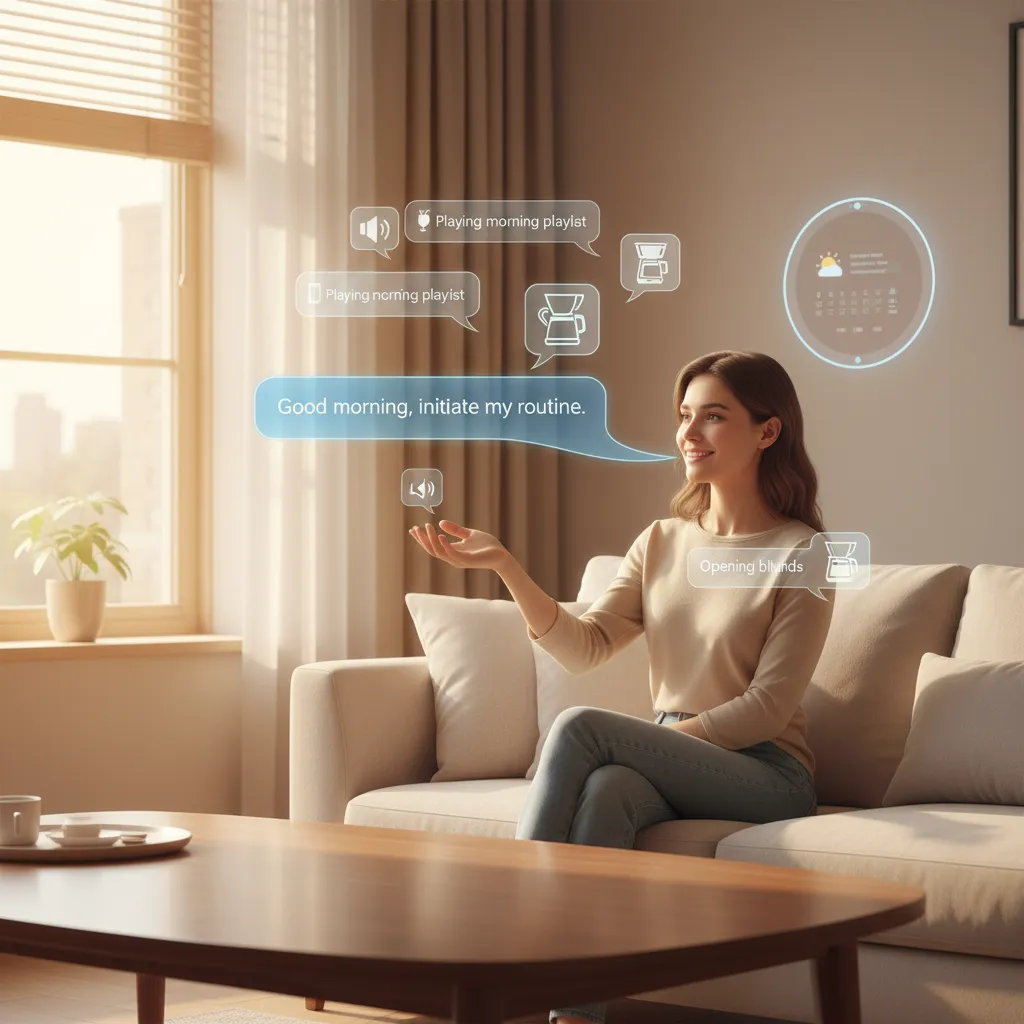
We’re moving from reactive assistants to proactive partners. Soon, your AI won’t just wait for a command; it will anticipate your needs. Imagine an assistant that analyzes your calendar and emails, then drafts a prep-doc for your next meeting, or monitors project management tools and flags potential roadblocks for your team. This is the future of personalized AI experiences, turning data into actionable intelligence.
Revolutionizing Business and Productivity
The impact on business is profound. We’re seeing a fundamental shift in how work gets done.
- AI for Business Communication: AI assistants can draft emails, summarize long meeting transcripts, and even analyze sentiment in customer feedback, freeing up humans for more strategic tasks.
- AI for Content Creation: Marketing teams can generate dozens of ad copy variations in seconds, while writers can overcome writer’s block by brainstorming with a creative AI partner.
- AI for Decision Making: By analyzing vast datasets, these tools can identify market trends, forecast sales, and highlight operational inefficiencies, providing leaders with the insights needed to make smarter choices. [Related: AI-Powered Investing: Robo-Advisors and Wealth Growth]

The Road Ahead: Navigating the Future of Conversational AI
The pace of innovation is not slowing down. As we look toward the AI trends next year, several key themes are emerging that will define the next chapter of this technological revolution.
The Push for Proactive and Autonomous Agents
The next frontier is AI “agents”—autonomous systems that can take multi-step actions on our behalf. Instead of just writing code, an AI agent could be tasked to “build a functional e-commerce website for a local bakery,” and it would then plan the steps, write the code, select hosting, and deploy the site with minimal human intervention. This is one of the most watched emerging AI technologies.
Ethical AI and Guardrails: The Unseen Challenge
With great power comes great responsibility. The development of ever-smarter AI raises critical questions about safety, bias, and privacy. The industry’s commitment to ethical AI development will be crucial. Companies like Anthropic are pioneering research into AI safety to ensure these systems are aligned with human values. Building trust through transparency and robust privacy controls is not just good ethics; it’s good business. [Related: AI Saves Lives: Predicting and Responding to Global Crises]

The Future of AI Chat is Integrated
The future of AI chat is not a standalone app. It’s an ambient, integrated layer across all our digital experiences. Imagine an AI assistant built into your operating system, your car, your glasses, and your work software, all sharing context to provide a seamless and truly personal experience. This is the end goal: to make technology so intuitive that it fades into the background, simply empowering us to be more productive, creative, and connected.
Conclusion: A New Era of Human-AI Collaboration
The arrival of Claude 3.5 Sonnet is more than just another product launch; it’s a testament to the incredible momentum behind the AI revolution. It has not only set new benchmarks for performance and intelligence but has also introduced innovative features like Artifacts that genuinely change how we interact with and create alongside AI.
The rivalry between Anthropic, OpenAI, and other major players is fueling a golden age of AI innovation 2024, bringing powerful, previously unimaginable tools into the hands of millions. We are at the dawn of an era where the best AI assistants will function as true partners, amplifying our own intelligence and creativity.
The journey ahead is filled with both immense promise and significant challenges. But one thing is clear: the future of work, creativity, and daily life is being written in real-time by the very models we’re learning to converse with. We encourage you to explore these tools, test their limits, and discover how they can empower you.
Frequently Asked Questions (FAQs)
Q1. What is Claude 3.5 Sonnet?
Claude 3.5 Sonnet is the latest and most intelligent AI model from Anthropic. It offers performance that surpasses their previous top-tier model, Claude 3 Opus, but at twice the speed and a fraction of the cost, making it a powerful and efficient tool for a wide range of tasks.
Q2. Is Claude 3.5 Sonnet better than GPT-4o?
It depends on the task. According to industry benchmarks, Claude 3.5 Sonnet outperforms GPT-4o in areas like graduate-level reasoning, coding, and interpreting complex visuals like charts. However, GPT-4o often excels in real-time voice conversations and creative brainstorming.
Q3. How much does Claude 3.5 Sonnet cost?
Claude 3.5 Sonnet is significantly more cost-effective than its predecessor. It is available via Anthropic’s API for $3 per million input tokens and $15 per million output tokens, which is one-fifth the cost of Claude 3 Opus. It is also available for free on Claude.ai with generous rate limits.
Q4. What are “Artifacts” in Claude 3.5 Sonnet?
Artifacts is a new feature that creates a dedicated workspace next to the chat window. When you ask Claude to generate content like code, a document, or a design, it appears in this space. You can then interact with, edit, and build upon the AI’s creation in real-time, creating a seamless, collaborative experience.
Q5. What is the main focus of Anthropic’s AI development?
Anthropic’s primary focus is on building safe, reliable, and steerable AI systems. Their research heavily emphasizes ethical AI development and creating constitutional AI principles to ensure their models are aligned with human values and are less prone to generating harmful or biased output.
Q6. How does multimodal AI work?
Multimodal AI explained simply is the ability of an AI model to understand and reason across multiple types of data, or “modalities,” at once. This includes text, images, audio, and video. For example, you could show a model like Claude 3.5 Sonnet a chart (image) and ask it to write a summary of the data trends (text).
Q7. What are the key AI trends for the next year?
The most significant AI trends next year include the development of more autonomous AI agents that can perform multi-step tasks, the integration of AI into operating systems for a more seamless experience, and a continued focus on improving on-device AI for better privacy and speed.