Navigating AI Ethics: Governance, Bias, and Trust in the AI Era
Introduction: The Ethical Imperative in Our AI-Driven World
In an age where artificial intelligence is no longer confined to the realms of science fiction but actively reshaping our daily lives, from how we commute and communicate to how we access healthcare and justice, a profound question emerges: how do we ensure this transformative power is wielded responsibly? The rapid evolution of AI technology has brought with it unprecedented opportunities, but also complex ethical dilemmas. This isn’t merely a theoretical debate for philosophers; it’s a pressing challenge for developers, policymakers, businesses, and citizens alike. The choices we make today about AI ethics and AI governance will profoundly impact the fabric of our societies for decades to come.
This article delves into the critical landscape of responsible AI, exploring the multifaceted ethical AI principles that must guide its development and deployment. We’ll examine the urgent need for robust AI regulation and AI policy to safeguard against potential harms, with a particular focus on insidious issues like AI bias and the paramount importance of data privacy AI. Building trustworthy AI is not just an aspiration but a necessity for widespread adoption and societal benefit. We’ll unpack concepts like AI transparency and explainable AI (XAI), which are crucial for demystifying AI’s inner workings. Furthermore, we’ll discuss the essential role of human-centered AI in ensuring that technology serves humanity, rather than the other way around, considering the broad AI societal impact. Join us as we navigate the intricate pathways to building an ethical and equitable AI future.
The Foundational Pillars of Ethical AI
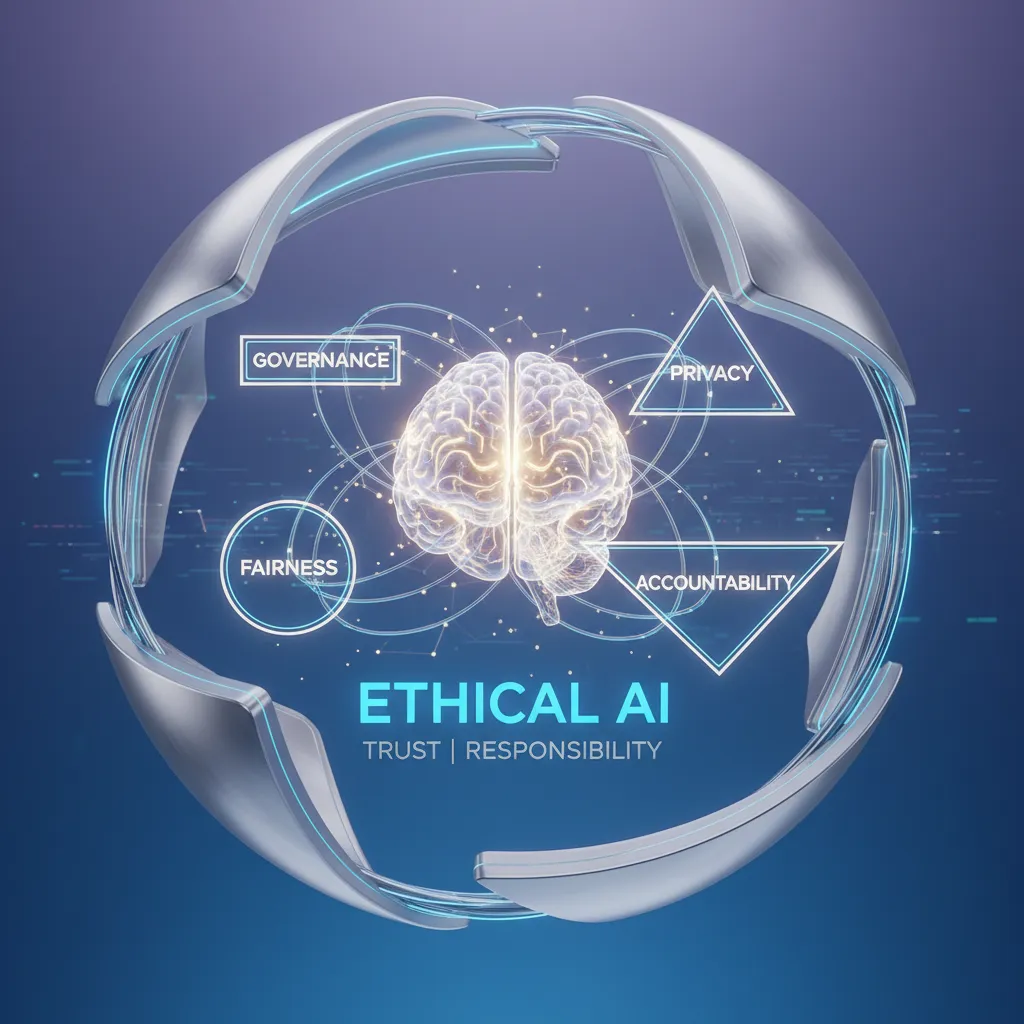
To truly build trustworthy AI, we must first establish a robust set of ethical AI principles. These principles act as a moral compass, guiding the design, development, and deployment of AI systems. While specific formulations may vary, several core tenets consistently emerge as fundamental to a responsible AI framework.
Fairness and Non-discrimination: Confronting AI Bias
Perhaps one of the most visible and concerning ethical challenges in AI today is AI bias. AI systems learn from data, and if that data reflects existing societal biases, the AI will inevitably perpetuate and even amplify them. This can lead to discriminatory outcomes in critical areas like employment, credit scoring, criminal justice, and healthcare. Imagine an AI recruitment tool that inadvertently favors male candidates due to historical hiring data, or a diagnostic AI that performs less accurately for certain demographic groups.
The implications of AI bias are profound, eroding trust and exacerbating existing inequalities. Addressing it requires a multi-pronged approach, including:
- Diverse and Representative Data: Actively seeking out and incorporating data that accurately reflects the diversity of the population.
- Bias Detection and Mitigation Techniques: Developing sophisticated algorithms and methodologies to identify and reduce bias in datasets and models.
- Regular Auditing: Continuously monitoring AI systems for biased outcomes and making necessary adjustments.
Transparency and Explainability (XAI): Unveiling the Black Box
For AI systems to be trusted, they cannot operate as inscrutable “black boxes.” AI transparency and explainable AI (XAI) are vital for fostering confidence and accountability. Transparency refers to understanding how an AI system is built, what data it uses, and what its intended purpose is. XAI goes a step further, aiming to make the decision-making processes of complex AI models understandable to humans. Why did the AI recommend this loan? Why was this medical diagnosis given?
The ability to understand an AI’s reasoning is crucial for:
- Debugging and Improvement: Identifying errors or unintended behaviors.
- Compliance: Meeting regulatory requirements and proving non-discrimination.
- Building User Trust: Empowering users to understand and challenge AI decisions.
- Legal Recourse: Providing a basis for challenging unfair or incorrect automated decisions.
Without XAI, challenging a decision made by an AI can feel like arguing with an invisible force, undermining fundamental notions of fairness and due process.

Accountability and Responsibility: Who is in Charge?
In the event of an AI system causing harm, who is ultimately responsible? This question of accountability AI is central to establishing an AI legal framework. Is it the developer, the deployer, the user, or even the AI itself? Current legal frameworks often struggle with the distributed nature of AI development and the autonomous capabilities of advanced systems.
Establishing clear lines of responsibility is crucial for:
- Assigning Liability: Determining who is legally and morally culpable when things go wrong.
- Incentivizing Ethical Development: Encouraging developers and organizations to prioritize safety and ethical design.
- Fostering Public Trust: Assuring the public that mechanisms exist to address grievances and hold actors responsible.
Many AI ethical frameworks emphasize the need for human oversight and the principle that humans should always retain ultimate control and responsibility for AI systems.
Privacy and Data Protection: Safeguarding Personal Information
AI systems are often voracious consumers of data. The collection, storage, and processing of vast amounts of personal information raise significant concerns about data privacy AI. From facial recognition technologies to personalized advertising algorithms, AI’s ability to analyze and infer sensitive details about individuals necessitates stringent privacy safeguards.
Key considerations include:
- Consent: Ensuring individuals provide informed consent for data collection and usage.
- Anonymization and Pseudonymization: Techniques to protect identities while still allowing data analysis.
- Data Security: Protecting data from breaches and unauthorized access.
- Purpose Limitation: Using data only for its intended purpose and not for secondary, undisclosed uses.
Adhering to regulations like GDPR and CCPA is a critical step, but proactive AI policy must go further to anticipate new privacy challenges posed by evolving AI capabilities. [Related: AI-powered personalized travel planning]
Safety and Reliability: Ensuring AI Works as Intended
An ethical AI system must first and foremost be safe and reliable. This means it should perform its intended function without causing unintended harm to individuals, groups, or infrastructure. The stakes are particularly high in critical applications like autonomous vehicles, medical devices, and defense systems.
Ensuring AI safety and reliability involves:
- Rigorous Testing and Validation: Exhaustive testing across diverse scenarios to identify vulnerabilities.
- Robustness against Adversarial Attacks: Protecting AI models from malicious attempts to manipulate their behavior.
- Continuous Monitoring: Tracking performance and detecting anomalies post-deployment.
- Redundancy and Fail-Safes: Designing systems with backup mechanisms in case of failure.
Human-Centered AI: Keeping Humanity at the Core
Ultimately, AI should serve humanity, augmenting our capabilities and improving our lives. Human-centered AI is an approach that prioritizes human well-being, values, and control throughout the AI lifecycle. This means designing AI that is intuitive, empowering, and respectful of human autonomy. It avoids automating tasks in ways that diminish human skills or critical thinking.
Key aspects of human-centered AI include:
- Empowerment: Designing AI that enhances human capabilities, rather than replacing them entirely.
- Respect for Autonomy: Ensuring humans retain ultimate control and the ability to override AI decisions.
- User Experience: Creating AI interfaces that are understandable and easy to interact with.
- Ethical Impact Assessments: Proactively evaluating the broader AI societal impact before deployment.
Navigating the Complexities: AI Governance in Practice
While ethical principles provide the ‘what,’ AI governance provides the ‘how.’ It’s the framework of policies, processes, and structures designed to ensure that AI systems are developed and used in alignment with ethical principles, legal requirements, and societal expectations. Effective AI governance models are crucial for translating abstract principles into actionable practices.
Defining AI Governance
AI governance encompasses a wide range of activities, from internal corporate policies to international treaties. It’s about creating mechanisms to guide behavior, manage risks, allocate responsibilities, and ensure compliance. Without clear governance, ethical intentions can easily fall by the wayside, leading to unintended consequences or unchecked power.
Key Components of Effective AI Governance
A comprehensive AI governance framework typically includes:
- Organizational Policies and Standards: Internal guidelines that dictate how AI is developed, procured, and deployed within an organization. These cover data handling, bias mitigation, transparency requirements, and internal AI auditing processes.
- Legal and Regulatory Frameworks: Laws and regulations enacted by governments to control AI development and use. This is where AI regulation and AI legal framework become critical, setting minimum standards for everything from data privacy to liability.
- Ethical Oversight Bodies: Independent committees or internal review boards responsible for assessing the ethical implications of AI projects.
- Risk Management Frameworks: Structured approaches to identify, assess, and mitigate AI risk management associated with AI systems, including technical, ethical, and societal risks.
- Impact Assessments: Tools like AI impact assessment that evaluate the potential positive and negative effects of an AI system on individuals, groups, and society before it is deployed.
Global AI Standards and Collaboration
The challenges posed by AI are global, demanding a collaborative response. Different nations and international bodies are working to establish global AI standards and harmonized ethical guidelines AI.
- European Union (EU) AI Act: This landmark proposed regulation aims to classify AI systems by risk level, imposing strict requirements on high-risk AI (e.g., in critical infrastructure, law enforcement, education, employment). It emphasizes human oversight, robustness, safety, transparency, and non-discrimination.
- NIST AI Risk Management Framework (USA): Developed by the U.S. National Institute of Standards and Technology, this voluntary framework provides guidance for managing risks associated with designing, developing, deploying, and using AI. It focuses on identifying, measuring, and managing AI risks to promote trustworthy AI.
- UNESCO Recommendation on the Ethics of AI: Adopted by 193 member states, this non-binding recommendation provides a global standard-setting instrument for ethical considerations AI, covering areas like human rights, environmental protection, and gender equality.
These initiatives represent significant steps towards a shared understanding of AI ethical frameworks and the collective responsibility to manage AI’s impact. [Related: Quantum AI Unleashed: Reshaping Intelligence & Innovation]

AI Risk Management and Impact Assessments
A proactive approach to AI risk management is fundamental to responsible AI. This involves not just identifying technical vulnerabilities but also anticipating broader societal harms. AI impact assessment tools help organizations systematically evaluate the potential positive and negative consequences of their AI systems.
These assessments typically consider:
- Human Rights: Does the AI infringe on fundamental rights like privacy, freedom of expression, or non-discrimination?
- Societal Impact: How might the AI affect employment, social cohesion, democratic processes, or the environment?
- Economic Impact: What are the potential economic benefits and drawbacks, including market concentration or workforce displacement?
- Ethical Alignment: Does the AI align with the organization’s stated ethical principles and societal values?
By conducting thorough AI impact assessment before deployment, organizations can identify and mitigate risks, design for fairness, and ensure their AI initiatives contribute positively to society.
Internal vs. External Governance Models
AI governance models can broadly be categorized into internal (within an organization) and external (governmental, international).
- Internal Governance: This involves establishing an AI ethics board or committee, appointing an AI ethics officer, developing internal codes of conduct, and implementing AI auditing processes. Companies like Google, IBM, and Microsoft have established internal AI ethics committees to guide their development.
- External Governance: This includes national AI regulation, international treaties, and multi-stakeholder initiatives involving governments, industry, academia, and civil society. The EU AI Act is a prime example of external AI legal framework.
Both internal and external governance are essential. Internal mechanisms allow for agility and integration into product development, while external frameworks provide overarching safeguards and a level playing field. Achieving AI compliance requires navigating both spheres effectively.
Battling Bias: A Core Challenge for Fair AI
The persistent shadow of AI bias remains one of the most significant ethical considerations AI faces. It’s not a mere technical glitch but a deep-seated issue reflecting societal inequalities, embedded within the very data that fuels our intelligent systems. Understanding its origins and impact is the first step towards building genuinely fairness in AI.
Sources of AI Bias: Where Does It Come From?
AI bias can creep into systems at multiple stages:
- Data Collection Bias:
- Historical Bias: Data reflecting past discriminatory practices (e.g., historical loan approvals showing bias against certain demographics).
- Sampling Bias: Data not being representative of the target population (e.g., facial recognition trained predominantly on lighter-skinned male faces).
- Measurement Bias: Inconsistent or inaccurate data collection methods that disproportionately affect certain groups.
- Algorithmic Bias:
- Design Choices: The choices made by developers in how algorithms learn or optimize, which can inadvertently amplify biases present in the data.
- Feature Selection: What data points the algorithm is told to prioritize or ignore can lead to biased outcomes.
- Human Bias:
- Developer Bias: The unconscious biases of the people designing, coding, and testing AI systems can subtly influence their choices.
- Deployment Bias: How an AI system is used or interpreted by humans in real-world scenarios can introduce bias, even if the system itself is fair.
A famous example is Amazon’s experimental recruiting tool, which was found to be biased against women because it was trained on historical data from job applications, predominantly from men in the tech industry. This underscores how real-world biases get encoded into algorithms.
Impact of Bias: Erosion of Trust and Exacerbation of Inequality
The consequences of AI bias extend far beyond mere inconvenience. They can lead to:
- Discrimination: Denying opportunities (jobs, loans, housing) or services to individuals based on their race, gender, age, or other protected characteristics.
- Misinformation and Amplification of Stereotypes: AI-generated content or recommendations reinforcing harmful stereotypes.
- Reduced Public Trust: When people experience unfair or inexplicable decisions from AI, their trust in the technology, and the institutions using it, plummets. This is a critical barrier to trustworthy AI.
- Legal and Reputational Damage: Organizations deploying biased AI face legal challenges, regulatory fines, and severe reputational harm.
- Ethical Concerns: Fundamentally, biased AI undermines principles of justice, equality, and human dignity, core to AI and human rights.
Strategies for Mitigating Bias: A Proactive Approach
Mitigating AI bias requires constant vigilance and a proactive strategy throughout the AI lifecycle:
- Data Auditing and Curation:
- Thoroughly examine training data for underrepresentation, stereotypes, or historical biases.
- Employ data augmentation techniques to balance datasets where necessary.
- Regularly update and review data sources to ensure continued relevance and fairness.
- Algorithm Design and Development:
- Integrate fairness in AI metrics directly into the model training and optimization process.
- Utilize techniques like “fairness constraints” or “adversarial debiasing.”
- Promote diversity within AI development teams to bring varied perspectives.
- Transparency and Explainability (XAI):
- Implement explainable AI (XAI) techniques to understand why an AI made a particular decision. This allows for easier identification of bias.
- Document all design choices, data sources, and known limitations of the AI system.
- Continuous Monitoring and Auditing:
- Post-deployment, continuously monitor AI systems for disparate impact across different demographic groups.
- Conduct regular AI auditing by independent third parties to assess fairness and identify new biases.
- Establish feedback loops to allow users to report perceived biases or unfair outcomes.
- Legal and Regulatory Frameworks:
- Develop AI legal framework that explicitly prohibits discriminatory AI and provides avenues for redress.
- Enforce AI compliance with non-discrimination laws in the context of AI.
The battle against bias is ongoing, but with concerted effort across data scientists, ethicists, policymakers, and user communities, we can move closer to achieving fairness in AI. [Related: Streamlining Supply Chains: AI Revolutionizing Logistics Efficiency]
Building Trust in the AI Era: The Cornerstone of Adoption
For AI to truly realize its potential as a force for good, it must be embraced and trusted by society. Without trust, even the most innovative AI solutions will face resistance, limiting their positive AI societal impact. Building trustworthy AI is therefore not a secondary consideration but a core pillar of its sustainable development.
The Role of Transparency and Explainability
As discussed earlier, AI transparency and explainable AI (XAI) are paramount in fostering trust. When users and stakeholders can understand how an AI system works, what data it uses, and the rationale behind its decisions, they are more likely to accept and trust its outputs. Imagine a doctor explaining a diagnosis given by an AI – if the AI’s reasoning is clear, the doctor (and patient) can have greater confidence.
- Open Communication: Organizations must be transparent about the capabilities and limitations of their AI systems.
- Clear Explanations: Providing explanations that are understandable to the target audience, whether they are experts or the general public.
- Auditability: Allowing for independent review of AI systems to verify their fairness, accuracy, and adherence to ethical standards.
User Empowerment and Control
Human-centered AI principles dictate that users should remain in control. This means designing AI systems that empower users, rather than disempowering them.
- Opt-out Options: Giving users the ability to opt-out of AI-driven recommendations or decisions where appropriate.
- Human Override: Ensuring that humans can always override or intervene in autonomous AI decisions, especially in high-stakes scenarios.
- Feedback Mechanisms: Providing clear channels for users to provide feedback on AI performance or perceived issues, which can then be used to improve the system.
This concept resonates with the idea that AI should be a tool that augments human intelligence, not a replacement that diminishes human agency. [Related: The Rise of AI Personal Assistants: Automate Your Life & Boost Productivity]

Ethical AI Auditing and Compliance
Regular AI auditing is a critical mechanism for verifying the ethical performance of AI systems. These audits can be internal or external and should assess an AI’s adherence to ethical AI principles, AI regulation, and internal AI policy.
Key aspects of ethical AI auditing include:
- Bias Audits: Systematically checking for discriminatory outcomes across different demographic groups.
- Performance Audits: Ensuring the AI performs as expected and reliably.
- Security Audits: Identifying vulnerabilities that could be exploited.
- Privacy Audits: Verifying that data handling practices comply with data privacy AI regulations and ethical standards.
- Impact Audits: Reviewing the broader AI societal impact over time.
For industries with high stakes, AI compliance becomes a non-negotiable aspect of operation. This often involves demonstrating adherence to specific AI legal framework and industry standards, proving that due diligence has been exercised.
Public Engagement and Education
Building trust also requires proactive public engagement and education. Many people are unfamiliar with how AI works, leading to misconceptions or undue fear.
- Demystifying AI: Explaining AI concepts in accessible language.
- Highlighting Benefits and Risks: Presenting a balanced view of AI’s potential, acknowledging both its opportunities and its challenges.
- Fostering Dialogue: Creating platforms for public discourse on ethical considerations AI and the future of AI governance.
By involving the public in the conversation, we can collectively shape a more informed and trusted future for AI.
The Future of AI Ethics and Governance: Adapting to Rapid Change
The journey of navigating AI ethics is dynamic and ever-evolving. As AI technology advances at an incredible pace, new challenges and complexities emerge, demanding continuous adaptation in our approaches to AI governance and responsible AI. The future of AI governance will be characterized by agility, foresight, and unprecedented levels of international cooperation.
Emerging Challenges: Beyond Today’s Horizon
While we grapple with current issues like bias and transparency, the horizon of AI presents even more intricate ethical dilemmas:
- General Artificial Intelligence (AGI): The theoretical development of AI with human-level cognitive abilities or beyond raises profound questions about sentience, rights, and humanity’s role.
- Deepfakes and Synthetic Media: The increasing sophistication of AI in generating highly realistic fake images, audio, and video poses severe threats to truth, trust, and democratic processes. AI transparency tools will be crucial to detect and label such content.
- Autonomous Weapon Systems (AWS): The development of “killer robots” that can select and engage targets without human intervention sparks intense debate about human control, accountability, and the very definition of war. This is a critical area for AI safety.
- Pervasive AI and Surveillance: The widespread deployment of AI in surveillance technologies and public spaces raises concerns about privacy, civil liberties, and the potential for oppressive regimes. Data privacy AI will be under constant scrutiny.
- Algorithmic Collusion: The possibility of AI systems independently discovering ways to collude in markets, potentially leading to anti-competitive practices without human intent.
These emerging challenges underscore the need for anticipatory AI ethical frameworks and robust AI legal framework that can adapt to unforeseen technological advancements. [Related: The Rise of AI Copilots: Revolutionizing Work, Boosting Creativity, Driving Innovation]
The Need for Adaptive Frameworks and Global Collaboration
Traditional regulatory approaches often lag behind technological innovation. For AI, this gap is even more pronounced. The future of AI governance will require:
- Agile Regulation: Regulatory sandboxes, soft law approaches (like guidelines and codes of conduct), and continuous review mechanisms that can adapt rapidly to technological shifts.
- Multi-Stakeholder Approaches: Solutions will not come from governments alone. They require active collaboration between governments, industry, academia, civil society, and the public. This ensures a holistic understanding of AI societal impact and fosters broader buy-in.
- International Harmonization: Given AI’s borderless nature, global AI standards and coordinated regulatory efforts are essential to prevent a fragmented landscape and regulatory arbitrage. Organizations like the UN, OECD, and G7/G20 will play increasingly important roles in shaping global AI standards.
- Education and Literacy: A digitally literate populace, informed about AI’s capabilities and risks, is crucial for fostering democratic debate and ethical oversight.
The ongoing development of AI governance models and ethical guidelines AI highlights a growing global consensus on the importance of human values at the core of AI development.
AI and Human Rights: A Constant Safeguard
At the heart of all ethical considerations AI lies the protection and promotion of AI and human rights. Every principle, from fairness and privacy to accountability and transparency, ultimately serves to safeguard individual dignity, autonomy, and well-being. As AI becomes more integrated into systems that directly affect human lives, ensuring its compatibility with human rights will be the ultimate measure of its ethical success. This includes:
- Non-discrimination: Ensuring AI does not create or perpetuate discrimination based on protected characteristics.
- Due Process: Guaranteeing the right to an explanation and challenge when AI makes significant decisions.
- Freedom of Expression: Protecting against censorship or manipulation through AI.
- Right to Privacy: Upholding the individual’s right to control their personal data.
The conversation around AI and law will increasingly focus on how existing human rights frameworks can be effectively applied and adapted to the unique challenges posed by AI.
Conclusion: Shaping a Responsible AI Future Together
The journey to navigating AI ethics: governance, bias, and trust in the AI era is a complex yet crucial undertaking. We stand at a pivotal moment where the choices we make will determine whether AI becomes a powerful tool for human progress or a source of unforeseen societal challenges. From the insidious dangers of AI bias and the critical need for data privacy AI to the foundational principles of explainable AI (XAI) and human-centered AI, every aspect demands our attention.
Building trustworthy AI isn’t just a technical problem to be solved by algorithms; it’s a societal responsibility requiring a collaborative effort from technologists, ethicists, policymakers, businesses, and the public. By establishing robust AI governance frameworks, enacting intelligent AI regulation, and adhering to comprehensive ethical AI principles, we can ensure that AI systems are developed with fairness in AI, accountability AI, and a deep respect for AI and human rights. The future of AI governance hinges on our collective commitment to continuous learning, adaptation, and proactive engagement. Let’s work together to steer AI towards a future that is not only innovative but also equitable, safe, and truly beneficial for all.
FAQs
Q1. What is AI ethics?
AI ethics refers to the branch of ethics that studies the moral principles and values that should guide the design, development, deployment, and use of artificial intelligence systems. It addresses questions of fairness, accountability, transparency, privacy, and the broader societal impact of AI.
Q2. Why is AI governance important?
AI governance is important because it provides the practical frameworks, policies, and structures necessary to translate ethical AI principles into actionable practices. It helps manage risks, ensure compliance with laws and standards, assign responsibility, and foster public trust in AI technologies.
Q3. How can AI bias be prevented or mitigated?
AI bias can be mitigated through several strategies, including using diverse and representative training data, employing bias detection and mitigation algorithms, conducting regular AI audits, implementing explainable AI (XAI) techniques, and fostering diversity within AI development teams.
Q4. What is the role of explainable AI (XAI) in building trust?
Explainable AI (XAI) enhances trust by making the decision-making processes of AI systems understandable to humans. When users can comprehend why an AI made a particular decision, they are more likely to trust its outputs, identify potential errors, and hold developers accountable.
Q5. What are some examples of global AI standards or regulations?
Key examples include the European Union’s proposed AI Act, which classifies AI by risk level and imposes strict requirements; the NIST AI Risk Management Framework from the U.S., a voluntary guideline for managing AI risks; and the UNESCO Recommendation on the Ethics of AI, a global standard-setting instrument for ethical AI development.
Q6. What does “human-centered AI” mean?
Human-centered AI is an approach to AI development that prioritizes human well-being, values, and control. It aims to design AI systems that augment human capabilities, respect human autonomy, and ensure that humans retain ultimate oversight and the ability to intervene in AI decisions.
Q7. How does AI impact data privacy?
AI significantly impacts data privacy because it often requires vast amounts of personal data for training and operation. This raises concerns about how data is collected, stored, processed, and used, necessitating strict adherence to principles like consent, anonymization, data security, and purpose limitation to protect individual privacy.
Q8. What is the difference between AI ethics and AI law?
AI ethics deals with the moral principles and values that should guide AI, often extending beyond what is legally mandated. AI law, or the AI legal framework, refers to the set of enforceable rules and regulations governing AI, often codified from ethical principles into legal requirements that ensure AI compliance. Ethics informs law, but law sets the minimum standard.