Multimodal AI for Creatives: Unleashing New Horizons in Art, Design, and Content
Introduction
We are standing at the precipice of a new creative renaissance, and its engine isn’t a brush, a camera, or a pen—it’s an algorithm. For years, artificial intelligence has been a fascinating but often siloed tool. A writer might use an AI to check grammar, a musician to master a track, or a designer to find color palettes. But the walls between these creative domains are crumbling, thanks to the rise of multimodal AI.
Imagine describing a scene in words and watching it materialize as a photorealistic image, a cinematic video clip, or even a complete musical score that captures the mood perfectly. This is not science fiction; it’s the reality of multimodal AI. These powerful systems can understand, interpret, and generate content across various formats—text, images, audio, and video—from a single prompt. This shift is fundamentally redefining the AI creative workflow and unlocking unprecedented levels of AI artistic expression.
For creatives, this isn’t a story about replacement; it’s a story of empowerment. This guide will explore the transformative impact of multimodal AI on the creative industries. We’ll dive into the specific ways generative AI art, AI music generation, and AI video creation are changing the game. You’ll discover the most innovative creative AI tools available today and learn how to integrate them into your process to amplify your vision, streamline your work, and explore entirely new forms of creativity.
What Exactly Is Multimodal AI? The New Creative Engine
Before we explore its applications, it’s crucial to understand what makes multimodal AI so revolutionary. For the longest time, AI models were unimodal. A model like the original GPT was a language specialist—it only understood and generated text. A separate model might be trained to recognize images. They lived in different digital worlds and spoke different languages.
Multimodal AI breaks down these barriers. The term “modality” simply refers to a type of data or a way of experiencing information, like sight (images, video) or sound (audio, music). A multimodal model is fluent in several of these modalities simultaneously.
Think of it this way: a unimodal AI is like a brilliant pianist who can only play the piano. A multimodal AI is a polymath artist who can not only play the piano but also paint a picture inspired by the music, write a poem about the painting, and direct a short film that brings it all together.
This ability to translate ideas seamlessly between formats is the core of its power. Models like Google’s Gemini and OpenAI’s GPT-4o can look at a picture of a guitar and not only identify it as a “guitar” (text) but also generate a piece of music (audio) that could be played on it. This deep, contextual understanding across different data types is what fuels the explosion of AI innovation creativity. It’s the technology that allows a simple text prompt to become a complex, multi-faceted piece of art.
Related: GPT-4o: What Is OpenAI’s New, Free AI Model?
The Canvas Reimagined: AI’s Impact on Visual Arts and Design
Perhaps the most visible and widely discussed application of creative AI is in the visual domain. From fine art to corporate branding, AI is reshaping what’s possible and how quickly it can be achieved.
Generative AI Art: From Text Prompts to Masterpieces
The concept of text to image AI has captured the public imagination like few technologies before it. Tools like Midjourney, DALL-E 3, and Stable Diffusion have empowered millions to become visual creators. The process, known as “prompt engineering,” is an art form in itself, where artists use descriptive language to guide the AI toward a specific vision.
This isn’t just about creating pretty pictures. AI in art is enabling new forms of expression:
- Conceptual Exploration: Artists can generate dozens of variations on a theme in minutes, rapidly iterating on ideas that would have taken days to sketch.
- Style Blending: An artist can ask for an image in “the style of Van Gogh mixed with cyberpunk futurism,” creating unique aesthetic hybrids.
- Surrealism and Abstraction: AI models aren’t bound by the laws of physics or traditional composition, making them incredible tools for creating dreamlike and abstract imagery.
For AI for digital artists, these tools are becoming as essential as a Wacom tablet or Adobe Photoshop. They are used for generating background assets, creating character concepts, and providing inspiration when facing a creative block.
Revolutionizing Graphic Design with AI
Beyond fine art, AI graphic design is bringing a new level of efficiency and innovation to the commercial world. The modern designer’s toolkit is rapidly expanding with AI-powered features that accelerate and enhance the entire design process.
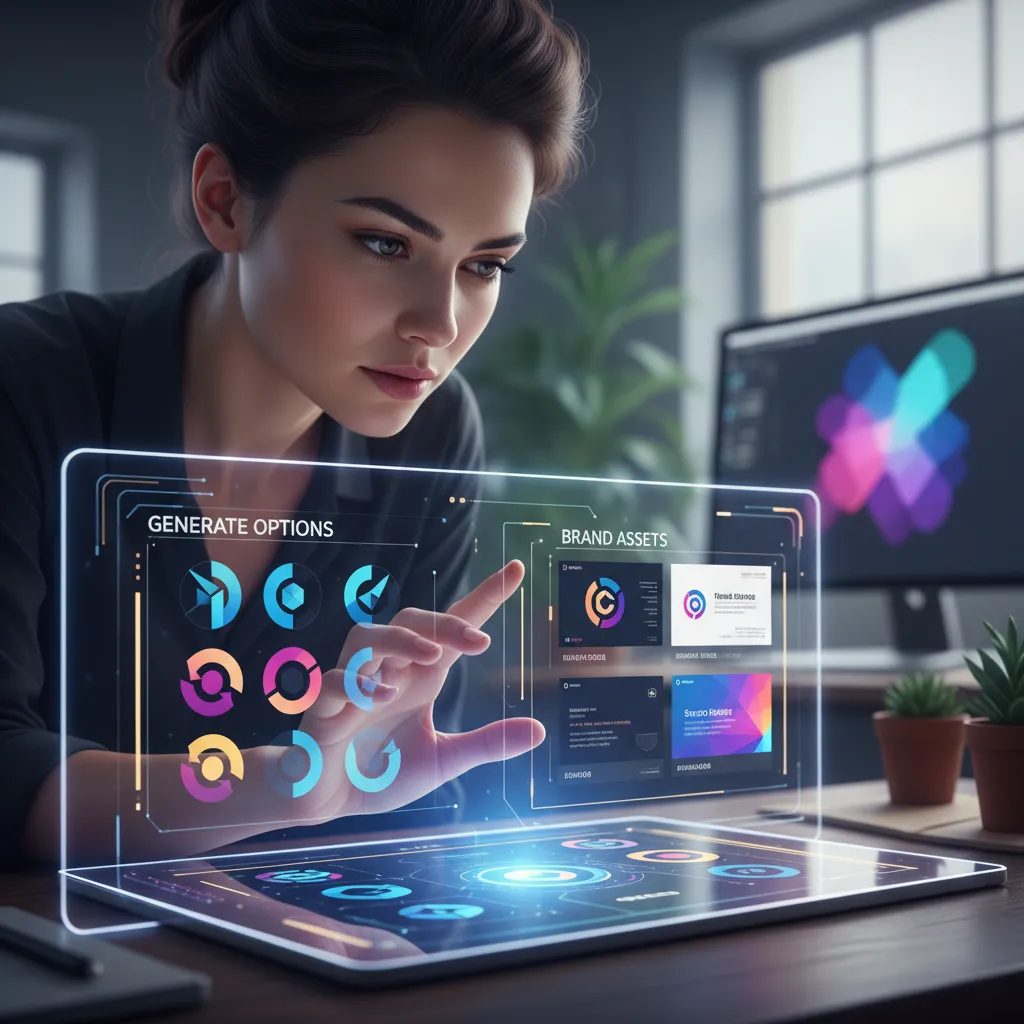
Platforms like Adobe Firefly (integrated into Photoshop and Illustrator) and Canva’s Magic Studio are prime examples. They don’t just generate images; they understand design principles. A designer can now:
- Generate Vector Graphics: Create scalable logos, icons, and illustrations from simple text descriptions.
- Use Generative Fill: Seamlessly add, remove, or expand elements within an existing image without complex manual editing.
- Create Template Variations: Instantly generate multiple layouts and color schemes for a social media post or ad campaign, tailored to different platforms.
- Automate Branding: Develop entire brand kits, including logos, fonts, and color palettes, based on a few keywords describing the company’s ethos.
This represents a fundamental shift in the AI creative workflow. Mundane and repetitive tasks are automated, allowing designers to focus on high-level strategy, client communication, and the core creative vision. The AI design software of today acts as a powerful, tireless junior designer.
Related: The XAI Revolution: Demystifying AI Decisions for Trust & Transparency
The Sound of Silicon: AI Music and Audio Generation
The creative revolution of multimodal AI extends far beyond visuals. The world of audio, from soaring film scores to crystal-clear podcast narration, is being profoundly transformed.
AI Music Generation: Your Personal Composer
For decades, creating original music required years of training in music theory and instrumental proficiency. AI music generation tools are democratizing this process, turning anyone with an idea into a composer.
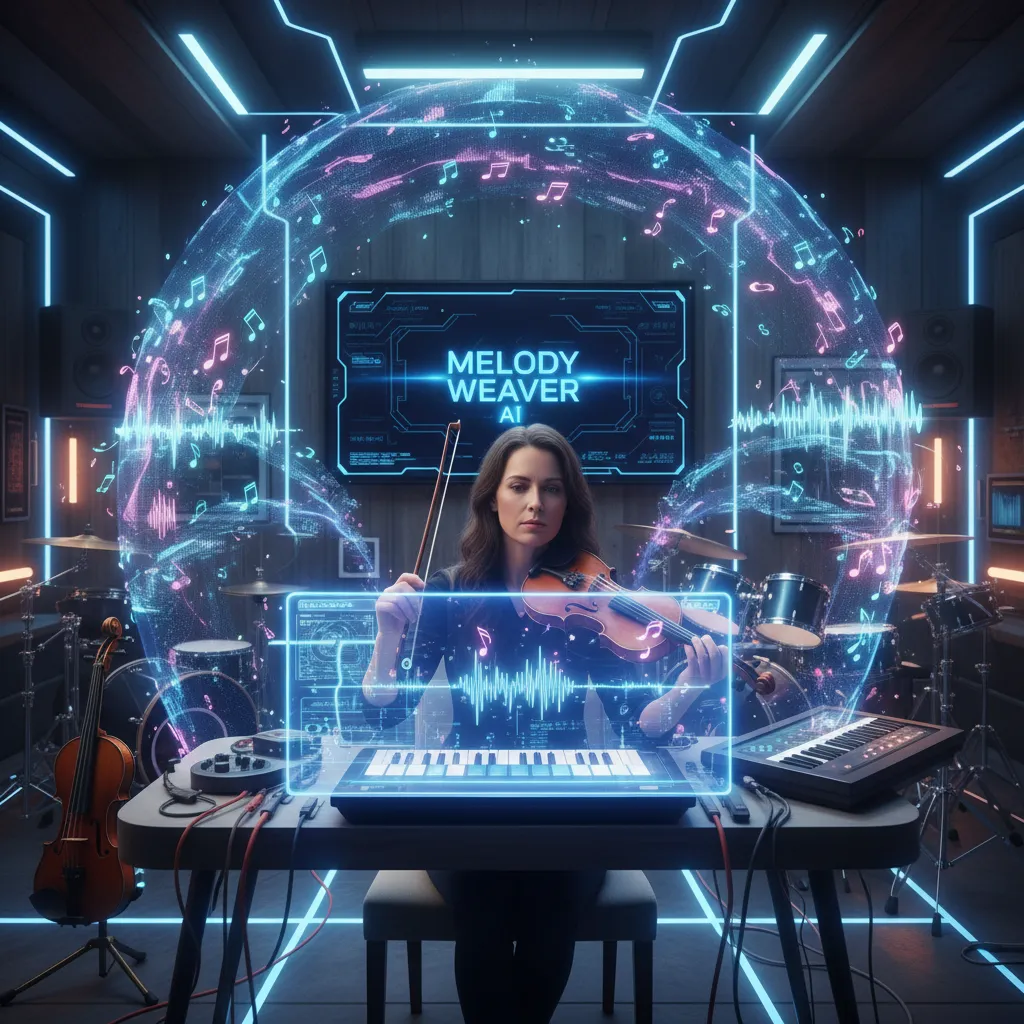
AI music composers like Suno and Udio can generate full-length songs—complete with vocals, lyrics, and complex instrumentation—from a simple text prompt like, “a soulful blues track about a rainy day in Chicago.” This new AI creative tech has staggering implications:
- For Content Creators: YouTubers, podcasters, and filmmakers can generate perfectly-themed, royalty-free background music in seconds, eliminating licensing headaches.
- For Musicians: Professional artists use these tools as a source of inspiration, generating new chord progressions, melodic ideas, or rhythmic patterns to overcome creative blocks.
- For Game Developers: Indie game developers can create entire dynamic soundtracks that adapt to a player’s actions without hiring a full orchestra.
Beyond Music: AI in Podcasting and Voiceovers
The impact of AI on audio isn’t limited to music. The quality of text-to-speech (TTS) has become virtually indistinguishable from human narration. Tools like ElevenLabs allow creators to generate realistic voiceovers in multiple languages or even create a digital clone of their own voice for consistent branding.
Furthermore, tools like Adobe Podcast’s “Enhance Speech” feature use AI to remove background noise and echo from recordings, making professional-grade audio accessible to anyone with a microphone. This dramatically lowers the barrier to entry for creating high-quality podcasts, audiobooks, and video narration.
Related: Google I/O 2024: The Biggest AI Announcements
The Director’s New Assistant: AI-Powered Video Creation
If a picture is worth a thousand words, a video is worth a million. Video creation has traditionally been the most complex, expensive, and time-consuming creative endeavor. AI video creation is poised to change that equation forever.
The Rise of Text-to-Video AI
The latest frontier in multimodal AI is text to video AI. Models like OpenAI’s Sora, Luma AI’s Dream Machine, and Kling have demonstrated the ability to create high-fidelity, coherent video clips from text prompts. While the technology is still in its early stages and primarily produces short clips, its trajectory is clear.
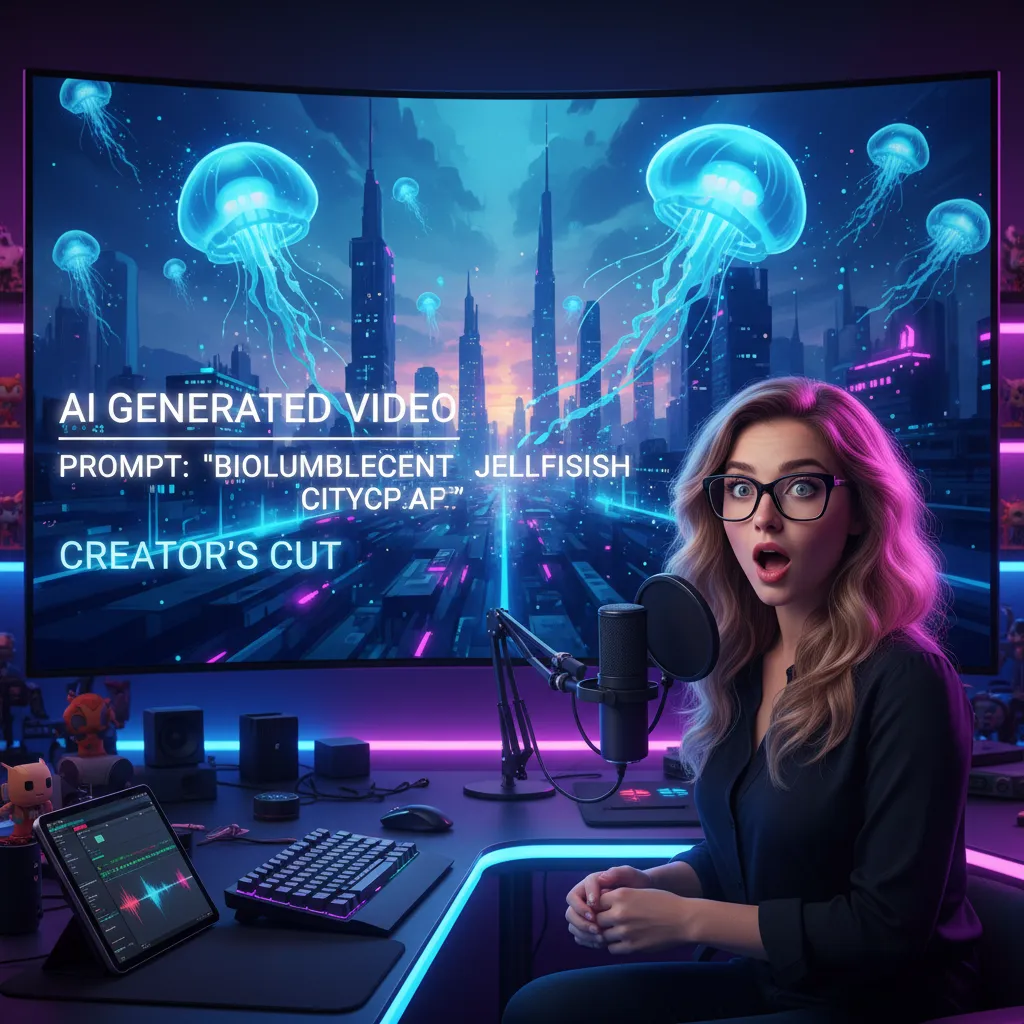
The potential use cases are immense:
- Marketing & Advertising: Generating quick, eye-catching product videos for social media ads.
- Storyboarding & Pre-visualization: Filmmakers can bring scenes from a script to life in seconds, helping them visualize shots and sequences before a single frame is shot.
- Education & Explainers: Creating animated explainer videos to simplify complex topics.
As these models mature, they will become indispensable AI storytelling tools, enabling independent creators to produce cinematic content that was once the exclusive domain of major studios.
AI Tools Enhancing the Entire Video Workflow
Beyond pure generation, AI is being woven into every step of the video production pipeline. This is a prime example of AI augmented creativity in action.
- AI-Powered Editing: Tools like Descript allow you to edit video by simply editing the text transcript. Deleting a sentence in the text automatically cuts the corresponding video and audio.
- Automated Color Grading: AI can analyze footage and apply professional color grades with a single click, ensuring a consistent look and feel.
- Smart Clip Selection: Platforms can analyze hours of raw footage and automatically suggest the most compelling takes, saving editors countless hours of manual review.
- Automated Subtitling and Translation: Reaching a global audience is easier than ever with AI that can accurately transcribe and translate video content into dozens of languages.
Wordsmiths in the Digital Age: AI in Writing and Content Generation
While visual and audio AI often steal the headlines, the revolution in text generation continues to accelerate, offering powerful new capabilities for writers, marketers, and storytellers.
Beyond Grammar Checks: AI as a Creative Writing Partner
The modern AI writing assistant creative tool is far more than a spellchecker. For creative writers, AI models like ChatGPT, Claude, and Jasper are invaluable partners in the creative process. They can:
- Brainstorm Ideas: Generate plot points, character names, or dialogue options when you’re stuck.
- Outline Complex Narratives: Help structure a novel, screenplay, or long-form article.
- Explore Different Styles: Rewrite a paragraph in a more formal, humorous, or poetic tone.
- Overcome Writer’s Block: Simply conversing with the AI about your project can often spark the insight needed to get the words flowing again.
These AI storytelling tools don’t write for you; they write with you, acting as a tireless sounding board and creative collaborator.
AI for Marketing Content: Personalization at Scale
In the world of marketing, AI content generation is enabling a new era of hyper-personalization. The impact of AI in marketing content is twofold: efficiency and effectiveness.
Marketers use AI to:
- Generate SEO-Optimized Content: Create drafts for blog posts, product descriptions, and landing pages that are optimized for search engines.
- Craft Social Media Campaigns: Produce dozens of variations of ad copy and social media posts tailored to different platforms and target audiences.
- Personalize Email Marketing: With personalized content AI, businesses can dynamically alter email content based on a user’s past behavior, location, or expressed interests, leading to significantly higher engagement.
Related: AI in Customer Experience: The Ultimate Guide to Personalization & Engagement
The Human-AI Collaboration: Navigating the Future of Creative Jobs
The rapid advancement of creative AI inevitably raises a critical question: What is the future of creative jobs? The narrative of “AI replacement” is a common fear, but the reality is shaping up to be far more nuanced and, for many, more exciting.
From Replacement to Augmentation: The New Creative Workflow
The dominant trend is not replacement but AI augmented creativity. AI is becoming a powerful tool that automates tedious tasks and amplifies human talent. Graphic designers won’t be replaced; designers who refuse to use AI will be replaced by those who do.
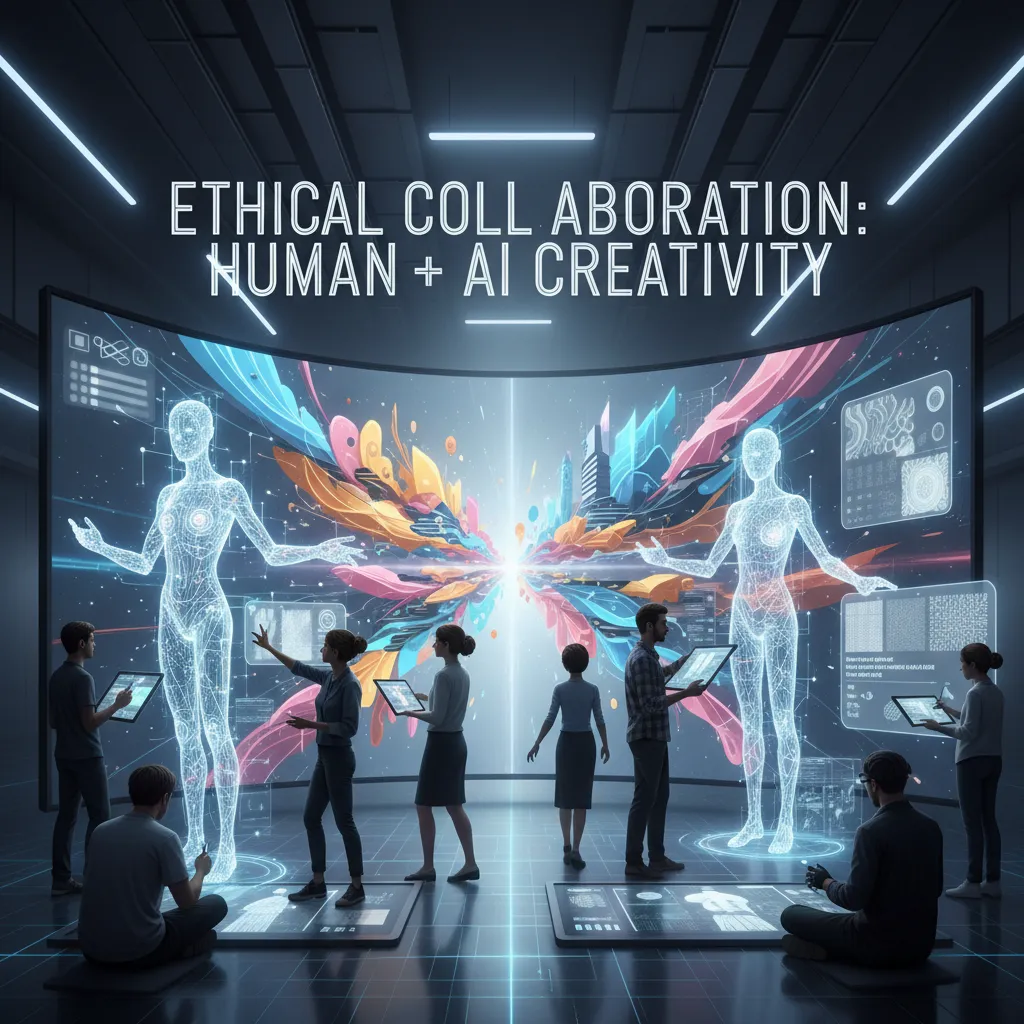
This shift is creating a new AI creative workflow and even new job titles:
- AI Prompt Engineer: A creative who specializes in crafting the perfect text prompts to elicit specific results from generative AI.
- Creative AI Director: An artist who oversees the entire creative process, guiding both human and AI contributors to achieve a unified vision.
- AI Ethics Consultant: A specialist who helps creative agencies navigate the complex legal and ethical landscape of using AI-generated content.
The creative professional of the future will be a curator, a director, and a visionary, using AI to execute their ideas at a scale and speed previously unimaginable.
Ethical AI and the Creative Industry: A Necessary Dialogue
With great power comes great responsibility. The AI creative industry impact brings a host of ethical challenges that must be addressed. The conversation around ethical AI creativity is ongoing and vital.
Key issues include:
- Copyright and Ownership: Who owns an AI-generated image? The user who wrote the prompt, the company that created the AI, or the owners of the data the AI was trained on? The legal frameworks are still catching up.
- Data Provenance: Many early AI models were trained by scraping billions of images from the internet without the original creators’ consent. Ethically-sourced models, like Adobe Firefly (trained on Adobe’s stock library), are becoming a key differentiator.
- Style Imitation and “Deepfakes”: The ability of AI to perfectly mimic an artist’s style or create photorealistic fake images and videos raises serious concerns about plagiarism, misinformation, and fraud.
- Bias: AI models can inherit and amplify biases present in their training data, leading to stereotypical or non-inclusive outputs.
Navigating this landscape requires transparency from AI companies and a commitment from creatives to use these powerful tools responsibly.
Related: Apple Intelligence: Your Guide to Apple’s New AI Features
Conclusion
The era of multimodal AI is not a distant future; it’s happening right now. It is dismantling the traditional boundaries between creative disciplines and forging a new paradigm of human-machine collaboration. From the solo digital artist exploring impossible worlds to the global marketing team personalizing content for millions, AI for creativity is the single most significant technological shift of our generation.
This is not the end of human creativity. It’s the start of its next chapter. The tools are more accessible, the workflows are more efficient, and the potential for innovation is limitless. The challenge now lies not in fearing the technology, but in mastering it. By embracing creative AI tools with curiosity, a critical eye, and a commitment to ethical use, we can unlock new frontiers of artistic expression and storytelling.
The blank page is more exciting than ever. What will you create with it?
Frequently Asked Questions (FAQs)
Q1. Will AI replace creative jobs?
No, the consensus is that AI will augment and transform creative jobs rather than replace them. It will automate repetitive tasks, allowing humans to focus on high-level strategy, ideation, and emotional intelligence. New roles centered on managing the human-AI creative workflow are already emerging.
Q2. What is the main benefit of using multimodal AI in creative projects?
The primary benefit is the seamless integration of different creative formats. A single idea can be instantly translated from text to image, from image to music, or from text to video. This breaks down creative silos, accelerates the prototyping process, and allows for a more unified and cohesive creative vision.
Q3. Is AI-generated content protected by copyright?
The legal landscape is complex and evolving. In many jurisdictions, including the US, works created solely by AI without significant human authorship are not eligible for copyright protection. However, a work that incorporates AI-generated elements but is substantially modified or arranged by a human may be copyrightable.
Q4. What is an example of a multimodal AI model?
Leading examples of multimodal models include Google’s Gemini and OpenAI’s GPT-4o. Both can process and respond to a combination of text, image, and audio inputs, and they power many of the generative tools available today.
Q5. How can I start using AI for my creative work?
Start small and experiment. For visual art, try user-friendly AI art generators like Midjourney or Microsoft Copilot’s Image Creator. For writing, explore the creative brainstorming features of ChatGPT or Claude. For music, experiment with a tool like Suno. The key is to learn by doing and see how these tools can fit into your existing process.
Q6. What is “prompt engineering”?
Prompt engineering is the skill of crafting effective text-based instructions (prompts) to guide a generative AI model to produce a desired output. It’s a blend of art and science, requiring clear, descriptive language, and an understanding of how the AI interprets instructions.
Q7. Can AI truly be creative?
This is a philosophical debate. AI can generate novel and aesthetically pleasing content by learning patterns from vast amounts of data. However, it lacks consciousness, intent, and lived experience, which are often considered core components of human creativity. Most experts view AI as a powerful tool that channels and amplifies human creativity rather than possessing it innately.