Humane AI Pin vs Rabbit R1: The Future of AI Wearables?
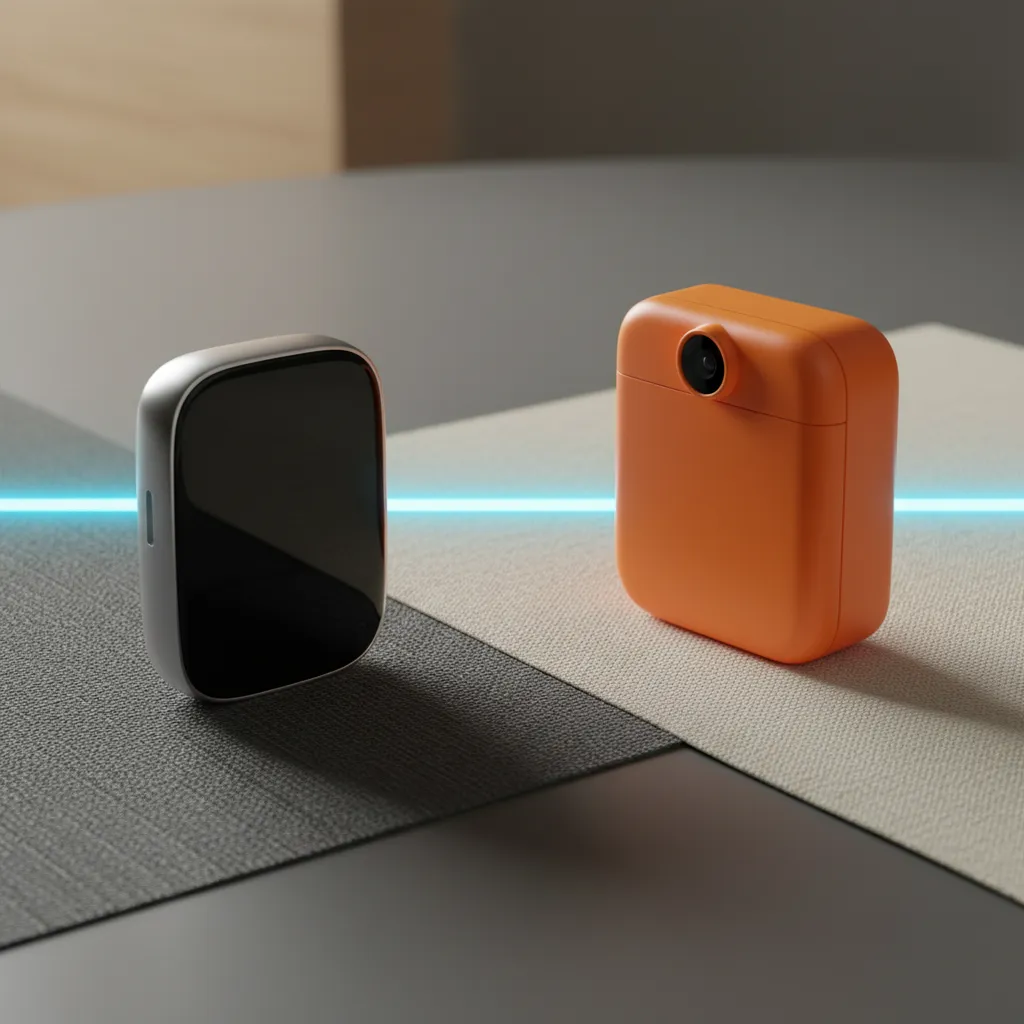
Introduction: The Search for Post-Smartphone Devices
For over a decade, the smartphone has been the unquestioned center of our digital lives. Yet, the persistent pull toward glowing rectangles and endless scrolling has spurred a growing dissatisfaction among consumers and innovators alike. The tech world is actively searching for the post-smartphone devices—a new paradigm that offers intelligence and utility without the cognitive load of apps and notifications.
In 2024, two specific products launched with enormous hype, challenging the status quo and igniting a fierce debate about the future of mobile computing: the Humane AI Pin and the Rabbit R1.
These are not just novel gadgets; they represent a fundamental shift toward generative AI hardware. They are dedicated AI-powered devices designed to function as intelligent AI personal assistants, promising an era of ambient computing where technology seamlessly fades into the background.
But are these early attempts successful? Do they deliver on the promise of becoming true smartphone alternatives?
This comprehensive guide dives deep into the Humane Pin vs Rabbit R1 comparison. We will dissect their core philosophies, analyze their hardware and software innovations, evaluate their real-world performance based on initial tech gadget reviews 2024, and determine which device, if either, successfully charts the course for the next generation technology in the realm of AI wearables 2024.
The Core Philosophy: Ambient AI vs. Action Automation
Before comparing specs, it’s crucial to understand the foundational beliefs driving Humane Inc and Rabbit. They are attacking the app-based interface from two very different angles.
The Humane Vision: Ambient Computing and Screenless Interaction
Founded by former Apple executives Bethany Bongiorno and Imran Chaudhri, Humane started with a radical ideal: completely eliminate the screen.
The Humane AI Pin is designed as true wearable technology, a sleek, minimalist badge meant to be magnetically clipped onto clothing. Its philosophy is rooted in ambient computing—intelligence that is always present but never demanding attention.
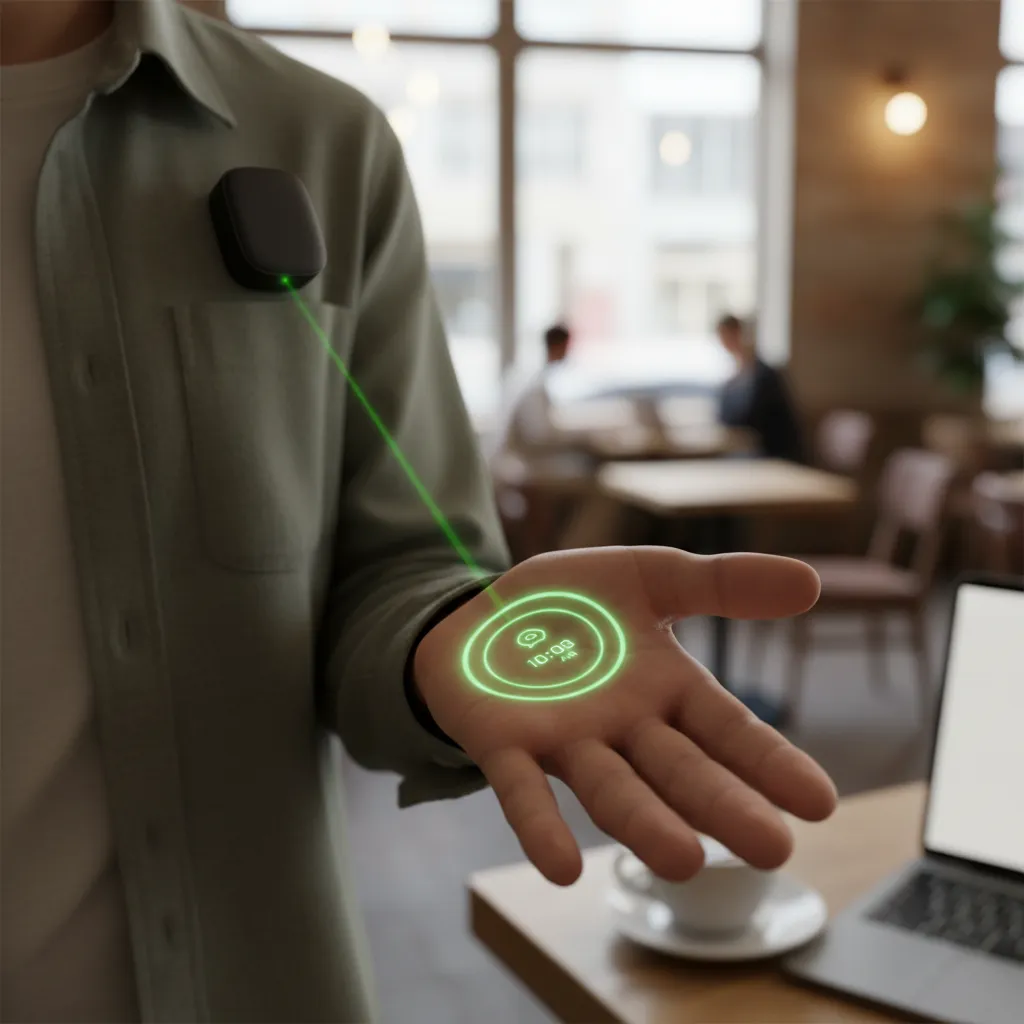
Humane envisions a future where interactions are based on voice, gesture, and contextual awareness. When information is needed, the device utilizes an innovative laser projection system to display information directly onto the user’s hand or a nearby surface. This commitment to screenless devices is Humane’s primary differentiator. The device runs on Cosmos OS, its proprietary AI platform, focusing on instant, seamless access to information and powerful large language models (LLMs).
The Rabbit Mission: Action Automation via the LAM
Rabbit, in stark contrast, took a more pragmatic, yet equally revolutionary, approach. While the Rabbit R1 is a handheld device (more on its design later), its intelligence engine, Rabbit OS, is the true innovation.
The core technology powering the R1 is the Large Action Model (LAM). While traditional LLMs are trained on text and code to understand information, the LAM is trained to use applications by observing human interaction.
The premise is brilliant: instead of developing an API integration for every service (like Uber, Spotify, or DoorDash), the LAM learns the steps a human takes within those apps. When a user asks the R1 to “Book a flight to Denver for next Friday,” the LAM executes those complex, multi-step actions across different platforms automatically. This focus on “action automation” positions the Rabbit R1 less as an AI assistant and more as a universal remote for the digital world, capable of abstracting away the cumbersome steps of opening, navigating, and manipulating apps.
Battle of the Hardware: Design, Form Factor, and Interface
The aesthetic and functional differences between the Humane AI Pin and the Rabbit R1 are the most immediate points of comparison. They represent two divergent paths for the future of user interface.
Humane AI Pin: Discreet Wearable Technology
The Humane AI Pin is arguably the more ambitious design. It is a small, square device (a bit larger than an oversized lighter) that attaches magnetically to clothing.
Key AI Pin features include:
- Laser Ink Projection: This is the signature interface. A tiny projector beams a monochrome, low-resolution interface onto the palm, which the user interacts with via tilt and hand gestures.
- Trust Light: A physical, integrated light illuminates whenever the microphone or camera is active, reinforcing transparency and user control—a crucial element for a constantly listening device.
- Camera: A 13-megapixel camera allows the device to visually recognize objects, landmarks, and items for contextual searches or simple photography.
- Processor: Customized Snapdragon chip optimized for AI workloads.
The biggest challenge facing the Pin’s hardware, as highlighted by early adoption and the extensive MKBHD Humane review, was power management. It requires a battery booster pack (which also serves as the counter-magnet) to last a full day, adding bulk and complexity to the otherwise seamless vision.
Rabbit R1: The Nostalgic Handheld Companion
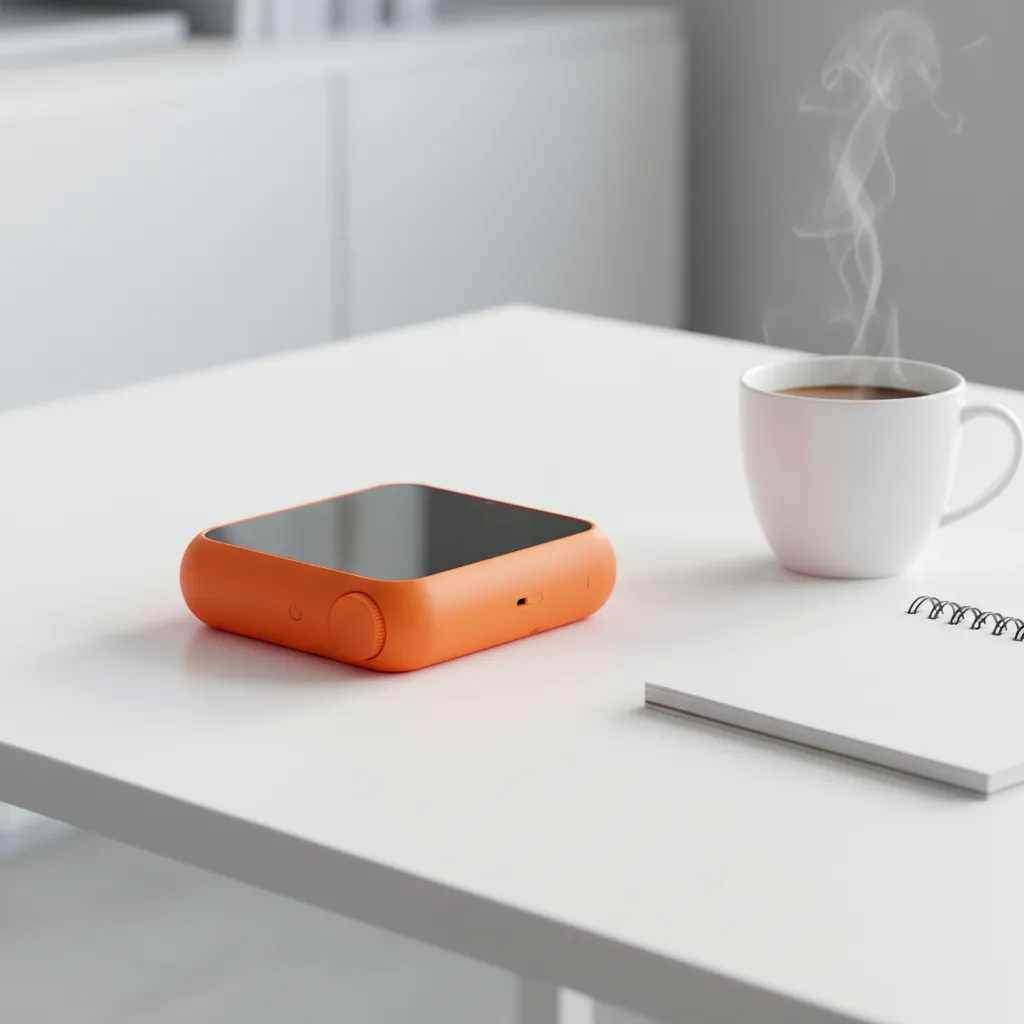
The Rabbit R1 takes a completely different approach. Designed in collaboration with Teenage Engineering, it is a playful, bright orange box that fits neatly in the palm. Its form factor is intentionally reminiscent of early-2000s handheld tech gadget reviews 2024 and portable gaming devices.
The R1 includes:
- 2.88-inch Touchscreen: Unlike the Pin, the R1 does feature a screen, though it is small and serves mainly as confirmation or an occasional visual aid, minimizing the smartphone-like distraction.
- Rotary Scroll Wheel: A physical, tactile wheel allows for rapid navigation through different Rabbit OS states—a nod to classic iPod interfaces.
- Rotatable Camera: The device includes a camera that can swivel 360 degrees, primarily used for “seeing” the world (e.g., identifying nutritional information on food packaging or understanding a complex setup) and for video calling.
While the R1 is not a wearable technology in the same sense as the Pin, it is designed to be carried everywhere, acting as a functional bridge between the user and their digital services.
User Interface: Projection vs. LCD Screen
The interface choice is perhaps the most defining architectural difference in this AI device comparison:
- Humane’s Projection: The Pin’s laser ink interface is futuristic but proved fragile in practice. Latency and jitter made basic interaction challenging, and the need for specific lighting conditions undermined its reliability as a primary interaction method.
- Rabbit’s Screen/Wheel: The R1 embraces tactility. The physical scroll wheel and push-to-talk button provide immediate, reliable feedback. The small screen serves as a necessary safety net and output display, ensuring that information delivery is fast and legible.
Rabbit’s decision to include a screen, even a small one, made the R1 inherently more functional out of the box, even if it compromises the utopian “screenless” vision championed by Humane.
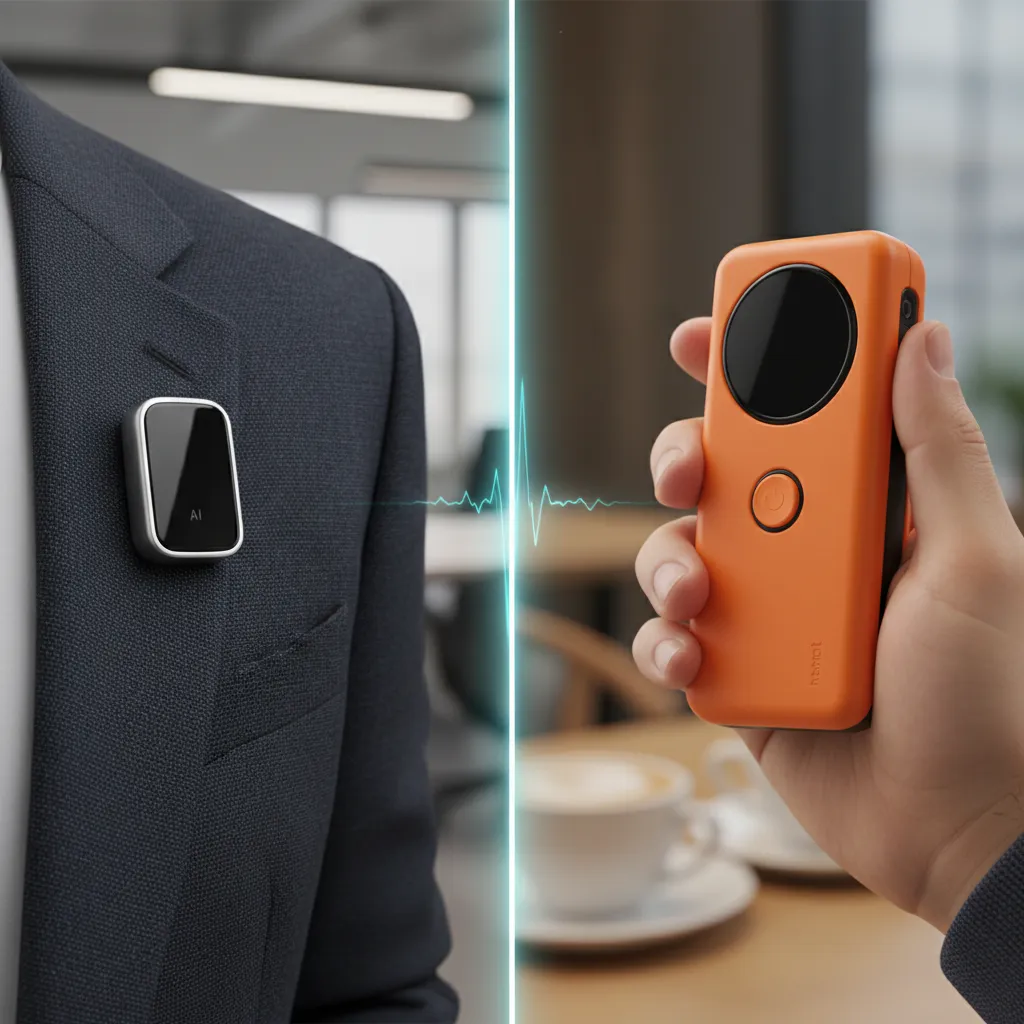
Software Showdown: AI Engines and Capabilities
The true value of these devices lies not in their silicon or plastic, but in the intelligence of the AI running underneath. Both devices utilize state-of-the-art AI, but their application architectures are fundamentally different.
Humane’s AI Platform: Privacy and Deep Integration
The Humane Inc platform is built around privacy by default, emphasizing that the device is “dormant” until the user activates it with voice or gesture, noted by the Trust Light.
The Pin relies heavily on large language models from partners like OpenAI and Microsoft. The key innovation is how Cosmos OS dynamically routes user queries to the most appropriate AI model for the task—be it translation, coding help, or general search. The AI Pin excels at real-time translation, messaging, and summarizing data.
However, its reliance on conversational LLMs means it is highly effective at retrieval and generation, but struggles with action—the very thing Rabbit built its entire system around. For instance, asking the Pin to order a pizza requires a lengthy, multi-step conversation that often fails the context switching test.
Rabbit OS and the Large Action Model (LAM)
The Rabbit OS is the star of the R1 show. The Rabbit R1 LAM is arguably the most intriguing technological development in this entire comparison.
The LAM doesn’t just talk to you; it acts for you. It sits on top of existing applications, learning their user interfaces through observation. Users simply link their accounts (Spotify, DoorDash, etc.) to the Rabbit cloud portal, and the LAM handles the rest. This approach addresses a major frustration of current AI assistants: the inability to handle complex, multi-step processes that span different services.
For example, if you want to find the perfect gift for a friend, the R1 might search five different e-commerce sites, compare prices, check sustainability claims ([Related: sustainable-tech-innovations-greener-gadgets-eco-smart-living/]), and present a consolidated recommendation. This capability pushes the R1 closer to the ideal of a holistic AI personal assistant.
Real-World Use Cases: Where the Devices Shine (and Falter)
| Feature | Humane AI Pin | Rabbit R1 |
|---|---|---|
| Core Strength | Real-time translation, context-aware information retrieval, note-taking. | Automated multi-step actions (ordering food, booking travel, changing music). |
| Interaction | Voice, Gestures, Hand Projection. | Voice, Scroll Wheel, Small Screen. |
| Connectivity | Requires a dedicated mobile plan ($24/month). | Requires a SIM card (user-provided) or Wi-Fi. |
| Visual Recognition | Excellent object and landmark identification (Vision feature). | Used primarily for ‘teaching’ the LAM new app functions. |
| Travel Utility | Good for instant language translation. | Excellent for end-to-end tasks like researching, comparing, and booking travel plans. [Related: ai-travel-planner-ultimate-2024-guide/] |
The Pin’s strengths lean into communication and immediate environment knowledge. The R1’s strengths lean into digital productivity and transaction automation.
The Crucial Test: Reviews, Latency, and the MKBHD Factor
The initial wave of enthusiasm for both the Humane AI Pin and the Rabbit R1 was followed by a period of sobering reality, driven largely by critical tech gadget reviews 2024 from major outlets, including the widely viewed MKBHD Humane review.
Why Early Reviews Were Mixed
Both devices launched in a state that felt decidedly “beta.” The gap between the dazzling promotional videos and the real-world user experience was significant.
- Latency: This was the single biggest killer of the user experience for both. Because the devices rely heavily on cloud-based generative AI models, the processing time—from voice command to generated response—often took several seconds. In the era of instantaneous smartphone results, this delay made simple tasks feel frustratingly slow.
- Reliability and Context: Early Humane AI Pin review and Rabbit R1 review reports showed that both devices frequently struggled with context switching and understanding nuanced commands. The Pin sometimes failed to understand gestures, and the R1’s LAM, while promising, required constant re-authentication for services and sometimes executed actions incorrectly.
- Battery Life: For the Pin, battery life was a significant practical barrier. The need for constant battery swaps or the use of external battery boosters undermined its intended seamlessness as a true wearable technology.
This poor initial performance led many to ask, particularly regarding the R1: is the Rabbit R1 worth it? For a device designed to automate complexity, adding a layer of frustration through lag and inconsistency makes it hard to justify as a daily driver.
Pricing, Subscriptions, and Long-Term Viability
The business models further complicate the purchasing decision:
Humane AI Pin
- Hardware Cost: $699 USD (high entry barrier).
- Subscription: $24 per month. This subscription is mandatory and covers the dedicated cell service (T-Mobile) and access to Humane’s proprietary AI services. Without it, the device is essentially a paperweight.
Rabbit R1
- Hardware Cost: $199 USD (highly accessible).
- Subscription: None required for the core Rabbit OS and LAM functionality. Users must provide their own SIM card if they want connectivity outside of Wi-Fi.
The Pin’s ongoing subscription cost has been a major point of criticism. While the Pin is arguably a more complex, self-contained AI-powered devices system, the monthly fee adds up quickly, making the AI device comparison favor the R1 for sheer upfront value. The R1’s lower cost reflects its position as an accessory, whereas the Pin attempts to be a standalone service platform.
The Broader Context: Shaping the Future of Mobile Computing
Despite their initial stumble, the Humane AI Pin and the Rabbit R1 have succeeded in generating conversation and setting expectations for the next era of digital interaction. They are proof of concept for the viability of AI hardware trends.
The Rise of Generative AI Hardware
We are moving past the era where AI was simply an app on a smartphone. We are entering a phase of dedicated, specialized generative AI hardware. The Pin and R1 demonstrate that purpose-built silicon and optimized operating systems can create user experiences fundamentally different from those on a general-purpose smartphone.
- Custom Silicon: Both devices leverage custom or highly optimized processors to handle the complex computations needed for large action models and real-time sensory input (camera, microphone).
- Contextual Awareness: These devices are built to understand the user’s immediate environment. The Pin, with its vision system, knows what you’re looking at. The R1, with the LAM, knows which digital services you commonly use.
This drive towards specialization is influencing the entire tech industry, pushing giants like Apple and Google to integrate deeper, more contextual AI into their flagship products.
Are Screenless Devices the Next Generation Technology?
The Humane AI Pin, with its ambitious leap toward screenless devices, challenged decades of user interface design. The mixed reaction proves that while the concept of less screen time is appealing, the reliability of the alternative interaction method must be near-perfect.
The ultimate future of mobile computing likely involves a spectrum:
- AI Companions (Rabbit R1 style): Highly effective, transaction-focused handheld devices that manage digital tasks for the user, offloading complexity.
- Ambient AI (Humane Pin style): Wearable technology that provides seamless, non-intrusive information and alerts, complementing the primary computing device (which might still be the smartphone).
The challenge is integrating these new formats into a cohesive digital ecosystem. If the AI Pin requires a monthly fee and acts solely as a redundant voice assistant, its utility is limited. If the Rabbit R1 requires constant network connection and manual account linking, it cannot truly replace the complexity of the smartphone.

The true victory of these devices is defining the future of user interface. They have established the need for a highly personalized, predictive, and action-oriented interaction model—a movement toward true personalized wellness tech and information filtering. [Related: personalized-wellness-tech-custom-path-optimal-health/]
The next version of these devices, or the competitors they inspire, will likely perfect the blend of reliable screen interaction (like the R1) with the immediacy of a wearable (like the Pin). This will require significant leaps in edge computing and ethical data management. [Related: navigating-future-imperative-ethical-ai-smart-world/]
Humane AI Pin vs Rabbit R1 Comparison Table: Specifications at a Glance
| Feature | Humane AI Pin | Rabbit R1 |
|---|---|---|
| Form Factor | Wearable (magnetic attachment) | Handheld (pocketable) |
| Weight | Pin: 34g, Battery Booster: 20g | 150g (Approx.) |
| Primary UI | Laser Ink Projection & Voice/Gesture | Small Touchscreen, Scroll Wheel, Voice |
| Core AI Tech | Cosmos OS (LLMs, Context-aware) | Rabbit OS (Large Action Model - LAM) |
| Processor | Snapdragon AI-optimized chipset | MediaTek Helio P35 |
| Camera | 13 MP (Vision) | 8 MP (360° Rotating) |
| Connectivity | Built-in eSIM (T-Mobile partnership) | Wi-Fi, Optional SIM slot (User provided) |
| Initial Cost | $699 USD | $199 USD |
| Subscription | $24/month (Mandatory) | None (Only SIM/Data required) |
Conclusion: The Road Ahead for AI Hardware Trends
The Humane AI Pin and the Rabbit R1 are more than just gadgets; they are markers on the timeline of digital evolution. They launched with lofty goals—to be the dedicated AI personal assistants that finally dethrone the smartphone—but both quickly ran into the harsh realities of battery life, latency, and the complexity of real-world use.
The Pin, with its commitment to screenless devices and its ambitious projection system, was a phenomenal experiment in ambient design, demonstrating the potential for truly invisible wearable technology. However, its high price point and mandatory subscription, coupled with initial performance hiccups, made it a niche product for early adopters willing to pay a premium for the future.
The R1, conversely, provided a cheap, tactile, and highly focused alternative. Its Rabbit R1 LAM concept—the ability to automate complex digital actions—is the true breakthrough that defines the future of user interface. While its performance in the initial Rabbit R1 review was also criticized for lag, the underlying technology offers a clearer path toward becoming an effective digital concierge.
Neither device proved to be the instant, comprehensive smartphone alternative the market craved. But they successfully proved two things:
- The market is hungry for relief from app dependency.
- Dedicated generative AI hardware is the necessary vehicle for this change.
For users seeking a glimpse into the future of mobile computing at a low entry cost, the Rabbit R1 is the more compelling package. For those fascinated by pure, radical design and the potential of true ambient computing, the Humane AI Pin provides a powerful (if expensive) vision. The failures of this generation of devices will undoubtedly inform the success of the next. The age of the AI-powered devices is here, and the conversation has been irrevocably changed.
As we look toward new tech releases, the innovation path set by these pioneers suggests that the next generation will be faster, cheaper, and far more reliable. The race for the post-smartphone world has only just begun.
FAQs
Q1. What is the difference between the Humane AI Pin and the Rabbit R1?
The primary difference lies in their form factor and core technology. The Humane AI Pin is a wearable technology that uses a laser to project information onto the hand and relies on traditional LLMs. The Rabbit R1 is a handheld device that uses a small screen and is powered by the Large Action Model (LAM), which is designed to automate complex, multi-step actions across various applications.
Q2. Is the Rabbit R1 worth it, despite the mixed reviews?
The question of whether the Rabbit R1 is worth it depends on user expectations. At its accessible price point ($199 USD), it offers an affordable entry into specialized generative AI hardware and the groundbreaking capabilities of the LAM. While early Rabbit R1 review performance was inconsistent, users who prioritize digital task automation and are willing to tolerate occasional latency may find its potential value high.
Q3. What is the Large Action Model (LAM) used by the Rabbit R1?
The Rabbit R1 LAM (Large Action Model) is a proprietary artificial intelligence model developed by Rabbit. Unlike typical large language models (LLMs) that process and generate text, the LAM is trained by observing human interaction with app interfaces. This allows it to learn how to navigate and execute actions—such as ordering food, summarizing documents ([Related: perplexity-pages-ai-content-generator-review/]), or booking a taxi—on behalf of the user across multiple linked platforms.
Q4. Does the Humane AI Pin require a subscription to function?
Yes, the Humane AI Pin requires a mandatory $24 per month subscription. This fee covers the dedicated cellular service the device needs to operate independently and provides access to Humane’s proprietary AI services and cloud computing resources. Without this subscription, the device cannot function as intended.
Q5. Are the Humane AI Pin and Rabbit R1 true smartphone alternatives?
Based on initial testing and tech gadget reviews 2024, neither device currently functions as a complete smartphone alternative. Both excel at specific tasks—the Pin at real-time information and the R1 at automation—but neither can reliably handle the entire range of communication, utility, and application services that modern smartphones provide. They are best classified as specialized AI wearables 2024 and companion devices that signal the future of mobile computing.
Q6. How does the Humane AI Pin handle privacy given its constant listening capability?
Humane Inc built the Pin with privacy as a core concern. It features a crucial Trust Light—a physical indicator light that illuminates only when the microphone, camera, or sensors are actively recording or sending data to the cloud. The device remains “asleep” and local until the user explicitly activates it, reinforcing the concept of user control over the AI personal assistants.
Q7. What are the main AI hardware trends that these devices represent?
The Humane AI Pin and Rabbit R1 represent the major shift toward decentralization of computing away from the single smartphone. Key trends include the move toward generative AI hardware, the rise of screenless devices and ambient computing interfaces, and the development of specialized AI models (like the LAM) capable of action and automation, rather than just retrieval and conversation.