Humane AI Pin Review: The Truth Behind the Hype
Introduction: The Quest for the Future of Mobile Computing
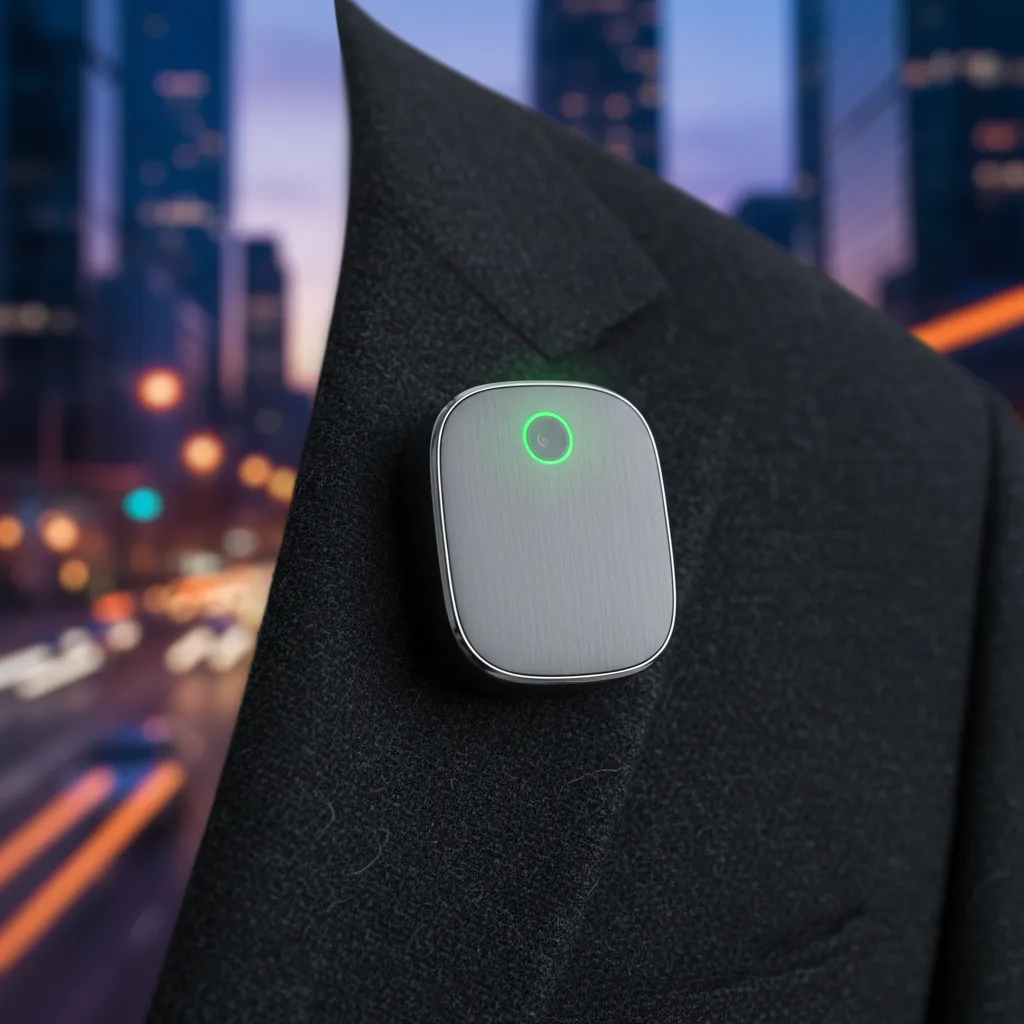
In a world dominated by the omnipresent black rectangle we call the smartphone, a new challenger emerged promising a radical departure: the Humane AI Pin. Heralded by former Apple executives Imran Chaudhri and Bethany Bongiorno, the Humane startup positioned the AI Pin not merely as another gadget, but as the next paradigm shift in how we interact with technology. It is designed to be a completely screenless AI device, shifting interaction from taps and swipes to voice and gesture.
The promise was intoxicating: a small, magnetic AI Pin wearable that listens, learns, and anticipates your needs using advanced large language models (LLMs), embodying true contextual computing and freeing us from the distracting digital vortex of the smartphone.
But did this ambitious device deliver on its promise?
This comprehensive AI Pin review dives deep beyond the slick demos and futurist rhetoric. We examine the reality of its Humane AI Pin features, assess the performance, break down the controversial Humane AI Pin price and subscription model, and answer the critical question that every early adopter is asking: is Humane AI Pin worth it? By grounding our analysis in real-world usage and comparing it directly to established mobile standards, we uncover the truth behind the hype surrounding one of the most talked-about tech gadget reviews 2024.
The Vision: What is the Humane AI Pin?
The core idea behind the Humane AI Pin is simple yet revolutionary: what if your technology disappeared into the background, becoming an intuitive, ambient assistant?
The AI Pin is an ambient computing device—a standalone piece of wearable technology 2024 designed to run solely on AI. Unlike a smartwatch, it doesn’t tether to your phone; it is its own mobile network device, complete with its own phone number (managed through T-Mobile in the US).
The device clips magnetically to your clothing and features a camera, microphone array, speaker, and the defining feature: a green laser projector. It’s designed to operate with minimal friction, primarily through AI Pin voice commands and simple hand gestures, aiming to fulfill the ultimate dream of the AI personal assistant device.
Contextual Computing and the Operating System
Humane built the AI Pin on an entirely new operating system called Cosmos. The concept of Cosmos is to blend different AI models seamlessly—not just relying on one service like ChatGPT or Gemini, but using the best model available for the specific task at hand (translation, coding, search, etc.). This pursuit of genuine contextual computing means the device should theoretically understand where you are, who you are talking to, and what you are doing to provide the most relevant answer, not just a search result.
Key features highlighted in the Humane AI Pin demo included:
- Catch Up: Summarizing emails and notifications instantly.
- Translate: Real-time, bi-directional voice translation.
- Ask: Open-ended queries answered by powerful LLMs.
- Compose: Drafting messages based on voice input and context.
- Inquire: Using the camera to identify objects, nutrition facts, or people.
Design and Core Mechanics: A Closer Look at the Hardware
The physical design of the AI Pin is elegant and minimalist, reflecting its ambitious vision of simplicity. It consists of two main pieces: the computing unit and a battery booster (or “Battery Booster”) which magnetically attaches to the back of your clothing to power the device.
Trust and Security: The “Trust Light”
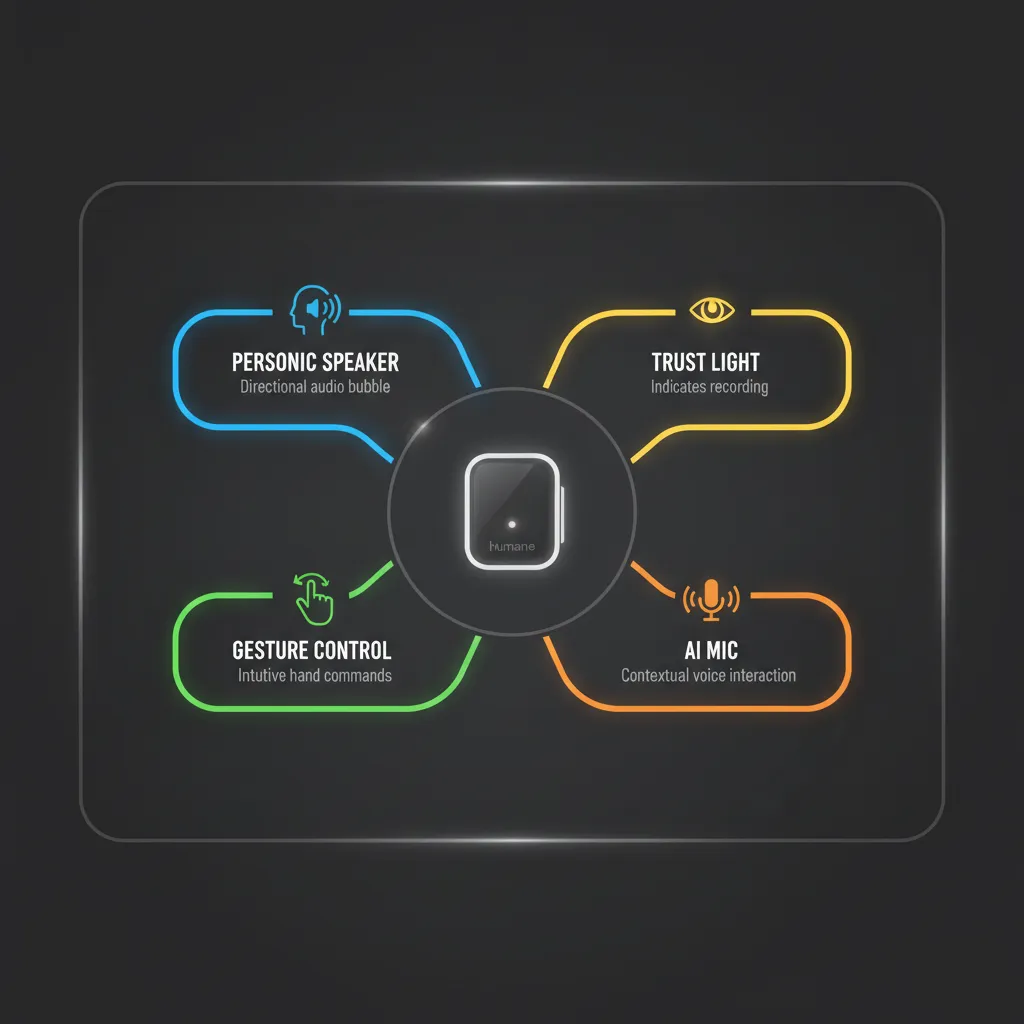
One of the most important hardware features is the “Trust Light.” Humane understood that wearing a device with a constant camera and microphone raises immediate privacy concerns (data privacy wearable tech). The Trust Light is a small, physical LED light that illuminates when the microphone or camera are actively recording or sensing data. If the light is on, the user and those around them know the device is listening or seeing. This design feature is crucial for maintaining the ethical integrity of the device, preventing hidden recording, and building trust in this new category of wearable.
Sound and Interaction: The Personic Speaker
The AI Pin uses a built-in speaker, referred to as the “Personic Speaker,” which projects sound directionally towards the user’s ear. This is meant to offer private audio without requiring headphones for simple interactions like hearing an answer or a summary. While innovative, real-world reports suggest the sound quality is often tinny and audible to nearby individuals, somewhat defeating the privacy purpose in noisy or quiet public spaces.
[Related: edge-ai-explained-powering-smart-devices-real-time-intelligence/]
The Central Challenge: Humane AI Pin Battery Life
The Humane AI Pin battery life emerged quickly as one of the device’s greatest practical weaknesses. Because the device is an always-on, connected mobile computer constantly listening and ready to deploy high-power AI models, the demand on the small battery is immense.
In practice, the Pin requires the magnetic attachment of the Battery Booster, and even then, heavy usage often necessitated swapping boosters multiple times a day. While Humane provides several boosters in the box, requiring constant swapping introduces friction—the very thing the device was intended to eliminate. This reliance on multiple external power sources makes the AI Pin feel less like a seamless assistant and more like a complicated modular system.
Breaking Down the Features: How the AI Pin Works in Practice
The true test of the Humane AI Pin lies in how effectively it replaces or enhances tasks we typically use a smartphone for. The core experience is driven by the AI engine, which powers everything from basic queries to its unique display system.
The Revolutionary Laser Ink Display
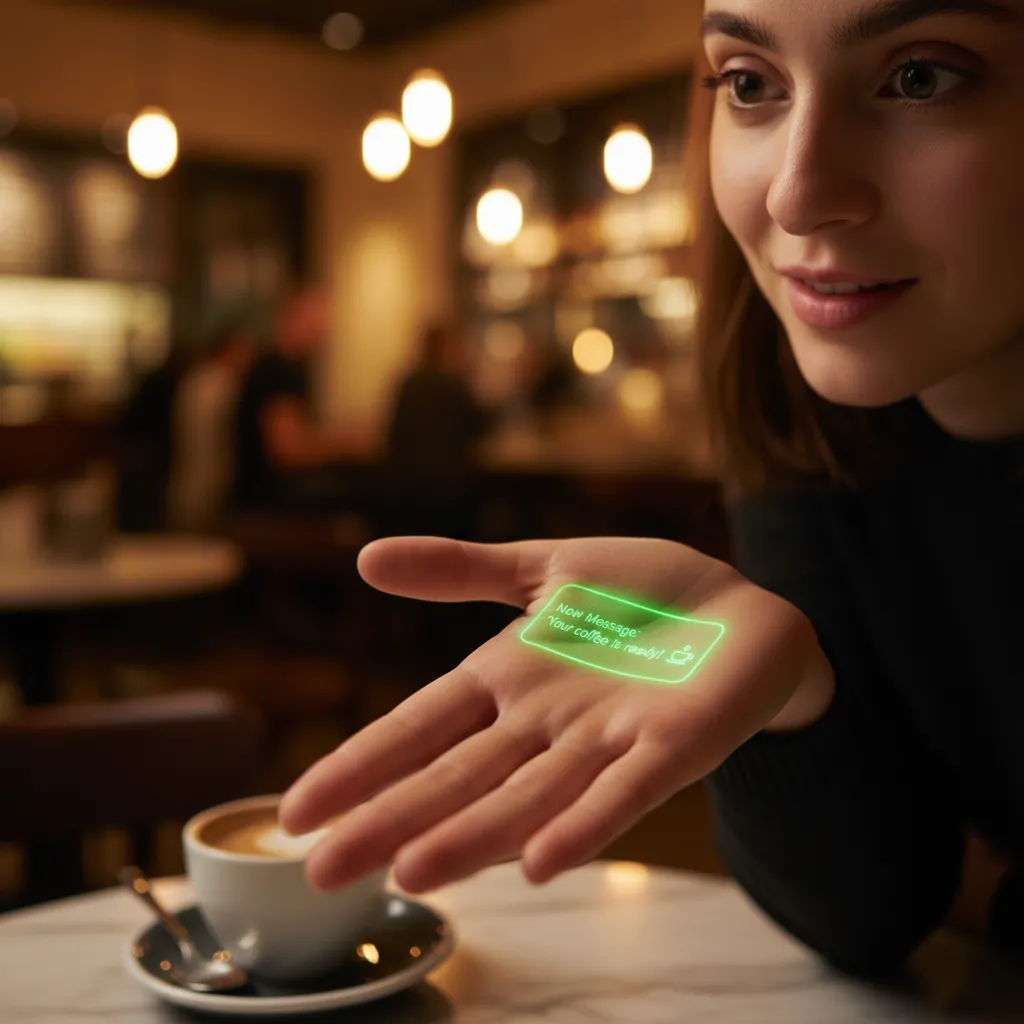
The most visually striking feature of the Pin is the Humane AI Pin laser display, also called Laser Ink. This is a miniature AI Pin projector built into the device, capable of projecting a monochromatic green interface directly onto the user’s palm or any nearby surface.
This projection system is central to the “no-screen smartphone” concept. The user can interact with the projection using simple tilt gestures of the hand. While dazzling in the initial Humane AI Pin demo, the reality is complex:
- Readability: The display requires specific lighting conditions. It struggles significantly outdoors in bright daylight, making it almost unusable in typical sunny environments.
- Interaction Speed: While gestures (tilting the hand) are intuitive in concept, the system often requires precise positioning and can be slow to respond, adding latency to simple tasks like checking the weather or reading a notification.
For simple, quick information bursts, the Laser Ink display is functional. For scrolling or detailed interaction, it quickly falls apart, reinforcing the device’s dependency on voice commands.
Voice Interaction and Contextual Computing
The primary mode of use is AI Pin voice commands. The promise is that the AI will understand natural language, context, and follow-up queries seamlessly. For example, asking the device to “Summarize my emails from my boss” and then immediately saying “Reply saying I’ll review it tomorrow” should flow naturally.
When the system works well, it is genuinely impressive and fast, showcasing the potential of a truly smart AI personal assistant device. However, user reviews consistently highlighted inconsistency:
- Latency: Queries often take several seconds to process, significantly longer than a traditional smartphone search or interaction with dedicated LLM apps. This “waiting period” breaks the flow of conversation and productivity.
- Inaccuracy: The AI sometimes hallucinates or misunderstands subtle context, leading to frustrating results when trying to execute complex or precise tasks needed for AI Pin for productivity.
- Reliance on Network: As a connected device, its performance is highly dependent on T-Mobile network stability, compounding latency issues in areas with weak coverage.
Comparing Features: Focus vs. Breadth
The Pin focuses narrowly on essential AI-driven functions, deliberately eschewing native apps in favor of integrated services (Tidal for music, integration with some contact/calendar apps). This narrow focus is meant to reduce distraction, yet it limits functionality severely.
| Feature | Humane AI Pin | Modern Smartphone |
|---|---|---|
| Interface | Voice, Laser Projection, Gesture | High-resolution Touchscreen, Voice |
| Primary Interaction | Conversational AI (Ask/Inquire) | Apps, Web Browsing, Notifications |
| Connectivity | Built-in T-Mobile SIM/eSIM | Multi-network, Wi-Fi 6/7 |
| App Ecosystem | None (Relies on integrated services) | Millions of Apps |
| Media Consumption | Extremely Limited (Voice/Tidal) | Unlimited (Video, Gaming, Social) |
| Battery Management | Modular (Requires swapping booster) | Single unit, all-day power expected |
[Related: ai-classroom-revolution-personalized-learning-future-skills/]
Cost of the Future: Price and the Mandatory Subscription Model
One of the steepest hurdles for early adoption is the financial commitment required to own and operate the device. The Humane AI Pin price structure is multi-layered and includes a mandatory monthly service fee, setting it apart from typical gadget purchases.
Upfront Hardware Cost
The Humane AI Pin launched with a base price of $699. This places it firmly in the premium gadget category, comparable to mid-to-high-tier smartphones, though without the decades of accumulated functionality.
The Humane AI Pin Subscription
Crucially, the Pin is useless without the Humane AI Pin subscription, known as the ‘Humane service plan’ or ‘Data Plan.’ This plan costs $24 per month.
What does the subscription cover?
- Cellular Connectivity: The device’s exclusive phone number and data connection (provided by T-Mobile in the US).
- AI Access: The continuous and integrated access to the suite of powerful LLMs and AI services (Gemini, ChatGPT, and others) that power the device.
This mandatory recurring cost means the total cost of ownership (TCO) rapidly surpasses that of most other wearables. After just two years, the initial $699 investment balloons by an additional $576 in subscription fees, pushing the cost toward $1,275. This high barrier to entry necessitates that the device provide genuinely indispensable value, which many users felt it currently does not.
Performance and Practicality: The Crucial Flaws
While the underlying philosophy—moving beyond the screen—is laudable, the execution of the initial Humane AI Pin release date model revealed significant issues that tempered the revolutionary narrative.
Speed and Reliability
The most consistent criticism in most AI Pin review coverage centered on speed. The time it takes from asking a question (e.g., “What’s the best route to the park?”) to receiving an audio or projected answer often involves a noticeable, several-second delay. In fast-paced human interactions or moments where quick information retrieval is essential, this latency is deadly.
Users expect an AI assistant to be instantaneous, matching or beating the speed of pulling out a phone and typing a query into Google. When the Pin fails to meet this expectation, the impulse naturally shifts back to the reliability of the smartphone.
The Gaps in Contextual Computing
While the device aims for contextual computing, its ability to understand truly complex context proved limited. For instance, asking the Pin to identify an object using the camera (Inquire feature) worked well for common items like fruit but struggled with nuanced objects, labels, or handwriting.
Moreover, the lack of third-party application support—a feature that provides deep context for smartphones—means the Pin is often blind to services we rely on daily (ride-sharing, complex banking, specific note-taking apps). This limits the device’s usefulness AI Pin for productivity tasks that require integrated digital workflows.
Thermal Issues
Another practical problem reported was overheating. Due to the high-demand processing required by on-device AI operations and continuous connectivity, the Pin sometimes became noticeably warm on the user’s clothing, which is a significant comfort issue for a device meant to be worn all day.
[Related: claude-3-5-sonnet-guide-new-features-performance/]
Humane AI Pin vs. The Modern Smartphone
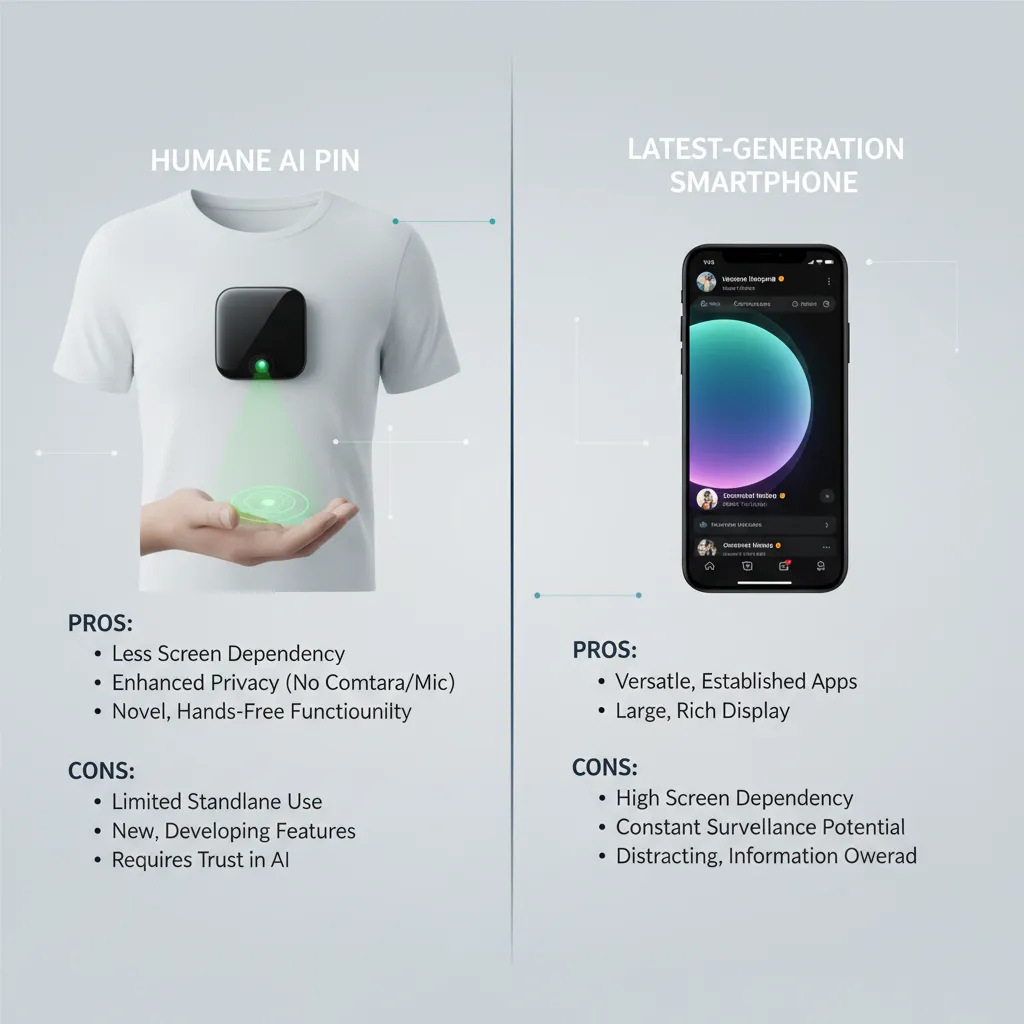
The Pin’s true litmus test is whether it can serve as a viable step toward the future of mobile computing, challenging the supremacy of the smartphone. The core philosophical challenge is the shift from access to suggestion.
A smartphone is an access portal—it provides the tools and lets the user choose the information and apps. The Pin, as a AI personal assistant device, aims to be a filter—it listens and decides what information is necessary, delivering only the answer, not the options.
| Metric | Humane AI Pin (Wearable) | Smartphone (iPhone/Android) |
|---|---|---|
| Distraction Level | Low (Screenless, voice-focused) | High (Notifications, apps, social media) |
| Battery Life | Poor (Requires modular swapping) | Standard (All-day typical) |
| Communication | Basic messaging, voice calls | Full suite (Video calls, complex texting, email clients) |
| Functionality | Limited AI utility, few services | Near-limitless applications and customization |
| Physical Interaction | Gestures, voice, laser projection | Intuitive touch, haptic feedback |
| Long-Term Vision | Paradigm shift, ambient computing device | Iterative improvement, utility maximisation |
As a pure challenger, the Pin fails today. It lacks the reliability, functionality, and crucial speed required to supplant the phone. Instead, it feels like an exciting, yet expensive, companion piece—an impressive AI Pin demo that hasn’t matured into a robust product.
Humane AI Pin Alternatives
Given the technological novelty and price point, many users are now looking at Humane AI Pin alternatives that offer varying levels of screenless or enhanced AI functionality:
- Smart Rings (e.g., Oura Ring): These focus entirely on biometric data tracking and wellness, operating entirely in the background, minimizing friction, and boasting exceptional battery life. They prioritize health over communication.
- Advanced Smartwatches (e.g., Apple Watch Ultra, Galaxy Watch): While they still feature a screen, the latest generations heavily rely on voice commands (Siri, Bixby, Google Assistant) and cellular connectivity, offering a far more robust application ecosystem and better performance than the Pin, albeit still tethered to traditional apps.
- Next-Gen True Wireless Earbuds: Devices like the rumored AI-focused earbuds from other tech giants promise conversational, low-friction interactions via voice assistant integration, leveraging the power of an existing smartphone but delivering a hands-free experience.
The Pin’s nearest philosophical competitor is the R1 Rabbit device, which also aims for an AI-first, natural language interface, though with a small screen and a slightly different hardware approach. Both are pioneering the future of mobile computing, but neither has yet delivered the polished experience consumers demand.
The Verdict: Is the Humane AI Pin Worth It in 2024?
To determine if the Humane AI Pin is worth it, we must weigh its undeniable vision against its current reality.
AI Pin Pros and Cons
| Pros | Cons |
|---|---|
| Visionary Design: Represents a true step toward ambient computing device. | High Cost: $699 hardware + mandatory $24/month Humane AI Pin subscription. |
| Screenless Freedom: Successfully removes the visual distraction of a display. | Latency and Inconsistency: Slow processing speeds hinder productivity. |
| Unique Interaction: The Humane AI Pin laser display is innovative and engaging. | Battery Life: Poor, requiring constant swapping of external battery boosters. |
| Privacy Focus: The “Trust Light” is an essential ethical feature. | Limited Functionality: Lack of a robust app ecosystem limits its real-world utility. |
| Contextual Potential: AI features like real-time translation and summarization show promise. | Readability: Laser display struggles severely in bright outdoor environments. |
The Recommendation
For the average consumer seeking a reliable device for communication, navigation, media, and productivity, the answer is unequivocally no. The Humane AI Pin, in its current iteration, is an expensive and inconsistent piece of technology that cannot effectively replace or significantly augment the modern smartphone experience. The frequent latency and modular battery system introduce more friction than they remove.
However, for the tech enthusiast, the developer, or the individual deeply interested in the future of mobile computing, the Pin is a fascinating case study. It is perhaps the most significant attempt yet to realize the no-screen smartphone concept.
[Related: wwdc-2024-ai-predictions-apple-intelligence-shift/]
The Pin feels less like a finished product and more like a groundbreaking, beautifully designed beta device. It successfully proves that the wearable technology 2024 market is ready for a non-phone future, but it also demonstrates that the AI technology needed to make that future seamless still requires significant refinement. We look forward to future software updates from the Humane startup that address the core issues of speed and reliability.
Looking Ahead: The Future of Screenless AI Devices
The narrative around the Humane AI Pin might focus on its initial struggles, but the long-term impact of its existence is undeniable. It has pushed the boundaries of best AI gadgets 2024 and forced the entire tech industry to think seriously about how to leverage powerful LLMs in a non-screen environment.
The future is likely not a complete absence of screens but a blending of interfaces—voice for quick context, heads-up displays for immediate data, and larger screens for deep work and media consumption. The Pin serves as an important, costly lesson in the challenges of ambient computing device design, specifically balancing advanced processing with long Humane AI Pin battery life and low latency.
As AI models become more efficient and capable of running locally on smaller chipsets, the Pin’s current deficiencies might be resolved through software. If Humane can drastically improve speed, accuracy, and power management, the Pin could still transform from a flawed first draft into the foundational blueprint for the next wave of personal technology.
[Related: googles-ai-overviews-future-of-search-is-here/]
Conclusion: An Ambitious Failure Paving the Way
The Humane AI Pin entered the market with extraordinary hype, promising to solve the digital distraction problem by ushering in a new era of contextual computing. While the design is compelling—featuring the innovative AI Pin projector and the crucial “Trust Light”—the reality of the device is that it remains a nascent technology, struggling with basic functionality.
The high Humane AI Pin price coupled with the mandatory monthly Humane AI Pin subscription demands high performance, which the device currently fails to deliver consistently. Until Humane can substantially mitigate the latency issues, improve Humane AI Pin battery life, and broaden the device’s reliable utility, it remains a pioneering, yet ultimately impractical, device. It is a fantastic signal of where technology is headed, but not the definitive answer we were hoping for in the wearable technology 2024 space.
If you value the vision and want to participate in the earliest stage of the future of mobile computing, the Pin offers a unique experience. If you need a reliable AI personal assistant device that works seamlessly every time, wait for the next generation—or stick to your highly optimized smartphone for now.
FAQs
Q1. What is the Humane AI Pin and who created it?
The Humane AI Pin is a screenless, magnetic, clip-on AI Pin wearable designed to be a standalone ambient computing device. It was created by the startup Humane, founded by former Apple executives Imran Chaudhri and Bethany Bongiorno, with the vision of replacing the distracting smartphone interface using voice, gesture, and contextual AI.
Q2. How much does the Humane AI Pin cost?
The upfront hardware price for the Humane AI Pin price is typically $699. Additionally, it requires a mandatory Humane AI Pin subscription service plan, which costs $24 per month, covering cellular connectivity and access to the AI models that power its features.
Q3. Does the Humane AI Pin replace a smartphone?
While the Pin is marketed as the next step beyond the smartphone and functions as a standalone mobile device, current AI Pin review consensus suggests it cannot replace a modern smartphone. It lacks the reliability, speed, battery life, and comprehensive application ecosystem required for daily communication, navigation, and complex productivity tasks. It is best viewed as an innovative, but limited, supplemental device.
Q4. What is the Laser Ink Display (AI Pin projector)?
The Humane AI Pin laser display, or Laser Ink, is a miniature green AI Pin projector built into the device. It projects a minimalist, monochromatic user interface directly onto the user’s palm or a nearby surface, allowing for visual feedback and interaction via hand tilts and gestures, embodying the screenless AI device concept.
Q5. What are the main limitations of the Humane AI Pin?
The primary limitations cited in most reviews are poor Humane AI Pin battery life (requiring modular battery swapping), significant latency and inconsistency in response times for AI Pin voice commands, limited real-world utility due to a lack of third-party apps, and the high cumulative cost (hardware plus subscription).
Q6. How does the Humane AI Pin handle data privacy?
The Pin features a prominent physical indicator called the “Trust Light.” This light illuminates visibly whenever the camera or microphone are active and sensing or recording data. This hardware-level transparency is designed to address data privacy wearable tech concerns by ensuring both the user and people nearby know exactly when the device is actively listening or viewing.
Q7. Are there any good alternatives to the Humane AI Pin?
While no direct competitors offer the exact same screenless experience with a laser projector, Humane AI Pin alternatives include advanced smartwatches (like the Apple Watch) for robust voice assistant functionality, and minimalist AI gadgets like the Rabbit R1, which also focuses on an “AI agent” operating system with natural language input.