Humane AI Pin: Is It a Flop or the Future?
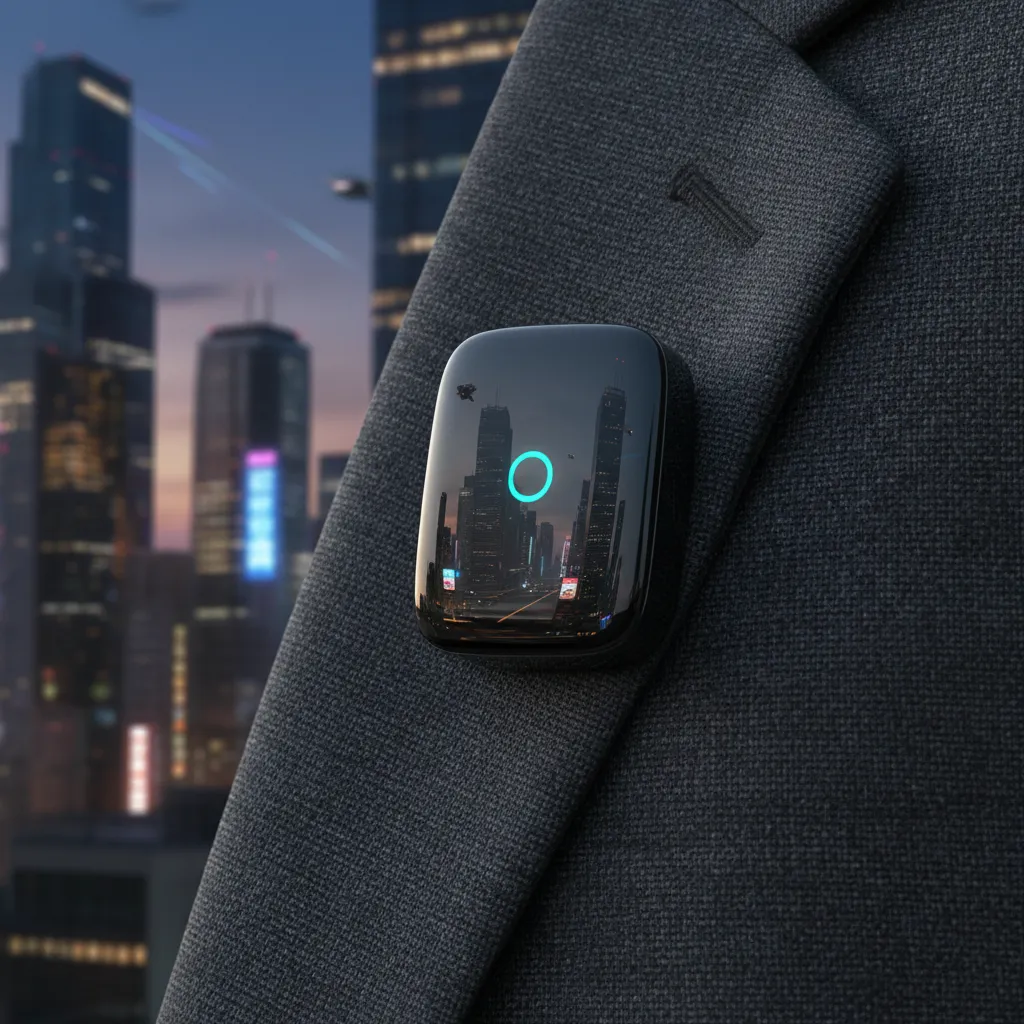
Introduction: The Screenless Dream and the Harsh Reality
In the relentless march of technological progress, few devices have generated as much polarized debate as the Humane AI Pin. Born from the minds of former Apple executives, Humane Inc. promised not just a new gadget, but a paradigm shift: a screenless smartphone replacement designed to integrate seamlessly into life, moving us away from the tyranny of the glass slab. This AI wearable device was touted as the dawn of ambient computing, where interaction is intuitive, proactive, and discreet.
But since its highly anticipated Humane AI Pin release date and subsequent wide release, the response has been… complicated.
For every enthusiast hailing the device as the future of mobile technology, there is a critic calling it an expensive, under-developed tech gadget review disaster. At the center of this controversy lies the essential question: Is the Humane AI Pin a visionary glimpse into tomorrow, or merely an ambitious, premature flop destined for the tech graveyard?
This deep dive offers a balanced, grounded AI Pin review. We will dissect the hardware, the groundbreaking Cosmos OS, the mandatory Humane AI Pin subscription, and the real-world performance to determine if this next-gen wearable is truly worth it in 2024, or if you should wait for the next iteration of wearable AI technology.
The Anatomy of Ambition: What is the Humane AI Pin?
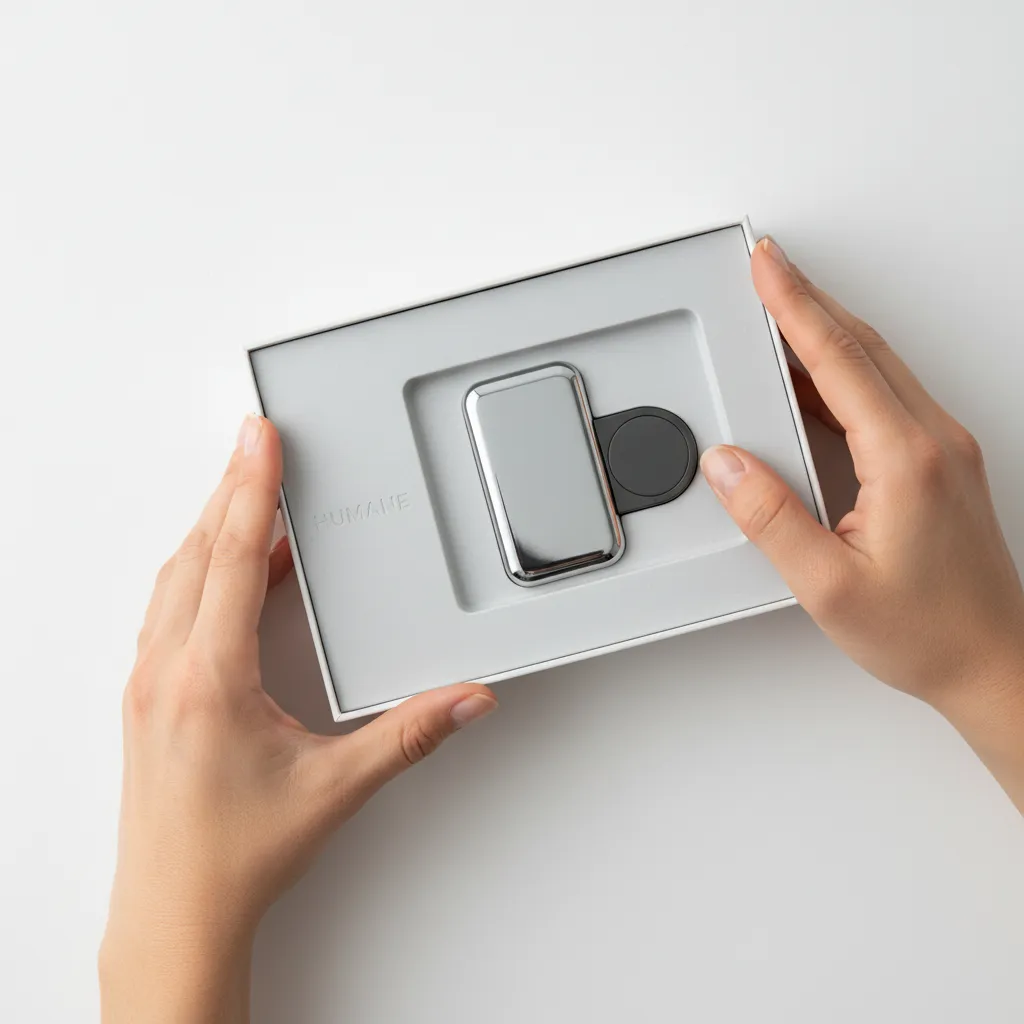
To understand the debate, we must first understand the device itself. The Humane AI Pin is a standalone, clip-on communicator that weighs just over an ounce. It relies entirely on voice commands, gestures, and its unique visual output system, aiming to free the user from constant screen interaction.
The Hardware: Specs and Design
From a design perspective, the Pin is a triumph of minimalist aesthetic. It’s a small, square, magnetically attaching device that clips onto clothing.
The key components in the Humane AI Pin specs are:
- Processor: A dedicated Snapdragon chip, optimized for AI workloads.
- Camera: A 13MP ultra-wide camera for capturing context and memories.
- Sensors: Accelerometers, gyroscopes, and ambient light sensors.
- Battery: A primary battery built into the device, supplemented by a magnetic “Battery Booster” for extended use—a critical piece of hardware given the intensive nature of its AI operations.
The setup process itself signifies its unique approach.
The Screenless Revolution: Laser Ink Display
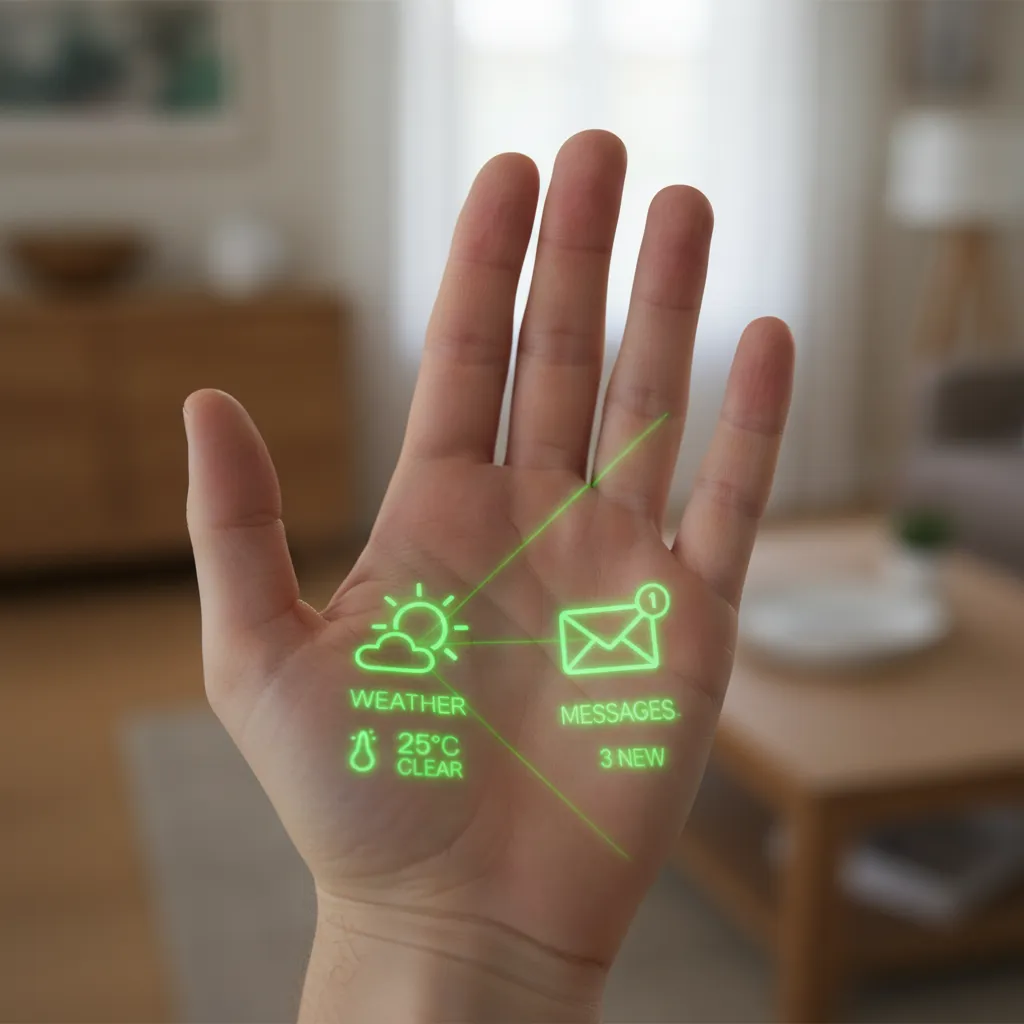
The most visually distinctive feature of the Pin is its laser ink display. Instead of a small built-in screen, the Pin uses a tiny laser projector to beam a green monochrome interface directly onto the user’s palm.
This projection serves as the primary output for information like current time, weather, messages, and basic navigation. The concept is revolutionary: information appears only when summoned and vanishes instantly when the hand is lowered, promoting presence and reducing distraction.
While visually stunning in Humane AI Pin demo videos, real-world usability has been a pain point. Bright sunlight, motion, and even the natural curve of the hand can make the display challenging to read or interact with reliably. This brings the central issue of the device into sharp focus: the gap between ambitious concept and practical execution.
Cosmos OS: The Brain of the Device
The operating system powering the device is Cosmos OS. Unlike traditional operating systems that rely on apps (like Android or iOS), Cosmos is built on an AI neural network and operates on a concept called “AI Services.” The system decides which service to use based on the user’s vocal query and contextual data. This is the core of its ambient computing goal.
The promise is radical: you don’t need to open a translation app, a search app, or a messaging app. You just speak your intent, and the Pin’s deep integration with LLMs (Large Language Models) finds the appropriate response or action.
“Cosmos OS isn’t about apps; it’s about instantaneous, context-aware actions. It seeks to bridge the gap between intention and action without the need for cumbersome digital navigation.”
[Related: unlocking-new-realities-ai-spatial-computing/]
AI Pin Features: The Promise vs. The Reality
The AI Pin features list is short but powerful in scope. Humane didn’t try to replicate a smartphone; they tried to reinvent the personal assistant.
1. Instant AI Search and Contextual Queries
The Pin excels at simple, instant queries. Asking “What’s the score of the game?” or “Tell me about the history of quantum computing” yields fast, voice-synthesized answers. Because the Pin is always listening (though only active when tapped or gestured to), it can potentially access real-time data faster than pulling out and unlocking a phone.
2. The Translator
One of the most highly praised features in the AI Pin hands-on reports is the real-time translation tool. By engaging the feature, the Pin listens to two people speaking different languages and translates the dialogue almost instantaneously. This provides genuine utility for international travelers or communication across language barriers.
3. Messaging and Call Management
The Pin handles essential communication via voice dictation. Users can compose texts and make calls entirely through voice. This feature works well when the user is in a quiet environment, but background noise significantly degrades the accuracy and efficiency, often leading to frustration—a major strike against its use as a primary smartphone replacement.
4. The “Catch Me Up” Feature
Using its AI Pin camera and built-in sensors, the Pin attempts to maintain continuous context of the user’s day. The “Catch Me Up” feature is designed to provide an instant summary of missed notifications, messages, and scheduled events, filtered and prioritized by the underlying AI. While ambitious, early reviews often cite this feature as inconsistent, sometimes summarizing irrelevant information or missing crucial alerts entirely.
The Case for “Flop”: Critical Headwinds and Practical Challenges
The “Flop” narrative is strong and largely driven by three critical areas: price, performance, and practicality. The core issue is that while the device is visionary, the Gen 1 product often fails to deliver reliable core functionality that users expect from a $700+ piece of technology.
The Financial Barrier: Price and Subscription
The cost structure of the Humane AI Pin is arguably its biggest hurdle.
| Component | Cost | Notes |
|---|---|---|
| Humane AI Pin Price (Hardware) | $699 USD | Equivalent to a high-end mid-range smartphone. |
| Mandatory Subscription | $24 USD/month | Required for network connectivity, AI services, and cellular data. |
| Total First Year Cost | $987 USD | Significantly higher than anticipated for a companion device. |
The required Humane AI Pin subscription is necessary because the device has no meaningful functions without constant access to the large language models and the T-Mobile network (in the U.S.). This adds a steep, continuous cost for functionality that many users already access via their existing smartphone and mobile plan. For many consumers asking, “is the AI Pin worth it?”, the steep initial investment coupled with the mandatory monthly fee makes the answer a clear “no” given the current performance level.
Battery Life and Practicality
The single most common complaint in nearly every AI Pin review centers on Humane AI Pin battery life. Because the Pin relies heavily on continuously fetching data and running complex AI models in the cloud, it consumes power rapidly.
The device often requires the magnetic battery booster to make it through a full day of moderate use. Even then, the entire system can generate significant heat, especially during periods of heavy AI computation or using the laser projector. Relying on an ancillary battery pack constantly undermines the device’s core mission of being an unobtrusive, always-ready accessory.
Inconsistency and Latency
Modern mobile users are accustomed to near-instantaneous feedback. The Pin, however, suffers from noticeable latency. When you tap the Pin and ask a question, there is often a pause of several seconds while the query travels to the cloud, is processed by the LLM, and the response is formulated and sent back. This delay breaks the flow of conversation and is a critical impediment to seamless ambient computing.
Privacy Concerns: The Always-On Assistant
While Humane has designed the device with privacy in mind (the camera and microphone are inactive unless explicitly engaged, indicated by a prominent Trust Light), the very nature of an always-clipped AI personal assistant raises privacy concerns AI Pin.
The device holds the potential to capture highly sensitive environmental and contextual data. Users must actively trust that Humane’s privacy protocols for the AI Pin camera and microphone are robust, especially when dealing with a device that is designed to be present for every moment of your day.
The Case for “Future”: Redefining Mobile Technology
While its current execution is flawed, dismissing the Humane AI Pin entirely would be short-sighted. Its existence signals a crucial shift in thinking about human-computer interaction, laying the groundwork for what wearable technology 2024 and beyond might look like.
The Philosophical Shift to Ambient Computing
The AI Pin represents a radical commitment to ambient computing—the idea that technology should fade into the background, providing information and assistance only when needed, not demanding constant attention.
The modern smartphone creates friction: pull it out, unlock it, find the app, wait for the app to load, perform the task. Humane envisions a world where the friction disappears. This focus on getting out of the screen and back into the physical world is the Pin’s highest value proposition.
Why Screenlessness Matters
The screenless smartphone design is more than a gimmick; it’s an attempt to solve the ubiquitous problem of digital distraction. We are cognitively exhausted by the endless notifications and the “Doomscrolling” loop.
By using the laser ink display only for brief bursts of information, the Pin forces brevity and immediate relevance. This fundamentally re-architects the user experience toward interaction based on voice and context, rather than endless visual scrolling. If future versions can nail the accuracy and speed, this approach could truly revolutionize personal focus and productivity.
[Related: ai-personal-growth-master-habits-unlock-potential/]
The Iterative Nature of Innovation
It is essential to remember that truly groundbreaking devices rarely achieve perfection in their first generation.
- The first iPhone lacked 3G and the App Store.
- The first smartwatches were slow and cumbersome.
- Early VR headsets were expensive, heavy, and induced nausea.
The Humane AI Pin is a Gen 1 product tackling a massive, complex challenge: integrating real-time, context-aware large language models into a minimalist, battery-powered wearable. Its current shortcomings (battery, latency, heat) are often engineering challenges typical of pioneering hardware. The Pin should be viewed as a proof-of-concept—an incredibly expensive and ambitious Humane AI Pin demo—that validates the demand for a non-traditional interface. It has established the necessary beachhead for next-gen wearable devices.

Competition and Context: Where Does the AI Pin Stand?
The wearable AI technology landscape is small but rapidly growing. The primary conceptual competitor to the Humane AI Pin is the Rabbit R1.
Rabbit R1 vs Humane AI Pin: Two Paths to AI
Both the Rabbit R1 and the Humane AI Pin seek to leverage AI to simplify tasks, but they approach the problem differently:
| Feature | Humane AI Pin | Rabbit R1 |
|---|---|---|
| Form Factor | Clip-on, screenless, highly minimalist | Dedicated handheld device with a screen and rotating camera |
| Operating System | Cosmos OS (Proprietary, AI Services) | Rabbit OS (Large Action Model - LAM) |
| Primary Interaction | Voice, Gestures, Laser Projection | Voice, Analog Scroll Wheel, Touch Screen |
| Price (Hardware) | $699 USD | $199 USD |
| Subscription | Mandatory $24/month | None required for basic functionality |
| Vision | Eliminate the screen entirely (Ambient Computing) | Simplify app interaction into one AI layer (Action Model) |
The contrast is stark: Rabbit R1 is a low-cost, screen-based device designed to simplify how we use existing digital services. The Humane AI Pin, on the other hand, is an expensive, high-concept risk attempting to create an entirely new digital experience. The Rabbit R1 is arguably more practical and accessible, while the Pin is philosophically more ambitious.
[Related: rabbit-r1-a-new-era-of-mobile-ai/]
Replacing the Smartphone: Is the World Ready?
The Pin’s ultimate challenge is displacing the device that does everything, everywhere: the modern smartphone.
The smartphone is not merely a tool; it is an aggregation of necessary functions (payment, navigation, identity, media, communication, banking). For the Pin to succeed as a true smartphone replacement, it needs to deliver reliability across all these critical functions. Currently, the Pin lacks robust integration with many essential third-party services, making it impossible to rely on it as a primary device.
The path forward for Humane might be acknowledging that the Pin is currently an exceptional best AI gadgets companion device, not a replacement. It can handle ephemeral information and creative tasks—like instant translation or quick notes—while the smartphone handles the high-friction necessities like complicated navigation or secure banking.
[Related: ai-travel-plan-your-dream-trip-faster/]
Humane AI Pin Review: Evaluating Value and Vision
The question of whether the Pin is a flop or the future hinges entirely on the observer’s definition of success.
The Perspective of the Early Adopter (The Future)
For early adopters, researchers, and technology enthusiasts—those who value the vision of ambient computing and want to be at the bleeding edge of wearable AI technology—the Pin is a success. It proves that the screenless, voice-first paradigm is physically possible. It offers a fresh, minimalist approach to interacting with the digital world, and for people seeking to reduce screen time, it provides a functional alternative.
The Perspective of the Average Consumer (The Flop)
For the average consumer expecting polished, reliable technology at a premium price point, the Pin is currently a flop. The high cost, mandatory subscription, mediocre battery life, and inconsistent performance mean it fails the basic test of practical utility. It simply doesn’t justify replacing a reliable, feature-rich smartphone.
Verdict on Investment: Is the AI Pin worth it?
If you are looking for a reliable communication device or value, look elsewhere. If you are deeply interested in the evolution of human-computer interaction and are willing to pay a high price to beta-test the future of mobile technology, then the Humane AI Pin demo unit might be for you. For everyone else, wait for the second or third generation.
Deep Dive into the Technological Stack
Understanding the depth of the Pin requires looking beyond the immediate usability critiques and into the Cosmos OS and its AI foundation.
The Power of the AI Personal Assistant
Humane’s proprietary software relies on massive server-side processing. Every query, every translation, and every contextual awareness trigger requires real-time neural network evaluation. This is what differentiates the Pin from a simple voice recorder or smartwatch. The AI isn’t just listening for keywords; it’s trying to infer intent and context based on audio, visual, and environmental cues.
This intentional reliance on high-power LLMs explains the high Humane AI Pin subscription cost—users are effectively paying for direct access to premium AI computing power, not just a cellular connection. The $24/month is the entry fee into a truly cloud-native, generative AI experience.
[Related: ai-content-powerup-speed-quality-today/]
Addressing the Latency Problem
The inherent latency in the device is a fundamental challenge for ambient computing. To make the Pin feel “instant,” Humane and other wearable technology 2024 manufacturers need to innovate in several areas:
- Edge Computing: Moving smaller, more frequently used AI models directly onto the device (on the Snapdragon chip) to handle basic commands and context locally, reducing reliance on the cloud.
- 5G/6G Optimization: Leveraging future low-latency, high-bandwidth networks to minimize round-trip travel time for cloud-based queries.
- Predictive AI: Allowing the AI personal assistant to anticipate the user’s need based on known patterns (e.g., automatically launching the translation service when foreign language is detected, or surfacing driving directions near commuter time).
The Pin’s performance will exponentially improve as network speeds increase and specialized AI chips become more efficient, making the current experience a snapshot in time, rather than a final verdict.
The Camera: A Vision for Context
The AI Pin camera functionality is crucial for its contextual awareness. It allows the Pin to “see” and interpret the environment.
- Hold up a piece of fruit and ask, “Is this ripe?”
- Show a product label and ask, “Does this contain dairy?”
These features demonstrate genuine value by bridging the digital world with the physical world in a uniquely intuitive way. While initial accuracy is variable, the potential for using visual input to enrich the AI’s understanding is profound.
Conclusion: A Glimpse, Not a Revolution (Yet)
The Humane AI Pin is neither a definitive flop nor a complete revolution. It is, perhaps, best described as an important, expensive first draft of the future.
The vision of a screenless smartphone powered by a seamless, context-aware AI wearable device is compelling and necessary for moving beyond the distraction economy. The Cosmos OS and the laser ink display showcase extraordinary ambition and engineering prowess.
However, the reality of the Humane AI Pin review points to significant roadblocks: the heavy Humane AI Pin price tag, the ongoing Humane AI Pin subscription, frustrating battery life, and debilitating latency. These factors prevent the device from being a practical smartphone replacement for the vast majority of users today.
Humane Inc. deserves credit for daring to redefine mobile technology. They have established a new category—ambient computing—that will undoubtedly be perfected by later entrants, or their own subsequent iterations. For now, the Pin serves as a magnificent, albeit costly, reminder that the future of tech is less about packing more into a screen and more about making the screen disappear entirely.
If you are looking for the best AI gadgets to spend your money on today, there are safer bets. If you are an architect of tomorrow and want to feel the future of mobile technology clipped to your lapel, the Humane AI Pin offers a tantalizing, if flawed, preview.
FAQs (Frequently Asked Questions)
Q1. What is the Humane AI Pin and what does it do?
The Humane AI Pin is a standalone, screenless AI wearable device designed to replace or supplement your smartphone. It uses a laser ink display projected onto your hand and is powered by voice commands, gestures, and the Cosmos OS which leverages large language models for tasks like real-time translation, messaging, and contextual search.
Q2. Is the Humane AI Pin worth the price and subscription?
For most general consumers, the Pin is not currently worth it. The device costs $699, plus a mandatory $24/month Humane AI Pin subscription for network access and AI services. Given its current performance issues (latency, battery life), it functions better as a fascinating prototype than a reliable daily driver.
Q3. How long does the Humane AI Pin battery life last?
The Humane AI Pin battery life is generally considered short due to its intensive, cloud-based AI processing. While designed to be used with a magnetic “Battery Booster,” users often report needing to swap or recharge the device multiple times throughout a moderate day of use.
Q4. When was the Humane AI Pin release date and where can I buy it?
The initial public release of the Humane AI Pin began in late 2023 and became more widely available in early 2024. It is available directly from Humane Inc.’s website.
Q5. How does the Humane AI Pin compare to the Rabbit R1?
The Rabbit R1 vs Humane AI Pin comparison shows two very different approaches to wearable AI technology. The Rabbit R1 is a $199 handheld device with a screen, focused on simplifying app actions via its Large Action Model (LAM). The Pin is a $699 screenless, clip-on device focused on ambient computing and replacing the traditional smartphone interface entirely.
Q6. What are the main privacy concerns with the Humane AI Pin?
The primary privacy concerns AI Pin stem from its design as an always-present, context-aware device with an AI Pin camera and microphone. While Humane implements a physical “Trust Light” to indicate when the camera and mic are active, users must trust that the system is only recording or processing data when explicitly intended, given the sensitive nature of the ambient data it can collect.