Guardians of the Digital Frontier: How AI is Revolutionizing Cybersecurity

Introduction: The Unfolding Digital Battlefield
In an era defined by hyper-connectivity, our lives, businesses, and critical infrastructure are intrinsically linked to the digital realm. This interconnectedness, while offering unprecedented opportunities, has also opened a vast and complex battlefield where cyber threats lurk at every corner. From sophisticated ransomware attacks crippling global corporations to nation-state sponsored espionage and insidious data breaches, the digital frontier is under constant assault. Traditional, reactive cybersecurity measures are proving increasingly insufficient against the escalating volume, velocity, and stealth of modern cyberattacks.
Enter Artificial Intelligence (AI) — the new vanguard in the battle for digital security. Far from being a futuristic concept, AI cybersecurity is rapidly becoming the cornerstone of robust defense strategies, promising to revolutionize how we detect, prevent, and respond to threats. This article delves deep into the transformative power of AI in cybersecurity, exploring how artificial intelligence is not just enhancing existing defenses but fundamentally reshaping the landscape of digital protection. We’ll uncover the mechanisms behind AI threat detection, the efficacy of machine learning cybersecurity, the tangible AI security benefits, and the crucial role of cybersecurity AI tools in safeguarding our increasingly digitized world. Join us as we explore how AI is emerging as the ultimate guardian of the digital frontier.
The Urgent Need for AI in Cybersecurity: Confronting a Evolving Threat Landscape
The digital threat landscape is a dynamic and relentless adversary. Cybercriminals are no longer relying on simple tactics; they employ advanced techniques, often leveraging AI themselves to craft more potent and evasive attacks. The sheer scale of data generated daily, coupled with the proliferation of connected devices (IoT) and the rapid migration to cloud environments, creates an attack surface that is too vast and complex for human defenders alone to manage effectively.
Traditional cybersecurity approaches, largely reliant on signature-based detection and manual analysis, are often reactive. They struggle to keep pace with zero-day exploits, polymorphic malware, and sophisticated social engineering tactics that constantly mutate and adapt. This creates a critical gap, where the speed and volume of attacks far outstrip the human capacity to identify and neutralize them. This urgent need for an automated, intelligent, and predictive defense mechanism has paved the way for the indispensable integration of AI into our security frameworks.
What is AI Cybersecurity? Understanding the Core Concepts
At its heart, AI cybersecurity refers to the application of artificial intelligence and machine learning technologies to detect, prevent, and respond to cyber threats. It’s about empowering security systems with the ability to learn, reason, and make decisions in a way that mimics human intelligence, but at a speed and scale impossible for humans.
Machine Learning Cybersecurity: The Brain Behind the Brawn
Machine learning (ML) is a subset of AI that is particularly critical in cybersecurity. ML algorithms are trained on vast datasets of network traffic, user behavior, threat intelligence, and malware samples. Through this training, they learn to identify patterns, anomalies, and indicators of compromise that signify malicious activity.
Unlike traditional rule-based systems that require explicit programming for every known threat, ML models can:
- Adapt and Evolve: They can continuously learn from new data, improving their accuracy and effectiveness over time.
- Identify Unknown Threats: By recognizing deviations from “normal” behavior, they can flag novel or zero-day attacks that have no prior signatures.
- Process Massive Data: ML can sift through petabytes of data in real-time, identifying subtle indicators that would be missed by human analysts.
This ability to autonomously learn and adapt makes machine learning cybersecurity an incredibly powerful tool in the fight against dynamic and sophisticated cyber threats.
Key Applications of AI in Cybersecurity: A Multi-Layered Defense
The integration of AI extends across virtually every facet of cybersecurity, fortifying defenses and enhancing responsiveness.
AI Threat Detection and Prevention
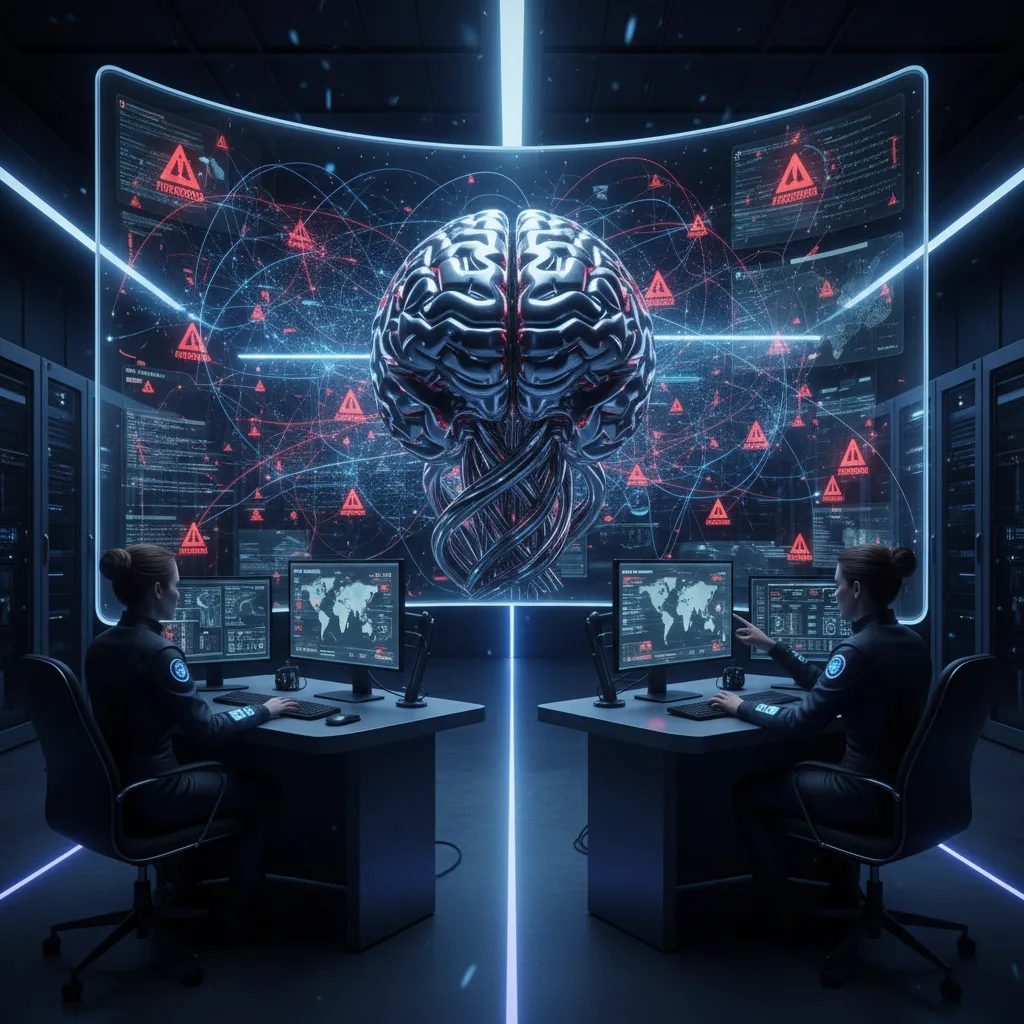
One of the most critical applications of AI is in identifying and stopping threats before they can inflict damage. AI threat detection systems analyze network traffic, endpoint activity, and user behavior in real-time to spot malicious patterns.
Signature-based vs. Anomaly-based Detection
While traditional systems rely on known threat signatures, AI excels at anomaly-based detection. It establishes a baseline of normal system and user behavior. Any significant deviation from this baseline – an unusual login attempt, an abnormal data transfer, or an executable running from an unexpected location – can be flagged as a potential threat, even if it has no known signature. This is crucial for combating zero-day exploits and advanced persistent threats (APTs).
Behavioral Analytics Cybersecurity
AI-powered behavioral analytics cybersecurity focuses on understanding the typical actions of users, applications, and network entities. By continuously monitoring and learning these behaviors, AI can detect subtle shifts that might indicate an insider threat, compromised credentials, or a sophisticated attack gradually unfolding. For example, if an employee suddenly starts accessing unusual files or attempting to log in from a foreign country, AI can flag this as suspicious activity.
Automated Cyber Defense and Incident Response
The speed of cyberattacks demands an equally swift response. Automated cyber defense systems, powered by AI, can take immediate action to neutralize threats without human intervention. This significantly reduces the window of opportunity for attackers.
Security Operations AI
Modern security operations AI platforms automate many of the repetitive and time-consuming tasks traditionally performed by security analysts. This includes sifting through alerts, correlating events from disparate systems, and prioritizing threats based on their potential impact. This cybersecurity automation allows human analysts to focus on complex investigations and strategic planning.
AI for Incident Response
When an attack occurs, rapid AI for incident response is paramount. AI-driven systems can automatically isolate infected systems, block malicious IP addresses, revoke compromised user credentials, and even initiate patching processes. This not only limits the spread of an attack but also drastically reduces recovery times and associated costs. Threat intelligence automation, driven by AI, can also feed real-time attack data into response systems, making them more adaptive.
Predictive Cybersecurity and Advanced Threat Intelligence AI
AI is transforming cybersecurity from a reactive posture to a proactive and predictive one. Predictive cybersecurity leverages AI and machine learning to analyze historical data, current threat intelligence feeds, and global attack patterns to forecast future vulnerabilities and potential attack vectors.
Advanced Threat Intelligence AI
Advanced threat intelligence AI aggregates and analyzes vast amounts of data from various sources – dark web forums, malware repositories, security blogs, and global sensor networks. It identifies emerging threat trends, attacker methodologies, and potential targets, providing organizations with actionable insights to strengthen their defenses before an attack materializes. This allows for proactive patching, policy adjustments, and resource allocation.
AI in Network Security and Cloud Security AI
The network is the backbone of any organization, and its security is paramount. AI in network security monitors traffic for anomalies, identifies unauthorized access attempts, and segments networks to contain breaches. In cloud environments, cloud security AI addresses the unique challenges of distributed infrastructure, shared responsibility models, and dynamic workloads. It monitors cloud configurations, identifies misconfigurations, and detects suspicious activity within cloud instances and services, ensuring compliance and preventing data exfiltration.
Endpoint Security AI and Zero Trust AI Security
Individual devices – laptops, smartphones, IoT devices – are often the first point of entry for attackers. Endpoint security AI provides advanced protection by monitoring device behavior, detecting malware, and blocking malicious processes. It goes beyond traditional antivirus by using machine learning to identify novel threats based on their behavior, not just known signatures.
The Zero Trust AI security model, heavily reliant on AI, operates on the principle of “never trust, always verify.” Every user, device, and application is continuously authenticated and authorized, regardless of whether they are inside or outside the traditional network perimeter. AI continuously analyzes contextual factors – user location, device health, access patterns – to determine if access should be granted or revoked in real-time.
AI for Data Protection
Data is the ultimate prize for cybercriminals. AI for data protection helps organizations identify sensitive data, classify it, and monitor its access and movement. It can detect unusual data access patterns, prevent unauthorized data exfiltration, and ensure compliance with data privacy regulations like GDPR and CCPA. AI can also enhance data encryption and access control mechanisms, adding an extra layer of defense for critical information.
AI Security Benefits: A Paradigm Shift in Digital Defense
The integration of AI into cybersecurity offers a multitude of compelling advantages that are fundamentally changing the game for defenders.
Enhanced Speed and Accuracy
AI systems can analyze vast datasets and identify threats in milliseconds, far surpassing human capabilities. This speed is crucial for responding to fast-moving attacks. Moreover, AI’s ability to learn and refine its models leads to significantly higher accuracy in distinguishing between legitimate and malicious activities, drastically reducing false positives that often plague traditional security systems.
Scalability and Efficiency
As organizations grow and their digital footprint expands, AI-driven security solutions can scale effortlessly to cover new endpoints, cloud environments, and data volumes. This cybersecurity innovation AI eliminates the need for proportional increases in human security staff for every expansion, leading to greater operational efficiency and cost savings.
Proactive Defense and Reduced Human Error
AI shifts the paradigm from reactive to proactive defense. By leveraging predictive cyber security and identifying vulnerabilities before they are exploited, organizations can preemptively strengthen their defenses. Furthermore, AI automates repetitive tasks and makes data-driven decisions, significantly reducing the potential for human error, which is a common factor in successful breaches.
Continuous Learning and Adaptation
Unlike static security measures, AI models are designed for continuous learning. They adapt to new threats, evolving attack techniques, and changes in the organizational environment. This ensures that an AI-enhanced security system remains relevant and effective against the latest threats, fostering a dynamic and resilient defense posture.
Challenges and Considerations for AI Security
While the benefits of AI in cybersecurity are undeniable, its implementation is not without challenges. Understanding these hurdles is crucial for effective deployment.
Data Quality and Bias
The performance of any AI system is heavily dependent on the quality and quantity of its training data. If the data is biased, incomplete, or contains errors, the AI model can inherit these flaws, leading to ineffective or even discriminatory security decisions. Ensuring clean, diverse, and representative datasets is a significant challenge.
Complexity and Implementation Costs
Developing, deploying, and maintaining sophisticated AI-driven security platforms requires significant investment in technology, infrastructure, and specialized talent. The complexity of these systems can also make integration with existing security architectures challenging, requiring careful planning and execution.
The Evolving Threat Landscape (AI vs. AI)
As defenders increasingly rely on AI, so too do attackers. The emergence of adversarial AI, where malicious actors attempt to trick or poison AI models, presents a formidable challenge. This creates an ongoing “AI vs. AI” arms race, demanding constant innovation and adaptation from security vendors.
Skills Gap and Ethical Concerns
There is a growing demand for cybersecurity professionals with expertise in AI and machine learning. The skills gap in this area can hinder effective deployment and management of AI security solutions. Furthermore, ethical considerations surrounding data privacy, algorithmic transparency, and the potential for autonomous decision-making in critical security scenarios need careful consideration.
The Symbiotic Relationship: Human and AI Collaboration
Despite the advanced capabilities of AI, it is crucial to recognize that AI is not a replacement for human intelligence in cybersecurity. Instead, the most effective next-gen cybersecurity AI strategies involve a symbiotic relationship where AI augments human capabilities.

Humans bring critical thinking, intuition, contextual understanding, and the ability to handle novel, unprecedented situations that AI might not be trained for. AI excels at processing vast amounts of data, identifying patterns, and automating routine tasks, freeing up human analysts to focus on strategic analysis, complex threat hunting, and incident management. This collaboration—where AI handles the heavy lifting of data analysis and initial threat detection, and humans provide the strategic oversight and nuanced decision-making—creates a far more robust and intelligent defense system than either could achieve alone. This partnership ensures that we leverage the best of both worlds.
Future of Cybersecurity AI: Glimpsing the Horizon
The trajectory of AI in cybersecurity points towards an increasingly intelligent, autonomous, and integrated future. The future of cybersecurity AI is not just about incremental improvements but transformative shifts.
Next-Gen Cybersecurity AI
We can expect next-gen cybersecurity AI to move towards even greater automation and self-healing capabilities. Systems will not only detect and respond but also proactively reconfigure network defenses, adjust access policies, and deploy countermeasures with minimal human intervention. This vision of smart cybersecurity will prioritize resilience and rapid recovery.
AI Security Trends: Towards Proactive and Personalized Defenses
Future AI security trends will emphasize hyper-personalization of security measures, adapting to individual user and device profiles. The integration of AI with other emerging technologies like quantum computing (for breaking and creating advanced encryption) and blockchain (for secure data integrity) will open new frontiers in defense. We will see more sophisticated AI security solutions that predict human behavior, anticipate attacker moves, and learn from global threat intelligence in real-time to create an impenetrable digital fortress.
Quantum Computing and AI Security
The advent of quantum computing poses both a threat and an opportunity for cybersecurity. While quantum computers could potentially break current encryption standards, AI, combined with quantum-resistant cryptography, could be instrumental in developing new, unbreakable encryption methods and detecting quantum-enabled attacks.
Hyper-personalized Security
Imagine security systems that understand your individual digital habits so deeply that any deviation, no matter how minor, triggers an alert. This hyper-personalized approach, driven by advanced AI, will offer unparalleled protection against identity theft and account compromise, making it incredibly difficult for attackers to impersonate legitimate users.
Choosing the Right Cybersecurity AI Tools and Platforms
For organizations looking to embrace the power of AI in their security strategies, selecting the right cybersecurity AI tools and AI-driven security platforms is paramount. This involves a careful assessment of needs, budget, and integration capabilities.
Key considerations include:
- Vendor Reputation and Expertise: Choose providers with a proven track record in both AI and cybersecurity.
- Integration with Existing Infrastructure: Ensure the AI solution can seamlessly integrate with your current security information and event management (SIEM) systems, firewalls, and endpoint protection.
- Scalability and Flexibility: The solution should be able to grow with your organization and adapt to changing security requirements.
- Threat Intelligence Capabilities: Robust AI security platforms should incorporate comprehensive and up-to-date threat intelligence feeds.
- User-Friendliness and Reporting: While AI automates much, human oversight is still necessary. The platform should offer intuitive dashboards and clear reporting to facilitate effective human analysis.
Investing in these tools is an investment in the future resilience and security of your digital assets. For deeper insights into leveraging technology for personal finance, you might explore resources on the fintech revolution: mastering money & innovative personal finance tools. Similarly, understanding AI’s broader impact on daily life and well-being, as discussed in rise of AI companions: enhancing daily life & emotional well-being, provides valuable context for its role in specialized domains like cybersecurity.
Conclusion: Securing Tomorrow, Today
The digital frontier is constantly expanding, and with it, the complexity and audacity of cyber threats. In this relentless battle, AI is not merely an enhancement; it is an indispensable partner, a force multiplier that is redefining the very essence of digital defense. From sophisticated AI threat detection and automated cyber defense to predictive cybersecurity and the nuances of behavioral analytics cybersecurity, AI-powered solutions are proving their mettle.
The convergence of human expertise and advanced Artificial intelligence cyber security capabilities promises a future where our digital lives are better protected, where threats are identified and neutralized with unprecedented speed and accuracy. While AI security challenges exist, the continuous innovation in AI security trends and the development of robust AI-driven security platforms are paving the way for a more secure and resilient digital world. Embracing AI-enhanced security is no longer an option but a strategic imperative for any organization or individual navigating the complexities of the 21st-century digital landscape. As we continue to push the boundaries of technology, AI will stand as the ultimate guardian, ever vigilant, ever learning, protecting the guardians of our digital frontier.
Don’t let your digital defenses lag behind the evolving threats. Explore how integrating AI security solutions can fortify your digital infrastructure and secure your future.
FAQs
Q1. What is AI cybersecurity?
AI cybersecurity involves applying artificial intelligence and machine learning to detect, prevent, and respond to cyber threats, enabling systems to learn, adapt, and make intelligent decisions to protect digital assets.
Q2. How does AI improve threat detection?
AI improves threat detection by analyzing vast amounts of data in real-time, identifying anomalies and suspicious patterns that indicate new or evolving threats, including zero-day attacks, which traditional signature-based systems might miss. This is often referred to as AI threat detection.
Q3. What are the main benefits of using AI in cybersecurity?
The main benefits include enhanced speed and accuracy in threat detection, increased scalability and efficiency, proactive defense capabilities, reduced human error, and continuous learning and adaptation to new threats, leading to a more resilient security posture.
Q4. Can AI fully replace human cybersecurity experts?
No, AI is not intended to fully replace human cybersecurity experts. Instead, it serves as a powerful tool to augment human capabilities, automating repetitive tasks and processing vast data, thereby allowing human experts to focus on complex analysis, strategic planning, and critical decision-making.
Q5. What are some examples of AI cybersecurity tools?
Examples of cybersecurity AI tools include AI-powered endpoint detection and response (EDR) systems, security information and event management (SIEM) platforms with machine learning capabilities, behavioral analytics tools, and AI-driven threat intelligence platforms.
Q6. What are the challenges of implementing AI in cybersecurity?
Challenges include ensuring high-quality training data, managing the complexity and cost of implementation, addressing the evolving threat landscape (e.g., adversarial AI), and overcoming the skills gap in AI and cybersecurity expertise.
Q7. How does AI contribute to predictive cybersecurity?
AI contributes to predictive cybersecurity by analyzing historical data, current threat intelligence, and global attack patterns to forecast potential vulnerabilities and future attack vectors, allowing organizations to proactively strengthen their defenses before an attack occurs.
Q8. What is the role of machine learning in cybersecurity?
Machine learning is a critical subset of AI in cybersecurity, enabling systems to learn from data without explicit programming. It’s used for pattern recognition, anomaly detection, malware analysis, and predicting future threats, forming the backbone of many AI security solutions.