GPT-4o vs. Project Astra: The Future of AI is Now
Introduction: The Multimodal AI Cold War
The landscape of intelligent assistants changed forever in the spring of 2024. Within weeks, OpenAI unveiled GPT-4o—an omnimodel designed for instantaneous, natural conversation—and Google presented Project Astra, a groundbreaking endeavor focused on creating a proactive, context-aware real-time conversational AI.
This wasn’t just another incremental update; it was a fundamental shift in human-computer interaction. Both announcements, the OpenAI new model launch and the showcases at Google I/O 2024 AI, demonstrated that the future of AI is no longer about typing prompts into a box. It’s about interaction that mirrors the speed, nuance, and seamlessness of human communication.
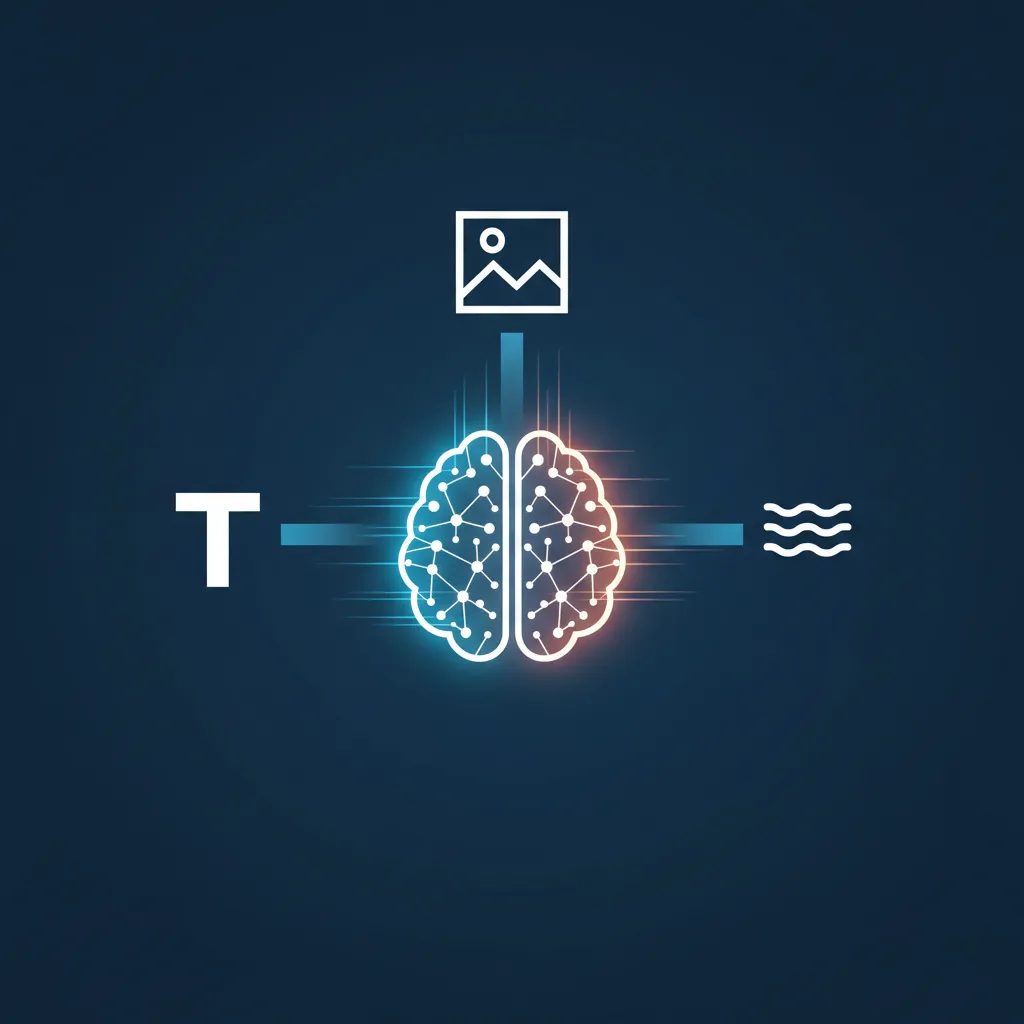
The competition between GPT-4o vs. Project Astra represents the pinnacle of next-gen AI technology. Both are designed to handle text, audio, and vision inputs and outputs natively within a single model—the definition of true multimodal AI. But which one is leading the charge? How will they integrate into our daily lives? And what do these revolutionary assistants mean for the average user?
In this comprehensive AI assistant comparison, we will break down the capabilities, performance metrics, and strategic positioning of both GPT-4o and Project Astra, helping you understand where the cutting edge of artificial intelligence truly lies.
The Dawn of Omnimodel AI: Defining the Contenders
Before comparing the two titans, it’s crucial to understand their shared architectural evolution. Traditional AI models often used separate modules to process different modalities (e.g., one model for speech recognition, one for text generation, one for image captioning). The latency introduced by passing information between these components made real-time conversation impossible.
Both GPT-4o and Project Astra solve this bottleneck by adopting an omnimodel or fully multimodal architecture, meaning they were trained end-to-end across text, audio, and visual data streams.
What is GPT-4o? The Omni-Model for Speed and Accessibility
GPT-4o (the “o” stands for “omni”) is OpenAI’s flagship model, announced in May 2024. The key differentiator of what is GPT-4o is its staggering speed and accessibility. It processes voice inputs and responds in as little as 232 milliseconds—nearly matching the speed of a typical human conversation.
This dramatic reduction in AI model latency is what enables true real-time interaction. The model can be interrupted mid-sentence, analyze the tone of voice, and even detect emotion, making the interaction feel far more natural than previous versions of ChatGPT or other assistants.
A major strategic move by OpenAI was to make many of the core free ChatGPT features powered by GPT-4o available to all users, immediately democratizing access to cutting-edge performance.
Key Features of GPT-4o:
- Native Multimodality: Text, audio, and image inputs are processed by the same neural network.
- Speed: Average audio response time is under 300ms.
- Emotional Range: Can detect and respond with a wide range of expressive and emotional tones in its voice output.
- Vision Capabilities: Superior image and video analysis, allowing it to perform live AI vision capabilities tasks, such as solving complex math problems written on paper or explaining code.
Project Astra: Google’s Vision for Proactive, Context-Aware AI
Project Astra, revealed shortly after GPT-4o at Google I/O 2024 AI, isn’t just a new model—it’s an overarching project to build the world’s most advanced, proactive universal AI helper for daily tasks. While the underlying technology likely utilizes advanced versions of Gemini, the public demonstration focused heavily on the seamless integration and contextual awareness of the assistant.
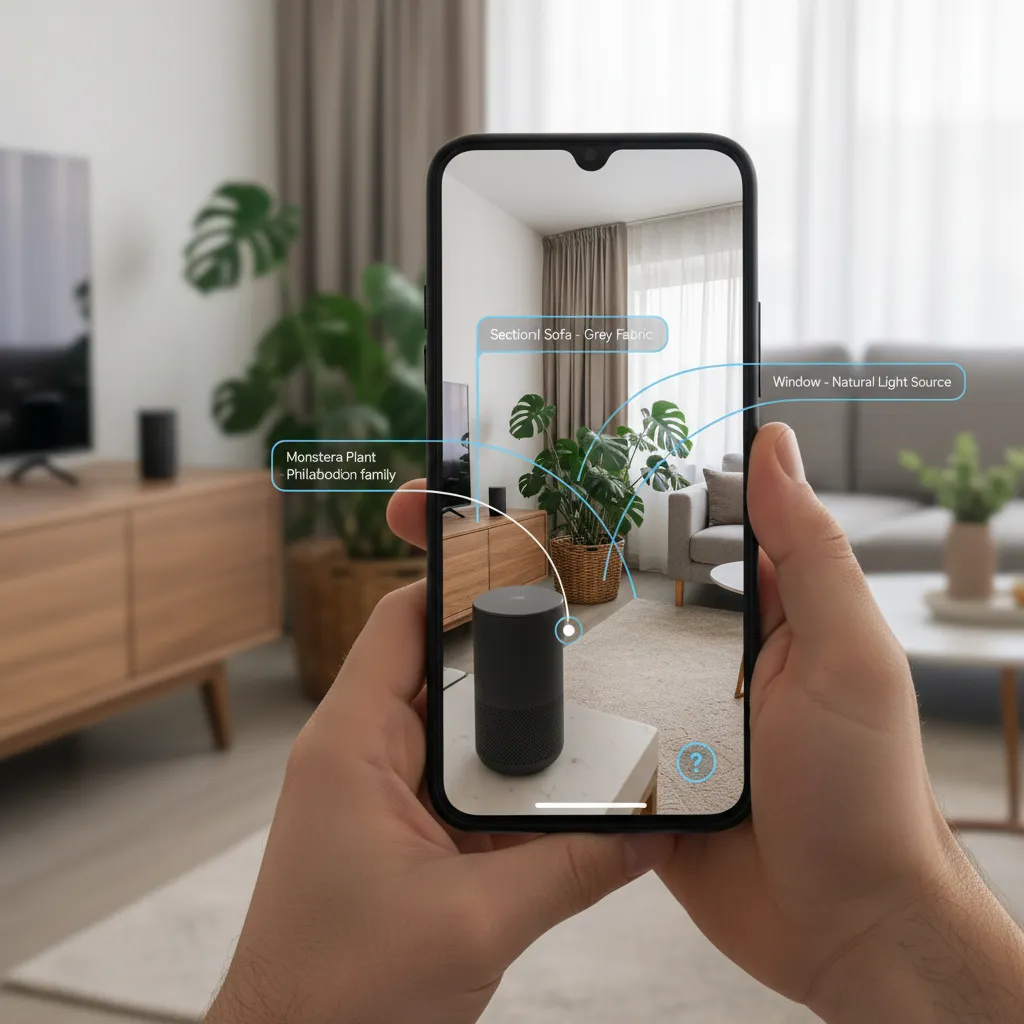
The Project Astra demo showcased an AI that uses a phone or smart glasses camera to observe the world constantly. This allows it to remember where items are, understand spatial context, and execute complex, multi-step commands based on what it sees and hears in real time.
Google’s goal for Astra is to move beyond simple question-answering and into true partnership, anticipating needs and offering assistance before being explicitly asked.
Head-to-Head Comparison: Latency, Vision, and Strategy
The rivalry between OpenAI vs Google has pushed the boundaries of what is possible. While both models promise similar high-level capabilities, the subtle differences in their approach to latency, vision, and strategic deployment reveal their distinct competitive angles.
Latency and Real-Time Interaction
This is arguably the most critical battleground for real-time conversational AI. A delay of even a few hundred milliseconds breaks the feeling of human conversation.
| Feature | GPT-4o (OpenAI) | Project Astra (Google) | Winner (By Announced Metric) |
|---|---|---|---|
| Average Voice Latency | 232–320 milliseconds | ”Almost instantaneous” (demonstrated) | Project Astra (Claimed) |
| Model Type | Single, unified omnimodel | Highly optimized Gemini variant (likely) | Tie |
| Interruption Handling | Excellent; handles interruptions mid-sentence | Demonstrated seamless interruption and correction | Tie |
| Focus | Maximizing responsiveness and expressive voice | Minimizing end-to-end perception-to-action lag | GPT-4o (Quantified Metric) |
While Google’s Project Astra demo showed incredibly fluid, almost zero-latency responsiveness, OpenAI provided hard numbers for GPT-4o. The core capability of GPT-4o’s low AI model latency is proven and being rolled out immediately across text and voice. Google’s demonstration, while compelling, is still categorized as a ‘project,’ leaving some questions about the immediate, widespread availability and consistent performance metrics.
Vision and Spatial Reasoning (AI Vision Capabilities)
The true test of a multimodal AI lies in how effectively it sees, processes, and interacts with the visual world. Both systems excel here, but with different emphases.
GPT-4o excels at deep visual analysis of static images or real-time video streams.
- Example: Showing GPT-4o a complex graph and asking it to summarize the trends, or presenting it with a foreign menu and having it translate and explain the dishes. It can see and solve equations handwritten on a notepad.

Project Astra, however, focuses heavily on spatial and temporal awareness. Because the assistant is designed to be continually present (as if running in the background of your life via a camera), it develops a memory of the environment.
- Example: In the demo, Astra used the camera to locate a misplaced object (glasses) in a messy room, based on its memory of where it last saw them. This capability goes beyond simple object recognition and moves toward contextual, persistent vision.
[Related: the-xai-revolution-demystifying-ai-decisions-trust-transparency/]
Voice and Emotional Nuance
The conversational quality of these new models is what truly makes them feel like the future of AI assistants.
GPT-4o introduced five highly expressive voices, capable of changing pace, tone, and even showing ‘excitement’ or ‘calm’ depending on the content. The input side is equally impressive, allowing it to interpret the user’s emotional state or hesitation based on vocal inflections. This depth is vital for applications like live AI translation or emotional support.
Project Astra’s voice, while highly natural and fluid, was demonstrated as being primarily focused on efficiency and clarity. Its strength is in the back-and-forth, almost seamless conversation flow, ensuring the user never feels like they are waiting for the AI to process the input.
Accessibility and Cost
OpenAI made a bold strategic move by making GPT-4o the default model for all free ChatGPT features, rolling out core vision, memory, and high-speed text capabilities to everyone. The advanced voice and live video features are gradually rolling out to Plus and Enterprise users first, but the shift signifies a push for market share dominance. How to use GPT-4o is now simply a matter of accessing the standard ChatGPT interface or mobile app.
Google’s Project Astra, conversely, is less about a standalone app and more about deep integration into Google’s ecosystem (Android, Search, Google Assistant). While the eventual goal is likely widespread availability, the current state suggests it may be rolled out through Google services first, potentially replacing or enhancing the existing Gemini framework. This may lead to an interesting GPT-4o vs Gemini strategic competition, with Gemini 2.5 Pro and Flash being the direct rivals to GPT-4o’s core capabilities, while Astra represents the conceptual future of Google’s ubiquitous presence.
[Related: ai-drug-discovery-revolutionizing-medicine/]
Revolutionary Use Cases for Next-Gen AI Technology
The true value of these omnimodel systems is realized in the complex, cross-modal tasks they can perform, fundamentally changing the nature of AI for education, daily work, and personal assistance.
1. The Real-Time Tutor and Live AI Translation
For education, the implications are massive.
Imagine a student struggling with a physics problem. Using GPT-4o or Astra, they could:
- Show the AI the textbook question and their handwritten attempt (vision input).
- Speak their confusion aloud (audio input).
- The AI could respond instantly with a voice explanation, drawing diagrams on the screen in real-time (multimodal output).
This level of interactive tutoring is far more effective than text-only help. Furthermore, the low latency and superior voice processing capabilities of both models make live AI translation an immediately practical reality, allowing fluid, natural cross-language conversations with minimal lag.
2. Streamlining Daily Tasks and Organization
As a sophisticated AI helper for daily tasks, Astra’s contextual memory shines. If you’re cooking, you can ask Astra to remind you of the next step without having to look away from the stove, simply by saying, “What was the next ingredient for this sauce?” and it remembers the recipe you were viewing 20 minutes ago.
GPT-4o offers similar robust assistance in areas like data analysis and coding help. Users can upload screenshots of error messages or data sheets, and the model can instantly diagnose the issue and offer corrective code or summaries.
3. Impact on the Future of Search Engines
The announcements make it clear that the future of search engines will be radically different. Why sift through ten blue links when you can simply point your camera at a complicated mechanical device and ask, “How do I fix this leak?”
Both OpenAI and Google are positioning their models to become the ultimate information conduit. Google’s strength is integrating Astra directly into the existing search paradigm (Search Generative Experience), while OpenAI is establishing ChatGPT as a distinct, conversational entity that can access and synthesize the web, challenging Google’s traditional dominance.
OpenAI vs Google: The Strategic Playbook
The launches of GPT-4o and Project Astra reveal two distinct strategic philosophies in the OpenAI vs Google race.
OpenAI’s Strategy: Rapid Deployment and Democratization
OpenAI is focused on maximum reach and performance bragging rights. By rolling out GPT-4o widely, including significant free ChatGPT features, they are aiming to make their model the de facto standard for conversational AI, pushing other competitors like Gemini (and the older GPT-4) into a catch-up position. Their strategy is aggressive; they want GPT-4o to be the API that powers everyone else and the user interface that everyone defaults to.
Google’s Strategy: Ubiquity and Contextual Deep Integration
Google’s core competency is context—indexing the world’s information and understanding your personal data (emails, calendar, location). Project Astra capitalizes on this. The goal is not just high performance but persistent, proactive assistance integrated across every Google-powered device, from Android to smart spectacles.
Google is aiming for an AI that knows you, your habits, and your physical surroundings better than anyone else. While the Project Astra release date is still conceptual, its integration pathway points toward embedding the AI deeply into operating systems and device hardware, offering an experience that is difficult for a third-party application like ChatGPT to replicate fully.
[Related: the-quantum-ai-revolution-unprecedented-computing-power/]
Technical Deep Dive: Latency, Tokens, and Efficiency
Achieving sub-300ms response times requires revolutionary efficiency. This performance enhancement addresses the primary pain point of previous multimodal models, which often took seconds to switch between modalities.
The Significance of Low Latency
Latency in large language models is the time between when the user stops speaking (or typing) and when the model begins its response. Low latency is critical for natural human-computer interaction.
| Latency Range | Interaction Quality |
|---|---|
| > 2.0 seconds | Frustrating; completely breaks conversation flow. |
| 1.0 – 2.0 seconds | Acceptable for complex queries; noticeable delay. |
| 300 – 1000 milliseconds | Feels responsive, like a slow human conversation. (Previous models) |
| < 300 milliseconds | Feels instantaneous, like normal human conversation. (GPT-4o/Astra) |
Both models have successfully cracked the <300ms barrier by optimizing the tokenization process and reducing the reliance on separate encoders/decoders for audio. They process the audio input stream and begin generating the output text stream almost immediately, a process known as streaming synthesis.
The Omnimodel Advantage
The term omnimodel perfectly describes the core advantage: a unified architecture. When the same model handles every input (audio tokens, visual pixels, text tokens), the need for cross-model translation is eliminated. This not only speeds up the process but also improves the quality of the multimodal output, as the model understands the context across all domains simultaneously.
For example, when asked to “summarize this diagram and explain it in a happy voice,” a traditional system would require three separate models:
- Vision Model (to understand the diagram).
- LLM (to generate the summary text).
- Text-to-Speech Model (to synthesize the voice).
GPT-4o and Astra achieve this in one streamlined process, ensuring the tone of the voice matches the synthesized text and the content accurately reflects the image, all in real time.
[Related: mastering-generative-ai-art-tools-trends-creative-futures/]
The Verdict: Is GPT-4o Better Than Gemini (Astra)?
Determining whether is GPT-4o better than Gemini (or Astra) is less about a single definitive performance score and more about evaluating strategic intent and current availability.
Where GPT-4o Leads (OpenAI)
- Immediate Access and Stability: GPT-4o is a finished product that users can interact with today. Its performance metrics are published, and its accessibility is high, especially with the wide range of free ChatGPT features.
- Expressive Voice: For pure conversational depth, emotional nuance, and diverse voice options, GPT-4o currently showcases a slight edge.
- APIs and Developer Focus: OpenAI’s immediate integration into APIs means developers can start building highly responsive applications now, furthering its early dominance.
Where Project Astra Leads (Google)
- Contextual Awareness: Astra’s focus on spatial memory and persistence gives it an unparalleled advantage for integration into real-world, dynamic environments. It’s designed to be an omnipresent companion.
- Ecosystem Integration: The potential for deep integration into the world’s most widely used operating system (Android) and its primary information service (Google Search) makes Astra potentially more ubiquitous and indispensable in the long run.
- Proactivity: Google’s vision for Astra as a proactive agent that anticipates your needs based on constant visual input is a game-changer for human-computer interaction.
In essence, GPT-4o is the current, high-performance champion available to everyone. Project Astra is the conceptual, deeply integrated future of AI assistants that Google is building toward. The real competition begins when the Project Astra release date arrives and it transitions from a demonstration to a globally deployed product integrated into the core Google experience.
Conclusion: The New Standard for Intelligent Assistants
The announcements of GPT-4o and Project Astra mark an irreversible paradigm shift. The era of slow, text-only chatbots is over. We have entered the age of the omnimodel, where an AI assistant comparison is defined by milliseconds of AI model latency, the subtlety of voice tone, and the depth of AI vision capabilities.
For users and businesses today, GPT-4o launch provides instant access to the most powerful and responsive conversational AI yet, transforming mundane tasks and opening doors for innovation in AI for education and productivity.
For the future, Google’s Project Astra demo offers a compelling glimpse into a world where an intelligent assistant is not just an app, but a seamless, integrated partner that sees, remembers, and acts proactively within our environment. The race for the best multimodal AI is intensely hot, and consumers stand to win the most as these two giants vie to redefine how we interact with technology every single day.
[Related: ai-content-powerup-speed-quality-today/] [Related: sustainable-smart-home-energy-saving-gadgets-greener-life/]
FAQs
Q1. What is GPT-4o?
GPT-4o is OpenAI’s latest flagship large language model (LLM) and the company’s first fully native omnimodel. It processes text, audio, and visual inputs and outputs within a single neural network, dramatically reducing AI model latency to human-level response times (average of 232ms) and enabling highly natural, real-time conversations.
Q2. Is GPT-4o better than Gemini 2.5 Pro?
GPT-4o vs Gemini 2.5 Pro is a close comparison, but GPT-4o currently excels in speed, achieving significantly lower latency in audio responses. While Gemini 2.5 Pro offers strong multimodal reasoning and impressive context window sizes, GPT-4o’s unified architecture currently gives it an edge in the crucial realm of real-time conversational AI and emotional nuance detection.
Q3. What is the Project Astra demo?
The Project Astra demo showcased Google’s ambitious vision for a highly contextual and proactive AI assistant comparison. Using a device’s camera, the model can observe the environment, remember spatial details, and respond to queries with extremely low latency, making it feel like a truly integrated, omnipresent AI helper for daily tasks.
Q4. When is the Project Astra release date?
As of the demonstrations, Project Astra is an ongoing research initiative and not a standalone product with a fixed Project Astra release date. Many of its core features are expected to be incorporated into Gemini and existing Google products later in 2024, gradually rolling out to users across Google’s search and device ecosystem.
Q5. What does ‘multimodal AI’ mean in the context of these models?
Multimodal AI means the system can understand and generate content across multiple formats—text, audio, and visual data—natively and simultaneously. For GPT-4o and Project Astra, this means you can talk to the model, show it an image, and have it respond in a customized voice, all within seconds, eliminating the friction between different data types that plagued older systems.
Q6. Are the best features of GPT-4o free?
OpenAI has made the base version of GPT-4o the default model for all users, dramatically enhancing the free ChatGPT features. Free users now benefit from higher intelligence, better speed, and core AI vision capabilities. The most advanced features, particularly highly complex real-time video analysis and priority access to specialized voices, are typically reserved for paid tiers (ChatGPT Plus).
Q7. How will GPT-4o and Project Astra change human-computer interaction?
They will make human-computer interaction feel less transactional and more conversational. By drastically reducing AI model latency and improving contextual awareness, these models allow for seamless interruptions, natural voice tones, and proactive assistance, mimicking the rhythm and flow of a genuine human dialogue rather than a series of prompts and responses. This shift is central to the future of AI assistants.