Google’s AI Overviews: The Future of Search is Here

Introduction: The Tectonic Shift in Search
For decades, Google’s search results page (SERP) followed a predictable structure: an ad block, followed by 10 blue links. That model, while incredibly successful, is now undergoing its most fundamental transformation since the advent of mobile search.
Enter AI Overviews.
Unveiled prominently at Google I/O 2024, the official rollout of the AI Overviews feature marks the definitive end of the traditional SERP. This isn’t just another snippet; it is Google’s new search paradigm, powered by the advanced capabilities of Google Gemini search. For many users, this generative summary now appears at the top of the page, synthesizing complex information into a concise, actionable answer.
This profound change, evolving from the experimental Search Generative Experience (SGE), signals the future of search and forces every content creator, marketer, and technology user to ask the same critical questions: What is AI Overviews? How does it work? And, most urgently, how do we adapt?
In this comprehensive guide, we’ll dive deep into the mechanics of Google Search AI, analyze the SERP changes 2024, explore the essential strategies for optimizing for AI Overviews, and even address the immediate practical need: how to disable AI Overviews if necessary. Prepare for a deep dive into the technology that is permanently reshaping how the world finds information.
What Exactly Are Google’s AI Overviews?
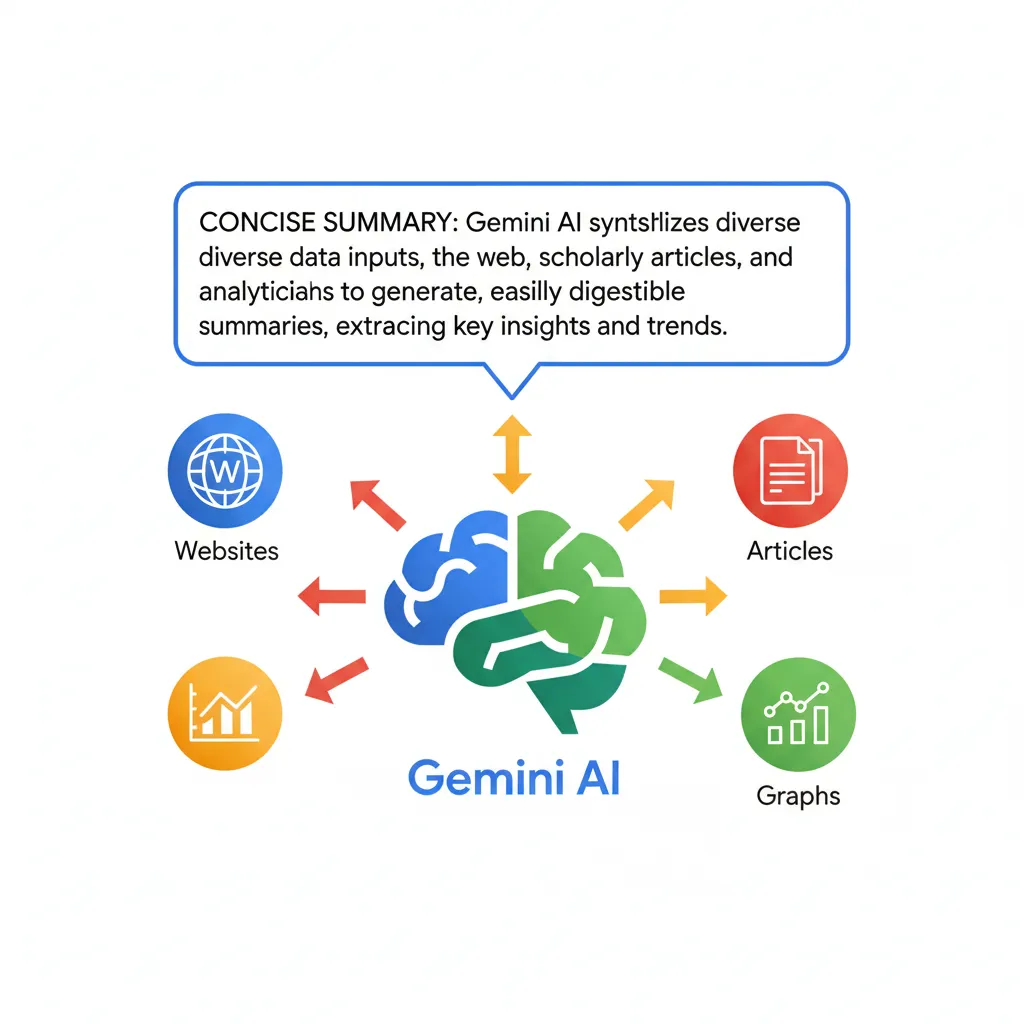
At its core, an AI Overview is an AI-generated answer that appears directly at the top of the Google search results page. Unlike a Featured Snippet, which pulls an answer directly from a single source, the AI Overview leverages a large language model (LLM)—specifically Google’s Gemini—to analyze multiple high-quality sources, synthesize the findings, and present a new, cohesive summary.
When you ask a complex or multi-step question, Google’s AI Overviews aim to provide a complete answer without you needing to click through to a website. This is Google’s answer to the conversational capabilities offered by standalone chatbots, integrated directly into the world’s leading search engine.
The Evolution from SGE (Search Generative Experience)
The current iteration of AI Overviews is the fully mature version of what was previously known as the Search Generative Experience (SGE). For over a year, SGE lived in Google Labs AI, allowing users to test and provide feedback on the generative search features.
The transition from SGE to the official AI Overviews rollout was significant because it moved the feature from an optional test bed to a core functionality deployed to hundreds of millions of users. This was a clear signal that Google is fully committed to integrating AI in search engines as the primary method for answering complex user queries.
The Role of Google Gemini Search
The power behind this new feature is the foundational model, Gemini. The integration of Google Gemini search is what distinguishes AI Overviews from earlier, rule-based search features.
Gemini provides capabilities like:
- Multimodality: Handling complex inputs that might include images or contextually related searches.
- Complex Reasoning: Generating answers that require multiple steps of logic, planning, and evaluation.
- Real-Time Grounding: Ensuring that the generative answer is based on current, factual information indexed by Google, rather than just its static training data.
This means the Google algorithm update isn’t just a ranking tweak; it’s a structural overhaul, moving from an index-and-rank system to an index-synthesize-and-rank system.
[Related: AI-Powered Investing: Robo-Advisors and Wealth Growth]
How AI Overviews Work: The Mechanics Behind the Generative Answer
Understanding how AI Overviews work is crucial for content creators. They aren’t magical; they follow a systematic, multi-step process to generate the final summary displayed on the SERP.
The underlying process relies heavily on semantic search, moving beyond simple keyword matching to grasp the true intent and context of the user’s query.
The Synthesis and Citation Principle
When a user submits a query, the Gemini model does the following:
- Intent Analysis: Determines the exact informational need (e.g., comparison, definition, step-by-step instruction).
- Source Retrieval: Queries Google’s massive index to identify the highest-quality, most authoritative, and most relevant web pages (based on established ranking signals, including E-E-A-T).
- Information Synthesis: Reads the selected sources, extracts key facts, reconciles discrepancies, and synthesizes the information into a smooth, narrative response.
- Grounding and Citation: Crucially, the system links the generated summary back to the specific source URLs it used. This grounding is essential for verifiability and maintaining the information ecosystem.
The goal is to provide AI Overviews accuracy while still driving authority and traffic to the original creators who supplied the high-quality content.
E-E-A-T: The Unseen Ranking Factor for Generative AI
For a website to be chosen as a source for an AI Overview, its content must meet extremely high standards, particularly concerning Expertise, Experience, Authoritativeness, and Trustworthiness (E-E-A-T for AI).
Since the AI Overview synthesizes information, it inherently prioritizes sources Google trusts deeply. Content that lacks demonstrated expertise, experience, or clear authorship is less likely to be selected as a source, regardless of its keyword optimization. This reinforces the need for human-level, expert-driven content.
The Impact on Search Results (SERP Changes 2024)
The introduction of AI Overviews has triggered significant SERP changes 2024. The Google search results new look places the generative answer immediately after the ads, effectively pushing organic search results further down the page—a phenomenon known as the “AI fold.”
This shift has major implications for visibility and traffic patterns, particularly for competitive informational keywords.
The Rise of Zero-Click Searches
The most immediate consequence of this change is the expected increase in zero-click searches. If a user’s question is fully answered by the concise, comprehensive AI Overview, they have no reason to click on a traditional link.
While Google intends for AI Overviews to handle highly factual or complex multi-step queries that previously required multiple clicks, the concern for publishers is real:
| Query Type | Traditional SERP Action | AI Overview Impact |
|---|---|---|
| Simple Facts (e.g., “capital of Canada”) | One click to verify | High zero-click likelihood |
| Complex Processes (e.g., “how to build a rain garden”) | Multiple clicks for steps | Medium-High zero-click likelihood (overview gives the steps) |
| Subjective/Shopping (e.g., “best ergonomic mouse 2025”) | Click needed for reviews | Low zero-click likelihood (user needs depth and trust signals) |
Content creators must now focus their content strategy for AI on areas where human depth, unique perspective, personal experience, and community reviews remain irreplaceable.
Shifting User Search Behavior
The presence of Google’s new search experience subtly changes user search behavior. Users may become accustomed to asking more complex, conversational questions, trusting the AI to sift through the noise.
Furthermore, the new search interface often includes suggested follow-up questions or options to “Ask a follow-up” within the generative container. This encourages a dynamic, iterative exploration of a topic rather than a static click on a link, potentially blurring the lines between search and research.
[Related: Mastering AI Workflow: Productivity and Automation]
AI Overviews Pros and Cons: A Balanced View
Like any massive technological deployment, the AI Overviews pros and cons list is long and fiercely debated. While Google touts massive improvements in efficiency, publishers are understandably concerned about their traffic ecosystem.
Advantages for Users and Search Efficiency
From a user perspective, the benefits of AI in search engines are compelling:
- Instantaneous Answers: Users get highly researched, structured answers immediately, saving time.
- Complex Query Handling: The AI handles nuanced, long-tail questions that traditional algorithms struggled with.
- Synthesis of Information: It aggregates diverse viewpoints or steps from various sources, providing a holistic answer faster than a human could read 10 different websites.
- Exploration: The conversational nature encourages deeper dives into topics without having to formulate new search queries constantly.

The Challenges: Accuracy, Trust, and Revenue
The challenges, especially concerning AI Overviews accuracy and impact on content creators, are critical:
- Potential for Hallucinations/Errors: While rare, instances have shown that AI Overviews can generate non-factual or nonsensical answers (hallucinations), even when grounded in real data. The speed of deployment often outpaces the vetting of 100% accuracy.
- The Zero-Click Dilemma: The loss of clicks translates directly into a loss of advertising revenue for publishers, challenging the sustainability of high-quality content creation.
- Attribution Complexity: While citations are present, they are often small and secondary to the large generative answer, potentially diluting the authority and traffic benefit for the original source.
- Fear of Replacement: The underlying anxiety—will AI replace websites?—drives content creators to prioritize unique, irreplaceable human insight.
A Critical Question: How to Disable AI Overviews
Despite the touted benefits, some users and professionals prefer the traditional search experience or are skeptical of the AI-generated answers. Fortunately, Google has provided a way to bypass or limit the feature, though it’s not a straightforward, permanent toggle switch. If you want to know how to disable AI Overviews or turn off Google AI search, here is the current methodology:
Temporary Disabling via Search Filters
In most regions, when an AI Overview appears, you will still see traditional search filters (like “Web,” “Images,” “News,” etc.) near the top of the SERP.
- Click the “Web” Filter: By clicking the standard “Web” filter, you often force Google to display the traditional SERP format—the 10 blue links—with the AI Overview suppressed for that specific session or query.
- Use Search Operators: Using classic search operators (like putting quotes around your entire query) can sometimes suppress the generative feature, forcing the algorithm to adhere strictly to your exact keywords.
Permanent Control via Google Labs (If Applicable)
When AI Overviews were still in beta as SGE, users could opt in or out via Google Labs AI.
- Check Labs Settings: If the feature is still technically in a testing phase in your region or account, navigate to the Google Labs interface (or the relevant settings section accessible via the main search page). Look for the setting related to “Search Generative Experience” or “AI-powered Search” and toggle it off.
- Account Settings and Feedback: Regularly check your main Google Account settings. While Google generally prefers widespread adoption, user feedback often dictates the availability of granular control settings.
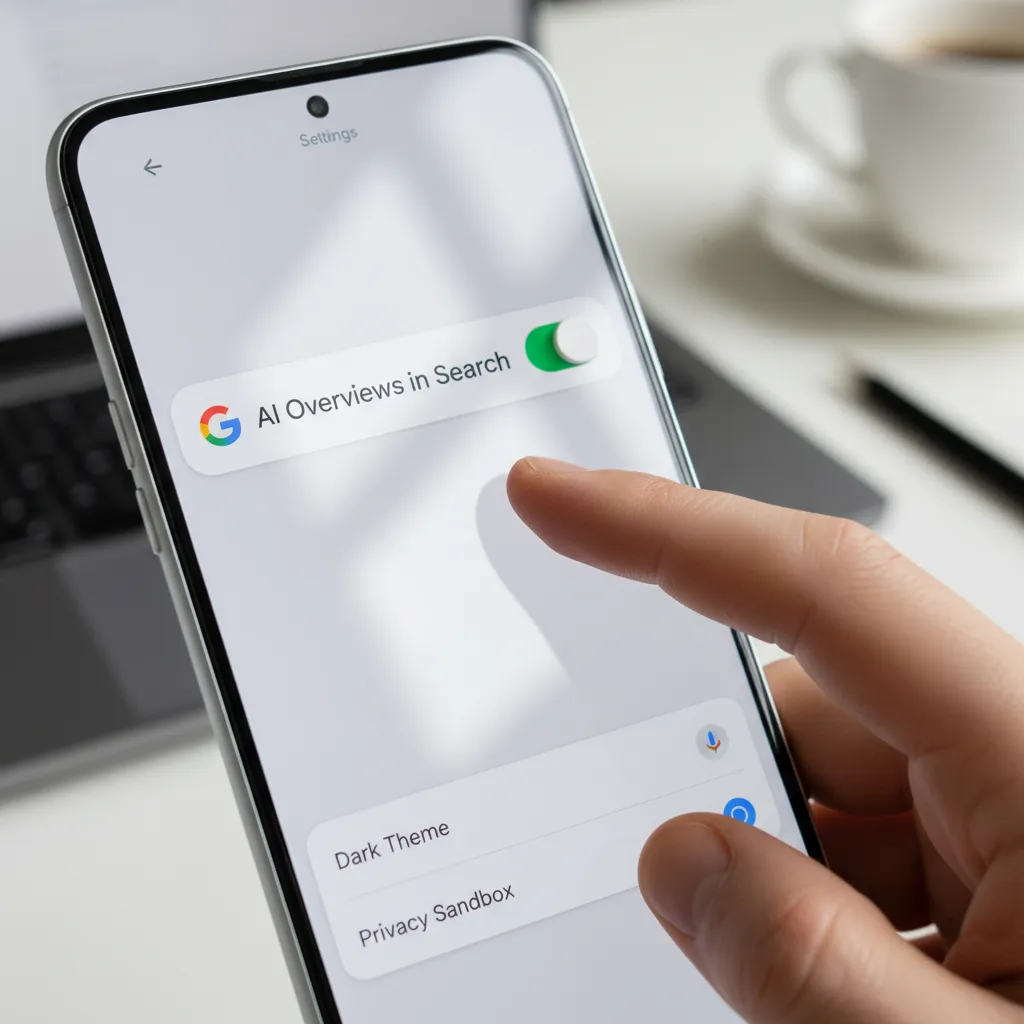
Note: As of major rollouts post-Google I/O 2024, the permanent disable switch has become less common, pushing users toward relying on the “Web” filter or adjusting query types.
Adapting to AI Search: A New SEO Strategy
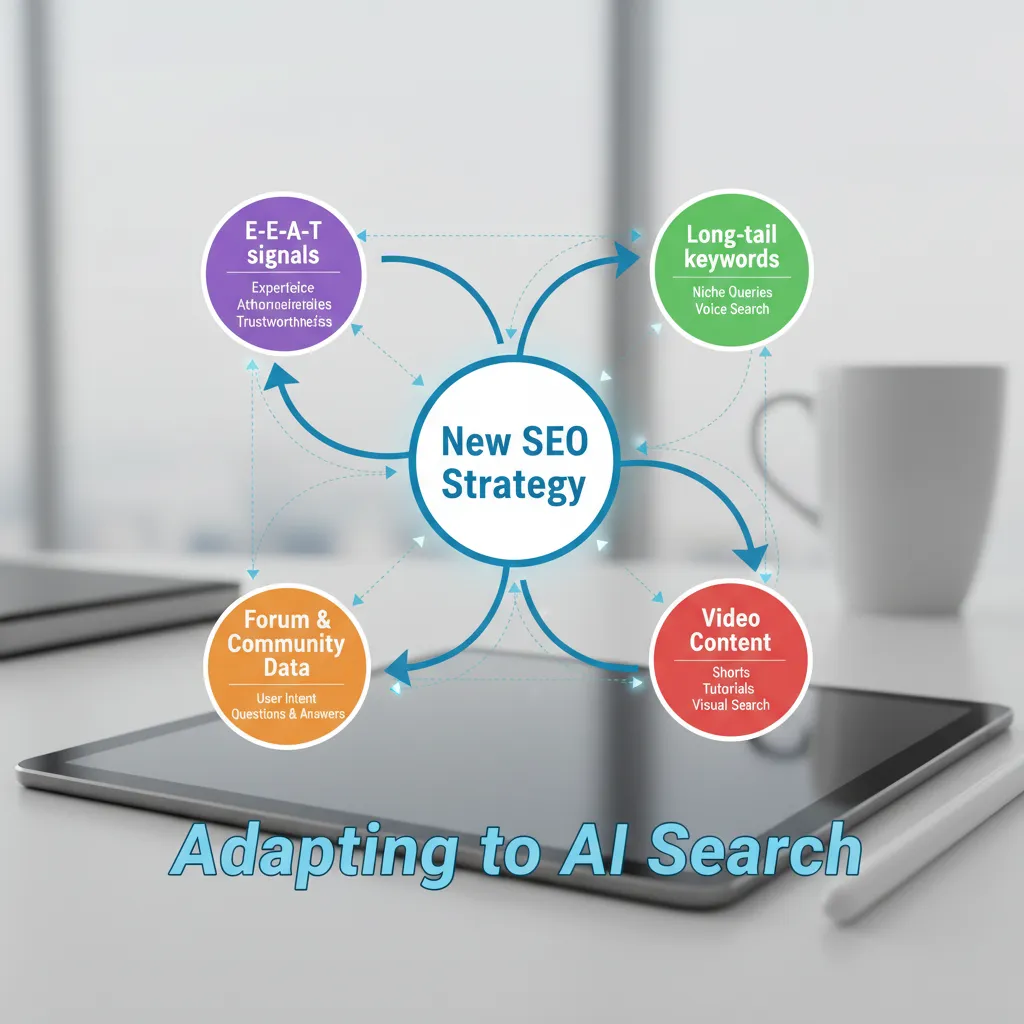
For content creators, the reaction to AI Overviews should not be panic, but strategic reassessment. The game has changed, moving away from simply targeting the #1 blue link to targeting the content that informs the AI Overview. This requires adapting to AI search with a heightened focus on quality and structure.
Optimizing Content for AI Overviews
The key to optimizing for AI Overviews is to create content that is inherently trustworthy and structured in a way that Gemini can easily parse and synthesize.
1. Prioritize Structure and Clarity
AI Overviews love content that is already pre-digested.
- Use Definitive Headings: Employ clear, descriptive H2s and H3s that directly answer potential questions.
- Structured Data: Implement schema markup (FAQ schema, How-To schema) diligently. This provides the AI with machine-readable context, increasing the likelihood of selection.
- Concise Answers: Provide direct, precise answers at the top of a section before expanding into detailed explanations. Think of the first paragraph of a key section as a potential AI snippet.
[Related: The Fintech Revolution: Mastering Money & Innovative Personal Finance Tools]
2. Deepen Your E-E-A-T Signals
The generative model is fiercely protective of its accuracy, meaning it trusts authority.
- Author Profiles: Ensure every article has a clear, credentialed author bio demonstrating their Experience and Expertise.
- Original Data and Research: Publish unique studies, proprietary survey results, or original photography. Content that exists nowhere else establishes unique Authority.
- Transparency and Trust: Clearly cite external sources, provide publication dates, and maintain an accessible “About Us” page, strengthening Trustworthiness.
The Content Strategy for AI: Quality Over Quantity
The era of generic, high-volume, low-quality content targeting shallow keywords is over. The AI search engine impact favors depth and vertical specialization.
Instead of writing 1,000 words on “what is AI Overviews,” write 5,000 words that deeply analyze “the economic implications of zero-click searches on local news publishers, citing 20 case studies.”
Focus on content that answers complex, multi-faceted questions that the AI cannot answer completely in a single paragraph, thereby necessitating a click for detail or nuance.
Keyword Integration for Semantic Success
In the age of semantic search, merely stuffing keywords is detrimental. Instead, ensure your content covers the full entity space of the topic. If you are discussing AI Overviews, you must naturally include related entities like:
- Google I/O 2024 announcements
- The difference between SGE and the final product
- The connection to the Gemini LLM
- The SEO consequences (zero-click, E-E-A-T)
By covering the topic exhaustively and semantically, you signal to Google that your page is the definitive authority on the entire entity cluster.
Addressing the Ultimate Fear: Will AI Replace Websites?
The most existential question hanging over the publishing industry is: Will AI replace websites?
The answer, definitively, is no.
The AI Overview model, whether it’s the original SGE or the current rollout, fundamentally relies on the web ecosystem. The Gemini LLM must be grounded in high-quality, up-to-date, human-created content. If publishers stopped creating that content, the AI would eventually run out of fresh, authoritative information to synthesize.
Therefore, the relationship is symbiotic:
- Publishers provide: Original research, experience-based narratives, unique opinions, and real-time data.
- Google provides: Distribution, synthesis, and traffic (even if fewer clicks, the traffic is highly qualified).
The AI Overviews feature is a massive Google algorithm update designed to enhance access to information, not destroy the sources of that information. By focusing on niche expertise, personalized storytelling, community building, and products/services that require a final transaction click, publishers can not only survive but thrive in the new era of generative search.
[Related: AI Classroom Revolution: Personalized Learning and Future Skills]
Conclusion: Mastering the AI-Powered SERP
Google’s rollout of AI Overviews is more than just a new feature; it is the official arrival of the future of search. The transition from the experimental SGE to a mainstream feature powered by Google Search AI signals that generative answers are here to stay.
For users, this means unparalleled speed and efficiency in finding information. For content creators, it necessitates a major, immediate shift in strategy. Success in this new environment hinges on prioritizing E-E-A-T for AI, structuring content for synthesis, and specializing in unique, high-value content that the AI must reference.
The traffic dynamics are changing, promoting highly authoritative voices and pushing generic content into irrelevance. By understanding how AI Overviews work and actively adapting to AI search, you ensure your visibility in the Google search results new look—whether you’re being cited in a generative summary or capturing the highly qualified click that follows.
Don’t wait for the next Google algorithm update. Start optimizing your digital presence today to secure your place in the generative search landscape.
FAQs: Understanding Google’s AI Overviews
Q1. What is the difference between AI Overviews and SGE?
AI Overviews is the official, publicly rolled-out name for the generative AI feature that Google has implemented directly into its main search results. SGE (Search Generative Experience) was the beta, experimental name used within Google Labs AI during the testing and development phase prior to its mass deployment in 2024.
Q2. Does the rise of zero-click searches mean SEO is dead?
No, zero-click searches do not mean SEO is dead, but they fundamentally change its focus. SEO is shifting from purely driving clicks to establishing authority and being the primary source that informs the AI Overview. Success means being cited in the summary or ranking highly for queries requiring human judgment, comparison, or purchase (where a click is necessary).
Q3. How does E-E-A-T specifically affect my chances of being featured in an AI Overview?
E-E-A-T for AI is more critical than ever because the Gemini model is designed to prioritize trustworthy, expert sources when generating AI-generated answers. Content demonstrating verifiable experience, clear author credentials, and high trust signals is exponentially more likely to be selected and cited as a source for the AI Overview than anonymous or low-authority content.
Q4. Can I permanently turn off Google AI search features?
While Google has heavily integrated the feature, you can often suppress it temporarily by using the “Web” filter on the search results page or by entering highly specific, complex queries. A permanent, universal toggle to turn off Google AI search entirely is generally not available after the mass rollout, but users should check Google Labs or their general settings for regional control options.
Q5. Are AI Overviews accurate, and how can I verify their information?
AI Overviews accuracy is generally high, as they are grounded in real, published web content. However, they are not infallible and can occasionally include minor errors or “hallucinations.” To verify the information, look for the numbered citations embedded within the AI Overview box. These links point directly to the original web sources the AI used for synthesis, allowing you to check the facts yourself.
Q6. Will optimizing for AI Overviews hurt my ranking for traditional organic results?
No. The best strategy for optimizing for AI Overviews—which involves improving content structure, increasing E-E-A-T, and writing clear, definitive answers—simultaneously strengthens your traditional SEO. High-quality, well-structured content is favored by both the traditional ranking algorithm and the generative AI model.
Q7. What major event led to the mainstream deployment of AI Overviews?
The mainstream deployment of AI Overviews was formally announced and highlighted as a key product feature at Google I/O 2024, signaling the company’s intent to integrate generative AI capabilities into core search globally.
Q8. How does my content strategy for AI need to change immediately?
Your content strategy for AI must immediately shift focus from breadth to depth, prioritizing originality, expertise, and structured data. Create cornerstone content that comprehensively answers entity-level questions, ensuring every fact is supported and sourced, making your page an indispensable resource for the AI to cite.