Google I/O 2024: The Biggest AI Announcements
Introduction: The “AI Everywhere” Revolution
Google I/O 2024 was not just a developer conference; it was a definitive statement that the future of computing is fundamentally rooted in artificial intelligence. From the moment CEO Sundar Pichai stepped onto the stage, the message was clear: Google is undergoing a massive, company-wide transition, repositioning every product and service around its generative AI models.
The Google keynote summary revealed a dizzying array of innovations, marking a significant leap forward in multimodal AI capabilities. The theme was ambient intelligence—AI that sees, hears, reasons, and acts in real-time. This wasn’t about incremental updates; these were foundational shifts designed to redefine how we interact with technology, the internet, and the world around us.
This article provides a comprehensive deep dive into the most pivotal AI announcements from Google I/O 2024, detailing breakthroughs like Project Astra, the powerful new Gemini 1.5 models, the overhaul of Google Search, and groundbreaking creative tools like Veo. We’ll explore the technology, analyze the user impact, and discuss the implications for developers and future of technology trends. If you want to learn about google ai’s current trajectory, this is your definitive guide to the best of google io 2024.
1. Project Astra: The Next-Gen Universal AI Assistant
Undoubtedly the star of the show and the most compelling demonstration of the conference was Project Astra. Dubbed the next gen ai assistant, Astra is Google’s ambitious move to create a truly universal, real-time, and context-aware AI companion. It transcends the typical chatbot interface, integrating sight, sound, and reasoning into a fluid, conversational experience.
What is Project Astra? Defining True Multimodal AI
What is Project Astra? It is a long-term initiative to build the world’s most useful AI assistant. Unlike current assistants that rely on singular inputs (voice commands or text), Astra processes information across multiple modalities simultaneously. During the live demo, Project Astra demonstrated its ability to:
- See and Reason: Using a phone camera, Astra accurately identified and described objects in a room, understood their purpose, and even recalled where a specific item was placed minutes earlier.
- Maintain Context: It holds an ongoing conversation, understanding nuance and referencing previous statements without needing constant re-initiation, bridging the gap between current fragmented AI interactions and a seamless human dialogue.
- Act in Real-Time: The speed of response was a major highlight. The assistant could analyze a complex coding structure displayed on a screen and explain it instantly, eliminating the frustrating lag common in today’s large language models. This real-time processing capability is crucial for making the google ai assistant feel truly helpful, especially in dynamic environments.
/image-topic.webp
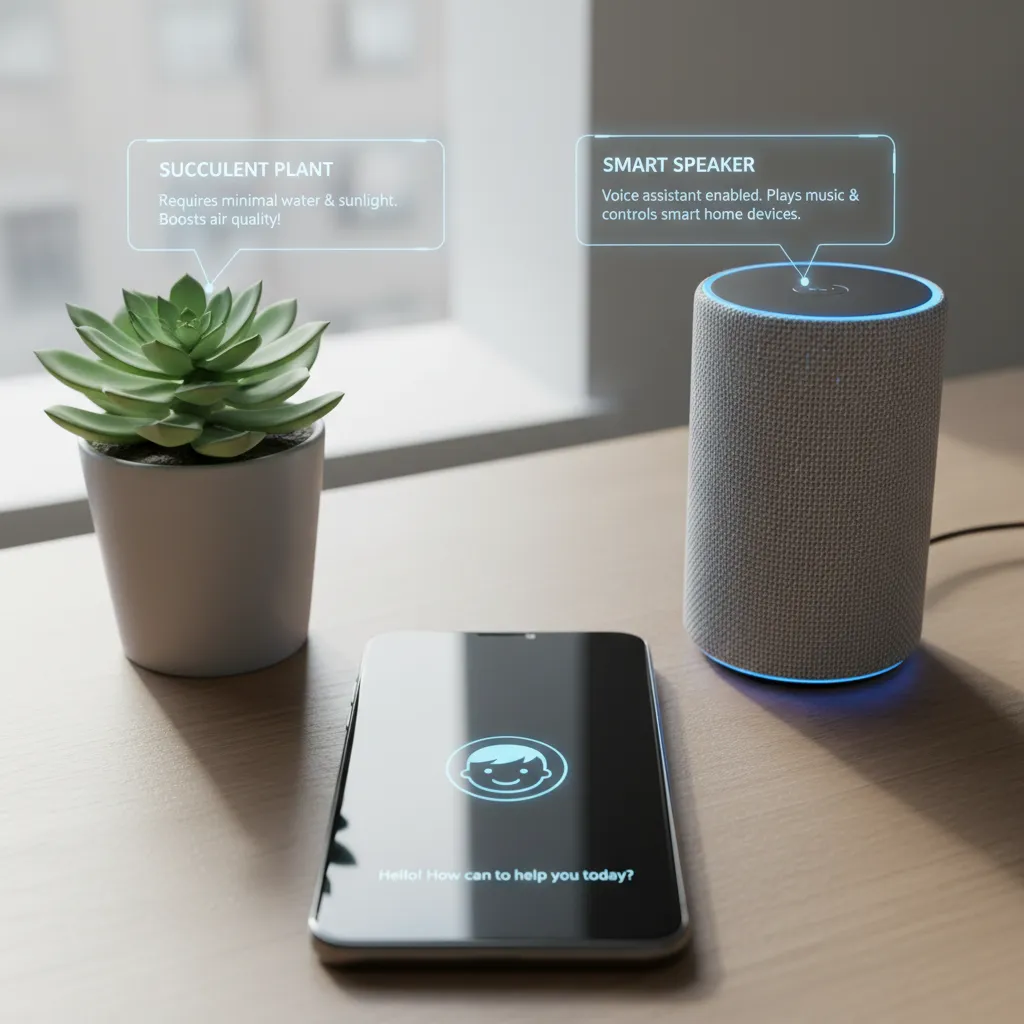
Project Astra is the practical application of Google’s advanced multimodal AI research. It’s an interface that aims to live in everything—phones, glasses, cars, and even smart home devices—creating a truly pervasive and helpful AI layer over reality.
The Significance of the Gemini Foundation
Project Astra is powered by the underlying Gemini 1.5 Pro and Gemini 1.5 Flash models, utilizing their massive context window capabilities. The ability to process video feeds, auditory inputs, and conversational history simultaneously is what allows Astra to achieve this level of sophistication. This is where the theoretical potential of generative AI models meets practical, everyday application.
[Related: ai-personal-growth-master-habits-unlock-potential/]
2. Gemini 1.5: Speed, Scale, and the Trillion-Token Context Window
While Project Astra grabbed the spotlight, the true engineering marvels lay in the updates to the Gemini family. Google announced significant scaling and efficiency improvements to its large language models, cementing its competitive position in the AI landscape.
Gemini 1.5 Flash: Built for Speed and Scalability
The key reveal for developers and enterprise users was Gemini 1.5 Flash. This model is designed specifically for high-frequency, low-latency tasks where speed is paramount.
| Feature | Gemini 1.5 Pro | Gemini 1.5 Flash | Implications |
|---|---|---|---|
| Primary Use Case | Highly complex reasoning, massive document analysis, sophisticated coding. | High-speed chatbot interactions, summarization, low-latency applications. | Optimal balance of power and cost efficiency for mass deployment. |
| Context Window | Up to 1 million tokens (with experimental 2 million). | Up to 1 million tokens. | Ability to process entire codebases or hundreds of thousands of words in one go. |
| Cost | Premium processing. | Highly cost-efficient. | Allows developers to deploy powerful AI economically across millions of users. |
The introduction of Gemini 1.5 Flash addresses a critical need in the market: an affordable, incredibly fast model capable of handling the same vast context as its Pro counterpart. This democratizes the ability to implementing google ai in a wide range of new applications, from personalized educational tools to enterprise customer support systems.

Gemini 1.5 Pro Updates and the 2 Million Token Milestone
The flagship Gemini 1.5 Pro updates pushed the context window limit even further, demonstrating an experimental 2-million-token capacity. To put this in perspective, 2 million tokens can ingest the content of 1,500 hours of video, 22 million lines of code, or more than 75,000 pages of text—all in a single prompt.
This immense context window is a game-changer for data analysts, researchers, and developers. It means a developer can drop in an entire GitHub repository and ask the AI to find bugs, suggest optimizations, or explain how a legacy system works. A healthcare researcher could analyze dozens of full-length medical journals simultaneously.
[Related: navigating-future-imperative-ethical-ai-smart-world/]
The Hardware Backbone: Trillium TPU
Powering this enormous scale and efficiency is the introduction of Google’s sixth-generation custom machine learning accelerator, the Trillium TPU (Tensor Processing Unit). Trillium is designed specifically for the rigorous demands of training and serving massive generative AI models.
Key facts about Trillium:
- 2.4x improvement in compute performance per chip over the previous generation (TPU v5p).
- 4.7x increase in High Bandwidth Memory (HBM) capacity.
This hardware investment is what enables the 1-million-token context window to be cost-effective and the Project Astra demo to run with near-zero latency. Google is doubling down on its full-stack AI strategy—from the chips (Trillium) to the models (Gemini) to the applications (Search and Astra).
3. Revolutionizing Search: AI Overviews Go Mainstream
Perhaps the most immediately impactful announcement for billions of users was the broad rollout of AI Overviews (formerly known as the Search Generative Experience, or SGE). Google is fundamentally reshaping the future of Google search, transitioning from a list of links to an environment where AI synthesizes information and directly answers queries.
The Generative Shift in Search
The full integration of generative AI into the main Google Search page means that users in the U.S. and eventually worldwide will see a powerful, comprehensive summary at the very top of their results for many complex queries.
The google search generative experience is designed to save users time by providing verified, multimodal answers. Google announced major improvements to AI Overviews:
- Complex Planning: AI Overviews can handle multi-step planning. For instance, a user can ask to plan a week of meals for a family of five with specific dietary restrictions, and the AI will generate a detailed, linked schedule.
- Search with Video: Users can now record a video of something they need help with (e.g., a broken part on their bicycle) and ask Google to identify the part and provide a step-by-step repair guide, showcasing a high degree of multimodal AI reasoning.
- Refined Citations and Safety: Addressing earlier concerns, Google emphasized the enhanced grounding of AI Overviews, ensuring that facts are traceable back to reputable sources. This is a crucial element for maintaining the quality and trustworthiness required for AdSense compliance and high search quality.
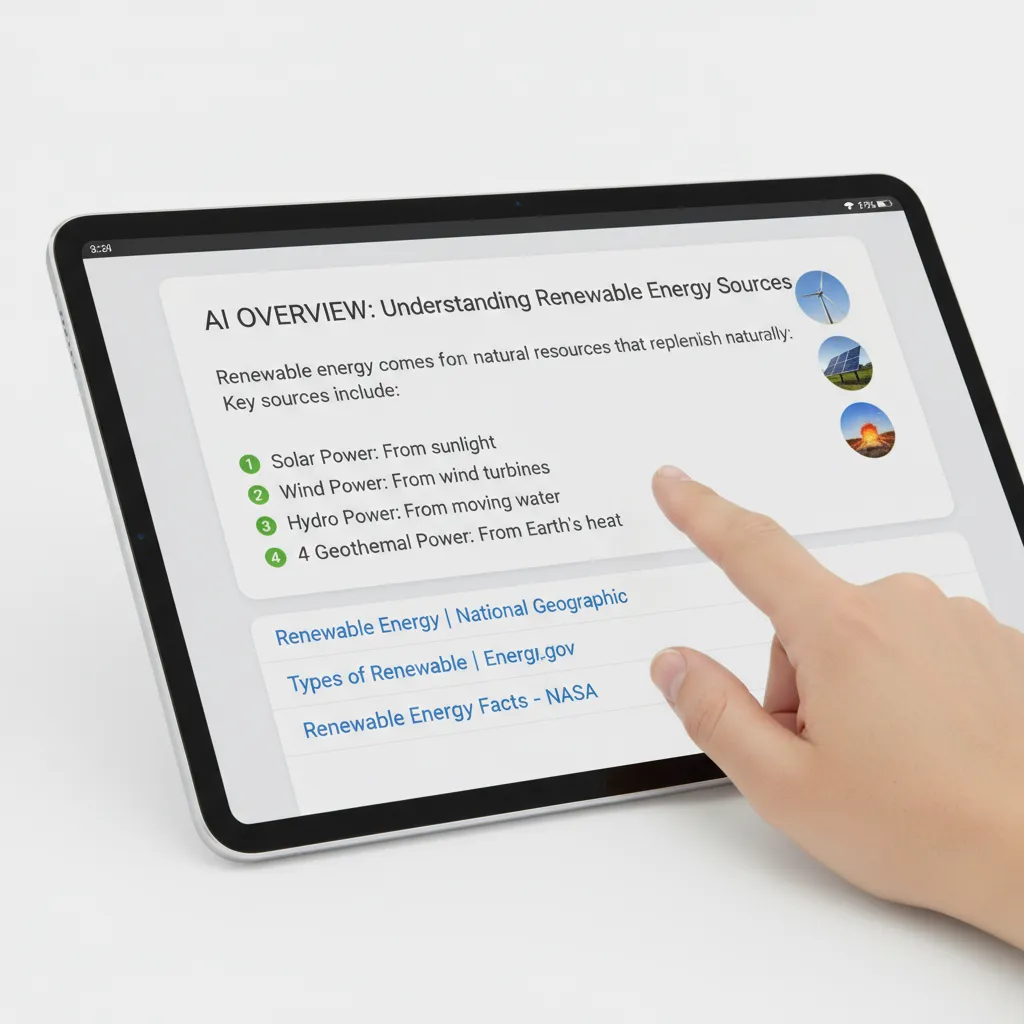
The rollout of AI Overviews will inevitably change how content ranks and how SEO professionals operate, making the ability to provide high-quality, authoritative content more important than ever to be included in the AI’s synthesis.
[Related: ai-in-healthcare-revolutionizing-medicine-patient-care/]
4. Google Veo: The Text-to-Video Powerhouse
In the rapidly evolving landscape of creative generative AI models, the reveal of Google Veo was Google’s definitive answer to competitors like OpenAI’s Sora. Veo is a new text-to-video AI model capable of generating high-definition, 1080p video clips that are photorealistic, consistent, and remarkably long.
Competing in the Creative Space
Google’s Sora competitor is engineered to master cinematic language. Veo demonstrated an impressive understanding of physics, lighting, and camera movement, generating seamless shots that included slow motion, drone shots, and realistic reflections.
Key features of Google Veo:
- Cinematic Quality: Generates realistic, highly detailed video at 1080p resolution.
- Consistent Narratives: Maintains character identity, object persistence, and environmental coherence across multiple stitched clips, overcoming a major hurdle for previous video generation models.
- Extended Lengths: While initial clips are shorter, the ability to generate subsequent clips that maintain continuity allows for longer, story-driven narratives.
This tool signals a massive shift for AI for creators. Veo will drastically reduce the time and cost associated with generating high-fidelity visual assets for marketing, film pre-production, and digital art. It positions Google as a serious player in the generative media space, empowering a new generation of digital storytellers.
Veo is initially being integrated into Google’s existing creative labs and selectively offered to filmmakers and developers, ensuring that AI ethics and safety google protocols—including robust watermarking and safety filters—are strictly adhered to before wider public release.

[Related: ai-video-generation-future-content/]
5. Integrating AI Across the Google Ecosystem
The AI announcements were not limited to standalone models or search; Google made it clear that Gemini will permeate every layer of its existing product lineup, making the ecosystem smarter and more proactive.
AI in Android 15 and Device Intelligence
The upcoming release of AI in Android 15 is heavily focused on making the operating system more intelligent and predictive, largely through on-device applications of Gemini 1.5 Flash.
- Contextual Control: AI will be used to better manage device notifications, prioritize security alerts, and even optimize battery life based on anticipated usage patterns.
- Circle to Search Enhancements: New features will leverage multimodal AI to provide even deeper, contextual answers when users circle objects on their screen, moving beyond simple identification to complex problem-solving (e.g., explaining a formula found in an image).
- Gemini as the Default Assistant: Gemini is being integrated deeper into the core of Android, replacing the legacy Google Assistant interface in key areas to leverage its conversational memory and reasoning skills.
Smarter Memory with Google Ask Photos
The evolution of Google Photos continues with the powerful new feature, google ask photos. Utilizing the massive context window of Gemini, users can now ask highly complex, abstract queries of their photo library that go beyond metadata tags.
Examples of queries Ask Photos can handle:
- “Show me all the photos of my daughter wearing the blue dress we bought last summer, but only the ones taken at the beach.”
- “Help me make a video montage of my son’s favorite milestones from ages five to ten, summarizing the best moments.”
This transformation turns Google Photos into a powerful, personal memory assistant, relying on the generative AI models to interpret visual context and emotional significance rather than just timestamps and locations.
Developer Tools: Implementing Google AI
For the developers attending the google developer conference, the focus was on how easy it is to implementing google ai capabilities into their own applications.
Google introduced:
- Improved APIs and SDKs: Simplified access to Gemini 1.5 Flash for developers across mobile, web, and cloud.
- Open Sourcing Models: Strategic open-sourcing of models like Gemma and new tools to foster an open and competitive AI ecosystem.
- Vertex AI: Enhancements to Google Cloud’s Vertex AI platform make it easier for enterprises to fine-tune Gemini models with their proprietary data, ensuring security and customization at scale.
These google ai tools 2024 are designed to fuel the next wave of AI-powered startups and enterprise solutions, making the development process faster and more accessible.
6. The Ethical Imperative: Safety and Responsibility
A constant thread running through the Google I/O 2024 keynote was Google’s commitment to AI ethics and safety google. As the technology grows more powerful—especially with photorealistic models like Veo and ubiquitous assistants like Astra—the potential for misuse increases.
Google highlighted its comprehensive approach:
- SynthID Watermarking: All generative outputs, including images and video from Veo, are embedded with SynthID, an invisible digital watermark that verifies the content was created by AI. This is a critical step in combating misinformation and deepfakes.
- Responsible Deployment: Phased rollouts, like that of Veo, ensure that the models are rigorously tested for bias, safety, and guardrails before being offered to the general public.
- Safety Filters in Search: The AI Overviews are built with strict safety filters to prevent the generation of harmful, misleading, or inappropriate information, a core requirement for remaining AdSense-compliant and authoritative.
This emphasis on safety underscores the maturity of Google’s approach, recognizing that the future of technology trends hinges not just on capability, but on trust and responsible deployment.
Conclusion: The Era of Ambient Intelligence
Google I/O 2024 was arguably the most AI-focused conference in the company’s history. The best of google io 2024 wasn’t a new gadget or operating system feature; it was the cohesive vision of an “AI Everywhere” future.
From the lightning-fast efficiency of Gemini 1.5 Flash and the massive scale of the Trillium TPU, to the revolutionary real-time assistance promised by Project Astra, Google demonstrated that its ambition extends beyond merely competing—it aims to redefine the fundamental contract between humans and technology. The pervasive integration of AI Overviews into Search and the introduction of advanced creative tools like Google Veo confirm that AI is no longer an add-on; it is the operating system for the next generation of computing.
The transition to multimodal AI is complete, and the focus is now on delivering personalized, instantaneous, and deeply contextual experiences. Developers have the tools, and users are about to gain a truly intelligent assistant ready to navigate the complexities of life in real-time.
What breakthroughs are you most excited to see come to fruition from these new google ai features? Dive into the details and start exploring how these google ai tools 2024 can shape your workflow today.
FAQs: Grounded Insights from Google I/O 2024
Q1. What is the key difference between Gemini 1.5 Pro and Gemini 1.5 Flash?
Gemini 1.5 Pro is Google’s most powerful model, optimized for complex reasoning tasks and large data analysis, boasting a standard 1-million-token context window. Gemini 1.5 Flash is a lighter, faster, and more cost-efficient version, designed for speed-critical applications like chatbots and high-frequency summarization, while retaining the same large context window for efficient scaling across millions of users.
Q2. How does Project Astra compare to the current Google Assistant?
Project Astra represents a fundamental shift. While the legacy Google Assistant is primarily a voice interface for specific commands, Astra is a next gen ai assistant designed to be multimodal. It uses sight, sound, and natural language to understand the surrounding environment in real-time, maintain conversational context over time, and offer proactive, informed assistance, much closer to a true digital companion.
Q3. Is AI Overview in Google Search the same as SGE (Search Generative Experience)?
Yes, the AI Overviews are the mainstream, official rollout of what was previously known as the Search Generative Experience (SGE). Google has moved the feature from an experimental program to a core component of the main Google Search results page, using the power of generative AI models to synthesize answers for complex or multi-step queries.
Q4. What does the Trillium TPU mean for AI users?
The Trillium TPU is Google’s new custom hardware accelerator, critical for increasing the speed and efficiency of its generative AI models like Gemini. For users, this means faster response times, reduced latency in services like Project Astra and AI Overviews, and the ability for Google to scale up resource-intensive features like the 1-million-token context window affordably.
Q5. How is Google Veo different from other text-to-video models like Sora?
Google Veo is Google’s Sora competitor, specializing in generating high-quality, 1080p video clips with advanced control over cinematic elements like camera movement, lighting, and composition. Its major differentiator, showcased at Google I/O 2024, is its ability to maintain remarkable consistency of characters and objects across multiple, stitched-together clips, allowing for more coherent, narrative-driven results for AI for creators.
Q6. Will AI Overviews replace the traditional links in Google Search?
No, Google confirmed that AI Overviews will not replace traditional organic links. AI Overviews function as a highly synthesized summary at the top of the results page. However, they rely on and provide citations for the sources they use, making the quality of the underlying authoritative content crucial for visibility within the future of Google search.
Q7. What are the main ethical safeguards Google is using for its new AI tools?
Google is heavily emphasizing AI ethics and safety google protocols. The main safeguards include mandatory SynthID watermarking on all generative media (like images and videos from Veo) to verify its AI origin, rigorous safety filters in AI Overviews to prevent harmful content, and a phased, responsible deployment of powerful tools like Project Astra.
[Related: ai-tutors-revolutionizing-personalized-education/]