Google’s AI Overviews: The Ultimate SEO Guide for 2024
Introduction: The Tectonic Shift in Search
The world of Search Engine Optimization (SEO) has never been static, but 2024 marks the most profound transformation since the debut of mobile search. Google’s public launch of AI Overviews—powered by its advanced Google Search generative AI models, notably Gemini—fundamentally reshapes the familiar search results page (SERP).
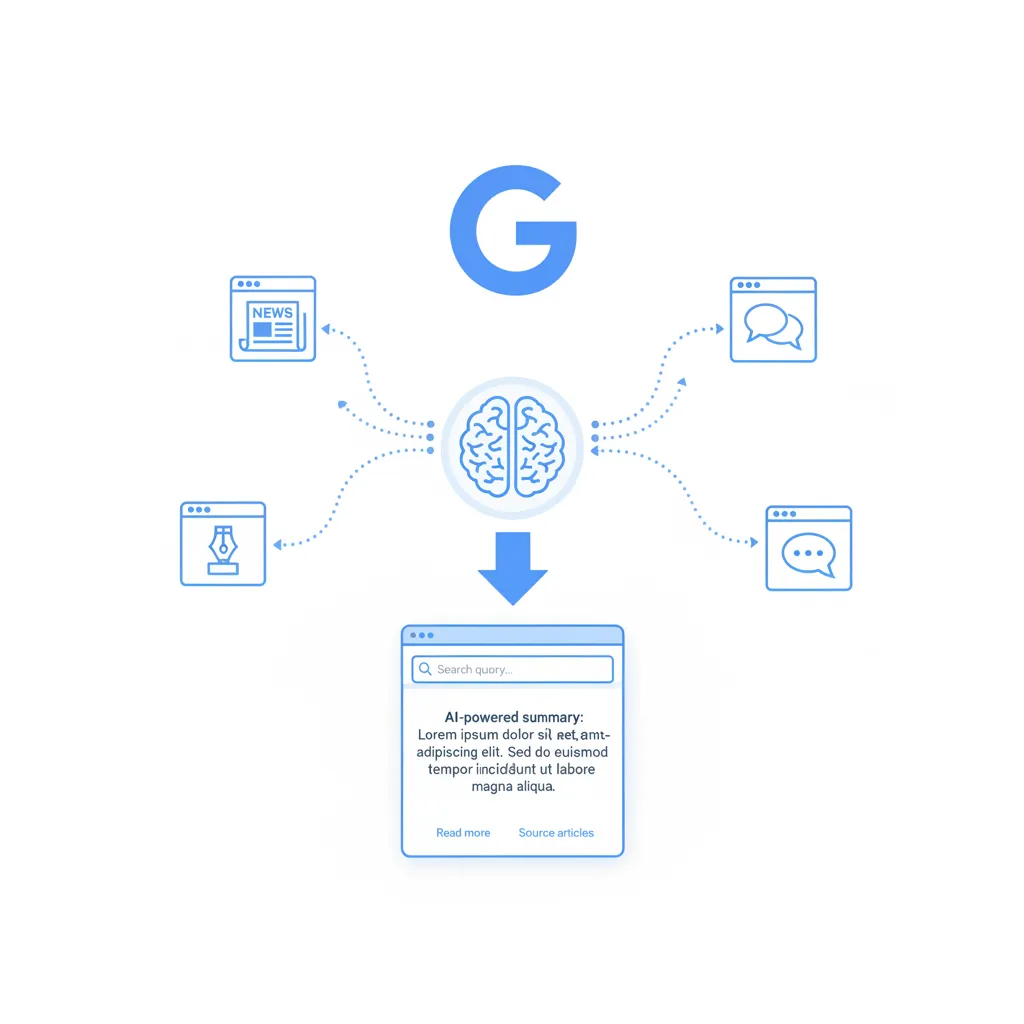
This change, often referred to as the SGE update or the transition to the Search Generative Experience, means that for many queries, the first information a user sees is an AI-generated summary, not a traditional organic link. These AI-generated answers sit prominently at the top of the page, synthesizing complex information from multiple web sources directly.
The implications are massive. Marketers and content creators must immediately pivot their content strategy for AI Overviews or risk irrelevance. This comprehensive guide serves as your roadmap, dissecting what are AI Overviews, how they function, their inevitable AI Overviews impact on traffic, and, most crucially, the specific, actionable SEO for AI Overviews strategies you must implement today. By focusing on authority, clarity, and structural excellence, you can learn how to rank in AI Overviews and thrive in this new landscape of AI-powered SERPs.
[Related: The Quantum AI Revolution: Unprecedented Computing Power]
The Mechanics of Google AI Overviews: Understanding the New SERP
To conquer the new frontier, you must first understand its terrain. Google AI Overviews are not merely large featured snippets; they are dynamic, conversational, and often multi-step answers derived from Google’s foundational AI models.
AI Overviews vs. Featured Snippets
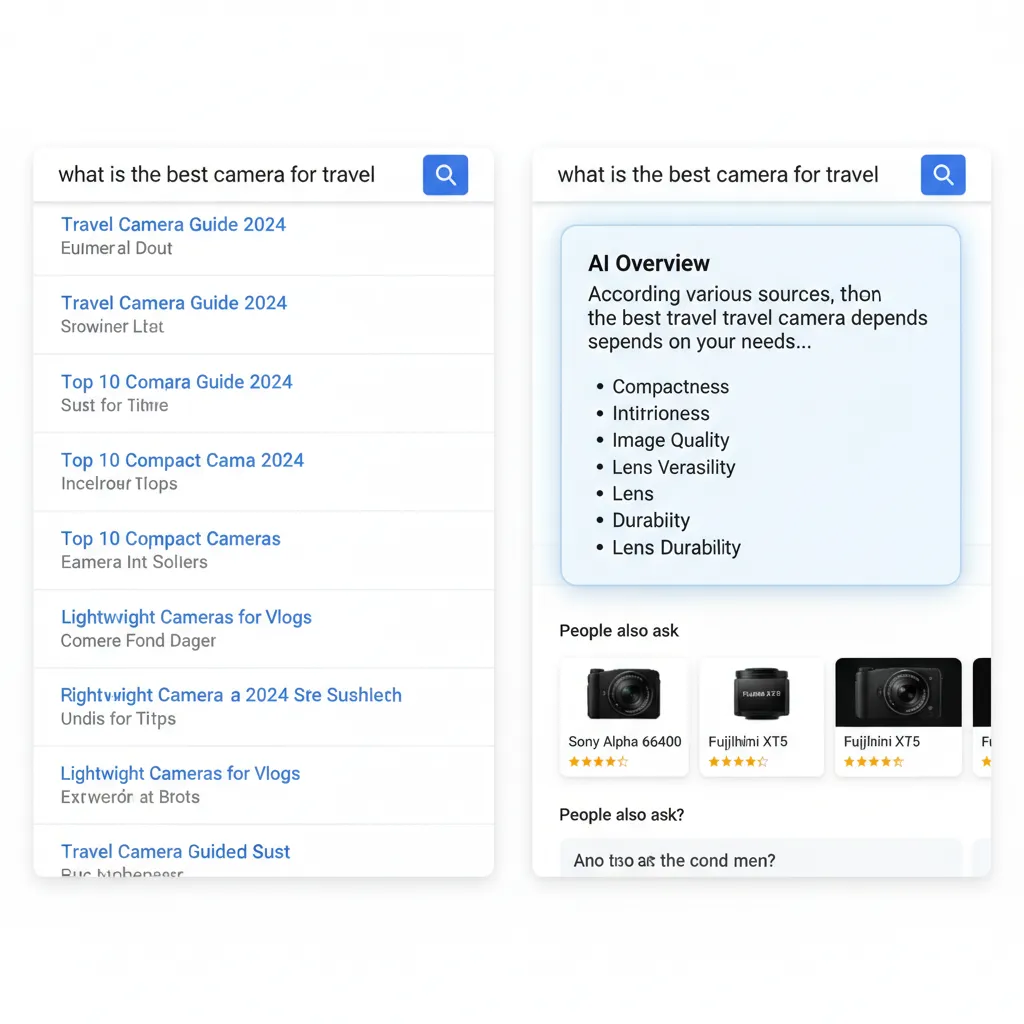
Before AI Overviews, the featured snippets vs AI Overviews comparison is necessary. Featured snippets were precise extractions—a direct quote lifted from a single source to answer a simple question (e.g., “What is photosynthesis?”).
AI Overviews, conversely, are characterized by:
- Synthesis: They combine facts and concepts from several sources, providing a holistic and structured answer.
- Citation: They prominently display 3–5 source links, offering pathways for users to verify or explore the topic deeper. This is your primary target: learning how to get cited in AI Overviews.
- Conversational Capacity: They often appear for complex, long-tail, or multi-faceted queries where a traditional search result wouldn’t suffice. They facilitate a deeper, more conversational user experience with AI search.
- Actionable Follow-ups: The AI frequently suggests follow-up questions, continuing the interactive dialogue.
The shift is from indexing information to understanding and synthesizing it. This demands a renewed focus on semantic SEO, ensuring your content provides complete, contextually rich answers to user intent, not just keyword matches.
How AI Overviews Select and Display Content
When a user submits a query, the AI Overviews algorithm analyzes the intent. Instead of just matching keywords to indexed pages, it uses models like Google Gemini search to grasp the concept and generate a coherent response.
The core process follows these steps, which dictate the necessary SEO pivots:
- Complex Query Interpretation: The AI uses natural language processing SEO principles to deconstruct the query’s intent, often identifying subtle needs or subsequent questions within the initial search.
- Source Vetting: Google’s AI prioritizes high-quality, reputable sources. This is where your authority (E-E-A-T) becomes non-negotiable. If your content lacks credibility, the AI will simply bypass it, regardless of its keyword optimization.
- Synthesis and Structuring: The AI builds the answer, often using bullet points, comparisons, or definitions, directly mirroring how humans consume complex information.
- Citation Assignment: Sources are selected based on relevance, accuracy, and perceived authority to support specific points within the generated answer.
Understanding this process is critical for optimize for AI search.
/image-topic.webp
The Profound Impact: Traffic, Zero-Click Searches, and Volatility
The biggest question echoing across the digital marketing world is the AI Overviews impact on traffic. While the AI Overviews were designed to enhance the user experience, they inevitably increase zero-click searches—queries answered directly on the SERP, eliminating the need to click through to a website.
1. Increased Zero-Click Searches
For simple, factual, or definitional queries, the AI Overview provides the full answer. If a user only needs to know “What is the capital of Peru?” or “How many ounces are in a gallon?”, they are unlikely to click a source link.
- The Content Shift: This means transactional and commercial content (product pages, service offerings) are slightly safer from traffic drops than purely informational, shallow content.
- The Mitigation: Focus on providing detailed, complex answers that require further exploration. The goal is to make your content so authoritative and rich that the AI must cite you, and the user must click through to read the full context.
2. A Redefined Search Landscape
The traditional Google SERP was a battlefield for ten organic positions. The AI-powered SERPs introduce a new, coveted position: the citation box within the AI Overview.
/image-topic.webp
The challenge is that the sources cited within the AI Overview do not necessarily hold the traditional #1 organic rank. Google’s AI is evaluating pages based on content quality and authority, decoupled slightly from traditional ranking signals. This causes perceived SEO ranking volatility as the search engine prioritizes sources that best serve the generative AI model, not just those with the most backlinks.
3. The Enduring Value of Clicks
While some users will stop at the AI Overview, many will click the listed source links for three main reasons:
- Verification: Users instinctively want to verify information, especially for sensitive topics (YMYL—Your Money, Your Life).
- Depth: The AI Overview is a summary; users often click the sources to get the necessary depth, nuance, and supporting data.
- Trust: Clicking through is an act of trust. If your site is cited alongside other highly authoritative sites, you inherit that trust.
The key takeaway: while the volume of clicks for simple queries may drop, the quality and conversion potential of the clicks you do receive should increase, as these users are seeking depth beyond the summary.
Foundational SEO Strategies: Mastering E-E-A-T in the AI Era
If there is one non-negotiable element for adapting SEO to AI, it is the relentless pursuit of E-E-A-T: Experience, Expertise, Authoritativeness, and Trustworthiness. The AI Overviews are built on the premise of delivering reliable, high-quality information, which means content written by proven experts is prioritized.
1. Amplifying Experience and Expertise
Google’s QRG (Quality Rater Guidelines) emphasize Experience more than ever. The AI is designed to look for firsthand knowledge.
- Demonstrate Hands-On Experience: If you are writing a guide on “how to build a custom PC,” include original images, personal anecdotes, and specific, non-generic step-by-step instructions that prove you have actually completed the task.
- Author Bios and Schema: Ensure every piece of content has a detailed author bio, linked to an “About Us” page that showcases their genuine credentials, certifications, and background. Use
Authorschema markup to clearly identify the creator.
2. Establishing Authoritativeness and Trustworthiness
Authority is now measured by the clarity and defensibility of your content, not just link volume.
- Source Citations (Internal and External): Link out to high-authority, established sources (academic journals, government reports, industry leaders) to back up your claims. This signals to the AI that your content is well-researched.
- Internal Link Strategy: Use internal links strategically. A dense, interconnected web of content on your site demonstrates comprehensive knowledge in a niche. Use anchor text naturally to define the entity you are linking to. For example,
[Related: What is GPT-4o: Next Era AI]. - Fact-Checking and Accuracy: Since the AI synthesizes facts, if your data points conflict with high-authority sources, the AI will ignore you. Ensure all statistics and definitions are up-to-date and verifiable.
/image-topic.webp

Advanced Optimization Tactics for AI-Generated Answers
Beyond E-E-A-T, the technical and structural implementation of your content must cater directly to the algorithms feeding the Google AI Overviews.
1. Structuring Content for Generative AI
Generative AI prefers content that is clean, logically segmented, and easy to parse. Think of your articles as databases for the AI.
Use Definitive, Stand-Alone Sections
Ensure every key concept is defined in a concise, dedicated paragraph or bullet list immediately following an H2 or H3 heading. The AI needs a clean block of text it can lift or paraphrase reliably.
Example:
- H3: What is Semantic SEO?
- Definition: Semantic SEO is an optimization technique focused on the meaning and context of words rather than just individual keywords. It helps search engines understand the intent behind a query and the relationships between entities mentioned in the content.
Employ Comparison Tables and Bullet Points
If you are comparing two entities (e.g., “AI Overviews pros and cons”), structure the comparison in a simple, HTML table. AI models are trained on structured data and frequently use lists and tables to generate their own summaries.
| Feature | Featured Snippets | AI Overviews |
|---|---|---|
| Source Count | Single Source | Multiple Sources |
| Content Type | Direct Quote / Extraction | Synthesis / Summary |
| Placement | Above Organic Results | Highly Prominent, Top of SERP |
| Model Power | Traditional Algorithm | Google Gemini search (Generative AI) |
2. Mastering Semantic SEO and NLP
The days of purely optimizing for specific keywords are over. Semantic SEO—the art of optimizing for concepts and relationships between words—is now paramount.
- Entity Optimization: Focus on entities (people, places, things, concepts) rather than just strings of words. If you write about “machine learning,” use related entities like “neural networks,” “deep learning,” “algorithms,” and “data sets” naturally throughout the text.
- Question-Driven Content: Your headers (H2s and H3s) should often be direct questions. This aligns perfectly with how the AI structures its own answers. Integrate the search terms like natural language processing SEO within the context of related concepts.
3. Leveraging Structured Data for AI Search
Structured data for AI search remains a critical technical lever. While structured data doesn’t guarantee a spot in the AI Overview, it significantly improves Google’s ability to understand the content and its relationships.
- FAQ Schema: Use FAQ schema on question-and-answer sections (like the FAQ section below). This directly signals to Google which parts of your content are structured Q&A pairs, making them easily digestible for the generative model.
- HowTo Schema: For procedural content, use HowTo schema. If your article provides steps, mark them up. This helps the AI generate step-by-step instructions within the Overview.
- Fact-Checking Schema: For YMYL content, use
ClaimReviewor similar schemas to explicitly state the veracity of claims, bolstering your Trustworthiness signal.
The Future of Search: Adapting Your Content Strategy
The shift to AI Overviews confirms that the future of SEO is less about technical hacks and more about profound content quality and utility.
1. Optimizing for Conversational and Voice Search
AI Overviews inherently favor conversational language, bridging the gap between traditional search and voice search optimization AI. Since many AI Overviews are effectively the textual response you would hear from a smart assistant, optimizing your content for natural language queries becomes essential.
- Long-Tail and Contextual Queries: Target complex, multi-faceted questions that people genuinely ask. Instead of “SEO strategy,” target “How does the SGE update change my SEO strategy for a small business in 2024?”
- Clarity and Brevity (Within Context): While the overall article must be detailed (to meet the minimum word count and E-E-A-T requirements), ensure the opening paragraph of each section provides a concise, snippet-ready answer.
[Related: Wearable Tech: Revolutionizing Health & Fitness]
2. Embracing the New SEO Checklist
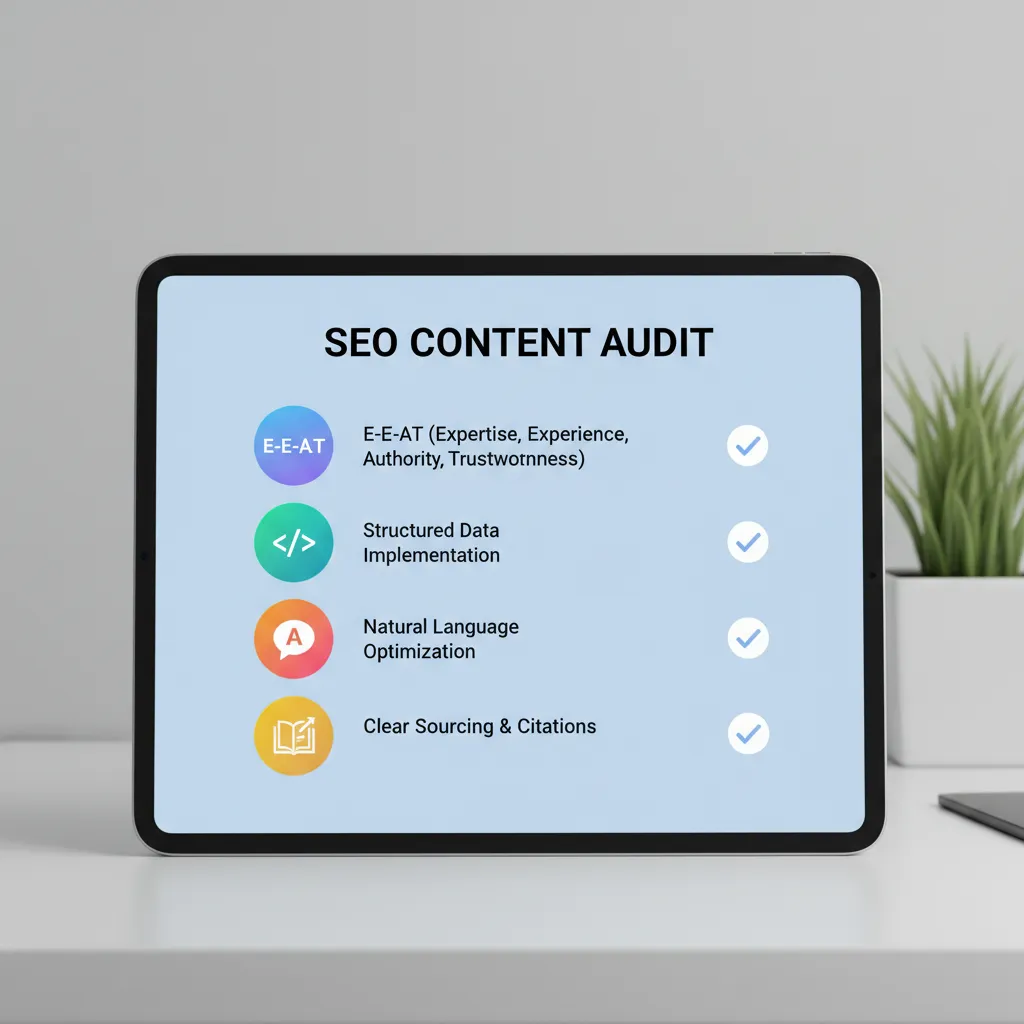
To successfully navigate adapting SEO to AI, implement the following checklist:
/image-topic.webp
| Strategy Element | Action for AI Overviews |
|---|---|
| E-E-A-T | Verify all authors are genuine experts; use Author Schema; link to high-authority sources. |
| Structure | Use H2/H3 for question-based headings; use lists and tables; employ clear, concise definitions. |
| Semantics | Cluster keywords around entities; write naturally using related terms (Google Gemini search). |
| Technical SEO | Implement FAQ, HowTo, and Review schema; ensure site speed is excellent. |
| Intent Mapping | Focus on detailed, comprehensive guides that require a click-through for full value, mitigating zero-click searches. |
3. Addressing the AI Overviews Pros and Cons
While the introduction of AI Overviews presents challenges, particularly the potential for reduced traffic, the long-term pros and cons weigh heavily toward evolution:
Pros:
- Higher quality, more sophisticated traffic seeking complex information.
- Enhanced opportunities for brand authority when cited by Google’s AI.
- Better understanding of user intent through sophisticated NLP.
Cons:
- Increased competition for citation boxes.
- Potential drop in organic traffic for simple, low-value informational content.
- The risk of the AI making errors or “hallucinations” in the generated answer, which could impact user perception of the sources cited.
The goal is to focus entirely on the pros by providing unmatched quality. Your content should be so superior that the AI must rely on you, positioning you as a definitive authority in your niche within the AI in search engines ecosystem.
[Related: Unlock Your Potential: Top AI Tools for Everyday Productivity]
Conclusion: Mastering the Evolution of Search
The introduction of Google AI Overviews and the accompanying Google I/O 2024 search update is not a threat to SEO; it is a catalyst for its refinement. The rules have changed from a game of keyword density and link volume to a demanding test of expertise, content depth, and structured authority.
To remain competitive in 2024 and beyond, you must embrace the reality that the search engine is now an AI curator. Successfully optimizing for AI search requires a strategic shift towards providing deeply satisfying, well-researched, and impeccably structured answers that fulfill the highest standards of E-E-A-T.
Start by auditing your foundational content, enhancing author credentials, and implementing semantic and structured data practices. The websites that successfully adapt their content strategy for AI Overviews today will define the next decade of success in the future of SEO. Don’t wait for a further SGE update to begin—the time to act is now.
FAQs (People Also Ask)
Q1. What is the fundamental difference between featured snippets vs AI Overviews?
AI Overviews (part of the Search Generative Experience) are synthetic answers compiled using Google Search generative AI (like Gemini) that combine information from multiple web sources. In contrast, featured snippets were typically direct extractions or quotes lifted from a single source to answer a very simple, direct question. AI Overviews prioritize synthesis and conversational complexity.
Q2. How does the AI Overviews algorithm determine which sources to cite?
The AI Overviews algorithm prioritizes sources based on E-E-A-T (Experience, Expertise, Authoritativeness, and Trustworthiness). The AI seeks high-quality, reputable, and contextually relevant content that directly and comprehensively addresses the user’s intent. Pages with robust author profiles, clear structures, and factual accuracy are more likely to be selected to how to get cited in AI Overviews.
Q3. Can users disable AI Overviews if they prefer traditional search results?
While Google has tested methods allowing users to disable AI Overviews or turn off the Search Generative Experience (SGE update) through temporary flags or specific UI controls during the testing phase, the ultimate goal is to integrate these AI-generated answers fully into the main search experience. For most queries, AI Overviews are becoming a standard, non-optional component of the AI-powered SERPs.
Q4. What is the biggest SEO risk posed by the AI Overviews impact on traffic?
The primary risk is the increase in zero-click searches. If a simple query is fully answered within the prominent AI Overview box, the user has no need to click through to any source website, potentially reducing organic traffic, especially for purely informational content that lacks depth or commercial intent.
Q5. How important is semantic SEO for adapting SEO to AI?
Semantic SEO is critical because the AI Overviews rely on natural language processing (NLP) to understand concepts and relationships, not just keywords. By implementing natural language processing SEO, you optimize your content to address the entire context and intent of a query, making your page a high-authority entity on a topic, which the Google Search generative AI rewards.
Q6. Should I focus more on structured data for AI search?
Yes. While not a direct ranking factor, structured data for AI search (such as FAQ and HowTo schema) helps the AI Overviews algorithm efficiently parse and understand the discrete elements of your content. Well-marked-up content is easier for the AI to synthesize reliably, increasing the chances of citation.
Q7. How does the SGE update relate to Google I/O 2024 search update?
The SGE update (Search Generative Experience) refers to the fundamental integration of generative AI into Google Search, which was a major focus of announcements during Google I/O 2024 search update. These events marked the transition of features like Google AI Overviews from experimental testing into widespread public deployment, cementing the future of SEO around AI.
[Related: The Metaverse at Work: Revolutionizing Remote Collaboration with Virtual Offices]