The Future of Human-Robot Collaboration: AI’s Next Frontier
Introduction: Forging a New Era of Partnership
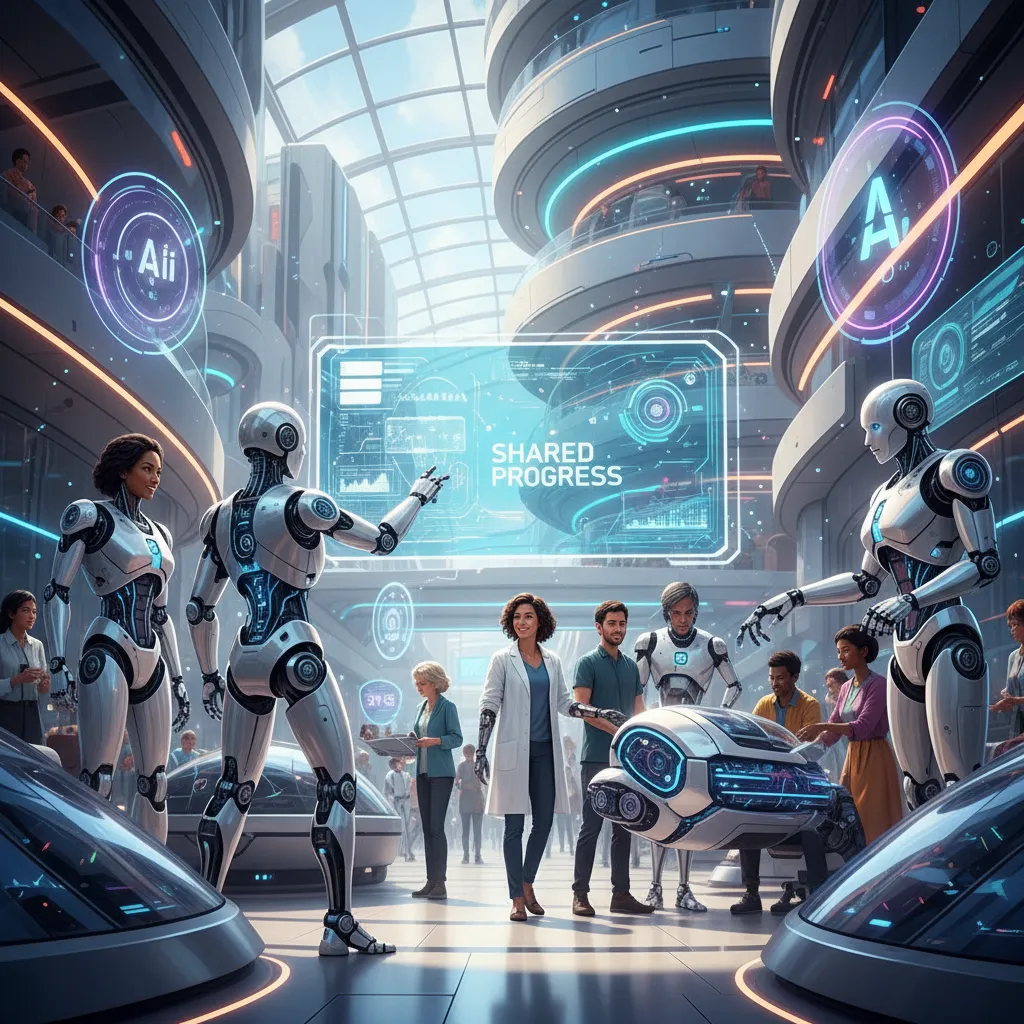
Imagine a workplace where humans and machines don’t just coexist but actively collaborate, each leveraging their unique strengths to achieve unprecedented outcomes. This isn’t a scene from a sci-fi movie; it’s the rapidly evolving reality of human-robot collaboration, propelled by the relentless march of AI robotics. We stand at the cusp of a revolutionary era where AI development robotics is transforming industries, redefining jobs, and fundamentally reshaping our interaction with technology.
The concept of robots has long captivated our imaginations, from the clunky industrial arms of yesterday to the sophisticated AI-powered robots of today. But what truly sets this new wave apart is the emphasis on seamless human-robot interaction. This isn’t just about automation replacing human tasks; it’s about intelligent machines augmenting human capabilities, creating more efficient, safer, and ultimately more productive environments. As we delve into the future of robotics, we’ll explore how AI is next frontier in this partnership, driving innovation across sectors like manufacturing, healthcare, and logistics, and profoundly impacting future workplaces. From the nuanced movements of dexterous robots to the ethical considerations of their integration, join us as we uncover the thrilling potential and critical challenges of this burgeoning field.
The Dawn of Collaborative Robots (Cobots): A Paradigm Shift
For decades, industrial robots operated in cages, their powerful, precise movements deemed too dangerous for human proximity. The advent of collaborative robots, or cobots, marked a significant turning point. These intelligent machines are designed from the ground up to work safely alongside humans, sharing workspaces and even direct tasks. This fundamental shift from isolation to integration is a cornerstone of human-robot collaboration.
AI robotics has been the catalyst for this transformation. Gone are the days of rigid programming; modern cobots, powered by sophisticated AI algorithms, can learn, adapt, and respond to their environment. This robot learning capability allows them to handle variations in tasks, adjust to human movements, and even anticipate needs, making them incredibly versatile tools in AI in industrial settings.
Redefining Industrial Settings with AI in Manufacturing
The manufacturing sector has been an early adopter and a significant beneficiary of AI in manufacturing and collaborative robots. Traditionally, assembly lines were characterized by repetitive, often ergonomically challenging tasks. Now, cobots are taking on these burdens, freeing human workers to focus on more complex problem-solving, quality control, and creative tasks.
Consider a scenario where a human technician and a cobot are working on an assembly line. The cobot might precisely pick and place components, while the human performs intricate wiring or inspection. This isn’t just about speed; it’s about leveraging the strengths of each partner. Humans bring critical thinking, adaptability, and fine motor skills for irregular tasks, while cobots offer unparalleled precision, strength, and endurance for repetitive actions. This symbiotic relationship exemplifies smart manufacturing in action, leading to improved efficiency, reduced errors, and enhanced worker safety. [Related: Harvesting Innovation: AI Revolutionizing Precision Agriculture]
The rise of robotic automation combined with AI is not just about replacing jobs, but rather about enhancing human potential. Workers can be upskilled to manage and program these advanced systems, fostering a new generation of human-machine team leaders. This is a crucial aspect of understanding robotics trends 2024 and beyond.
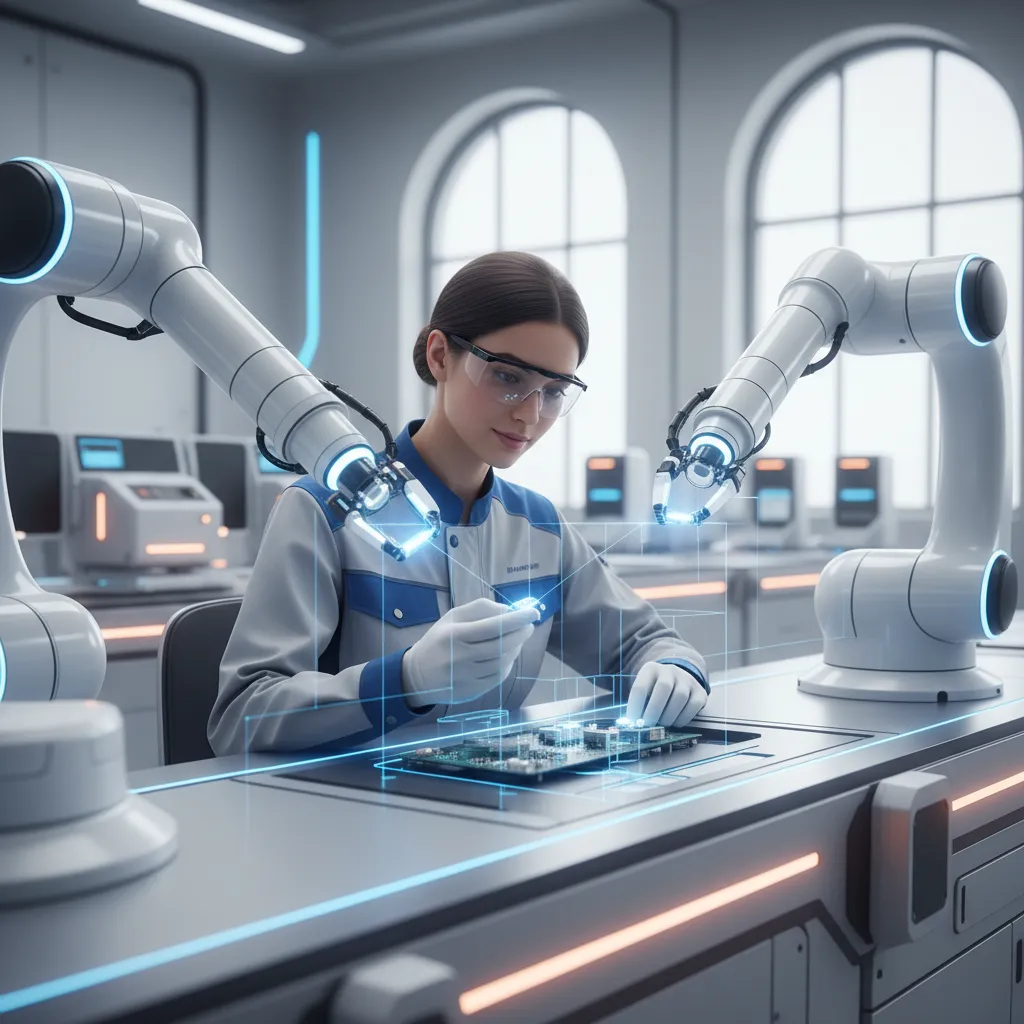 Human and cobot working on an assembly line
Beyond the Factory Floor: AI’s Impact Across Industries
The influence of AI powered robots extends far beyond manufacturing. From healthcare to logistics and even our daily lives, intelligent automation is creating new possibilities and addressing long-standing challenges.
Revolutionizing Healthcare with AI in Healthcare Robotics
The healthcare sector is witnessing a profound transformation thanks to AI in healthcare robotics. Surgical robots, once a novelty, are now becoming standard in many complex procedures, offering surgeons enhanced precision, dexterity, and minimal invasiveness. These next-gen robotics systems allow for smaller incisions, reduced blood loss, and faster patient recovery.
Beyond the operating room, service robots are increasingly deployed to assist with patient care, medication delivery, and even companionship. Imagine a robot helping an elderly patient with mobility, reminding them to take medication, or providing social interaction. This not only improves patient well-being but also frees up valuable human nursing time for more critical tasks. The integration of personal robots for assistance in homes for the elderly or individuals with disabilities is a burgeoning area of robotics research, promising a future where assistive technology significantly enhances quality of life.
 Service robot assisting an elderly person in a smart home
Streamlining Logistics and Supply Chains with Logistics Robots
The logistics industry, a backbone of the global economy, is being reshaped by logistics robots driven by AI. Warehouses are now teeming with autonomous mobile robots (AMRs) that can navigate complex environments, transport goods, and optimize storage. These robots dramatically increase efficiency, reduce operational costs, and improve safety by minimizing human presence in hazardous areas.
From sorting packages to inventory management, AI-driven systems are enabling faster, more accurate, and more resilient supply chains. The ability of these robots to learn and adapt to changing demands, thanks to robot learning, ensures that they remain valuable assets in an ever-evolving market. The efficiency gains offered by advanced robotics in logistics are critical for meeting the increasing demands of e-commerce and global trade. [Related: The DePIN Revolution: Building Tomorrow’s Decentralized Physical Infrastructure]
The Human Element: Enhancing Interaction and Collaboration
The true promise of human-robot collaboration lies in the seamless interplay between human and machine. It’s not just about tasks being performed but about the quality of the interaction. Human-robot interaction (HRI) is a critical field of robotics research that focuses on designing robots that are intuitive, responsive, and easy for humans to work with.
Designing for Intuitive Human-Robot Interaction
Effective HRI requires robots to understand human intentions, gestures, and even emotional cues. Advances in AI, particularly in natural language processing and computer vision, are enabling robots to interpret human communication more effectively. Imagine a robot that can understand your verbal commands, anticipate your next move based on your gaze, or even offer assistance without explicit instruction. This level of responsiveness makes the collaboration feel more natural and less like interacting with a mere tool.
The development of more dexterous robots also plays a crucial role. Robots with human-like hands and arms can perform more intricate tasks, mimicking human movements and making their assistance more adaptable. This is vital for tasks that require fine manipulation or a degree of human-like adaptability.
AI in Daily Life: Personal Robots and Beyond
While industrial and service robots are transforming workplaces, the concept of personal robots in AI in daily life is also gaining traction. These robots could assist with household chores, provide companionship, or offer educational support. Think of smart home devices evolving into more physical, interactive assistants. [Related: The Rise of AI Companions: Enhancing Daily Life & Emotional Well-Being]
The future envisions a world where AI and robotics seamlessly integrate into our personal spaces, enhancing convenience and offering support. However, this also raises important questions about privacy, ethical boundaries, and the nature of human connection, which we will address further.
Navigating the Ethical and Safety Landscape of AI Robotics
As AI robotics becomes more pervasive, a critical discussion around ethical AI robotics and robot safety is paramount. The integration of intelligent machines into human environments brings forth a range of considerations that demand careful attention and proactive solutions.
Ensuring Robot Safety and Reliability
The physical safety of humans working alongside robots is non-negotiable. Robot safety protocols and standards are constantly evolving to ensure that cobots can operate without posing a risk. This includes features like force and speed limiting, emergency stop functions, and advanced sensing capabilities that allow robots to detect and avoid collisions. The goal is to create environments where humans and robots can coexist safely and productively.
Beyond physical safety, the reliability of AI-driven systems is crucial. As robots take on more critical tasks, the robustness of their AI algorithms and hardware becomes increasingly important. Rigorous testing and continuous improvement are essential to ensure these systems perform as expected, even in unpredictable situations.
The Ethical Imperative: Bias, Accountability, and Control
The ethical implications of AI and automation are far-reaching. Issues such as algorithmic bias, accountability for robot actions, and the extent of human control over autonomous systems are central to the discussion of ethical AI robotics.
- Algorithmic Bias: If the data used to train AI models for robots contains biases, these biases can be perpetuated or even amplified in the robot’s actions. Ensuring diverse and unbiased datasets is critical to prevent robots from making discriminatory decisions.
- Accountability: Who is responsible when an AI-powered robot makes an error or causes harm? Is it the programmer, the manufacturer, the operator, or the AI system itself? Clear frameworks for accountability are necessary as these technologies become more complex.
- Human Control: As robots become more autonomous, determining the appropriate level of human oversight and intervention is crucial. The goal is to empower robots to act intelligently while maintaining human control when necessary, especially in critical decision-making processes.
These are not trivial questions, and ongoing robotics research is dedicated to developing ethical guidelines and regulatory frameworks to navigate these complexities. It is essential that the development of advanced robotics proceeds with a strong ethical compass.
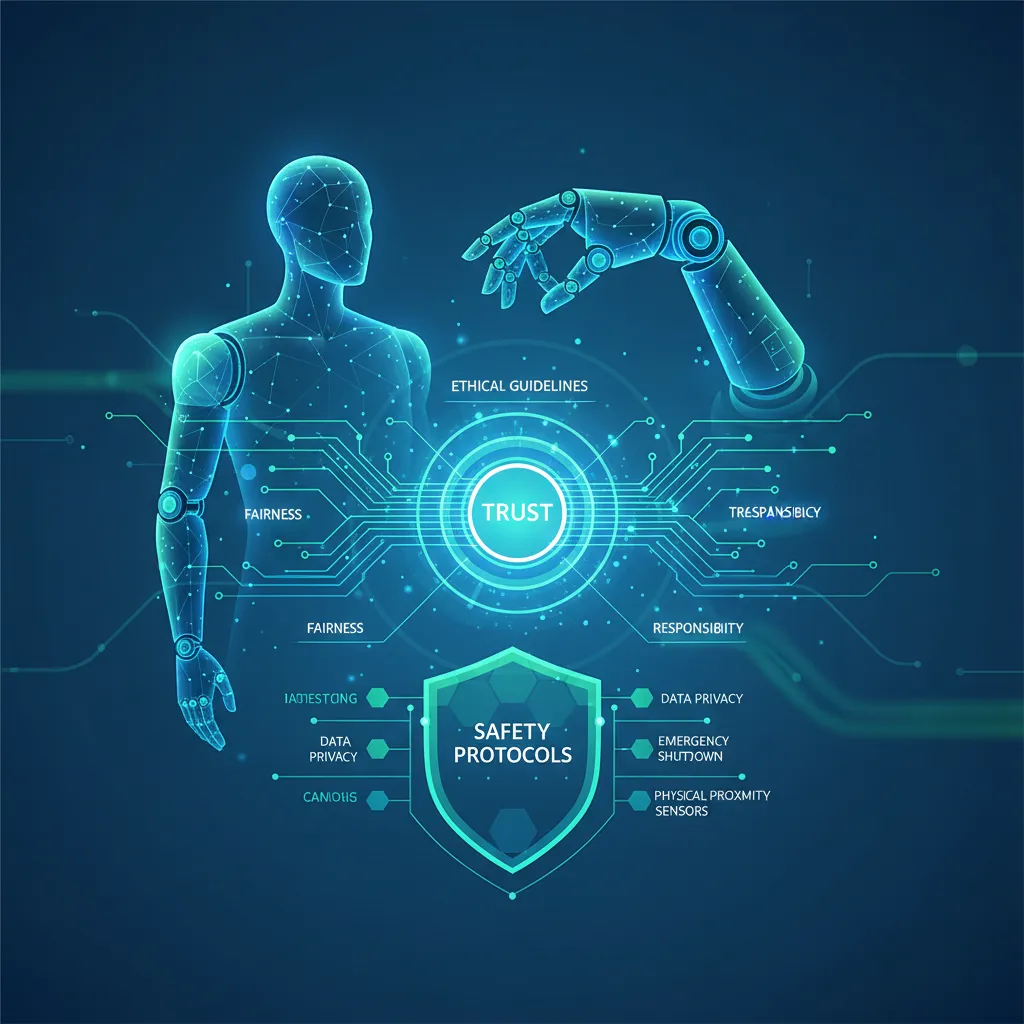 Abstract representation of ethical AI and robot safety
The Impact on Future Workplaces and Society
The widespread adoption of human-robot collaboration and AI development robotics will undoubtedly reshape future workplaces and have significant societal impacts. Understanding these changes is crucial for preparing for the coming era of robotic innovation.
Reshaping Job Roles and Skill Sets
One of the most common concerns regarding AI and automation is job displacement. While it’s true that some routine, repetitive tasks will be increasingly automated, the future of robotics is more about augmentation than outright replacement. Instead of eliminating jobs, intelligent automation will likely transform them, creating new roles and demanding new skill sets.
Workers will need to develop skills in areas such as robot operation, maintenance, programming, and human-robot team management. The focus will shift from purely manual labor to tasks requiring critical thinking, creativity, problem-solving, and strong interpersonal skills for collaborating with both humans and machines. Education and training initiatives will be vital to ensure a smooth transition and equip the workforce for these next-gen robotics environments.
The Socio-Economic Implications of AI and Automation
Beyond individual job roles, the broader socio-economic implications of AI and automation are substantial. These include:
- Productivity Growth: Increased efficiency and output from AI-driven systems can lead to significant economic growth.
- Economic Inequality: Without careful planning, the benefits of robotic automation could be unevenly distributed, exacerbating existing economic inequalities. Policies focusing on universal basic income, retraining programs, and fair wealth distribution may become increasingly relevant.
- Quality of Life: By automating dangerous, tedious, or physically demanding tasks, robots can improve the overall quality of working life, leading to fewer injuries and greater job satisfaction. In AI in daily life, personal robots could free up human time for leisure and personal development.
- Global Competitiveness: Nations and industries that embrace advanced robotics and smart manufacturing will likely gain a competitive edge in the global market.
Addressing these implications requires a multidisciplinary approach involving policymakers, industry leaders, educators, and ethicists to ensure that the benefits of AI powered robots are leveraged for the good of all society.
Robotics Trends 2024 and Beyond: The Horizon of Innovation
The pace of robotic innovation is accelerating, driven by breakthroughs in AI, sensor technology, and materials science. Looking at robotics trends 2024 and beyond, several key areas are poised for significant advancements.
More Dexterous and Adaptive Robots
The development of dexterous robots with increasingly sophisticated manipulators is a major trend. Inspired by the human hand, researchers are creating robotic grippers and manipulators that can handle delicate objects, perform intricate tasks, and adapt to varying shapes and sizes with remarkable precision. This will open up new possibilities for human-robot collaboration in fields requiring fine motor skills, such as advanced manufacturing, surgery, and even personal assistance.
Enhanced Robot Learning and Generalization
Current robot learning often requires extensive data for specific tasks. The future will see robots that can learn more efficiently, generalize knowledge from one task to another, and even learn through observation and human demonstration. This will make robots more versatile and easier to deploy in new environments, further boosting AI in daily life and diverse industrial applications. [Related: Edge AI Explained: Powering Smart Devices with Real-Time Intelligence]
Swarm Robotics and Decentralized Intelligence
Imagine not just one robot, but a collective of robots working together as a coordinated unit. Robotics research into swarm robotics and decentralized intelligence aims to create systems where multiple robots can collaborate on complex tasks, sharing information and adapting their strategies in real-time. This could revolutionize areas like logistics, environmental monitoring, and disaster relief.
The Role of AI in Further Automating Robotics Development
Ironically, AI itself is playing a growing role in automating the development of robots. From designing optimal robot structures to generating efficient control algorithms, AI development robotics is speeding up the innovation cycle. This meta-level application of AI will accelerate the creation of even more advanced and capable AI-driven systems.
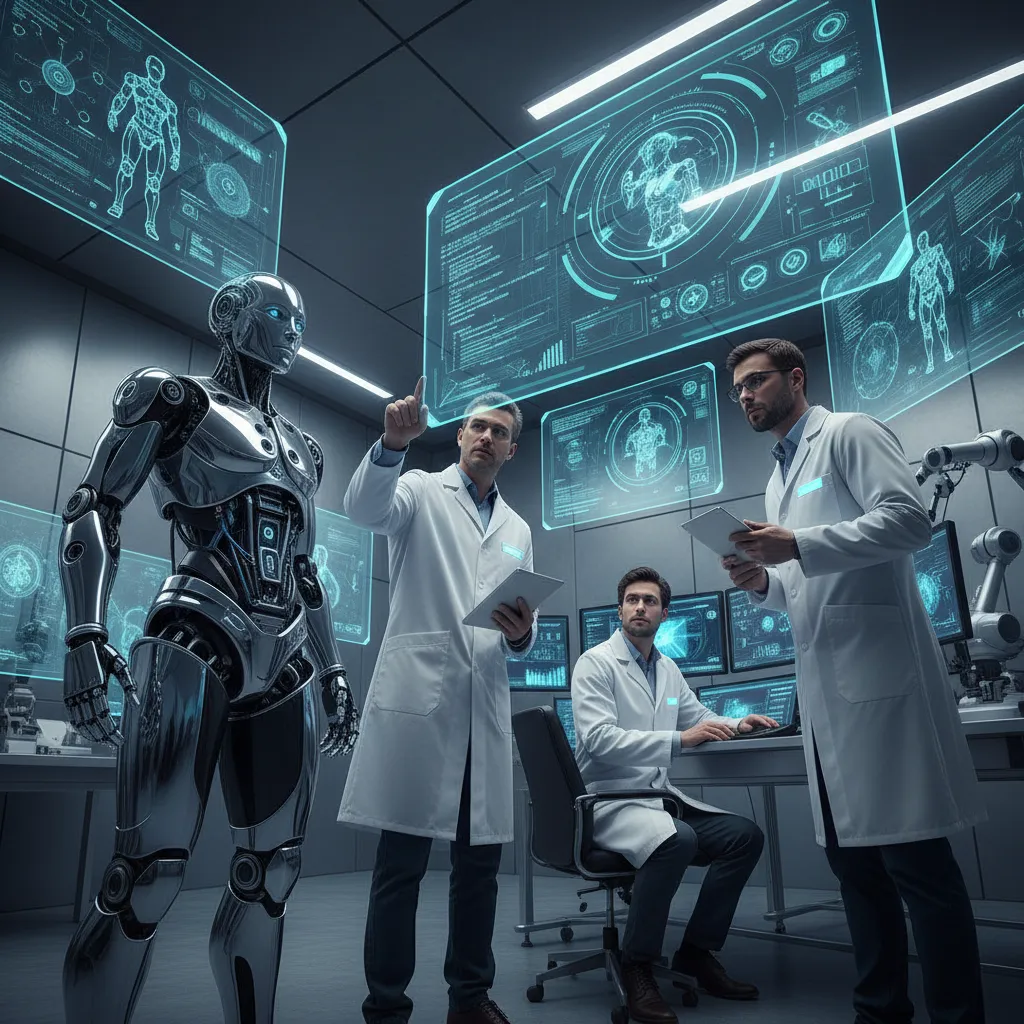 Scientists programming a humanoid robot in a lab
Hyper-Personalization and Proactive Assistance
As AI models become more sophisticated, personal robots and service robots will offer increasingly hyper-personalized and proactive assistance. Imagine a robot that anticipates your needs based on your habits, preferences, and even biometric data (with appropriate privacy safeguards). This level of intuitive understanding will make AI in daily life even more seamless and beneficial. [Related: AI-Powered Personalized Travel Planning]
Conclusion: A Collaborative Future Awaits
The journey into the future of human-robot collaboration is not just about technological advancement; it’s about reimagining our world. AI’s next frontier is not a world of robots, but a world with robots, where intelligent machines are partners in progress, augmenting human potential and solving some of our most pressing global challenges. From the precise movements of dexterous robots in smart manufacturing to the compassionate assistance of service robots in healthcare, the potential is boundless.
As we continue to navigate the exciting and complex landscape of AI robotics and intelligent automation, it is imperative that we proceed with a focus on ethical AI robotics, robust robot safety standards, and thoughtful societal integration. The robotics trends 2024 indicate a future where AI-powered robots are not just tools, but integral members of our teams, enhancing our capabilities and enriching our lives. By embracing this collaborative spirit and investing in robotics research and responsible AI development robotics, we can ensure that this next frontier is one of shared success and human flourishing.
FAQs
Q1. What is human-robot collaboration (HRC)?
Human-robot collaboration (HRC) refers to the interaction between humans and robots, often collaborative robots (cobots), working together in a shared space to perform tasks. Unlike traditional industrial robots that operate in isolation, HRC focuses on seamless and safe cooperation, leveraging the unique strengths of both humans and machines.
Q2. How is AI transforming human-robot collaboration?
AI is fundamentally transforming HRC by enabling robots to learn, adapt, and interact more intelligently. AI-powered robots can understand human intentions, respond to changes in their environment, and perform tasks with greater autonomy and flexibility, moving beyond rigid programming to become true collaborative partners.
Q3. What are “cobots” and how do they differ from traditional industrial robots?
Cobots (collaborative robots) are designed specifically to work safely alongside humans in a shared workspace without protective barriers. They differ from traditional industrial robots, which are typically larger, faster, and require isolation from human workers due to safety concerns. Cobots often have built-in safety features like force and speed limiting.
Q4. What are some key applications of AI in robotics across different industries?
AI in robotics is being applied across various industries: in manufacturing, for assembly and quality control; in healthcare, for surgical assistance and patient care; in logistics, for automated warehousing and delivery; and in daily life, through personal and service robots for assistance and companionship.
Q5. What are the main ethical considerations for AI robotics?
Key ethical considerations for AI robotics include algorithmic bias, ensuring fairness and non-discrimination; accountability for robot actions and errors; the level of human control over autonomous systems; and the potential impact on privacy and employment. Addressing these requires careful design, regulation, and public discourse.
Q6. How will human-robot collaboration impact future workplaces?
Human-robot collaboration is expected to transform future workplaces by augmenting human capabilities, automating repetitive tasks, improving efficiency, and enhancing safety. It will likely create new job roles requiring skills in robot management, programming, and human-robot team coordination, rather than simply replacing human workers.
Q7. What are the emerging trends in robotics for 2024 and beyond?
Emerging trends in robotics include the development of more dexterous and adaptive robots, enhanced robot learning and generalization capabilities, research into swarm robotics and decentralized intelligence, and the increasing use of AI to automate the robotics development process itself, leading to hyper-personalized and proactive assistance.
Q8. What is the role of robot learning in advanced robotics?
Robot learning, a key aspect of AI, allows robots to acquire new skills and knowledge from data, experience, or human demonstration, rather than just relying on pre-programmed instructions. This enables robots to adapt to new environments, handle variations in tasks, and continuously improve their performance, making them more versatile and intelligent.