DePIN’s Rise: Powering Smart Cities & IoT’s Decentralized Future

Imagine a city that truly works for its citizens. A place where traffic flows seamlessly, air quality is monitored in real-time by a thousand sensors, and high-speed internet is a public utility, not a corporate monopoly. For years, this has been the promise of “smart cities.” Yet, a critical question has always loomed: who owns and controls the vast physical infrastructure that makes it all possible?
Historically, the answer has been a handful of tech giants and government bodies, creating centralized systems that are often expensive, inefficient, and vulnerable to single points of failure. But a revolutionary new model is emerging from the world of Web3, one that promises to put the power back into the hands of the people. It’s called DePIN, or Decentralized Physical Infrastructure Networks.
DePIN is more than just another crypto buzzword; it’s a fundamental shift in how we build and manage the real-world services we rely on every day. This article is your comprehensive guide to understanding the DePIN explained simply. We’ll explore its core technology, its transformative impact on IoT and smart city technology, and how this next-gen infrastructure is laying the groundwork for a more connected, efficient, and equitable urban future.
What is DePIN? Untangling Decentralized Physical Infrastructure Networks
At its core, DePIN represents the most tangible application of real-world blockchain technology to date. It’s a model that uses cryptocurrency incentives to crowdsource the deployment and operation of physical hardware, creating decentralized, community-owned networks for everything from wireless connectivity and data storage to energy grids and mobility solutions.
Beyond the Hype: A Simple DePIN Explanation
Think of it like Airbnb for infrastructure. Airbnb doesn’t own any hotels; it created a platform and an incentive system (money) that encouraged people to share their spare rooms, building a global hospitality network.
Similarly, a DePIN project doesn’t own a fleet of cell towers or a massive data center. Instead, it creates a blockchain-based protocol with a native crypto token. This protocol incentivizes individuals and businesses around the world to buy, deploy, and maintain small-scale hardware devices (like a Wi-Fi hotspot, a sensor, or a hard drive) that collectively form a powerful, resilient network.
The core components of any DePIN project are:
- Physical Infrastructure: The real-world hardware (sensors, routers, servers, etc.) that provides a useful service.
- Blockchain Technology: The decentralized ledger that tracks contributions, payments, and network state transparently and securely.
- Token Incentives: The cryptocurrency rewards paid to hardware operators for building and maintaining the network.
- Community: The global network of contributors and users who collectively own and govern the infrastructure.
How DePIN Works: The Flywheel Effect
The magic of DePIN technology lies in its economic model, often called the “flywheel effect.” It’s a self-perpetuating cycle designed to bootstrap a network from zero to global scale far more efficiently than any traditional, centralized company could.
Here’s how DePIN works in a nutshell:
- Incentivize Supply: The project offers generous token rewards to early adopters who deploy hardware. This solves the “cold start” problem. For example, Helium famously rewarded people for setting up LoRaWAN hotspots in their homes to create an IoT network.
- Build the Network: As thousands of contributors join to earn tokens, the physical network rapidly expands its coverage and capacity. This grassroots growth is faster and cheaper than a corporation buying land and building towers.
- Attract Demand: With a robust and affordable network now in place, businesses and developers are drawn to use its services (e.g., an IoT company paying to use Helium’s network to track its assets). They typically pay for these services in a stable currency or by burning the project’s native token.
- Drive Value: This real-world revenue creates demand for the native token, increasing its value. The rising token price attracts even more hardware providers, further strengthening the network and kicking the flywheel into a higher gear.
This elegant model aligns the incentives of every participant, creating a powerful engine for building the web3 infrastructure of the future.
The Perfect Match: Why IoT and Smart Cities Need DePIN
The Internet of Things (IoT) is the technological backbone of any smart city, a sprawling web of connected devices collecting and sharing data. However, the current centralized approach to building this infrastructure is fraught with problems that DePIN is uniquely positioned to solve.
The Problem with Centralized Smart City Infrastructure
- Single Points of Failure: When a central server at Amazon Web Services or a local telecom provider goes down, entire city services can be disrupted.
- Data Silos & Privacy Risks: Data is often controlled by a single corporation, creating privacy concerns and preventing different systems from working together seamlessly. Who truly owns the data from your smart meter or the traffic sensors on your street?
- High Costs & Slow Deployment: Centralized providers have massive capital expenditures and often move slowly, creating “digital deserts” in less profitable areas.
- Lack of Innovation: Walled-garden ecosystems stifle competition and prevent developers from building new applications on top of the city’s infrastructure without permission.

DePIN Benefits: A Paradigm Shift for Urban Development
DePIN flips this model on its head, offering a blueprint for more democratic, resilient, and efficient urban environments. The depin impact on urban development is profound.
- Democratization and Citizen Ownership: With DePIN, citizens are no longer just consumers of services; they can become active participants and owners of their city’s infrastructure. Running a small node or sensor in your home could generate passive income and give you a say in how the network is governed.
- Unmatched Resilience and Security: A decentralized network has no central point of attack. The failure of one or even a thousand nodes won’t bring the network down. Blockchain IoT integration ensures that data is tamper-proof and transactions are secure.
- Hyper-Scalability and Cost Efficiency: The crowdsourced model drastically reduces deployment costs. Networks can scale organically wherever people are willing to participate, filling gaps left by traditional providers and leading to more affordable services for everyone.
- Permissionless Innovation: DePIN networks are built on open protocols. This means anyone, anywhere can build new applications and services on top of the existing infrastructure, fostering a Cambrian explosion of innovation in depin for urban development.
[Related: Sustainable Smart Homes: Your Guide to Eco-Friendly Tech]
Real-World DePIN Applications Transforming Our Cities
This isn’t just theory. The DePIN ecosystem is already booming with projects deploying real-world infrastructure that is actively shaping our cities. These DePIN use cases span multiple sectors, forming the foundational layers of the decentralized future.
Decentralized Connectivity Solutions: The Foundation
The most basic need of any smart device is connectivity. DePIN projects are creating bottom-up alternatives to traditional telecom giants.
- Helium: The poster child of DePIN, Helium incentivized the creation of the world’s largest decentralized LoRaWAN network for low-power IoT devices (like pet trackers and environmental sensors). It has since expanded to include a community-owned 5G network, offering more affordable mobile data plans. This is a prime example of connectivity solutions depin in action.
Decentralized Sensor Networks and Environmental Monitoring
Smart cities thrive on data. DePIN enables the creation of hyper-local, real-time sensor networks that are owned and operated by the community.
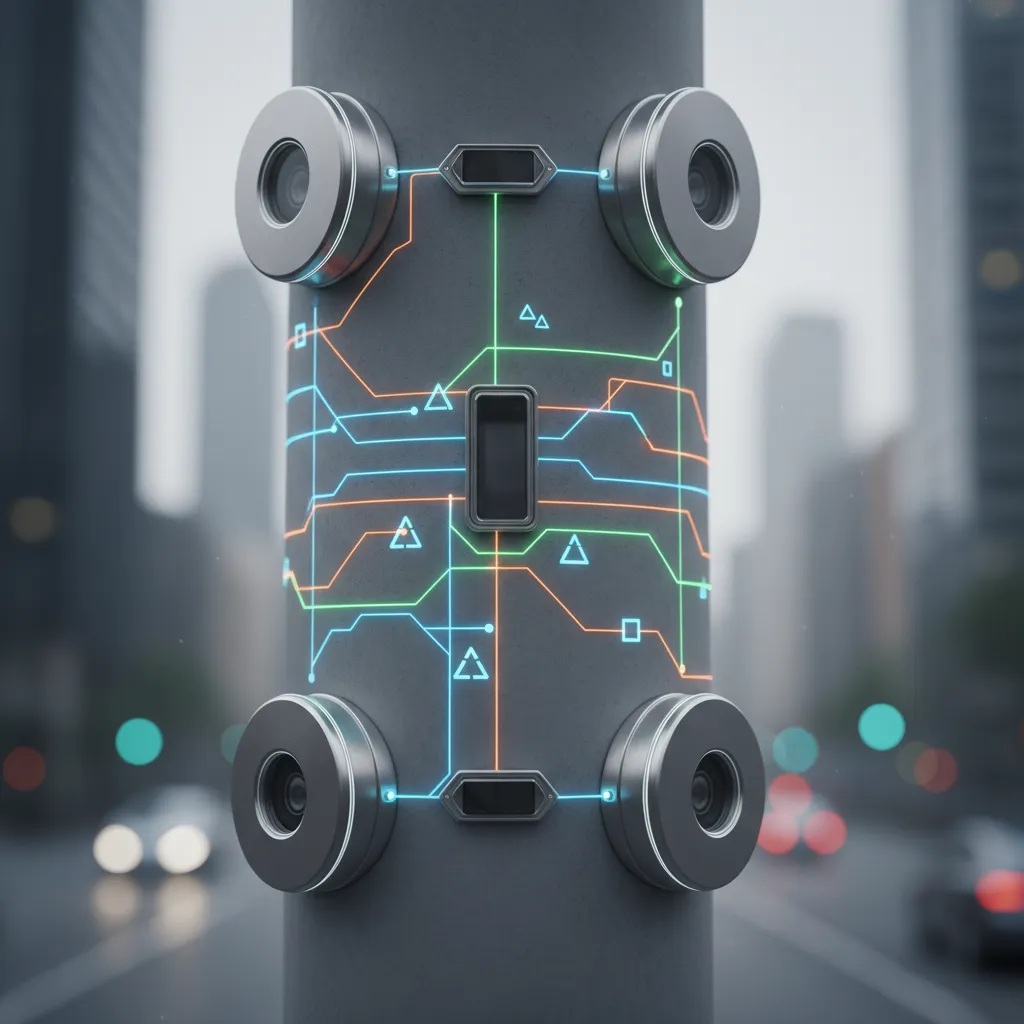
- WeatherXM: This project allows individuals to set up their own weather stations and contribute hyper-local weather data to a global network. This data is far more granular than traditional sources and can be used for everything from precision agriculture to improved climate modeling. It’s a perfect example of a decentralized sensor network.
- PlanetWatch: Similar to WeatherXM, PlanetWatch incentivizes users to deploy air quality sensors, creating a global, citizen-powered air quality monitoring system that can hold polluters accountable and inform public health policy.
Smart Grids and Sustainable Cities
DePIN can play a crucial role in the transition to renewable energy. By decentralizing energy production and distribution, we can create more resilient and efficient power grids.
- Arkreen: This project is building a decentralized network for connecting and monetizing renewable energy assets, like rooftop solar panels and home batteries. It allows for peer-to-peer energy trading, empowering homeowners to sell their excess energy directly to their neighbors, which is a key step towards depin and sustainable cities. [Related: New Green: Beyond ESG Investing in a Sustainable Future]
Mobility, Logistics, and the Rise of MachineFi
The future of mobility is connected, autonomous, and electric. DePIN and the concept of MachineFi (Machine Finance) are creating the infrastructure for this new economy of machines.

- Hivemapper: This project is building a decentralized, continuously updated map of the world. Contributors use dashcams to map streets while they drive, earning tokens in the process. This crowdsourced data is fresher and often more detailed than Google Maps, serving as a critical tool for logistics, autonomous driving, and urban planning.
- DIMO (Digital Infrastructure for Moving Objects): DIMO lets car owners connect their vehicles to a decentralized network, collect their own data, and monetize it. This data can be used to build better insurance products, predictive maintenance services, and more, all while giving the vehicle owner control and compensation.
Secure Data Storage and Digital Infrastructure
All the data generated by a smart city needs to be stored securely and accessibly. DePIN offers a censorship-resistant and cost-effective alternative to centralized cloud storage.

- Filecoin & Arweave: These are decentralized storage networks where individuals and data centers rent out their spare hard drive space. This creates a hyper-competitive, global marketplace for data storage that is often significantly cheaper and more resilient than Amazon S3 or Google Cloud, providing the robust backbone needed for decentralized networks.
The DePIN Ecosystem: Key Projects and Investment Landscape
The DePIN ecosystem is a vibrant and rapidly expanding corner of the Web3 world. While it’s crucial to do your own research (this is not financial advice), understanding the landscape is key to appreciating the sector’s potential.
A Glimpse at Prominent DePIN Projects
| Category | Key Projects | Service Provided |
|---|---|---|
| Wireless | Helium, Pollen Mobile, XNET | Decentralized 5G and IoT connectivity |
| Sensors | Hivemapper, WeatherXM, PlanetWatch | Decentralized mapping, weather, and air quality data |
| Storage | Filecoin, Arweave, Storj | Decentralized cloud storage |
| Compute | Akash Network, Render Network | Decentralized cloud computing (CPU/GPU) |
| Energy | Arkreen, Powerledger | Decentralized energy data and trading |
DePIN Investing: Navigating the Opportunities and Risks
For those interested in DePIN investing, the potential is clear: you’re investing in the rails of the future digital and physical economy. However, as with any nascent technology, the risks are also significant.
When evaluating a DePIN project, consider:
- Real-World Demand: Is there a genuine, non-speculative demand for the service the network provides? Is it cheaper, better, or more accessible than the centralized alternative?
- The Flywheel’s Strength: Are the tokenomics designed to sustainably grow the network? Is the project successfully attracting both hardware suppliers and fee-paying users?
- Team and Community: Is the team experienced and transparent? Is there a strong, engaged community building and supporting the network?
The primary risk lies in the classic Web3 challenges: regulatory uncertainty, technical scalability hurdles, and the volatility of the broader crypto market. The path to DePIN adoption will have its bumps.
The Road Ahead: Challenges and the Future of DePIN
While the promise of DePIN is immense, several challenges must be overcome for it to achieve mainstream adoption and realize its full potential as the future of decentralized infrastructure.
Overcoming the Hurdles to Mass DePIN Adoption
- Regulatory Clarity: Governments are still figuring out how to classify and regulate digital assets and decentralized networks. Clearer guidelines will be essential for attracting institutional investment and large-scale enterprise customers.
- User Experience (UX): Setting up hardware and interacting with blockchain protocols can still be complex for the average person. Simplifying the onboarding process is critical for attracting the millions of contributors needed for global scale.
- Hardware and Logistics: Manufacturing and distributing physical hardware globally is a complex logistical challenge that is very different from simply deploying software.
- Bridging the Web2-Web3 Gap: DePIN services need to be seamlessly accessible to traditional businesses and developers who may not want to deal directly with cryptocurrency.
The Next-Gen Infrastructure: What’s on the Horizon?
Despite the challenges, the future of DePIN is incredibly bright. We are at the very beginning of a multi-decade trend of decentralizing our physical world.
We can expect to see a deeper integration of AI and DePIN, where decentralized compute networks power intelligent city management systems. [Related: What is GPT-4o? OpenAI’s New AI Model Explained]. The rise of MachineFi will lead to truly autonomous machine-to-machine economies, where your self-driving car pays for its own charging at a DePIN-powered station.
DePIN is the critical missing layer that connects the digital world of blockchain to our physical reality. It’s the engine that will power the truly smart, sustainable, and citizen-centric cities of the 21st century.
Conclusion
We’ve journeyed from a simple DePIN explanation to exploring its complex and exciting applications in the real world. DePIN is not just a technological evolution; it’s a socio-economic one. It challenges the centralized models of the past and offers a new blueprint for building next-gen infrastructure that is more open, resilient, and community-owned.
By harnessing the power of blockchain IoT integration, token incentives, and community collaboration, decentralized physical infrastructure networks are creating the foundational layer for the smart cities and interconnected world of tomorrow. The rise of DePIN is a quiet revolution, happening one sensor, one hotspot, and one community member at a time. The decentralized future is being built, and now you know how to see it.
What DePIN application are you most excited about? Share your thoughts in the comments below!
FAQs
What is DePIN in simple terms?
DePIN stands for Decentralized Physical Infrastructure Networks. In simple terms, it’s a way of using cryptocurrency rewards to encourage people and businesses all over the world to set up and run real-world hardware (like Wi-Fi hotspots or sensors). This collectively builds a powerful, community-owned infrastructure network as an alternative to ones built by big corporations.
How do DePIN projects make money?
DePIN projects generate revenue when end-users (like businesses or developers) pay to use the network’s services. For example, an IoT company pays a fee to use the Helium network to track its packages. This revenue is then used to buy back and burn the project’s native token or distribute it to the network’s stakeholders, creating economic value.
Is Helium a DePIN project?
Yes, Helium is widely considered one of the earliest and most successful examples of a DePIN project. It successfully bootstrapped a global, decentralized wireless network for IoT devices (LoRaWAN) and later a 5G network by rewarding individuals with its HNT token for deploying hotspots.
What is the difference between DePIN and DeFi?
DeFi (Decentralized Finance) focuses on recreating traditional financial systems like lending, borrowing, and trading on the blockchain. Its products are purely digital. DePIN (Decentralized Physical Infrastructure) uses similar blockchain and token concepts but applies them to building and managing tangible, real-world physical infrastructure, like wireless networks, data storage, or energy grids.
What are the main challenges facing DePIN adoption?
The main challenges for DePIN adoption include navigating unclear regulatory environments, simplifying the user experience to make it accessible for non-crypto natives, overcoming the logistical complexities of global hardware distribution, and achieving the scale necessary to compete with established centralized providers.
Can I participate in a DePIN network?
Absolutely. Most DePIN networks are permissionless, meaning anyone can participate. Participation usually involves purchasing specific hardware (like a sensor or miner) and setting it up according to the project’s instructions. In return for providing network coverage or resources, you earn the project’s native cryptocurrency token.
Is investing in DePIN crypto risky?
Yes, like any investment in the cryptocurrency space, investing in DePIN tokens is highly risky. The technology is nascent, markets are volatile, and many projects may not succeed. It’s crucial to conduct thorough research, understand the project’s technology and economic model, and never invest more than you can afford to lose.