DePIN Investing: Unlock the Future of Decentralized Infrastructure & Wealth

Introduction
Ever wondered who owns the internet? Or the vast server farms that power your favorite apps? For decades, the answer has been a handful of tech giants. They build the infrastructure, set the prices, and control the data. But what if we could build it together, piece by piece, and share in the rewards?
Welcome to the world of DePIN investing.
DePIN, which stands for Decentralized Physical Infrastructure Networks, is a revolutionary Web3 movement that uses blockchain technology and crypto-economic incentives to build and maintain real-world infrastructure. Think of it as the gig economy for everything from Wi-Fi hotspots and cloud storage to energy grids and traffic monitoring. It’s a paradigm shift from top-down, corporate-controlled systems to bottom-up, community-owned networks.
This guide is your comprehensive starting point for understanding this explosive sector. We’ll demystify the core concepts, explore the most exciting DePIN projects, and provide a strategic framework for investing in DePIN. Whether you’re a seasoned crypto investor or a curious beginner, you’ll learn how DePIN is tokenizing real-world assets and creating unprecedented Web3 investment opportunities.
What Exactly is DePIN? Unpacking the Revolution
At its heart, DePIN is about one simple, powerful idea: using tokens to motivate people to contribute to a physical network. It’s a system designed to solve the “cold start” problem that plagues any new infrastructure project. How do you build a global network without billions in upfront capital?
DePIN answers this with a brilliant economic model often called the “flywheel.”
The DePIN Flywheel: A Virtuous Cycle of Growth
- Incentivize: A new DePIN project offers its native crypto token to early adopters who contribute hardware or resources (e.g., setting up a wireless hotspot, sharing unused computer power, or installing a smart sensor).
- Build: Attracted by the potential rewards, a global community of individuals and small businesses starts deploying the necessary physical hardware. This builds out the network’s coverage and capacity without the project needing a massive central budget.
- Attract: As the network becomes more robust and widespread, it attracts real-world users and businesses who pay to use its services (e.g., affordable data storage, widespread IoT connectivity).
- Generate Revenue: These user fees create a sustainable revenue stream for the network. A portion of this revenue is often used to buy back and burn the native token, increasing its scarcity and value.
- Reward: The increased token value further incentivizes more people to join and contribute, spinning the flywheel faster and creating a self-sustaining, community-owned infrastructure.
This model fundamentally challenges traditional, centralized infrastructure, which is often inefficient, expensive, and controlled by monopolies. DePIN offers a more democratic, cost-effective, and resilient alternative.

The DePIN Ecosystem: A Universe of Real-World Use Cases
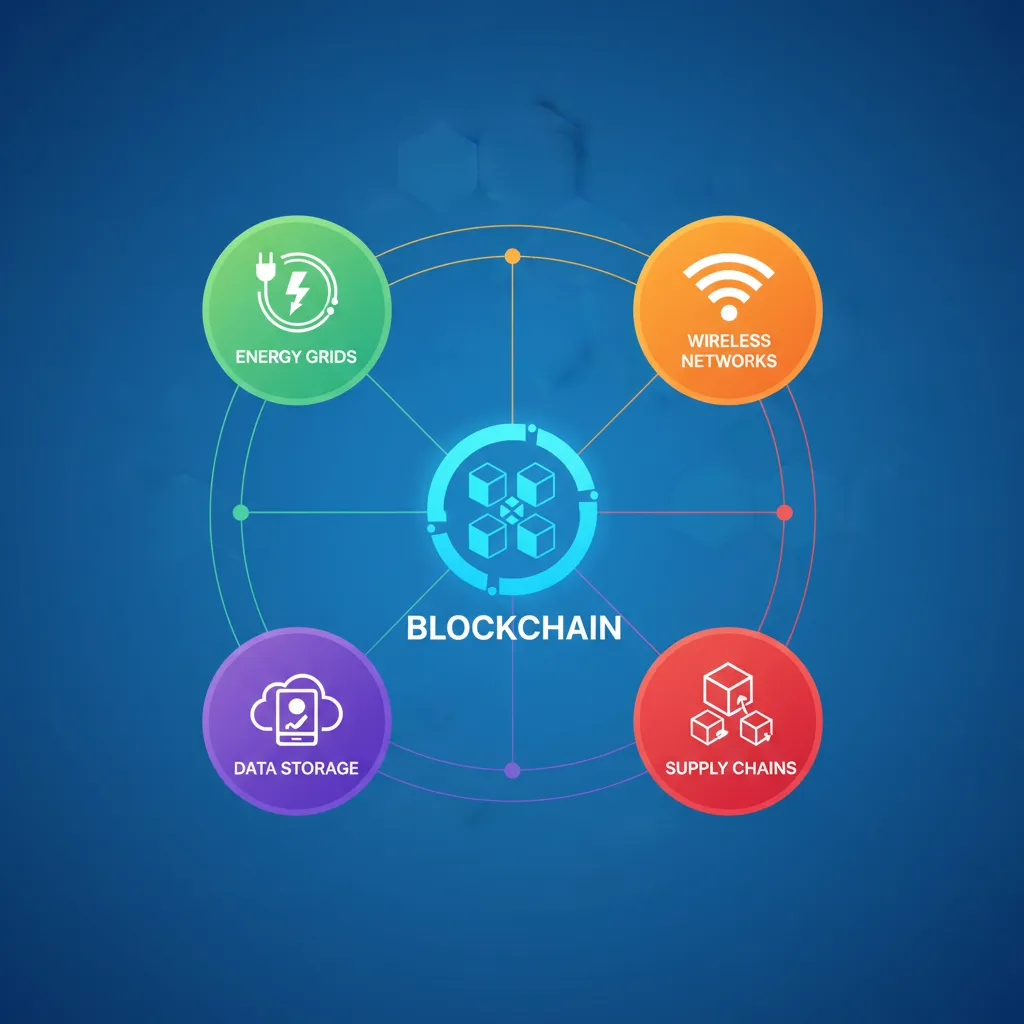
The DePIN ecosystem is not a monolith; it’s a vibrant collection of networks tackling diverse, real-world problems. While new categories emerge constantly, most projects fall into two main buckets: Digital Resource Networks and Physical Resource Networks.
Digital Resource Networks (DRNs)
These networks create decentralized marketplaces for digital commodities like storage, computing power, and bandwidth.
- Decentralized Storage: Projects like Filecoin (FIL) and Arweave (AR) create a global, peer-to-peer market for data storage. Instead of relying on Amazon S3 or Google Drive, users can rent storage space from a distributed network of providers at a fraction of the cost. This is a cornerstone of the permanent, decentralized internet.
- Decentralized Compute: This is one of the hottest areas in DePIN, supercharged by the AI revolution. Render Network (RNDR) connects artists and AI developers needing GPU power with a global network of idle graphics cards. Akash Network (AKT) acts as a “supercloud,” offering decentralized cloud computing resources that are often significantly cheaper than traditional providers. [Related: What is GPT-4o? OpenAI’s New AI Model Explained]
- Decentralized Wireless (DeWi): Helium (HNT) pioneered this space by incentivizing users to deploy hotspots that create a global IoT and 5G network. It’s a powerful example of building a massive telecommunications network from the ground up, powered by the community.
Physical Resource Networks (PRNs)
These networks use sensors and hardware to collect unique, real-world data that wasn’t previously available or was locked away in corporate silos.
- Mobility & Mapping: Hivemapper (HONEY) pays contributors to mount a dashcam on their car, collecting street-level imagery to build a decentralized, constantly updated alternative to Google Maps. DIMO (DIMO) allows car owners to connect a device to their vehicle, collect its performance data securely, and monetize that data with apps and services.
- Energy Networks: Imagine a future where homes with solar panels can sell excess energy directly to their neighbors. Decentralized energy networks are making this a reality, creating more resilient and efficient power grids. This is a key area for sustainable infrastructure crypto.
- Environmental Data: WeatherXM incentivizes people to set up weather stations, creating the world’s most comprehensive and hyperlocal weather data network. This data is invaluable for industries from agriculture to insurance.
How to Invest in DePIN: A Strategic Guide
Investing in DePIN isn’t just about buying a token; it’s about backing the future of infrastructure. The potential for passive income in DePIN is a major draw, whether through token appreciation or active participation. Here’s a step-by-step approach to navigate this exciting landscape.
Step 1: Identifying Promising DePIN Projects
Your journey begins with research. The DePIN ecosystem is growing fast, and staying informed is key.
- Use Data Aggregators: Websites like CoinGecko and CoinMarketCap have dedicated DePIN sections that list projects by market capitalization and other metrics.
- Explore DePIN Scanners: Specialized tools like DePINscan and DePIN Ninja provide real-time data on network growth, provider rewards, and hardware status across various projects.
- Follow Key Opinion Leaders: Follow DePIN-focused analysts and venture funds on platforms like X (formerly Twitter) and YouTube to get insights into emerging DePIN trends.
Step 2: The Due Diligence Checklist
Once you’ve identified a project, it’s time for a deep dive. The DePIN economic model is complex, so a thorough analysis is crucial.
- Team & Vision: Who is building the project? Do they have experience in both blockchain and the specific industry they’re targeting? Is their vision clear and ambitious yet achievable?
- Technology & Hardware: Is the hardware required affordable and accessible? Is the software open-source and well-documented? Check their GitHub for developer activity.
- DePIN Tokenomics: This is the heart of your analysis.
- Token Utility: What is the token’s purpose? Is it used for payments, staking, governance, or all three? A token with strong utility has intrinsic demand.
- Supply Dynamics: Is the total supply capped? What is the inflation/emission schedule for rewarding contributors? High, perpetual inflation can suppress price.
- Value Accrual: How does the network’s success translate to token value? Look for mechanisms like fee-sharing or token buybacks and burns funded by network revenue.
- Community & Ecosystem Growth: A strong DePIN project is a living ecosystem. Is the community active and growing on Discord and Telegram? Are new developers building applications on top of the network? Are there significant partnerships in place?
Step 3: Acquiring DePIN Assets
There are two primary ways to gain exposure to the DePIN sector.
- Direct Investment (Buying Tokens): The simplest method is purchasing the project’s native token on a centralized or decentralized crypto exchange. This is a bet on the future growth and adoption of the entire network.
- Active Participation (Earning Tokens): This is the essence of DePIN. You can earn tokens as a passive income stream by contributing resources. This could mean:
- Running a Helium hotspot.
- Renting out your spare GPU power on the Render Network.
- Sharing your unused disk space on Filecoin.
- Driving with a Hivemapper dashcam.
This approach not only provides potential financial returns but also makes you an active part of building decentralized infrastructure.
The Bull Case: Why DePIN Could Be the Next Trillion-Dollar Narrative
The excitement around DePIN isn’t just hype; it’s rooted in powerful, converging trends that signal a massive long-term potential.
Tapping into Real-World Value
DePIN is a leader in real-world asset tokenization (RWA). It’s not about abstract digital concepts; it’s about tangible infrastructure that provides services people use every day. The total addressable market for physical infrastructure is in the trillions of dollars, and DePIN is poised to capture a significant slice of that pie.
The Rise of AI and the Insatiable Demand for Compute
The AI industry is growing exponentially, and so is its need for computational power. Centralized providers are struggling to keep up, and costs are soaring. DePIN projects like Render and Akash offer a global, decentralized pool of GPU resources that is more scalable and cost-effective, positioning them as essential infrastructure for the AI revolution. [Related: Apple Intelligence: All the New AI Features for iOS 18]

Building the Backbone for Smart Cities and IoT
The future is connected. Smart cities DePIN will be the nervous system for billions of IoT devices, from autonomous vehicles and delivery drones to smart meters and environmental sensors. Decentralized networks are more resilient and censorship-resistant, making them ideal for the critical infrastructure of tomorrow.
Navigating the Risks: A Sober Look at DePIN Investing
While the potential is enormous, it’s crucial to approach DePIN investing with a clear understanding of the DePIN risks and rewards. This is an emerging sector, and a healthy dose of caution is warranted.
- Market Volatility: Like the broader crypto market, DePIN tokens can be extremely volatile. Prices can swing dramatically based on market sentiment, project news, and macroeconomic factors.
- Regulatory Uncertainty: Governments worldwide are still developing frameworks for digital assets and decentralized networks. Future regulations could impact DePIN operations, particularly in sectors like telecommunications and energy.
- Technical & Execution Hurdles: Scaling a global infrastructure network is incredibly complex. Projects may face unforeseen technical challenges, security vulnerabilities, or difficulties in attracting a critical mass of both providers and users.
- Tokenomic Failures: A poorly designed economic model can lead to a death spiral. If incentives are misaligned or inflation is too high, the network’s flywheel can stall or reverse.
Conclusion: Building the World of Tomorrow, Today
DePIN investing represents more than just a new crypto category; it’s a fundamental rethinking of how we build, own, and operate the physical infrastructure that underpins our world. By aligning incentives between network builders and users, DePIN unlocks a future that is more efficient, resilient, open, and equitable.
The journey is just beginning, and the landscape of decentralized networks is evolving at a breakneck pace. For investors willing to do their research and embrace the long-term vision, DePIN offers a unique opportunity to not only generate wealth but also to actively participate in building the decentralized future.
The question is no longer if community-owned infrastructure will compete with centralized incumbents, but how quickly it will redefine entire industries. Start exploring the DePIN ecosystem today, analyze the projects that resonate with you, and consider your role in this exciting revolution.
FAQs
Q1. What is a simple explanation of DePIN?
DePIN (Decentralized Physical Infrastructure Networks) is a system that uses cryptocurrency tokens as a reward to encourage individuals and businesses to build and maintain real-world physical infrastructure, such as Wi-Fi networks, data storage servers, or mobility sensors. It’s like a community-owned and operated version of services traditionally run by large corporations.
Q2. Is DePIN a good investment?
DePIN can be a high-risk, high-reward investment. The sector has massive long-term potential to disrupt trillion-dollar industries like cloud computing, telecommunications, and energy. However, it is a new and volatile market. A good investment decision depends on your risk tolerance, thorough research into specific DePIN projects, and an understanding of their DePIN tokenomics.
Q3. What are the top DePIN crypto projects?
Some of the most well-known DePIN projects include Filecoin (FIL) for decentralized storage, Render Network (RNDR) for decentralized GPU computing, Helium (HNT) for decentralized wireless networks, and Hivemapper (HONEY) for decentralized mapping. The list is constantly growing as new projects emerge.
Q4. How do you make money with DePIN?
There are two primary ways to make money with DePIN. The first is by investing in DePIN tokens on crypto exchanges and benefiting from their potential price appreciation. The second, more active method, is by earning passive income DePIN rewards for contributing resources to a network, such as sharing your computer’s storage, running a hotspot, or collecting data with a specific device.
Q5. What is the difference between DePIN and RWA (Real-World Assets)?
DePIN is a type of RWA, but they are not the same. RWA is a broad category that includes any physical or traditional financial asset tokenized on a blockchain (e.g., real estate, stocks, bonds). DePIN specifically refers to tokenized infrastructure networks that produce a useful service or commodity (like data, bandwidth, or energy). Essentially, all DePINs are RWAs, but not all RWAs are DePINs.
Q6. What are the main risks of investing in DePIN?
The main risks include high market volatility inherent in cryptocurrency, regulatory uncertainty from governments, technical risks related to scaling and security, and the possibility of a project’s economic model (tokenomics) failing to attract and retain users and service providers.