DePIN: Powering the Decentralized Internet & Future Connectivity

For decades, the physical infrastructure that powers our digital world—from the cloud servers storing our photos to the cell towers connecting our calls—has been the exclusive domain of a few mega-corporations. This centralization has led to walled gardens, data monopolies, and ever-increasing costs. But what if we could build a new internet, one owned and operated by its users?
This is the promise of DePIN, or Decentralized Physical Infrastructure Networks. It’s a revolutionary Web3 movement that uses blockchain technology and crypto-token incentives to crowdsource and build real-world infrastructure. From global wireless networks and cloud storage to energy grids and mobility services, DePIN is laying the groundwork for a more open, resilient, and equitable digital future.
In this deep dive, we’ll give you a full DePIN explained guide. You’ll learn exactly how this groundbreaking technology works, explore its transformative use cases, understand the benefits of community-owned infrastructure, and discover the top DePIN crypto projects building the future of internet connectivity.
What Exactly is DePIN? Demystifying the Revolution
At its core, DePIN is a simple but powerful idea: using a blockchain to coordinate and incentivize people all over the world to deploy and operate hardware, creating a shared, decentralized infrastructure network.
Let’s break down the acronym:
- Decentralized: Instead of a single company like Amazon or AT&T owning and controlling the network, power and ownership are distributed among its users and operators. There’s no central point of failure or control.
- Physical: This isn’t just about software. DePIN involves tangible, real-world hardware—think Wi-Fi hotspots, hard drives, GPUs, solar panels, and environmental sensors. This is a core part of the real-world assets blockchain narrative.
- Infrastructure: These individual devices work together to form a cohesive, usable network that provides a valuable service, such as internet access, file storage, or computational power.
- Networks: The blockchain and its associated token create a set of rules and economic incentives that allow these globally distributed devices to self-organize and operate as a single, powerful network.
Think of it like an Airbnb or Uber for digital resources. Instead of sharing a spare room or a car ride, you’re contributing unused hard drive space, GPU power, or wireless bandwidth to a collective network and earning rewards for it. This creates a powerful model for P2P infrastructure that can outcompete centralized incumbents on both cost and scale.
How DePIN Works: The Flywheel of Community-Owned Growth
The magic of DePIN lies in its economic model, often called the “flywheel.” This model elegantly solves the classic “chicken-and-egg” problem that plagues new networks: how to attract suppliers without demand, and how to attract demand without supply. DePIN uses token incentives to kickstart this process and create a self-sustaining ecosystem.
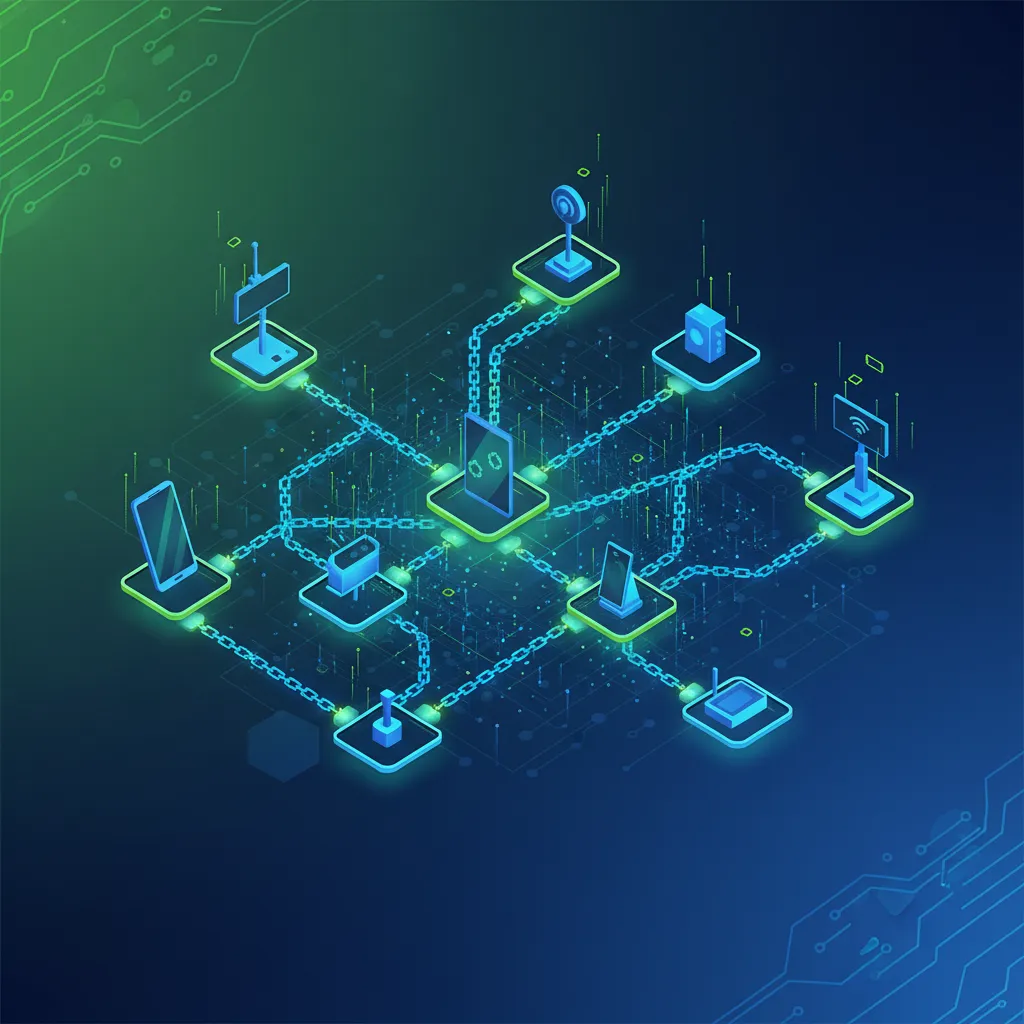
The Core Components of a DePIN
- Physical Hardware: The network’s supply side consists of individuals and businesses who purchase and deploy hardware. This could be a Helium hotspot to provide wireless coverage or a powerful computer rig contributing to the Render Network for decentralized computing.
- Blockchain & Smart Contracts: This is the network’s transparent and immutable back-end. It verifies that the hardware is online and providing useful work (a concept called Proof of Physical Work), and it automatically distributes rewards based on pre-defined rules.
- Token Incentives: Every DePIN has a native cryptocurrency token that serves as the fuel for its economy. These tokens are used to reward the hardware operators (the supply side) for their contributions, creating a powerful incentive to build out the network.
The DePIN Flywheel Effect Explained
The flywheel model turns network growth into a virtuous cycle:
- Incentivize Supply: A new DePIN project offers its native tokens as a reward to early adopters who deploy hardware. This initial incentive is crucial for bootstrapping the physical infrastructure when there are few or no users.
- Build the Network: Attracted by the rewards, contributors around the world purchase and set up devices. This expands the network’s capacity and geographic coverage, making the service more robust and useful.
- Attract Demand: As the network grows, it begins to offer a service that is often significantly cheaper, more resilient, or more accessible than traditional centralized alternatives. This starts to attract real users and businesses (the demand side) who pay to use the network’s services (e.g., data transfer, storage space).
- Drive Value: Users typically pay for services in the network’s native token. This creates real demand for the token. Often, a portion of these fees is “burned” (permanently removed from circulation), which increases the scarcity and potential value of the remaining tokens. This increased value further motivates more suppliers to join the network, spinning the flywheel faster.
This elegant model aligns the incentives of everyone involved. The more the network is used, the more valuable it becomes for both the people providing the infrastructure and the token holders.
The Tangible Benefits: Why DePIN is a Game Changer
DePIN isn’t just a novel application of blockchain; it represents a fundamental shift in how we build and manage the infrastructure that underpins our society. Its benefits over traditional models are profound.
Breaking Free from Centralization
Today’s internet relies on a handful of tech giants. This hyper-centralization creates single points of failure, enables censorship, and stifles innovation. DePIN networks are, by nature, distributed and resilient. An outage in one region doesn’t bring down the entire network, and no single entity can dictate who can or cannot use it.
Empowering Data Ownership and Privacy
In the current Web2 model, your data is the product. Corporations collect and monetize your personal information. DePIN flips the script, creating systems where you control your data. Whether it’s your personal files on a decentralized storage network or the data generated by your vehicle, data ownership DePIN models ensure that you—not a third party—are in the driver’s seat. Related: AI Privacy On Your Device: Securing Your Data in the Age of On-Device Intelligence
Radical Cost Reduction and Efficiency
Centralized infrastructure providers have massive overhead costs—data centers, employees, marketing, and profit margins. DePINs operate on a fraction of this cost by leveraging a global, crowdsourced pool of underutilized resources. This peer-to-peer model fosters intense competition, driving down prices for end-users for services like cloud storage, wireless data, and GPU rendering.
Fostering Community-Owned Infrastructure
DePIN offers a new vision for community-owned infrastructure. It allows communities to build and own the digital and physical services they rely on, from local wireless networks in underserved areas to community-owned energy grids. This distributes wealth and power to the edges of the network rather than concentrating it at the top.

Real-World DePIN Use Cases: Building the Future, Today
The DePIN landscape is exploding with innovation across multiple sectors. These aren’t theoretical concepts; they are functioning networks with millions of devices and users, showcasing the power of this Web3 infrastructure.
Decentralized Wireless (DeWi)
DeWi is one of the most prominent DePIN sectors, aiming to build global, people-powered mobile and IoT networks.
- Helium: The pioneer in this space, Helium incentivized users to deploy over 1 million LoRaWAN hotspots globally for IoT devices. It has since expanded to a 5G network, allowing users to build their own cellular coverage and earn rewards.
- Pollen Mobile: This project focuses on building a decentralized, privacy-first mobile network in the US, allowing users to run their own 5G and CBRS “Flowers” (small cells).
Decentralized Data Storage
These networks offer a censorship-resistant and cost-effective alternative to cloud storage giants like Amazon S3 and Google Drive.
- Filecoin: A massive decentralized storage market where users can rent out their unused hard drive space. It’s designed for robust, long-term storage of large datasets and archives.
- Arweave: Focuses on creating a permanent, immutable “permaweb.” Users pay a one-time fee to store data forever, making it ideal for archiving historical records, journalism, and NFTs.
Decentralized Computing and AI
The demand for computational power, especially for AI and graphics rendering, is insatiable. Decentralized computing networks pool GPU and CPU resources from around the world.
- Render Network: Connects artists and studios needing GPU power for rendering with a global network of idle GPUs. It drastically reduces the time and cost of creating complex 3D graphics and visual effects. Related: AI PCs Unveiled: How They’ll Boost Your Productivity and Creativity with Next-Gen Hardware
- Akash Network: An open and decentralized “Supercloud” that provides a permissionless marketplace for cloud compute. It offers compute resources at a fraction of the cost of traditional cloud providers.
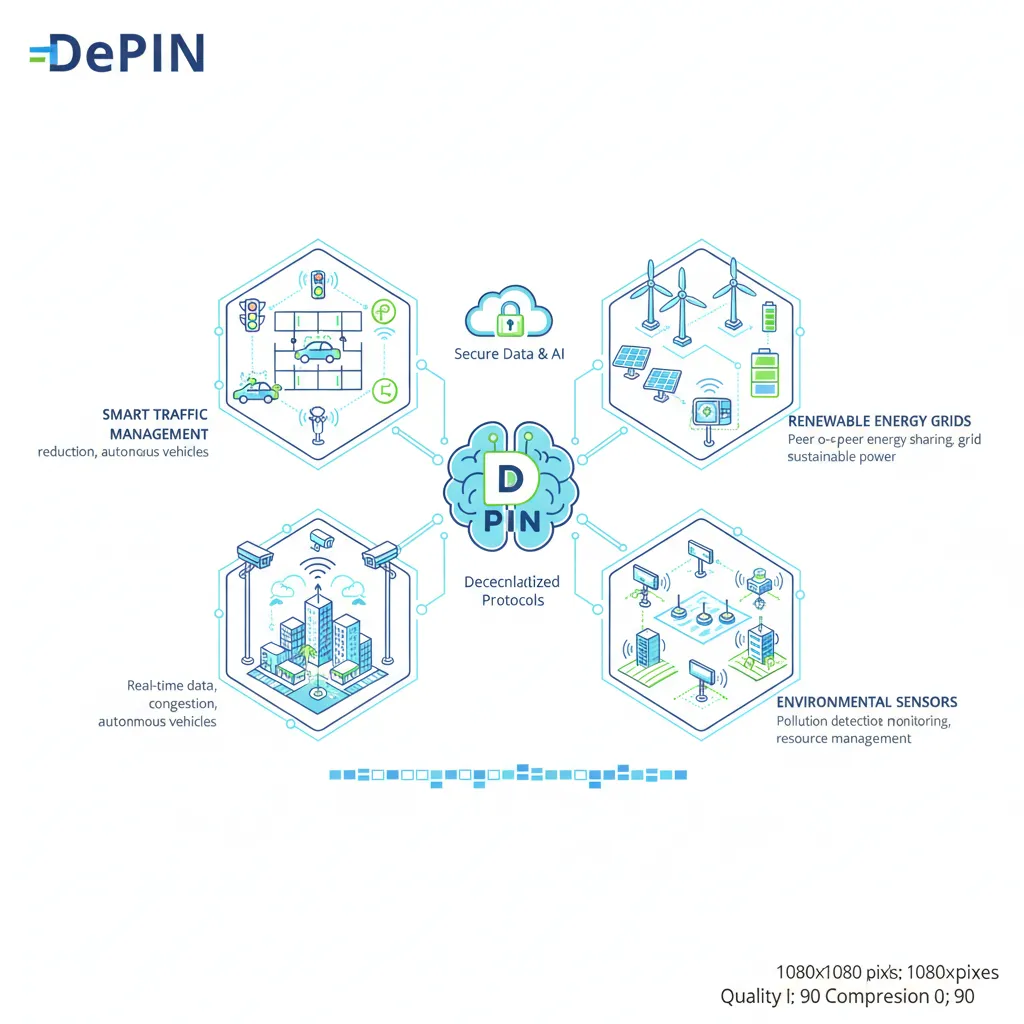
Sensor Networks and Real-World Data
DePIN is perfect for collecting real-world data at an unprecedented scale.
- Hivemapper: A decentralized mapping network that rewards contributors with dashcams for mapping the world’s roads. It aims to build a more up-to-date and detailed global map than Google Maps.
- DIMO: An open network that allows drivers to connect their cars, collect their own vehicle data, and share it privately with apps and services to save money on insurance, maintenance, and more.
- WeatherXM: A community-powered weather network where individuals set up weather stations and share localized, real-time data, improving forecasting for everyone. This is a prime example of smart cities DePIN in action.
The Rise of Tokenized Infrastructure and the Machine Economy
DePIN is at the forefront of two major technological trends: the tokenization of real-world assets and the emergence of a machine economy.
By representing physical hardware as a digital token on a blockchain, DePIN effectively creates tokenized infrastructure. A piece of hardware, like a GPU or a 5G small cell, is no longer just a static piece of equipment; it becomes a liquid, productive asset that can generate yield and be traded on a global market. This unlocks immense liquidity and new financial models for building out physical infrastructure.

This leads directly to the concept of a machine economy, where autonomous IoT devices can transact with each other. Imagine an electric vehicle that automatically finds and pays the nearest community-owned charging station, or a smart home that sells its excess solar energy back to a decentralized grid. These IoT blockchain solutions are made possible by the trustless and automated nature of DePIN. Related: AI Agents for Personal Finance: Your Key to Financial Mastery
Investment and Development: The Future Internet Architecture
The DePIN sector is attracting significant attention from both investors and developers who recognize its potential to disrupt trillion-dollar markets.
Why is Investment in DePIN Growing?
- Tangible Value: Unlike purely speculative crypto assets, DePIN tokens are backed by real, physical infrastructure providing a useful service. The revenue generated by the network creates a fundamental basis for the token’s value.
- Scalability: DePIN models are incredibly scalable. Instead of a single company spending billions on capital expenditures, these networks can grow organically and exponentially as thousands of individuals contribute resources.
- Massive Addressable Markets: DePIN projects are targeting some of the largest markets in the world: telecommunications, cloud computing, energy, and data. The potential for growth is astronomical.
DePIN for Developers: Building on the New Stack
For developers, DePIN represents a new, open, and permissionless technology stack. It provides the foundational layers (storage, compute, connectivity) to build decentralized applications (dApps) that were previously impossible or prohibitively expensive. It lowers the barrier to entry for creating applications that require significant infrastructure, fostering a new wave of innovation in the future internet architecture.
However, the road ahead is not without challenges. Bootstrapping the initial network, ensuring a high quality of service, navigating complex regulatory landscapes, and designing user-friendly experiences are all significant hurdles that projects must overcome.
Prominent DePIN Crypto Projects: A Curated List
The DePIN ecosystem is vast and growing. Here is a list of some of the leading projects categorized by their sector:
| Category | Projects | Ticker | Primary Use Case |
|---|---|---|---|
| Decentralized Storage | Filecoin, Arweave, Sia, Storj | FIL, AR, SC, STORJ | Peer-to-peer cloud storage and permanent data archiving. |
| Decentralized Wireless | Helium, Helium Mobile, Pollen | HNT, MOBILE, PCN | Community-owned IoT and 5G cellular networks. |
| Decentralized Computing | Render, Akash Network, Golem | RNDR, AKT, GLM | Global marketplaces for GPU and CPU computing power. |
| Sensor & Data Networks | Hivemapper, DIMO, WeatherXM | HONEY, DIMO, WXM | Crowdsourced mapping, vehicle data, and weather information. |
| Energy Networks | React Protocol, Arkreen | Decentralized energy data and renewable energy certificate trading. |
This DePIN projects list is just a snapshot, with new and innovative networks launching constantly, further proving the viability and potential of DePIN technology.
Conclusion: A New Foundation for Our Digital World
DePIN is far more than just another crypto trend. It is a fundamental reimagining of how we build, own, and operate the physical infrastructure that connects our world. By replacing centralized corporate control with open, community-driven, and token-incentivized networks, DePIN is laying the foundation for a more resilient, efficient, and equitable future of internet connectivity.
From providing internet access to the unconnected and offering cheaper cloud services for all, to empowering individuals with true data ownership, the applications are transformative. We are still in the early innings, but the DePIN flywheel is beginning to spin faster. The networks are growing, the technology is maturing, and the vision of a decentralized physical world is slowly but surely becoming a reality.
What DePIN project are you most excited about? Join the conversation and share your thoughts below!
Frequently Asked Questions (FAQs)
Q1. What is DePIN in simple terms?
In simple terms, DePIN (Decentralized Physical Infrastructure Networks) is a way of using cryptocurrency tokens to pay regular people to build and maintain real-world infrastructure. Instead of one big company owning a cell network or a server farm, a DePIN network is made up of thousands of individual devices owned by a community, all working together.
Q2. What is an example of a DePIN project?
A great example is Helium. The project created a global wireless network for Internet of Things (IoT) devices by rewarding people with HNT tokens for setting up small hotspots in their homes or offices. This crowdsourced approach built a massive network far faster and cheaper than a traditional telecom company could.
Q3. Is DePIN a good investment?
Investing in DePIN can be promising because the tokens are tied to real-world utility and revenue generation, unlike many purely speculative cryptocurrencies. However, like all crypto assets, they are volatile and carry significant risk. Potential investors should thoroughly research specific DePIN crypto projects, their tokenomics, and the maturity of their network before making any investment in DePIN.
Q4. How does DePIN work?
DePIN works through a “flywheel” model. First, a project offers token rewards to incentivize people (the supply side) to set up physical hardware (like a sensor or router). As more people add hardware, the network becomes more powerful and useful, which attracts users (the demand side) who pay to use the service. This usage generates revenue, which increases the value of the token, further encouraging more people to supply hardware.
Q5. What is the difference between DePIN and Web3?
Web3 is the broad concept of a new, decentralized version of the internet built on blockchains. DePIN is a specific category within Web3 that focuses exclusively on building and managing physical infrastructure. So, DePIN is a key part of the Web3 infrastructure that helps bring the vision of Web3 to life in the real world.
Q6. What problems does DePIN solve?
DePIN aims to solve the problems caused by centralized infrastructure. This includes breaking the monopoly of Big Tech companies, reducing costs for services like cloud storage and internet access, improving network resilience against outages and censorship, and giving individuals true ownership over their data. It fosters sustainable DePIN models built by the community.
Q7. How does DePIN relate to the Internet of Things (IoT)?
DePIN and IoT are a natural fit. Many DePINs are IoT blockchain solutions designed to support the billions of smart devices that make up the IoT. For example, decentralized wireless networks like Helium provide low-cost connectivity for IoT sensors, while projects like DIMO allow IoT devices in cars to collect and monetize their own data securely.