DePIN & Daily Life: How Decentralized Networks Are Building Smarter Cities

Introduction: The Dawn of Decentralized Urbanism
Imagine a city where your everyday utilities and services aren’t controlled by a few monolithic corporations, but are instead managed by a vast, interconnected network of individuals and smart devices. A city where infrastructure is resilient, efficient, and directly incentivizes its users and contributors. This isn’t science fiction; it’s the promise of Decentralized Physical Infrastructure Networks (DePIN), a groundbreaking evolution at the intersection of blockchain, IoT, and real-world assets.
As urban populations swell and the demand for more efficient, sustainable, and equitable living grows, the concept of smart city technology is no longer a luxury but a necessity. Traditional centralized infrastructure often struggles with scalability, high costs, data monopolies, and a lack of transparency. DePIN emerges as a powerful Web3 infrastructure solution, leveraging the decentralized nature of blockchain to build, operate, and maintain physical infrastructure networks.
In this comprehensive exploration, we’ll delve into what DePIN is, how DePIN works, its profound DePIN real-world applications in shaping DePIN smart cities, and the tangible DePIN impact on our DePIN daily life. We’ll uncover how token incentivized infrastructure is revolutionizing everything from energy grids and mobility systems to data networks, paving the way for a more sustainable and community-owned future of urban development.
What is DePIN? Understanding Decentralized Physical Infrastructure Networks
At its core, DePIN (Decentralized Physical Infrastructure Networks) represents a paradigm shift in how we build, operate, and interact with the physical infrastructure that underpins our daily lives. Instead of relying on a single entity or a handful of centralized corporations to manage vital services like internet connectivity, energy distribution, or transportation, DePIN leverages blockchain technology and cryptocurrency incentives to create globally distributed, community-owned networks.
Think of it this way: traditional infrastructure is often funded, built, and maintained by governments or large private companies. While effective in many ways, this model can lead to bottlenecks, single points of failure, lack of transparency, high costs passed to consumers, and limited innovation due to entrenched interests.
DePIN flips this model on its head. It combines:
- Physical Infrastructure: Real-world assets such as Wi-Fi hotspots, electric vehicle charging stations, weather sensors, energy meters, or delivery drones.
- Decentralization: The use of blockchain technology to coordinate, verify, and secure the network, ensuring no single entity has absolute control. This is the essence of blockchain physical networks.
- Incentivization: Cryptographic tokens are used to reward participants for deploying, maintaining, and utilizing the infrastructure. This is where token incentivized infrastructure comes into play, motivating individuals and businesses to contribute to the network’s growth and operation. This creates a powerful flywheel effect, often referred to as crypto infrastructure.
The result is a more resilient, efficient, and democratized system where infrastructure is built and maintained by a collective of participants, each earning rewards for their contributions. This model is driving the next wave of Web3 infrastructure, extending the principles of decentralization from digital assets to the physical world. It’s truly a form of physical blockchain infrastructure.
How DePIN Works: A Symbiotic Relationship of Tech and Incentives
The operational mechanics of a DePIN network are elegantly designed, blending hardware, software, and economic incentives:
- Hardware Deployment: Individuals or organizations purchase and deploy physical devices (e.g., Helium hotspots for internet, Hivemapper dashcams for mapping data, traditional energy grid hardware combined with smart meters).
- Data Contribution & Service Provision: These devices collect data (e.g., connectivity data, mapping data, energy consumption data) or provide services (e.g., EV charging, Wi-Fi access).
- Blockchain Verification: All activities, data contributions, and service provisions are recorded and verified on a blockchain. This ensures transparency, immutability, and trust without intermediaries.
- Token Rewards: Participants are rewarded with native utility tokens for their contributions. These tokens can then be used within the network (e.g., to pay for services) or traded on exchanges. This feedback loop is crucial to the how DePIN works mechanism.
- Community Governance: Many DePINs incorporate decentralized autonomous organizations (DAOs), allowing token holders to vote on network upgrades, parameters, and future development, fostering community-owned infrastructure.
This decentralized approach offers significant benefits of DePIN, including lower operational costs, increased resilience against outages, faster deployment, and greater accessibility for users and providers alike. It’s a testament to the power of collective action facilitated by advanced technology.
The Pillars of DePIN: Key Technologies and Mechanisms
DePIN doesn’t operate in a vacuum; it’s built upon several foundational technologies that enable its unique capabilities. Understanding these pillars helps in grasping the full potential of DePIN use cases in creating smarter cities.
IoT and DePIN: The Data Backbone
The Internet of Things (IoT) is an indispensable component of many DePIN projects. IoT devices – from smart sensors monitoring air quality to connected vehicles gathering traffic data – are the eyes and ears of these decentralized networks. They continuously collect real-time data from the physical world, which is then fed into the DePIN.
- Data Collection: Smart sensors, cameras, and various connected devices capture environmental data, traffic patterns, energy consumption, and more.
- Edge Computing: Often, initial processing of this data occurs at the “edge” – on the devices themselves – before being sent to the decentralized network, reducing latency and bandwidth usage.
- Decentralized Data Networks: DePINs can create decentralized data networks where individuals or entities own and operate the infrastructure for data collection and transmission. This contrasts with traditional models where large corporations often control and monetize all collected data. This gives rise to the concept of the decentralized internet of things, where data ownership and privacy are enhanced.
The synergy between IoT and DePIN is critical. IoT devices provide the raw, real-world information, while DePIN provides the decentralized framework for securely transmitting, verifying, and incentivizing the collection of this data.
Blockchain & Token Incentives: The Trust and Economic Engine
The blockchain is the distributed ledger technology that provides the backbone of trust and transparency for DePINs. Every interaction, every data point, and every service rendered within a DePIN can be immutably recorded and verified on the blockchain.
- Trustless Verification: Blockchain ensures that all contributions to the network are valid and that rewards are distributed fairly, without the need for a central authority.
- Smart Contracts: Automated agreements written on the blockchain execute predefined actions when certain conditions are met, such as releasing tokens as payment for providing a service or data.
- Tokenomics: The economic model of a DePIN, often referred to as “tokenomics,” uses native cryptocurrencies (utility tokens) to incentivize specific behaviors. These tokens serve multiple purposes:
- Reward Mechanism: Participants earn tokens for contributing resources (e.g., sharing internet bandwidth, providing mapping data, charging an EV).
- Payment for Services: Users often pay for the services provided by the DePIN (e.g., using decentralized Wi-Fi, accessing mapping data) using the same native tokens.
- Governance: Token holders may have voting rights in a DAO to influence the network’s future development.
This clever integration of token incentivized infrastructure ensures a self-sustaining ecosystem where participants are economically aligned with the network’s success. It democratizes access to infrastructure deployment and maintenance, moving towards a truly community-owned infrastructure model.
DePIN in Action: Real-World Applications for Smarter Cities
The theoretical promises of DePIN truly come alive when we look at its transformative DePIN real-world applications in shaping DePIN smart cities. From how we power our homes to how we navigate our streets, DePIN is laying the groundwork for a more efficient, equitable, and sustainable urban future.
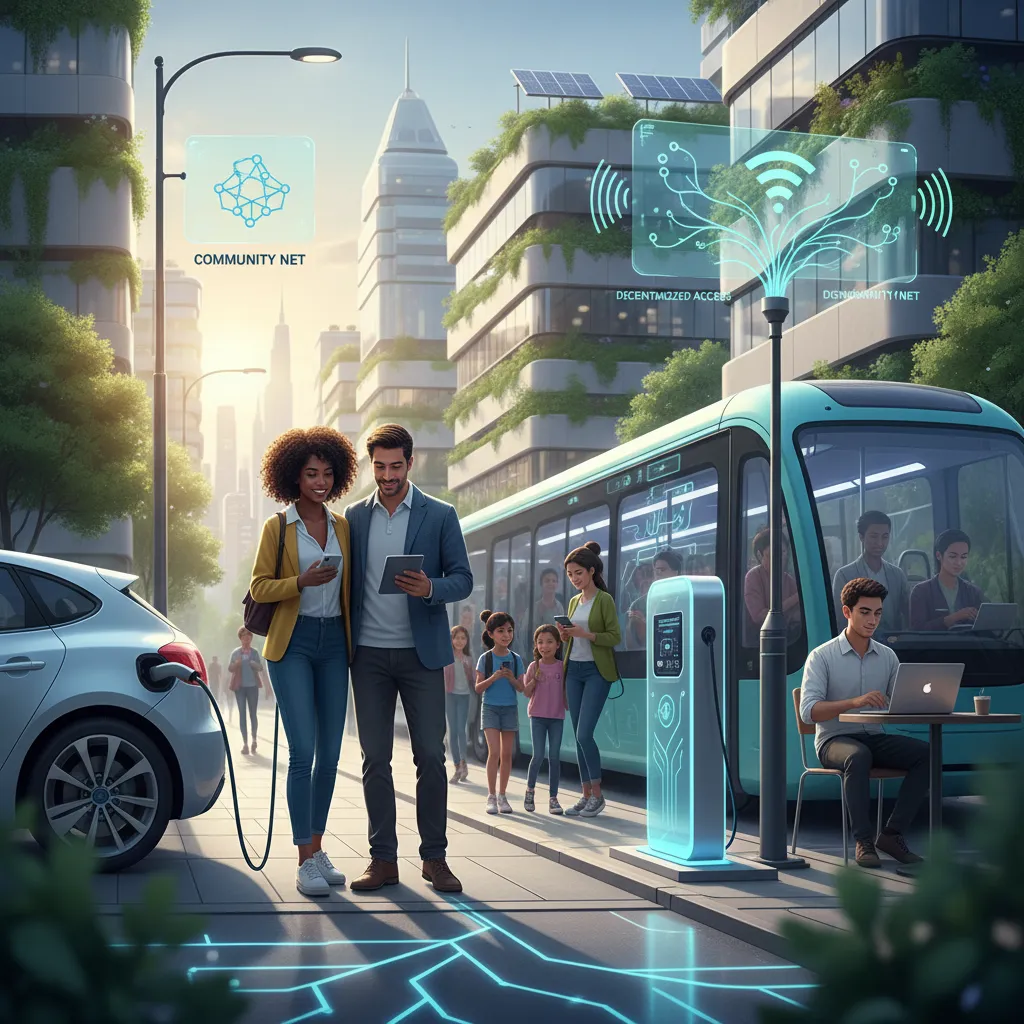
Decentralized Energy Grids: Powering Sustainable Futures
One of the most compelling DePIN use cases is in the energy sector. Traditional energy grids are centralized, making them vulnerable to outages and often inefficient in distributing renewable energy. Decentralized energy grids built on DePIN principles can revolutionize how cities generate, distribute, and consume power.
- Peer-to-Peer Energy Trading: Imagine homeowners with solar panels being able to sell their excess energy directly to their neighbors through a blockchain-powered marketplace, rather than solely relying on a central utility.
- Microgrids: DePIN can facilitate the creation of local microgrids that can operate independently or in conjunction with the main grid, increasing resilience, especially during emergencies.
- Smart Metering & Demand Response: With IoT and DePIN, smart meters can accurately record energy production and consumption, enabling automated demand response programs where devices adjust usage based on real-time grid conditions and incentives. This is a prime example of DePIN for energy.
- Sustainable Cities DePIN: By incentivizing local renewable energy generation and efficient consumption, DePIN significantly contributes to the vision of sustainable cities DePIN, reducing carbon footprints and promoting energy independence.

[Related: Sustainable Smart Homes: Eco-Friendly Tech]
Smarter Mobility & Transport: Navigating Urban Landscapes
Traffic congestion, inefficient public transport, and the carbon footprint of vehicles are major urban challenges. DePIN offers innovative solutions for decentralized mobility and transportation.
- Decentralized Ride-Sharing: Instead of centralized apps taking a large cut, DePIN-based ride-sharing platforms could connect drivers and riders directly, leading to fairer prices and better earnings for drivers.
- Dynamic Traffic Management: Networks of IoT sensors (like dashcams or smart traffic lights) could collect real-time traffic data, which, when aggregated and analyzed by a DePIN, could provide highly accurate predictions and optimize traffic flow dynamically, all while preserving user privacy.
- EV Charging Networks: Individuals could host EV charging stations and earn tokens for providing charging services, creating a widespread and accessible DePIN for transport charging infrastructure.
- Last-Mile Delivery: Decentralized drone or robotic delivery networks could optimize logistics and reduce delivery costs within urban environments.

[Related: AI-Powered Personalized Travel Planning]
Community-Owned Connectivity: The Future of Internet & Data
Access to reliable and affordable internet is a fundamental necessity. DePINs are emerging as alternatives to traditional ISPs, fostering community-owned infrastructure for connectivity.
- Decentralized Wi-Fi Networks: Projects like Helium allow individuals to deploy wireless hotspots and earn tokens by providing network coverage, creating expansive, resilient, and often more affordable internet access, directly addressing the decentralized internet of things.
- Decentralized Data Networks: Beyond just internet access, DePIN can create networks for secure and private data storage, processing, and distribution. This allows for sovereign data ownership and new ways for individuals to monetize their data securely, contributing to truly decentralized data networks.
Environmental Monitoring & Resource Management
Cities face immense pressure to manage resources efficiently and monitor environmental health. DePIN can provide the distributed infrastructure for this.
- Air Quality Monitoring: Networks of DePIN-connected sensors can provide hyper-local, real-time air quality data, empowering citizens and city planners to make informed decisions.
- Water Management: Smart sensors can monitor water levels, leaks, and usage, enabling more efficient water distribution and conservation efforts, contributing to sustainable cities DePIN.
- Waste Management: DePIN could optimize waste collection routes and incentivize proper recycling by tracking waste generation and disposal at the individual or community level.
Benefits of DePIN for Urban Development
The shift towards Decentralized Physical Infrastructure Networks in smart cities brings a myriad of benefits that address many of the shortcomings of traditional urban development models.
Enhanced Efficiency & Resilience
By distributing infrastructure across numerous independent nodes, DePINs inherently become more resilient. A single point of failure won’t bring down the entire network, unlike centralized systems. Furthermore, dynamic resource allocation and real-time data flow lead to unparalleled operational efficiency in services like energy distribution, waste management, and traffic control. This directly ties into the benefits of DePIN.
Cost Reduction & Accessibility
The token incentivized infrastructure model often leads to lower operational costs. Individuals and small businesses can contribute to building and maintaining infrastructure, reducing the need for massive capital expenditure from large corporations or governments. This makes essential services more accessible and potentially more affordable for city residents. It democratizes investment in and ownership of public utilities.
Increased Security & Transparency
Blockchain’s immutable ledger ensures that data collected and transactions performed within a DePIN are secure and tamper-proof. This enhanced security is vital for critical infrastructure. The transparent nature of blockchain also allows for greater accountability, as network activity can be audited by anyone, fostering trust among participants. This transparent framework is a cornerstone of Web3 infrastructure.
Community Empowerment & Ownership
One of the most profound DePIN impacts is the shift from corporate-owned to community-owned infrastructure. Citizens become active participants in building and governing their urban environment. They are incentivized to contribute and have a direct stake in the network’s success, leading to stronger community bonds and a more responsive urban ecosystem. This directly enhances DePIN daily life.
Driving Sustainability
Many DePIN projects are inherently designed with sustainability in mind. By optimizing resource allocation, incentivizing renewable energy generation, and promoting efficient consumption, DePIN can significantly contribute to making cities greener and more environmentally friendly. This makes DePIN a critical component in achieving the goals of sustainable cities DePIN.
Challenges and the Road Ahead for DePIN
While the promise of DePIN is immense, its journey to widespread adoption in smart city technology is not without hurdles.
- Scalability: As DePINs grow, managing vast amounts of data and transactions on a blockchain can present scalability challenges. Layer 2 solutions and more efficient consensus mechanisms are continually being developed to address this.
- Regulatory Uncertainty: The nascent nature of blockchain and token economies means regulatory frameworks are still evolving. Clear legal guidelines are needed to foster widespread DePIN investment and adoption.
- Technological Complexity: Deploying and maintaining some physical infrastructure can be complex for the average user, requiring user-friendly interfaces and robust technical support.
- Initial Capital for Hardware: While DePIN aims to decentralize, there’s still an initial capital cost for individuals to purchase and deploy the necessary hardware. Incentive structures need to be strong enough to overcome this barrier.
- Integration with Legacy Systems: Integrating new DePIN infrastructure with existing, often aging, city infrastructure requires careful planning and significant technological bridges.
Despite these challenges, the rapid innovation in the Web3 space, coupled with increasing demand for sustainable and efficient urban solutions, points towards a bright future of decentralized networks. The DePIN trends indicate a growing interest from both investors and developers.
DePIN Projects and Their Impact on Daily Life
Several pioneering DePIN projects are already making waves, demonstrating the tangible DePIN impact on our urban environments:
- Helium (HNT): One of the most well-known DePINs, Helium incentivizes individuals to deploy wireless hotspots to create a decentralized, long-range wireless network for IoT devices. This provides alternative, cost-effective connectivity for everything from smart pet trackers to environmental sensors, impacting DePIN daily life.
- Hivemapper (HONEY): This project uses dashcams to build a decentralized global map. Contributors drive with a Hivemapper dashcam, collect street-level imagery, and earn HONEY tokens, creating an up-to-date and censorship-resistant mapping service. This is a clear example of decentralized data networks in action for decentralized mobility.
- Render Network (RNDR): While not purely physical infrastructure in the city sense, Render exemplifies DePIN principles by allowing users to rent out their idle GPU power for rendering complex graphics, creating a decentralized cloud rendering network. This model can be extended to other forms of compute power needed for smart city analytics.
- Powerledger (POWR): Focused on the energy sector, Powerledger facilitates peer-to-peer energy trading and tracking of renewable energy, paving the way for more efficient and localized decentralized energy grids.
These examples highlight the diverse ways Decentralized Physical Infrastructure Networks are starting to weave into the fabric of our existence, making our cities smarter, more responsive, and more aligned with collective good.

[Related: AI Revolutionizing Mental Wellness]
The Future of DePIN and Smart City Technology
The convergence of DePIN and smart city technology represents a significant leap forward in urban development. As we look towards the future of urban development, DePIN is poised to play an increasingly central role.
We are moving towards a world where infrastructure is not just “smart” but “self-organizing” and “community-owned.” The future of decentralized networks promises cities that are more adaptable, more resilient to climate change and other challenges, and more responsive to the needs of their inhabitants.
- Increased Integration: Expect DePIN to integrate seamlessly with other emerging technologies like AI and advanced robotics, creating highly intelligent and autonomous urban systems.
- New Investment Models: DePIN investment will grow, with new financial instruments and crowdfunding models allowing more people to participate in building critical infrastructure.
- Global Scalability: As technology matures, DePINs will be able to scale globally, offering solutions for connectivity, energy, and mobility that transcend national borders and traditional corporate boundaries.
- Citizen Participation: The long-term vision involves empowering citizens to not just consume services but also actively participate in shaping their urban environment, creating truly participatory smart cities.
The transition won’t be instantaneous, but the foundational pieces are in place. The DePIN trends show a clear trajectory towards a future where decentralized networks are not just a niche application of blockchain but a cornerstone of how our cities function and thrive.
Conclusion: Building a Smarter, More Equitable Urban Future
The concept of Decentralized Physical Infrastructure Networks (DePIN) is transforming our understanding of how cities can and should operate. By leveraging the power of blockchain and token incentives, DePIN offers a compelling alternative to traditional, centralized infrastructure models, promising greater efficiency, resilience, transparency, and community ownership.
From empowering decentralized energy grids to fostering innovative decentralized mobility solutions and enabling community-owned infrastructure for data and connectivity, DePIN real-world applications are already having a tangible DePIN impact on our DePIN daily life. These DePIN use cases are not just theoretical; they are actively being built and deployed, laying the foundation for true DePIN smart cities.
While challenges remain, the clear benefits of DePIN—including enhanced security, reduced costs, and a drive towards sustainable cities DePIN—position it as a critical component in the future of urban development. As technology matures and adoption grows, we will see our cities evolve into more intelligent, equitable, and sustainable hubs, powered by the collective efforts of decentralized networks. The journey to a truly smart city is not just about technology; it’s about empowering people, and DePIN is leading the way.
FAQs
Q1. What is DePIN and how does it relate to smart cities?
DePIN (Decentralized Physical Infrastructure Networks) are blockchain-based networks that incentivize individuals or entities to build, maintain, and operate real-world physical infrastructure using crypto tokens. In smart cities, DePINs enable decentralized services like energy grids, mobility networks, and data collection, making urban infrastructure more resilient, efficient, and community-owned.
Q2. How does DePIN differ from traditional infrastructure?
Traditional infrastructure is typically centralized, owned, and managed by governments or large corporations. DePIN, on the other hand, is decentralized, owned by a distributed network of participants, and uses blockchain and token incentives to coordinate operations and reward contributions. This leads to greater transparency, resilience, and often lower costs.
Q3. What are some real-world examples of DePIN?
Notable DePIN network examples include Helium (for decentralized wireless networks), Hivemapper (for decentralized mapping data), and Powerledger (for peer-to-peer energy trading). These projects demonstrate how individuals can contribute physical resources and earn rewards, creating shared infrastructure.
Q4. How does DePIN contribute to sustainable cities?
DePIN fosters sustainability by incentivizing local, renewable energy generation (e.g., in decentralized energy grids), optimizing resource management through decentralized sensor networks, and promoting efficient consumption. It creates a framework for sustainable cities DePIN by aligning economic incentives with eco-friendly practices.
Q5. Is DePIN considered Web3 infrastructure?
Yes, DePIN is a key component of Web3 infrastructure. It extends the principles of decentralization, transparency, and user ownership—which are core to Web3—into the physical world, moving beyond purely digital applications to impact tangible assets and services that shape our daily lives.
Q6. What role does IoT play in DePIN?
IoT (Internet of Things) devices are crucial for DePIN as they serve as the “eyes and ears” of the network, collecting real-time data from the physical environment (e.g., traffic data, air quality, energy consumption). This data is then fed into the DePIN, verified by blockchain, and used to provide services or inform network operations, forming decentralized data networks.
Q7. What are the main benefits of DePIN for urban development?
The main benefits of DePIN for urban development include enhanced efficiency and resilience of services, significant cost reduction, increased security and transparency through blockchain, greater community empowerment and ownership of infrastructure, and a strong drive towards more sustainable urban environments.