Decentralized Science: How Blockchain & AI Are Revolutionizing Research

For centuries, the scientific method has been our most powerful tool for understanding the universe. Yet, the institution of science itself is facing a crisis of trust, speed, and accessibility. Breakthroughs are often stifled by bureaucratic funding, valuable data is locked behind paywalls, and a “publish or perish” culture can prioritize quantity over quality, leading to a reproducibility crisis.
What if we could rebuild the entire scientific ecosystem from the ground up? What if we could create a system that is inherently more transparent, collaborative, and equitable? This is the audacious promise of Decentralized Science (DeSci), a movement leveraging the disruptive power of blockchain and artificial intelligence to forge a new era of discovery.
DeSci isn’t just a niche application of Web3 technology; it’s a fundamental reimagining of the future of scientific research. By combining the immutable trust of blockchain with the analytical horsepower of AI, this movement aims to tackle the systemic flaws of traditional science head-on. In this deep dive, we’ll explore how DeSci works, the incredible synergy between blockchain and AI, and how this revolution is poised to change the world.
The Cracks in Traditional Science: Why We Need a Revolution
Before we can appreciate the solution, we must understand the problem. The current scientific framework, despite its successes, is riddled with inefficiencies and systemic biases that slow down progress.
- The Funding Gauntlet: Securing research grants is a notoriously slow, political, and often biased process. A handful of centralized institutions hold the purse strings, creating bottlenecks and often favoring established researchers over novel, high-risk ideas.
- The Reproducibility Crisis: A shocking number of published studies cannot be replicated by other scientists. This is often due to a lack of access to raw data, methodologies being poorly documented, or pressure to publish positive results.
- Walled Gardens of Knowledge: Most scientific knowledge is locked behind exorbitant paywalls of academic journals. This prevents a vast majority of the world—including researchers in developing nations and the general public—from accessing cutting-edge findings their taxes may have funded.
- Intellectual Property (IP) Hurdles: The patent system is slow, expensive, and can incentivize secrecy over collaboration. This often leads to “patent trolls” and prevents the rapid, open development of new technologies and medicines.
- Data Silos: Research data is often stored in private, centralized servers, making it difficult to share, verify, and build upon. This is a massive missed opportunity for large-scale analysis and discovery.
These challenges create a system that is slower, less reliable, and less accessible than it should be. DeSci proposes to tear down these walls and build a more robust, community-driven research infrastructure.
Enter DeSci: A New Blueprint for Scientific Discovery
At its core, Decentralized Science (DeSci) is a movement to build public infrastructure for science using Web3 technologies. It applies the principles of decentralization—transparency, immutability, and distributed control—to the scientific process.
The goal is to create an ecosystem where:
- Funding is democratized, allowing anyone to fund the research they believe in.
- Data and methodologies are transparent and permanently recorded, making research easily verifiable and reproducible.
- Collaboration is borderless and permissionless, connecting scientists and resources globally.
- Value is distributed fairly among all contributors, from principal investigators to data providers and peer reviewers.
This is not a theoretical dream. It’s an active, growing ecosystem of platforms and protocols using blockchain and AI to make this vision a reality.
The Twin Pillars of DeSci: Blockchain & AI
The true power of DeSci emerges from the fusion of two of today’s most transformative technologies: blockchain and artificial intelligence. They are not just complementary; they are symbiotic, each strengthening the other’s capabilities.
Blockchain: The Bedrock of Trust and Transparency
Blockchain serves as the foundational trust layer for the entire DeSci ecosystem. It’s an incorruptible public ledger that can track every component of the research lifecycle.
- Immutable Records & Data Provenance: Every piece of data, from a raw dataset to a peer review comment, can be time-stamped and recorded on a blockchain. This creates an unchangeable audit trail, ensuring data provenance blockchain integrity and combating fraud. Researchers can prove exactly where their data came from and that it hasn’t been altered.
- Smart Contracts for Automation: These are self-executing contracts with the terms of the agreement directly written into code. In DeSci, they can automate everything from distributing research grants crypto funds upon meeting milestones to managing IP rights and royalty payments, all without a central intermediary.
- Decentralized Storage: Using technologies like IPFS for scientific data, researchers can store large datasets in a distributed network. This prevents a single point of failure (like a university server crashing) and makes the data censorship-resistant. This aligns perfectly with the FAIR data principles (Findable, Accessible, Interoperable, and Reusable) on the blockchain.
- A Transparent Peer Review System: The current peer review process is often a black box. A peer review blockchain system can make the process transparent and accountable. Reviewers can be rewarded for their contributions (often with cryptocurrency tokens), and their reputation can be built on-chain based on the quality of their reviews.

Artificial Intelligence: The Engine of Insight and Acceleration
If blockchain provides the trust, AI provides the intelligence. AI algorithms can sift through the vast, transparent datasets unlocked by DeSci to find patterns and accelerate discovery at a speed impossible for humans. Related: Google I/O 2024: The Biggest AI Announcements
- Accelerating Discovery: The most exciting applications are in complex fields like medicine. AI-driven drug discovery blockchain platforms can analyze decentralized genomic data blockchain sets to identify potential drug candidates in a fraction of the time and cost of traditional methods. This is a cornerstone of modern biotech blockchain applications.
- Data Analysis at Scale: DeSci will generate an unprecedented amount of open scientific data. AI is the only tool capable of analyzing this data at scale, connecting disparate research findings, and generating novel hypotheses for scientists to test.
- Predictive Modeling & Automation: AI can power sophisticated scientific collaboration tools. For example, it can predict the outcomes of experiments, optimize lab procedures, and even automate robotic lab equipment, ensuring that processes are followed exactly as recorded on the blockchain.
- Ethical AI and Bias Mitigation: A crucial aspect is ensuring ethical AI in science. By training AI on transparent, diverse datasets from a global DeSci network, we can work to mitigate the biases present in siloed, traditional data. The transparent nature of blockchain can also make the AI’s decision-making process more auditable. Related: Ethical AI in Content Creation: Navigating Bias & Trust
Reimagining the Research Lifecycle with DeSci
DeSci, powered by blockchain and AI, overhauls every stage of the scientific method.
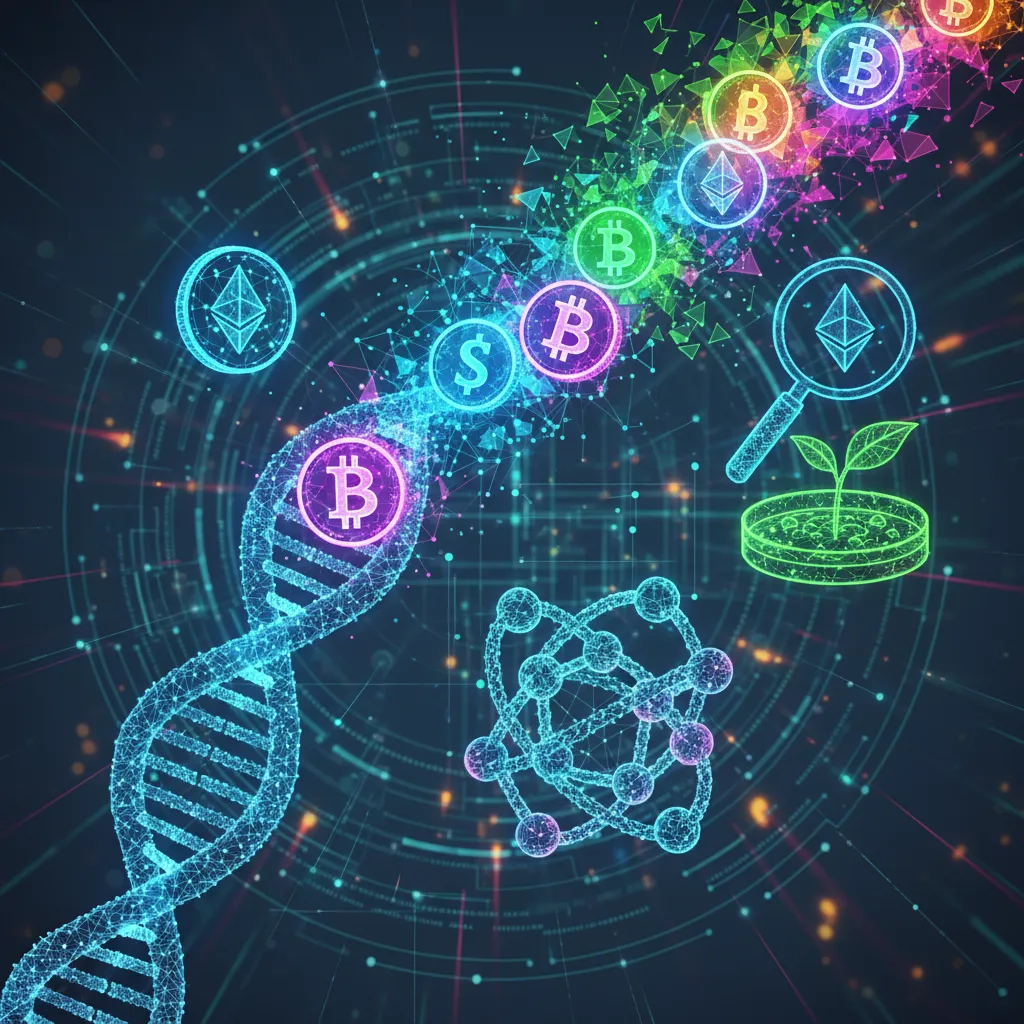
Funding and Incentivization: The Crypto-Economic Revolution
This is where DeSci makes its first, most dramatic change. Instead of relying on slow, centralized grants, research funding becomes dynamic and community-driven.
- DAOs (Decentralized Autonomous Organizations): A DAO in science is like a community-run venture fund for research. Members use governance tokens to vote on which projects to fund. VitaDAO, which funds longevity research, is a prime example of a successful research DAO.
- NFTs for Intellectual Property: NFT in research funding is a novel concept where an NFT can represent ownership in a piece of research or intellectual property. These “IP-NFTs” can be traded, allowing researchers, institutions, and even funders to own a fractional stake in future discoveries.
- Crowdfunding with Crypto: DeSci enables crowdfunding scientific projects on a global scale. Using crypto for research, anyone can contribute to a project they care about, fostering a direct connection between the public and the scientific process. This represents the ultimate form of tokenized science.
Collaboration and Execution: Breaking Down Silos
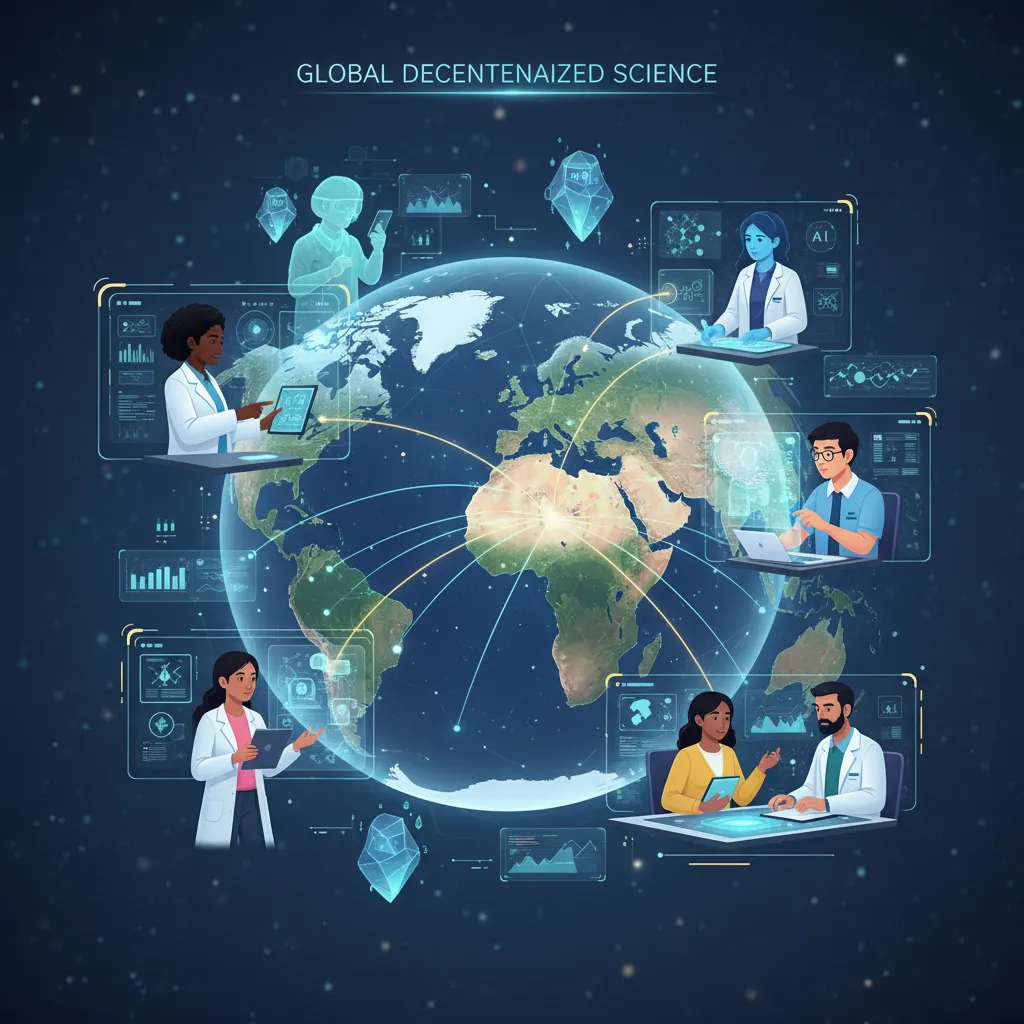
Web3 science is inherently global and collaborative. It provides the tools for scientists to work together without institutional or geographical barriers.
By creating open data repositories and shared digital lab environments, DeSci platforms foster a culture of open science on the blockchain. A researcher in Brazil can collaborate seamlessly with a team in Japan, with all contributions and communications transparently logged. This is the epitome of democratizing science, giving brilliant minds access to resources regardless of their location or affiliation. AI-powered tools can further enhance this by facilitating translation, summarizing findings from different teams, and identifying potential collaborators across the network.
Data, IP, and Publication: A New Paradigm of Ownership
In the DeSci model, data is an asset owned by its creator.
Scientific data ownership is a core tenet. Researchers can choose to share their data openly, license it, or place it into data DAOs, earning rewards when their data is used in other studies. This incentivizes data sharing and creates a richer, more interconnected web of scientific knowledge.
When it comes to publishing, instead of waiting months for a journal, researchers can publish their findings directly to the blockchain. The work is immediately available, time-stamped, and immune to censorship. Peer review can happen post-publication, in an open and ongoing dialogue.
This model is particularly transformative for medical research in Web3. For example, decentralized clinical trials can securely and transparently collect patient data, with patients retaining ownership and control, while AI analyzes the incoming data in real-time to monitor for safety and efficacy.

Leading DeSci Platforms and Real-World Examples
DeSci is no longer just a concept. A vibrant ecosystem of platforms is already putting these principles into practice:
- ResearchHub: Co-founded by Coinbase CEO Brian Armstrong, ResearchHub aims to be a decentralized version of GitHub for science. It uses a token (RSC) to reward users for contributing, reviewing, and curating scientific knowledge.
- VitaDAO: A leading biotech DAO focused on funding and incubating early-stage longevity research. It has successfully funded numerous projects voted on by its community.
- LabDAO: A community of independent scientists and engineers building open-source tools for life science research, effectively creating a decentralized, on-demand contract research organization.
- Molecule: A decentralized marketplace for research-related IP. It uses IP-NFTs to allow for the funding and transfer of ownership in early-stage pharmaceutical research.
These platforms are just the beginning, proving that the DeSci model for AI in scientific discovery and blockchain-backed research is viable and gaining momentum.
The Road Ahead: Challenges and the Future
Despite the immense potential, the path to mainstream adoption for DeSci has its challenges.
- User Experience (UX): Web3 technology can still be complex for the uninitiated. DeSci platforms must become as user-friendly as the Web2 tools scientists currently use.
- Scalability & Cost: Blockchain transactions can be slow and expensive. Layer-2 solutions and more efficient blockchain architectures are needed to handle the vast amount of data science generates.
- Regulatory Uncertainty: The legal and regulatory framework around DAOs, crypto tokens, and decentralized IP is still evolving.
- Cultural Adoption: The biggest hurdle may be cultural. Traditional academia is a deeply entrenched institution, and convincing researchers to adopt a radically new way of working will take time and proven success.
Looking forward, the integration with even more advanced technologies like quantum computing in DeSci could unlock computational power for simulations and data analysis that we can currently only dream of. The synergy with next-generation AI, like omnidirectional models that can see, hear, and speak, could create truly intelligent lab assistants and research partners. Related: GPT-4o: The AI That Hears, Sees, and Speaks
Conclusion: A More Perfect Science
Decentralized Science is more than a technological upgrade; it’s a philosophical one. It’s a return to the foundational ethos of science: a relentless, open, and collaborative pursuit of truth. By leveraging the trust architecture of blockchain and the analytical power of AI, DeSci tackles the systemic flaws that have held back progress for decades.
The convergence of these technologies creates a powerful flywheel: blockchain enables verifiable, open data, which serves as the perfect fuel for powerful AI analysis. This, in turn, accelerates discovery, attracting more funding and talent to the ecosystem.
The road is long, and the challenges are real, but the promise is too great to ignore. DeSci offers a blueprint for a future where scientific discovery is faster, more reliable, and accessible to everyone. It is the beginning of a new scientific renaissance, built on a foundation of code, community, and collaboration.
Frequently Asked Questions (FAQs)
What is Decentralized Science (DeSci)?
Decentralized Science (DeSci) is a movement that uses Web3 technologies like blockchain, DAOs, and NFTs to create a more open, transparent, and democratized scientific research ecosystem. It aims to fix problems in traditional science, such as funding bottlenecks, data accessibility, and reproducibility issues.
How does blockchain help scientific research?
Blockchain provides a secure and transparent foundation for research. It creates an immutable public ledger for data, ensuring data provenance and preventing fraud. Smart contracts can automate funding and IP agreements, while decentralized storage protects data from censorship or loss.
What is a science DAO?
A science DAO (Decentralized Autonomous Organization) is a community-led organization that collectively manages and governs scientific research. Members typically use crypto tokens to vote on which research projects to fund, how to allocate resources, and the overall direction of the organization, removing traditional intermediaries.
What are the main goals of DeSci?
The primary goals of DeSci are to:
- Democratize Funding: Allow anyone to fund science and break the monopoly of centralized grant institutions.
- Ensure Open Access: Make scientific data and publications freely accessible to everyone.
- Improve Reproducibility: Create verifiable and transparent records of research to make findings easier to validate.
- Incentivize Collaboration: Reward all contributors to the scientific process fairly, from researchers to peer reviewers.
How is AI used in DeSci?
AI acts as a powerful analytical engine in the DeSci ecosystem. It can rapidly analyze the vast, open datasets made available through decentralized networks to identify patterns, generate hypotheses, and accelerate discoveries, particularly in complex fields like drug development and genomics.
What are some examples of DeSci projects?
Prominent DeSci projects include VitaDAO, a DAO that funds longevity research; ResearchHub, a platform for publishing and discussing science that rewards contributors with crypto; and Molecule, a marketplace for funding and trading pharmaceutical intellectual property as NFTs.
Is DeSci a threat to traditional academic journals?
DeSci offers an alternative model to the traditional publishing industry, which relies on paywalls and a slow, closed peer-review process. By enabling direct, open-access publishing and transparent peer review on-chain, DeSci challenges the existing business model of many journals and could lead to a major shift in how scientific knowledge is disseminated.