Explore Beyond: Augmented reality is Revolutionizing Travel Experiences

Imagine standing before the Roman Colosseum, not just seeing the weathered ruins, but holding up your phone and watching as the missing walls reconstruct themselves, filled with cheering crowds and gladiators. Picture navigating the labyrinthine streets of Tokyo, not by staring down at a map, but by following a glowing, holographic path projected right onto the sidewalk in front of you. This isn’t a scene from a sci-fi blockbuster; this is the reality of travel today, thanks to the power of Augmented Reality (AR).
For decades, the traveler’s toolkit has been fairly standard: a map, a guidebook, and a phrasebook. The digital age upgraded this to GPS and translation apps, but the fundamental experience remained the same—looking at a screen instead of the world. Now, augmented reality travel is shattering that paradigm. It’s one of the most exciting travel tech innovations of our time, seamlessly blending the digital and physical worlds to create truly immersive travel experiences.
This guide delves into the incredible AR impact on travel, exploring how this technology is reshaping everything from planning your trip to experiencing a destination. We’ll uncover how AR enhances travel, the top AR apps for travelers, and what the future of tourism with AR holds. Get ready to see the world through a new, digitally enhanced lens.
What is AR in Travel? A New Lens on the World
Before we dive into the incredible applications, let’s clarify what we mean by augmented reality tourism. Unlike Virtual Reality (VR), which creates an entirely artificial environment, Augmented Reality overlays computer-generated images, sounds, and information onto the real world as you see it. It doesn’t replace your reality—it enhances it.
Think of it as a magic window. By looking through your smartphone, tablet, or a pair of smart glasses, you can see additional layers of context-aware information. A statue in a park is no longer just a statue; it’s an interactive biography of the person it depicts. A menu in a foreign language instantly translates before your eyes. This ability to provide the right information at the right time and place is what makes the benefits of AR in travel so profound.
The Transformative Benefits of AR for the Modern Traveler
So, how AR enhances travel in practical terms? The advantages go far beyond simple novelty. AR technology addresses some of the most common pain points of traveling, making journeys smoother, safer, and infinitely more enriching.
1. Unprecedented Engagement and Immersion
Traditional travel can sometimes feel passive. You read a plaque, you look at a ruin, you move on. AR turns passive observation into active participation. It fosters a deeper connection with a place by making its history, culture, and stories tangible, creating a level of cultural immersion AR makes uniquely possible.
2. Effortless Navigation and Exploration
Getting lost in a new city can be part of the adventure, but it’s often just stressful. AR navigation travel solves this by overlaying directional arrows and points of interest directly onto your view of the street. This makes finding your way intuitive and allows you to keep your head up and aware of your surroundings, a key aspect of AR travel safety.
3. Breaking Down Language and Cultural Barriers
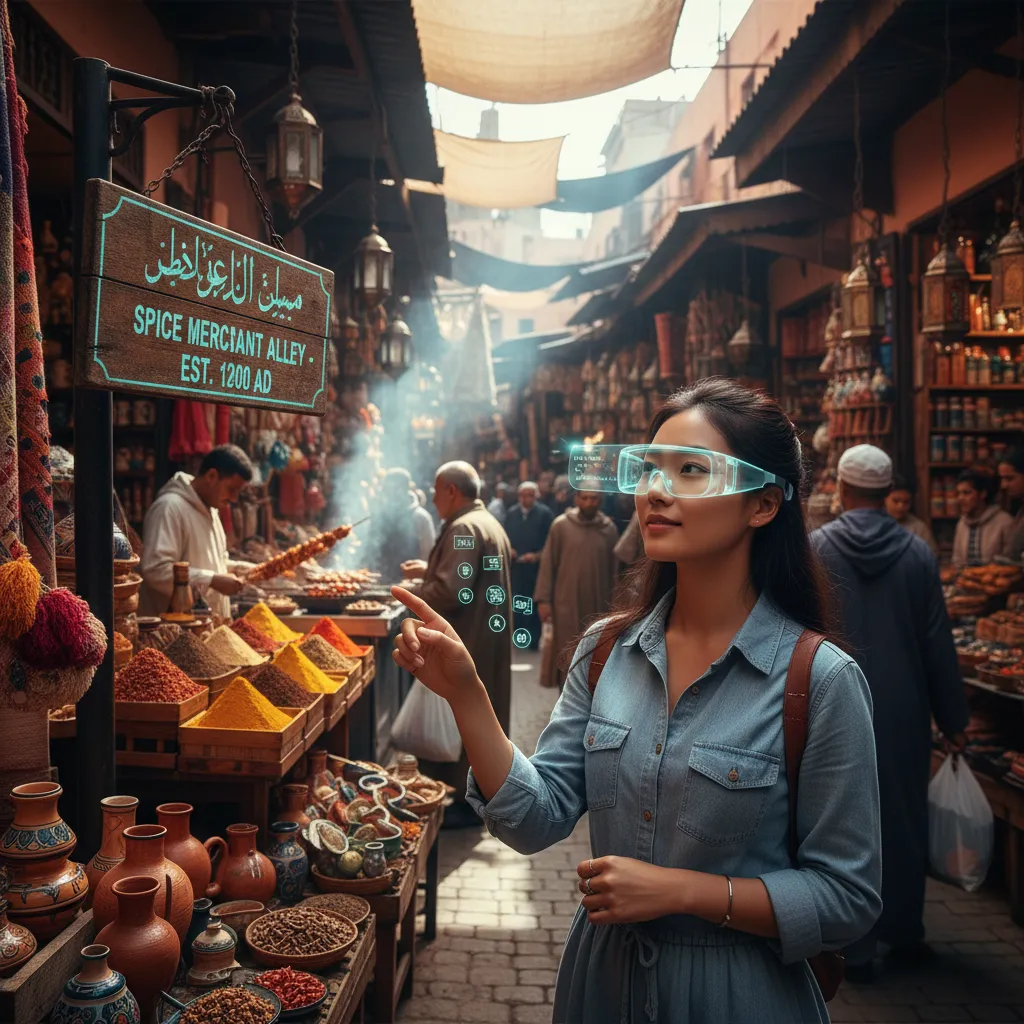
The language barrier is one of the biggest hurdles in international travel. AR tools provide real-time translation, whether you’re pointing your camera at a sign, a menu, or even a person speaking. These AR translation devices and apps are fostering greater understanding and making the world feel more accessible.
4. Personalized and Context-Rich Journeys
AR can tailor your experience to your interests. Imagine an app that highlights vegetarian-friendly restaurants as you walk down a street or points out architectural details only an expert would notice. This level of personalized travel AR delivers creates a journey that is uniquely yours, functioning as a dynamic, intelligent AR travel guide.
How AR is Enhancing Every Stage of Your Journey
Augmented reality isn’t just a tool you use when you arrive; its influence is felt across the entire travel timeline, from the initial spark of wanderlust to the final moments of a trip.
Pre-Trip Planning: Visualizing Your Vacation Before You Go
The anxiety of the unknown—will the hotel room look like the pictures? Is the beach really that close?—can be a stressful part of planning trips with AR. Augmented reality is changing this.
- Virtual Hotel Tours: Instead of static photos, hotels are offering AR experiences that let you place a 3D model of a room right in your own living room, allowing you to “walk” around it and get a true sense of the space.
- Destination Previews: Travel agencies and tourism boards are creating virtual travel AR previews, allowing you to see a 3D map of a city on your coffee table, highlighting key attractions and helping you visualize your itinerary.
On-the-Go Navigation: Never Get Lost Again
Once you’re at your destination, AR becomes your personal navigator. The days of awkwardly holding a map or constantly glancing at your phone’s GPS are numbered.
- Live View in Google Maps: This is one of the most accessible examples of AR navigation travel. It uses your phone’s camera to identify your surroundings and overlays large, clear arrows and street names to show you exactly where to turn.
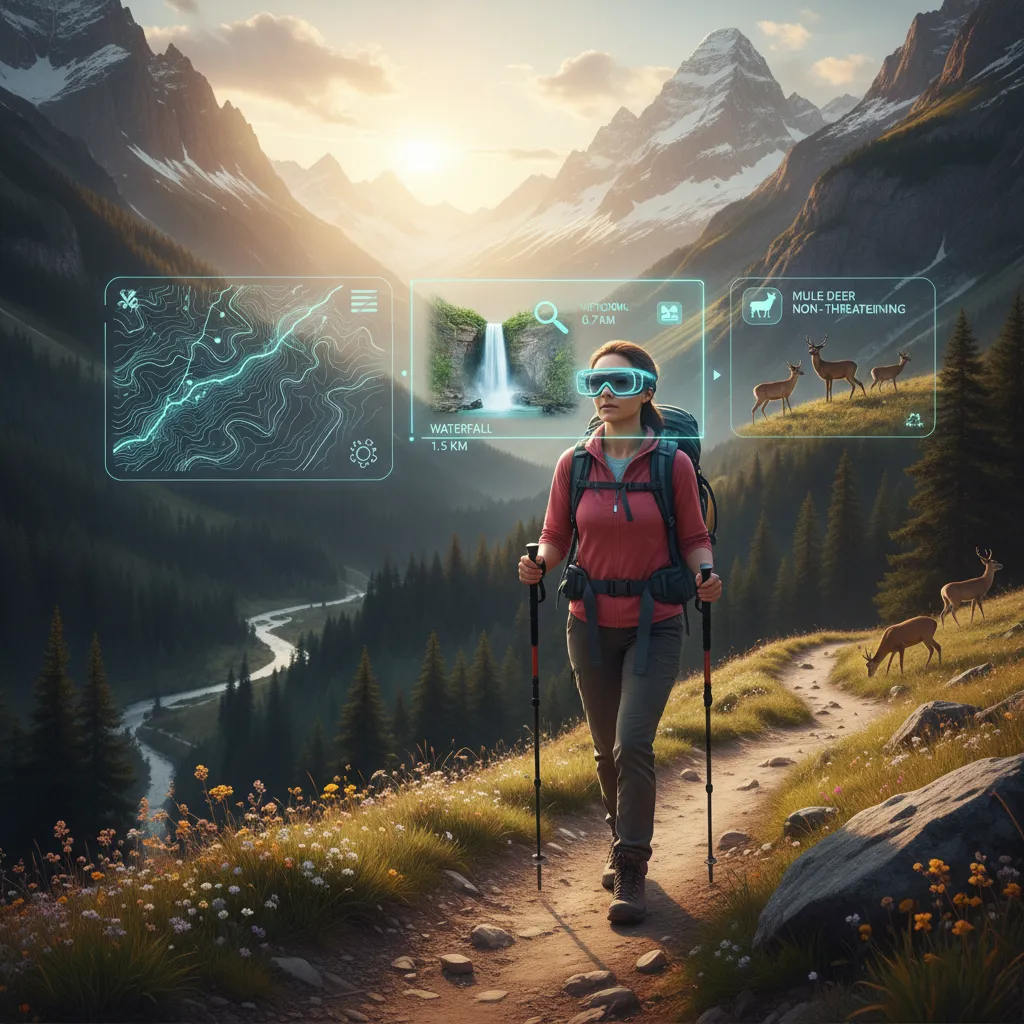
- AR Outdoor Exploration: For hikers and nature lovers, AR apps can overlay trail maps onto the landscape, identify mountain peaks, and highlight points of interest or potential hazards. This makes AR outdoor exploration safer and more informative.
Cultural Immersion & Historical Discovery: Bringing the Past to Life
This is where AR truly shines, transforming historical sites and cities into living museums. It provides an unparalleled form of AR educational travel.
- Reconstructing Ancient Ruins: Apps at sites like Pompeii or the Acropolis allow you to point your device at ruins and see them restored to their former glory. This provides powerful context that a simple plaque never could. This is especially impactful for AR for family travel, as it captures children’s imaginations.
- Interactive AR City Tours: Instead of following a guide in a group, you can take a self-guided AR city tour. As you walk, historical figures might appear on your screen to tell you stories about the locations you’re visiting, making history feel personal and immediate. Related: AI Reshapes Creativity: The Art, Music, and Design Revolution

Interactive Museums and Galleries: Art That Speaks to You
Museums are no longer static collections of artifacts behind glass. AR museum experiences are breathing new life into galleries worldwide.
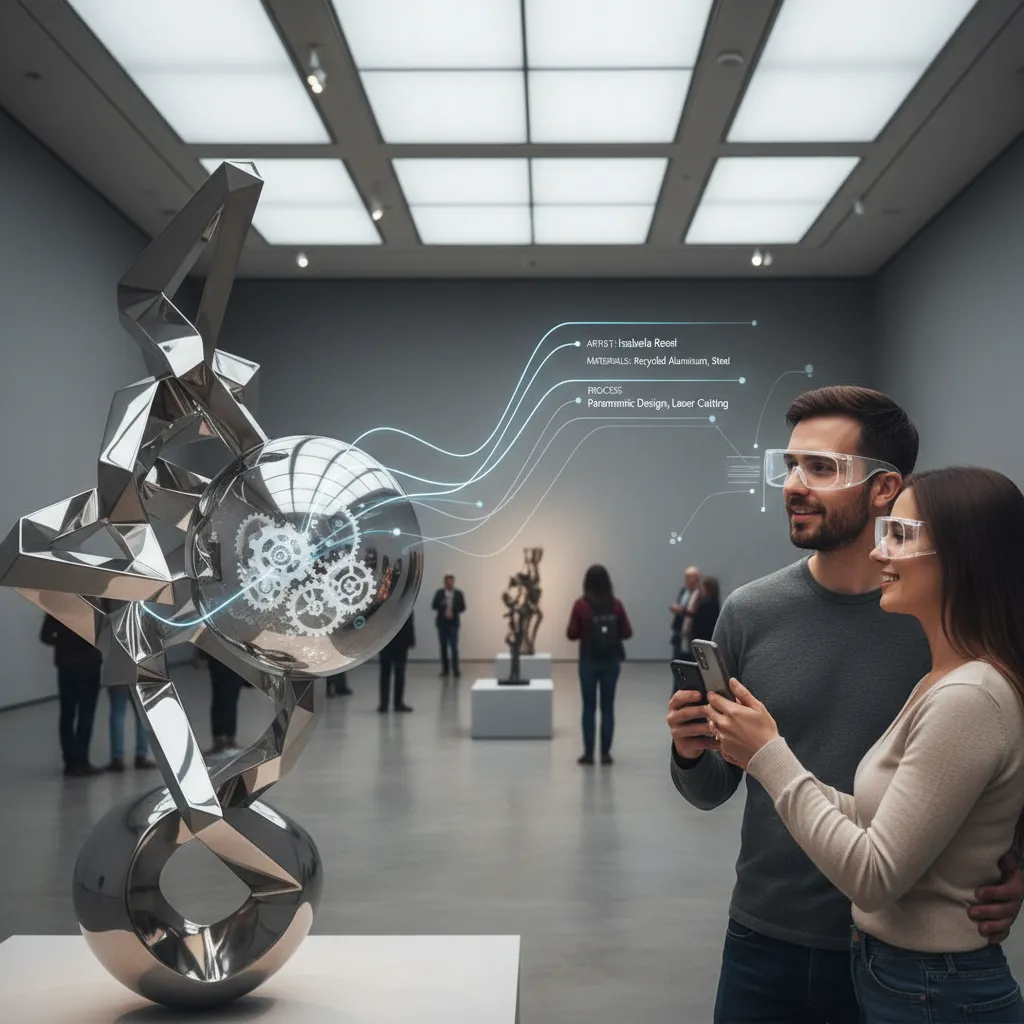
- Behind-the-Scenes Content: Point your phone at a painting, and an AR overlay could show you the artist’s initial sketches, an X-ray revealing hidden layers, or a video of an art historian explaining its significance.
- Bringing Exhibits to Life: Imagine a dinosaur skeleton in a museum reassembling its muscles and skin on your screen and roaring to life. This level of interaction makes learning engaging and memorable for all ages.
The Tech Behind the Magic: Top AR Travel Innovations
The growth of AR in travel is powered by increasingly sophisticated hardware and software. From the smartphone in your pocket to dedicated wearables, the tools are becoming more powerful and accessible.
The Rise of Wearable AR Travel
While smartphones are the current primary platform for AR, the future lies in hands-free devices. Wearable AR travel is the next frontier.
- Smart Glasses: Devices like the Ray-Ban Meta glasses are integrating cameras and AI, hinting at a future where your AR guide is seamlessly integrated into your eyewear. You’ll be able to get directions, translate conversations, and identify landmarks without ever pulling out your phone.
- AR Translation Devices: Standalone earbuds and other wearables are emerging that offer near-instantaneous voice translation, making conversations with locals fluid and natural.
As hardware becomes more powerful and discreet, these technologies will feel less like gadgets and more like natural extensions of our senses. Related: AI PCs Unveiled: How to Boost Your Productivity and Creativity with Next-Gen Hardware
Essential AR Apps for the Modern Traveler
You don’t have to wait for futuristic glasses to start using AR. Many powerful AR apps for travelers are available right now:
- Google Maps: Its Live View feature is the gold standard for AR walking navigation.
- Google Lens: A versatile tool that can translate text, identify plants and animals, and provide information about landmarks simply by pointing your camera at them.
- Star Walk 2: An astronomy app that uses AR to overlay constellations and planets onto the night sky as you see it.
- Civilisations AR: From the BBC, this app brings historical artifacts from museums around the world into your home in stunning 3D.
- Museum-Specific Apps: Many major museums, like the National Museum of Singapore, have their own dedicated AR apps to enhance their exhibits.
The Future of Tourism: AR Travel Trends to Watch
The integration of AR in travel is still in its early stages, but the trajectory is clear. The augmented reality travel trends we see today are just the beginning.
Hyper-Personalization and AI Integration
The true power of AR will be unlocked when it’s combined with artificial intelligence. Future AR travel guides will learn your interests. If you love street art, your AR view will automatically highlight notable murals and provide artist bios as you explore. If you’re a foodie, it will show you daily specials and user reviews floating outside restaurant doors.
Gamification of Travel
AR will increasingly turn exploration into a game. Imagine city-wide scavenger hunts where you solve historical riddles to unlock the next clue, or family-friendly adventures where kids collect virtual creatures at different landmarks. This makes travel more engaging, especially for younger travelers.
Enhanced Safety and Accessibility
AR has huge potential to make travel safer and more accessible. For a solo traveler, an AR overlay could highlight well-lit, safe walking routes at night. For travelers with disabilities, it could provide real-time information on wheelchair accessibility or audio descriptions of visual sights.
The future of tourism AR is not about replacing authentic experiences, but about deepening them. It’s about removing friction, adding layers of understanding, and empowering travelers to connect with the world in ways that were never before possible. Related: The Quantum Leap: How Quantum Computing Will Reshape Our Future
Conclusion: A New Reality for Exploration
Augmented reality is fundamentally changing what it means to be a traveler. It’s moving technology from a distraction in our hands to a helpful, integrated layer over the world around us. From the practicalities of AR navigation travel and AR language translation to the wonder of seeing AR historical sites come alive, this technology is enriching every facet of the journey.
The AR impact on travel is undeniable, creating more personalized, educational, and immersive travel experiences. It empowers us to be more curious, confident, and engaged explorers. The next time you plan a trip, don’t just think about where you’ll go. Think about what new realities you might discover there. The adventure is no longer just the destination; it’s the augmented world you uncover along the way.
Frequently Asked Questions (FAQs)
Q1. What is an example of augmented reality in tourism?
A great example of augmented reality tourism is using an app at an ancient site like Pompeii. By pointing your smartphone or tablet at the ruins, the app overlays a digital reconstruction, showing you how the buildings and streets looked in their prime, complete with virtual inhabitants. Another common example is using Google Maps’ Live View, which overlays walking directions onto your real-world view of the street.
Q2. How does augmented reality enhance the travel experience?
Augmented reality enhances travel by making it more interactive, informative, and seamless. It provides real-time information directly in your line of sight, which helps with navigation, language translation, and learning about your surroundings. This creates a deeper cultural immersion and turns passive sightseeing into an active, engaging experience.
Q3. What is the difference between VR and AR in tourism?
The key difference is that Virtual Reality (VR) replaces your real-world environment with a completely digital one. You might use a VR headset at home to “visit” Paris. Augmented Reality (AR), on the other hand, adds to your real-world environment. You would use AR while physically in Paris to see digital information, like historical facts or navigation arrows, layered on top of the actual streets and landmarks.
Q4. What are some top AR apps for travelers?
Some of the most popular and useful AR apps for travelers include Google Maps for its “Live View” navigation, Google Lens for instant translation and object identification, Star Walk 2 for stargazing, and various museum-specific apps that provide interactive tours for their exhibits.
Q5. How can AR help with language barriers while traveling?
AR is a game-changer for overcoming language barriers. Using an app like Google Lens, you can point your phone’s camera at any foreign text—such as a restaurant menu, a road sign, or a museum plaque—and the app will translate it into your native language in real-time, overlaying the translation on your screen. This makes communication and understanding much easier.
Q6. Is AR technology making travel less authentic?
This is a common concern, but most experts believe AR actually makes travel more authentic. Instead of burying your head in a guidebook, AR allows you to keep your eyes on the world around you while receiving context and information. It can reveal hidden histories and cultural details you would have otherwise missed, leading to a richer and deeper understanding of a place.