AI’s Green Thread: Revolutionizing Sustainable Fashion from Design to Consumer

The fashion industry, a dazzling world of creativity and self-expression, has a well-documented dark side. From staggering water consumption and chemical pollution to the mountains of textile waste clogging landfills, its environmental footprint is a heavy one. For decades, the call for sustainability has grown from a whisper to a roar, yet systemic change has been painfully slow. Now, an unlikely ally has emerged from the world of code and algorithms: Artificial Intelligence.
AI is no longer just a buzzword for tech giants; it’s the green thread weaving a new, more responsible future for the clothes we wear. This isn’t about robots sewing dresses. It’s about using intelligent systems to tackle the industry’s biggest challenges at every single stage—from the initial design sketch to the moment a garment is recycled. This revolution in sustainable fashion technology promises to curb overproduction, enhance transparency, and empower both brands and consumers to make smarter, more ethical choices.
In this deep dive, we’ll unravel how AI sustainable fashion solutions are moving from concept to reality. We’ll explore how AI driven fashion innovation is creating a more circular economy, optimizing supply chains, and ultimately reducing the fashion footprint with AI, proving that style and sustainability can, and must, coexist.
The Colossal Problem: Fashion’s Unsustainable Model
Before we explore the solutions, it’s crucial to understand the scale of the problem. The traditional “fast fashion” model operates on a linear system of “take, make, dispose.” This has led to some alarming statistics:
- Overproduction: The industry produces over 100 billion garments annually, yet a shocking 30% of it is never even sold.
- Waste: An estimated 92 million tons of textiles waste is created each year, with the equivalent of one garbage truck of clothing being burned or landfilled every second.
- Water Usage: It can take over 2,700 liters of water to produce a single cotton t-shirt—enough for one person to drink for 2.5 years.
- Carbon Emissions: The fashion industry is responsible for up to 10% of global carbon emissions, more than all international flights and maritime shipping combined.
This model is fundamentally broken. To fix it, the industry needs a paradigm shift, and AI is providing the tools to make it happen.
Weaving a New Beginning: AI in Sustainable Design and Material Innovation
The journey of a garment begins long before it hits the production line. The design and material selection phase is where the seeds of sustainability are sown, and AI is proving to be a master gardener.
H3: Predictive Analytics for Waste-Free Creation
One of the biggest drivers of waste is inaccurate trend forecasting. Brands produce massive quantities of styles based on predictions that often miss the mark, leading to unsold inventory. AI driven fashion innovation flips this script.
By analyzing vast datasets—from social media trends and runway shows to consumer search behavior and even weather patterns—AI algorithms can forecast demand with incredible accuracy. This allows brands to:
- Design for Demand: Create collections that people actually want to buy, minimizing the risk of overproduction.
- Optimize Assortments: Determine the right mix of sizes, colors, and styles for specific markets, preventing wasteful stock imbalances.
- Virtual Prototyping: Instead of creating dozens of physical samples for a single design (a process that consumes significant resources), AI enables the creation of hyper-realistic 3D digital twins. Designers can visualize drape, fit, and texture on virtual models, making iterations instantly and committing to physical production only for the final design. This is a cornerstone of AI fashion design sustainability.
H3: Engineering Eco-Friendly Materials
The materials used in our clothes are a major part of their environmental impact. The development of new, sustainable textiles can be a slow and costly process of trial and error. AI textile innovation is accelerating this process dramatically.
Machine learning models can simulate and analyze the properties of new material combinations at a molecular level. This helps scientists and designers discover and test novel AI and eco-friendly materials like:
- Lab-grown leather alternatives.
- Textiles derived from agricultural waste like pineapple leaves or orange peels.
- Fabrics that require less water and fewer pesticides to produce.
AI can predict a material’s durability, breathability, and even its biodegradability before it’s ever created, saving immense time and resources in the R&D phase.
The Transparent Thread: AI in Ethical Sourcing and Supply Chains
A garment’s journey from raw material to retail shelf is often long, complex, and notoriously opaque. This lack of transparency can hide a host of environmental and ethical issues. AI for transparent fashion supply chains is shedding light on these hidden corners.
H3: Ensuring Ethical Sourcing with AI
How can a brand be sure the cotton in its t-shirts wasn’t grown using child labor or sourced from a region engaged in deforestation? Verifying claims across a global network of suppliers is a monumental task. Ethical fashion AI provides powerful new verification tools.
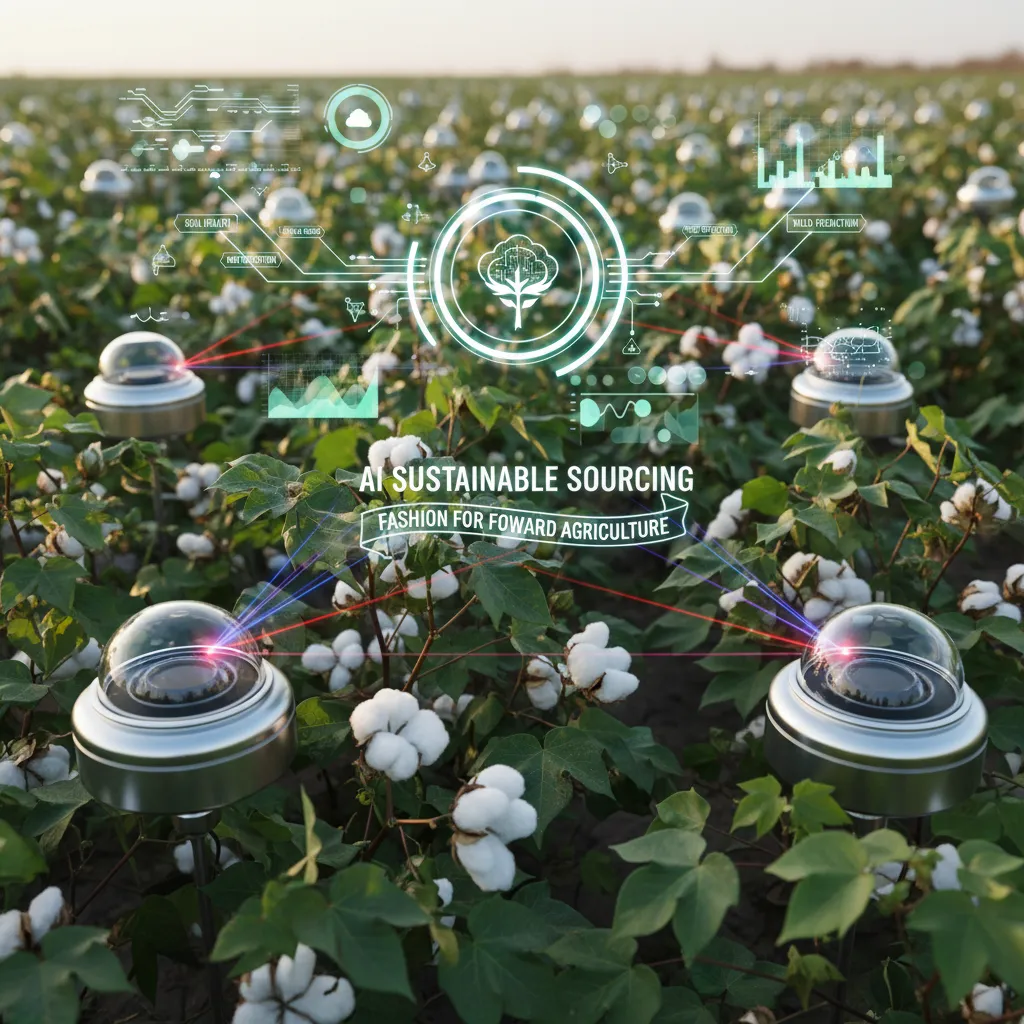
AI platforms can analyze satellite imagery to monitor farms for sustainable practices, cross-reference supplier databases with labor-risk reports, and use blockchain to create an immutable record of a material’s journey. This ensures that claims of “organic” or “ethically sourced” are backed by verifiable data. This level of scrutiny is fundamental to AI in ethical sourcing fashion.
H3: Optimizing Logistics for a Lighter Footprint
The transportation of materials and finished goods is a major contributor to fashion’s carbon footprint. AI supply chain sustainability fashion tackles this head-on by optimizing every step of the journey.
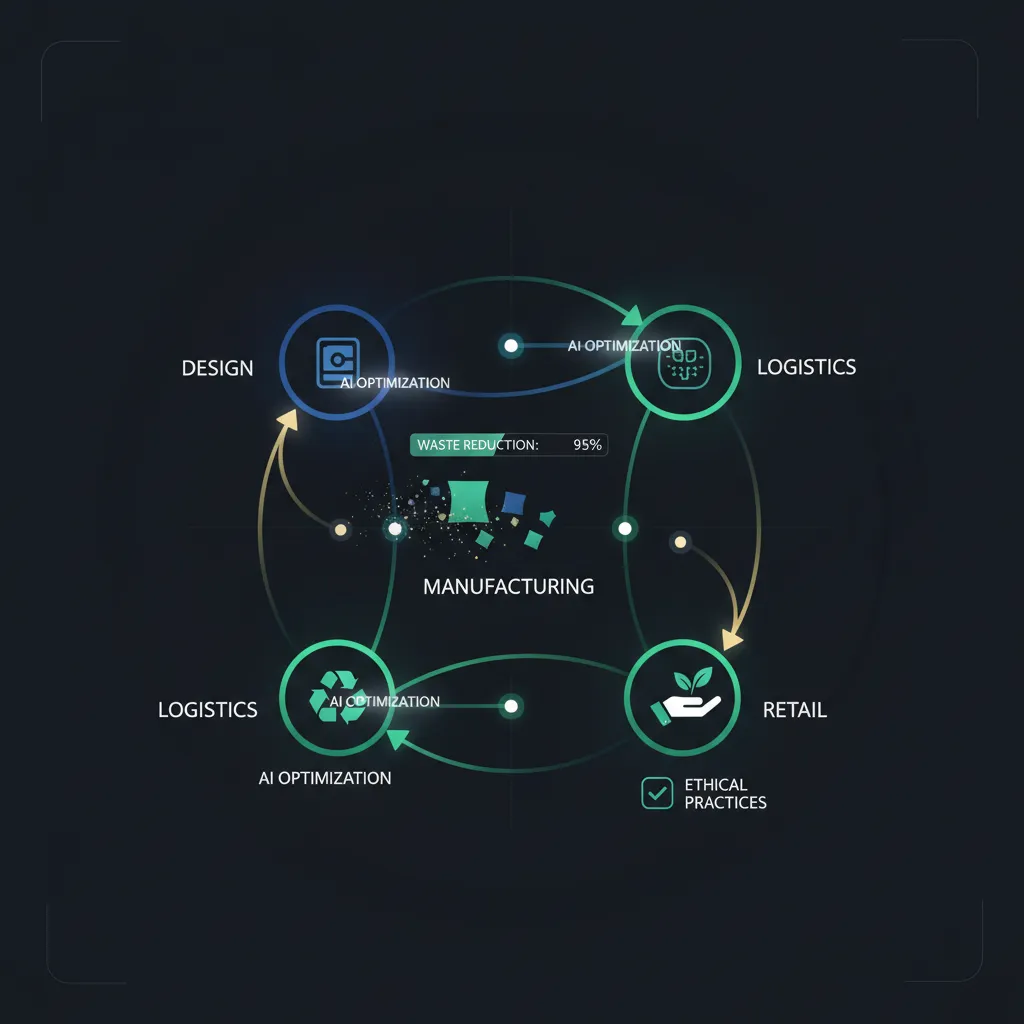
AI algorithms can calculate the most fuel-efficient shipping routes, consolidate shipments to reduce the number of empty trucks on the road, and improve inventory management to place products closer to the end consumer, minimizing last-mile delivery emissions. This granular level of optimization, similar to the decentralized efficiency seen in new network technologies, is key to real-world impact. Related: The Rise of DePIN: Decentralized Physical Infrastructure Networks Reshaping the Future
The Smart Factory: AI’s Impact on Sustainable Manufacturing
The factory floor is where designs become tangible products, and it’s also a place of immense resource consumption. AI in manufacturing sustainable fashion is creating smarter, more efficient processes that are kinder to the planet.
H3: On-Demand Production and Reducing Overstock
The traditional manufacturing model is built on mass production. AI enables a shift towards a more agile, on-demand model. By integrating AI-driven demand forecasting directly with factory operations, brands can produce clothing in smaller batches, or even as one-off custom orders, responding to sales in real-time. This “produce-what-sells” approach is a powerful tool for AI for waste reduction fashion. It drastically cuts down on unsold inventory—the industry’s single biggest source of waste.
H3: Intelligent Resource Management
AI-powered sensors on production machinery can monitor energy and water consumption in real-time. These systems can identify inefficiencies and make automated adjustments to minimize waste. For example, in fabric dyeing—a notoriously water-intensive process—AI can calculate the precise amount of dye and water needed, preventing overuse and chemical runoff. This is a core component of creating eco-friendly fashion AI solutions.
Conscious Closets: How AI Empowers the Sustainable Consumer
The responsibility for sustainable fashion doesn’t end with the brands; consumers play a vital role. However, navigating the complex world of green claims and materials can be overwhelming. AI is emerging as a personal sustainability guide, right in our pockets.
H3: Personalized Styling with a Conscience
Imagine an AI stylist that not only knows your taste but also your values. This is the future of personalized sustainable fashion AI. New apps and platforms use AI to:
- Analyze Your Wardrobe: By uploading photos of your clothes, AI can help you “shop your own closet,” suggesting new outfit combinations you hadn’t considered.
- Recommend Sustainable Brands: Based on your style preferences, AI can recommend pieces from ethical and sustainable brands.
- Promote Re-wearing: Virtual try-on technology allows you to see how a new sustainable piece would pair with items you already own, encouraging mindful purchases over impulse buys. This is where user-centric AI, like the kind we see evolving in our personal devices, can make a huge difference. Related: Apple Intelligence: Top AI Features in iOS 18 Guide
H3: Fostering Transparency and Ethical Choices
AI for conscious consumption fashion is empowering shoppers with information at the point of sale. Imagine scanning a QR code on a garment’s tag and instantly seeing its entire lifecycle—from the farm where the cotton was grown to the factory where it was stitched, complete with its carbon and water footprint.

These AI-powered transparency tools help consumers cut through the noise of “greenwashing” and make choices that align with their values, making AI consumer ethics fashion a tangible reality.
Closing the Loop: AI and the Circular Fashion Economy
The final frontier of sustainable fashion is circularity—a system where nothing is wasted. Instead of a linear path to the landfill, garments are reused, repurposed, and recycled back into the system. This is where circular fashion AI is a game-changer.
H3: Revolutionizing Textile Recycling
One of the biggest obstacles to a circular economy is the difficulty of recycling blended fabrics (like cotton-poly blends). It’s a complex, labor-intensive process to separate these fibers.

Enter AI in textile recycling. Advanced sorting facilities are now using AI-powered robotic arms equipped with near-infrared sensors and computer vision. These systems can identify a fabric’s precise composition in a fraction of a second and sort it into pure waste streams. This high-quality sorting is essential for turning old clothes back into new fibers, a core principle of AI driven fashion circularity. These are the ultimate AI solutions for fashion waste.
H3: Powering the Recommerce Revolution
The resale market is booming, and AI is its operational backbone. AI algorithms are used to:
- Authenticate Luxury Goods: Computer vision can detect counterfeit bags and sneakers with a high degree of accuracy.
- Set Dynamic Pricing: AI analyzes demand, condition, and brand to suggest fair market prices for second-hand items.
- Streamline Operations: From categorizing listings to recommending products, AI makes the process of buying and selling pre-loved fashion more efficient and user-friendly. A decluttered digital marketplace can inspire a decluttered physical life. Related: Declutter Your Life: Minimalist Strategies for a Serene Home and Mind
The Challenges and the Road Ahead
While the potential of green fashion AI is immense, it’s not a magic wand. There are significant challenges to address:
- Energy Consumption: Training complex AI models requires significant computational power, which has its own energy footprint. The industry must prioritize using green energy to power these solutions.
- Data Privacy: The personalization that makes AI so powerful relies on user data. Brands must be transparent and ethical in how they collect and use this information.
- Accessibility: The high cost of implementing advanced AI systems can be a barrier for smaller, independent brands who are often at the forefront of sustainability.
- Greenwashing: There’s a risk that brands could use “AI-powered” as a marketing buzzword without implementing meaningful, impactful changes.
Conclusion: A Future Woven with Intelligence
The fashion industry is at a critical crossroads. The old, wasteful model is no longer tenable. Artificial Intelligence, when wielded thoughtfully and ethically, offers a powerful toolkit to redesign the entire system. From creating waste-free designs and transparent supply chains to empowering conscious consumers and enabling a true circular economy, AI is the thread that can help stitch together a more sustainable future.
The journey is just beginning, but the future of sustainable fashion with AI is not a distant dream; it’s being coded into reality today. It represents a fundamental shift from reactive problem-solving to proactive, intelligent creation. By embracing this technology, the fashion industry has a chance to not only reduce its negative impact but to become a positive force for change, proving that innovation and responsibility can be the most timeless trends of all.
What are your thoughts on AI’s role in creating a more sustainable future for fashion? Share them in the comments below!
Frequently Asked Questions (FAQs)
Q1. How does AI contribute to sustainable fashion?
AI contributes to sustainable fashion by tackling waste and inefficiency at every stage. It helps in designing clothes based on real demand to prevent overproduction, optimizing supply chains to reduce carbon emissions, enabling on-demand manufacturing to minimize waste, and powering advanced textile recycling to create a circular economy.
Q2. What is AI-driven textile recycling?
AI-driven textile recycling uses technologies like computer vision and robotics to automatically identify and sort different types of fabrics from post-consumer waste. This high-speed, accurate sorting is crucial for separating materials like cotton, polyester, and blends, which enables them to be effectively recycled into new fibers instead of ending up in landfills.
Q3. Can AI help in creating transparent fashion supply chains?
Yes, absolutely. AI can create highly transparent supply chains by using blockchain to track garments from source to sale, analyzing satellite data to verify sustainable farming practices, and cross-referencing supplier information against global ethical standards. This gives brands and consumers verifiable proof of a product’s journey and ethical claims.
Q4. What are some examples of ethical fashion AI?
Examples of ethical fashion AI include platforms that vet suppliers for fair labor practices and environmental compliance, tools that ensure the traceability of raw materials to prevent the use of resources from conflict zones, and consumer-facing apps that provide a transparency score for brands based on publicly available data.
Q5. How does AI reduce fashion waste?
AI reduces fashion waste primarily by preventing its creation. It uses predictive analytics to forecast trends accurately, leading to the production of only what is likely to sell. It also enables virtual sampling to eliminate physical prototype waste and facilitates on-demand manufacturing, which drastically reduces unsold inventory—the industry’s largest source of waste.
Q6. What is the concept of a circular fashion AI?
Circular fashion AI refers to the use of artificial intelligence to support and enable a circular economy in the fashion industry. This involves using AI to design products for longevity and recyclability, track garments through their lifecycle, power rental and resale platforms, and, most importantly, manage the complex process of sorting and recycling textiles to “close the loop.”